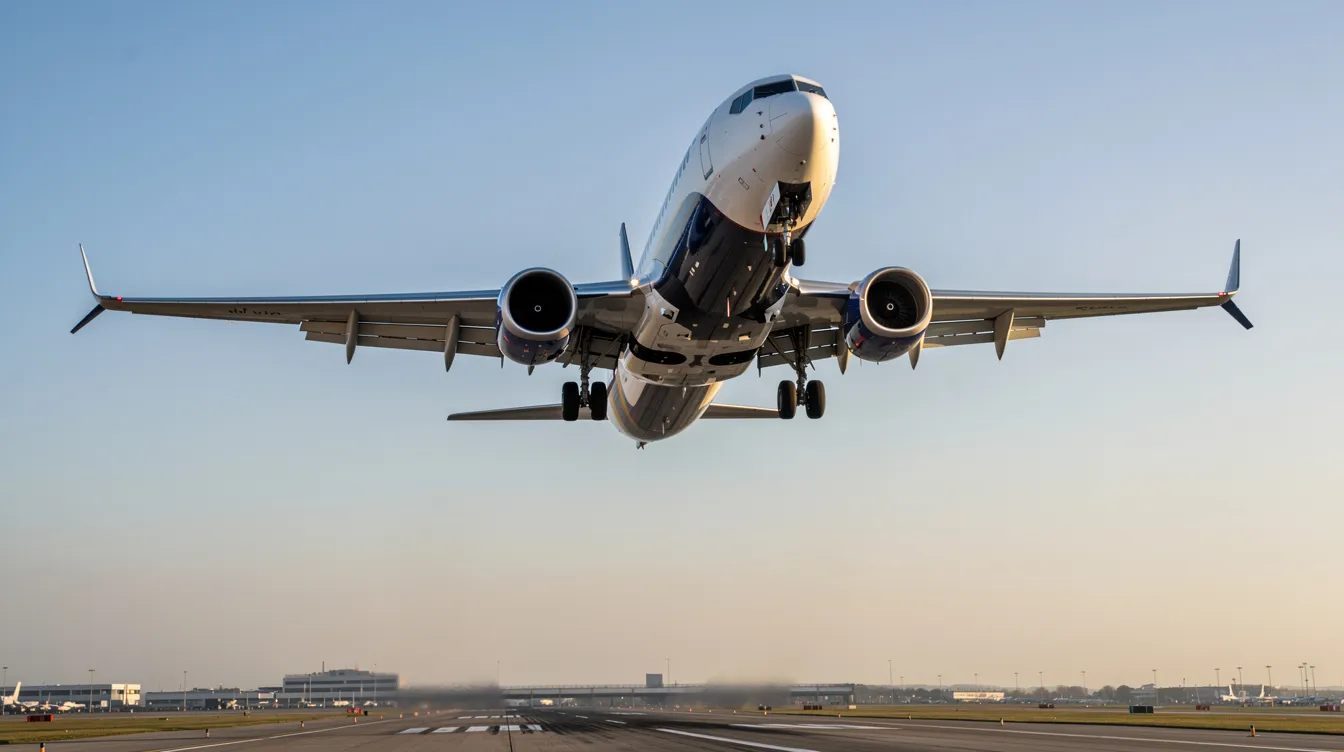
Few numbers in commercial aviation carry more operational weight than the landing speed of a 737: most Boeing 737s touch down at about 130 to 150 knots (roughly 150 to 175 mph), with a 737-800 typically landing near 140 knots in standard conditions. Whether you are a pilot, a frequent airline passenger, or a private jet traveler comparing commercial aircraft with BlackJet, that number shows how aircraft weight, weather, flap settings, and runway length shape every arrival.
This introduction looks at 737 landing speeds across the main variants, how crews calculate the correct approach and touchdown speed, what those numbers mean for safety and runway requirements, and what passengers actually feel during landing. For high-net-worth travelers and anyone considering private aviation, it also puts the 737 into context against private jets, highlighting the operational precision behind commercial landings and why premium private jet cards and membership programs can offer a more tailored, flexible, and convenient experience.
Overview: Typical Landing Speed of a Boeing 737
The Boeing 737 typically lands at 130–150 knots (roughly 150–175 mph), but landing speeds are not fixed for the 737 series-they vary by model and conditions. Each variant of the Boeing 737 has a different typical landing speed based on design and weight:
Variant | Typical VREF (Flaps 30, MLW) | Approx. Ground Speed |
|---|
737-700 (lighter load) | ~130–135 knots | ~150–155 mph |
737-800 | ~140–145 knots | ~160–167 mph |
737 MAX 8 | ~145 knots | ~167 mph |
The 737-800 has a landing speed of approximately 140 knots under standard conditions. Landing speed varies by aircraft weight and configuration-a 737-800 touching down at London Heathrow on a cool sea-level day needs less speed than the same aircraft arriving at Denver, where 5,400 feet of elevation and thinner air demand higher indicated airspeed for equivalent lift.
Pilots use three key terms on final approach. VREF is the reference landing speed for the selected flap setting and weight-typically 1.3 times stall speed. VAPP is the approach speed, which adds a wind correction to VREF. VLS is the lowest selectable speed for safe control. Passengers simply experience these calculations as a firm but controlled touchdown.
As a transport-category, swept-wing aircraft, the 737 lands faster than many private jets but slower than widebody long-haul types. More than 1 million passengers fly on a 737 MAX daily, making its landing performance one of the most-practiced routines in aviation. That speed range also determines how efficiently the aircraft can serve different airports-something that matters to both airline scheduling and private jet travelers choosing among aircraft types and to those comparing how high private jets cruise relative to commercial airliners, where private jets often fly between 35,000 and 51,000 feet.
How 737 Aircraft Landing Speed Is Determined
Boeing 737 pilots calculate a precise landing speed for each approach-they never guess. Before every arrival, the crew uses performance charts, the Flight Management System, and real-time data to compute the exact target.
Factors affecting landing speed include aircraft weight and flap configuration, but the full list is longer:
Landing weight (fuel loading, passengers, cargo)-heavier aircraft require higher landing speeds to generate sufficient lift
Flap configuration-higher flap settings allow for lower landing speeds by increasing lift and drag; a greater flap extension generally decreases the reference landing speed.
Airport pressure altitude and temperature
Runway conditions (dry, wet, contaminated)
Wind-the approach speed is typically calculated by adding a wind correction to the reference landing speed, using a formula of half the steady headwind plus the full gust increment, capped at a defined maximum.m
As a concrete example, consider a 737-800 at 60 metric tons landing weight using flaps 30: VREF sits around 140 knots. Drop that weight by 10–15 tons, and the speed might reduce to roughly 135 knots. Wind conditions can influence the final approach speed further-a 20-knot headwind with gusts would add 10–15 knots to VAPP.
Pilots monitor indicated airspeed during approach, which differs from groundspeed. Modern 737 MAX variants use onboard performance software and tools similar in concept to a private jet flight time calculator for accurate planning to compute VAPP, required landing distance, and brake settings in real time. Airline standard operating procedures constrain pilots to specific, trained speed ranges, reinforcing the precision and safety that define commercial operations.
Landing Performance, Runway Length, and Safety Margins
Landing speed is inseparable from stopping distance. Kinetic energy scales with the square of speed, which means even a 5-knot increase can meaningfully extend the runway required to stop.
For a 737-800 at maximum landing weight on a dry, sea-level runway with flaps 30, Boeing's certified landing field length is approximately 6,000–7,000 feet. That range expands at higher altitudes, on contaminated surfaces, or with tailwinds. Conditions such as runway surface and aircraft configuration can further affect landing performance-wet pavement alone can add hundreds of feet.
Key safety tools that maintain controlled deceleration from ~140 knots to taxi speed include autobrake settings, thrust reversers, ground spoilers, and anti-skid braking systems. FAA and EASA regulations require airlines to demonstrate adequate stopping distance with conservative buffers before dispatching to any airport.
Consider one realistic scenario: a 737-800 assigned to a 5,000-foot regional runway might require full flaps (40 instead of 30), maximum reverse thrust, and dry conditions. If margins aren't adequate, pilots divert-safety is non-negotiable.
Passenger Experience: Why 737 Landings Can Feel "Fast"
Many passengers report that a 737 landing feels rapid, even though 135–145 knots is well within safe limits. The perception comes from perspective: the cabin sits close to the ground, runway markings rush past the windows, and a touchdown speed exceeding 155 mph dwarfs anything experienced in a car.
A "firm" landing is often intentional. On wet or contaminated runways, pilots aim for positive contact to ensure spoilers deploy fully and brakes engage immediately. This differs from a "hard" landing, which exceeds descent-rate thresholds and may trigger maintenance inspections.
Modern 737 models, including the MAX, feature refined wing design and advanced spoilers that smooth out the flare while the aircraft holds the required speed. Still, the experience contrasts noticeably with private jets. A super-midsize business jet typically approaches at 110–125 knots-lower kinetic energy, less noise, and a more composed arrival that high-end travelers notice immediately.
For BlackJet clients, understanding why a commercial 737 lands at a certain speed helps them appreciate the quieter, more tailored profile they experience aboard smaller business jets.
737 Landing Speeds vs Private Jets: What It Means for BlackJet Members
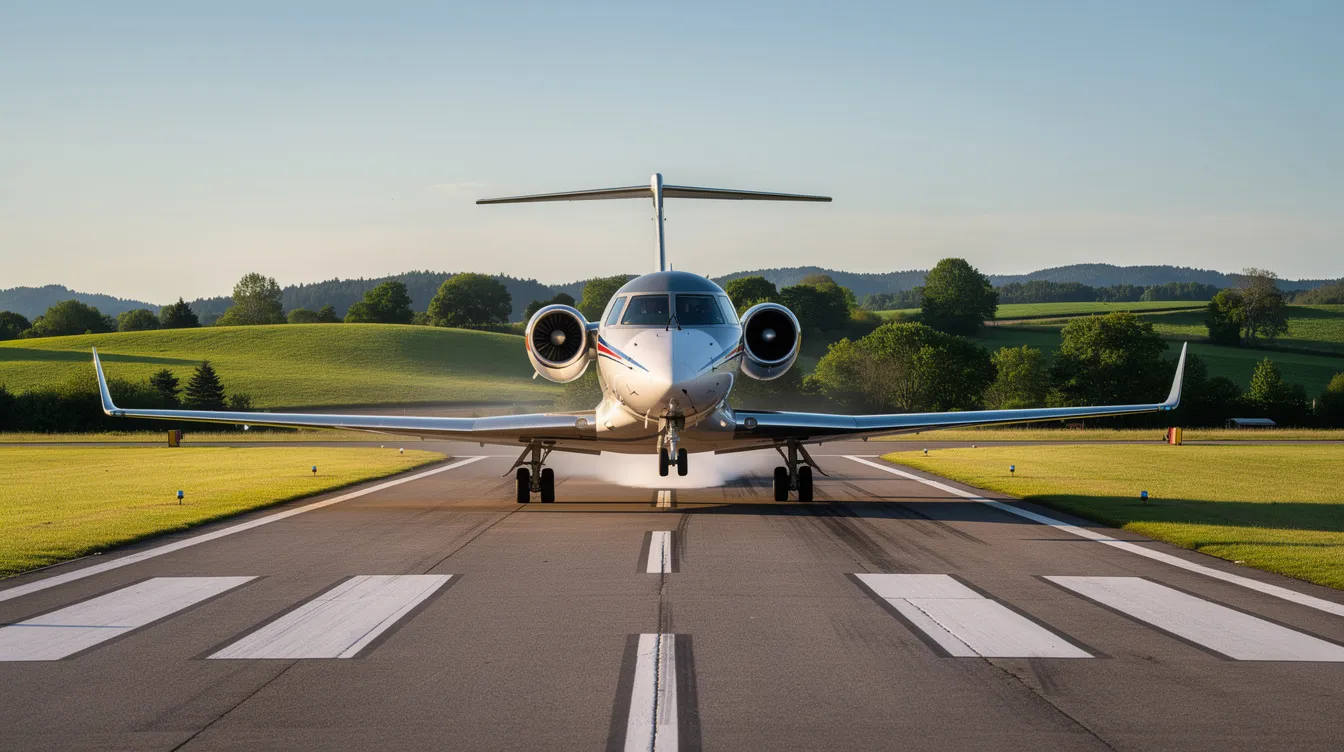
Picture a standard airline 737 arriving at LAX: crossing the threshold at 140 knots, decelerating on a 12,000-foot runway, taxiing through congested gates. Now picture a BlackJet-arranged super-midsize aircraft landing at Van Nuys Executive Airport at 120 knots, rolling to a stop on a shorter runway, and parking steps from your waiting car. The difference in time, stress, and convenience is substantial.
Aircraft Category | Typical Approach Speed | Runway Needed |
|---|
Boeing 737-800 / MAX 8 | 130–150 knots | 6,000–7,000 ft |
Light private jet | 95–115 knots | 3,000–4,000 ft |
Super-midsize private jet | 110–125 knots | 4,000–5,000 ft |
Large-cabin private jet | 115–135 knots | 4,500–5,500 ft |
Lower landing speeds and shorter runway requirements mean BlackJet clients can access executive airports close to city centers or resort destinations. This means real savings-not just in air time, but in ground transfer. A 45-minute post-landing commute from a major hub disappears when you land minutes from your destination.
As a Jet Card provider, BlackJet leverages a curated fleet with stringent safety certifications that go beyond basic regulatory requirements, applying the same rigor described in our guide to understanding overall jet card cost and membership pricing. Every aircraft's landing performance and operational range are thoroughly vetted. BlackJet's digital platform matches travelers with the right aircraft category for each mission—je verzoek wordt geverifieerd as the system confirms availability, and je kunt over een paar seconden doorgaan with booking. Whether scheduling in English or encountering a prompt like vernieuw deze pagina niet while the system processes your flight, the experience is seamless. You kunt over een paar clicks een paar seconden doorgaan from search to confirmed reservation.
On sustainability: the 737 MAX reduces CO2 emissions by 20% compared to prior generations, and the 737-8 has a 50% smaller noise footprint than the 737-800. Even so, BlackJet offers carbon-neutral flights by offsetting emissions on every private trip-combining performance, safety, and environmental responsibility, all within transparent jet card pricing structures that explain costs and benefits.
Frequently Asked Questions About Boeing 737 Landing Speeds and Private Jet Comparisons
Why does the Boeing 737 have a landing speed range instead of a fixed speed?
The landing speed varies due to factors such as aircraft weight, flap settings, wind conditions, runway altitude, and temperature. Pilots calculate a precise speed for each landing to ensure safety and optimal performance.
How do flap settings affect the landing speed of a 737?
Higher flap settings increase lift and drag, allowing the aircraft to land at lower speeds. For example, extending flaps from 30 to 40 degrees generally decreases the reference landing speed.
How does the landing speed of a 737 compare to private jets?
The 737 typically lands faster, around 130–150 knots, while private jets like super-midsize models land slower, usually between 110–125 knots. This difference enables private jets to use shorter runways closer to city centers.
What safety measures ensure a safe landing at these speeds?
Safety protocols include autobrakes, thrust reversers, ground spoilers, anti-skid braking systems, and strict adherence to certified landing speeds and runway length requirements.
How does BlackJet ensure environmentally responsible private jet travel?
BlackJet offsets carbon emissions on every private flight, offering carbon-neutral travel options while maintaining rigorous safety and operational standards.
Can wind conditions affect the approach speed of a Boeing 737?
Yes, pilots add a wind correction to the reference landing speed (VREF), typically half the steady headwind plus the full gust increment, to maintain safe approach speeds.
Why might passengers perceive 737 landings as "fast"?
The cabin’s proximity to the ground and the high touchdown speed (over 155 mph) create a sensation of speed, even though the landing is within safe operational limits.
What runway lengths are typically required for a 737 landing?
Depending on weight and conditions, a Boeing 737-800 usually requires 6,000–7,000 feet of runway for landing, with longer distances needed for higher altitude or wet runways.
How does BlackJet’s Jet Card program enhance travel convenience compared to commercial flights?
BlackJet’s Jet Card program provides prepaid access to private jets with flexible scheduling, access to executive airports, and seamless digital booking, reducing travel time and stress compared to commercial airline travel.
What technologies help pilots calculate landing speeds on modern 737 models?
Pilots use onboard performance software, Flight Management Systems, and real-time data to compute the exact approach speed, required landing distance, and brake settings for safe landings.
Conclusion: Understanding the Landing Speed of the Boeing 737 and Its Impact on Travel
The landing speed of the Boeing 737 is a critical factor that encapsulates the precision, safety, and operational expertise behind every commercial flight. With typical touchdown speeds ranging from 130 to 150 knots, influenced by weight, flap settings, and environmental conditions, pilots ensure every landing is both safe and efficient. For passengers, this translates to a firm but controlled experience, while for aviation professionals, it represents a finely tuned balance of physics and technology.
For discerning travelers, especially those familiar with private aviation, these landing speeds highlight the differences in operational flexibility and convenience. Private jets, such as those accessible through BlackJet’s Jet Card programs, offer lower approach speeds and shorter runway requirements, enabling access to exclusive airports closer to final destinations. This not only reduces travel time but also enhances comfort and privacy.
Moreover, the integration of advanced safety protocols, rigorous certification standards, and sustainability initiatives—like carbon-neutral flights—demonstrates how modern aviation continues to evolve responsibly. Whether flying commercial on a 737 or privately with BlackJet, understanding these dynamics enriches the travel experience and underscores the value of choosing the right aircraft and service.
Elevate your travel experience with BlackJet’s Jet Card program, where safety, sustainability, and seamless access converge to redefine what private flight means for today’s traveler. Explore how our mobile booking platform and real-time flight support ensure effortless and premier travel every step of the way.


 Sign up with google
 Sign up with Apple