Introduction to Jetson Aero ONE and Modern Private Aviation
Two categories of aircraft are drawing attention from high-net-worth travelers: consumer-grade personal eVTOL aircraft like the Jetson ONE, and on-demand private jet access through programs like BlackJet's Jet Card. eVTOL stands for electric vertical takeoff and landing, a category that the Jetson ONE defines with its eight electric motors and single-seat open cockpit. A BlackJet Jet Card member can fly from New York to Miami in roughly three hours on a midsize jet; a Jetson ONE pilot covers a local 10-mile hop in under 20 minutes. These options solve different problems. The Jetson ONE complements private jet travel rather than replacing it. This article compares the Jetson Aero ONE personal eVTOL with private jet access programs like BlackJet Jet Cards, helping high-net-worth travelers understand the strengths and limitations of each option.
What Is the Jetson ONE? Specs, Capabilities and Limits
The company behind the Jetson ONE was co-founded by Tomasz Patan, originally from Poland, and Peter Ternström. From early Jetson prototype stages, the goal was to create a consumer-grade personal eVTOL aircraft capable of giving individuals access to flight without a pilot license, under FAA Part 103 ultralight rules.
Design and Construction
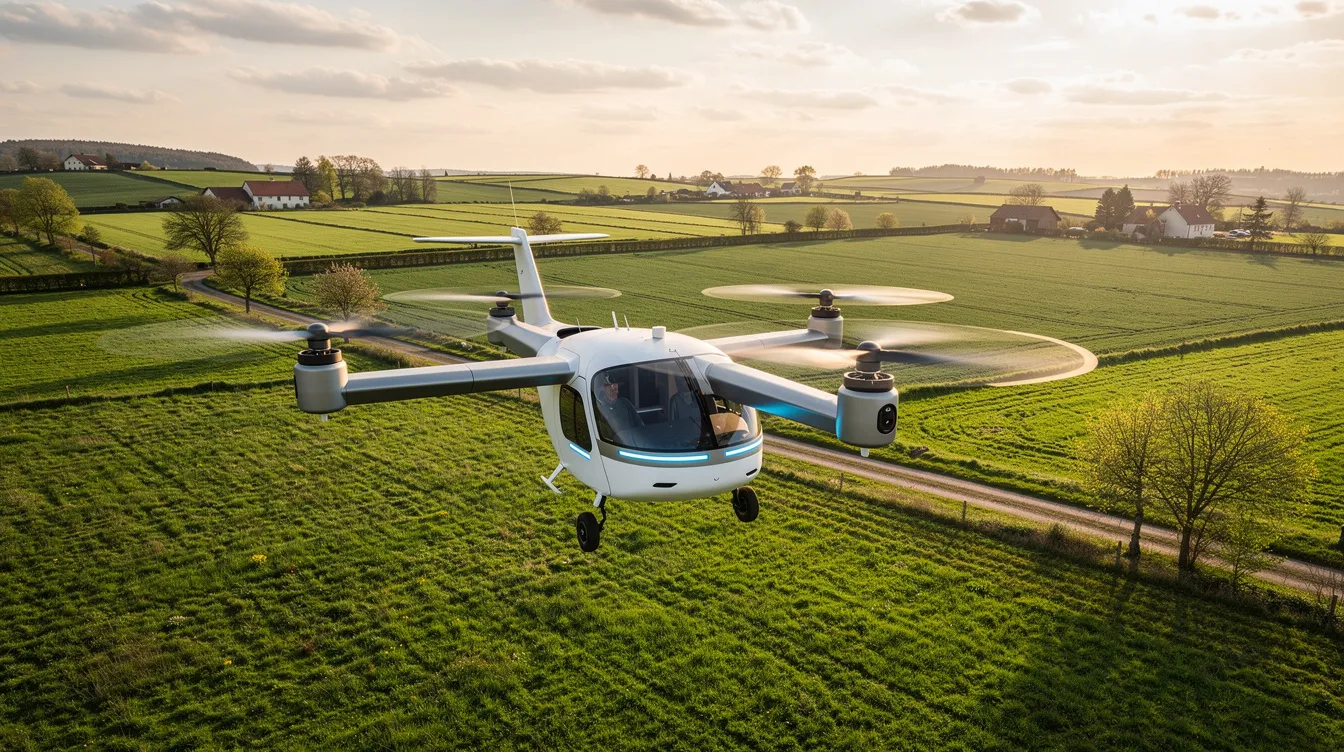
The aircraft is built on an aluminium space frame with carbon-fiber bodywork, a design that emphasizes lightweight construction with race-car safety elements. It is powered by eight electric motors driving fixed-pitch propellers. The pilot controls the craft using a 4-axis joystick, and an intuitive flight computer supports easy learning for new operators.
Performance Specifications
Key specs:
Top speed: 102 km/h (software limited)
Flight time: 20 minutes per charge on high-discharge batteries
All-up weight: 86 kg; empty mass around 55 kg (121 lbs)
Maximum pilot weight: 95 kg (210 lbs)
Service ceiling: 1,500 feet AGL
Intended Use and Availability
The Jetson ONE is designed primarily for personal recreational use rather than commercial applications. As of October 2026, production slots for 2026 and 2027 are sold out; Jetson ONE orders are currently being accepted for 2028 delivery at a base price of $148,000. Flight video clips shared across social media, including Facebook, have drawn thousands of comments and fueled demand. The aircraft has also been tested for search and rescue applications, though its 20-minute flight time limits that use case. Early adopters treat it the way they would a performance boat or supercar: a recreational machine, not a business plane.
Jetson Aero ONE vs Private Jets: Use Cases, Range and Comfort
A Jetson ONE and a private jet serve different segments of a traveler's life. One offers ultra-short-range solo mobility; the other handles multi-city, multi-passenger itineraries via private jet charter.
Range Comparison
The Jetson ONE's 20-minute flight time on current batteries covers roughly 15 to 20 km in ideal conditions. By contrast, private jet operators often rely on advanced private jet flight time calculators to plan longer missions with precise arrival estimates. A BlackJet-arranged midsize jet can fly 1,700 statute miles non-stop; a super-midsize reaches 3,900 miles, falling squarely within the typical private jet price and performance spectrum. Battery energy density is the constraint that keeps personal eVTOL craft local.
Capacity and Comfort
When moving beyond single-seat aircraft, understanding private jet sizes and cabin classes helps travelers match passenger counts and comfort expectations to the right category of jet.
Private jets accessed via a Jet Card: Seat 4 to 14 passengers depending on cabin class, with climate control, Wi-Fi, galleys, and baggage holds.
Use Case Scenarios
A Silicon Valley technologist might fly a Jetson ONE from a private estate to a nearby airstrip for recreation.
That same day, a BlackJet member takes a team of five from Los Angeles to Denver on a midsize jet, works en route, and returns that evening.
Different tools for different problems; one does not change the need for the other.
Safety, Regulation and Sustainability: eVTOL Craft and BlackJet Jet Cards
Both platforms invest in safety, but they sit at different points on the maturity curve. The Jetson ONE uses redundant motors to maintain safe flight in case of a motor failure. It is equipped with a ballistic parachute for emergency landings, and the flight control system features terrain tracking and obstacle avoidance, including LiDAR-driven terrain mapping.
BlackJet operates under a different framework entirely. Every flight uses operators holding FAA Part 135 certification or equivalent, vetted through the BlackJet Certified program with third-party audits (ARGUS Gold/Platinum, IS-BAO). For travelers comparing eVTOL experimentation with established charter providers, it is useful to understand how private jet safety standards and risk profiles compare with general aviation norms. A Safety Advisory Board of former FAA and NTSB leaders oversees standards built on over 300 million proprietary data points, while also evaluating how more affordable private plane options fit into rigorous safety and compliance expectations.
On sustainability, the Jetson ONE produces zero emissions at the point of use. BlackJet takes a different approach: every Jet Card flight is carbon-neutral at no extra cost, with 300% offsetting to account for CO₂ plus non-CO₂ effects like water vapor and aerosols, even as it promotes more economical private jet options for travelers entering the market, including guidance on the cheapest private aircraft and budget-friendly access models.
Italy has already granted Jetson the first official ultralight eVTOL identification in Europe, a regulatory step that may accelerate adoption across other countries.
How BlackJet Jet Cards Complement the Future of Personal eVTOL Flight
For cross-country or international travel, a Jet Card delivers what a Jetson ONE cannot: multi-hour range, privacy for a full team, and access to thousands of airports, all under a predictable jet card membership cost structure informed by broader jet card pricing frameworks and benefits. BlackJet offers 25-hour and 50-hour Jet Cards across four cabin classes, with hours that never expire and transparent per-hour pricing (from ~$5,484/hr for light jets to ~$13,131/hr for large cabin) through its flagship BlackJet 25+ Hour Jet Card program, mirroring the advantages outlined in a broader 25-hour jet card guide to features and costs.
The integrated future looks like this: a Jet Card member flies London to Geneva on a large-cabin jet for a board meeting, same-day return, booked via BlackJet's mobile platform—exactly the type of mission where top jet cards for frequent flyers create outsized time savings and make it crucial to understand jet card cost per hour across aircraft types. On the way home, a personal eVTOL handles the short hop from the local airfield back to the estate. The private jet covers the long leg; the eVTOL handles the last mile, and a 50-hour jet card program often matches the annual flying profile of owners considering such a hybrid setup, especially when paired with BlackJet’s premium private jet card programs that emphasize safety, comfort, and sustainability.
Today, that second leg remains aspirational for most buyers weighing the trade-offs between a 5 million dollar private jet and more flexible access models, or even downsizing into the best small private aircraft for specific missions. The first leg is available now, especially for travelers whose usage patterns might justify a 100 hour jet card commitment once they understand how much it costs to rent a private jet for typical routes. Explore how BlackJet's Jet Card programs can reshape your travel while the eVTOL revolution takes shape, whether you’re evaluating 15 million dollar private jet features alongside the best features of a 20 million dollar private jet or simply seeking smarter access via buying a seat on a private jet instead of full ownership.
Frequently Asked Questions
What is the Jetson ONE?
The Jetson ONE is a single-seat, consumer-grade personal eVTOL aircraft. Made with an aluminium frame and carbon-fiber bodywork, it uses eight electric motors and is designed primarily for recreational flying.
How far can the Jetson ONE fly?
The Jetson ONE has a stated flight time of about 20 minutes, with range depending on conditions, payload, and operating choices. It is intended for short local flights, not long-distance travel; a private jet is better suited to regional or international itineraries.
Does the Jetson ONE require a pilot’s license?
The aircraft is designed to comply with FAA Part 103 ultralight rules in the United States, which generally do not require a pilot certificate. Regulations and operating requirements can vary by location, so prospective operators should confirm current rules with the relevant aviation authority.
What safety features does the Jetson ONE have?
The Jetson ONE includes redundant motors, terrain tracking and obstacle-avoidance features, and a ballistic parachute. These systems are distinct from the operator certification, audits, and oversight that apply to BlackJet-arranged private jet flights.
How does a Jetson ONE compare with a BlackJet Jet Card?
The Jetson ONE provides one person with short-range recreational flight. A BlackJet Jet Card provides access to certified private jet operators for longer trips, multiple passengers, and cabin amenities, often leveraging small private jets as flexible luxury travel options for sub-3-hour missions. For example, an executive could use a midsize jet to travel from New York to Miami with colleagues, while an eVTOL is suited to a brief local flight.
Are Jetson ONE orders available?
Jetson ONE orders are currently being accepted for 2028. Availability, pricing, and delivery details should be confirmed directly with the manufacturer. Travelers considering a similar commitment level on the jet side may also compare NetJets jet card costs and structures to BlackJet’s approach.
Are private jet flights through BlackJet carbon neutral?
BlackJet states that every Jet Card flight is carbon neutral at no extra cost, using 300% offsetting to account for CO₂ and non-CO₂ effects. The Jetson ONE produces no emissions at the point of use, though its overall environmental impact also depends on how its electricity and materials are sourced. For larger groups trying to balance sustainability with logistics, it can be useful to compare charter plane costs for 100 passengers or evaluate the best private jet for 15 passengers, ideal aircraft for 20-passenger private flights, and even large-cabin jets suited to 50-passenger charters.
Conclusion: Choose the Right Aircraft for Each Journey
The Jetson ONE and a BlackJet Jet Card are not competing versions of the same service. The Jetson ONE is a personal, single-seat eVTOL built for short recreational flights, while a Jet Card provides access to certified private jets for longer trips, multiple passengers, and business or leisure itineraries. For a traveler weighing both, the distinction is practical: an eVTOL may suit a local flight, but it cannot replace the range, capacity, or cabin comfort of a private jet.
As personal electric aviation develops, safety standards, operating rules, battery performance, and charging infrastructure will shape where eVTOLs can be used. For travel available today, BlackJet Jet Cards offer a flexible alternative to aircraft ownership, with 25- and 50-hour options, digital booking, real-time support, and carbon-neutral flights. Explore premium jet access with BlackJet and discover how a Jet Card can complement the next generation of personal flight.


 Sign up with google
 Sign up with Apple