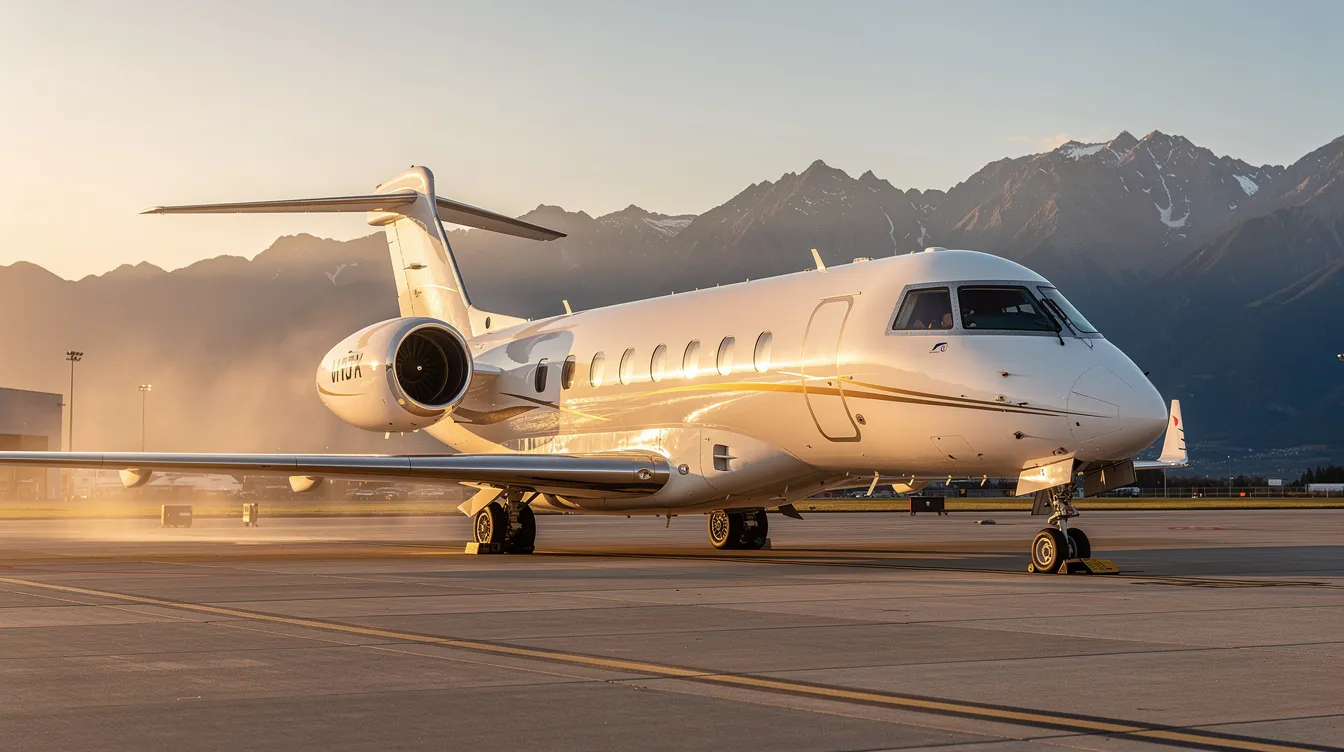
The jet turbine engine is the heartbeat of modern aviation. Whether you are crossing the Atlantic nonstop or hopping between coastal cities for back-to-back meetings, the turbine spinning behind the nacelle determines how fast you arrive, how quietly you work en route, and how far you can fly without stopping. This guide breaks down the engineering, history, and strategic relevance of jet turbine engines-and explains why they matter to anyone who values time, safety, and the freedom of private flight.
Strategic Advantage of Jet Engines in Modern Private Aviation
Jet engine technology is what makes point-to-point private travel viable at very high speeds and very high altitudes. Consider a business executive flying from New York to Los Angeles. On a commercial airline, the journey typically involves a drive to a major hub, two to three hours of pre-flight time, possible connections, and arrival logistics at a congested terminal, easily eight or more hours door to door. On a BlackJet-arranged private jet powered by a modern turbofan engine, that same executive departs from a nearby FBO, boards fifteen minutes before takeoff, flies a direct route at Mach 0.80–0.85, and arrives steps from a waiting car. Total door-to-door time drops by 30 to 50 percent.
The advantages extend well beyond speed:
Direct routing. Private jets bypass hub congestion, flying great-circle paths that shave distance and time.
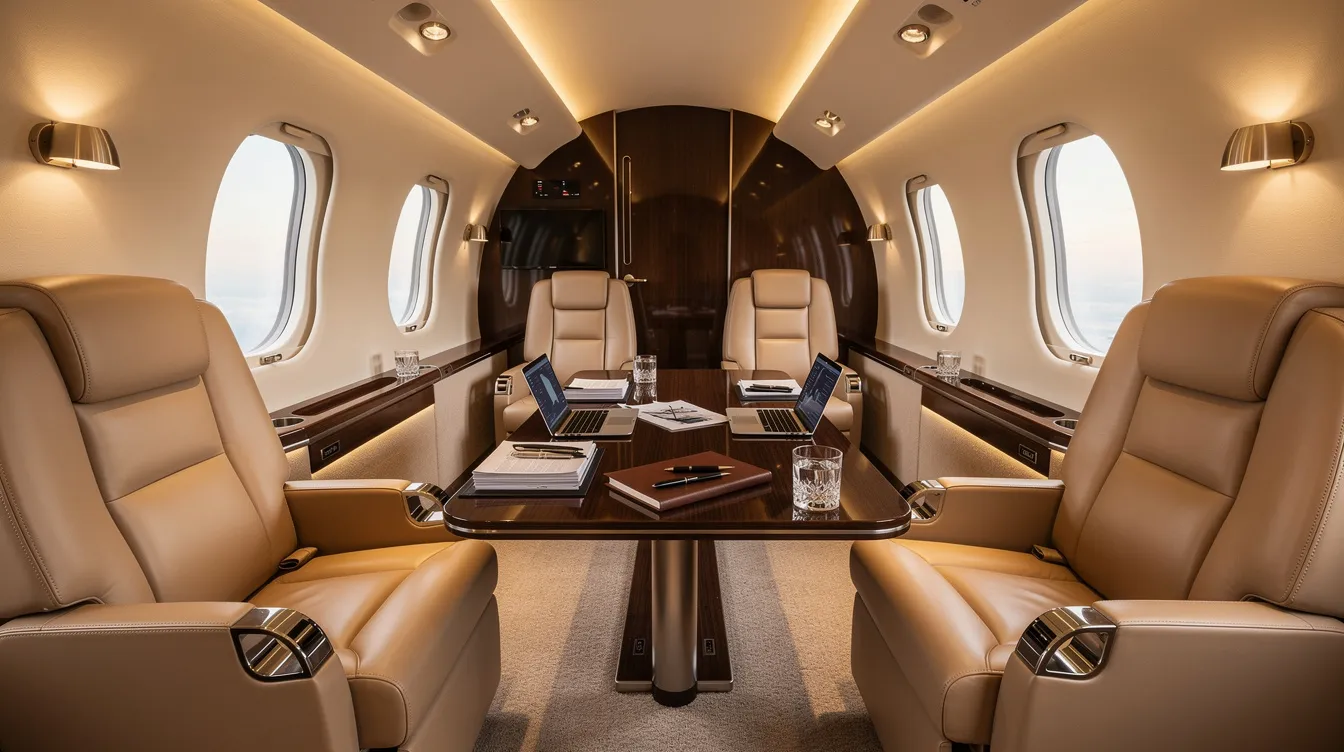
Privacy and productivity. Secure calls, focused meetings, and uninterrupted rest happen in a cabin shared only with your party, impossible in a commercial first-class cabin surrounded by strangers.
Smaller airports. Turbofan thrust-to-weight ratios allow access to thousands of regional airfields closer to your origin and destination.
Quieter cabins. High-bypass turbofan engines reduce noise compared with older turbojet designs, making the cabin a genuine workspace.
Private jet with turbofan vs commercial first class:
Factor | Private Turbofan Jet | Commercial First Class |
|---|
Airport type | FBO / regional field | Major hub terminal |
Pre-flight time | 15–30 minutes | 90–120 minutes |
Routing | Direct, nonstop | Hub-and-spoke, possible layover |
Cabin privacy | Complete | Shared cabin |
Door-to-door (NY–LA) | ~6 hours | ~10–12 hours |
BlackJet Jet Card members access aircraft powered mainly by efficient turbofan engines across light, midsize, super-midsize, and large-cabin categories-ensuring every flight aligns with the performance standards outlined above.
How a Jet Engine Works (The "Suck–Squeeze–Bang–Blow" Cycle)
A jet turbine engine operates on a continuous cycle known as "suck, squeeze, burn, and blow." The underlying principle is Newton's third law: expelling high-speed gas rearward generates an equal and opposite force forward, producing thrust that propels the airplane through the air.
Here is how each stage works inside the engine:
Intake ("Suck"). The fan sucks in large quantities of air through the front of the engine. In a turbofan, a large-diameter fan pulls in far more air than the engine core alone could ingest, ensuring abundant airflow even at cruise altitudes of 35,000 to 45,000 feet, where cold air is thin. Essentially, air entering the intake is the raw material for everything that follows.
Compression ("Squeeze"). The compressor of a jet engine consists of spinning rotors and stationary stators packed with blades. These multiple stages squeeze the incoming air, increasing its pressure significantly before combustion. Modern turbofans can achieve overall pressure ratios exceeding 50:1. The result is high-pressure air ready for ignition.
Combustion ("Bang"). Inside the combustion chamber, atomized jet fuel is continuously sprayed into highly pressurized air and ignited to create a high-energy gas stream. Unlike piston engines, where combustion occurs in discrete pulses, the combustor ignites a fuel-air mixture at high temperatures in a continuous, stable flame. Classic turbojet engines run lean with an air-fuel ratio of roughly 50:1, and the mixture burns at extreme temperatures sustained by nickel superalloys and ceramic coatings.
Exhaust ("Blow"). The burning gases expand rapidly. Hot gases spin a set of turbine blades, and the turbine extracts energy from those gases to drive the compressor, and, in a turbofan, the large front fan via concentric shafts. The remaining energy exits through the exhaust nozzle at very high speeds, and the nozzle produces thrust by expelling high-speed gas rearward. The nozzle converts internal pressure into high-velocity exhaust, completing the cycle.
To visualize this in practice, imagine a wintertime London-to-Geneva hop. As the plane climbs through cold, turbulent air at low altitudes, the turbine engine maintains stable combustion and reliable power. Anti-ice systems fed by compressor bleed air keep the intake clear. By the time the aircraft reaches FL350, the engines are cruising efficiently in thin, frigid atmosphere-exactly the conditions they were designed for. For a deeper look at the physics behind this process, see Jet Propulsion: From Physics to Private Jet Power.
The First Jet Engine and Early Milestones
The quest for the first jet engine began in the late 1920s, driven by a simple limitation: propeller-driven aircraft were approaching their speed ceiling. Engineers on both sides of the English Channel recognized that a gas turbine could push aviation beyond what any propeller could achieve.
Frank Whittle, a Royal Air Force officer and engineer, patented the first turbojet engine on 16 January 1930 in the United Kingdom; the patent was granted in 1932. Meanwhile, Hans von Ohain pursued a similar design independently in Germany. Turbojets were the first type of gas turbine engine invented, and competition between these two pioneers accelerated development rapidly.
Von Ohain's work bore fruit first in the air. The Heinkel He 178 was the first turbojet aircraft in 1939, making its maiden flight on 27 August of that year. The Whittle engine first flew successfully in May 1941, powering the British Gloster E.28/39 testbed. Across the Atlantic, the first American jet engine was built for the XP-59A in 1942, marking the United States' entry into the jet age.
These early turbojet engines were loud, fuel-hungry, and suited primarily to military speed requirements. But they proved the same principle that still governs every modern business jet: compress air, add fuel, ignite, and channel expanding gas to generate thrust. From those experimental turbojets, engineers refined the concept into the turbofan engine, quieter, more efficient, and ideally suited to the subsonic cruise speeds of private aviation.
Core Types of Aircraft Jet Engines
Modern private and commercial aircraft primarily use four gas turbine engine configurations: turbofans, turbojets, turboprops, and turboshafts. The four main types of jet turbine engines share the same jet engine work cycle (intake, compression, combustion, exhaust) but differ in how they channel airflow and deliver power. For a comprehensive breakdown, see Types of Jet Engines Explained.
Turbojet engine. The original gas turbine design. All the air passes through the engine core-compressor, combustion chamber, turbine, and exhaust nozzle. This produces very high exhaust velocity, making turbojets efficient at high speeds but less fuel-efficient at the subsonic cruise typical of business travel. Cycle efficiency in turbojet engines is around 30 percent. Today, turbojets are virtually extinct in civil aviation, reserved for specific supersonic or experimental platforms.
Turbofan engine. The dominant choice for business jets and airliners. A large fan at the front moves bypass air around the engine core, and turbofan engines primarily bypass air around the core to reduce noise and improve efficiency. High-bypass designs generate most thrust from this cooler, slower fan flow rather than the hot core exhaust. Turbofan engines are the most common in commercial aviation and across every cabin class in private jet fleets.
Turboprop engine. A gas turbine driving a propeller through a reduction gearbox. Turboprop engines are more efficient below 500 mph, making them ideal for regional routes and shorter runways-think Zurich to Nice or Geneva to Cannes, where forward speed matters less than fuel economy and airfield access.
Turboshaft engine. Essentially, a turbine optimized to deliver shaft power rather than exhaust thrust. Turboshaft engines drive helicopter rotors, enabling vertical-lift access to remote villas, ski resorts, or superyacht helipads-missions where no runway exists at all.
Worth noting: beyond these four, ramjets have no moving parts and require high speeds to operate, while scramjets operate efficiently at hypersonic speeds. Neither is relevant to current private aviation, but both illustrate how the gas turbine principle extends across the speed spectrum.
Why Turbofan Engines Dominate Business and Private Jets
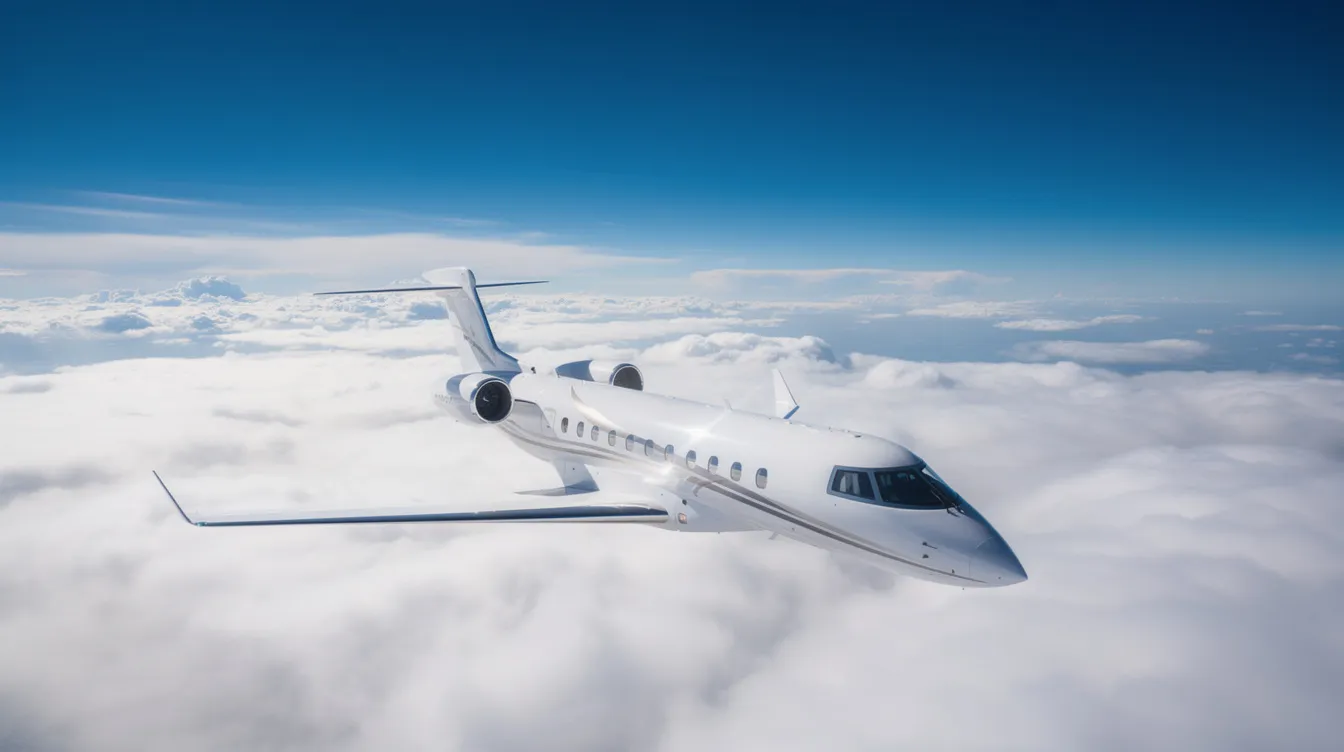
Turbofan engines are more efficient than turbojets at subsonic speeds, and since virtually all business jet missions occur between Mach 0.75 and Mach 0.90, the turbofan's advantages are decisive.
The metric that matters most is specific fuel consumption, which measures fuel needed for one unit of thrust. High-bypass turbofans achieve dramatically lower specific fuel consumption than turbojets because they accelerate a large mass of air to a moderate speed rather than a small mass to extreme velocity. The result: longer range, lower operating cost, and quieter cabins.
Here is how turbofan power translates across common business jet categories:
Gulfstream G650 / G650ER: Powered by two Rolls-Royce BR725A1-12 turbofans, each rated at approximately 16,100 lbf of thrust at takeoff. Maximum speed reaches Mach 0.925; range extends to roughly 7,000 nautical miles. Ideal for nonstop intercontinental missions under a BlackJet Jet Card-New York to London, or Los Angeles to Hawaii-with no fuel stops.
Light jets (e.g., Honeywell TFE731-powered aircraft): Thrust ratings of roughly 3,500 to 5,000 lbf per engine. Compact, reliable, and well-suited to regional missions of one to two hours-New York to Boston, Los Angeles to San Diego.
Midsize and super-midsize jets: Turbofans in the 6,000 to 12,000 lbf range enable coast-to-coast flights with the cabin comfort and speed that make a four-to-five-hour transcontinental trip productive rather than exhausting.
Thrust-to-weight ratio-the relationship between engine power and aircraft weight-directly affects short-runway performance and climb gradient. Higher ratios mean a plane can operate from smaller regional airfields and ascend quickly above commercial traffic and weather, an advantage BlackJet members experience on nearly every departure.
High Speed vs Efficiency: Matching Engine Type to Mission
Every jet engine design involves a trade-off between maximum speed and fuel efficiency. Propulsive efficiency improves as exhaust jet velocity approaches vehicle speed, meaning an engine that perfectly matches its exhaust velocity to the aircraft's forward speed wastes the least energy. High-bypass turbofans come closest to this ideal at typical business jet cruise speeds.
Classic turbojet engines generate extremely high exhaust velocities, which is why they excel at supersonic speeds. But for a business traveler cruising at Mach 0.80 on a four-hour coast-to-coast trip, that excess velocity translates directly into wasted fuel and higher cost.
Turboprop engines sit at the other end of the spectrum. At low speeds-250 to 350 knots-a propeller moves air far more efficiently than any jet nozzle. For intra-Florida hops or short Swiss alpine routes, a turboprop can access smaller airfields and burn significantly less fuel. For travelers considering this option, our guide to prop jet travel covers the details.
Factor | Turbofan | Turboprop | Turbojet |
|---|
Cruise speed | Mach 0.75–0.90 (~430–550 kts) | 250–350 knots | Mach 0.85–1.2+ |
Typical range | 1,500–7,000 nm | 300–1,200 nm | Limited by fuel burn |
Cabin noise | Quiet at altitude | Louder (propeller vibration) | Very noisy |
Operating cost | Moderate; efficient over range | Lowest on short routes | Extremely high fuel burn |
BlackJet's flight advisors help members match engine type to mission profile, selecting a light turbofan jet for a quick regional trip, a large-cabin turbofan for intercontinental legs, or recommending a turboprop when a 1,500-foot mountain strip is the only option. The goal is always the right aircraft for the right route, with no wasted time, fuel, or cost.
Inside a Jet Turbine Engine: Key Components
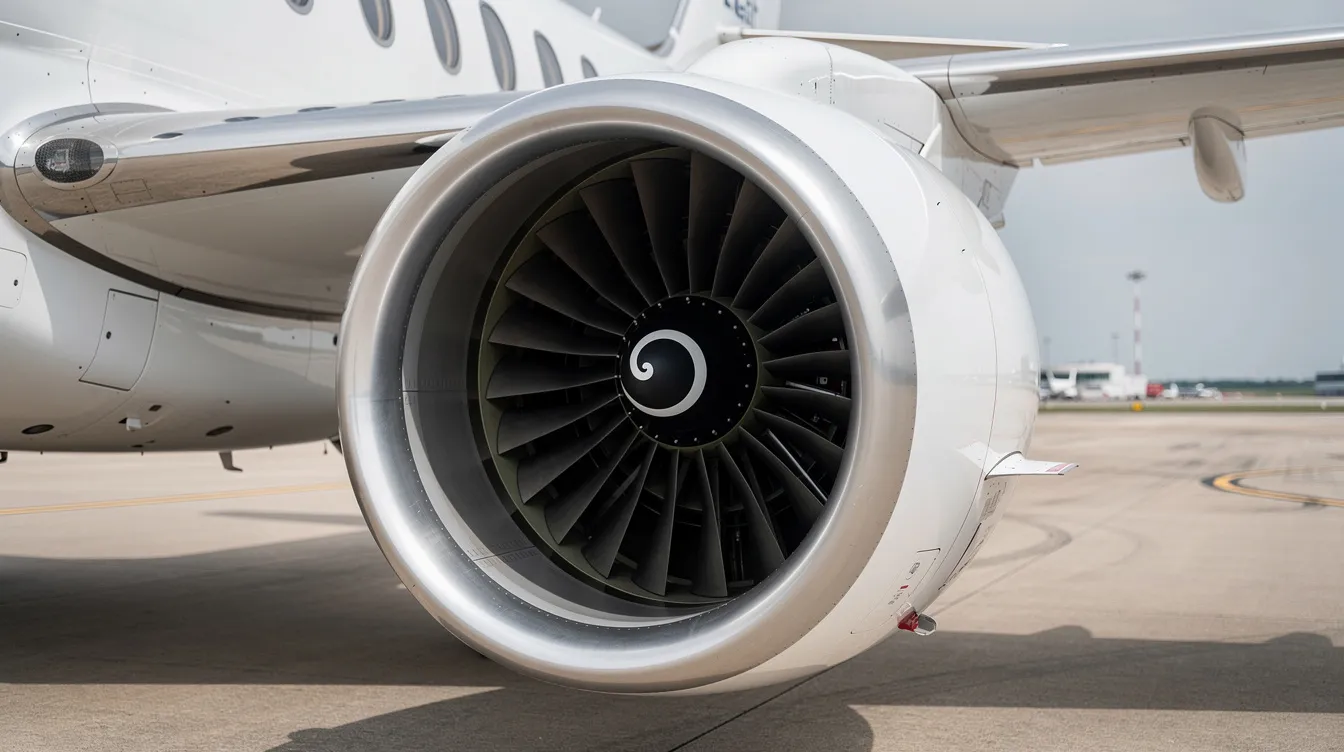
Every turbine engine-whether turbojet, turbofan, or turboprop-shares a set of core components working in sequence. Understanding these parts clarifies why modern engines are so reliable and what differentiates one design from another. For a broader look at how these components integrate into a complete aircraft, see Understanding the Basics of Airplane Engine Functionality.
Fan. In a turbofan, the large front-stage fan is the first thing air flows through. It pulls in massive volumes of air, directing most of it as bypass air around the engine core. This bypass flow generates the majority of thrust while significantly reducing noise-a key reason turbofan-equipped business jets offer such quiet cabins.
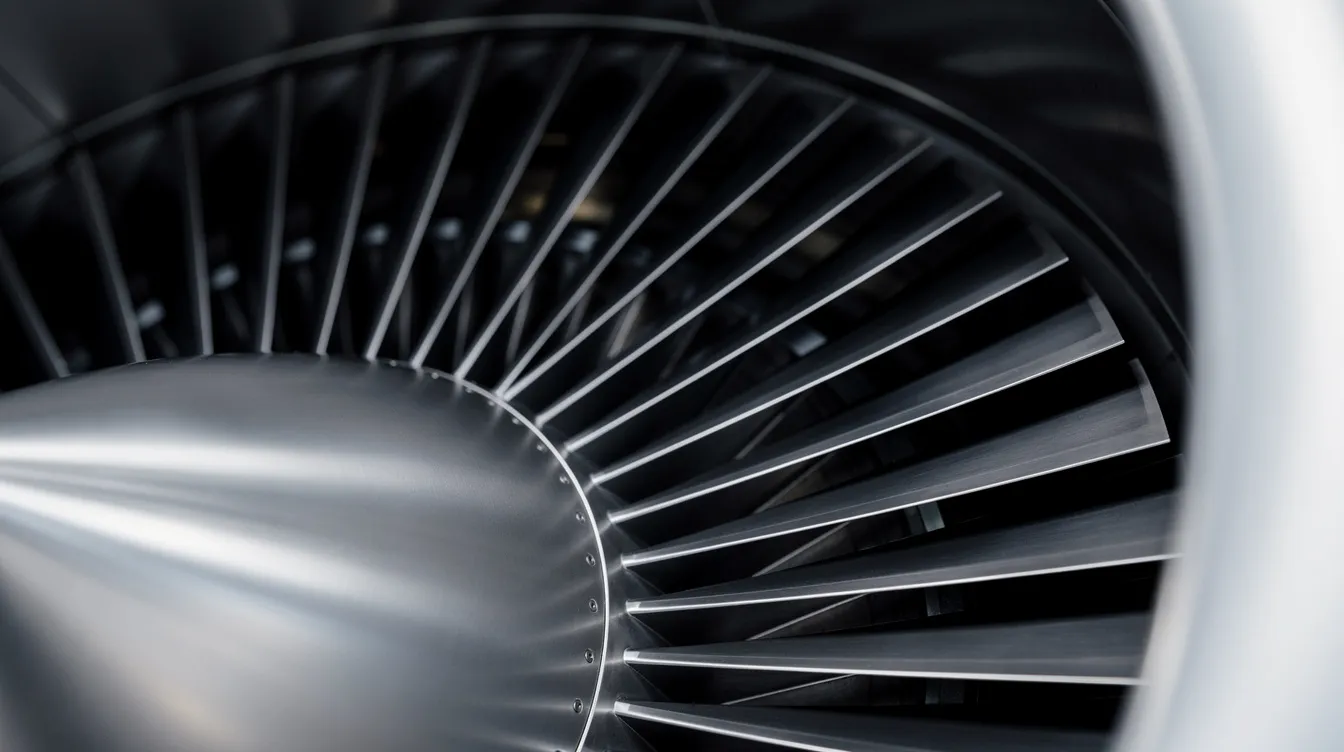
Compressor. The compressor increases air pressure significantly before combustion. Multi-stage rows of rotating and stationary blades progressively squeeze compressed air to ratios as high as 50:1 or more in advanced designs. The blade tips of each stage are precision-engineered to maintain tight clearances that adapt as temperature changes with altitude.
Combustion chamber. This is where atomized fuel meets compressed air and burns continuously. The combustor ignites a fuel-air mixture at high temperatures, sustaining a stable flame across varying altitudes and conditions. Advanced combustor designs minimize pollutant formation while maintaining temperature uniformity, a direct contributor to engine longevity.
Turbine. Located downstream of the combustor, the turbine extracts energy from hot gases to drive the compressor and fan. High-pressure turbine blades endure temperatures exceeding 1,000°C and extreme centrifugal force, made possible by nickel superalloys, ceramic thermal barrier coatings, and internal cooling passages. The turbine is essentially the gas generator that keeps the entire cycle self-sustaining.
Exhaust nozzle. The nozzle at the rear of a jet engine accelerates exhaust gases to generate thrust. Convergent nozzles are standard on subsonic civil turbofans; convergent-divergent designs serve aircraft intended for supersonic speeds. Nozzle geometry also contributes to noise suppression, shaping the jet plume to minimize ground-level sound during takeoff.
Safety, Reliability, and Certification of Jet Engines in Private Aviation
Turbine engines achieve extraordinary reliability through rigorous design, testing, and regulatory oversight. For private jet travelers, especially those crossing oceans or flying over remote terrain, this reliability is not a luxury; it is the foundation of every safe flight. For an in-depth look at aviation safety, explore Safety in the Skies: Key Facts About Private Jet Travel.
Major certification bodies-the FAA in the United States and EASA in Europe-require exhaustive engine testing before any turbine enters commercial service. These tests include bird-ingestion trials (engines must sustain a large bird strike without catastrophic failure), flame-out and re-light verification at altitude, multi-thousand-hour endurance runs, and vibration analysis across the operating envelope.
Twin-engine business jets certified for extended operations over water and remote areas must meet standards analogous to ETOPS, ensuring the aircraft can safely reach an alternate airport if one engine becomes inoperative. Redundant fuel, avionics, and sealing systems are mandatory. This is what allows a Gulfstream G650 to fly nonstop from New York to London over the North Atlantic with full regulatory confidence.
BlackJet partners exclusively with operators that meet or exceed leading third-party safety audits, including ARG/US Platinum and Wyvern Wingman ratings, and maintains rigorous maintenance tracking for every turbine in the fleet.
Engine safety checklist (what informed travelers should know is tracked):
Total engine hours and flight cycles
Hot-section inspection intervals and compliance
Compressor and turbine blade condition monitoring
FADEC performance history and software currency
Oil analysis trends and cooling system integrity
Flame-out and re-light test history
Sustainable Jet Propulsion: Efficiency, Fuel, and Carbon-Neutral Flights
Modern turbine engine design has steadily improved specific fuel consumption across every generation-higher bypass ratios, advanced compressor aerodynamics, and materials that tolerate greater turbine inlet temperatures all contribute. The Rolls-Royce Pearl 700, for example, delivers 3 to 5 percent better fuel efficiency than its predecessor, the BR725, through higher overall pressure ratios and improved bypass flow. Each incremental gain reduces emissions per passenger-mile.
Sustainable aviation fuel is accelerating the transition further. Many modern turbofan and turboprop engines are certified to operate on SAF blends, and some on 100 percent neat SAF, without modification. Gulfstream Aerospace has flown over three million nautical miles on SAF blends, including the first transatlantic flight powered entirely by neat SAF in 2023. Lifecycle carbon reductions from SAF can reach up to 80 percent, depending on feedstock.
Advanced materials-ceramic matrix composites, single-crystal turbine blades, lighter fan and nacelle structures-reduce weight and drag while permitting higher operating temperatures for better thermodynamic efficiency. These are not future promises; they are production realities in the engines powering today's business jets.
BlackJet integrates sustainability directly into its Jet Card programs. Every flight hour includes a carbon offset at no additional cost, and where available, flights utilize SAF blends. Combined with fleet selection favoring the most fuel-efficient engine families, this approach ensures members fly with a meaningfully reduced environmental footprint.
How Jet Engine Choice Shapes the BlackJet Experience
Different turbine engine types map directly to BlackJet's aircraft categories, ensuring every member flies the right plane for the mission:
Light jets powered by compact turbofans (Honeywell TFE731-class or similar) are optimal for regional business hops of one to two hours. A New York-to-Miami flight, roughly 1,000 nautical miles, pairs perfectly with a light jet offering two engines in the 4,000 lbf thrust range, direct access to smaller South Florida airfields, and fast turnaround.
Midsize and super-midsize jets with turbofans in the 6,000–12,000 lbf class handle coast-to-coast missions and intra-European legs efficiently, with expanded cabin comfort and range that eliminates fuel stops.
Large-cabin, ultra-long-range jets like the Gulfstream G650, powered by BR725 turbofans delivering ~16,100 lbf each, enable nonstop intercontinental flights. A Paris-to-Dubai itinerary (~3,200 nautical miles) unfolds entirely within the aircraft's 7,000 nm range, with cabin altitude and pressurization that reduce fatigue on arrival. For options in this category, see The Best Transatlantic Private Jet Options.
The passenger-facing outcomes of engine choice are tangible. Modern turbofan-powered jets produce noticeably quieter cabins. Bypass air essentially muffles core exhaust noise. Climb rates are faster, placing the aircraft above weather and turbulence sooner. Strong thrust-to-weight ratios grant access to shorter runways closer to your actual destination.
BlackJet's digital platform abstracts this complexity entirely. When members book via their Jet Card, engine performance, safety history, fuel efficiency, and sustainability metrics are already vetted. You see the right aircraft for your route. The engineering is built in; the experience is seamless.
Frequently Asked Questions About Jet Turbine Engines and Private Jet Travel
What type of jet engine powers most private jets?
Most private jets today use turbofan engines with high-bypass designs that deliver an optimal balance of speed, fuel efficiency, and quiet operation. Light jets may use smaller turbofans while large-cabin aircraft rely on powerful twin-engine turbofan configurations capable of intercontinental range.
Are turbofan engines safe for ocean crossings?
Yes. Turbofan-powered business jets destined for overwater routes must meet extended operations standards, including redundant systems, proven engine reliability, and regular maintenance intervals. Leading operators and aircraft with these ratings can reliably fly transoceanic legs, and BlackJet partners only with operators meeting the highest safety standards.
How noisy are jet engines inside a business jet cabin?
Modern high-bypass turbofan engines are engineered to dampen noise significantly. Bypass air around the core reduces exhaust noise, and improvements in blade and nacelle design lower cabin sound levels further. Combined with advanced cabin insulation, large-cabin jets with current-generation turbofans can operate at noise levels comparable to or quieter than commercial first class.
How do turbine engines handle extreme weather?
Turbine engines are designed to operate across a wide range of conditions-high altitudes, cold temperatures, icing, and turbulence. Anti-ice systems (bleed-air or electric), FADEC controls that adjust fuel flow and variable vane positions, and blade materials resistant to thermal cycling ensure reliable performance whether departing in a snowstorm or cruising through temperature inversions at altitude.
Can private jets use sustainable aviation fuel?
Yes. Many modern turbofan engines are certified for SAF blends, and some aircraft have completed flights on 100 percent neat SAF. Using SAF can reduce lifecycle carbon emissions by up to 80 percent. BlackJet supports SAF usage where available and includes carbon offsets with every Jet Card flight hour.
How do turbine engines compare with piston engines in small aircraft?
Piston engines are simpler and cheaper to operate at low altitudes and low speeds, making them common in light trainers and recreational aircraft. But for speed, altitude (weather avoidance), range, and reliability, turbine engines vastly outperform them, delivering less vibration, more power at altitude, and superior safety margins. This is why every serious business aircraft uses a turbine rather than a piston.
What determines how far a private jet can fly nonstop?
Range is primarily a function of fuel capacity, aircraft weight, and engine efficiency. A turbofan with low specific fuel consumption burns less fuel per unit of thrust, extending nonstop range. Aircraft like the Gulfstream G650ER can cover roughly 7,000 nautical miles, sufficient for New York to Dubai, because their engines produce ample thrust while consuming fuel efficiently.
Do different aircraft sizes use different engine types?
Yes. Light jets typically use smaller turbofans in the 2,000–5,000 lbf thrust range; midsize and large-cabin jets may use engines producing 6,000–17,000 lbf or more. Turboprops power regional and short-runway aircraft, while turboshafts are reserved for helicopters. The right match between engine and airframe determines speed, range, runway requirements, and operating cost.
Choosing the Right Private Jet: Engine, Aircraft Class, and Jet Card Access
Understanding basic jet engine types-turbofan, turboprop, turbojet, turboshaft-clarifies the real differences between light, midsize, and large-cabin jets in range, speed, noise, and operating economics. A pilot selects the right power for the mission; as a traveler, you benefit from that selection every time you step aboard.
BlackJet's Jet Card programs convert these complex engine and aircraft variables into simple, prepaid hourly access across multiple cabin classes. Safety certifications, sustainability metrics, and engine performance standards are built into every tier-no technical expertise required on your part.
Consider your most frequent mission profile when choosing a Jet Card tier. If your travel centers on one-to-two-hour regional trips, a light jet card delivers maximum value. If you regularly fly four-to-five-hour coast-to-coast legs, midsize or super-midsize tiers match perfectly. And for seven-to-ten-hour intercontinental journeys, large-cabin access ensures nonstop range, full cabin productivity, and arrival without fatigue.
Elevate your travel effortlessly. With BlackJet, private flight is accessible on your terms through our Jet Card programs, complete with rigorous safety, carbon-neutral performance, and unmatched flexibility. Explore the BlackJet 50 Jet Card and discover how refined, meaningful travel becomes your new standard.


 Sign up with google
 Sign up with Apple