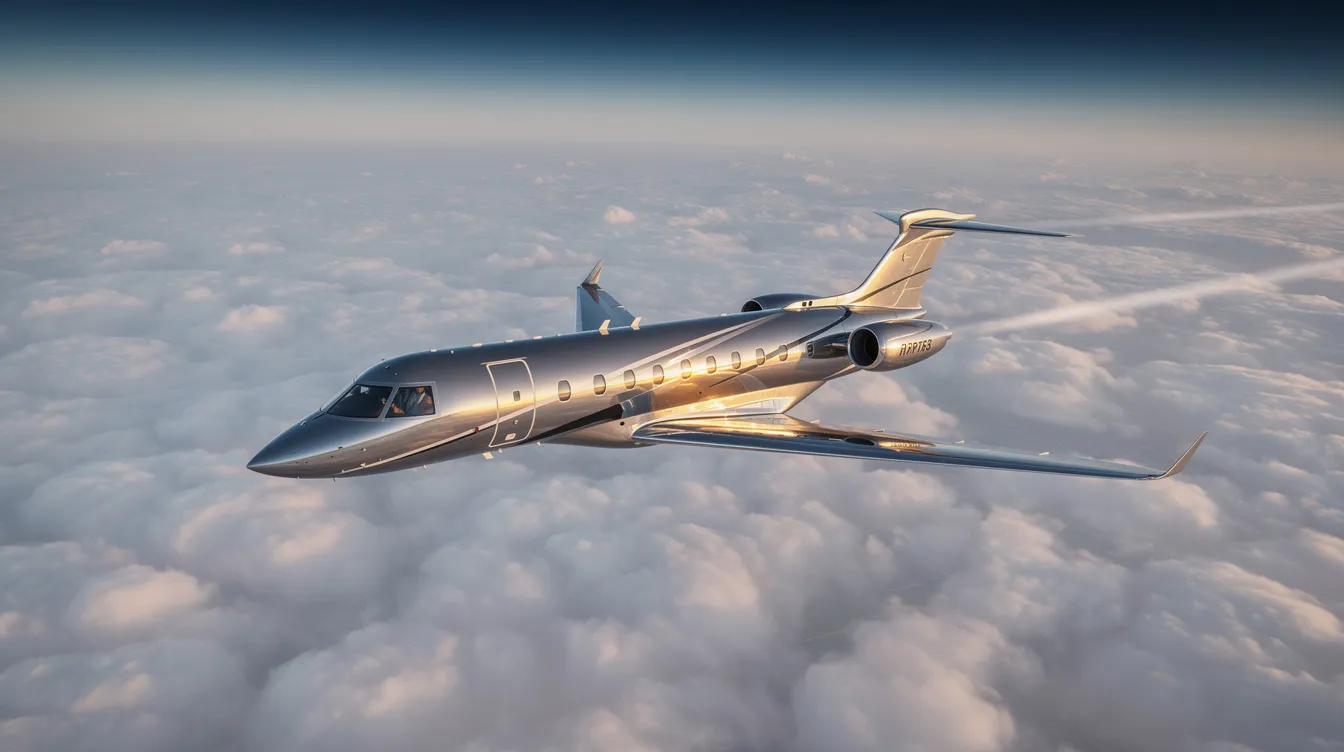
The airplane engine sitting beneath the wing or mounted at the rear of a private jet is far more than a powerplant—it determines how fast you arrive, how far you can fly nonstop, how quiet the cabin stays, and how safely you travel. For the discerning traveler, understanding the line between a piston engine and a modern turbofan is understanding the difference between adequate travel and a genuine strategic advantage.
Why Aircraft Engines Matter for High-End Private Travel
Private aviation exists to eliminate wasted time, and the aircraft engine is the single largest factor in that equation. A modern turbofan-powered midsize jet covers New York to Miami—roughly 1,100 nautical miles—in about two and a half hours, gate to gate. The same trip on a commercial airline, factoring in connections, security, and ground time, routinely consumes five to six hours. London to Geneva? A high-speed turbofan or turboprop engine covers it in under an hour; commercial schedules and transfers stretch it past three.
BlackJet's Jet Card membership gives clients access to a curated fleet spanning light jets, midsize and large-cabin jets, and efficient turboprops—without the capital cost, maintenance burden, or depreciation of ownership.
Every flight operates under rigorous safety certifications (IS-BAO, Wyvern, ARG/US), strict engine maintenance standards, and carbon-neutral protocols.
Members fly on aircraft equipped with engines selected to match their route, passenger count, and airport requirements—performance matched to purpose.
Fundamentals: What Is an Aircraft Engine?
An aircraft engine converts chemical energy from fuel into kinetic energy, producing the thrust or shaft power that allows an airplane to fly. The category spans two broad families, each with distinct strengths.
Piston engines (reciprocating engines): cylinders, pistons, and a crankshaft drive a propeller. They operate similarly to car engines by moving pistons inside cylinders. Think of a Cessna trainer powered by a Lycoming four-cylinder—reliable, proven, but limited in speed and altitude.
Jet engines (gas turbines): air is compressed, mixed with fuel, ignited, and the resulting hot expanding gases spin turbine stages that produce thrust or drive a propeller. A turboprop engine includes an intake, compressor, combustor, and turbine.
Historical contrast: the Douglas DC-3 of the 1930s relied on radial piston engines producing roughly 1,200 hp each, cruising near 180 knots. A 2025 Gulfstream G700 uses high-bypass turbofan engines, cruises at Mach 0.85, and can carry passengers over 7,000 nautical miles nonstop.
Subtypes include turbojet, turbofan, turboprop, and turboshaft engine designs—each form optimized for a different mission in the world of aviation.
How a Jet Engine Works: From Inlet to Combustion Chamber to Exhaust
Airplane engines convert fuel energy into forward motion through what pilots and engineers sometimes call the "suck, squeeze, bang, blow" cycle, which propels the aircraft forward. Gas turbines work on the principle of Newton's third law of motion: exhaust leaves rearward, pushing against the back of the engine, and an equal, opposite force pushes the plane forward.
Intake: Jet engines suck in air at the front with a fan. As air flows through the front inlet, it is slowed and stabilized before reaching the compressor.
Compression: the compressor raises the air pressure significantly—turbojet engines compress air to 3 to 12 times its original pressure, while modern turbofans achieve ratios of 20:1 or higher. High pressure ratios in the compressor improve overall thermal efficiency. The throttle controls the volume of air entering the engine.
Combustion: fuel is mixed with compressed air in the combustor, where the mixture is ignited. Jet engines can reach temperatures up to 2,700°F in the combustor—hot enough to melt most metals without advanced cooling.
Turbine: the turbine spins to drive the compressor and fan, extracting energy from the hot gases that rush through its blades.
Exhaust: hot gases expand and exit through the nozzle, creating thrust. The aircraft is propelled by this continuous cycle of air moving through the core at high speed and being pushed rearward as exhaust.
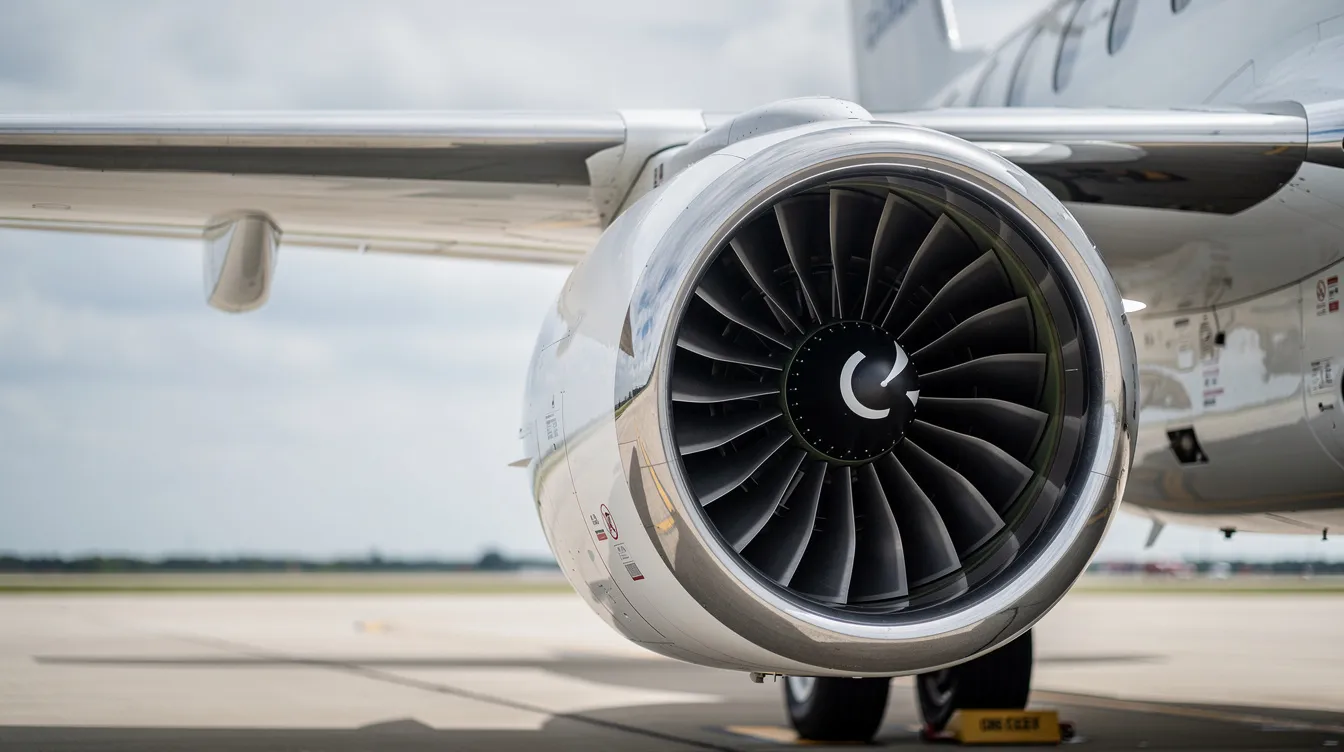
Key Components of a Modern Jet Engine
Fan: The large front stage that moves a large volume of air. In a high-bypass turbofan, most of this air bypasses the hot core, producing quieter, more efficient thrust.
Compressor: Low-pressure and high-pressure compressor stages squeeze air entering the core to many times atmospheric pressure before combustion, with compressed air heated by the process itself.
Combustion chamber: The combustor mixes air with fuel and ignites it. This is where the heated mixture reaches peak temperature—the fire at the heart of every gas generator cycle. The main components of a turbofan engine are the fan, compressor, combustion chamber, turbine, and nozzle.
Turbine: Turbine blades—often single-crystal alloys with ceramic coatings—extract energy from the hot air and gases to drive the compressor and fan via concentric shafts. Advanced cooling passages keep each engine part operating safely despite extreme temperatures.
Nozzle: The exhaust nozzle converts high-pressure gases into high-velocity jet flow, generating the thrust that pushes the aircraft forward. In some installations, bypass air and core exhaust are mixed at the rear for improved efficiency and noise reduction.
Types of Jet Engines Used in Private and Commercial Aviation
Turbojets: Characterized by all intake air passing directly through the engine core. Historically used on 1950s airliners and supersonic aircraft, they produce large quantities of thrust but burn fuel at rates that make them impractical for modern business aviation. Ramjets, a related concept, have no moving parts and rely on forward speed—used mainly in military and research applications.
Turbofans: The turbofan is the most prevalent type of gas turbine engine in modern commercial aircraft. Turbofan engines are commonly used in modern airliners and business jets alike. Turbofans maximize thrust while minimizing noise and fuel consumption by bypassing cold air around the engine core. High-bypass turbofans are fuel-efficient and quieter than low-bypass turbofans. The bypass ratio influences modern engine efficiency by determining the proportion of air that bypasses the core, and turbofans use a large bypass ratio to improve propulsive efficiency.
Turboprops: A gas turbine driving a fixed propeller. Turboprops are highly fuel-efficient at lower altitudes and slower speeds, and turboprop engines are efficient below 500 mph flight speeds—ideal for sectors of 300–600 nautical miles. Aircraft like the Pilatus PC-12 are capable of operating from short or unpaved runways.
Turboshaft engines: Turboshaft engines provide power for helicopter rotors, converting turbine energy into shaft rotation rather than direct thrust. They are the standard powerplant for rotorcraft search and rescue, offshore, and executive helicopter operations across the world.
Piston Engines vs Jet Engines in Aviation
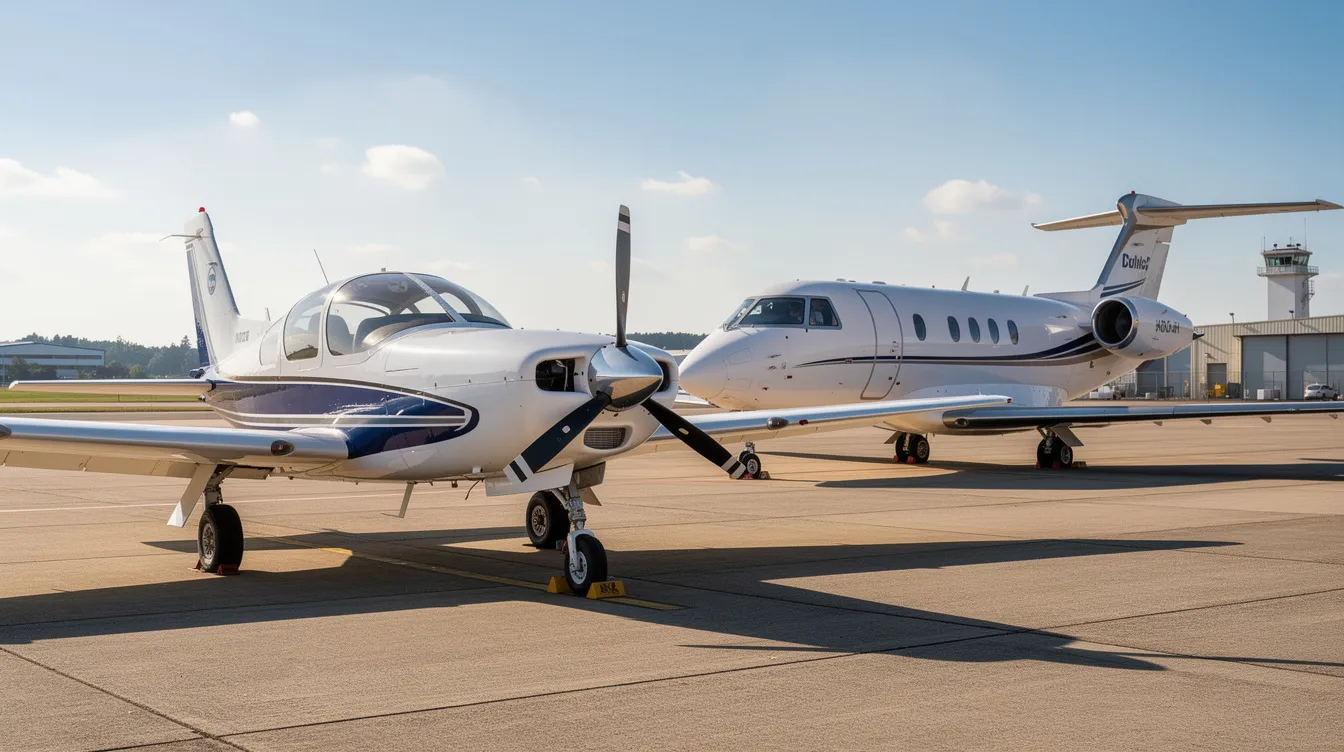
Piston engines dominate smaller general aviation aircraft—trainers, personal planes, feeder services—while jet engines power the business jets and airliners that carry executives across continents. The differences are fundamental.
Feature | Piston Engines | Jet Engines |
|---|
Power Mechanism | Use cylinders, a crankshaft, and a propeller to produce power | Use gas turbines to produce thrust from hot, high-velocity exhaust |
Typical Aircraft | Cessna with a six-cylinder Lycoming engine | Business jets, airliners with turbofan engines |
Cruise Speed | 120–180 knots | High subsonic cruise (Mach 0.78–0.90) |
Altitude | Generally below FL200 | FL400 and above |
Thrust-to-Weight | Lower | Far exceeds piston engines at full power |
Operating Costs | Lower upfront price, but limited speed and comfort | Higher per-hour fuel burns, but greater range and efficiency for time-critical travel |
Use in BlackJet | Mainly in feeder or training aircraft | Jet Card programs provide access to turbofan and turboprop aircraft for performance flights |
Operating costs differ: piston engines carry a lower upfront price, but their speed and comfort limitations make them impractical for time-critical business travel. Jet card pricing structures help frequent flyers align higher-per-hour fuel burns from jet engines with predictable budgets while still delivering the range and ground-to-air efficiency that frequent travelers require.
In BlackJet's ecosystem, piston engines appear mainly in feeder or training aircraft. Jet Card programs provide access to turbofan and turboprop aircraft, ensuring every flight meets the performance standards members expect.
Hybrid and Emerging Engine Concepts
Geared Turbofans
Hybrid Regional Jet Concepts
Open-Rotor and Hybrid-Electric Systems
Open-rotor propfan designs and hybrid-electric assistance systems are under active research, targeting 10–20% emission reductions on regional and business routes.
BlackJet monitors these developments, ensuring its partner fleet transitions over time to more efficient, lower-emission aircraft engines as new powerplant options reach certification and continues leveraging the ability of private jets to cruise higher than commercial flights for smoother, more efficient routes.
Aircraft Engine Placement, Numbering, and Redundancy
Engine placement and redundancy are not academic details—they directly affect cabin noise, runway performance, and safety during rare failures.
Standard numbering runs left to right from the pilot's perspective: on a four-engine aircraft like the Boeing 747, engine No. 1 is the outer left, No. 4 the outer right. Special cases exist—on the historic English Electric Lightning, engines were stacked vertically, with No. 1 being the lower engine.
Most business jets use two engines, and certification requires demonstrated engine-out climb performance. Pilots train extensively for these scenarios, and regulatory standards (FAR 25.121) mandate safe climb gradients with one engine inoperative.
Placement matters: rear-fuselage-mounted engines reduce cabin noise; wing-mounted turboprops allow shorter ground rolls. The installation of engines on high-wing turboprops enables operations from airfields where larger jets cannot safely land, and understanding the different types of jet engines helps explain why certain airframes favor specific placements.
BlackJet selects operators whose aircraft meet or exceed regulatory engine redundancy criteria and whose safety ratings reflect top-tier engine maintenance programs.
Fuel Types and Environmental Considerations
Most piston engines use aviation gasoline (Avgas), historically leaded (100LL). Ongoing efforts in the 2020s aim to transition to unleaded formulations for environmental and health reasons.
Jet engines and turboprops run on Jet A or Jet A-1—kerosene-based fuels that spray fuel efficiently into the combustion system at high altitude and low temperature.
Sustainable aviation fuel (SAF) is a drop-in replacement that can reduce lifecycle CO₂ emissions by up to 80%. In 2025, SAF represented approximately 0.6% of global airline fuel consumption, with production nearly doubling year over year.
BlackJet operates every flight on a carbon-neutral basis through verified carbon offsets and, where available, SAF usage across partner fleets—at no extra cost to members.
Safety, Reliability, and Maintenance of Aircraft Engines
Aircraft engines are engineered for extraordinary reliability. Modern turbine engines typically have a lifespan of about thirty years and achieve time between overhaul (TBO) intervals of 3,500–6,000+ flight hours, compared to 1,200–2,400 hours for piston engines.
New engine certification under FAA Part 33 requires multi-year testing: bird-strike resistance, cyclic fatigue, failure-mode analysis, and emissions compliance. Developing an aircraft engine takes around eight years and billions of dollars.
Five manufacturers dominate the global aircraft engine market by 2025, and the last successful entry into the jet engine market was in the 1970s—a testament to the barriers of certification, capital, and expertise. Jet engine manufacturers have reported shareholder returns of 100 to 1,000 percent over long horizons, and manufacturers profit mainly from maintenance services and spare parts sales rather than initial engine sales.
Routine Maintenance and Overhaul
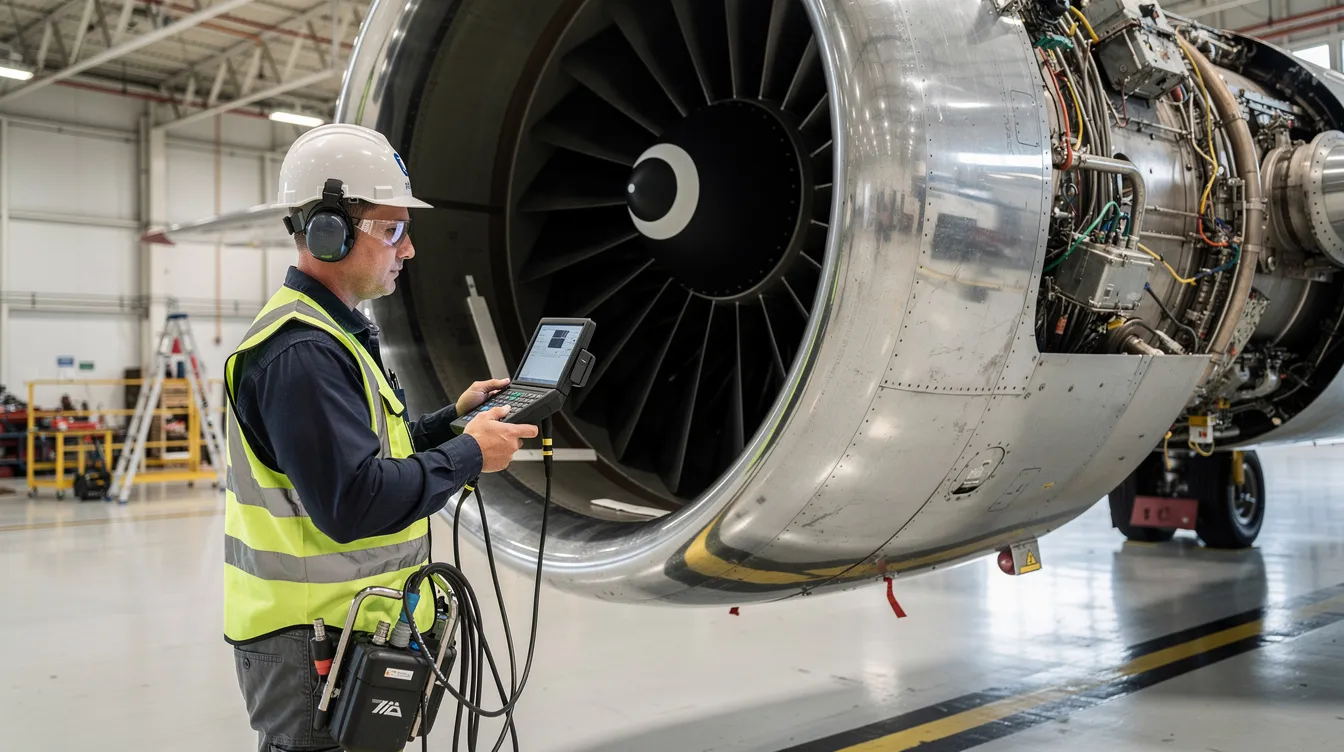
Ongoing maintenance includes routine inspections, borescope checks of compressor and turbine blades, hot-section inspections, and planned overhauls. Many operators use "power by the hour" contracts, where the manufacturer handles long-term maintenance and parts supply for a fixed per-hour rate.
BlackJet partners exclusively with operators that adhere to or exceed international safety standards, ensuring every engine is maintained to top-tier specifications. You can shop for aircraft on BlackJet's website; it is confident that every option meets rigorous safety benchmarks, similar to the standards highlighted among the top private jets in the world.
Redundancy in Ignition and Fuel Systems
In many piston aircraft engines, aircraft engines have two spark plugs in each cylinder for redundancy, delivering more complete combustion of the fuel-air mixture and ensuring the engine continues to produce power even if one ignition system fails.
Dual magnetos provide independent ignition circuits—if one magneto suffers a fire or failure, the other keeps the engine running safely.
Redundancy in Turbine Engines
Modern turbine engines feature redundant fuel pumps (engine-driven and electric boost), multiple fuel control channels via FADEC, and forced redundancy in every critical system to prevent single-point failures.
These design choices contribute to the consistently low in-flight shutdown rates recorded by modern jet engines—often single-digit events per 100,000 engine flight hours.
Aircraft Engines in the Context of BlackJet Jet Card Programs
Engine technology is the invisible force behind every BlackJet experience—speed, range, runway flexibility, and cabin quiet all trace back to the engines on each aircraft, particularly for members using the BlackJet 25+ Hour Jet Card.
Light jets with compact turbofans handle regional hops of 500–1,000 nm, reaching destinations like New York to Chicago in under two hours, often serving as the core of more affordable private jet options for first-time private flyers.
Midsize and large-cabin jets with higher-thrust turbofans cover transcontinental or intercontinental routes, capable of flying nonstop from New York to London or Los Angeles to Tokyo, similar to ultra-long-range private jets for sale that enable seamless global travel.
Turboprops serve shorter runways and sectors under 600 nm with exceptional fuel efficiency, bringing travelers closer to final destinations at remote or regional airfields and echoing many models featured among private jets for sale under 10 million.
Sample scenario: An executive uses a 25-hour Jet Card for monthly New York–Chicago round-trips on a midsize jet. Departing from a private terminal, the jet's engines bring the airplane to rotation speed in seconds, climbing above the weather to cruise at FL450. Total door-to-door time: roughly three hours, compared to five or more on a commercial flight with ground delays—an efficiency gain that often justifies the investment in a 50-hour jet card program for heavy users. The energy saved isn't just fuel—it’s the executive's most valuable resource: time.
BlackJet's digital booking platform presents aircraft options alongside performance metrics—range, cruise speed, cabin size—all rooted in engine capabilities, whether you’re chartering a compact light jet or evaluating the best private jet for 20 passengers. Members benefit from cutting-edge engine performance without managing technical details themselves, even when trips call for large private jets for up to 50 passengers on complex group itineraries.
Why Engine Type Influences Your Private Flight Experience
Jet engines enable cruise altitudes above most weather (FL400+), delivering smoother rides—an important comfort factor on long business or leisure trips where passengers need to arrive rested and productive.
Block time comparisons on a 500-mile route: a piston aircraft takes roughly 3+ hours; a turboprop covers it in about 2 hours; a light jet, under 1.5 hours. The airflow dynamics and thrust of each engine type translate directly into time saved as jets cruise higher and faster than airlines on comparable routes, a key factor for travelers evaluating whether a 100-hour jet card cost aligns with the time savings they expect.
Cabin noise varies significantly: turbofans are the quietest, turboprops produce moderate propeller noise, and piston engines generate noticeable vibration—differences that affect whether you can hold a conference call or sleep en route, an important comfort factor when comparing the best jet cards for frequent flyers.
Certain light jets and turboprops powered by efficient engines allow access to shorter regional airfields with runways under 4,000 feet, bringing travelers closer to their final destination and eliminating lengthy ground transfers, whether on regional hops in North America or bespoke routes such as private jet charters in Karachi.
Frequently Asked Questions About Airplane Engines
What's the difference between a jet engine and a piston engine?
A jet engine uses continuous combustion in a gas turbine to produce thrust from hot, high-velocity exhaust. A piston engine uses reciprocating cylinders and a crankshaft to turn a propeller—effective for slower, shorter flights but limited in speed and altitude.
How safe are modern aircraft engines?
Extremely. Modern turbofan engines record in-flight shutdown rates in the single digits per 100,000 flight hours. Redundant ignition, fuel, and control systems ensure safe operation even during component failure.
What engines power most private jets today?
The majority use turbofan engines—specifically, medium- to high-bypass designs like the Pratt & Whitney PW300 family, which has surpassed 6,000 engines produced and delivers 4,700–8,000 pounds of thrust per engine.
How do aircraft engines fit into carbon-neutral and sustainable aviation initiatives?
Through SAF adoption, verified carbon offsets, and next-generation engine efficiency improvements. BlackJet ensures every flight is carbon neutral, combining these approaches seamlessly.
Do I need to understand aircraft engines to choose a jet with BlackJet?
Not at all. BlackJet's team and digital platform match aircraft to your route, passenger count, and preferences. You get the performance—we handle the engineering.
Elevate Your Travel: Choosing Engine Performance Through BlackJet
Every private flight begins with an engine—and the technology behind that engine shapes your entire experience, from how quickly you reach cruising altitude to how quietly you work at 45,000 feet. BlackJet ensures you access a vetted network of aircraft with modern, meticulously maintained jet engines and turboprops, delivering safety, speed, and sustainability without the complexity of ownership.
24/7 flight support and real-time digital booking put the right aircraft at your fingertips, every time.
Carbon-neutral operations come standard—no extra cost, no compromise.
Jet Card programs (25-hour, 50-hour) offer the flexibility to fly on your terms, across cabin classes and engine types, and understanding broader jet card pricing and how specific providers like NetJets structure their jet card costs can help you benchmark value in the market.
Explore BlackJet's Jet Card programs and discover how refined, purpose-driven travel becomes your new standard, whether you prefer on-demand charter or ultimately owning a premium UK private jet.


 Sign up with google
 Sign up with Apple