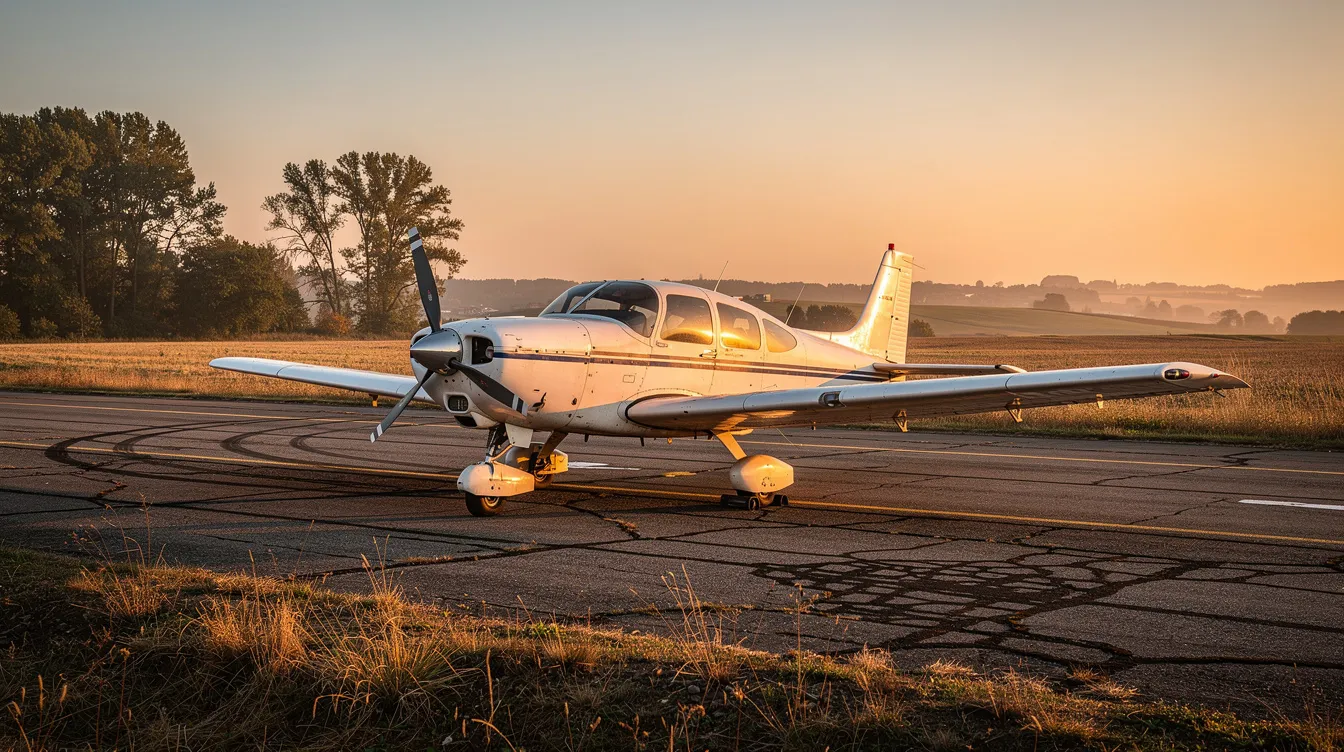
Fuel is the single largest variable expense most aircraft owners face—and one of the biggest cost drivers behind private charter rates. In mid-2026, fueling a small plane such as a four-seat Cessna 172 typically costs about $45-$65 per hour, based on 100LL avgas at roughly $5.50-$7.50 per gallon and a burn rate of 5 to 10 gallons per hour. Whether you're a private pilot, prospective aircraft owner, frequent business traveler, or high-net-worth leisure traveler evaluating ownership costs or Jet Card programs, knowing that baseline gives you a clearer view of what each flight really costs.
From there, the picture gets more specific by aircraft type and fuel type, including 100LL avgas and Jet A, as well as the factors that change fuel burn and hourly expense—region, routing, payload, maintenance condition, and operating profile. This guide breaks down fuel costs across common small aircraft, shows how to budget for them, explains how maintenance affects efficiency, touches on environmental considerations, and clarifies how fuel-cost management differs for owners versus Jet Card users so you can make smarter buying, budgeting, and membership decisions in private aviation.
Quick Answer: Typical Fuel Cost to Run a Small Plane
In mid-2026, a private pilot flying a standard four-seat Cessna 172 can expect to pay roughly $45–$65 per hour in fuel alone. That rough estimate comes from a simple reality: small single-engine planes burn 5 to 10 gallons per hour in cruise, and 100LL avgas currently runs about $5.50–$7.50 per gallon across U.S. airports. The average fuel cost for small planes hovers near $5 per gallon at lower-cost fields, though most pilots pay closer to $6.50 at typical FBOs.
A private pilot flying 100 hours annually spends $2,500 to $5,000 on fuel, depending on aircraft type and regional fuel prices. Annual fuel costs for a private pilot can reach $5,000 or more at busier, higher-priced airports.
Fuel cost per hour equals burn rate multiplied by price per gallon—a formula that scales predictably whether you're flying a trainer or a turboprop.
A small turboprop like the Pilatus PC-12 burns 55–65 gallons per hour of Jet A, pushing fuel expenses to $220–$360 per hour at current jet fuel prices.
For some owner-operators, fuel costs may account for 70% of operational expenses once the initial purchase price is paid off.
While BlackJet members don't typically buy fuel directly, these underlying fuel consumption figures drive Jet Card and charter hourly rates and ultimately shape Jet Card cost per hour. Understanding fuel burn by aircraft type helps explain why different cabin classes carry different price tags.
Small Plane Fuel Types: 100LL Avgas vs. Jet A
For this article, "small plane" covers piston singles and light twins running on 100LL avgas, plus small turboprops burning Jet A aviation fuel. The fuel types differ in chemistry, price, and the engines they serve.
100LL avgas is a leaded aviation gasoline rated at 100 octane, used by most training and recreational aircraft—Cessna 150/172, Piper Cherokee, Cirrus SR22, and similar single-engine planes. In 2026, 100LL costs $5.50–$7.50 per gallon, well above what you'd pay at any gas station, due to small production volumes, specialized additives, and regulatory handling costs for leaded fuel.
Jet A is a kerosene-type fuel powering turbine engines in turboprops and business jets. Jet A is primarily used in the United States, while Jet A-1 is more common worldwide than Jet A, distinguished partly by its lower freeze point of -40�6. Jet A fuel prices range from $3 to $8 per gallon depending on whether you're looking at wholesale benchmarks or full-service FBO retail.
Emerging alternatives: Unleaded avgas replacements are under development, and Sustainable Aviation Fuel (SAF) is available at select airports for turbine aircraft. SAF costs $6–$12 per gallon in 2026� — a significant premium —� but promises major emissions reductions.
BlackJet's fleet access centers on Jet A aircraft, but many prospective members first encounter aviation fuel costs through small 100LL planes during flight training, making it useful to understand the different types of jet fuel and where each is used.
Key Drivers of Fuel Cost: Price Per Gallon and Fuel Consumption
Total fuel cost is straightforward arithmetic: price per gallon fuel burn (gallons per hour flight time. But aircraft specs alone never tell the whole story, because other factors also affect actual fuel use and what you pay.
Price per gallon drivers:
Crude oil prices affect aviation fuel prices directly, and crude oil prices typically account for over half of jet fuel costs. When oil prices rise, aviation fuel follows within days.
Environmental or local taxes can add extra costs to aviation fuel. Environmental regulations and taxes increase aviation fuel prices further, particularly in states with aggressive carbon mandates.
Airport fees, into-plane charges, and local taxes mean fuel prices can vary significantly by airport and location depending on where you choose to refuel.
Fuel consumption drivers:
A 100 hp trainer like a Cessna 150 burns roughly 6 gallons per hour; a 230 hp Cessna 182 cruiser consumes about 12 gph; multi-engine planes like a Piper Seminole burn 18�0 gph combined.
Fuel consumption tends to be higher during the climb phase of flight compared to cruising, which means short-hop flights with frequent climbs burn proportionally more fuel.
Weight, altitude, and power setting all matter. More passengers, more baggage, and lower altitudes increase fuel burn and reduce fuel efficiency.
Across commercial flights, fuel costs account for 20% to 40% of airline operating expenses. For private aviation, the percentage is often even higher due to smaller aircraft and shorter legs. In private jet travel, heavy jets may burn 250�50 gph, making fuel the dominant share of the hourly rate.
Real-World Examples: How Much Fuel for Common Small Aircraft Types?
Numbers become meaningful when attached to specific aircraft. Here's how much fuel common small planes actually consume and what it costs in 2026.
Cessna 172: Burns 8�9 gph of 100LL in cruise. A 2-hour round trip at $6.50 per gallon costs roughly $105�120 in fuel. This is the benchmark most buyers and student pilots use when evaluating small plane purchase economics.
Cirrus SR22: A high-performance single burning 14�17 gph at cruise yields about $90�110 per flight hour at mid-range average fuel prices. The added speed and glass cockpit come at nearly double the Cessna's fuel use.
Beechcraft Baron 58: This light twin consumes 26�32 gph combined across both engines, pushing fuel expenses to $170�210 per hour. The jump from single- to multi-engine planes is not linear—it's steep.
Pilatus PC-12 / King Air C90 (turboprop): Burning 50�70 gph of Jet A, a 3-hour business hop uses roughly 180 gallons. At $4.50 per gallon, that's around $810 in jet fuel costs for a single trip—before crew, maintenance, or airport fees.
BlackJet's aircraft selection guidance considers both fuel burn and mission profile, ensuring members fly the right aircraft for the distance and passenger count without paying for unnecessary fuel consumption� — an important lens when comparing the broader private jet price list and access options available in the market.
Aircraft Type | Fuel Burn (gph) | Fuel Type | Cost per Gallon | Estimated Fuel Cost per Hour |
|---|
Cessna 172 | 8-9 | 100LL | $5.50-$7.50 | $45-$65 |
Cirrus SR22 | 14-17 | 100LL | $5.50-$7.50 | $90-$110 |
Beechcraft Baron 58 | 26-32 | 100LL | $5.50-$7.50 | $170-$210 |
Pilatus PC-12 | 55-65 | Jet A | $3-$8 | $220-$360 |
King Air C90 | 50-70 | Jet A | $3-$8 | $225-$560 |
BlackJet's aircraft selection guidance considers both fuel burn and mission profile, ensuring members fly the right aircraft for the distance and passenger count without paying for unnecessary fuel consumption—an important lens when comparing the broader private jet price list and access options available in the market.
Regional Fuel Price Differences and Airport Choice
Where you refuel matters almost as much as what you fly. Geographic location significantly impacts airport fuel prices, and fuel prices can vary 20–50% between airports in the same region.
A rural airport or Midwest non-towered field can be a lower-cost refueling and storage option than a busier urban field, with 100LL at $5.80 per gallon while a coastal Class B airport charges $7.50 or more. AirNav's national fuel survey shows 100LL ranging from $4.35 to over $16 at certain airports in Alaska.
Full-service fueling often incurs additional fees compared to self-service pumps. At airports that offer both, self-serve 100LL can be 10–20% cheaper. Some operators also cut fuel spend through negotiated volume discounts when buying larger amounts or using airports with multiple FBOs.
Experienced aircraft owners and pilots use online fuel-price tools to plan strategic fuel stops, sometimes adding a short leg to refuel where competitive fuel prices are available—and save money on the overall trip.
For private aviation customers, BlackJet's operations teams factor airport-level fuel prices into route planning. This keeps all-in hourly rates competitive for Jet Card members without sacrificing convenience or safety at the airports they prefer, and pairs well with choosing the cheapest private aircraft options that still meet your mission profile.
From Fuel Cost Per Hour to Cost Per Trip
Converting hourly fuel burn into a per-trip budget is a three-step process any small plane owner or charter client can follow.
Determine hourly fuel burn (gph) for your aircraft type at planned cruise settings.
Multiply by current fuel price per gallon at your departure or fuel-stop airport.
Multiply by planned flight hours, adding a buffer for taxi, climb, descent, and reserves. Reserve fuel requirements vary between daytime VFR and nighttime VFR operations, so plan accordingly.
Leisure trip example: A Cessna 172 burning 9 gph on a 3-hour round trip (1.5 hours each way) at $6.80 per gallon. Total fuel: 27 gallons $6.80 = approximately $184. With taxi and climb allowances, budget around $200.
Business trip example: A turboprop covering 500 nm at 60 gph and $4.25 per gallon of Jet A. Flight time � : 1.7 hours. Total fuel: ~102 gallons at $4.25 = roughly $434. Add reserves, and you're approaching $500 in fuel expenses for a single leg.
Choosing efficient flight paths can reduce fuel consumption by 20 30%, a tactic that matters on longer flights because better routing also helps lower overall travel costs. For BlackJet clients, these calculations are embedded in transparent hourly pricing—but understanding the fuel component clarifies why larger aircraft types and remote airports carry higher costs and how they flow through into overall jet card pricing structures.
Fuel Cost, Maintenance, and Inspection Costs: How They Interact
You cannot evaluate fuel costs in isolation. Aircraft condition and upkeep are an important factor in total operating and ownership economics because they directly affect how much fuel your plane burns on every flight.
Poor maintenance—dirty spark plugs, incorrect magneto timing, clogged air filters—can increase fuel burn by 3 10%, quietly inflating fuel expenses over hundreds of hours.
Annual inspections for small piston aircraft typically run $800 2,000 in 2026. Catching a failing fuel injector or a leaking exhaust during these inspections prevents wasted fuel and avoids far larger repair bills. Inspection costs and maintenance costs are investments in fuel efficiency, not just safety.
Specialized planes with retractable gear, turbocharged engines, or pressurized cabins carry both higher maintenance and storage costs and steeper fuel consumption. Ownership costs compound when these overlooked maintenance, inspection, and storage burdens become additional costs during budgeting beyond the initial purchase price.
Larger private jet aircraft in BlackJet's network undergo rigorous safety and maintenance oversight, preserving the predictable fuel burn assumptions built into Jet Card pricing and the specific terms of the BlackJet 25+ Hour Jet Card. That level of greater control over aircraft condition is difficult—and expensive—for individual owners to replicate.
Environmental Considerations: Fuel Burn, Emissions, and SAF
Fuel use in small planes directly produces carbon emissions—roughly 2022 pounds of CO0 per gallon burned. For pilots and private flyers weighing environmental considerations alongside cost, several factors are worth noting.
More fuel-efficient aircraft types and careful flight planning reduce both annual expenses and environmental impact simultaneously. Even a modest altitude or power-setting adjustment can cut fuel burn measurably.
Sustainable Aviation Fuel is now available at select U.S. and European airports for turbine aircraft. Typical SAF blends (up to 50% with Jet A) can cut lifecycle emissions by up to 80%. However, the 24x jet fuel price premium remains a barrier to widespread adoption, particularly for travelers focused on the cheapest private jet options and entry-level operating costs.
U.S. tax incentives under the Inflation Reduction Act and EU regulatory mandates are gradually narrowing the SAF price gap, making green private jet options increasingly viable and intersecting with strategies to optimize jet card tax deductions for sustainability-minded business travelers.
BlackJet's commitment to carbon-neutral flights means fuel burn data from every trip is used to calculate and purchase verified offsets—at no extra cost to members. Environmental regulations and taxes increase aviation fuel prices industry-wide, but they also accelerate the shift toward cleaner alternatives.
Frequently Asked Questions (FAQs) About Fueling Small Planes
How much does it cost to fuel a small plane per hour?
Fueling a small plane like a Cessna 172 typically costs between $45 and $65 per hour, based on fuel burn rates of 5 to 10 gallons per hour and 100LL avgas prices ranging from $5.50 to $7.50 per gallon.
What is the difference between 100LL avgas and Jet A fuel?
100LL avgas is a leaded aviation gasoline used primarily in piston-engine aircraft, while Jet A is a kerosene-based fuel used in turbine engines like turboprops and jets. Jet A generally costs between $3 and $8 per gallon, whereas 100LL avgas is more expensive due to specialized additives.
Why do fuel prices vary by airport?
Fuel prices vary due to geographic location, local taxes, airport fees, and whether fueling is full-service or self-service. Prices can differ by 20% to 50% between airports even within the same region.
How do fuel surcharges affect private jet travel costs?
Fuel surcharges are additional fees applied when fuel prices exceed certain thresholds. They can increase charter or Jet Card hourly rates and are often indexed to market fuel price benchmarks.
How can I manage or reduce fuel costs when flying privately?
Choosing fuel-efficient aircraft, planning routes to avoid unnecessary repositioning, refueling at airports with lower fuel prices, and booking trips in advance can help reduce fuel expenses.
What role does maintenance play in fuel efficiency?
Proper maintenance ensures engines run efficiently, reducing fuel burn by 3-10%. Neglecting maintenance can increase fuel costs and lead to higher operating expenses.
Is Sustainable Aviation Fuel (SAF) available for small planes?
SAF is currently available for turbine-powered aircraft at select airports. It costs $6 to $12 per gallon and offers significant carbon emissions reductions but is not yet widely available for piston-engine planes using 100LL.
How much of total operating costs does fuel represent?
Fuel costs can account for 20% to 40% of airline operating expenses and up to 70% of operating costs for small plane owners once purchase costs are amortized.
Does BlackJet include fuel costs in Jet Card pricing?
Yes, BlackJet's Jet Card programs incorporate real-time fuel data into fixed or semi-fixed hourly rates, protecting members from fuel price volatility and fuel surcharges.
Where can I find current aviation fuel prices?
Websites like AirNav provide up-to-date fuel price surveys by airport. Additionally, platforms like BlackJet and other private aviation providers offer fuel-inclusive pricing information for their services.
Planning and Budgeting Fuel Costs: Owners vs. Private Jet Users
Fuel budgeting looks fundamentally different depending on whether you own a plane or access one through a Jet Card program, and understanding jet card pricing and benefits as well as how to compare the best jet cards for frequent flyers is central to evaluating those trade-offs.
For aircraft owners:
Start with projected flight hours per year, multiply by your aircraft's average fuel burn in gallons per hour, then apply a realistic fuel price per gallon. A Cessna 172 owner flying 100 hours at 8.5 gph and $6.50 per gallon should budget roughly $5,525 annually for fuel alone, which is why many compare that outlay to simply chartering the cheapest private aircraft for similar missions instead of owning.
Build a 1520% margin into your budget. Market fluctuations driven by oil prices and geopolitical tensions mean aviation fuel prices can move 1020% in a few months. Global jet fuel prices can swing 10% or more within a single week during supply disruptions, which is especially important if you are considering leasing a private jet and taking on longer-term operating cost exposure.
For context, U.S. airline aviation fuel cost averaged $3.13 per gallon in March 2026 at the wholesale level. A single-cent increase in fuel price can add $40 million annually for airlines—imagine the proportional impact on an individual owner paying retail. Aviation fuel represents 20%–40% of airline operating costs, and for most buyers of small planes, the percentage of total annual expenses consumed by fuel is even higher under current market conditions—figures that frame the broader private jet price list and ownership economics.
For private jet users:
Fuel costs appear indirectly through hourly charter rates, fuel surcharges, or all-inclusive Jet Card pricing. You never stand on a ramp watching the meter tick—but you benefit from understanding what drives the numbers, how jet card cost per hour compares across providers, and what each program's jet card pricing model includes or excludes.
BlackJet's fixed or semi-fixed hourly rates, backed by real-time fuel data and sophisticated scheduling technology, shield members from day-to-day market conditions and fuel price swings while keeping pricing aligned with actual fuel consumption across light jets and larger cabin classes, especially within the BlackJet 25+ Jet Card program.
Whether you're managing your own ultralight aircraft and single-seat trainers or flying cross-country in a private jet, the pilots association principle holds: know your fuel numbers, plan conservatively, and choose partners who manage the complexity for you—including when you buy a seat on a private jet instead of chartering an entire aircraft.
Explore how BlackJet's Jet Card programs can deliver predictable access to premium aircraft—without the operational complexity, volume discount negotiations, or fuel price risk that come with personal aircraft ownership. Discover how BlackJet can reshape your travel at blackjet.com.


 Sign up with google
 Sign up with Apple