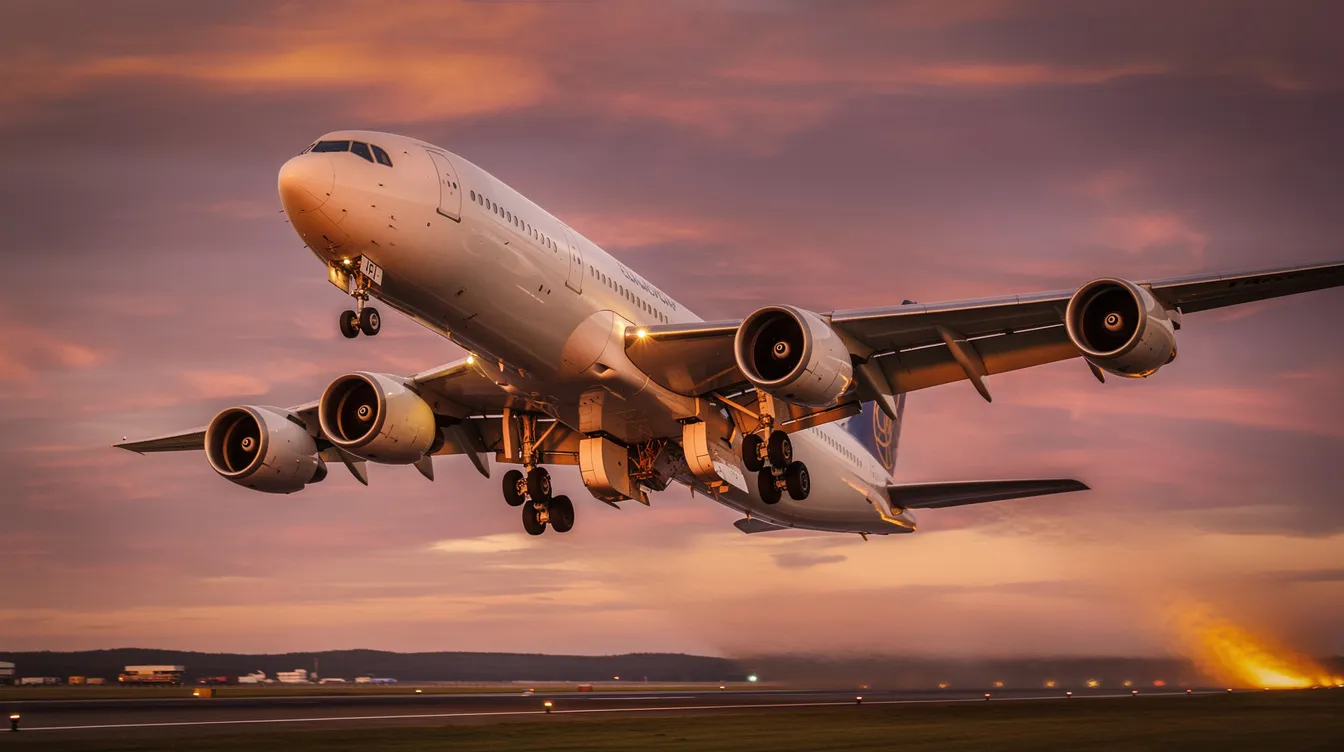
The Boeing 747 defined long-haul travel for over five decades. Whether you are comparing aircraft for a transatlantic flight or simply curious about the dimensions of the Queen of the Skies, the answer to "how long is a 747 in feet" reveals more than a number; it unlocks a broader conversation about cabin layout, runway length requirements, airport access, and why modern travelers increasingly choose right-sized private aircraft over jumbo jets.
Quick answer: how long is a Boeing 747?
The length of a Boeing 747 ranges from 231 feet to 250 feet, depending on the variant. A standard Boeing 747-400 measures approximately 231 feet 10 inches (70.66 m) from nose to tail. The Boeing 747-8 stretches to 250 feet 2 inches (76.25 m), making it the longest commercial aircraft built by Boeing and the longest ever produced in the United States.
When people ask how long a 747 is in feet, they are referring to overall fuselage length, measured from the tip of the nose cone to the end of the tail. This excludes wingspan, tail height, and internal cabin length.
Variant | Length (ft-in) | Length (m) |
|---|
747-100 / 747-200 / 747-300 | 231 ft 10 in | 70.66 m |
747-400 | 231 ft 10 in | 70.66 m |
747SP | 184 ft 9 in | 56.31 m |
747-8 (passenger and freighter) | 250 ft 2 in | 76.25 m |
For perspective, a Bombardier Global 7500 measures about 111 ft in length and a Gulfstream G650 about 99 ft. Both are classified as large-cabin, long-range private jets, yet each is less than half the length of a 747-8. That size gap drives every downstream difference: how many passengers fit inside, which runways the airplane can use, and whether you arrive at a major hub or a convenient secondary airport near your destination.
These dimensions also dictate how airlines design economy class seating, premium cabins, cargo area capacity, and fuel capacity for intercontinental routes.
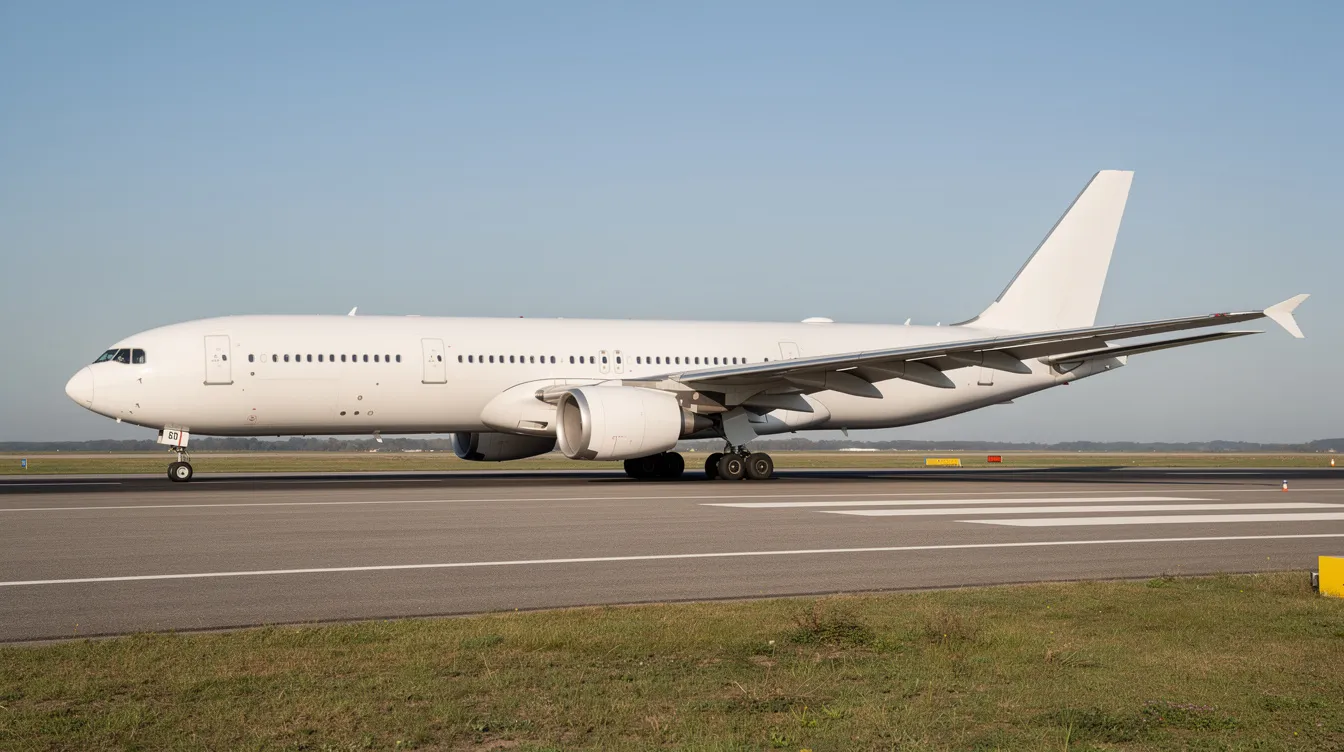
Why 747 size and length matter for elite travelers
Length is not trivia. For a jumbo jet like the 747-8, 250 ft of fuselage means a plane optimized for dense, high-volume commercial service. Airlines pack several hundred economy class seats across the main deck and upper deck, then fill cargo holds below with freight. The airplane earns its economics only when most of those seats are sold.
That model works for airlines. It does not work for a business executive who needs to reach a meeting in London by morning, or a family flying privately to a ski resort served by a 5,500 ft runway.
Long-range private jets built on airframes one-third to one-half the 747's length offer a different equation:
Jumbo jet experience: Fixed schedules, 400+ passengers, boarding at congested hubs like JFK or Heathrow, 3-4-3 seating on main deck, hours spent in terminals.
Private jet experience: Departure on your schedule, 8-16 passengers in a quiet cabin, access to 5,000+ airports (vs. roughly 500 that can handle a 747), arriving minutes from your final destination.
The 747's length enables mass capacity. A private jet's compact airframe enables flexibility.
Understanding Boeing 747 length across major variants
The Boeing 747 has undergone several size updates during its production history. Boeing developed the original 747-100 in the late 1960s, and its 231 ft 10 in fuselage length remained unchanged through the -200, -300, and -400 variants. The -300 extended the upper deck but did not lengthen the overall airplane.
Two variants break the pattern:
Variant | Length | Key distinction |
|---|
747SP | 184 ft 9 in | The Boeing 747SP was built for ultra-long-range routes with a shorter fuselage design, trading passenger capacity for the special performance needed to fly farther on thin, low-demand city pairs. |
747-8 | 250 ft 2 in | The Boeing 747-8 was designed for longer-range flights with a fuselage stretch of about 18 feet, achieved by inserting structural plugs ahead of and behind the wing. |
Despite similar overall lengths across several variants, internal layout and maximum capacity changed over the decades. The 747-400 introduced a glass cockpit, extended range fuel tanks, and winglets. The 747-8's extra 18.3 ft is distributed as roughly 13 ft 4 in forward of the wing and about 5 ft aft, improving aerodynamic balance and increasing both passenger and cargo volume.
From CX-HLS studies to "Queen of the Skies": how length became part of the 747's identity
In the early 1960s, the U.S. Air Force funded the CX-HLS (Cargo Experimental, Heavy Logistics System) program to develop a very large military cargo aircraft. Boeing lost that contract to Lockheed (which built the C-5 Galaxy), but the research on wide-body fuselage design carried directly into commercial aviation. Pan Am's Juan Trippe then asked Boeing for an airplane roughly 2.5 times the capacity of the 707, a request that forced Boeing's design engineers to scale the fuselage to unprecedented length and width.
Boeing's team chose a wide single-deck layout with a raised cockpit housed in the iconic upper deck hump, rather than a full double deck configuration. That decision preserved the option for a front cargo door and nose-loading capability for freighter variants, while keeping structural integrity manageable. The four-engined aircraft that resulted, powered by Pratt & Whitney JT9D engines, made its first flight on February 9, 1969, from Boeing's Everett factory and Paine Field in Washington state.
The first test flight lasted 75 minutes. After a rigorous flight test program involving five test flight aircraft, Pan Am inaugurated commercial service on January 22, 1970, on the New York-to-London route. Since then, 1,574 Boeing 747 aircraft have been built in total during the airplane's production run. Boeing delivered the last 747-8F freighter from Boeing Field in early 2023, closing a chapter that spanned over half a century. The "Queen of the Skies" nickname stuck because no other airplane matched its combination of size, range, and cultural presence for decades.
Technical dimensions: length, wingspan, and height in context
Answering how long a 747 is in feet naturally leads to questions about overall dimensions. Length alone does not define an aircraft's ground footprint or infrastructure demands; wingspan and tail height matter just as much.
Boeing 747-400:
Boeing 747-8:
The standard Boeing 747-400 is roughly two-thirds the length of an American football field. The 747-8 approaches the length of a standard U.S. city block (often cited at 264 ft) and exceeds the combined length of two adult blue whales laid nose to tail.
Length and wingspan together determine aircraft weight classification, gate spacing requirements, and taxiway width at major hubs. The 747-8's wingspan places it in ICAO Aerodrome Reference Code F, requiring wider taxiways and larger gate positions than most airports were originally built to accommodate.
Length, maximum takeoff weight, and runway needs
A longer fuselage carries more fuel, more passengers, and more cargo, which increases takeoff weight. The structural engineering required to support that weight at rotation speed is one reason jumbo jets demand long runways.
The maximum takeoff weight of a 747-400 is up to 910,000 lbs. Its typical operating empty weight is 412,300 lbs, meaning the airplane can carry roughly 498,000 lbs of fuel weight, passengers, and freight before reaching its limit. The 747-8 pushes further: its maximum takeoff weight of 987,000 lbs makes it the heaviest aircraft manufactured in the U.S. The 747-8's empty weight is approximately 485,300 lbs.
These figures translate directly into runway length requirements. A fully loaded 747 at sea level under standard atmospheric conditions needs approximately 10,000 to 10,500 ft of runway for takeoff distance. On hot days or at high-altitude airports, the airplane needs more runway because thinner air reduces engine thrust and wing lift, requiring a higher ground speed and a high angle of attack at rotation.
By contrast, a Gulfstream G650ER or Global 7500 can operate from 5,000 to 6,000 ft runways under many load conditions, illustrating how different private jet sizes unlock access to shorter fields that jumbo jets cannot use. That difference opens access to thousands of additional airports for private jet travelers, including fields minutes from city centers that no 747 could ever reach.
Metric | Boeing 747-8 | Bombardier Global 7500 |
|---|
Length | 250 ft 2 in | ~111 ft |
Maximum takeoff weight | 987,000 lbs | ~115,000 lbs |
Typical runway needed | 10,000+ ft | ~5,800 ft |
How fuselage length affects maximum capacity and cabin layout
The 747's length allowed it to become the first wide-body aircraft to carry hundreds of passengers on a single flight. A standard 747-400 seats approximately 366 to 416 passengers in a typical three-class configuration. In high-density, all-economy layouts, the same airplane can hold a maximum capacity of roughly 524 passengers with extra seating rows filling every available section, a scale comparable to certain large private jets for 20 passengers and more when configured for VIP group travel rather than standard airline seating.
The 747-8 Intercontinental, or 747 8I, can carry up to 467 passengers in a dense layout, though most airlines operating the type configure it for 350 to 410 seats in premium-heavy designs. The Boeing 747 held the passenger capacity record for 37 years, from its introduction in 1970 until the Airbus A380 entered active service in 2007.
On the main deck, economy class typically runs in a 3-4-3 arrangement across the full fuselage length. The upper deck hump, accessed via a curved stairway, traditionally housed the first class cabin, a lounge, or business class seating. Airlines used the 747's length to create distinct zones: economy in the rear, premium economy in the center, and high-yield cabins forward and upstairs.
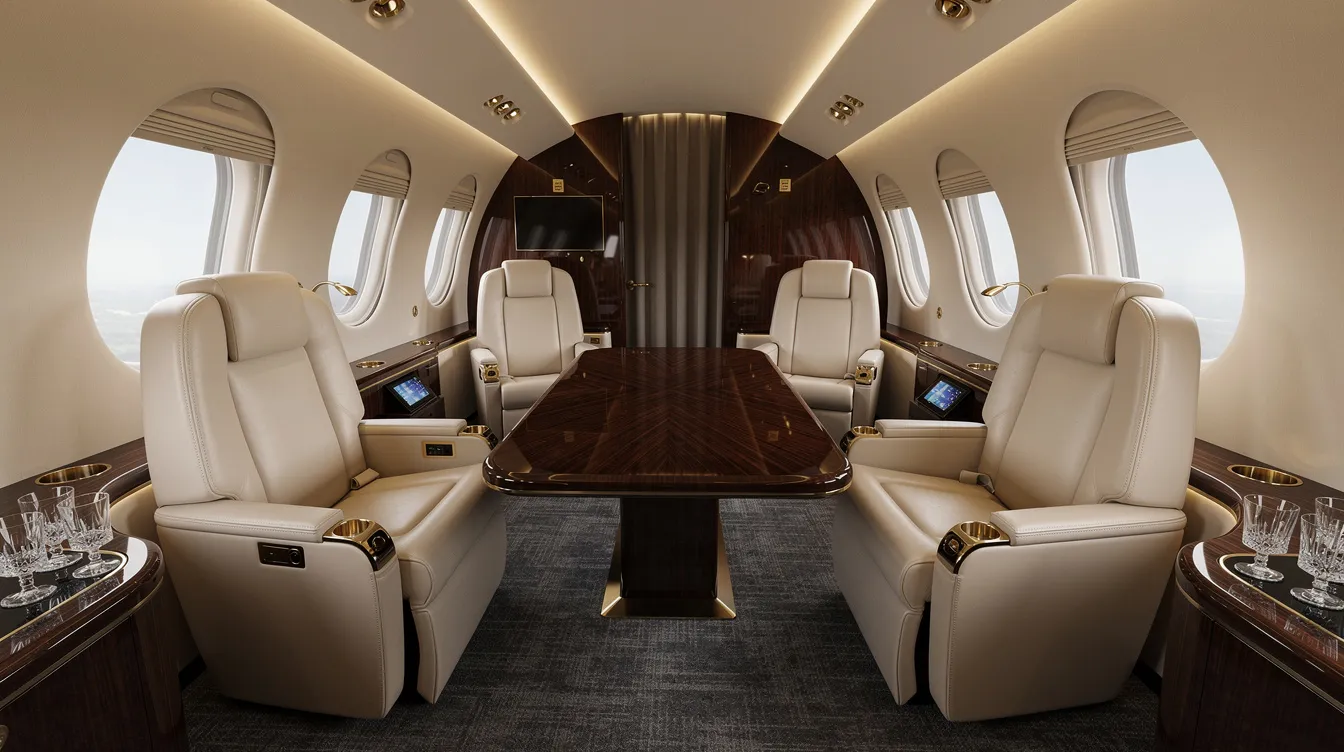
Private jet cabins operate on the opposite principle. Instead of maximizing seat count, a large-cabin private jet with 10 to 16 seats uses its ~100 ft airframe to provide conference tables, lie-flat beds, and enclosed suites, illustrating how different private jet sizes are optimized for comfort rather than sheer capacity. The trade-off is clear: 250 ft shared with 400+ strangers, or 100 ft tailored to your group alone.
Long range and the 747's role in global commercial service
The 747's length was a direct consequence of its long-range mission requirements. A longer fuselage holds more fuel and payload for intercontinental sectors where airlines needed to carry enough passengers to justify flight operations across oceans.
Range improved with each generation:
747-100: roughly 5,300 nautical miles
747-400: about 7,200 to 7,300 nautical miles
747-8 Intercontinental: around 7,700 to 8,000 nautical miles depending on configuration
These figures enabled nonstop routes that defined global commercial aviation: the London route from New York, transpacific services to Tokyo, and freight lanes connecting manufacturing hubs. The 747-400's range allowed airlines to bypass intermediate fuel stops that earlier jets required, and the 747-8 extended that reach while burning less jet fuel per seat through more powerful engines and improved aerodynamics.
Most passenger 747s have now retired from commercial service. Fuel burn on four engines, combined with maintenance costs on aging airframes, made twin-engine widebodies like the 787 and A350 more economical. Remaining 747-8s serve primarily as cargo aircraft for Cargolux and UPS, or as government and VIP transports. For travelers seeking similar reach with fewer seats, today’s market of long-range private jets for sale offers alternatives that deliver intercontinental capability without jumbo-jet scale. A ferry flight of a retired 747 to a storage facility is now a more common sight than a full revenue passenger departure.
Private jets with similar range now routinely perform nonstop sectors like New York to Dubai or Los Angeles to London. A Global 7500 covers over 7,700 nautical miles; a Gulfstream G700 reaches 7,500 nm. These private jets with the longest range carry 12 to 19 passengers instead of 400+, but they fly farther per hour of flight time due to higher cruise speeds and more direct routing.
Inside the "Queen of the Skies": economy class vs premium space
Walking down a 747 main deck aisle is like traversing a narrow corridor through a 250 ft building. Rows of seats stretch ahead in seemingly endless repetition, separated by galleys, lavatories, and bulkheads that break the cabin into zones.
Airlines used the airplane's length to fit as many revenue seats as possible. Standard configuration on most 747-400 operators placed economy class in a 3-4-3 layout on the lower deck, with the upper deck reserved for premium passengers. Some carriers, notably Virgin Atlantic and British Airways, installed bars or lounges on the upper level during the 1990s and 2000s.
The experience for a premium traveler on a 747 still involves sharing the airplane with several hundred other passengers, queuing at boarding gates, and arriving at congested major hubs. BlackJet's proposition inverts that model: instead of a long cabin packed with seats, a private jet offers a compact, quiet space where a small group controls the environment, temperature, lighting, and schedule for the entire flight.
The Boeing 747-8: the longest U.S. jumbo jet ever built, just as NetJets offers some of the most established Jet Card membership options with detailed cost structures in the private aviation market
The Boeing 747-8 holds the distinction of being the longest variant in the 747 family and the longest commercial aircraft at 250 feet produced in the United States. Its fuselage is stretched by 18.3 feet over the 747-400, using structural plugs inserted fore and aft of the wing box.
The 747-8's four wing-mounted engines are GEnx-2B67 turbofans, derived from the GE engine family developed for the 787 Dreamliner. These more powerful engines, combined with a redesigned wing featuring raked wingtips and innovative new technologies in materials and aerodynamics, reduce fuel burn per seat by roughly 16% compared with the 747-400, according to Boeing's published data. The 747-8F freighter variant can carry a payload of 308,000 pounds, making it a dominant cargo carrier on high-volume freight routes.
Despite improved efficiency, the four engines and near-million-pound aircraft weight still made the 747-8 less economical than modern twin-engine widebodies for many airlines. Only a handful of passenger operators committed to the type: Lufthansa, Korean Air, and Air China among them. Cargolux operates the largest fleet of 747-8F freighters. Several governments acquired the passenger variant as VIP or head-of-state transports, including conversions at Boeing's Everett factory.
The 747-8 has a maximum takeoff weight of 987,000 pounds. Its max landing weight is lower, requiring pilots to calculate fuel burn carefully on shorter routes to avoid exceeding structural limits on arrival. The Boeing 747-8I can carry up to 467 passengers in dense layouts, though most operators fly it in configurations well below that number with generous premium cabins.
From jumbo jets to private cabins: what 747 length teaches about aircraft choice
The 747's length and maximum capacity were built for an era when mass, scheduledlong-haull travel was the only option for crossing oceans. Hundreds of passengers boarded at fixed times, flew to major hubs, and then connected onward. That model moved millions of people and set a world record for sheer volume, but it was never designed for time-sensitive executives or travelers who value privacy over seat count, many of whom now buy seats on private jets through shared or semi-private solutions instead of booking a row on a jumbo jet.
Private aviation evolved to prioritize the opposite: fewer seats, more space per passenger, direct access to more airports, and departure times set by the traveler rather than the airline, with long-range private jets for global travel designed around flexibility and comfort instead of maximum headcount. A BlackJet Jet Card member traveling from New York to London chooses a large-cabin jet with about 10 to 14 seats and over 7,000 nm range, bypassing crowded commercial hubs entirely. Departure from Teterboro (15 minutes from Manhattan) instead of JFK. Arrival at Farnborough or Luton instead of Heathrow. The cabin serves as a boardroom, bedroom, or family space for the entire flight.
The historical prestige of flying the Queen of the Skies was real. The modern prestige lies in having an entire aircraft configured for your schedule, your route, and your comfort.
Safety, performance, and weight: why length is only part of the story
Fuselage length is the most visible number, but safety and performance depend on variables that no photograph can capture: wing design, engine thrust margins, avionics redundancy, and precise weight-and-balance calculations. Every 747 takeoff requires the crew to verify that aircraft weight (fuel, passengers, cargo) falls within limits for both takeoff weight and max landing weight given the runway available, ambient temperature, and wind conditions.
The same principles apply to every private jet in BlackJet's network, even though the airplane is smaller. Operators calculate performance data before every flight: runway length, obstacle clearance, engine-out climb gradients, and fuel reserves. For travelers wondering whether private jets are safe, the answer lies in this disciplined framework of private jet safety standards and oversight. BlackJet's approach to safety mirrors the rigor of commercial aviation: vetted operators, audited maintenance records, and standardized protocols that cover everything from crew qualifications to structural integrity inspections.
Length impresses on a spec sheet. Safety credentials and performance data determine whether you arrive.
Sustainability: jumbo jets vs carbon-neutral private flights
A fully loaded 747 can be efficient on a per-seat-mile basis. When 400+ seats are occupied, fuel burn per passenger drops to levels competitive with smaller aircraft. But in absolute terms, a single 747-8 flight from New York to London consumes tens of thousands of gallons of jet fuel and produces hundreds of tons of CO₂. The airplane was designed by Boeing decades before sustainability entered aviation planning, whereas many of today’s more affordable private jet options leverage newer technology and access models to balance cost, efficiency, and emissions.
Modern private jets serving small groups use newer engines, lighter composite airframes, and more efficient routing. Travelers evaluating these options often weigh not only sustainability but also Jet Card pricing structures that govern how they pay for access. A green private jet approach also includes carbon offset programs that neutralize the emissions from every flight. BlackJet ensures carbon-neutral operations by offsetting emissions from every Jet Card flight at no additional cost to the member, using verified offset mechanisms that fund reforestation, renewable energy, and methane capture projects, while also advising clients on more economical private aircraft options when budget considerations matter alongside environmental impact.
The result: a traveler flying privately on a 7,000 nm route produces a known, offset quantity of emissions rather than sharing in the immense absolute output of a four-engine jumbo jet.
Technology and access: how Jet Cards modernize long-range travel
A Jet Card provides prepaid access to a curated fleet of private jets across cabin classes. BlackJet offers programs in 25-hour and 50-hour increments, allowing members to select the right airplane for each mission: a midsize jet for a 90-minute domestic hop, or a large-cabin aircraft for a transatlantic crossing.
BlackJet's digital platform enables 24/7 booking, real-time flight support, transparent pricing, and the technology connection between trip planning and aircraft availability that eliminates the friction of traditional charter, especially when you understand Jet Card cost per hour and can budget flights with confidence. A member flying New York to London to Dubai over several days can choose different aircraft categories for each leg based on passenger count, schedule, and routing preferences.
Time savings compound across every touchpoint for travelers who choose the best Jet Cards for frequent flyers:
Private terminals with no security queues or boarding lines
Departure within minutes of arrival at the airport
Landing at secondary airports closer to final destinations (Teterboro instead of JFK; Dubai Al Maktoum instead of DXB Terminal 3)
No layovers, no connections, no fixed airline schedules
Jet Cards are a strategic tool for travelers who measure cost in hours saved, not just dollars spent, and a clear grasp of overall Jet Card cost structures helps align membership choice with those priorities.
FAQs: length, capacity, and long-range options beyond the 747
Exactly how long is a 747-8 in feet and meters?
The Boeing 747-8 measures 250 ft 2 in (76.25 m) from nose to tail. This applies to both the 747-8 Intercontinental passenger variant and the 747-8F freighter. The 747-8F freighter can carry a maximum payload of 308,000 lbs across its main deck and lower cargo holds.
Are all Boeing 747 models the same length?
No. The Boeing 747-100 and 747-400 measure approximately 231 feet 10 inches long. The Boeing 747SP measures 184 feet 9 inches long, shortened for ultra-long-range, low-density routes. The 747-8's fuselage is 18.3 ft longer than the 747-400.
How does a 747 compare in length to common private jets?
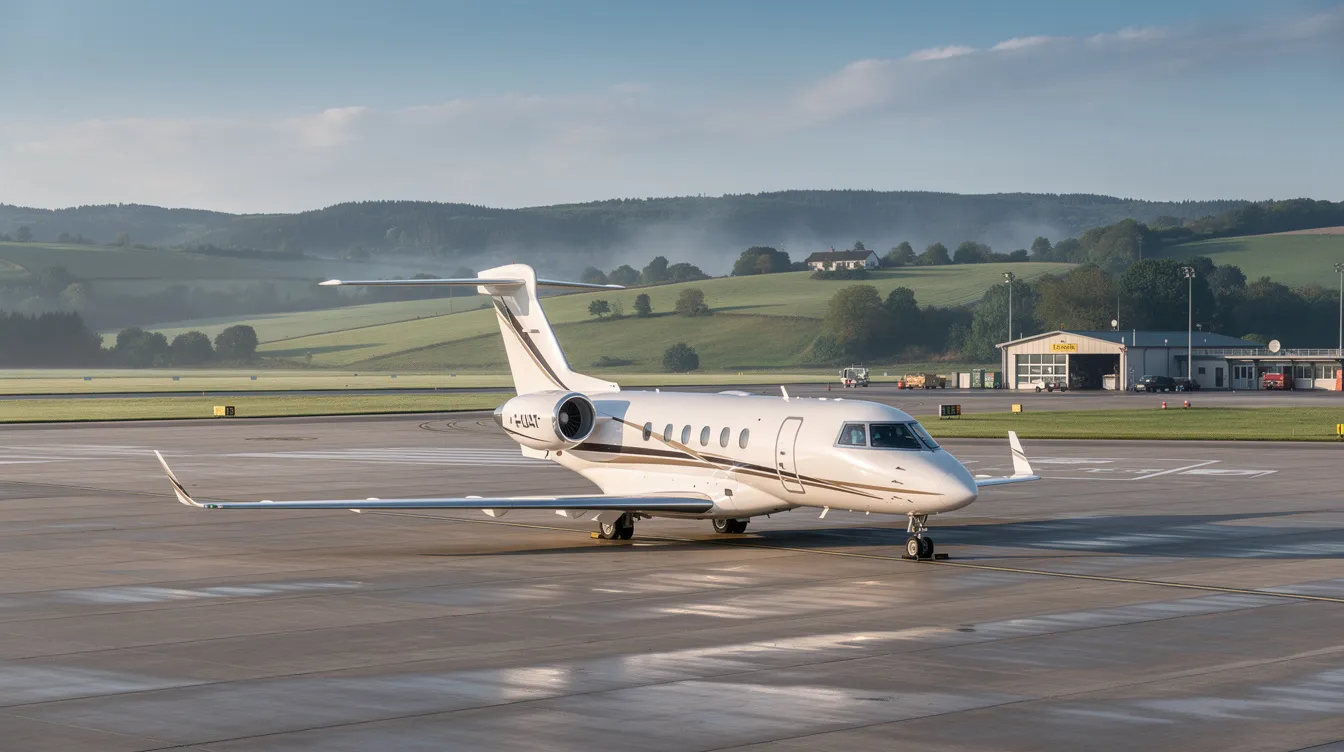
A 747-400 at 231 ft is more than twice the length of a Gulfstream G650 (99 ft) or Global 7500 (111 ft). That extra length houses hundreds of seats and massive cargo holds, while a private jet uses its shorter airframe for a cabin serving 8 to 19 passengers.
Does a longer airplane always carry more passengers?
Not necessarily. The 747SP is shorter than the standard 747 yet was designed to sacrifice passenger capacity for range. Internal layout, seat pitch, and cabin class mix all affect how many people an airplane carries regardless of fuselage length.
Can a private jet match the long range of a 747 without being as long?
Yes. Aircraft like the Bombardier Global 7500 (7,700+ nm) and Gulfstream G650ER (7,500 nm) match or approach the 747-400's range of 7,200 to 7,300 nm while measuring less than half its length. BlackJet Jet Card members access these aircraft types without owning or leasing.
How can I get long-range capability without flying on a jumbo jet?
BlackJet's Jet Card programs provide prepaid access to large-cabin, long-range private jets that cover intercontinental routes nonstop. Members select the aircraft category and schedule that fits each trip, with carbon-neutral operations and rigorous safety standards included.
Conclusion: from the longest jumbo jets to right-sized private travel
The Boeing 747 spans roughly 231 to 250 ft in length depending on variant. The Boeing 747-8 at 250 ft 2 in represents the family's longest, most advanced form; 1,574 Boeing 747s have been built since 1970, and their combined impact on commercial aviation is unmatched. The four-engine jumbo jet carried billions of passengers across oceans, set the passenger capacity record that stood for 37 years, and earned nicknames that became part of popular culture.
That era has given way to a different calculus. Modern travelers who once flew in a 747's first-class cabin now choose private aircraft that offer equivalent range in a fraction of the airframe length, with departure times, airport choices, and cabin configurations under their direct control.
BlackJet Jet Card programs deliver that control: carbon-neutral flight operations, vetted safety protocols, and 24/7 digital booking across a fleet of large-cabin jets built for intercontinental travel. The Queen of the Skies redefined what an airplane could be. BlackJet redefines what your next flight can be.
Explore BlackJet Jet Card programs and discover how private, long-range travel becomes your new standard.
Learn more about the largest 747 variant, understand private jet safety standards, explore long-range private jets, see how private jets compare to commercial flights, and dive into carbon-neutral private flights.


 Sign up with google
 Sign up with Apple