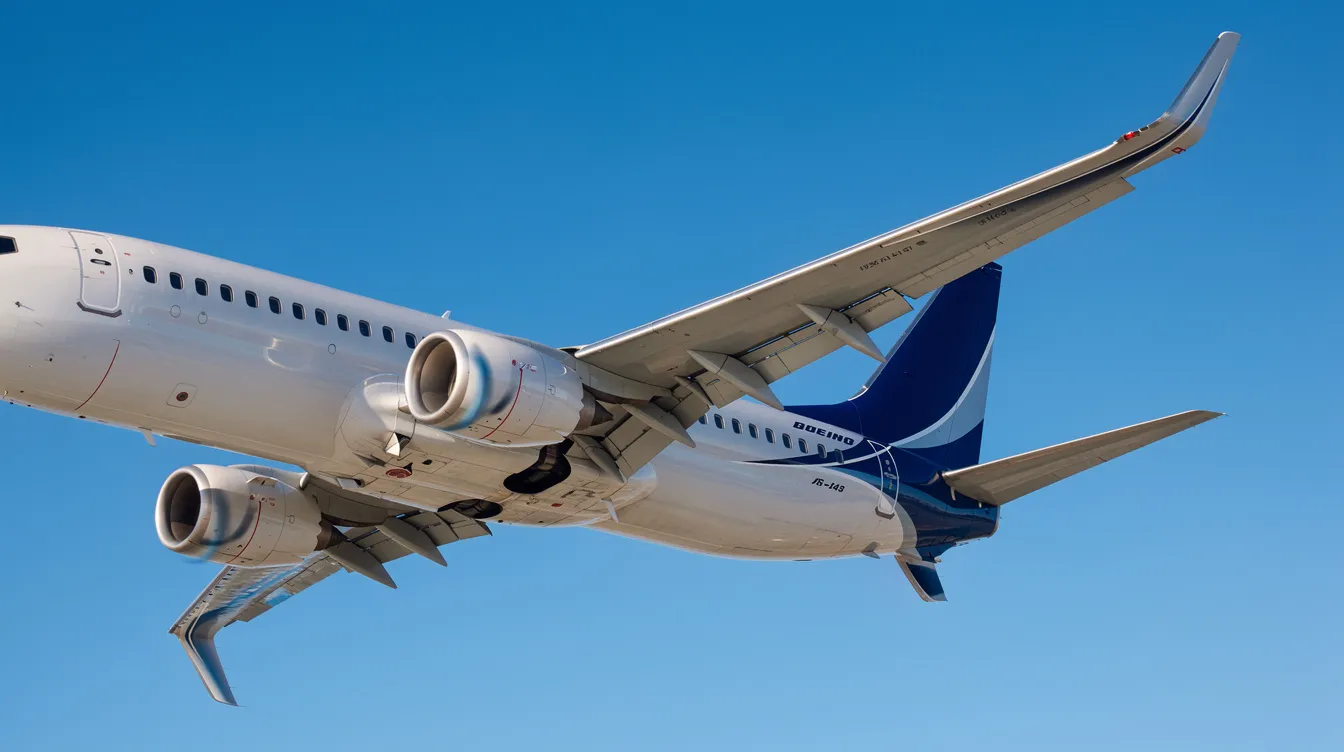
For anyone comparing the size of Boeing planes, the range is wide: compact single-aisle 737 models measure roughly 44 meters in length, while larger wide-body aircraft such as the 747-8 and 777-9 stretch to about 76 meters with wingspans beyond 68 meters. For anyone who has ever walked the length of a Boeing 747 or settled into the wide cabin of a 777, aircraft size isn't abstract - it's a visceral part of the travel experience. Narrow-body jets like the 737 serve shorter regional routes, while wide-body jets like the 777 are designed for long-haul travel. Narrow-body jets feature a single aisle and typically seat 3-3 across, while wide-body jets have two aisles and can accommodate more passengers with 9 or 10 seats across.
Understanding the size of Boeing commercial airplanes matters for route planning, cabin comfort, and making informed comparisons between flying private and flying commercial. A frequent business traveler, high-net-worth leisure flyer, or BlackJet member weighing commercial aircraft against private jet options can use these benchmarks to judge space, privacy, range, and flexibility more clearly. This guide breaks down major Boeing models by dimensions and capacity, then connects those numbers to passenger comfort, long-haul capability, Boeing Business Jets, safety and sustainability standards, cabin technology, and how to choose the right aircraft experience in the context of BlackJet's premium private jet card and membership services.
Why Aircraft Size Matters for Luxury & Business Travel
Boeing's commercial aircraft range from single-aisle jets to wide-body aircraft that can carry more than 400 passengers across oceans. The difference between a narrow-body 737 and a wide-body 777 isn't just a matter of length - it defines how much cabin volume each passenger receives, how many seats the airlines can install, and how far the plane can fly without refueling. Narrow-body jets like the 737 serve shorter regional routes, while wide-body jets like the 777 are designed for long-haul travel.
For BlackJet members, these comparisons serve as a practical benchmark. When you step off a commercial Boeing 787 with 290 passengers and board a large-cabin private jet with eight seats, the contrast in personal space per traveler is dramatic. Yet the Boeing cabin you know from commercial flight - its width, headroom, aisle layout - is the reference point most travelers carry with them when evaluating private jet comfort and navigating different private jet sizes and cabin classes.
This article answers a straightforward question: which Boeing planes are biggest and smallest? Then it explores what those dimensions mean for anyone choosing between commercial and private aviation.
The largest Boeing models reach lengths of up to 251 feet, while the smallest modern variants start around 116 feet.
Cabin width ranges from roughly 11 feet 7 inches on the 737 to over 19 feet on the 777 family.
Boeing produces a variety of jets tailored to different travel needs, from domestic shuttles to intercontinental flagships.
Private jets allocate far more space per passenger despite being physically smaller than any Boeing airliner.
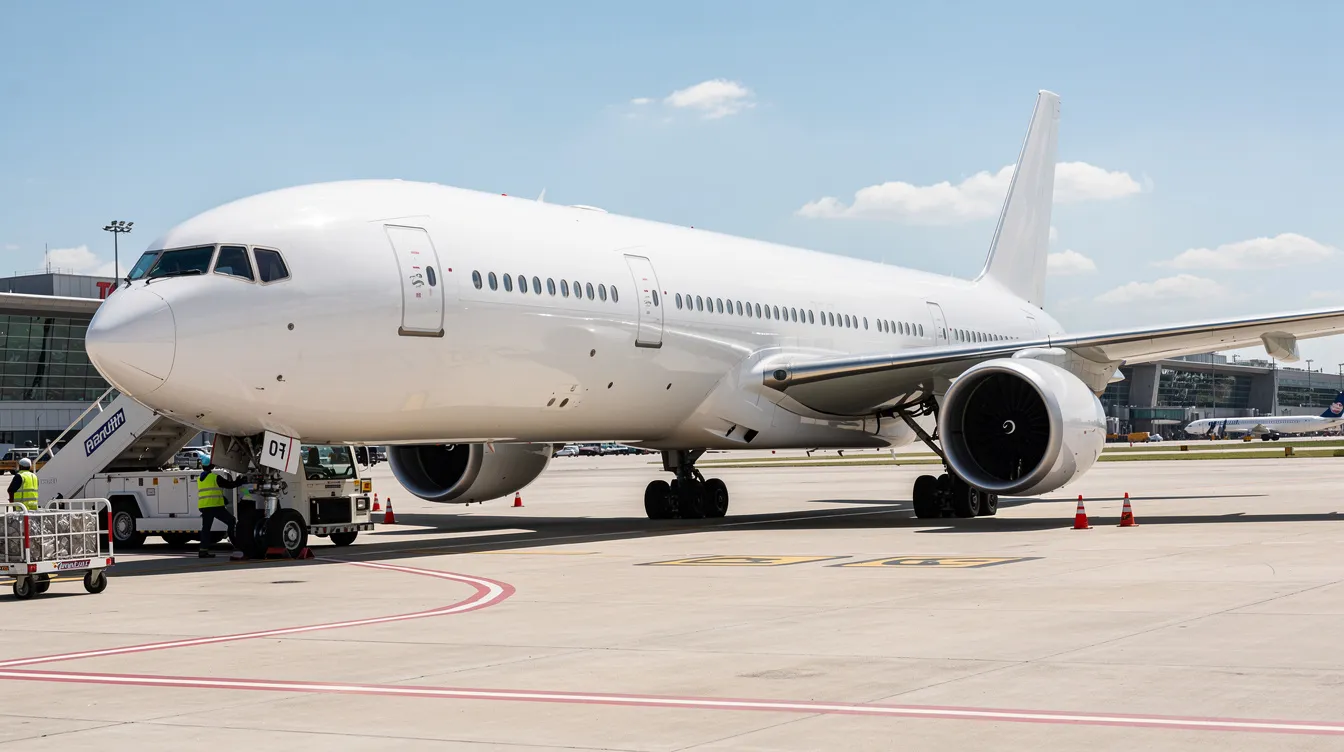
Quick Overview: Smallest to Largest Boeing Commercial Airplanes
This section gives you the direct answer. Here are six representative Boeing models ranked by overall length, with approximate wingspan and typical two-class passenger capacity:
Model | Length (m/ft) | Wingspan (m/ft) | Typical Two-Class Capacity |
|---|
737-700 / MAX 7 | ~35.6 m (116 ft 8 in) | ~35.9 m (117 ft 10 in) | ~135–172 |
737 MAX 8 | ~39.5 m (129 ft 6 in) | ~35.9 m (117 ft 10 in) | ~162–210 |
787-8 Dreamliner | ~56.7 m (186 ft) | ~60.1 m (197 ft) | ~242 |
777-300ER | ~73.9 m (242 ft 4 in) | ~64.8 m (212 ft 7 in) | ~350–396 |
777-9 | ~76.7 m (251 ft 8 in) | ~71.8 m (235 ft 5 in) | ~350–426 |
747-8 | ~76.3 m (250 ft 2 in) | ~68.4 m (224 ft 7 in) | ~410–467 |
The 737 family represents Boeing's smaller single-aisle aircraft, purpose-built for short- and medium-haul routes. At the opposite end, the 747- 8 and 777X sit at the top of the size spectrum, engineered for maximum range and capacity on the world's longest routes.
Among these, the 737 and 787 families are most commonly converted into Boeing Business Jets, or BBJ variants, serving heads of state and ultra-high-net-worth individuals who demand airliner-size cabins configured for private luxury.
Understanding Aircraft Size: Key Dimensions and What They Mean
Key Size Metrics Explained
Before comparing specific models, it helps to understand what size metrics actually tell you. The five numbers that matter most are length, wingspan, height, maximum takeoff weight (MTOW), and cabin floor area.
Length determines how many rows of seats (or private zones) fit inside the fuselage, and it affects gate compatibility on the ground.
Wingspan directly influences aerodynamics, fuel burn, and which taxiways and gates the aircraft can use - a problem the 777X solves with folding wingtips.
Height matters for tail clearance in hangars and for cabin headroom in the upper decks of double-deck designs.
MTOW reflects total payload capacity: more weight means more passengers, cargo, or fuel for longer range.
Cabin floor area is the metric that matters most to passengers. A Boeing 777-300ER's cabin floor area is roughly equivalent to five or six typical large-cabin private jets placed end to end.
For BlackJet members, the most relevant comparison is cabin length and height. A midsize private jet offers roughly 7–10 meters of cabin length with about 1.8 m of headroom - comparable to a short section of a 737 cabin, but configured for just six to ten passengers instead of 180, especially in the case of small private jets optimized for luxury travel.
The Boeing 737 Family: Compact Single-Aisle Workhorse
The 737 is the smallest major commercial aircraft family in the Boeing Company’s current lineup and has been the backbone of domestic and short- to medium-haul travel since its inception. Boeing began preliminary design work for the 737 on May 11, 1964, and the 737-100 was launched in February 1965. Only 30 units of the 737-100 were produced before the stretched 737-200 variant entered service in April 1968, with its fuselage stretched by 36 inches ahead of the wing to increase capacity, a key milestone in the family’s early development that year.
Narrow-body jets like the 737 serve shorter regional routes, and the "single-aisle" designation tells you everything about boarding time and passenger density: one aisle, six-abreast seating (3-3), and a fuselage cross-section that is 148 inches wide. Compare that with a "twin-aisle" wide-body like the 777, where two aisles and nine or ten seats across make boarding faster and the cabin feel dramatically more spacious.
Over the decades, the 737 family has grown considerably in length, and its evolving role alongside other types of private jets for different travelers highlights how mission profile and cabin class matter as much as raw fuselage length:
Original 737-100/200: ~28.6–30.5 m (94–100 ft)
Classic 737-300/400/500: ~31–36.4 m
Next Generation 737-600 through 737-900ER: ~31.2–42.1 m; the 737 Next Generation series introduced a six-screen LCD glass cockpit, and its ordering history peaked in a later production year before slowing
737 MAX 7 through MAX 10: ~35.6–43.8 m
The cabin width of approximately 3.54 m (11 ft 7 in) contrasts sharply with the more spacious configurations used on private BBJ conversions, where the same fuselage tube might hold a bedroom suite, a conference room, and a lounge instead of 180 economy seats. The 737's compact size also makes it suitable for conversion into specialized government and military variants like the P-8 Poseidon maritime patrol aircraft and the C-40 Clipper transport, though BlackJet clients typically fly smaller, more agile private jets.
737 MAX Size and Capacity: The Latest Generation
The 737 MAX is Boeing's current-generation single-aisle family, serving customers at airlines worldwide including American Airlines, United Airlines, Lufthansa, and WestJet through formal order and delivery agreement structures. The 737 MAX 8 first flew on January 29, 2016, and by June of that year the program had reached an important milestone, marking the launch of a new chapter in single-aisle efficiency and design.
Variant | Length (m/ft) | Typical Two-Class Capacity | MTOW (kg) |
|---|
737 MAX 7 | ~35.6 m (116 ft 8 in) | ~138–172 | ~80,280 |
737 MAX 8 | ~39.5 m (129 ft 6 in) | ~162–210 | ~82,640 |
737 MAX 9 | ~42.1 m (138 ft 2 in) | ~175–195 | ~88,300 |
737 MAX 10 | ~43.8 m (143 ft 8 in) | up to ~230 | - |
The 737 MAX series uses LEAP-1B engines for improved efficiency, featuring a 69-inch fan diameter housed in a redesigned nacelle that reduces drag. The Advanced Technology winglets extend the wingspan to approximately 35.9 m (118 ft), and blended winglets improve fuel efficiency by up to 5%, a meaningful gain across thousands of annual departures. These commonality advantages let pilots transition between MAX variants with minimal additional training, which airlines favor as they continue to increase capacity on high-demand routes.
Airlines select different MAX sizes to match route demand - a strategy that mirrors how BlackJet clients choose between light, midsize, and large-cabin private jets for each mission. Despite their size, 737 MAX cabins are optimized for dense seating in commercial service, contrasting with the low-density, fully bespoke layouts typical of private aviation and BBJ variants, where travelers focus more on how much it costs to rent a private jet for each mission than on seat count alone.
Boeing 747-8: The Largest Boeing Passenger Aircraft
The 747- 8 is Boeing's longest aircraft and an enduring icon of long-haul air travel. The 747-8 Intercontinental entered service in the early 2010s, extending the legacy of a plane that has defined prestige flying since 1970.
747-8 Dimensions and Capacity
Metric | Value |
|---|
Length | ~76.3 m (250 ft 2 in) |
Wingspan | ~68.4 m (224 ft 7 in) |
Tail height | ~19.4 m (63 ft 6 in) |
MTOW | ~447,700 kg (987,000 lb) |
Typical Seats | ~410–467 (three-class layout) |
In three-class layouts, the 747-8 Intercontinental typically seats about 410–467 passengers. The freighter variant redirects that volume to cargo pallets, making it a critical asset for global logistics and deliveries of high-value products.
The Boeing 747-8 is recognized for its distinctive upper deck design - a partial second deck that creates a signature "hump." In VIP and head-of-state configurations, that upper deck becomes a private retreat: master suites, executive offices, and reception areas that rival a luxury penthouse. These ultra-luxury layouts share a philosophy with BBJ conversions, but on a vastly grander scale.
For BlackJet members, the contrast is instructive. While the 747-8's cabin floor area dwarfs any private jet, a large-cabin private aircraft delivers comparable or superior privacy and personalization - without needing a runway built for a 987,000-pound airplane- and group travelers can instead evaluate the best private jet options for around 20 passengers when they need airliner-like capacity with private-level flexibility.
Boeing 777 and 777X: Modern Long-Range Giants
The 777 is Boeing's flagship twin-engine wide-body, and wide-body jets like the 777 are designed for long-haul travel linking global city pairs nonstop. The 777X - comprising the 777-8 and 777-9 - represents the newest and largest evolution of this platform, with production ramping toward initial deliveries to airlines including Japan Airlines.
777 and 777X Dimensions and Capacity
Model | Length (m/ft) | Wingspan (m/ft) | Typical Three-Class Capacity |
|---|
777-200ER/LR | ~63.7 m (209 ft) | ~60.9–64.8 m | ~300–317 |
777-300ER | ~73.9 m (242 ft 4 in) | ~64.8 m (212 ft 7 in) | ~350–396 |
777-9 | ~76.7 m (251 ft 8 in) | ~71.8 m (235 ft 5 in) | ~350–426 |
The Boeing 777-9 is one of the longest operational commercial aircraft, stretching to approximately 76.7 m - slightly longer than the 747-8. Its new composite wing features an extended span of approximately 71.8 m in flight, meaning Boeing commercial aircraft often have wingspans exceeding 235 feet on their largest models. The 777X has folding wingtips to fit into standard airport gates, reducing ground span to ~64.8 m when parked - an elegant engineering solution to a real-world airport compatibility problem that the FAA has specifically addressed.
The cabin width of approximately 5.86 m (19 ft 3 in) allows airlines to configure 9- or 10-abreast seating in economy, while VIP and government 777 layouts use the same cross-section for spacious lounges and private suites. Such aircraft comfortably link city pairs like New York to Hong Kong nonstop - similar to how long-range large-cabin private jets serve BlackJet clients on intercontinental business missions, including those needing the best private jet configurations for 15 passengers.
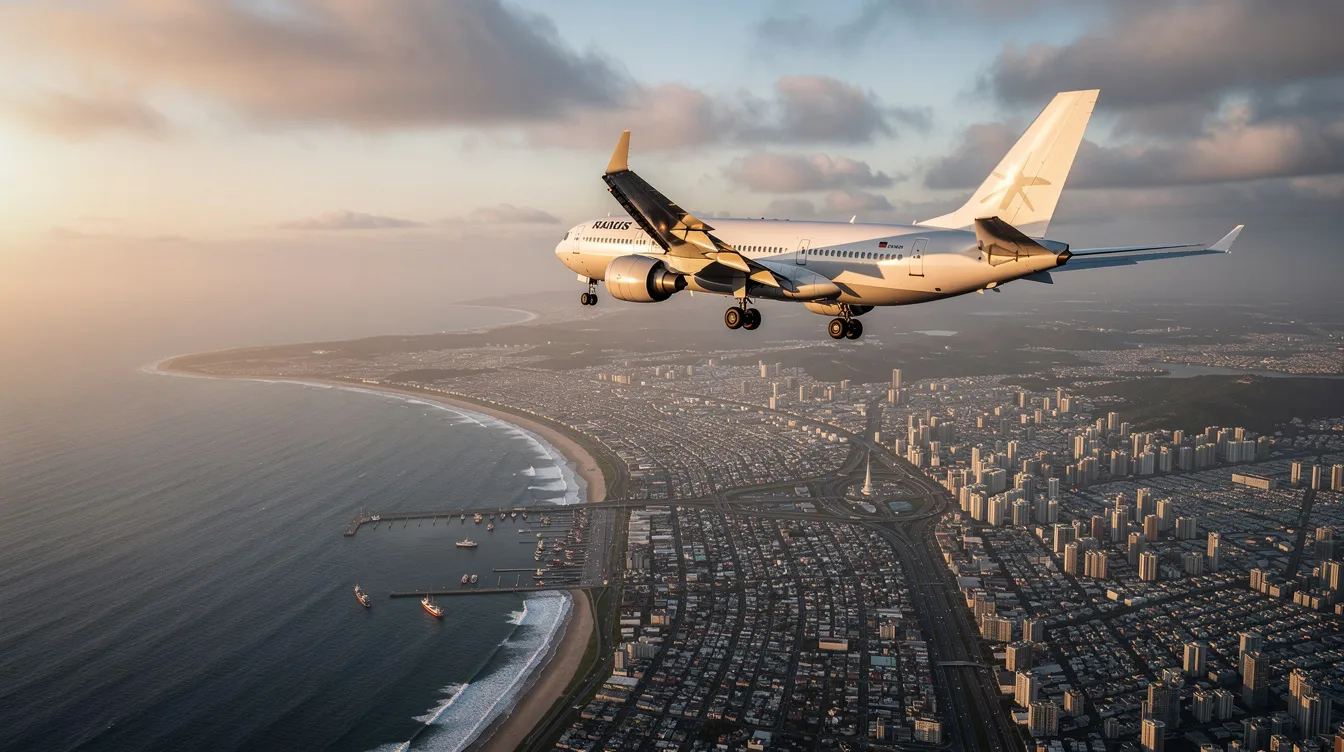
Dreamliner Dimensions: The Boeing 787 Family
The Boeing 787 Dreamliner family features composite materials for efficiency, making it the first major commercial aircraft built primarily from carbon-fiber-reinforced polymer. Three variants serve different market segments:
Model | Length (m/ft) | Wingspan (m/ft) | Typical Two-Class Capacity |
|---|
787-8 | ~56.7 m (186 ft) | ~60.1 m (197 ft) | ~242 |
787-9 | ~63 m (206 ft) | ~60.1 m (197 ft) | ~290 |
787-10 | ~68.3 m (224 ft) | ~60.1 m (197 ft) | ~318–330 |
All 787 variants share the same wingspan thanks to raked wingtips, with a cabin width around 5.49 m, generally configured 9-abreast in economy. The shared wing design across variants is a strong example of commonality in engineering, simplifying maintenance and reducing production complexity.
VIP and head-of-state 787 configurations offer vast cabin real estate - closer to a flying penthouse than a traditional private jet. For ultra-high-net-worth BlackJet clients considering different forms of premium air travel, these airplanes represent the upper boundary of what a private plane layout can achieve and overlap with VIP airliner and BBJ options for groups of up to 50 passengers.
The 787's combination of size and fuel efficiency also makes it a benchmark when comparing environmental performance and range with both commercial aircraft and the most advanced long-range private jets. Its engine technology and composite construction reduce fuel burn by approximately 20% compared to similarly sized predecessors.
Classic Narrow-Bodies: 727, 757, and 717 Size Benchmarks
While no longer in production, these classic Boeing models still provide useful size reference points for understanding how the aircraft landscape has evolved and how today's business jets compare.
Boeing 727 Size
Boeing 757 Size
757-200: length ~47.3 m (155 ft 3 in), wingspan ~38 m (124 ft 10 in), typical ~200–228 passengers. Its long, narrow cabin and strong runway performance led airlines to deploy it on transatlantic routes - unusual for a narrow-body.
Boeing 717 Size
The 757's unique blend of range and thin fuselage still influences narrow-body design choices. Its ability to fly routes that typically demand a wide-body - close to what the 737 MAX 10 and Airbus A321XLR now target - made it a favorite of airlines and a type that has never been completely replaced.
Business and government operators converted some of these models into VIP aircraft, offering more square footage than typical private jets but far fewer seats than in airline service. Many BlackJet members first experienced "big jet" flying on these planes, and those memories of cabin height, aisle width, and seat pitch still shape expectations when they board a private jet today or explore the most budget-friendly private aircraft options.
Boeing Business Jets (BBJ): Using Airliner Size for Private Luxury
Boeing Business Jets are customized private versions of Boeing airliners - 737 BBJ, 747-8 VIP, and 777 and 787 VIP configurations - that leverage commercial aircraft size for ultra-luxury use. They represent the intersection of airline-grade engineering and bespoke interior design, widely deployed by heads of state, royal families, and select corporate operators.
A 737-based BBJ retains the external footprint of its commercial counterpart (~33–43 m in length) but reconfigures the interior into distinct zones: a master bedroom suite, a conference area, a lounge, and a private office. Where an airline might install 180 seats, a BBJ fits 15–25 passengers in complete comfort.
Wide-body BBJ variants (777, 787, 747-8) can offer thousands of square feet of floor area, rivaling a luxury residence. These aircraft feature beds, showers, and dining rooms that would be impossible in a standard large-cabin private jet.
For most BlackJet members, however, the trade-offs matter: BBJ-class aircraft require large airports, carry high operating costs, and offer less scheduling flexibility than a super-midsize or large-cabin jet booked through a Jet Card program such as the BlackJet 25+ Hour Jet Card. Understanding these dimensions helps sophisticated travelers decide whether they need an airliner-based VIP solution or a more nimble membership-based approach.
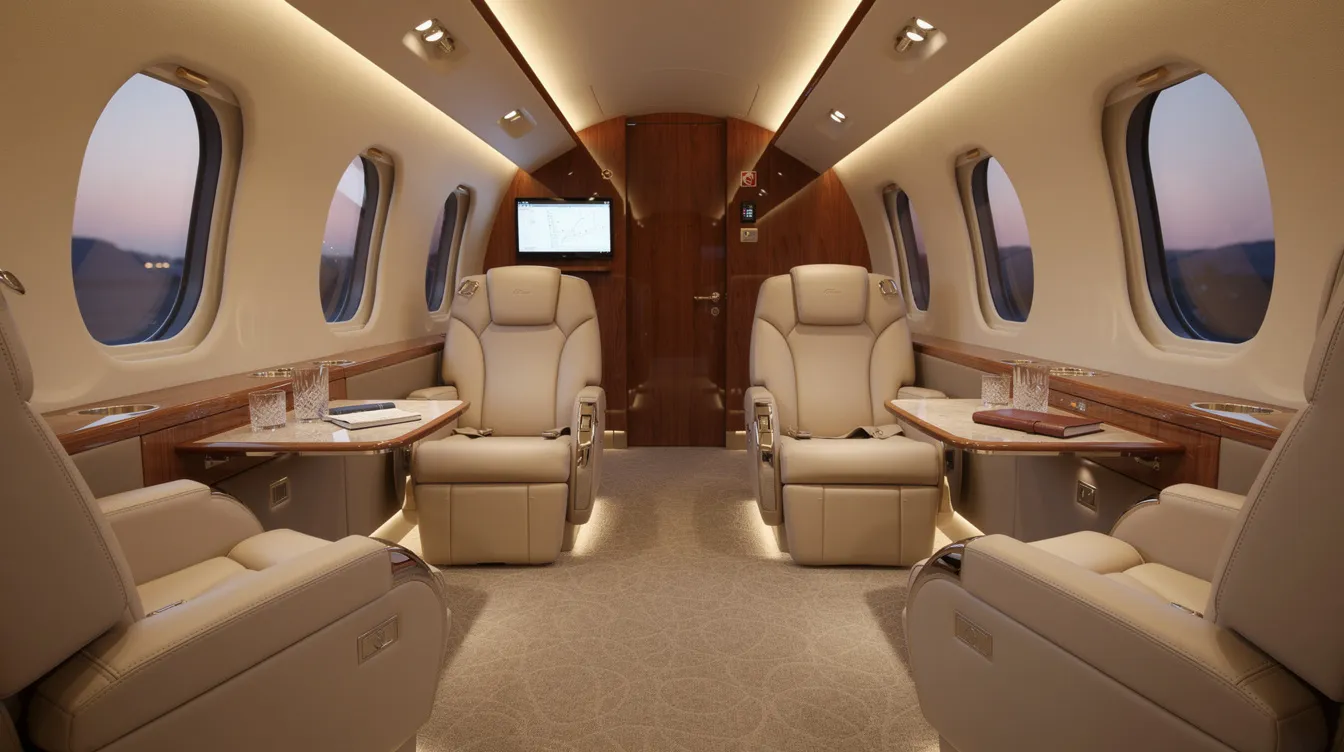
How Commercial Aircraft Size Compares to Private Jet Cabin Classes
Many travelers mentally compare private jet cabins to familiar Boeing cabins from their commercial flight experiences. The numbers put that comparison in perspective.
Typical cabin dimensions by private jet category, as outlined in more detail in BlackJet’s guide to understanding private jet sizes and categories:
Jet Category | Cabin Length (m) | Headroom (m) | Typical Passenger Count |
|---|
Light jets | ~4.5–5.5 | ~1.5 | 4–7 |
Midsize & super-midsize jets | ~6–8 | ~1.7–1.8 | 7–10 |
Large-cabin, long-range jets | up to ~15 | ~1.85–1.9 | 10–16 |
A single 737 fuselage offers roughly 30–40 m of cabin length, while a 777 or 787 stretches to 50–60 m of usable cabin. But here's the distinction: a large-cabin private jet allocates all of its space to a handful of passengers, yielding more cabin volume per person than even business class on a wide-body Boeing.
BlackJet structures its Jet Card offerings around mission profiles - regional versus intercontinental - rather than raw physical size, focusing on comfort and time savings, and complementary resources like its guide to understanding overall Jet Card cost help travelers quantify that value. For many routes, a well-chosen large-cabin private jet provides "big-jet comfort" without needing the vast overall size of a Boeing wide-body.
Safety, Certification, and Size: What Larger Aircraft Enable
The size and role of Boeing commercial aircraft drive some of the most rigorous safety certification and maintenance regimes in aviation. The scale of operations - hundreds of millions of passengers annually - demands it.
Key Safety Features of Large Aircraft
High passenger counts and global operations mean Boeing designs must meet strict regulatory standards from the FAA and international authorities, which in turn mandate structural redundancy, multiple evacuation exits, and exhaustive testing.
737 Safety Record
The Boeing 737 family has accumulated 529 aviation accidents over its six-decade history, including 215 hull loss accidents and 5,779 fatalities. Context matters: the hull loss rate for the 737 Next Generation is 0.18 per million departures - exceptionally low for an aircraft with billions of accumulated flight hours.
The 737 MAX series has a hull loss rate of 1.48 per million departures. Two 737 MAX crashes caused 346 deaths in total, leading to a global grounding that was phased over nearly two years and resulted in sweeping design and certification reforms, which in turn inform the safety baselines for chartering larger private aircraft for around 100 passengers.
Larger aircraft support enhanced safety features - multiple redundant hydraulic systems, numerous evacuation exits, advanced fire suppression - while smaller private jets rely on modern avionics and carefully vetted operators to achieve equivalent safety levels per passenger.
BlackJet addresses this directly through its certified safety standards and partnerships with operators who meet or exceed Wyvern Wingman criteria. Crew training and recurrent checks remain essential: both large Boeing operators and BlackJet's partner operators prioritize ongoing proficiency for pilots and cabin crew.
Sustainability and Aircraft Size: Fuel Burn, Emissions, and Offsets
Larger aircraft like the 777X or 747-8 burn more total fuel per flight but can be remarkably efficient on a per-passenger basis, especially on long routes where they carry 300–400 passengers. New Boeing designs incorporate aerodynamic improvements, advanced engine technology, and lighter materials to reduce fuel burn and CO₂ per seat-kilometer.
The 737 MAX's LEAP-1B engines reduce fuel consumption by roughly 14% compared to the previous generation. The 787 Dreamliner's composite construction cuts weight and emissions significantly. Boeing aims for a 50% reduction in carbon emissions by 2050, and Boeing's ecoDemonstrator program tests sustainable aviation technologies that could accelerate that timeline. In fact, Boeing's 2021 ecoDemonstrator used SAF in a test flight to validate the operational viability of alternative fuels. Sustainable aviation fuel (SAF) can reduce lifecycle emissions by 80%, making it one of the most promising pathways to decarbonize both commercial and private aviation.
In private aviation, fewer passengers per flight means higher per-person emissions - a reality BlackJet confronts head-on. Consider a scenario: a group of executives comparing a commercial 787 business-class trip versus a large-cabin private jet. The private jet burns more fuel per person, but carbon offsets and sustainable aviation fuel can rebalance the environmental impact, ensuring every BlackJet flight is carbon neutral at no extra cost to the client, even when flying more affordable entry-level private jets.
Sophisticated travelers increasingly weigh both size and sustainability when choosing between a Boeing wide-body and a Jet Card program, and that demand continues to shape industry competition and production priorities.
Technology and Cabin Experience: Big-Jet Features vs Private Jet Comfort
The size of Boeing aircraft allows for advanced onboard technology and wide-ranging cabin options that set a reference point for what travelers expect in the sky. The Boeing Sky Interior on the 737 MAX features sculpted sidewalls, LED mood lighting, and larger overhead bins. The 787 offers improved pressurization at a lower effective cabin altitude and higher humidity, reducing jet lag. The 777 and 747-8 provide advanced in-flight entertainment, connectivity, and service galleys that support full meal service for hundreds.
Private jets counter with advantages that no airliner - regardless of size - can match: quieter, more intimate cabins, fully flat seating for every passenger on board, and the ability to customize catering, timing, and ground handling. Through programs like BlackJet's Jet Card, supported by transparent Jet Card pricing structures and cost breakdowns, clients control every detail of their journey.
While a 777 or 747 can host hundreds of passengers, private jets deliver a higher share of cabin volume, crew attention, and bandwidth per traveler, despite smaller overall size. Understanding these differences helps travelers choose the right platform - large Boeing commercial aircraft or curated private jets - for each specific trip.

Choosing the Right Aircraft Experience: When Size Should Guide Your Decision
Aircraft size directly affects range, comfort, airport choice, and total trip time. The right answer depends on the mission, not just the model.
A few scenarios illustrate the point:
Transatlantic business meeting: A large-cabin private jet booked through BlackJet departs on your schedule, arrives at a close-in airport like London Farnborough, and eliminates the two-plus hours of ground time a commercial Boeing 787 or 777 requires at Heathrow. Despite smaller overall aircraft size, total door-to-door time is often shorter.
Large delegation or sports team: When you need to fly 50–100 people, a Boeing 747-8 or 777 charter provides the seat count and cargo volume that no private jet can match. This is where airliner size is a genuine operational advantage.
Family vacation: A midsize or super-midsize private jet delivers airline-level cabin space for a family of four or six, with dramatically better privacy and the convenience of flying directly to smaller airfields near resort destinations.
Many BlackJet clients fly commercial wide-bodies - often Boeing 777 or 787 - for certain long-haul routes and use private jets for regional connectors, leveraging the strengths of both size categories in a complete travel strategy and comparing options based on Jet Card cost per hour across aircraft types.
Whether you're evaluating the massive footprint of a 747-8 or the precision-fit cabin of a super-midsize jet, the goal is the same: the right aircraft for the right journey. Explore BlackJet's Jet Card programs to discover seamless access to the cabin class and aircraft type that match your world - with safety, technology, and carbon-neutral travel built into every flight, whether you're analyzing 100-hour Jet Card pricing, 50-hour Jet Card options, the cost of a 12-seater private jet, the best Jet Cards for frequent flyers, or a broader private jet price list and access models.


 Sign up with google
 Sign up with Apple