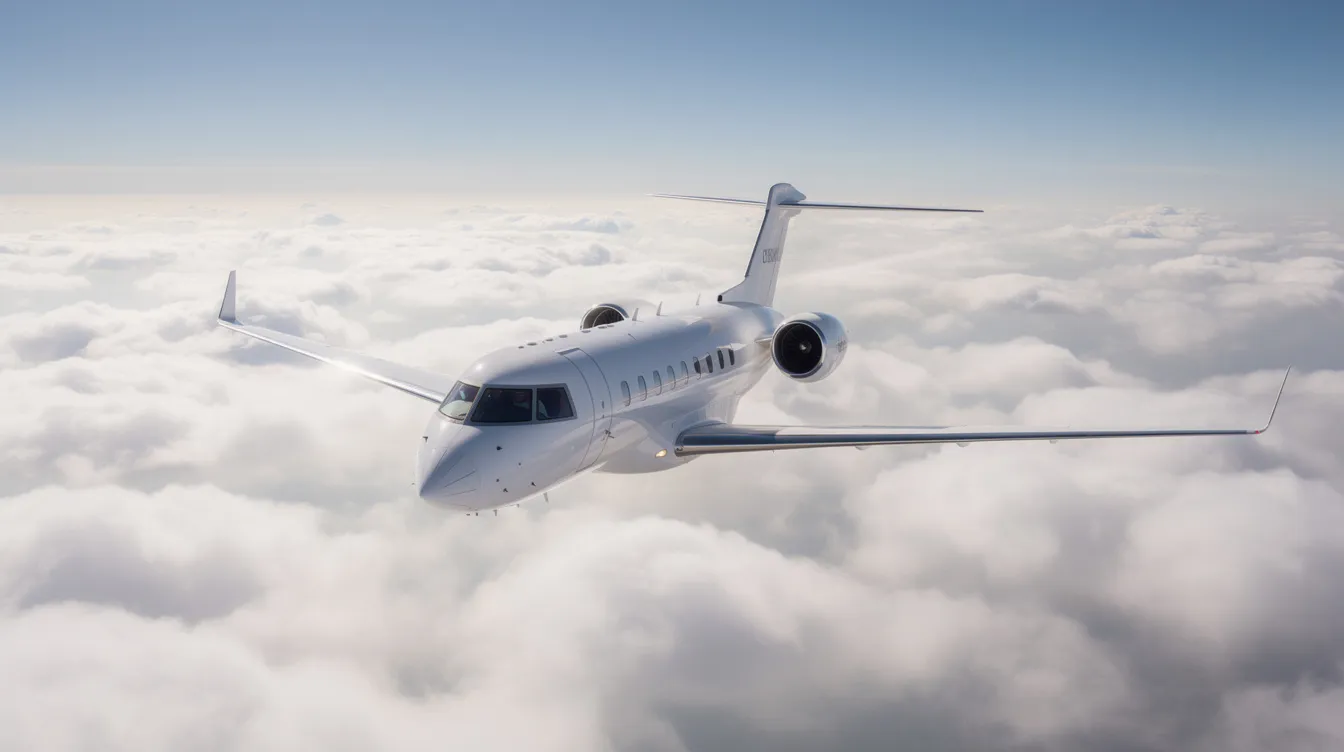
Gulfstream engines are the force behind some of the most capable business aircraft ever built. They define how far, how fast, and how comfortably you travel - turning private aviation from a convenience into a genuine strategic advantage. For BlackJet members, the engine beneath the wing determines everything from schedule flexibility to cabin quietness on an overnight transatlantic crossing.
Strategic Advantage: Why Gulfstream Engines Matter to BlackJet Members
Consider a New York–London trip. A commercial first-class itinerary involves ground transport, security queues, potential connections, and roughly ten hours door-to-door. A BlackJet Jet Card member boards a Gulfstream at a private terminal, departs on their schedule, and arrives nonstop in under seven hours — stepping off rested and meeting-ready.
That difference is powered by engines. All Gulfstream aircraft use advanced engines that integrate with aerodynamic improvements for fuel-efficiency gains, enabling nonstop missions that would otherwise require connections. BlackJet's curated fleet selection prioritizes modern Gulfstream Aerospace platforms whose engines deliver the range at Mach 0.85 needed for intercontinental routes, the high-speed cruise capability that shaves hours off long sectors, and the climb performance that reaches initial cruise altitude above weather and congestion — all aligned with its premium private jet card programs.
Throughout this article, we'll cover the engine families across the Gulfstream fleet, the Gulfstream Symmetry Flight Deck integration that ties engines to avionics, sustainability advancements, cabin comfort, and configurations that can seat up to 19 passengers and sleep long-haul groups — all grounded in the engineering that makes it possible.
Gulfstream Engine Families Across the Fleet
Gulfstream aircraft do not utilize proprietary engines but rely on powerplants from leading manufacturers. High-bypass turbofan engines are used in Gulfstream aircraft for their combination of speed, range, and fuel efficiency. A turbofan is a type of jet engine that uses a fan to generate additional thrust and improve fuel efficiency. Gulfstream relies on two primary engine manufacturers for its current lineup: Rolls-Royce and Pratt & Whitney, which supply these high-bypass turbofan engines for optimal performance. The roles of manufacturers like Rolls-Royce and Pratt & Whitney have evolved alongside Gulfstream's aircraft from turboprops to modern turbofans. Gulfstream aircraft have historically relied on high-performance turbofan engines from premier manufacturers.
Here are the key engine-airframe pairings across the fleet, many of which underpin top 16-seat private jet options ideal for larger groups:
Model | Engine Type | Thrust (per engine) | Max Speed | Range (nm) |
|---|
G280 | Honeywell HTF7250G | ~7,624 lbf | Mach 0.85 | ~3,950 |
G400 | Pratt & Whitney PW812GA | ~13,496 lbf | Mach 0.90 | - |
G500 | Pratt & Whitney PW814GA | 15,144 lbf | Mach 0.90 | ~5,300 (@ M0.85) |
G600 | Pratt & Whitney PW815GA | ~18,664 lbf | Mach 0.90 | ~5,600–6,600 |
G650/G650ER | Rolls-Royce BR725 | ~16,900 lbf | Mach 0.925 | ~7,000 |
G700/G800 | Rolls-Royce Pearl 700 | 18,250 lbf | Mach 0.935 | ~6,650 (G700), 8,200 (G800) |
G280
Powered by high-thrust Honeywell engines (HTF7250G), each producing approximately 7,624 lb of takeoff thrust. Maximum operating speed reaches Mach 0.85 with a long range of roughly 3,950 nm (7,315 km) under NBAA IFR reserves. Ideal for regional and transcontinental missions.
G400
G500
Whitney engines of the PW814GA variant deliver 15,144 lb per engine. Range at Mach 0.85 with 8 passengers reaches roughly 5,300 nm (9,816 km); range at Mach 0.90 drops to about 4,500 nm (8,334 km). Takeoff distance is ~5,300 ft at MTOW.
G600
Pratt & Whitney PW815GA at ~18,664 lb thrust. The Pratt & Whitney PW800 series provides exceptional reliability, low cabin noise, and lower fuel consumption profiles across this family. NBAA IFR theoretical range at Mach 0.85: roughly 5,600 nm (10,371 km) to 6,600 nm depending on configuration and 3 crew and NBAA IFR reserves.
G650/G650ER
Rolls-Royce BR725 engines at ~16,900 lbf. The Rolls-Royce BR700 family includes engines designed for high efficiency and long-range performance. Operating Mach number MMO of Mach 0.925; trans atlantic range capability up to 7,000 nm (12,964 km) with 4 crew and NBAA IFR reserves.
G700/G800
Rolls-Royce Pearl 700 engines, each providing 81.20 kN (18,250 lbf) of thrust. Gulfstream G700 and G800 are equipped with the Rolls-Royce Pearl 700 engines specifically designed for ultra-long-range performance. Maximum operating speed of Mach 0.935; high-speed cruise at Mach 0.90; long-range cruise at Mach 0.85 with 6,650 nm (12,316 km) on the G700 based on 8 passengers and 4 crew under NBAA IFR assumptions, and up to 8,200 nm on the G800. The G300 NBAA IFR theoretical range sits below these flagships but fills important mission gaps.
Performance, Range, and High-Speed Cruise
Gulfstream's operations emphasize high-speed performance and exceptional fuel efficiency owing to advanced engine designs. Modern Gulfstream aircraft utilize advanced powerplants engineered to deliver exceptional high thrust capabilities, allowing the airframe-engine combination to sustain high-speed cruise up to Mach 0.925 — and Mach 0.935 on the G700/G800 - without sacrificing practical range.
Gulfstream utilizes high-performance engines for efficient transcontinental and international flights, making them strong contenders when evaluating the best private jet for 15 passengers. Typical maximum range figures under NBAA IFR conditions:
Model | Long-Range Cruise (M 0.85) | High Speed Cruise Range (M 0.90) |
|---|
G500 | ~5,300 nm | ~4,500 nm |
G600 | ~6,600 nm | ~5,600 nm (est.) |
G650ER | ~7,500 nm | ~6,400 nm (est.) |
G700 | ~7,750 nm | ~6,650 nm |
G800 | ~8,200 nm | ~7,000+ nm |
Gulfstream G800 has a maximum range of 8,200 NM and can cruise at Mach 0.85. At high speed cruise, operators can save one to 1.5 hours on flights over 6,500 nm — meaningful on routes like New York–Dubai or Hong Kong–London. The maximum operating altitude for the G800 is 51,000 feet, and engine thrust margins allow a steep climb to cruise altitude between 41,000 and 51,000 ft, flying above most weather and airline traffic, in the same performance class as some of the most expensive private jets flown by heads of state and ultra-high-net-worth individuals. Affected by ATC routing, operating speed, weather, outfitting options, and passenger count, actual performance may vary, but these figures represent the engineering baseline. Fewer flight hours at higher cruise speeds also reduce engine maintenance cycles, indirectly benefiting Jet Card availability and reliability.
Symmetry Flight Deck, Avionics, and Engine Integration
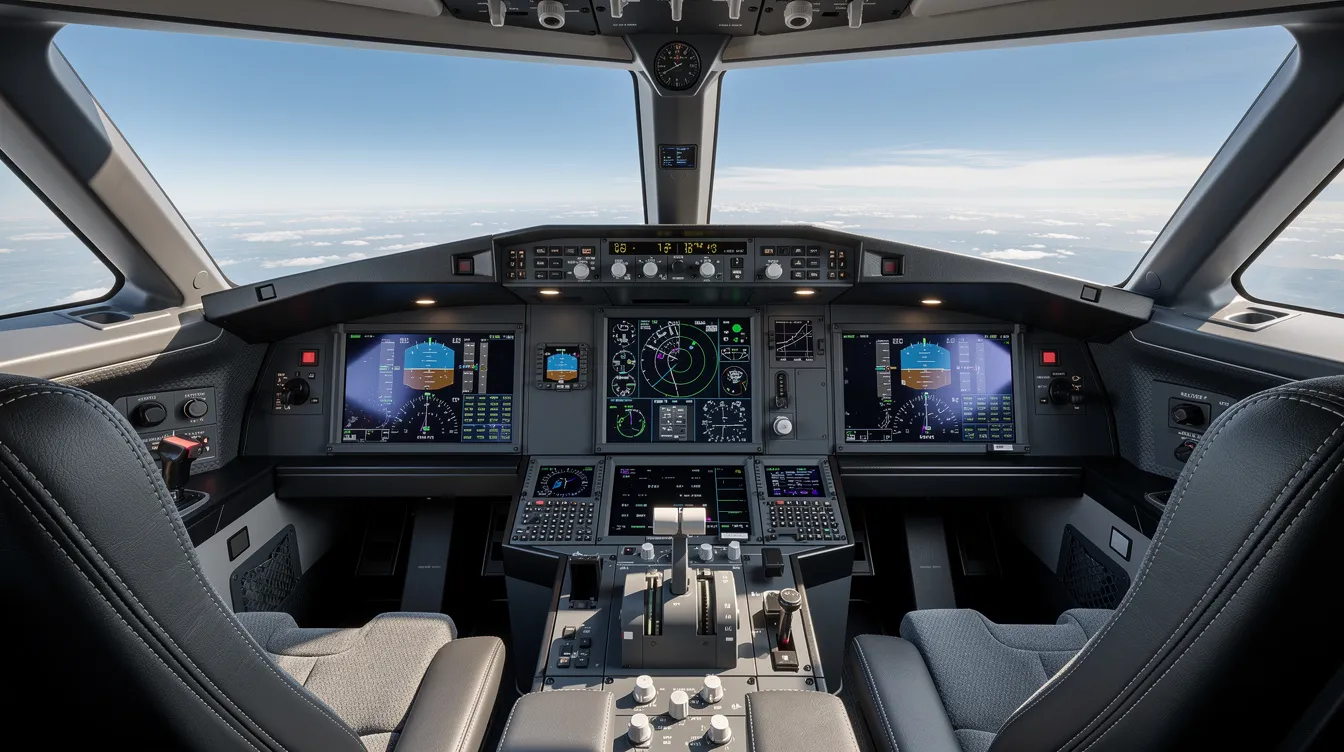
The Gulfstream Symmetry Flight Deck represents next-generation technology in how pilots interact with engines, and its reliability is a key differentiator for travelers comparing the best jet cards for frequent flyers. Found on the G500, G600, G700, and G800, this award-winning system features active control sidesticks, ten touch-screen displays, and phase of flight intelligence that simplify engine start, power setting, and monitoring throughout every mission phase.
Modern FADEC works in concert with the symmetry flight deck to optimize fuel flow, thrust, and high-speed cruise settings — reducing pilot workload and enabling consistent performance whether affected by ATC routing, operating speed, weathe,r or unexpected diversions. A synthetic vision primary flight display, Enhanced Flight Vision System, and Combined Vision System on dual head-up displays rely on stable, predictable engine thrust to support lower-minima operations. Click to close video demonstrations on Gulfstream's channels — or scan the QR code for Gulfstream WeChat channel access — and the depth of this integration becomes clear. The code for Gulfstream WeChat is also available through official channels for international audiences.
This avionics-engine synergy underpins BlackJet's focus on safety-certified aircraft, reducing human error and improving decision-making on challenging routes. A video thumbnail alone cannot convey the sophistication; it must be experienced.
Cabin Experience Powered by Engine Technology
Cabin Comfort Features
Quiet, efficient engines translate directly into a calmer cabin environment, especially on large-cabin jets that rank among the best private jets for 20 passengers. Modern Gulfstream turbofans are designed for optimal fuel efficiency, lower emissions, and reduced cabin noise. The turbofan design provides high speed and altitude capability while maintaining lower noise than turbojet designs — a distinction that matters over a ten-hour overnight crossing.
Gulfstream cabins support 19 passengers and sleep 10 to 17 depending on configuration, overlapping with aircraft families often chosen as top private jets for 30 passengers when missions demand even more capacity.
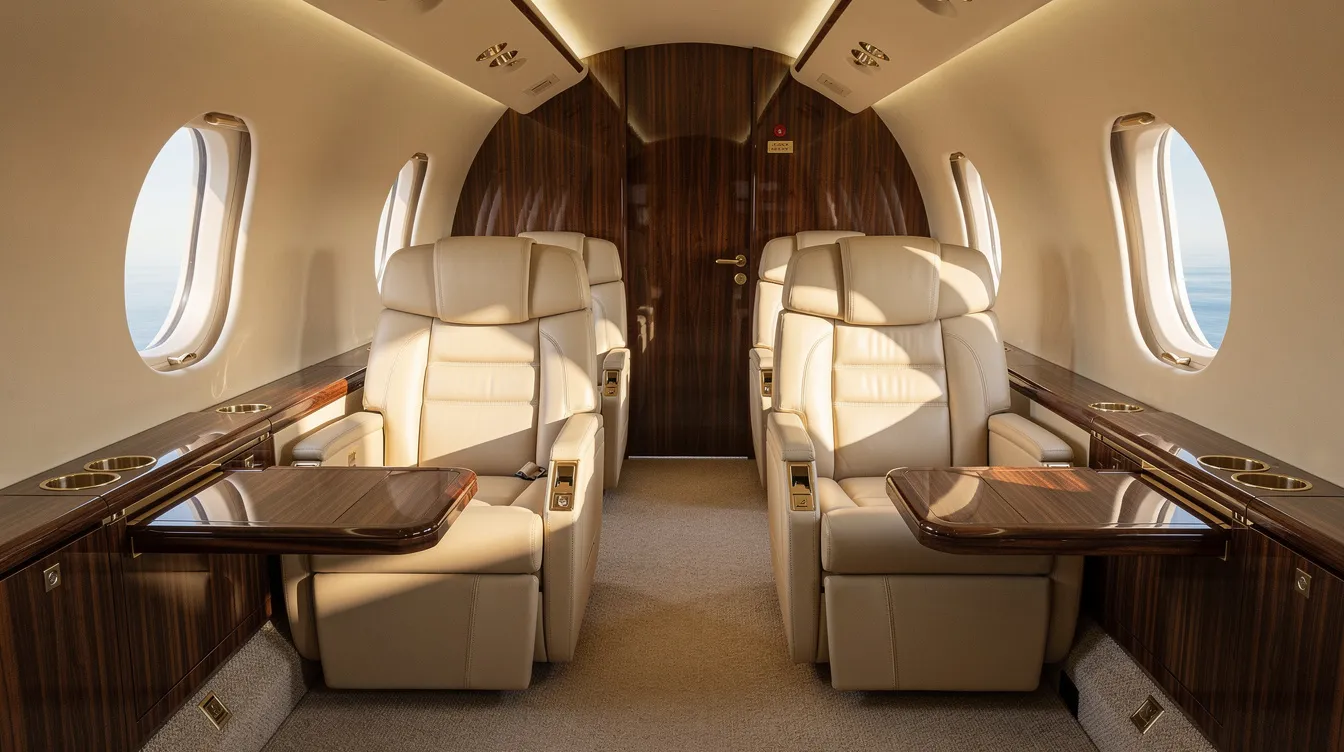
Each large cabin aircraft features a spacious cabin with configurations that bring the designer's vision to life with comfortable configurations for work, dining, and rest.
Gulfstream panoramic oval windows flood interiors with abundant natural light, while up to five living areas provide exceptional comfort and separation for business and leisure groups.
Higher cruise altitude - enabled by powerful engines — means lower cabin altitude. The G700, for example, maintains a cabin altitude of roughly 4,850 ft while cruising at 51,000 ft, reducing fatigue and jet lag.
A BlackJet 25-hour Jet Card member flying overnight from New York to Paris can dine, work, and sleep in a large cabin that seats a board-level team yet converts to beds, arriving fresh for same-day meetings. The story behind our aircraft choices centers on this link between engine capability and passenger well-being. Explore the sustainability innovation story behind each model and the routing, operating speed, and weather performance that defines life with comfortable configurations at altitude.
Sustainability Advancements in Gulfstream Engine Design
Engine Sustainability Innovations
Gulfstream Aerospace and BlackJet share an emphasis on lower emissions and carbon-neutral flights. Recent Gulfstream engines emphasize lower fuel consumption and reduced emissions in their design.
Gulfstream's fuel efficiency improves by 33% over older models when pairing new-generation engines with aerodynamic clean-wing designs.
The Pearl 700 provides a thrust-to-weight ratio approximately 12% better than previous-generation engines, while delivering roughly 5% lower specific fuel consumption versus the BR725.
Higher bypass ratios, improved turbine materials (including blisks and advanced alloys), and optimized combustors reduce emissions per nautical mile.
The Pearl 700 engine is fully compatible with 100% Sustainable Aviation Fuel, supporting lower carbon footprints on every sector.
Speed, weather, outfitting options, and range business requirements need not conflict with environmental responsibility.
BlackJet's carbon-neutral program layers certified carbon offsets on top of these inherent efficiencies, extending even to large-group missions where clients may compare the economics of charter planes for 100 passengers against scheduled commercial options. A BlackJet client flying a G700 on SAF for a high-speed transatlantic business trip can have the journey calculated and offset to net-zero - while still flying at Mach 0.90. These sustainability advancements and technical specifications make each flight measurably cleaner than the generation before.
Safety, Certification, and Engine Reliability
In business aviation, engine reliability is non-negotiable. Gulfstream aircraft are twin-engine designs optimized for cruise efficiency and long-range capability, with independent systems, multiple generators, and dual-channel FADEC redundancy providing protection against single-point failures.
Certification requirements include engine-out performance at distance SL, MTOW, balanced field length, and climb gradients — standards Gulfstream consistently exceeds. Safety-enhancing avionics like Predictive Landing Performance Systems and runway overrun alerts depend on consistent, predictable engine thrust for accurate deceleration modeling. Efficient flight profiles are maintained even during contingency scenarios.
Beyond civilian operations, about 200 Gulfstream aircraft serve 35 governments worldwide. The Gulfstream G550 is used for airborne early warning. Gulfstream aircraft are utilized for medical evacuation missions, support intelligence and reconnaissance operations, and conduct high-altitude atmospheric research — roles that demand the highest engine reliability standards. These same standards flow directly into BlackJet's commitment to audited operators, rigorous safety ratings like Wyvern Wingman, and transparent certification for every Jet Card member, including those booking large-group flights on private jets for 50 passengers. A business jet in the BlackJet program meets or exceeds every benchmark.
FAQs About Gulfstream Engines and Private Jet Travel
What types of engines power Gulfstream aircraft?
Gulfstream aircraft are powered primarily by high-bypass turbofan engines from leading manufacturers Rolls-Royce and Pratt & Whitney. These engines provide the optimal balance of speed, range, fuel efficiency, and reduced cabin noise.
How do Gulfstream engines contribute to fuel efficiency and sustainability?
Modern Gulfstream engines, such as the Rolls-Royce Pearl 700, emphasize lower fuel consumption and reduced emissions. They are fully compatible with 100% Sustainable Aviation Fuel (SAF), supporting carbon-neutral flights and reducing environmental impact.
What is the significance of engine performance for long-range flights?
High-thrust, fuel-efficient engines enable Gulfstream jets to cruise at high speeds (up to Mach 0.935) and cover ultra-long ranges (up to 8,200 nautical miles on the G800), allowing nonstop intercontinental travel and saving valuable time.
How do Gulfstream engines affect cabin comfort?
Efficient turbofan engines produce lower noise levels, contributing to a quieter cabin environment. Combined with higher cruising altitudes enabled by powerful engines, passengers experience reduced fatigue and jet lag.
Are Gulfstream engines reliable and safe for critical missions?
Yes. Gulfstream’s twin-engine designs feature redundant systems and dual-channel FADEC for dependable performance. About 200 Gulfstream aircraft serve governments worldwide in roles like medical evacuation and intelligence, underscoring their reliability.
How does engine technology integrate with Gulfstream's avionics?
The Symmetry Flight Deck integrates engine controls with advanced avionics, including active control sidesticks and phase-of-flight intelligence, optimizing engine performance and reducing pilot workload for safer, more efficient flights.
What advantages do Gulfstream engines offer over commercial aviation?
Gulfstream engines allow for faster climb rates, higher cruise altitudes, and nonstop long-range flights, enabling BlackJet members to save hours compared to commercial itineraries and enjoy more personalized, flexible travel.
How can BlackJet members benefit from Gulfstream-powered jets?
BlackJet Jet Card members gain prepaid access to Gulfstream aircraft with cutting-edge engines, ensuring seamless, high-speed, and carbon-neutral travel tailored to their schedules and mission needs.
Choosing Gulfstream-Powered Aircraft with a BlackJet Jet Card
BlackJet advisors help clients match trip profiles to the right Gulfstream aircraft and engine combinations — from super-midsize to ultra-long-range, whether you’re booking an entire aircraft or buying a seat on a private jet through shared solutions.
New York–Miami weekend: A super-midsize Gulfstream with efficient Honeywell/Pratt & Whitney engines covers the ~1,100 nm route quickly, with access to smaller airports closer to your destination.
Los Angeles–New York shuttle: G500 or G600-class aircraft at high speed cruise, arriving coast-to-coast in under five hours, a pattern well-suited to analyzing 100-hour jet card cost for bi-coastal executives.
New York–Hong Kong nonstop: G700 or G800 with Pearl 700 engines, covering up to 8,200 nm with maximum range capability and cabin comfort for the entire journey, and illustrating how some travelers maximize the value of unlimited private jet flight memberships.
Configurations that can seat up to 19 passengers allow BlackJet to support board meetings, family trips, and mixed business-leisure missions on a single flight, particularly for clients comparing options like a 25-hour jet card program against ad hoc charter. The Jet Card model — available in 25-hour, 50-hour, or custom programs — lets frequent travelers lock in access to high-performance Gulfstream aircraft without capital commitment, unpredictable charter pricing, or ownership overhead, while resources like a 50-hour jet card cost guide and detailed breakdowns of jet card cost per hour help quantify the value.
Discover how a BlackJet Jet Card can reshape your travel — securing priority access to Gulfstream-powered, carbon-neutral journeys tailored to your schedule and standards — and use comparisons of overall jet card cost, analyses of NetJets jet card pricing, and a complete guide to jet card pricing structures to benchmark your options.


 Sign up with google
 Sign up with Apple