The aircraft you fly in, the avionics guiding your pilot, and the engine burning fuel at 41,000 feet all trace back to a single organization's standards and advocacy. Here is what GAMA does and why it matters if you fly privately.
Quick Overview: GAMA's Role in General Aviation
The General Aviation Manufacturers Association is the aviation manufacturers association that GAMA members, regulators, and policymakers turn to as the primary voice of general aviation manufacturers worldwide. This international trade association, representing over 100 aviation manufacturers,s sets the baseline for safety, technology, and operational standards across business jets, turboprops, piston aircraft, and rotorcraft. GAMA assists in defining technical standards for flight safety and operations, and its influence shapes what private flyers experience every time they board.
Founded in 1970 and headquartered in Washington, D.C., with an additional office in Brussels, GAMA engages with global aviation authorities to streamline aircraft certification processes. Its membership includes the world's leading manufacturers of engines, avionics, and components, plus maintenance, repair, and training providers. General aviation includes airplanes and rotorcraft, and GAMA covers both categories.
For BlackJet members holding a Jet Card, this translates to direct benefits: the aircraft in your fleet carry avionics mandated or encouraged through GAMA advocacy, burn fuel from engines refined by GAMA member companies, and meet safety protocols shaped by decades of industry trade association work.
About GAMA: History, Mission, and Global Reach
GAMA held its first organizational meeting on January 2, 1970, in Washington, D.C. Edward W. Stimpson was elected president that year and served for over 25 years, establishing the trade association as the primary manufacturers' association for the general aviation industry. The mission stated at founding: "to foster and advance the general welfare, safety, interests, and activities of general aviation."
That mission translates into four concrete pillars: enhancing safety through innovation and training, improving certification and regulatory processes, supporting economic growth across the general aviation sector, and promoting general aviation's contribution to communities, transportation, and related enterprises. GAMA represents the economic interests of general aviation in public policy discussions at federal, state, and international levels.
Geographically, GAMA's members span North America, Latin America, Europe, Asia-Pacific, and the Middle East. Companies from the US, Canada, Brazil, China, and across Europe participate. The Brussels presence gives GAMA direct access to EASA and EU regulators, while its Washington office handles FAA coordination, congressional engagement, and government affairs.
Who GAMA Represents: Aircraft, Engine, Avionics, and Component Manufacturers
GAMA's membership covers the full general aviation ecosystem, from aircraft OEMs to specialized service and training organizations.
On the aircraft side, manufacturers like Textron Aviation (Cessna and Beechcraft), Gulfstream Aerospace, Bombardier, Dassault Aviation, Embraer, and Cirrus Aircraft all participate, covering everything from large-cabin jets to the best small private aircraft for specific missions. Cessna operates a fleet of 543 single-engine aircraft, and the Cessna Skyhawk 172 remains one of the most widely used training aircraft for pilots entering general aviation, illustrating how budget-friendly private aircraft options can open the door to flying for more people. Cirrus has delivered over 800 Vision Jets since the Cirrus Vision Jet received FAA type certification in 2016, helping define what today’s cheapest private jet options look like in terms of performance and safety. At the other end of the spectrum, Dassault's Falcon 10X, with a range of 7,500 nautical miles, sits alongside many of the top private jets in the world and is expected to be certified in 2029.
Engine manufacturers like Pratt & Whitney Canada and Rolls-Royce drive gains in engine efficiency, range, and reliability for business jets and turboprops, which is especially critical for 16-seat private jets designed for group travel. Their turbofan advances reduce fuel burn per flight hour and extend maintenance intervals.
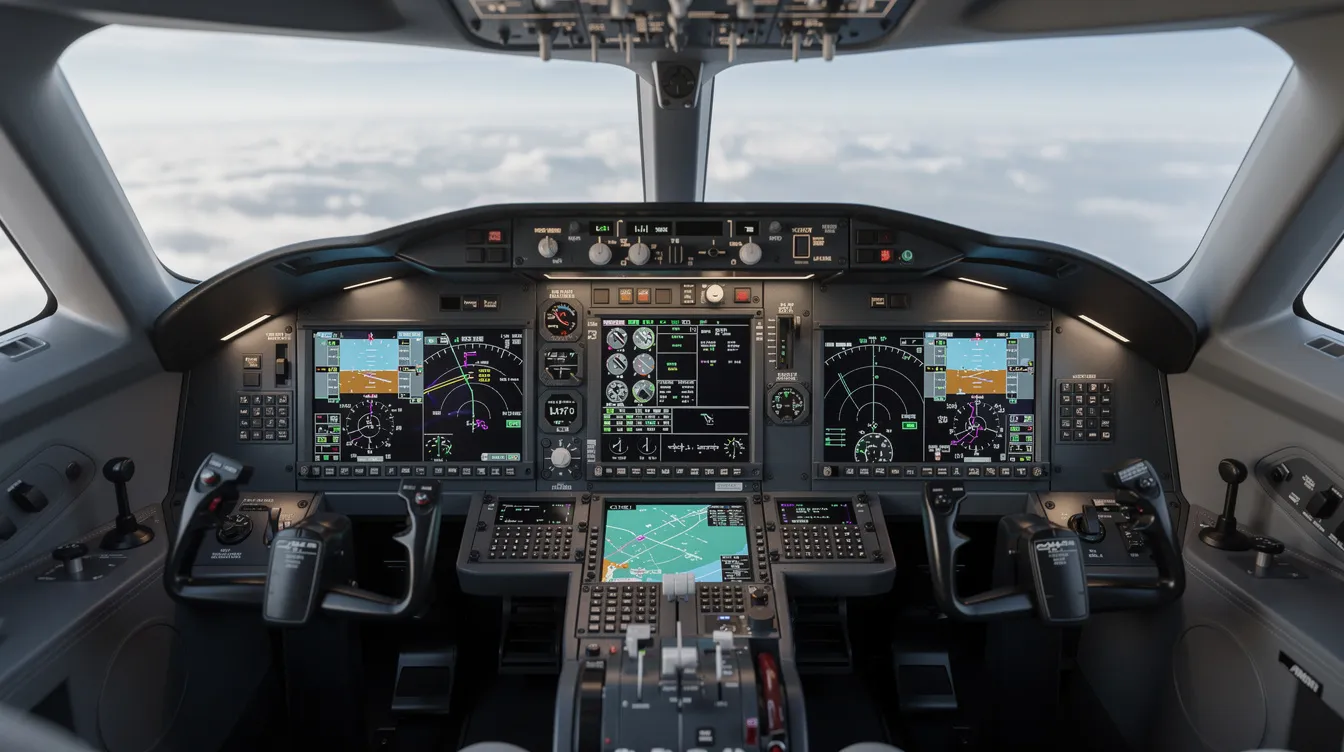
Avionics companies, including Garmin and Honeywell, produce flight management systems, synthetic vision, and safety technologies that reduce pilot workload. Garmin Emergency Autoland can automatically land an aircraft if the pilot becomes incapacitated; this system is already active in several general aviation airplanes.
Component manufacturers and service providers round out the ecosystem: landing gear suppliers, interior outfitters, composites specialists, fixed-base operations, MRO firms like Duncan Aviation and StandardAero, and training providers like FlightSafety International, all of which also support the fleets of leading private jet companies worldwide. These related services keep fleets airworthy and comfortable throughout each aircraft's operational life. Jet card providers like BlackJet rely on this supply chain to ensure every flight meets current safety and performance standards.
Issues, Government Affairs, and Industry Advocacy
GAMA's core function beyond standards is government affairs: lobbying the FAA, EASA, Transport Canada, and legislative bodies on certification rules, airspace modernization, and environmental policy, all of which ultimately influence the private jet price landscape and access models available to travelers. GAMA works alongside the National Business Aviation Association to position business aviation as essential to economic development, medical transport, and critical missions, not just a convenience for individuals worldwide.
Sustainability occupies a growing share of GAMA's agenda, which directly affects how operators plan long-range missions on large private jets for 20 passengers. The EAGLE coalition promotes lead-free aviation fuel initiatives, with general aviation aiming for unleaded fuel by 2030, even as demand grows for heavy jets and VIP airliners that can serve as private jets for up to 50 passengers. A California judge questioned the availability of unleaded aviation fuel in 2024, highlighting how regulatory and supply timelines remain misaligned. Sustainable Aviation Fuel initiatives aim to reduce aviation's environmental impact, and GAMA reported a commitment to sustainable aviation fuels as part of the broader aviation industry effort to reduce dependence on fossil fuels.
GAMA also advocates for technological innovation in electric and hybrid aircraft, supports workforce development (including programs targeting high school students entering engineering and maintenance careers), and publishes its annual state of the industry outlook, informing everything from pilot training pipelines to planning large-group private jet travel for 30 passengers. The organization plays an important role in keeping regulation balanced: clear enough to protect safety, flexible enough to preserve access to smaller airports and advance innovative solutions for new vertiport infrastructure and advanced air mobility.
For BlackJet members, this advocacy preserves the operational flexibility that makes private jet access a strategic advantage over commercial alternatives.
Data, Reports, and the State of General Aviation
GAMA compiles and releases industry shipment and billing data as performance benchmarks through quarterly and annual reports, which many operators and providers, including those analyzing NetJets jet card costs and structures, use to gauge demand. These cover general aviation aircraft deliveries (business jets, turboprops, piston airplanes, helicopters, a nd rotorcraft) and total billing figures, giving manufacturers, operators, and investors a clear view of market health and helping frequent flyers benchmark options like a 50-hour jet card cost comparison.
The numbers tell a growth story. General aviation aircraft shipments topped 4,000 units in 2024, and total billing for aircraft shipments exceeded $30 billion that year. Aircraft deliveries increased in every category during the first nine months of 2022, and aircraft shipments increased in 2022 compared to 2021 despite supply chain challenges. General aviation shipments rose despite a decline in durable goods orders in April 2025, showing resilience in global business demand. In the first half of 2026, 1,458 airplanes were delivered, with billings reaching $14.3 billion.
General aviation supports total economic output exceeding $339 billion in the U.S. alone and over 1.3 million jobs across manufacturing, operations, maintenance, and related enterprises, while also enabling new access models so travelers can buy a single seat on a private jet instead of chartering an entire aircraft. The Civil Air Patrol has flown nearly 200,000 hours since 2024, underscoring general aviation's role in communities, search and rescue, and development of future pilots. GAMA members and leadership, including its president and CEO, use this data to brief members of Congress, the chairman of relevant committees, and directors across federal agencies on the industry's contribution to the economy.

GAMA, Business Aviation, and the BlackJet Perspective
Every aircraft in a Jet Card program reflects decades of GAMA member engineering, certification, and safety advocacy, and understanding how jet card costs are structured helps members see the value behind those standards. When a BlackJet member books a midsize jet from Dallas to New York, the avionics, engines, and airframe trace back to companies represented by this organization.
BlackJet's safety standards align with GAMA's priorities: vetted operators, modern aircraft, strict maintenance schedules, and adherence to Part 135 operating requirements. On sustainability, BlackJet provides carbon-neutral flights through offsets, complementing GAMA's push for SAF adoptioOn sustainability, BlackJet provides carbon-neutral flights through offsets, complementing GAMA's push for SAF adoption and lower-emission airframes across the industry.
Frequently Asked Questions About GAMA and Private Aviation
What does the General Aviation Manufacturers Association do?
The General Aviation Manufacturers Association (GAMA) represents more than 100 aviation manufacturers worldwide. It advocates for the industry, supports workforce development, shares shipment and billing data, and works with regulators on safety standards and aircraft certification.
How does GAMA's work affect private flyers?
GAMA does not certify individual flights or operate aircraft. Its advocacy and technical work can influence the standards, technologies, and regulatory processes that shape aircraft used in private aviation. Travelers should still evaluate the operator, aircraft, and safety credentials for each flight.
Does GAMA certify private jets or operators?
No. Aircraft certification is handled by aviation authorities such as the FAA and EASA, while operators must meet applicable regulatory requirements. GAMA engages with these authorities to support efficient certification processes and industry-wide technical standards.
How does general aviation address sustainability?
Industry efforts include developing Sustainable Aviation Fuel, advancing electric and hybrid aircraft, and working toward unleaded fuel for piston aircraft by 2030. BlackJet also offers carbon-neutral flights through carbon offsets, helping customers address the emissions associated with their travel.
What is the difference between aircraft manufacturers and a Jet Card provider?
Manufacturers design and build aircraft, engines, avionics, and components. A Jet Card provider gives members prepaid access to flights operated by qualified aviation companies. BlackJet's Jet Card model offers access across cabin classes without requiring the traveler to own an aircraft.n and lower-emission airframes across the industry.
Three models of access to general aviation exist today. Owning a jet means full control but carries capital costs, depreciation risk, and regulatory exposure. Ad-hoc charter offers flexibility without commitment but inconsistent aircraft quality and pricing. A Jet Card from BlackJet delivers prepaid access across multiple cabin classes with consistent safety certification, 24/7 support, and technology-driven booking, without the burden of ownership or the unpredictability of one-off charters.
GAMA's work in certification, innovation, and news about regulatory development shapes what aircraft are available, how safe they are, and how efficiently they operate, ultimately influencing jet card pricing structures and benefits across the market. For the discerning traveler, understanding this organization offers a better understanding of why private aviation keeps advancing and how to select the best jet cards for frequent flyers to take advantage of that progress.
Conclusion: Why GAMA Matters to Private Flyers
The General Aviation Manufacturers Association may not operate aircraft or certify individual flights, but its work helps shape the standards, technology, and policy environment behind modern private aviation. From aircraft certification and safety innovation to workforce development, sustainability, and industry data, GAMA influences the ecosystem that keeps general aviation evolving.
For private flyers, that progress supports more capable aircraft, advanced avionics, and broader access to the airports and communities commercial airlines may not serve directly. A frequent traveler can benefit from those advances without owning an aircraft: a Jet Card provides flexible access across cabin classes while avoiding the capital and management responsibilities of ownership.
GAMA’s role is one part of the picture. Travelers should also assess the operator, aircraft, and applicable safety credentials for each trip. With BlackJet, members can pair that diligence with responsive support, modern booking tools, and carbon-neutral flight options. Explore BlackJet’s Jet Card programs to experience private aviation shaped by continued progress in safety, technology, and sustainability.
Explore BlackJet's Jet Card programs for access to modern, rigorously certified aircraft across light, midsize, super-midsize, and large cabin classes, and consider how jet card tax deductions can further optimize the economics of frequent private flying. Safety, sustainability, and flexibility- built into every flight.
Join BlackJet's Jet Card program for private travel that reflects the best of what general aviation manufacturers produce.


 Sign up with google
 Sign up with Apple