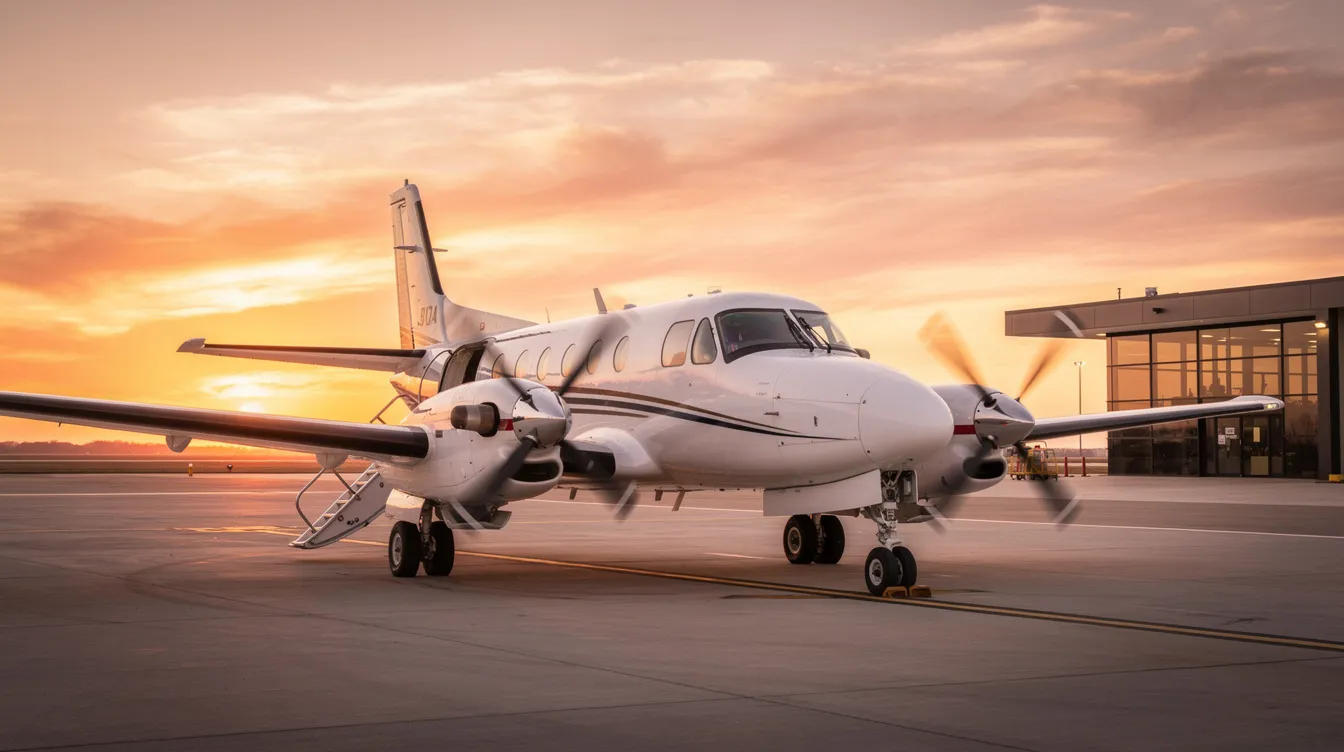
A Garmin G1000 retrofit is one of the largest single avionics investments an aircraft owner can make. This guide is designed for aircraft owners, pilots, and private flyers considering an avionics upgrade or evaluating aircraft purchase options. Understanding the costs and value of the Garmin G1000 and G1000 NXi systems is essential for making informed decisions about safety, resale value, and operational efficiency. Here is what the numbers look like in 2026, what drives the price, and how to decide whether the upgrade pencils out.
Garmin G1000 vs. G1000 NXi: Cost Snapshot for 2026
A full Garmin G1000 flight deck retrofit for a King Air aircraft costs between $325,000 and $400,000 installed, with most shops quoting roughly $375,000 as the baseline for King Air 200/B200 and C90 models. That figure covers hardware, wiring, panel modifications, certification, and labor.
For aircraft that already have a G1000 system installed, a G1000 NXi upgrade costs $28,995 from Garmin authorized dealers for the hardware kit. Installation and hardware charges apply on top of that base price and typically add $4,000 to $10,000 or more, depending on the aircraft type and shop.
The distinction matters: a full retrofit replaces legacy analog or older digital avionics with an integrated glass cockpit, while an NXi upgrade swaps displays and controllers in an existing G1000 installation for faster processors, LED backlighting, and expanded capabilities.
| Full G1000 Retrofit | G1000 NXi Upgrade | Legacy Avionics Maintenance |
|---|
Typical cost | $325,000–$400,000 installed | $28,995 kit + $4,000–$10,000 install | ~$20,000/year + piecemeal compliance |
Downtime | ~15 working days (3–5 weeks total) | 2–3 days for display swap | Ongoing unscheduled repairs |
5-year compliance spend | Included (ADS-B, WAAS, RVSM) | N/A (already compliant) | $175,000–$350,000+ |
Resale value impact | +$250,000–$300,000 | Moderate uplift | Minimal or negative |
These numbers matter for business travelers and high-net-worth aircraft owners who depend on reliable, modern avionics for safety and dispatch reliability. At BlackJet, we operate in the private aviation space and frequently fly clients on aircraft models where the Garmin G1000 and G1000 NXi are standard equipment, so we track these costs closely for our fleet partners and owners as part of our broader premium private jet card and charter services.
What Makes Up the Cost of a Garmin G1000 Flight Deck?
The Garmin G1000 cost is not a single line item. It bundles hardware, software, labor, and certification into one project. Here is where the money goes:
Displays and core avionics: Two primary flight display units, one multi-function display, digital air data computers, attitude heading reference systems, and integrated GPS/WAAS receivers. Hardware kits for turboprop aircraft run $50,000–$60,000 before autopilot or antennas.
Autopilot integration: The GFC 700 autopilot, common in King Air G1000 installs, lists around $62,000 for King Air 200 series configurations. Servo installation, calibration, and flight testing add to the total.
Wiring, harnesses, and panel work: Converting from steam gauges or older EFIS requires new wiring runs, connectors, panel cutouts, and sometimes cooling modifications. This portion scales with airframe complexity.
Certification: Supplemental Type Certificates (STCs) may be necessary for aircraft installation. For eligible aircraft already on Garmin's STC eligibility list, this cost is lower. New or amended STCs can add tens of thousands.
Shop labor: U.S. avionics shops charge $150 to over $200 per hour for turbine and turboprop work in 2026, placing the labor portion of a full King Air retrofit at $30,000–$50,000.
Additional features like synthetic vision, Flight Stream connectivity, weather radar (GWX-68), and SurfaceWatch add measurable cost but boost situational awareness in ways that pay back over a 5–10 year operating horizon, especially for high-utilization business aircraft flying 200–400 hours annually.
Typical Garmin G1000 Install Costs by Aircraft Category
Installed cost varies by aircraft size, existing avionics, and whether an STC exists for the specific airframe.
For single-engine piston aircraft like an older Cessna Skyhawk 172 or Cessna 182 without a factory G1000, no broadly available STC covers a full G1000 retrofit. Owners instead turn to partial glass solutions: G3X Touch, dual GI-275 backups, GTN 650/750 navigators, and GFC 500 autopilots. These packages typically cost $40,000 to $100,000 installed, with hardware alone ranging from $25,000 to $50,000.
Legacy turboprops tell a different story. A Beechcraft King Air B200 or B300 with a full Garmin G1000 base install runs approximately $375,000 installed, covering WAAS/LPV, ADS-B in and out, RVSM compliance, and a modern autopilot in a single integrated system. The high cost reflects the complexity of pressurization interfaces, performance data integration, and propeller system monitoring that turboprops demand.
For select light jets with factory G1000 installations (some Embraer Phenom 100/300 variants, for example), NXi upgrade hardware kits are listed around $59,995 MSRP, but installation and aircraft-specific certification can double that figure. Full retrofits on light jets are rare and typically OEM-only programs.
Differences in autopilot integration, pressurization, and existing power supplies affect both cost and downtime. At BlackJet, we favor aircraft with modern integrated flight decks in our partner fleet because they reduce dispatch risk and unscheduled downtime for jet card members who rely on predictable jet card membership pricing and consistent aircraft standards.
G1000 NXi Upgrade Costs vs. Legacy G1000: Dollars and Details
The Garmin G1000 NXi is the evolutionary upgrade to the original G1000. It shares the same panel footprint but replaces the internals with a dual-core processor for faster performance, LED backlighting, and new software capabilities.
The G1000 NXi upgrade costs $28,995 from Garmin authorized dealers. The upgrade includes a $4,000 STC Letter of Authorization. Installation and hardware charges may apply beyond the kit price, often adding $4,000 to $10,000 depending on shop rates and aircraft-specific wiring. The G1000 NXi upgrade comes with a two-year warranty on upgraded components.
NXi upgrade pricing runs lower than a full retrofit for three reasons. First, displays and main LRUs reuse existing mounts and connectors, eliminating panel rework. Second, no large-scale rewiring or structural changes are required. Third, certification work is already covered under existing STCs for eligible aircraft.
Cessna 172, 182, and 206 are eligible for the G1000 NXi upgrade. Beechcraft Bonanza and Baron can also upgrade to G1000 NXi. Cessna Nav III includes specific models for G1000 NXi eligibility. Garmin's notifications specify eligible aircraft models for NXi, and eligibility depends on specific aircraft configurations and modifications. Owners should verify serial number eligibility before committing.
For actively flown aircraft, the NXi delivers HSI mapping, improved synthetic vision, faster map redraws on the moving map, and wireless connectivity that the original G1000 lacks.
King Air Case Study: Maintain Legacy Avionics or Install Garmin G1000?
The King Air is one of the most common turboprops in business and charter fleets, making it an ideal financial case study.
Maintaining a Collins Pro Line 2 avionics system in a King Air costs approximately $20,000 per year just to keep everything operable. Meeting modern airspace mandates piecemeal through that legacy system compounds the problem: a WAAS/LPV upgrade runs roughly $95,000, RVSM certification adds about $83,000, and ADS-B compliance pushes another $75,000. Over five years, adding those upgrades plus annual maintenance can exceed $350,000 without fundamentally modernizing the cockpit.
A full Garmin G1000 retrofit at roughly $375,000 installed packages all of those capabilities into a single integrated flight deck. According to 2023–2025 brokerage data, the system adds approximately $250,000 to $300,000 in resale value. The math favors the retrofit for operators planning to hold the aircraft five years or longer.
Operationally, downtime for a King Air G1000 NXi upgrade runs around three weeks. Transition training for crews already familiar with glass cockpits is minimal, and dispatch reliability improves because a single integrated system has fewer failure points than a patchwork of legacy boxes.
From BlackJet's perspective, a King Air with G1000 or G1000 NXi reduces trip disruptions for jet card clients flying to regional business centers or leisure destinations where turboprops are ideal and compare favorably with other options covered in our guide to the best small private aircraft for different missions.
Key Features That Influence G1000 and G1000 NXi Value
Cost is one side of the equation. What the investment delivers in safety, situational awareness, and workload reduction is the other.
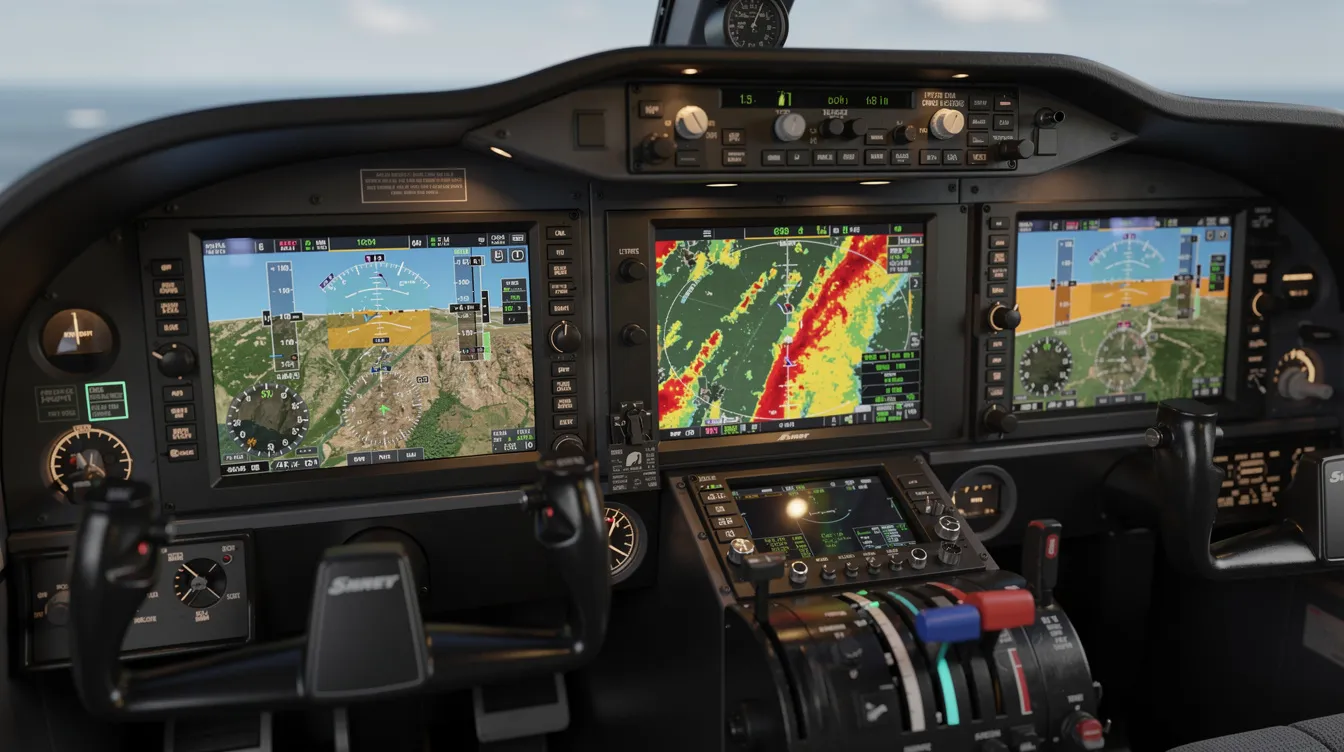
The primary flight display replaces six analog instruments with a single screen showing attitude, airspeed, altitude, vertical speed, and a horizontal situation indicator. The multi function display provides a geographical map overlay, engine monitoring, weather, and airport diagrams on a second screen. Together, they let pilots visualize nearby flight traffic, terrain, and weather in a single scan.
The GFC 700 autopilot uses all G1000 sensor data to fly a precise flight path through climbs, descents, and coupled approaches, including LPV approaches and visual approach guidance for safer landings. Performance data entered by the crew feeds directly into the flight plan, enabling the system to compute fuel burns and descent profiles automatically.
Advanced situational awareness tools separate the G1000 NXi from older panels. Enhanced terrain alerting with color-coded contouring and a terrain profile view warns pilots of CFIT risks with visual and aural cues. SurfaceWatch technology helps prevent runway incursions by using airport environment data to graphically alert crews to a wrong runway based on the aircraft's position and closure rates; the system detects when proximity conflicts loom ahead during taxi and landing. Turbulence detection through weather radar, including NEXRAD weather radar imagery, gives crews lead time to avoid hazardous conditions.
These features matter for private flyers who value safety standards comparable to or exceeding those of leading charter and jet card operators, and align with what we outline when addressing the question of whether private jets are safe and how risks are managed.
Connectivity, Flight Stream, and Ongoing Subscription Costs
Garmin's connectivity ecosystem turns the G1000 NXi into a connected flight deck. The G1000 NXi supports wireless database transfers via Flight Stream 510, which links the avionics to tablets running Garmin Pilot or ForeFlight Mobile.
Flight Stream enables wireless flight plan transfer between the panel and mobile apps, real-time GPS information, attitude, weather, and traffic data streaming to tablets, and Database Concierge for updating navigation databases without swapping SD cards. Pilots can select vectors, review flight plan data, or check frequency type and station ID information on their tablet, then push changes to the panel wirelessly.
Ongoing aviation database subscriptions are required for G1000 operations. Owners should budget for Jeppesen or Garmin navigation databases for IFR flying, weather and chart subscriptions (FliteCharts, ChartView, SiriusXM), and optional services like European visual reporting points databases depending on where the aircraft operates. These subscriptions typically run $2,000 to $5,000 per year, a predictable expense much like the structured hourly costs outlined in our guide to 100 hour jet card pricing.
While small relative to the install cost, over a 5–10 year period subscriptions materially contribute to total lifecycle avionics cost of ownership. Connected avionics also support faster turnarounds and smoother coordination between cockpit, dispatch, and travelers on time-sensitive itineraries, which becomes increasingly important as overall private jet pricing and access models make high-frequency travel more common.
Training, Transition, and Safety Implications of Upgrading to G1000 or G1000 NXi
Training is part of the true cost of moving to a Garmin G1000 or Garmin G1000 NXi. Pilots transitioning from steam gauges need ground school and flight time to build proficiency with glass-panel scan patterns, MFD priority management, and autopilot modes.
Pilots already familiar with the G1000 typically need minimal transition training for NXi because the layout, knobs, and softkeys remain the same. The upgrade adds capabilities without changing the fundamental interface, keeping training expense low.
The indirect financial benefits of better situational awareness compound over time. Fewer weather diversions mean less fuel waste. Improved in-flight decision support and back up attitude information reduce the risk of incidents that could ground the aircraft, spike insurance costs, or disrupt travel schedules. On final approach, visual approach guidance and terrain alerting at ground level provide additional information that reduces workload during demanding operations at night or in IMC at unfamiliar airports.
Many operators, including high-end charter and jet card providers, incorporate G1000 NXi training and standardization into their safety management systems, a theme echoed by top private jet companies focused on safety and service. At BlackJet, aircraft with modern Garmin flight decks and trained crews align with our emphasis on safety, standardization, and predictable travel experiences.
Financing, Resale Value, and When a G1000 Upgrade Makes Economic Sense
A Garmin G1000 or G1000 NXi upgrade is a six-figure project. Understanding financing and resale implications keeps the decision grounded.
A separate loan for the G1000 NXi upgrade may be possible through aviation lenders, similar to how buyers structure financing when evaluating 10 million-dollar private jet ownership options. Financing options depend on lender approval and project eligibility. Some owners refinance the entire aircraft with a higher first lien that covers the project, using the post-upgrade appraised value to support improved terms. Others pay cash to preserve simplicity, similar to travelers who prepay for a 50 hour jet card block to lock in rates and avoid per-trip financing decisions. Lenders typically require clear documentation, STCs, and completion reports before adjusting hull value or loan amounts, just as owners seeking jet card tax deductions must maintain detailed records to support their positions.
A full retrofit makes the most economic sense for a mid-time King Air or similar turboprop with solid engines but obsolete avionics, flown 200–400 hours annually, with a planned hold period of 5–10 years, especially when compared to alternative access models such as a NetJets jet card program. The resale uplift of $250,000–$300,000 and the elimination of $20,000/year in legacy maintenance costs create a clear payback window.
A G1000 NXi upgrade or partial panel refresh may be smarter for owners considering sale within a few years; the lower capital outlay preserves flexibility and can be weighed alongside broader private jet cost and pricing benchmarks.
For travelers whose primary goal is reliable, luxury point-to-point travel rather than aircraft ownership, a premium jet card program can sidestep these avionics capital decisions entirely, and comparing the best jet cards for frequent flyers helps match access models to actual usage. Prepaid jet programs are appealing for high-net-worth leisure travelers because the avionics investment and upgrade risk are borne by fleet owners, not passengers, and some even emulate the feel of unlimited private jet flight memberships for very frequent travelers.
Alternatives to Full Garmin G1000 Installations (and When to Consider Them)
Many owners who research Garmin G1000 cost discover that a full G1000 install is not available or economically sensible for their aircraft.
For legacy Cessna single-engine aircraft and similar training or personal airplanes, there is no STC to retrofit a G1000, so owners often weigh these avionics upgrades against acquiring one of the cheapest private aircraft options for budget-conscious flyers. Instead, Garmin G500/G500 TXi, G3X Touch, GI 275, or GTN 650/750 series provide modern glass capability at $40,000 to $100,000 installed. These alternatives deliver much of the G1000's situational awareness: synthetic vision, a moving map with geographical map overlay, integrated GPS/nav/com, and ADS-B traffic and weather.
Used G1000 systems vary in pricing based on condition and configuration, but sourcing used components introduces warranty and support risks that new kits avoid. Garmin offers a two-year warranty on new upgraded components; used parts rarely carry equivalent coverage.
For owner-pilots flying personal or training missions, partial upgrades often offer a better return on investment than chasing a non-certified full retrofit, and those calculations mirror the tradeoffs discussed when evaluating the cheapest private jet options for entry-level travelers. From BlackJet's perspective, for travelers whose priority is straight-in access to private, modern, carbon-neutral flights rather than start-up costs and hangar bills, a Jet Card program offers the same result without ownership complexity.
FAQs on Garmin G1000 Cost, NXi Upgrades, and Private Travel
How much does a Garmin G1000 NXi upgrade cost in 2026 for a typical King Air? The NXi hardware kit is $28,995 from Garmin-authorized dealers. With installation, the $4,000 STC Letter of Authorization, and shop labor, the total project cost for a King Air typically lands between $35,000 and $65,000.
Can I retrofit a Garmin G1000 into my Cessna 172 or 182 if it did not leave the factory with one? No broadly available STC exists for a full G1000 retrofit on these aircraft. Cessna 172, 182, and 206 are eligible for a G1000 NXi upgrade only if they already have a factory-installed G1000 system.
How long will my aircraft be down for a G1000 or G1000 NXi install? A full King Air retrofit takes roughly 15 working days (3–5 weeks including shipping and FAA inspections). An NXi display upgrade typically requires 2–3 days of shop time.
Will a Garmin G1000 upgrade pay for itself when I sell the aircraft? For King Air aircraft, brokerage data shows a resale value increase of $250,000–$300,000 post-retrofit, which often recoups most or all of the $375,000 install cost when combined with avoided maintenance expenses over the hold period.
What are the ongoing subscription costs? Navigation database subscriptions, weather services, and chart data run $2,000 to $5,000 per year. Today Garmin announced expanded subscription bundles, but costs remain modest relative to the hardware investment.
Does upgrading to G1000 NXi reduce insurance premiums or change training requirements? Many underwriters view modern avionics favorably, but premium reductions are not guaranteed. Transition training is minimal for pilots already rated on the G1000; the cockpit layout and flight information architecture remain consistent.
If I fly mostly by charter or jet card, should I care whether the aircraft has a Garmin G1000 or G1000 NXi? Yes. A Garmin G1000 NXi-equipped aircraft offers pilots better terrain alerting, weather capabilities, and backup attitude information, all of which contribute to a safer, more reliable flight and a smoother ride when private jets encounter turbulence. Private jet customers value flexibility, privacy, safety, and luxury while traveling. Jet Card programs offer prepaid access to private jets with digital booking tools, and the best programs ensure their fleet partners fly aircraft with modern avionics, all within transparent jet card pricing structures and fee models.
Conclusion: Make the Upgrade Decision Around Your Mission
Garmin G1000 cost depends on whether you are installing a complete flight deck or upgrading an aircraft that already has an eligible G1000 system. A full King Air retrofit can reach roughly $325,000–$400,000 installed, while the G1000 NXi hardware upgrade starts at $28,995 before aircraft-specific installation charges. Eligibility, certification, shop labor, optional equipment, database subscriptions, and downtime all affect the total investment.
Before committing, confirm that the exact aircraft configuration qualifies, obtain an itemized quote from an authorized avionics shop, and compare the expected operating and resale benefits with your ownership horizon. Modern avionics can improve capability and situational awareness, but no installation guarantees a particular resale premium, insurance discount, or operational outcome. Use approved installation data, qualified maintenance professionals, and appropriate pilot training to support a safe transition.
For owners who fly frequently, a G1000 or NXi upgrade may support a long-term aircraft strategy. For travelers who value private access without the capital, maintenance, and certification responsibilities of ownership, a Jet Card offers another way to fly. The right choice depends on how often you travel, how much flexibility you need, and whether owning the aircraft is central to your mission.
If your priority is reliable, carbon-neutral private travel rather than navigating avionics upgrades and ownership costs, explore BlackJet's Jet Card and membership options to discover how premium access can reshape the way you fly, or simply buy a seat on a private jet when you need it.


 Sign up with google
 Sign up with Apple