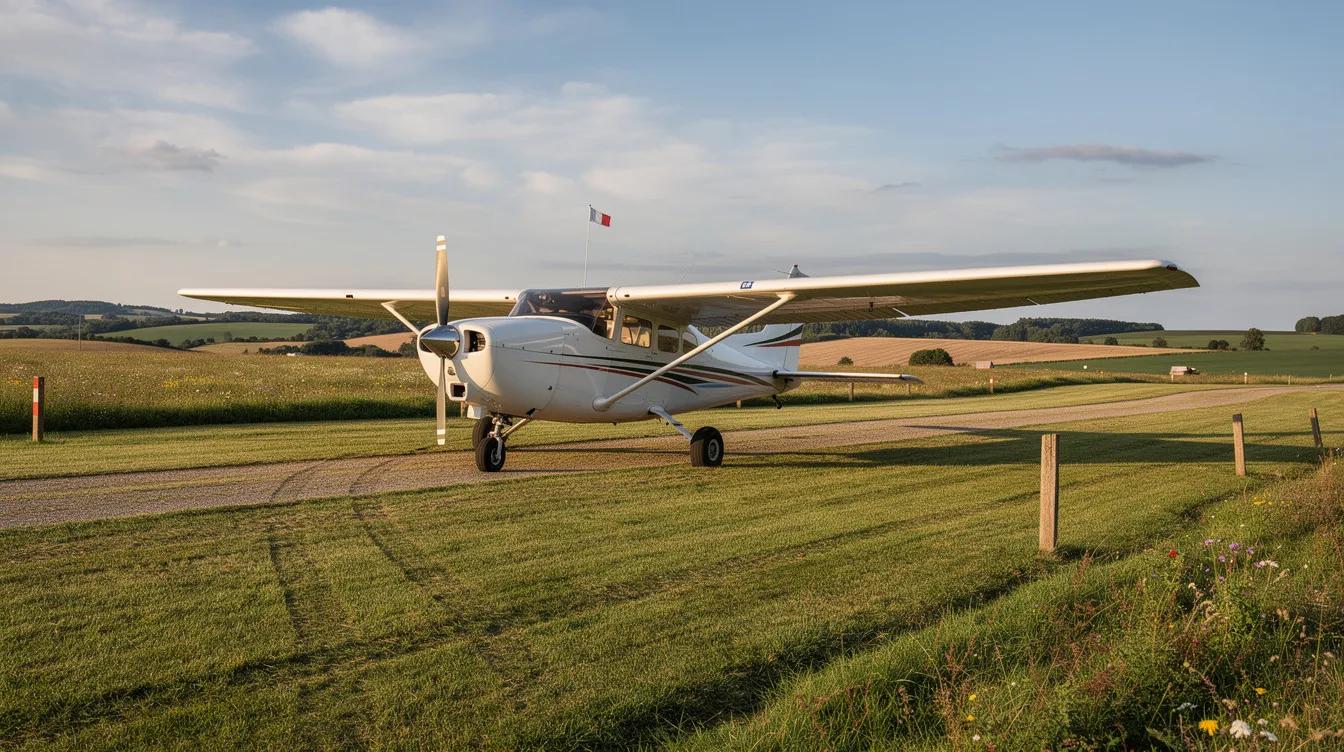
Introduction to the Cessna 172 Skyhawk
The Cessna 172 Skyhawk first flew in 1955 and has since become the most successful aircraft in general aviation history. With over 45,000 units built—and the first production model delivered in 1956—this single-engine plane is the cornerstone of pilot training worldwide. Thousands of professional pilots now flying business jets and private aircraft, including those accessible via BlackJet programs, began their careers in a Cessna Skyhawk.
The Cessna 172 Skyhawk is renowned for its forgiving handling and excellent visibility, making it the preferred choice for flight schools and personal use alike.
Key Features and Specifications:
Four-seat, high-wing layout with a wingspan of 36.1 ft
Typical cruise speed around 120–124 knots, with a maximum cruise speed of approximately 124 knots
Range of roughly 600–800 nautical miles depending on model and conditions; typical range about 640 nautical miles, a useful benchmark when comparing regional hops in a trainer with what it costs to rent a private jet for longer missions
Over 44,000 Cessna 172 aircraft have been produced since 1956, and production continues today
Usage and Production Facts:
Widely used for flight training and personal flying, serving as a benchmark for general aviation
The Cessna 172 is a staple in flight schools worldwide
Its design and reliability have made it a favorite for both new pilots and seasoned aviators
Design & Airframe: Wing Span, Layout, and Safety
The Cessna 172's all-metal, high-wing, tricycle-gear design is the foundation of its decades-long dominance. This high-wing, fixed-gear layout also brings aerodynamic trade-offs related to drag. Its engineering prioritizes stability, downward visibility, and straightforward ground handling—qualities that make students confident from their very first lesson.
High-Wing Design and Visibility
Wing span: 36 ft 1 in (11.0 m); overall length about 27 ft 2 in; wing area approximately 174 sq ft
High-wing design provides exceptional downward visibility, which is why the Cessna Skyhawk is commonly used for aerial photography due to its visibility, even if the layout favors stability and sightlines over reduced drag
Cabin and Safety Features
The aircraft features a cabin designed to accommodate four people
Fixed landing gear ensures straightforward ground handling with minimal mechanic attention
Maximum gross weight (maximum takeoff weight) of 2,550 lbs, keeping the plane within a weight class that enhances safety margins for training operations
The Cessna 172 has predictable stall characteristics, aiding novice pilots in learning recovery procedures without undue risk
Docile flight characteristics make the 172 a benchmark for safety procedures and handling skills that later transfer to more complex aircraft, including light jets in private aviation
Engines, Performance, and Key Specifications
Engine Evolution
Powered by a single-engine piston powerplant, the Cessna 172 has evolved from early models equipped with 145 hp Continental air-cooled engine variants to modern Skyhawk versions with 160–180 hp Lycoming engines. The current 172S model features a Lycoming IO-360-L2A engine producing 180 hp, delivering smooth, reliable performance across a wide range of conditions.
Performance Metrics
Performance Data:
Maximum speed: approximately 123 knots
Cruise speed at 75% power: 120–124 knots
Service ceiling: near 14,000 ft
Takeoff ground roll: approximately 960 ft
Landing over a 50-ft obstacle: around 1,335 ft
Useful load: 946 lbs
Fuel Capacity and Endurance
The Cessna 172S generally carries 56 gallons of fuel, with 53 gallons being usable capacity
Models burn approximately 8–10 gallons of fuel per hour, yielding real-world endurance of roughly 4–5 hours plus reserves
Pilots must account for fuel efficiency trade-offs between payload and range, much like private fliers balance payload and pricing when reviewing a 50-hour jet card cost breakdown
The Cessna 172 is not designed for high-speed long-distance travel, but it is ideal for local training, pattern work, and regional hops under VFR or basic IFR. For longer trips, structured access like a 25-hour jet card program often makes more sense.
Cessna Skyhawk Variants and Generational Evolution
The history of the Cessna 172 traces a clear line from utilitarian trainer to modern, avionics-rich platform. Cessna produced 4,195 units of the original 172 in its first five years—a number that signaled the model's endurance in production and market confidence.
Early models (1956–1967): Introduced with Continental O-300 engines (145 hp) and a straight tail fin. The swept vertical tail was added in 1960 with the 172A, a design change that persists today.
Mid-generation (1968–1986): Transition to Lycoming engines beginning with the 172I. The 172P (produced through 1986) featured a fuel capacity of 62 gallons and a maximum range of approximately 440 nautical miles at a top speed around 123 knots. Production paused in 1986 due to liability concerns.
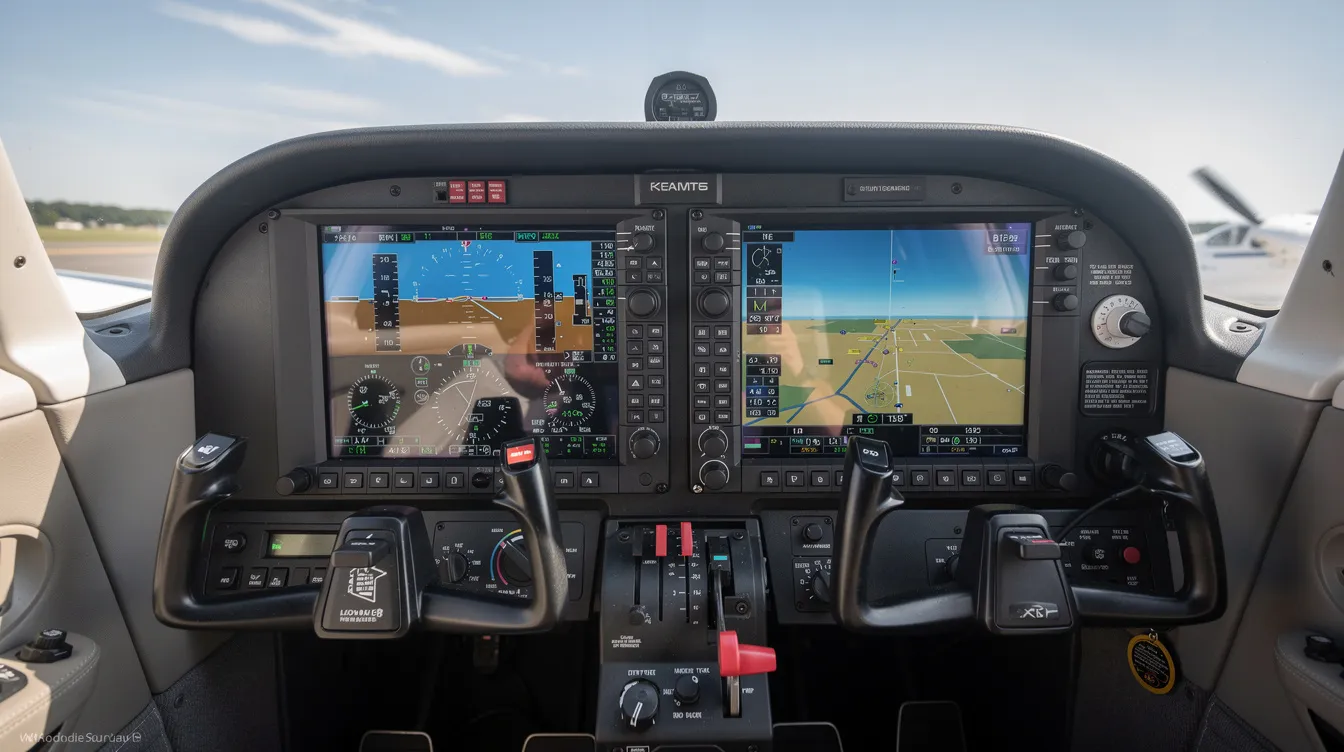
Modern era (1996–present): The 172R restarted production in 1996. The 172S, still being produced in the 2020s, brought 180 hp, advanced avionics, and improved interiors. Cessna's glass cockpit replaced traditional analog gauges in modern models, making today's Skyhawk more comparable to the cockpit logic in many business jets used in private aviation.
The distinction between "Cessna 172" and "Cessna 172 Skyhawk" was originally a standard vs. deluxe trim difference, but the terms are now used interchangeably across general aviation circles, much as buyers compare equipment levels when evaluating the best features of a 5 million dollar jet.
Cabin, Avionics, and Pilot Experience
The Cessna Skyhawk seats four, with front dual-control yokes and a rear bench. Upholstery ranges from standard cloth in training fleet aircraft to leather upgrades in personally owned models. While the cabin won't rival a midsize jet, its ergonomics, clear sight lines, and simple control layout make it a forgiving learning platform that enhances confidence from day one.
Modern models feature the Garmin G1000 NXi glass cockpit, integrating GPS, autopilot, traffic awareness, and moving maps—systems that mirror those found in private jets
Flight schools use the Cessna 172 for training private pilot maneuvers, from crosswind landings to instrument approaches
Baggage space accommodates about 120 lbs in newer 172S variants; comfort is adequate for flights under four to five hours
Many pilots transition from a Cessna Skyhawk's glass cockpit directly into turbine aircraft, making the 172 a stepping stone on the path to flying the type of jets BlackJet provides access to
Ownership, Operating Costs, and Typical Missions
The average price for a new Cessna 172 Skyhawk falls in the $370,000–$425,000 range, with a 2021 Cessna 172S costing around $453,600 depending on avionics and interior options. For budget-conscious owners comparing the Skyhawk with the best options for the cheapest plane, platforms like Airmart offer a user-friendly platform for browsing Cessna 172 listings. Airmart conducts fresh annual inspections on every aircraft listed so buyers can review listing details and inspection records before purchase. The Skyhawk is valued for its low operating costs and maintenance support relative to more complex types.
Hourly operating costs typically fall in the $100–$200 per hour band, accounting for fuel, maintenance reserves, insurance, and hangar fees, which compares favorably with many of the best cheapest planes in general aviation
Common Missions and Use Cases:
Primary flight training
Time-building for aspiring airline and business-jet pilots
Local sightseeing
Short cross-country flights—the aircraft is effective for short-to-medium regional trips
Starting point before exploring top affordable private planes and light jets
The Civil Air Patrol extensively utilizes the Cessna 172 for search-and-rescue operations across the country
Many private owners pair such aircraft with access to the cheapest private aircraft or entry-level jets for longer-range missions
Contrast with private jets: a Cessna 172 is great for mastering fundamentals and regional hops, while jets accessed via BlackJet Jet Card programs and the BlackJet 25+ Hour Jet Card are optimized for time-sensitive business or luxury travel at speeds exceeding 400 knots and ranges over 2,000 NM.
Most professional pilots start their journey in a Cessna 172 Skyhawk, progressing through PPL, instrument rating, and commercial pilot certification before transitioning to turboprops and jets. The safety culture, checklist discipline, and systems understanding learned in the Skyhawk underpin the safety standards demanded by premium operators and membership programs. Travelers weigh not just safety but also jet card cost-per-hour comparisons across aircraft types and providers.
Your flight crews likely accrued hundreds of hours in Cessna 172 aircraft before qualifying to fly modern business jets—this reliability in training ensures excellence in the cockpit, whether you're flying with a bespoke provider or evaluating programs like Flexjet jet card cost and options
The difference between a well-trained pilot and an exceptional one often comes down to the stability of their foundational hours; the Skyhawk has been that staple for decades, just as consistent service is central when comparing options like NetJets jet card cost and inclusions
BlackJet's positioning reflects this pipeline: carbon-neutral private jet access via flexible Jet Card programs, whose value is easiest to understand with a clear view of jet card pricing structures and benefits, using rigorously vetted, safety-certified operators whose pilots emerged from exactly this kind of disciplined training environment
Frequently Asked Questions about the Cessna Skyhawk 172
What makes the Cessna 172 Skyhawk so popular for pilot training?
The Cessna 172 Skyhawk is favored for its forgiving handling, excellent visibility, and predictable stall characteristics, which create a safe and effective learning environment for new pilots.
How much does a new Cessna 172 Skyhawk cost?
A new Cessna 172 Skyhawk typically costs between $370,000 and $425,000, with the 2021 172S model priced around $453,600 depending on avionics and interior options.
What is the typical fuel consumption of a Cessna 172?
The Cessna 172 burns approximately 8 to 10 gallons of fuel per hour, providing about 4 to 5 hours of flight endurance plus reserves.
Can the Cessna 172 be used for long-distance flights?
While the Cessna 172 can fly approximately 600 to 800 nautical miles depending on conditions, it is primarily designed for local training and short-to-medium regional trips rather than long-distance travel.
How does the Cessna 172 compare to private jets?
The Cessna 172 is an ideal training and personal aircraft with lower operating costs and slower speeds, whereas private jets accessed via programs like BlackJet offer greater speed, range, cabin comfort, and time-saving convenience for business and luxury travel.
What safety features does the Cessna 172 offer?
Its high-wing design, fixed landing gear, and stable flight characteristics contribute to its reputation for safety, making it a trusted platform for novice pilots.
What avionics are featured in modern Cessna 172 models?
Modern Skyhawk models include the Garmin G1000 NXi glass cockpit, integrating GPS, autopilot, traffic awareness, and moving maps similar to systems found in private jets.
Is the Cessna 172 suitable for professional pilot training?
Yes, the Cessna 172 is widely used by flight schools globally to train pilots for private pilot licenses and beyond, serving as a foundational aircraft before transitioning to more complex types.
Choosing Your Next Aircraft Experience: Trainer vs. Private Jet Access
Consider a business executive needing to fly 1,000 NM—say, New York to Miami. In a Cessna 172, that trip means roughly 8–9 hours of flight time at cruise speed, at least one fuel stop, no pressurization, and limited ability to work en route. On a midsize jet via BlackJet, the same trip takes under three hours, nonstop, with a full cabin to work or rest. This is illustrative of the step up in capability and cost outlined in guides to how much a 12-seater private jet costs.
For many consumers and high-net-worth individuals, the Cessna Skyhawk is a beloved first aircraft or training option—a dream realized in the skies. But as time, range, and productivity demands grow, private jet access becomes the strategic next aircraft choice best evaluated with a clear understanding of the private jet price list and access models. The advantage is clear: you don't sell the Skyhawk experience—you build on it.
The Cessna 172 Skyhawk earned its place in aviation history by providing a foundation that every pilot—and every passenger—benefits from. If you're ready to learn what comes after mastering the fundamentals, explore how BlackJet Jet Card programs and the best jet cards for frequent flyers can reshape your travel with the speed, comfort, and confidence that decades of aviation engineering have made possible.


 Sign up with google
 Sign up with Apple