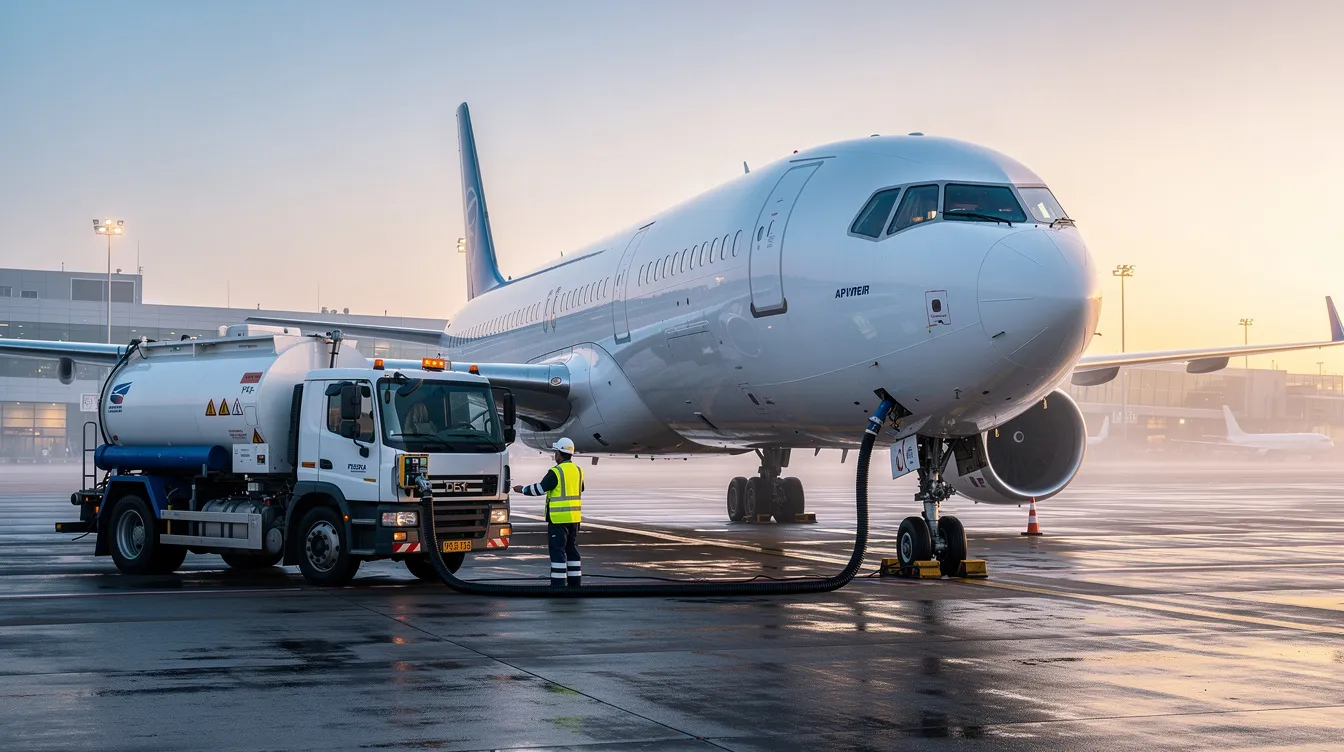
Airline fuel surcharges have become one of the most consequential-and least understood-line items on modern airline tickets. For premium-cabin and award travelers, these fees can quietly add hundreds or even thousands of dollars to a single trip. Here is what you need to know about them in 2026 and what your alternatives look like.
This guide is designed for frequent business travelers, corporate travel managers, and high-net-worth individuals seeking to understand and manage airline fuel surcharges.
Fast answer: what airline fuel surcharges mean for your travel budget
Airline fuel surcharges (a fuel surcharge is an additional fee on airfare) are carrier-imposed fees layered on top of base fares to offset volatile jet fuel costs. In 2026, with fuel prices climbing and geopolitical uncertainty persisting, these surcharges are a major driver of higher ticket prices and inflated out-of-pocket costs on award tickets. They are not government taxes. They appear on your ticket breakdown as YQ or YR codes under "taxes, fees & carrier imposed surcharges," and the airline-not a regulatory body-sets the amount.
This matters most to frequent business class travelers and corporate flyers. On a round trip flight between London and New York in a premium cabin, carrier surcharges alone can exceed $700. For executives flying that route six or eight times a year, the cumulative cost is staggering.
For private jet travelers using a Jet Card, this entire category of fees simply does not exist. Fuel is built transparently into hourly rates, with no YQ/YR-style surprises at checkout, which becomes even more compelling at higher commitments such as a 100-hour jet card program or when comparing Flexjet jet card pricing and options against similar products.
If you do fly commercial, the best bet to avoid fuel surcharges includes:
Choosing airlines like United Airlines or Singapore Airlines that generally do not levy fuel surcharges on their own flights for award redemptions
Using programs like Air Canada Aeroplan, which eliminated YQ on awards in November 2020
Booking through Alaska Airlines miles for partners like Japan Airlines, bypassing JAL's own hefty surcharges
Fuel costs and the rise of carrier-imposed surcharges
Jet fuel is one of the single largest operating costs for any airline. According to IATA, fuel and oil account for roughly 28.7% of global airline operating expenses, a figure projected to reach 31.4% by 2026 as jet fuel crack spreads hit record levels. When crude oil surged past $100 per barrel during Middle East tensions in 2024–2025, carriers needed a mechanism to recover rising fuel costs without rewriting every fare in their system.
That mechanism was the fuel surcharge. Originally introduced as temporary measures in the early 2000s, these fees were pegged to fuel indexes and meant to disappear when jet fuel prices moderated. They rarely did. Even when oil dropped below $50 in 2015–2016, many airlines kept surcharges in place, having discovered a flexible revenue tool that sat outside advertised fares and corporate discount grids.
The distinction is deliberate. Airlines charge fuel surcharges separately from the base fare so they can advertise competitive fares and offer negotiated discounts while quietly adjusting YQ/YR to protect margins. European carriers face an additional layer: environmental levies and sustainable aviation fuel mandates that push cost even higher, making carrier surcharges on long-haul routes from hubs like London, Frankfurt, and Paris particularly steep.
High-net-worth travelers increasingly notice the contrast. Where commercial flying layers on opaque fees tied to market conditions, private aviation models like BlackJet's Jet Card offer a single, predictable hourly rate that absorbs fuel volatility behind the scenes, making the overall private jet price list and access options easier to evaluate against premium commercial fares and understand broader private jet charter pricing fundamentals.
What exactly is a fuel surcharge on airline tickets?
A fuel surcharge is a flexible carrier-imposed fee that airlines add to a ticket to recover aviation fuel and related costs, separate from both the base fare and government taxes. It is set entirely at the airline's discretion and can change monthly or even more frequently.
On ticket breakdowns, these charges appear with IATA codes YQ or YR. Many airlines have dropped the word "fuel" from the label since 2012–2015, preferring the generic term "carrier-imposed surcharges" after regulatory pressure from the U.S. Department of Transportation and similar bodies worldwide. The mechanics remain the same regardless of label.
For paid tickets, several airlines simply bake surcharges into the advertised total, making them invisible. For award flights, however, YQ/YR shows up explicitly in the "Taxes, fees & surcharges" box-the cash amount you must pay even when miles cover the base price. This is why a "free" business class seat can still cost you $400–$700 in fees.
Corporate discounts typically apply only to the base fare. That means a company negotiating 35% off fares may see far less savings than expected because the surcharge portion-sometimes 25–40% of the total-remains untouched.
A useful way to think about the breakdown:
Base fare: controlled by the airline, subject to discounts and competitive pricing
Government taxes: set by authorities, partially refundable if you do not fly
Carrier imposed surcharges (YQ/YR): set by the airline, rarely discounted, frequently non-refundable
YQ and YR: how carrier-imposed surcharges really work
YQ and YR are accounting labels used by airlines and global distribution systems to tag additional charges beyond the base fare. YQ was originally created to track fuel-related add-ons, while YR covers other carrier surcharges, but in practice, many airlines use them interchangeably.
The structure is straightforward. When an airline publishes fares, the base price sits inside the discount grid that corporate contracts and promotional campaigns reference. YQ/YR sits outside that grid, allowing carriers to maintain headline claims like "up to 40% off" while simultaneously raising surcharges as fuel or revenue demands shift. Customers see what appears to be a discount; the total cost tells a different story.
Long-haul international routes carry the highest and most volatile surcharges. Economy tickets on transatlantic or transpacific routes often include $100–$200 in YQ/YR, while premium cabins can push past $500 per direction. On domestic routes, many U.S. carriers embed fuel costs entirely into base fares to keep pricing simpler, but European and Asian international airlines maintain sizeable separate surcharge lines on intercontinental flights.
The terminology shift from "fuel surcharge" to "carrier-imposed surcharge" around 2012–2015 was partly cosmetic, driven by transparency rules and consumer advocacy. The underlying economics did not change. Sophisticated travelers and corporate travel managers now track YQ and YR separately in reporting tools, benchmark them by route, and compare across alliances to identify where the same flight can be booked for substantially less in fees.
How major airlines use fuel surcharges: concrete 2024–2026 examples
Fuel surcharge policies vary widely between carriers. Understanding a handful of key airlines can dramatically change what you pay on the same routes.
Air Canada made headlines in November 2020 when Aeroplan eliminated fuel surcharges on both its own and partner award flights. In 2025–2026, the airline adjusted base fares and trimmed unprofitable routes rather than reintroducing YQ, making Aeroplan one of the most attractive programs for surcharge-conscious travelers.
Air France and its KLM partner took a different approach. KLM cut dozens of marginal intra-European services from Amsterdam Schiphol, while the group increased typical long-haul round-trip fares by roughly €40–€60 to offset elevated fuel and SAF costs. YQ/YR remains prominent on many premium-cabin tickets issued from European origins.
British Airways is perhaps the most cited example of heavy surcharge reliance. On Club World (business class) award flights between London Heathrow and New York, passengers routinely face £500–£700 or more in carrier surcharges alone-on top of the Avios required. This makes BA one of the most expensive programs for redeeming points on premium cabins.
Delta Air Lines generally avoids explicit fuel surcharges on domestic routes but applies carrier surcharges on many international Delta SkyMiles awards and partner itineraries. Its 2025–2026 strategy focused on capacity discipline and selective YQ increases on long-haul routes to recapture higher fuel prices.
Japan Airlines hiked international surcharges significantly in mid-2025 and early 2026. North America–Japan awards booked through JAL Mileage Bank can exceed $300–$350 per direction in fuel surcharge costs alone.
Lufthansa and several airlines, including Virgin Atlantic and Qantas have trimmed tens of thousands of flights from seasonal schedules-partly to save on fuel consumption, partly to preserve pricing power and support elevated YQ/YR levels across remaining capacity.

Fuel surcharges, award tickets, and how to avoid them
Points and miles cover the base fare on an award ticket, but travelers are still responsible for all taxes and carrier surcharges. This creates a paradox: a "free" business class seat to Europe can carry $600 or more in additional fees, making the out-of-pocket cost anything but free. Fuel surcharges on award travel are the single biggest complaint among frequent flyers who track cost per point.
The variation between programs is enormous. British Airways Avios redemptions carry heavy YQ. Using American Airlines AAdvantage miles on BA or Iberia flights passes those surcharges through. Delta SkyMiles awards on international partners often include sizeable carrier surcharges. By contrast, United Airlines MileagePlus and Singapore Airlines KrisFlyer generally do not levy fuel surcharges on their own flights, while some competing award options require more miles as well as higher cash surcharges, making the overall value comparison less favorable for long-haul premium award redemptions.
To avoid fuel surcharges on award tickets, consider these approaches:
Use Air Canada Aeroplan for Star Alliance partners. Booking Lufthansa or ANA via Aeroplan instead of those carriers' own programs eliminates YQ entirely. One comparison found that a Cathay Pacific business class redemption cost roughly $43 in fees through Aeroplan versus $440 through Alaska Airlines Mileage Plan for the same flight.
Favor United MileagePlus or Singapore KrisFlyer for long-haul awards where those carriers do not pass along partner YQ. Redeeming Alaska Airlines miles on Japan Airlines can also sidestep surcharges that JAL itself would impose.
Use transferable point currencies-American Express Membership Rewards, Chase Ultimate Rewards, Capital One miles, or Citi ThankYou points-to compare options across multiple airlines before transferring. Travel resources like Points Guy and Business Insider regularly publish updated guides on which programs carry the lowest surcharges.
For high-net-worth travelers, however, the time spent mastering these workarounds often exceeds the value saved. A Jet Card eliminates the entire calculus: one prepaid hourly rate, no YQ/YR, no need to memorize each carrier's quirks, provided you understand how jet card pricing works and which structure best fits your flying profile.
Corporate and executive travel: why fuel surcharges complicate budgets
Corporate travel programs routinely negotiate impressive percentage discounts off base fares, 30%, sometimes 40%, on key routes. But those discounts apply only to the base fare. Carrier surcharges sit entirely outside the negotiated grid, and on transatlantic or transpacific business class trips, YQ/YR can account for 25–40% of the total ticket cost.
Travel managers face several recurring issues:
Reporting tools often lump base fare, taxes, and surcharges together, making it difficult to isolate where cost inflation is actually coming from
Non-refundable YQ/YR amounts erode cost recovery when trips are cancelled, even when government taxes can be reclaimed
Higher fuel prices translate into disproportionately larger surcharges on premium cabins versus economy, which means executive travel absorbs the heaviest impact.
Strategies to limit exposure include evaluating carrier deals on total ticket cost rather than headline discounts, tracking surcharges by route and airline in quarterly reviews, and switching preferred carriers where YQ/YR levels are consistently lower for comparable schedules. TMC data and internal analytics should monitor the share of spend going to surcharges versus the base price.
For executives who fly frequently, a 25-hour or 50-hour BlackJet Jet Card effectively sidesteps these opaque commercial surcharges for critical international and regional trips, replacing them with predictable, all-in hourly rates through the flexible BlackJet 25+ Hour Jet Card.

How airlines calculate and adjust fuel surcharges over time
Airlines typically tie fuel surcharges to benchmark jet fuel prices or internal cost models, updating them based on moving averages rather than daily spot prices. This smooths out volatility and prevents constant fare changes.
The conceptual formula works roughly like this: the surcharge per segment reflects the gap between the current average price of jet fuel and a baseline reference price, scaled by the estimated fuel consumption for that route and divided across passenger capacity. Many carriers use thresholds-when fuel exceeds a certain dollars-per-barrel level, surcharge bands increase. When fuel drops below that threshold, YQ/YR may shrink but often does not disappear entirely.
Japanese carriers like JAL and ANA, for example, use the Singapore kerosene-type jet fuel average over the preceding two months to set bi-monthly surcharge tables. ANA formally abolishes its surcharge only when the benchmark falls below a specific yen-equivalent threshold and remains there.
A brief timeline illustrates the pattern: surcharges dropped in 2015–2016 as oil cheapened, surged again around 2018, moderated during the 2020–2021 demand collapse, then rose sharply from 2022 onwards as traffic rebounded and geopolitical risks pushed jet fuel costs higher, prompting many travelers to compare commercial premium fares not just with one provider but also with jet cards from competitors like NetJets.
One critical detail: surcharges are applied based on the date tickets are issued, not the travel date. Booking early can lock in current YQ/YR levels even if fuel costs spike before departure. Watch airline announcements in March and September, schedule updates when many carriers re-price surcharges for upcoming seasons.
Practical tactics to reduce or avoid airline fuel surcharges
Completely eliminating fuel surcharges on commercial airlines is difficult, but high-frequency travelers can substantially reduce them with the right strategy. The key is choosing your airline, program, and routing deliberately rather than defaulting to the most convenient option.
Start by favoring carriers that do not add YQ/YR on their own flights. United Airlines and Singapore Airlines are consistent examples of long-haul business class awards, making them strong choices for routes like San Francisco–Singapore or Newark–Frankfurt.
When you want to fly a partner airline that normally imposes heavy surcharges, book through a program that has eliminated YQ. Aeroplan is the standout here: booking ANA, Lufthansa, or even Cathay Pacific through Aeroplan avoids the surcharges those carriers would impose if you used their own programs or other partners. For Japan Airlines specifically, using Alaska Airlines miles can bypass JAL's steep transpacific surcharges.
Departure point matters. Tickets issued from the United States sometimes carry different surcharge levels than the same flight booked from a European or Asian origin. Experimenting with routing and origin can yield meaningful savings, as can considering budget-friendly private aircraft options for shorter or regional segments.
Leverage transferable currencies. If you hold American Express Membership Rewards, Chase Ultimate Rewards, Citi ThankYou, or Capital One miles, you can compare award options across multiple alliances before committing. This flexibility is your best defense against adding fuel surcharges unnecessarily.
Timing also helps. Securing tickets before widely publicized fuel price increases or scheduled surcharge hikes locks in lower YQ/YR. Conversely, monitoring for rare surcharge reductions can reward flexible travelers willing to wait, just as watching for the most affordable private jet options can lower entry costs to private aviation.
For those whose time outweighs incremental savings from gaming airline rules, a Jet Card removes the need for complex surcharge-avoidance strategies altogether, and comparing the best jet cards for frequent flyers and leading private jet companies can help align benefits with your travel pattern.
Commercial surcharges vs. private jet pricing: how BlackJet handles fuel costs
Fuel surcharges are a symptom of the commercial airline model: massive fleets, fixed schedules, and constant exposure to public demand cycles. Every swing in the average price of jet fuel ripples through hundreds of fare classes and surcharge tables. Private aviation operates on fundamentally different economics.
In the BlackJet Jet Card model, fuel costs are already accounted for in the contracted jet card hourly rate. Members see a clear, upfront price for each aircraft category-light, midsize, super-midsize, or large cabin-without a separate carrier imposed fuel line item. There is no YQ, no YR, and no seasonal recalculation that changes your cost after you have committed.
BlackJet manages fuel volatility through fleet planning, operator partnerships, and forward purchasing rather than passing sudden spikes onto clients, while owners weighing a switch from full ownership must still consider the cost of private jet pilots and operations and whether leasing a private jet might better match their usage and risk profile. This approach also sustains rigorous safety standards-proprietary operator vetting, maintenance oversight, and carbon-neutral operations through integrated offsetting-without forcing a trade-off between safety and cost when markets tighten, even on larger-group missions that might require private jets for around 20 passengers.
Consider an executive based in New York flying to London and continental Europe six times per year. On commercial business class, cumulative fuel surcharges alone could exceed $4,000–$5,000 annually, before accounting for higher fares and additional fees—costs that, for some flyers, begin to overlap with the economics of large private jets for sale or charter. Understanding when chartering a private jet is worth it and what 20 million dollar private jets offer, clarifies when shifting those trips off commercial airlines makes financial sense. A BlackJet Jet Card wraps fuel management, safety certification, and carbon offsetting into one transparent hourly rate, eliminating the guesswork entirely.

Summer and peak-season travel: what to know about surcharges and capacity cuts
Airlines frequently adjust both capacity and fuel surcharges ahead of peak periods. Northern Hemisphere summer is the most aggressive window, as carriers balance strong demand against fuel cost volatility and operational constraints.
For some itineraries, understanding the cost to charter a small plane or evaluating affordable private plane options can reveal that a focused private segment is more efficient than enduring peak-season commercial disruption. Recent patterns from 2024–2026 are instructive. Many airlines suspended marginal domestic routes and regional services to conserve fuel and focus aircraft on high-yield long haul routes. This squeezes customers into fewer options, and those remaining flights often carry seasonal YQ increases-particularly in premium cabins on transatlantic and transpacific services-precisely the type of missions where understanding 12-seater private jet costs and broader 15-passenger private jet options and costs can inform a private alternative for small groups.
For high-end travelers, the effects compound. Short-haul feeder flights may be cut or reduced in frequency, forcing longer connections even as long-haul flights remain protected. Fuel surcharges tend to peak in June through August, when airlines charge the highest additional charge on routes where demand is strongest, making options like buying a seat on a private jet and leveraging the higher cruising altitudes of private jets increasingly attractive on critical segments.
Planning guidance for peak season, particularly if you are coordinating travel for larger groups that might benefit from 50-passenger private jet options:
Book long-haul trips earlier in the year to lock in current surcharges before airlines publish new seasonal YQ tables
Monitor announcements of capacity cuts, which often foreshadow further surcharge increases as supply tightens
For critical segments-direct New York to the Côte d'Azur, intra-European multi-city tours, or last-minute schedule changes-consider private jet access to bypass hub congestion and schedule reshuffles entirely
Key takeaways and when it's worth stepping up to private jet access
Fuel surcharges are carrier-imposed fees used to manage volatile jet fuel costs. They heavily impact premium-cabin and award travel, sit largely outside corporate discounts, and are unlikely to disappear. Here is how to decide what to do about them.
If you fly long haul business or first class only a few times a year and have flexible dates, optimizing award programs and choosing low-surcharge carriers can still deliver strong value. Programs like Aeroplan and carriers like United remain your allies.
If you or your executives fly transatlantic or transcontinental frequently, need fixed schedules and direct routes, and require predictable costs, the cumulative impact of YQ/YR plus schedule disruptions may justify a private jet solution, especially when evaluating 10 million dollar private jet options against ongoing premium-cabin commercial spend. The hours spent researching which loyalty programs offset jet fuel costs or which partners avoid fuel surcharges represent a real opportunity cost compared with understanding how much it costs to rent a private jet for your highest-value trips.
If sustainability and safety are central to your personal or corporate brand, BlackJet's carbon-neutral flights and stringent safety certification are embedded in pricing-not treated as optional add-ons or hidden surcharges layered on after the fact, and there are still ways to fly private more affordably, including private jet rideshare options, without compromising on those standards.
Explore BlackJet Jet Card membership or speak with a BlackJet advisor to model how a 25- or 50-hour program could replace a portion of your high-surcharge commercial flying with seamless, transparent private jet access, particularly if you are also comparing private jets for sale under 10 million as a longer-term option. Your time-and your travel budget-deserve better than opaque fees.
Conclusion: Navigating Fuel Surcharges with Confidence and Choice
Airline fuel surcharges represent a complex but unavoidable reality in today’s commercial aviation landscape, especially for premium and frequent travelers. These carrier-imposed fees, designed to offset volatile jet fuel prices, can significantly inflate ticket costs and complicate corporate travel budgets. Understanding how surcharges work, which airlines and programs minimize them, and the timing strategies to lock in favorable rates empowers travelers to make smarter choices.
For discerning executives and high-net-worth individuals, the contrast between commercial surcharges and the transparent pricing of private jet access is stark. BlackJet’s Jet Card programs eliminate the unpredictability of YQ/YR fees by embedding fuel costs into a clear, all-inclusive hourly rate. This not only simplifies budgeting but also enhances safety, sustainability, and convenience—key pillars for modern luxury travel. For ultra-frequent flyers, exploring unlimited private jet flight memberships or the capabilities of a 15 million dollar private jet can further stabilize costs versus constantly rising commercial surcharges.
Whether optimizing award bookings or stepping up to private aviation, knowledge and strategic planning are your best tools against rising fuel surcharges, especially in markets with distinct pricing dynamics such as private jet costs in India. Explore how BlackJet can transform your travel experience with seamless, carbon-neutral private jet access tailored to your schedule and preferences. Your journey deserves clarity, control, and uncompromising quality.


 Sign up with google
 Sign up with Apple