Fly Time Calculator for Private Jets: Plan Every Minute in the Air
For executives, business travelers, and high-net-worth travelers, knowing precisely how long a flight will take is not a curiosity - it is a strategic advantage. A flight time calculator built for private aviation transforms the way you plan meetings, manage time zones, and decide which aircraft type fits your life.
Why Flight Time Matters for High-End Travelers
Door-to-Door Time Savings
Consider a New York to Los Angeles journey. A commercial itinerary typically consumes 7–8 hours door-to-door once you account for security lines, boarding queues, and taxi delays at busy terminals. A private jet covering the same flight distance delivers an in-air flight duration closer to 5 hours, and your total airport time shrinks to minutes rather than hours. That difference compounds across dozens of trips per year.
A dedicated flight time calculator lets BlackJet members forecast exactly how much time they save on their most common routes - and that data drives smarter decisions about same-day turns, international connections, and meeting schedules. BlackJet underpins its time calculator and quoting tools with professional aviation data and certified operators, so the numbers you see reflect the world of premium private jet travel and Jet Card programs, not commercial airline averages.
Route | Commercial (Door-to-Door) | Private Jet (Door-to-Door) | Time Saved |
|---|
New York – Miami | ~5.5–6 hrs | ~3.5 hrs | ~2–2.5 hrs |
London – Geneva | ~4.5–5 hrs | ~2 hrs | ~2.5–3 hrs |
Los Angeles – New York | ~7.5–8 hrs | ~5.5–6 hrs | ~2 hrs |
What a Private Jet Flight Time Calculator Actually Does
A flight time calculator is a tool that estimates total flight time between any departure and destination city based on flight distance, aircraft type, and typical cruise speed. The basic formula for calculating flight time is straightforward: time equals distance divided by speed. But real-world flights take longer due to taxiing, climbing, and descending - which is why a purpose-built flight calculator goes far beyond simple arithmetic.
Unlike free consumer tools, BlackJet's calculator is optimized for private jet performance profiles. Flight calculators provide instant flight time and distance estimates while also using real-world data for accurate planning. Common methods for determining flight duration include online calculators and flight tracking services, but BlackJet's version layers in routing flexibility - for example, using smaller airports closer to your home or office. For Jet Card members, the outputs feed directly into pricing ranges and aircraft category recommendations.
Core outputs at a glance:
Great circle distance between the origin and the destination
Estimated block time from takeoff to landing
Departure and arrival times adjusted to local time zones
Aircraft category suggestions with indicative cost to fly private
How the BlackJet Flight Time Calculator Works Behind the Scenes
Calculation Methodology
The tool begins by computing the great circle distance between coordinates for chosen airport pairs - say Teterboro (TEB) to Van Nuys (VNY), or London Luton (LTN) to Nice (NCE). Calculators use great circle distance for accurate flight time calculations because it represents the shortest path across Earth's curved surface. Flight time estimates use great circle distance calculations as their baseline, then layer on real routing adjustments, helping travelers connect realistic schedules with a clear understanding of the broader private jet price list and access options.
Next, calculating flight time involves dividing the distance by the aircraft's ground speed. It is important that flight time calculation must account for units of distance and speed being the same - mixing nautical miles with kilometers per hour, for example, produces meaningless results. The calculator applies realistic average cruise speeds by category:
Light jets ~ 720–750 km/h (private jets typically cruise at speeds around 700 km/h for lighter models)
Super-midsize jets ~ 820–850 km/h
Long-range jets ~ 880–910 km/h
While the average cruising speed for commercial jet calculations is often cited at 900 km/h, private aircraft vary considerably by category. The distinction between airspeed and ground speed matters here: airspeed is how fast the plane moves through the air, while ground speed is its speed relative to the Earth, and the calculator accounts for both.
Adding Real-World Buffers
Many dispatchers add an extra 10 to 15 minutes to account for terminal procedures and routing. Adding taxi time is essential for accurate flight duration estimates, often adding 10 to 20 minutes. BlackJet's calculator adds buffers for climb, descent, and typical ATC vectors rather than a flat generic padding. An additional 30 minutes is typically added for takeoff and landing procedures in total. Time zones and daylight saving shifts are accounted for, so departure and arrival times are always shown in local time.
Historically, pilots relied on E6B flight computers to calculate time based on wind correction and true airspeed. Today, using online tools can provide exact flight durations factoring in real-time data and routes - and BlackJet's platform incorporates updated airways and NOTAMs to keep estimates close to real operator flight plans.
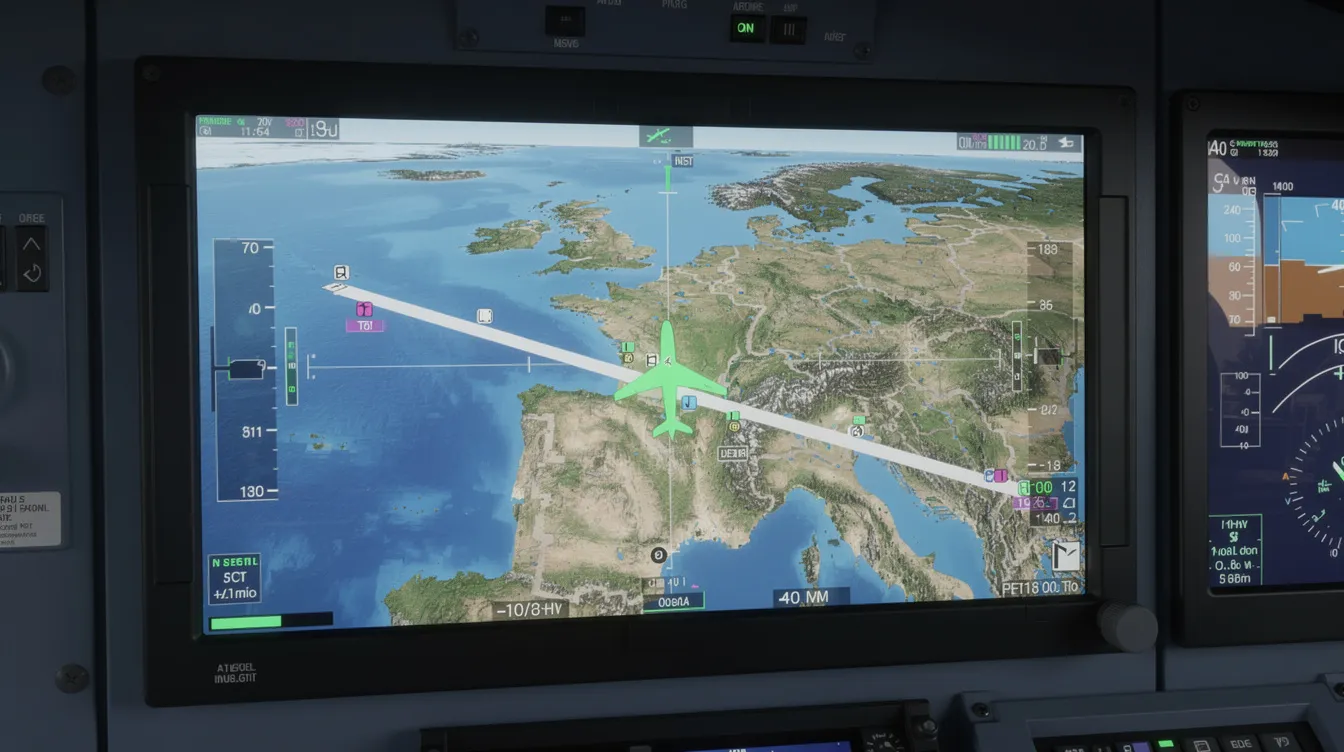
Using the Flight Time Calculator for One-Way, Round-Trip & Multi-Leg Itineraries
Users can input any combination of departure and arrival airports worldwide, including private aviation hubs like TEB, VNY, DAL, LTN, and GVA. Flight time calculators provide estimates based on user inputs, whether you are planning a quick shuttle or a complex multi-country roadshow.
Planning Multi-Leg and Round-Trip Itineraries
For round-trip itineraries, the calculator considers typical return routing differences. On transatlantic legs, for example, eastbound flights benefit from jet stream tailwinds while westbound legs face headwinds - a detail that can shift each direction's time by 30–60 minutes. Calculators can factor in multiple stops for route optimization, making multi-leg planning straightforward.
Sample multi-leg itinerary:
New York (TEB) → London (LTN): ~6.5 hrs
London (LTN) → Geneva (GVA): ~1.5 hrs
Geneva (GVA) → Dubai (DWC): ~6.5 hrs
Total airborne estimate: ~14.5 hrs across three legs over three days
The calculator totals all legs to reveal the full airborne time commitment. BlackJet advisers then use these totals to recommend an appropriate Jet Card size - whether a 25-hour or 50-hour card or a flexible BlackJet 25+ Hour Jet Card - based on projected annual hours. To determine scheduled flight times accurately, include taxi and wait times in the total travel estimate for each leg.
Estimating Flight Time by Aircraft Category: Light, Mid, and Long-Range Jets
The same route can produce noticeably different flight durations depending on whether you select a light jet, a super-mid, or a long-range aircraft. The flight calculator lets you toggle between categories and see how time changes instantly.
New York (TEB) → Miami (OPF):
Cessna Citation CJ3+ (light jet, max range of 4h 40m): ~2.5 hrs
Cessna Citation CJ2+ (light jet, max range of 3h 45m): ~2.5 hrs - similar airborne time, but range limits make it tighter on reserves
Challenger 350 (super-mid): ~2.25 hrs, with a faster climb and higher cruise altitude
London (LTN) → Dubai (DWC):
Embraer Praetor 500 (super-mid, max range of 7h 15m): ~6.5–7 hrs, potentially requiring fuel-weight trade-offs
Embraer Legacy 450 (mid, max range of 6h 25m): may need a technical stop on this route
Gulfstream G650 (heavy/ultra-long range): ~6–6.5 hrs nonstop, shaving 20–40 minutes due to higher cruise speed and more direct routings
Larger, longer-range jets often cruise faster. BlackJet uses these estimates to balance time savings, comfort, and cost - suggesting the most efficient type of plane for each member's common routes, including when a true long-range private jet for sale or charter is warranted for nonstop global missions. The difference a category makes is not trivial on long-haul flights where every hour matters to your schedule.

Planning Long-Haul Flights with the Time Calculator (US–Europe, Europe–Middle East, Transcon)
In the private jet context, long-haul flights typically mean 6 or more airborne hours. Wind patterns can affect flight duration by 30 to 60 minutes on these legs, and jet streams can shorten flights by 30 to 60 minutes when working in your favor. Tailwinds decrease flight time while headwinds increase flight time - a reality that makes eastbound Atlantic crossings meaningfully faster than westbound.
Key long-haul examples:
New York → London: ~5.5–6 hrs eastbound (jet stream assist), ~6.5–7 hrs westbound
Paris → Dubai: ~6.5–7 hrs
Los Angeles → Honolulu: ~5 hrs
The calculator shows not just raw flight duration but also local arrival time - crucial for managing jet lag and same-day commitments. For example, an executive might depart Teterboro at 19:00, sleep on board through the night, and arrive at London Luton around 07:00 local time the next morning - ready for a 09:00 meeting with no layover and no connection hassle. Or depart Dubai at 09:00 and arrive in Geneva around 13:00 local, with a margin for a 15:00 board meeting.
Run several departure-time scenarios to align sleep, inflight work blocks, and ground transfers, especially if you are coordinating complex agendas for a board or family group and weighing private jet options for 15 passengers. For ultra-long legs to countries in East Asia or Canada, BlackJet advisers can suggest technical stops, and the calculator shows each leg's time plus total duration. You can prepare your entire journey around the data.
From Flight Time to Jet Card Hours: Right-Sizing Your BlackJet Membership
One of the most practical uses of a flight time calculator is converting your typical trips into an annual flight-hour total. Rather than guessing at membership levels, you let the data determine the right fit.
Example - Chicago-based executive:
Chicago → New York: ~2 hrs each way × 10 round trips = 40 hrs
Chicago → Aspen: ~2.5 hrs each way × 5 round trips = 25 hrs (though some legs are shorter; calculated conservatively)
Chicago → Cabo San Lucas: ~4 hrs each way × 1 round trip = 8 hrs
Projected annual total: ~48–50 hrs
This profile points toward a 50-hour Jet Card, and understanding Jet Card pricing, costs, and benefits ensures those 50 hours leave enough room for an extra European trip or a spontaneous leisure getaway to Italy or Manchester for a Premier League weekend with the kids. Members can share their calculator outputs with their BlackJet representative for a data-driven conversation about the optimal card size and aircraft mix, informed by a clear view of Jet Card cost per hour. Scheduled flight times often exceed simple distance-divided-by-speed calculations due to various delays, so building a small buffer into your annual hour estimate is wise. Explore your own travel history to connect the numbers to reality and see how the best Jet Cards for frequent flyers translate those hours into guaranteed access and predictable costs.
Accuracy, Variables, and Why Estimates Still Matter
Key Variables Affecting Flight Time
All flight time calculators - including BlackJet's - provide estimates based on typical conditions rather than guarantees. Here are the key variables that can lengthen or shorten any given flight:
Prevailing winds: New York to London may vary from 5:45 to 7:00 depending on winter jet stream tailwinds versus summer headwinds.
ATC flow restrictions: Congested airspace around hubs can add holding time.
Weather deviations: Convective weather over the Midwest or North Atlantic forces longer routings.
Runway configuration and delays: Busy airports sometimes queue departures.
Los Angeles to New York, for instance, can swing 30–45 minutes between eastbound and westbound legs.
Building Buffers for Reliability
Flight time estimates include an additional 30 minutes for procedures such as takeoff, landing, and ATC sequencing, and this buffer reflects the risk of minor schedule shifts on any given date.
BlackJet builds realistic buffers into its planning so meetings and transfers are scheduled conservatively, especially around congested locations like London, New York, and Paris, while also helping you understand how much it costs to rent a private jet on these busy routes. While exact day-of-flight times may shift, the calculator is precise enough for annual planning, jet card sizing, and broad itinerary design. Expect minor variance; plan around the midpoint.
Seamless Travel: Combining Time Calculator Results with Ground and Airport Choices
The calculator's value multiplies when paired with smart choices of private terminals and ground transport, or even innovative private plane rideshare options on select routes where shared cabins make both time and cost more efficient. Seamless travel starts before you reach the aircraft.
Alternate airports that cut door-to-door time:
Manhattan: Use Teterboro (TEB) instead of JFK - 15 minutes from Midtown versus 60+
Los Angeles: Use Van Nuys (VNY) instead of LAX - skip the congestion entirely
London: Use Farnborough or Luton instead of Heathrow - where private jets land matters enormously for ground transfer speed
BlackJet advisers use flight time plus ground-transfer estimates to present total journey time, not just in-air duration. Try plugging in different origin or destination airports - say White Plains versus Teterboro - into the calculator to see how much you gain or lose in air time, then weigh that against ground travel to your location in the city; the same logic applies when comparing hubs for regional markets like private jet charters in Karachi.
BlackJet's digital platform can align the calculated flight duration with car service pickups and drop-offs, creating genuinely seamless travel days where every detail connects. If you prefer a particular airport for its features or proximity, the tool helps you see the trade-off in minutes rather than guesses.
Safety, Certification, and Real-Time Support Behind Every Calculated Minute
Every time estimate is grounded in certified operators - not theoretical aircraft performance alone. BlackJet partners only with operators meeting or exceeding recognized safety standards such as ARG/US or Wyvern certifications, ensuring pilots, maintenance, and operational protocols are held to the highest level.
Real-time flight support teams monitor weather and ATC conditions on the day of flight. When storms over the Midwest or North Atlantic are likely to add 30–60 minutes to a route, BlackJet flags this in advance so clients can move meetings or plan earlier departures.
Consider a December New York to Chicago flight. A developing snowstorm might prompt the support team to suggest departing two hours earlier or rerouting via a southern corridor - protecting your schedule and reducing risk without you having to track weather yourself. "On-time" in private aviation means both minimizing risk and honoring the traveler's calendar.
This is the difference between a generic flight calculator and a managed aviation service: BlackJet's team stands behind every calculated minute, adjusting in real time so your arrival reflects the plan you built.
Sustainability: Carbon-Neutral Flights Without Wasting Time
BlackJet ensures every journey is carbon neutral - at no extra cost to you. And sustainability begins before offsets are applied: choosing efficient routing and an appropriately sized aircraft, guided by the calculator, reduces fuel burn from the start.
For a 2.5-hour regional route like Dallas to Palm Beach, selecting a super-mid jet instead of a heavy jet maintains cabin comfort while lowering emissions - and sometimes shortens time due to more flexible airport access at your destination, much like choosing among the cheapest private aircraft and budget-friendly options can optimize both sustainability and spend. The average cruising speed for these calculations is around 900 km/h for larger jets, but right-sizing often means a slightly slower, far more efficient aircraft is the smarter choice for shorter legs.
Efficient routing = fewer air miles = lower fuel burn
Right-sized aircraft = less weight = reduced emissions per passenger
Carbon offsets applied per flight, independent of precise minute-by-minute duration, complementing smarter choices among affordable private jet options that already reduce fuel burn
No conflict between sustainability and schedule - they align through smart aircraft matching
Frequently Asked Questions About the BlackJet Flight Time Calculator
How accurate is the flight time estimate for my specific trip date?
Estimates typically fall within ±10–15% of actual block time. The average cruising speed for calculations is 900 km/h for heavy jets and varies by category, and weather on your specific date can shift the number. Flight time estimates include an additional 30 minutes for takeoff and landing as standard.
Does the tool show both departure and arrival in local time zones?
Yes. All outputs reflect local time at both origin and destination, including daylight saving adjustments.
Can I plan stopovers and see the total time?
Absolutely. Enter multi-stop routes - such as New York to Reykjavik to London - and the calculator sums each leg plus ground time for a complete picture.
Is the flight time calculator only for BlackJet members?
The tool is available to prospective clients exploring their options. Members receive enhanced outputs tied to their Jet Card tier and pricing details, whether they are evaluating a 25-hour block or exploring a 100-hour Jet Card cost guide for heavier usage.
What makes this different from a free online flight calculator?
Consumer tools use commercial airline speeds and major hub routing. BlackJet's calculator uses private jet cruise profiles, accounts for smaller airport pairs across Europe and the world, and integrates with Jet Card hour planning.
Can I use it for turboprop or helicopter flights?
Currently, the calculator is optimized for jet aircraft across light, midsize, super-mid, and heavy categories, which also simplifies tracking hours for potential Jet Card tax deductions.
How do I export my results to discuss Jet Card options?
You can share calculated routes and hours directly with your BlackJet adviser - the details transfer seamlessly into a membership consultation and can be combined with other ways to access private flying, such as buying a seat on a private jet.
Next Steps: Turn Calculated Flight Time into an Elevated Travel Strategy
Using a flight time calculator shifts your travel from reactive to strategic. Instead of guessing how many Jet Card hours you need or whether a same-day turn is realistic, you plan with precision - choosing the right cabin class, optimizing long-haul flights for sleep and productivity, and building an annual hour profile grounded in your actual travel patterns.
To get started:
Run three to five of your most common routes through the calculator: home to primary office, your main leisure destination, and the international hub you visit most.
Review the results for each route, including total flight time, local arrival times, and suggested aircraft categories.
Compare the time savings and convenience versus commercial travel.
Share those results with BlackJet to explore Jet Card membership levels, preferred aircraft categories, and the departure and arrival airports that best fit your life.
Assess whether an unlimited private jet flights membership makes sense for your cadence of travel.
Whether that is London, Dubai, or somewhere across the country, the numbers will reveal how your next trip - and every trip after - can be structured around your calendar rather than an airline's, and how competing programs like NetJets Jet Card cost structures compare to BlackJet solutions for your pattern of use.
The benefits are clear: time saved versus commercial, precision in scheduling, guaranteed carbon-neutral flights, and the assurance of certified operators with real-time support, even when coordinating complex large-group itineraries that might call for private jets for up to 50 passengers.


 Sign up with google
 Sign up with Apple