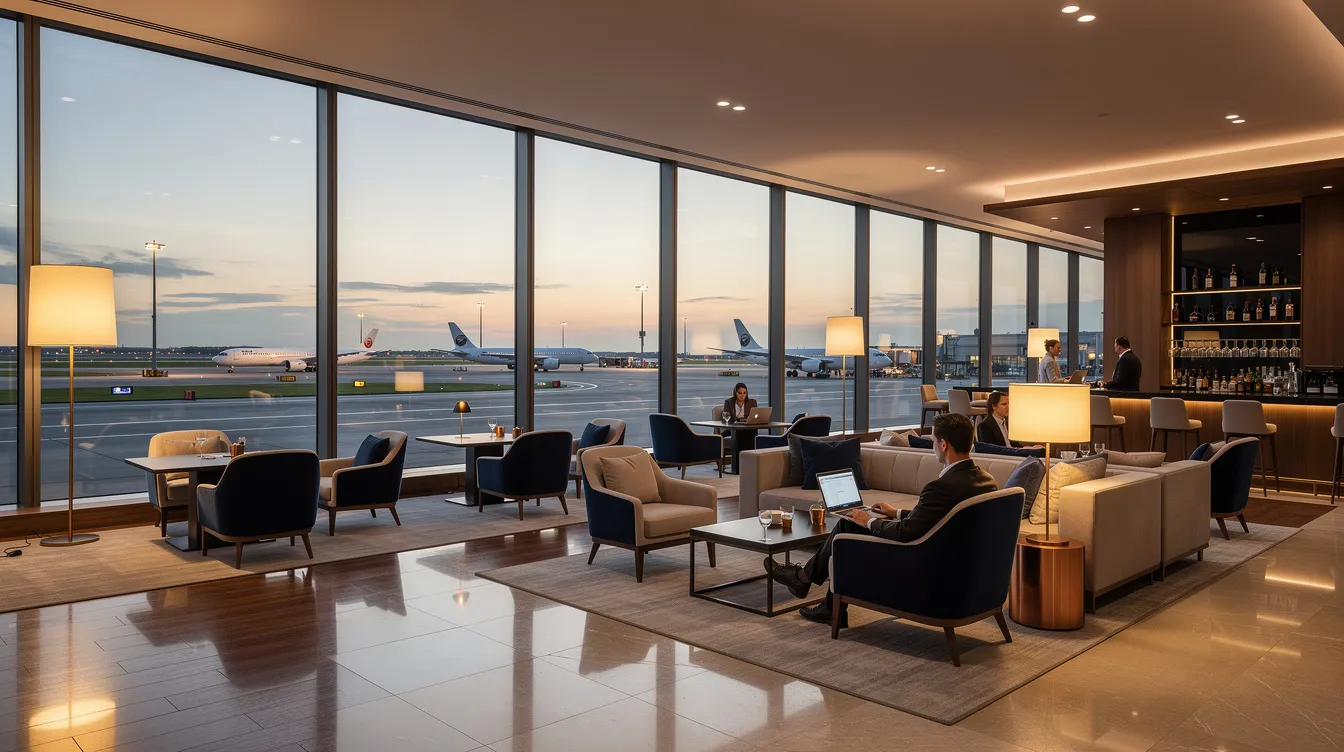
Fly First Class to Europe in 2026: When Commercial Cabins Make Sense – and When to Go Private with BlackJet
This guide is for travelers considering first class or private jet options for transatlantic flights to Europe in 2026. We compare commercial first class, business class, and private jet travel, covering features, costs, and booking strategies. Whether you’re a business executive, a frequent flyer, or a family seeking the ultimate in comfort and flexibility, this comprehensive overview will help you decide which premium travel solution best fits your needs.
Flying first class to Europe in 2026 means stepping into a private suite, sleeping flat on an overnight crossing, and walking off the jet bridge at London Heathrow or Paris CDG ready for a morning meeting. On popular routes like JFK to LHR, Los Angeles to Paris, and Miami to Rome, first class flights deliver gourmet multi-course meals, private suites, and a level of service that justifies first class tickets averaging $10,236 per ticket.
But here's the calculation more travelers are making: even the finest commercial cabin still requires you to navigate check-in queues, security lines, and boarding gates—often adding two to three hours of unproductive ground time each way. A private jet card from BlackJet compresses that overhead to roughly 20 minutes, giving you control over your departure time, your airport, and who sits next to you.
Transatlantic demand remains high. Routes like JFK LHR and JFK–CDG rank among the world's busiest, and premium cabins routinely sell out months ahead during peak season from May through September and again over the Christmas–New Year window. Airlines like British Airways, Air France, and American Airlines set the standard for commercial first class—yet for travelers who need schedule flexibility and total privacy, BlackJet's 25- and 50-hour jet card programs represent the logical next step beyond even the best class seats.
Economy vs. premium vs. business vs. first class on flights to Europe
Four cabin tiers exist on most US–Europe routes, though not every flight offers all four—especially from secondary airports.
Economy class provides 31–32 inches of pitch and roughly 17–18 inches of seat width. A round trip ticket from New York to Paris during peak season generally runs $800–$1,200. You get the destination, but little else.
Premium economy steps up to about 38 inches of pitch with wider class seats, enhanced high-quality meals, and priority boarding on carriers like British Airways and Air France. Expect to pay 1.5 to 2 times the economy fare.
A business class flight on modern widebodies—the A350, 777-300ER, or 787-9—includes lie-flat seats with direct aisle access, elevated dining, and lounge access. Shoulder-season round trip fares commonly range $3,000–$5,000, depending on carrier and route.
First class is the rarest tier, offered on select carriers like Air France La Première, Lufthansa, and certain American Airlines Flagship services. First class seats can convert into fully flat beds, and first class includes complimentary meals and alcohol at a level most restaurants would envy. First class tickets can be up to 16 times more expensive than economy on the same flight.
What's notable in 2026 is how much top business class products have closed the gap. Many airlines offer suite doors, lie-flat beds exceeding 6'4", and in-flight entertainment rivaling first class—effectively delivering a first class experience under a business class label. The distinction increasingly lies in soft product: service ratio, lounge exclusivity, and dining refinement.
Domestic vs. international first class when you're heading to Europe
The term "first class" means dramatically different things depending on whether you're on a domestic connector or a transatlantic flight.
On US domestic legs—say LAX to JFK or ORD to JFK—first class generally means a wider reclining seat, free drinks, improved meal service, and extra baggage allowance. It's comfortable, but it's closer to premium economy on a European carrier than to anything resembling a suite. First-class tickets typically allow more generous baggage allowances, and priority boarding is a common benefit across both domestic and international segments.
International first class on the long-haul leg is an entirely different class experience. International first-class cabins feature lie-flat beds and luxury bedding with thread counts above 300. You'll find private or semi-private suites, often with doors, plus dedicated check-in zones like American Airlines' Flagship First check-in or British Airways' First Wing at London Heathrow Terminal 5. First class provides extra free checked luggage on international flights—sometimes three bags versus one in economy.
A typical itinerary for a US traveler might involve domestic first class from a regional city to a hub, then international first or business class onward to Europe. BlackJet can bypass that domestic segment entirely—flying you from your regional airport directly to your European gateway via a transatlantic private jet, eliminating hub delays, security re-screening, and tight connections while giving travelers multiple options to buy a seat on a private jet when full aircraft charter isn’t necessary. The practical takeaway: never assume a short domestic connector's "first class" equals the overnight transatlantic segment's comfort.
What you really get with a first class ticket to Europe: seats, suites, and sleep
First Class Seat Features
On overnight eastbound flights to Europe—where you might have only six to seven hours in the air—the hard product determines whether you arrive rested or wrecked.
British Airways First offers individual suites with fully flat beds stretching approximately 198 cm (about 6'6"), Temperley London loungewear, and Elemis amenity kits. Air France La Première features ultra-private suites with dual 32-inch 4K screens, a sliding drawer that fits two carry-ons, and wireless charging—wrapped in leather, wool, and tweed. Lufthansa's Allegris First Class on the A350 introduces a double suite measuring 49 inches wide, making it one of the widest first-class seats in the sky.
Dining and Service
High-end international carriers provide complimentary luxury pajamas, and dine-on-demand service is available in many first-class cabins so you can eat on your schedule rather than the airline's. First-class dining often includes chef-curated meals paired with vintage champagnes, and some airlines offer caviar service as a staple of first-class flights. Flight attendants in first class are trained to provide personalized service—learning your name, remembering your preferences, anticipating needs. That personalized service is a hallmark of first-class flight experiences across every major carrier.
Private Jet Comparison
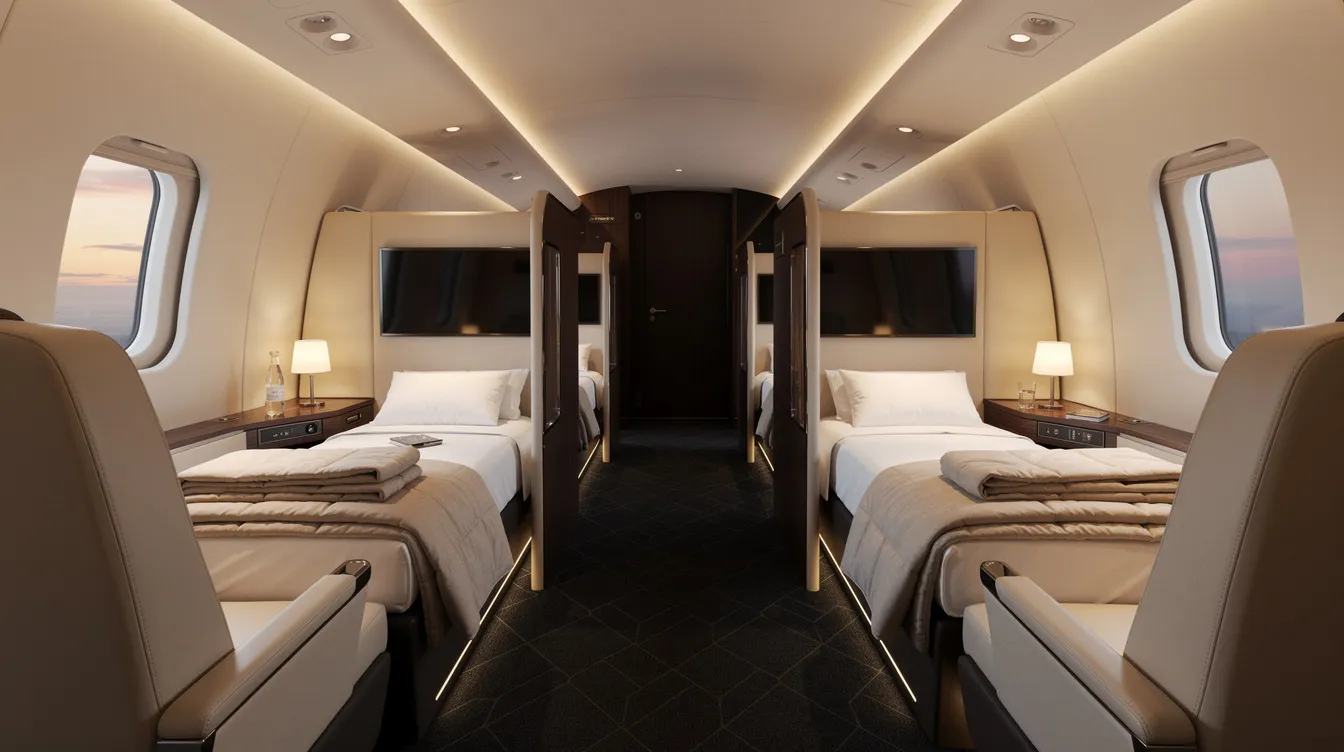
Contrast this with BlackJet's private plane to Europe experience: cabins configured for 4–14 passengers where everyone sleeps flat, temperature and lighting are individually adjustable, and there are no strangers. For a small group, that level of control is difficult for any commercial cabin to match.
Lounges, check-in, and ground services: the hidden value of first class
Lounge Access and Airport Experience
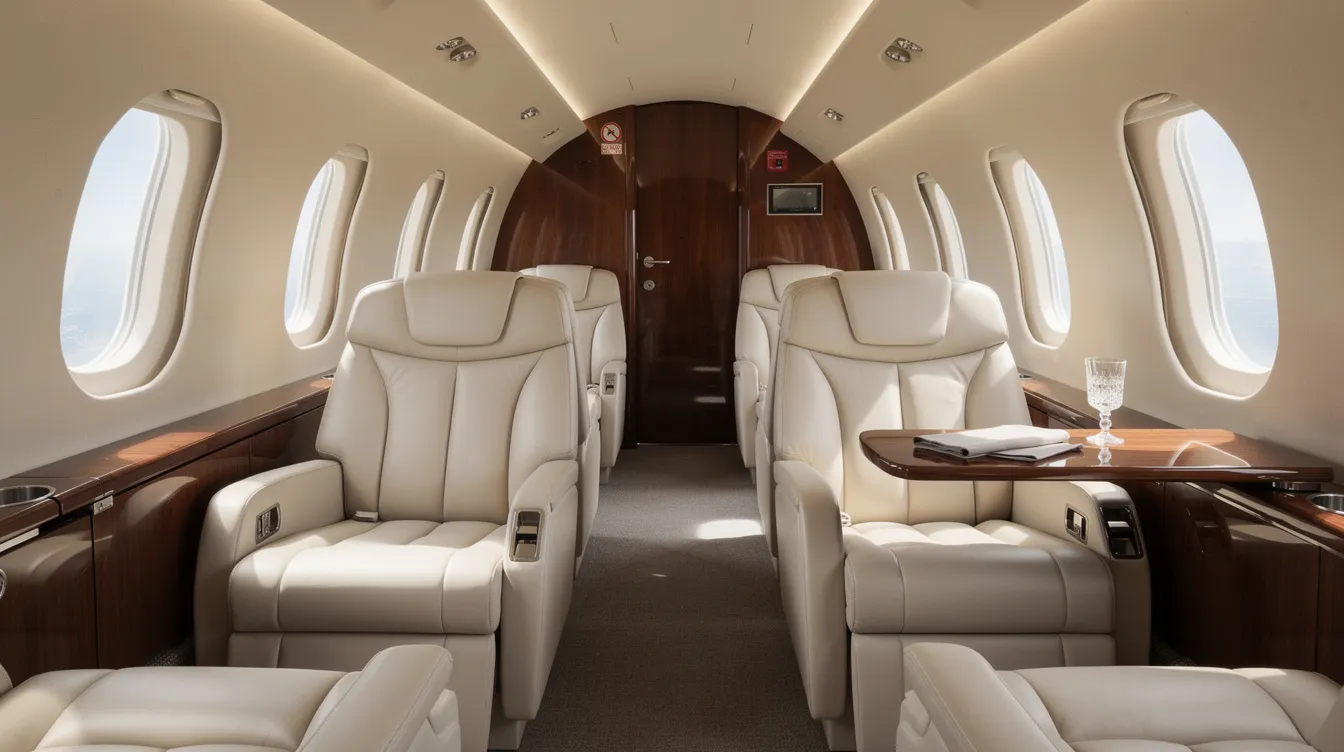
Much of what makes first class worth the price happens before you board. First class offers airport lounge access, and many first-class tickets include lounge access and fast-track security as standard. First class passengers enjoy expedited security lines, and first-class tickets include priority check-in and expedited baggage handling—shaving significant time off the airport process.
At London Heathrow Terminal 5, British Airways' The First Wing provides a private check-in area, dedicated security lane, and direct access to the Galleries First Lounge and the Concorde Room. At JFK Terminal 8, the Chelsea Lounge—shared by British Airways and American Airlines first class passengers—offers a Champagne bar, à la carte dining, and quiet workspaces. American Airlines' Flagship First Dining in select US hubs serves multi-course meals before flights to Europe, complete with sommelier-selected wines.
Travelers are advised to arrive early to maximize airport lounge enjoyment—especially when you have access to showers, sit-down dining, and an arrivals lounge at your destination. These amenities are essential for a traveler landing in London at 7:00 a.m. who needs to shower, change, and step into a boardroom.
Private Jet Ground Experience
BlackJet compresses this entire ground experience. Arrive at a private FBO 20–30 minutes before departure, walk through minimal formalities, and transfer car-to-aircraft without queues. For many business travelers, eliminating one to two hours of airport time each way is worth more than any lounge, however luxurious.
How much does it cost to fly first class to Europe in 2026?
First Class Ticket Price Ranges
First class flights to Europe average around $10,236 per ticket—but the range is wide depending on route, season, and carrier.
A first class ticket from Los Angeles to Paris costs $18,606 on certain peak-season departures, making LAX–CDG one of the most expensive class flight routes across the Atlantic. Economy from the same airport might run $1,100, and business class from roughly $3,800—illustrating why first class remains a world apart. On JFK to London Heathrow, economy generally hovers between $700 and $1,200 round trip, business class runs $2,500–$4,500, and first class on select carriers spans $8,000–$15,000 round trip. Miami to Rome or Madrid shows similar spreads, with summer prices consistently higher.
The cheapest recent first class ticket was $3,838—an outlier that surfaces during off-peak windows or via inventory clearing. The premium exists because first class flights offer extremely limited class seats (sometimes only six to eight suites per aircraft), a higher flight-attendant-to-passenger ratio, and comprehensive ground services.
Private Jet Cost Comparison
For comparison, BlackJet's jet card model works differently: clients pre-purchase 25-hour jet card access or 50 hours of private jet time. A New York–London trip on a large cabin or ultra-long-range jet consumes roughly 7–8 flight hours each way. For a team of four, the per-person cost may approach or exceed first class fares—but the time saved, privacy gained, and schedule control often tip the calculation.
Finding and booking first class flight deals to Europe
Securing class flight deals on transatlantic first class requires strategy, not luck.
Flexibility wins. Flexibility with travel dates can lead to discounted first class fares—shifting departure by even two or three days can drop pricing by thousands. Compare prices across departure airports: JFK, EWR, and BOS can yield meaningfully different fares for the same destination. December is the cheapest month to book first class flights, so travelers with schedule flexibility should search that window aggressively.
Monitor promotions. Airlines offer sales on premium cabins 60–120 days before departure, particularly during shoulder seasons. Mixed-cabin itineraries—outbound in business class, return in first class—can reduce total cost while preserving the best class experience for the overnight leg when sleep matters most.
Consider fifth-freedom routes. Fifth-freedom flights often provide better rates for first-class tickets because carriers like Turkish Airlines, Virgin Atlantic, or Singapore Airlines operate routes where competition is thinner and pricing more favorable.
Book early for peak. Booking in advance can secure better deals on first-class tickets, especially for summer Europe travel. Fare buckets fill quickly on popular routes, and the lowest price disappears months before departure.
Professional travel advisors specializing in premium cabins can sometimes access unpublished deals to Europe, but travelers considering private aviation should also understand how much it costs to rent a private jet for comparable routes. But for travelers who value certainty over hunting for one-off bargains, BlackJet's jet card programs provide guaranteed access at locked-in hourly rates—no last minute flight deals required, no availability anxiety.
Using miles and credit card points for first and business class tickets to Europe
Booking with points is a reliable way to fly first class at a reduced cost—and for many travelers, the most effective path to Europe first class flights without paying full fare.
A business class flight from New York to Frankfurt via a major alliance program might require 60,000–70,000 frequent flyer miles plus taxes, compared to a $3,000+ cash fare. A first class flight from a US hub to London can run 80,000–100,000+ miles one-way, depending on airline and season. Cards from American Express, Capital One, and Chase offer category bonuses on travel, dining, and business spending that accelerate point earning toward class tickets, while resources that break down overall jet card cost help compare private membership against premium cabin spend.
The constraints are real, though:
Limited award availability on popular summer dates and popular routes
Higher surcharges on some European carriers—particularly British Airways
The need to be flexible on routing, often connecting through Frankfurt, Zurich, or Madrid before reaching your final European destination
Strategic travelers use miles for one-way first class segments—especially the overnight return from Europe when sleep quality directly affects your first day back. Combine that with a cash business class ticket outbound, and you've built a cost-effective round trip with maximum comfort where it counts.
BlackJet's value proposition runs parallel: instead of constantly searching for award space that may vanish, jet card members have guaranteed access to aircraft with transparent hourly pricing and no blackout dates. For frequent transatlantic travelers, that consistency eliminates the search entirely.
First class vs. business class vs. private jet: which is right for your Europe trip?
The answer depends on several factors: group size, schedule rigidity, and how you value time versus cost per seat.
First class delivers maximum commercial comfort with the fewest class seats, excellent service, and the highest price per seat. British Airways offers first class flights to Europe, Lufthansa is a recommended airline for first class to Europe, SWISS is known for its first class flights to Europe, and United Airlines provides first class options to Europe. It's best suited to solo travelers or couples on routes where schedules align and the experience itself is part of the trip.
Business class has closed much of the gap—lie flat seats, strong dining, and solid lounge access at meaningfully lower fares. It's often the sweet spot for premium commercial travel, particularly when using points or catching fare sales. For many cities, business class is the highest cabin available.
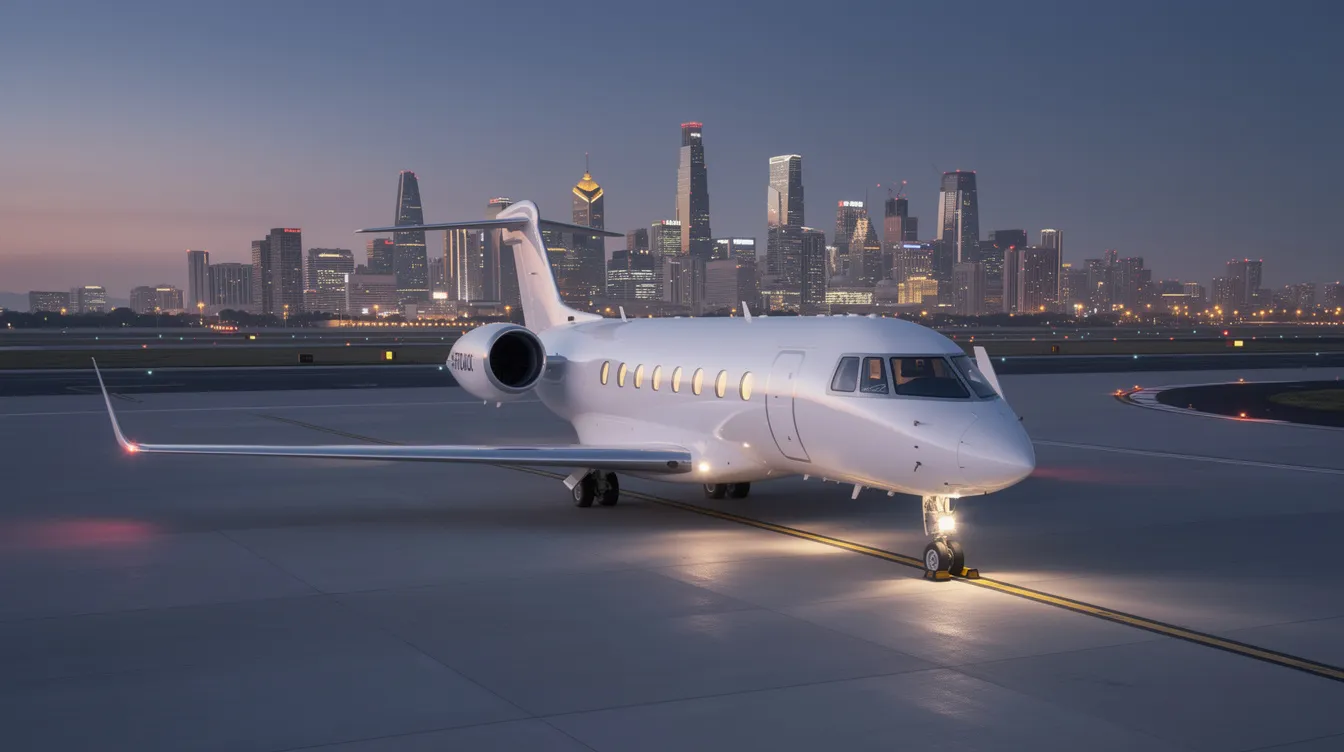
Private jet access via BlackJet through its 25+ Hour Jet Card puts the entire aircraft under your control. A leadership team flying from Teterboro to London Farnborough on a large cabin jet can even select among the top 16-seat private jet options to balance comfort, range, and budget while avoiding JFK entirely. You choose departure time, route, and who's on board. Landing at regional airports—Farnborough instead of Heathrow, Le Bourget instead of CDG—saves another hour on arrival.
Consider this scenario: a CEO needed in both London and Geneva over 48 hours. Commercial first class requires awkward connections and possibly an overnight hotel in a hub city. A BlackJet jet card lets them fly direct city pairings—London to Geneva, then back to New York—on their schedule, even with late-night or early-morning departures. Time and privacy benefits outweigh per-seat cost when timing is critical.
Safety, sustainability, and technology: beyond the champagne
Premium travel decisions involve more than comfort. For serious travelers, safety standards, environmental impact, and technology tools are increasingly central to how they choose to fly.
Commercial airlines maintain rigorous safety and regulatory oversight across all cabins—the same flight deck and protocols protect economy and first class alike. For private aviation, the standards vary by operator, which is why BlackJet works exclusively with operators meeting stringent, third-party safety certifications—including regular audits, experienced crews, and strict maintenance requirements across aircraft categories. A 24/7 operations team monitors every flight, weather conditions, and itinerary changes in real time.
On sustainability, BlackJet ensures every flight is carbon-neutral via verified offset and insetting programs, at no additional cost to members. These investments fund certified projects—forestry restoration, renewable energy—that match or exceed emissions produced, aligned with ICAO and GHG Protocol standards. For ESG-focused executives and corporate clients, this removes the environmental objection to private aviation.
Technology rounds out the advantage, just as a clear private jet price list rounds out the financial picture for clients comparing access models. BlackJet's digital platform enables instant quoting, aircraft selection, and booking from a mobile device—compared to the rigid schedules and multi-step booking flows of commercial international flights. Same-day adjustments that would be impossible with traditional first class tickets happen with a message or call.
Frequently Asked Questions About Flying First Class to Europe
What amenities can I expect in first class on flights to Europe?
First class passengers enjoy private suites with lie-flat beds, gourmet multi-course meals often including caviar and vintage champagnes, luxury amenity kits, and personalized service from dedicated flight attendants. Complimentary luxury pajamas and dine-on-demand options are common on premium carriers.
Which airlines offer the best first class flights to Europe?
British Airways, Lufthansa, SWISS, and United Airlines are among the most popular airlines providing exceptional first class experiences to Europe. Each offers unique cabin features, exclusive lounges, and premium services.
When is the most popular time to fly first class to Europe?
Peak travel times for first class flights to Europe are typically from May through September and during the Christmas to New Year holiday period. Booking early is recommended as premium cabins often sell out months in advance during these popular times.
How does first class airport lounge access enhance the travel experience?
First class tickets include access to exclusive business lounges and first class lounges, which offer quiet workspaces, gourmet food, premium beverages, shower facilities, and expedited security and boarding processes. These lounges transform waiting time into productive or relaxing moments before departure.
Can I use miles or points to book first class flights to Europe?
Yes, booking with frequent flyer miles or credit card points is a reliable way to reduce the cost of first class tickets. However, award availability is limited on popular routes and during peak seasons, so flexibility with travel dates and routes can improve your chances.
How does flying private with BlackJet compare to commercial first class flights?
BlackJet’s private jet card programs offer unparalleled flexibility, privacy, and time savings compared to commercial first class. Members enjoy direct flights from regional airports, personalized service, and carbon-neutral flights, eliminating long airport waits and security lines.
Planning your next Europe trip: putting it all together with BlackJet
The smartest travelers in 2026 don't lock into one approach—they combine strategies, using guides to jet card pricing alongside award charts and fare sales to decide when to fly private versus commercial.
Blueprint 1: The executive sprint. A New York–based leadership team uses BlackJet's 50-hour Jet Card to fly Teterboro to London Farnborough nonstop, then London to Geneva and back over three days—all segments on private aircraft. Door-to-door time per leg drops to roughly 8–9 hours versus 11–12 on commercial, even in first class, and frequent flyers can benchmark that value against frameworks that explain 100-hour jet card costs for truly heavy private jet usage. No hub delays, no split bookings, no compromises.
Blueprint 2: The hybrid vacation. A family flies commercial business class or first class from San Francisco or Los Angeles to Paris for a two-week trip, using miles for the transatlantic leg and evaluating whether a 12-seater private jet makes sense for the most time-sensitive segments. For intra-European hops—Paris to Mykonos, Mykonos to Florence—they use BlackJet on a light or midsize jet, skipping cramped regional connections and maximizing time on the ground at each destination, much like frequent flyers use the best jet cards to streamline recurring private travel.
There is no single "best" option. Redeem miles for an occasional first class ticket when award space opens. Buy discounted business class flight deals when schedules align. And rely on BlackJet's jet card when time, privacy, and flexibility matter most.
If you're evaluating how private jet access compares financially to your current spend on premium class tickets, BlackJet's team can model that for your specific travel patterns and highlight scenarios where the cheapest private jet options rival commercial first-class pricing on a per-seat basis. Explore our jet card programs, speak with a specialist, and discover what it means to arrive on your own terms—every time—whether you're comparing Flexjet jet card costs, evaluating NetJets jet card pricing, or planning large-group travel on 20-passenger private jets, 30-passenger private jets, or even 50-passenger private jet charters, potentially alongside longer-term options like leasing a private jet.


 Sign up with google
 Sign up with Apple