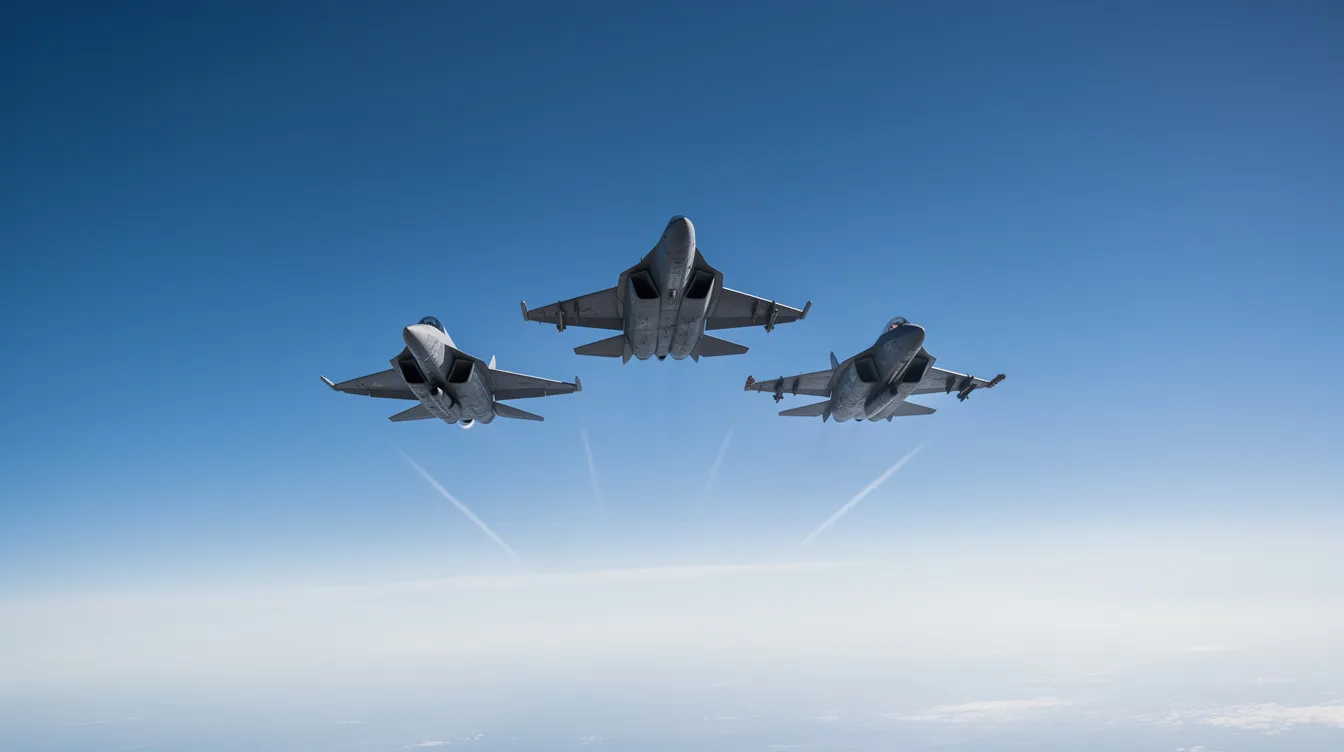
Private aviation is not merely a luxury. It is a strategic instrument for executives, entrepreneurs, and discerning travelers who measure their advantage in hours saved, connections made, and risks managed. In 2026, accessing a private jet has never offered more options-or more complexity. This guide breaks down exactly what those options cost, how they compare, and which model fits your travel profile.
Understanding Fighter Jet Costs and "Fighter Price" in Private Aviation
The phrase "fighter price" evokes images of extreme performance married to extreme investment. Consider what goes into a modern military fighter jet: research and development costs are essential components of the pricing structure for fighter jets, often spanning decades and billions of dollars before a single airframe rolls off the line. Fighter aircraft pricing is driven by massive research and development costs that dwarf the manufacturing expense itself. Combat aircraft prices vary due to multiple pricing metrics such as flyaway cost and program acquisition cost, meaning the sticker price of a fighter jet does not typically include full procurement costs.
The price of a fighter aircraft varies significantly based on generation and capabilities. Fifth-generation fighter jets utilize advanced technologies—stealth coatings, sensor fusion, advanced avionics, and internal weapons bays—that significantly increase costs compared to earlier generations. Modern military fighter jets typically cost between $30 million and $150 million per aircraft. More precisely, a modern fighter jet costs between $80 million and $150 million depending on the platform. Fighter jet pricing includes complex high-tech components which elevate costs, while flyaway costs refer to the manufacturing cost of the aircraft without additional expenses like spare engines, ground support, or training programs. Fighter jet prices are also influenced by economies of scale in production volume-the more units a country orders, the lower the unit cost per airframe.
How does this connect to private aviation? The parallel is striking. The sticker price of a Gulfstream G650ER or a Bombardier Global 7500 tells you almost nothing about what you will actually spend to fly privately. Just as a fighter program includes development, production, training, maintenance, and lifecycle support, private jet access involves acquisition costs, hourly operating rates, fuel surcharges, crew expenses, insurance, hangar fees, and sustainability premiums. The "fighter price" question for private travelers in 2026 is really: What will private jet access actually cost me this year, and how should I structure that spending?
Here are the ballpark figures. On-demand charter ranges from roughly $2,500 per hour for turboprops to $13,000 or more per hour for ultra-long-range jets—before taxes and surcharges. Jet card programs average approximately $11,314 per hour all-in across cabin classes, a number that aligns with broader analyses of jet card cost per hour. Fractional shares start at $500,000 for light jets and exceed $1.5 million for large cabins. Full ownership of flagship aircraft runs $45 million to $70 million-plus, with annual operating costs in the millions.
This article ranks and compares the five main pricing models—ownership, fractional, on-demand charter, fixed-rate jet cards like BlackJet, and subscription models-so you can determine which delivers genuine "fighter-level" value for your travel pattern. BlackJet's premium private jet card programs bring a distinctive edge to this comparison as a premier jet card provider offering carbon-neutral flights, strict safety certifications, and a tech-enabled booking platform.
How We Evaluated the Best Private Jet Pricing Models
Rather than comparing aircraft brands, this guide compares pricing structures—how you pay for private flight hours—because the model you choose determines your total annual cost, risk exposure, and travel experience far more than any single airframe selection.
Key Evaluation Criteria Including Flyaway Costs
We assessed each model across seven dimensions that matter most to executives and high-net-worth travelers:
Cost predictability: Fixed hourly rates (jet cards) versus variable charter quotes versus unpredictable operating costs of ownership.
Capital commitment: Up-front investment required—from millions for ownership or fractional shares to prepaid hour blocks for jet cards, such as structured 100-hour jet card programs,s to zero for ad-hoc charter.
Operational flexibility: Ease of booking, peak-day restrictions, cancellation terms, and ability to switch between light, midsize, and large cabin aircraft.
Safety and certification: Inclusion of ARGUS-rated, Wyvern Wingman-audited, and IS-BAO certified operators with rigorous crew vetting.
Sustainability: Whether flights are carbon-neutral by default, offer optional offsets, or ignore emissions entirely.
Technology and support: 24/7 live support, app and web booking, real-time flight tracking, disruption management.
Scalability: How costs behave once you exceed 25, 50, or 100+ hours per year, and which jet card options for frequent flyers best match that growth.
Best 5 Pricing Models for Private "Fighter-Level" Jet Access in 2026
Five distinct pricing models realistically cover 95% of serious private aviation demand. They are ranked below by overall value and fit for frequent business and high-end leisure travel—not simply by lowest price. BlackJet Jet Cards are treated as one distinct model and benchmarked transparently against the others.
1. Fixed-Rate Jet Card Programs (e.g., BlackJet Jet Card)
A fixed-rate jet card lets you prepay a block of hours—typically 25 or 50 hours—at guaranteed hourly rates across multiple cabin classes. This is the sweet spot for travelers flying 25 to 100-plus hours per year.
Why It Stands Out
Guaranteed, all-in hourly pricing eliminates the budgeting guesswork that plagues charter and ownership.
In 2026, representative jet card rates range from approximately $7,000 to $8,500 per hour for light jets, around $12,500 for super-midsize, and $15,000-plus for large cabin aircraft, with products like the BlackJet 25+ Hour Jet Card defining the mid-to-long-range sweet spot.
BlackJet combines that pricing with 24/7 digital booking, real-time support, and automatic carbon-neutral offsets at no extra cost to you.
The result: aircraft choice similar to charter, with price predictability closer to ownership.
Best For
Executives commuting between hubs-New York to Chicago to Dallas-two to four times per month.
Entrepreneurs and families flying 25 to 75 hours per year who want zero asset risk or management hassle.
Companies consolidating spend from commercial first or business class into a consistent private solution.
Key Strengths
Fixed, published hourly rates by cabin type—light, midsize, super-midsize, large—visible to members before booking.
High safety standards: only vetted, top-tier operators and audited aircraft meeting ARGUS Platinum, Wyvern Wingman, and IS-BAO benchmarks.
Carbon-neutral flights by default, with offsets calculated per route and applied automatically.
Ability to upgrade or downgrade cabin size per trip while drawing from one hourly balance.
Minimal lead-time requirements for most routes—often 24 to 48 hours on common pairings.
Possible Limitations
Prepayment requirement, typically $200,000 to $600,000 for an initial hour load, compared with zero for ad-hoc charter.
Blackout or peak-day surcharges during holiday periods, though these are defined in advance and contractually transparent.
Less financially efficient than full ownership for flyers exceeding approximately 250 to 300 hours per year.
2. On-Demand Private Jet Charter (Trip-by-Trip Pricing)
Ad-hoc charter means paying per trip with no long-term commitment. Quotes vary depending on aircraft type, date, routing, and repositioning requirements.
Why It Stands Out
Ultimate flexibility for occasional flyers.
You pay only when you fly, with no upfront capital.
You also gain access to a broad range of aircraft globally, including one-off specialty requests.
Best For
Travelers flying fewer than 20 to 25 private hours per year.
Clients testing private aviation before committing to a jet card like BlackJet's and who want a clear understanding of how much it costs to rent a private jet.
One-off complex itineraries—a multi-stop European summer tour, for example—where you want to handcraft each leg.
Key Strengths
Zero membership or card fees; purely trip-based invoices.
Ability to shop quotes across multiple providers, including BlackJet's booking platform.
Good fit for irregular, seasonal, or experimental usage patterns.
Possible Limitations
Pricing volatility is real. A light jet charter from New York to Miami might quote at $18,000 in March but $28,000 over Thanksgiving once repositioning legs and fuel surcharges are factored in. Prices shown on aggregator platforms rarely include the full invoice.
No guaranteed availability on peak dates; last-minute trips can become very expensive.
More time spent comparing aircraft, operators, and safety standards trip by trip if not using a curated platform.
3. Fractional Jet Ownership (Buying a Share of an Aircraft)
Fractional ownership means purchasing a share of a specific aircraft—commonly a 1/16 or 1/8 share—that entitles you to a fixed annual number of flight hours within a managed fleet. This model retains legacy appeal among corporate flight departments.
Why It Stands Out
Best For
Key Strengths
Fractional programs offer institutional-grade reliability for heavy users and specific financial characteristics, including meaningful fractional jet ownership depreciation benefits when structured correctly.
Guaranteed aircraft availability windows, often with 8 to 10 hours' notice.
Ability to brand or customize the cabin experience across frequent routes.
Professional management of crew, maintenance, and scheduling through the fractional operator.
Possible Limitations
High upfront buy-in—often several million dollars—plus monthly management fees and hourly occupied charges, partially offset in some cases by tax benefits of fractional jet ownership.
Longer contractual commitments and potential residual-value risk if market values drop.
Less flexible if your hours or aircraft size needs change significantly year to year compared to a jet card like BlackJet's.
4. Full Aircraft Ownership (Buying Your Own "Fighter-Class" Jet)
Owning a jet outright—whether a Gulfstream G650ER, Bombardier Global 7500, or large-cabin Dassault Falcon—means total responsibility for capital expenditure and operating expenses, similar to evaluating the features of a 20 million-dollar private jet in detail. It is the private aviation equivalent of running your own air force of one.
Why It Stands Out
Maximum control: your aircraft, your crew, your schedule, your interior.
This can be status-affirming for ultra-high-net-worth individuals or corporations with complex, intercontinental travel demands.
To appreciate the scale, consider the military parallel. The most expensive fighter jets in service today include the F-22 Raptor, which costs approximately $143 million per unit and is stealthy enough to operate in contested airspace undetected. The F-35A Lightning II has a flyaway cost of $82 million—the average flyaway cost of an F-35A was $82.5 million in 2022—while the Eurofighter Typhoon costs around $117 million per unit, and the average cost of a Dassault Rafale is about $125 million. These are among the most expensive military aircraft ever produced, and they illustrate how development and production complexity drive pricing in any aviation sector.
The F-22 Raptor has a top speed of Mach 2.25 and represents the pinnacle of air superiority with its supercruise capability and stealth technology. The Eurofighter Typhoon has a top speed exceeding Mach 2.0, a thrust-to-weight ratio of almost 1:1, and features the Captor E AESA radar for superior situational awareness. The Dassault Rafale is a multirole fighter jet capable of air-to-air combat, ground strike, and nuclear deterrence missions. The F-35 Lightning II has three variants-the F-35A for conventional landing, the F-35B for vertical landing operations, and the F-35C for carrier operations—each with different cost profiles, and many combat aircraft are also offered in a two-seat version for training or mission-management roles. The Sukhoi Su-35, evolved from the Su-27 Flanker lineage, is a 4.5-generation air superiority fighter featuring thrust vectoring engines for enhanced maneuverability. The Chengdu J-20 is China's first stealth fighter—often described as China's answer to the F-22—and can supercruise at Mach 1.8 without afterburners. The F-35A Lightning II has a maximum speed of approximately 1,200 mph, making it capable across diverse mission sets.
Even the F-15EX Eagle II, designed as a missile truck able to carry more weapons than any other fighter in the US Air Force inventory, and the Super Hornet with its proven AESA radar and combat radius demonstrate that expensive fighter jets are expensive not because of sticker price alone but because of weapons systems, stealth aircraft technology, and lifecycle costs. Countries including Italy operate the Eurofighter Typhoon alongside the F-35 to maintain air superiority across NATO. Some jet fighters serve primarily as jet trainer platforms or ground attack aircraft, while others fill roles requiring sensor fusion and the ability to dominate in a single sortie. A single Gripen E could expend over $15 million in missiles per sortie, illustrating how operating costs can dwarf acquisition price. The F-15EX itself proves that even fourth-generation platforms can remain relevant when fitted with advanced avionics and modern weapons. These expensive military aircraft—from stealth fighters with internal weapons bays to multirole platforms—highlight a universal truth: the most capable aircraft in the world demand the highest total investment.
Modern fighters often require extensive lifecycle support, which adds to total ownership costs. Maintenance and support costs can exceed the original purchase price over an aircraft's service life. Operating costs for the F-22 Raptor are about $85,000 per flight hour, while the F-16's operating costs range from $22,000 to $27,000 per flight hour—demonstrating how low operating cost platforms contrast with top-tier stealth aircraft. The F-35 program will cost over $2 trillion to operate through 2088. Costs vary depending on mission profile, flight hours, and pilot training requirements.
Private jet ownership follows the same pattern. Pre-owned late-model G650ERs list for $45 to $63 million. Operating a G650 at 400 hours per year costs roughly $3.35 million annually. At lower utilization, the per-hour cost climbs dramatically, as any comprehensive private jet price list quickly makes clear.
Best For
Owners flying 300 to 500-plus hours annually on consistent intercontinental patterns.
Enterprises needing specialized interiors—flying boardrooms, medevac configurations—that charters cannot replicate.
Key Strengths
Unlimited access to your aircraft, subject to maintenance, and deep personalization options.
Ability to integrate aircraft into broader corporate logistics strategy.
Potential charter revenue when the aircraft is not in use, via third-party management companies.
Possible Limitations
Acquisition prices ranging from $8 million for older light jets to $70 million-plus for new large-cabin aircraft, plus hangar, crew, insurance, and maintenance.
Exposure to market cycles, regulatory changes, and technology obsolescence over a 10- to 15-year ownership horizon.
Lower capital efficiency versus high-quality jet cards like BlackJet for most sub-300-hour flyers.
5. Subscription & Membership-Only Models (Hybrid Approaches)
Newer models combine fixed monthly fees with capped hourly rates or shuttle-style service between key business routes—think Top Gun meets ride-sharing for the sky.
Why It Stands Out
Simple "set and forget" budgeting with a recurring membership fee covering access and sometimes a block of hours.
Some programs offer shared shuttle legs—New York to South Florida, for example—to materially reduce per-trip cost.
Best For
Frequent travelers on specific corridors who fly at least once or twice per month on the same routes.
Individuals who value membership-club style perks—lounges, events—alongside flight benefits.
Key Strengths
Predictable monthly cash flow for heavy users, with less lump-sum prepayment than traditional jet cards.
Potential for lower effective hourly rates on popular shuttle routes or shared flights.
Community feel and networking potential among members on key city pairs.
Possible Limitations
Route-dependent value: if you don't use the main shuttle legs, economics deteriorate quickly.
More complex rules and blackout dates than a straightforward BlackJet-style jet card.
Some programs rely on smaller fleets or third-party partners, impacting availability and consistency.
Quick Comparison of the Best Private Jet Pricing Models and F-15EX Eagle II Options
Model | Best For | Key Features |
|---|
Fixed-Rate Jet Cards (BlackJet) | 25 to 150 hours per year travelers who want guaranteed, carbon-neutral pricing without owning a jet | Guaranteed hourly rates, carbon-neutral flights, high flexibility, vetted operators |
On-Demand Charter | Under-25-hour flyers and one-off trips who value flexibility over price predictability | Pay-per-trip, no upfront commitment, broad aircraft access |
Fractional Ownership | 150 to 300 hours per year corporate or family users comfortable with multi-year commitments | Share of aircraft, predictable availability, potential tax benefits |
Full Ownership | 300 to 500-plus-hour flyers requiring full customization and internal flight departments, similar to ultra-high-end fleets tracked in billionaire private jet price trends | Complete control, full customization, potential for charter revenue |
Subscription/Membership Models | Frequent travelers on a few core routes who can maximize shuttle and shared options, especially when evaluating unlimited private jet flight memberships | Fixed monthly fees, shuttle/shared flights, club perks |
How to Choose the Right Private Jet Pricing Model
Choose Based on How Many Hours You Fly Per Year
Clear breakpoints exist for different spend levels, from evaluating the cheapest private aircraft options at the entry point to heavy usage that can justify ownership:
Recommended Model by Annual Flight Hours
Annual Hours | Recommended Model |
|---|
Under 25 hours | On-demand charter |
25–75 hours | Fixed-rate jet card (BlackJet) |
75–150 hours | Jet card or fractional, depending on route consistency |
150–300 hours | Fractional ownership |
300+ hours | Full ownership |
Consider a practical example: an executive flying New York to Miami monthly plus a quarterly trip to London. That pattern produces roughly 60 to 80 flight hours annually. A BlackJet Jet Card at roughly $8,000 to $12,000 per hour, depending on cabin class, yields a predictable annual spend of $480,000 to $960,000 with zero capital at risk, no crew to manage, and carbon-neutral travel included. Compare that to ownership of even a midsize jet: $15 to $25 million acquisition, $1 to $2 million in annual fixed costs, plus variable flight expenses—all for fewer hours than the aircraft is capable of serving.
Choose Based on Capital Commitment and Risk Tolerance
Asset-light approaches—BlackJet's jet card, ad-hoc charter—keep capital deployed in your business or portfolio rather than depreciating on a tarmac. Asset-heavy approaches—fractional shares, full ownership—tie up millions and expose you to aircraft market cycles.
Prepaying hours in a card program offers a deliberate balance: no aircraft market risk, but still preferred access, rate locks, and pricing stability that charter cannot match, whether through BlackJet or competitors such as Flexjet’s jet card offerings.
Choose Based on Flexibility, Safety, and Sustainability Priorities
If you need maximum spontaneity, prioritize models with guaranteed availability—jet cards and fractional ownership outperform one-off charter here, whether through providers like NetJets, whose jet card costs and programs are widely benchmarked, or through BlackJet. Safety is non-negotiable: vetted operators and standardized audits, as maintained by BlackJet Certified, should be part of any decision regardless of model.
Carbon-neutral flying changes the true price calculation when ESG goals matter. Built-in offsets—like BlackJet's—mean sustainability is not an add-on expense but a standard feature, even when selecting among the best small private aircraft for shorter missions. Across models, the operator who embeds safety and sustainability into the base price delivers the most honest "fighter price" comparison.
Which Pricing Model Is Best for You?
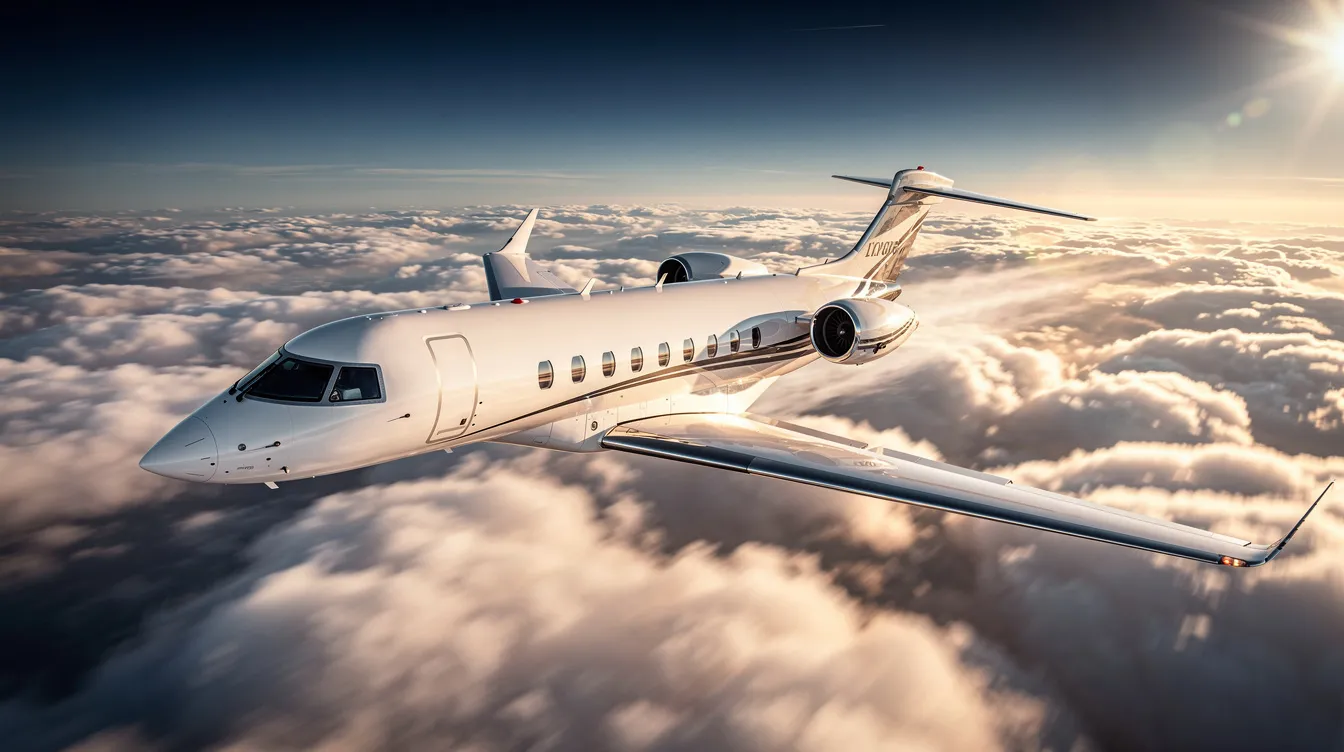
Choose a BlackJet Fixed-Rate Jet Card if you fly 25 to 150 hours per year and want guaranteed, carbon-neutral pricing with high flexibility across cabin types.
Choose On-Demand Charter if you mostly travel commercially and only occasionally need a private jet for special trips.
Choose Fractional Ownership if your company flies regularly but is not ready for full aircraft ownership complexity.
Choose Full Ownership if you already treat private aviation as core infrastructure and can justify the capital for 300-plus hours per year.
Choose Subscription/Membership if your life or business centers on a few high-traffic routes where shuttle-style flying makes sense, and you understand how private jet charter pricing compares to fixed-membership economics.
Ready to see how these models apply to your actual travel pattern? Whether you're weighing card membership against acquiring a 2 million dollar private jet, speak with BlackJet's team to model your 12-month flight schedule and compare real fighter-grade cost scenarios.
Final Thoughts
Like the world's most capable fighter programs, where the true cost encompasses development, production, training, pilot readiness, and decades of lifecycle support—the fighter price of private aviation is not just what you pay per hour. It is time saved, flexibility gained, and risks avoided.
No single model is best for everyone. The optimal choice depends on hours flown, cash-flow preferences, route consistency, and strategic goals, whether you are considering the most expensive private jet options or configuring a private jet for 20 passengers on critical routes. What should never be sacrificed for a lower quote is safety, technology, and sustainability—these are the pillars that separate serious private aviation from commodity seat-filling.
BlackJet stands as a premier jet card solution delivering predictable pricing, carbon-neutral flights, and a seamless tech-driven experience for discerning travelers. If you value performance at the level the word "fighter" implies, explore what BlackJet can do for your next chapter of travel.


 Sign up with google
 Sign up with Apple