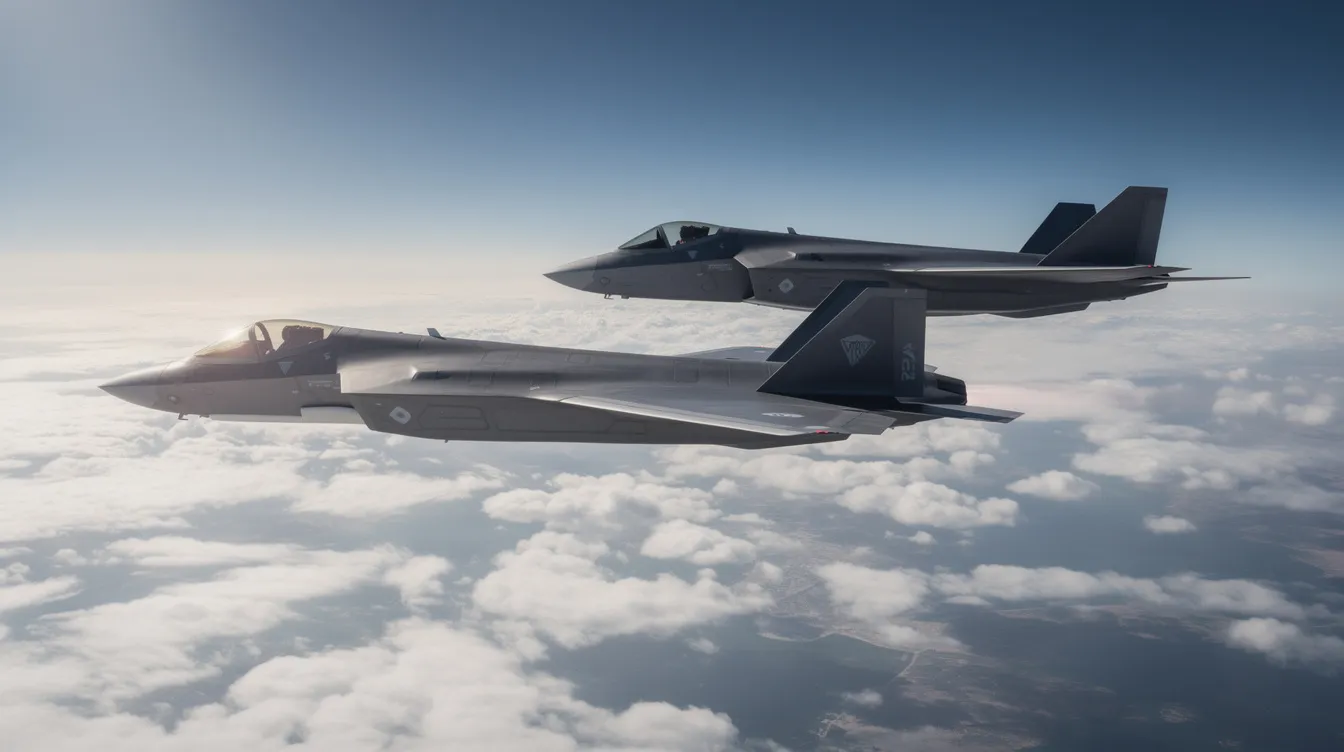
The world's top fighter jets define the balance of power between nations, and their technology shapes everything from battlefield tactics to the private jets that carry executives across oceans. This fighter plane comparison covers every major aircraft in operational service as of October 2026, from stealth icons to upgraded workhorses, and draws a direct line between military mission-fit thinking and how discerning travelers should choose private aircraft.
Answer First: What Is the Top Fighter Jet in 2026?
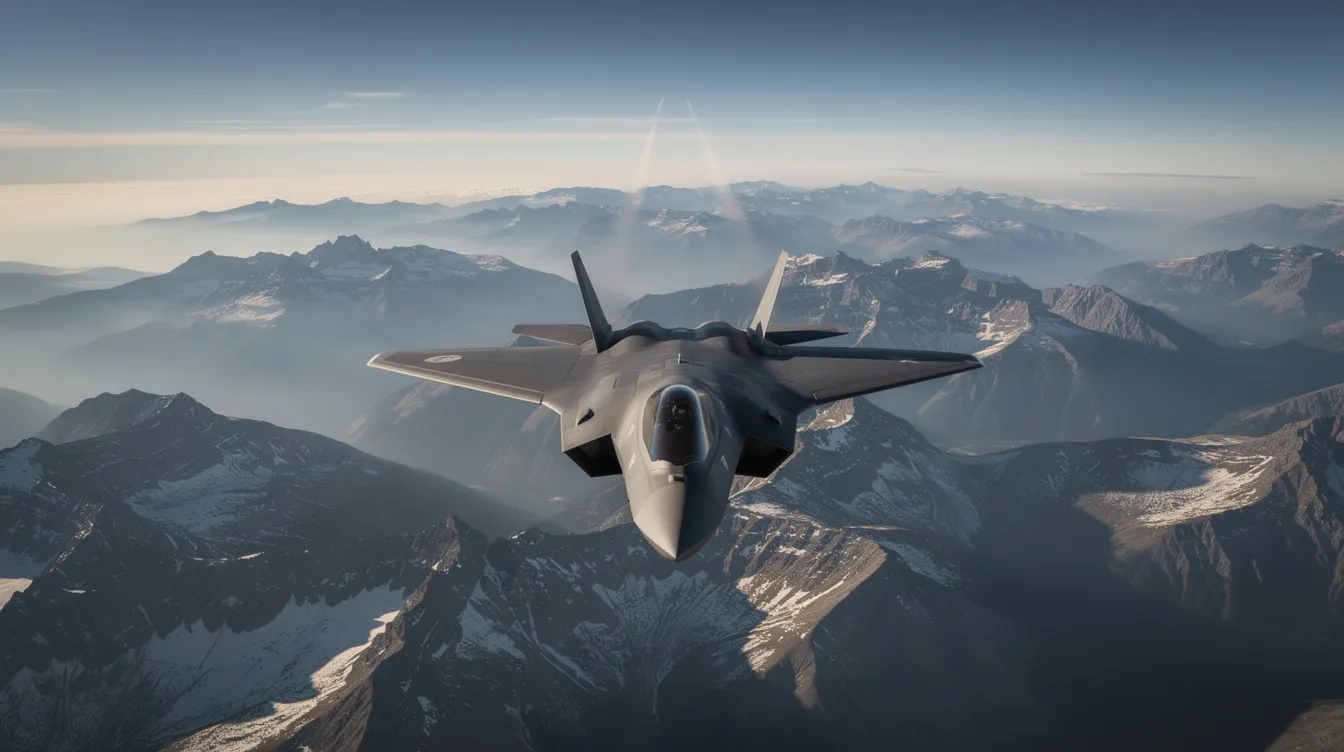
The Lockheed Martin F-35 Lightning II is the most consequential fighter jet in 2026. With over 1,375 aircraft delivered worldwide to more than 20 allied air forces, it is the most numerous fifth-generation platform in production and sets the standard for multirole flexibility, advanced sensor fusion, and networked air combat.
The F-22 Raptor, however, remains the benchmark for pure air superiority. Its maximum speed of Mach 2.25, lower radar cross section, and supercruise performance make it the aircraft every other air dominance fighter is measured against.
"Best" depends on the mission. For air superiority, the F-22 leads. For multirole flexibility across strike, ISR, and coalition operations, the F-35 dominates. For raw weapons payload, the F-15EX carries nearly 30,000 lbs. For cost-effective 4.5-generation performance, the Dassault Rafale and Eurofighter Typhoon deliver proven results across dozens of air forces.
Modern fighter plane comparison in 2026 prioritizes stealth, advanced avionics, and networked combat over raw speed alone. At BlackJet, we see the same principle at work in private aviation: the right aircraft is the one matched to the mission, not the one with the highest top speed.
How Fighter Jets Are Ranked and Compared Today
Fighter aircraft are categorized into generations reflecting technological advancements, and each generation reflects a leap in technology, design philosophy, and operational roles. Performance specifications vary based on intended design purpose: an interceptor optimized for high speed and climb rate differs from a strike platform built around weapons payload and range.
The criteria used across defense analysts, procurement offices, and media for any fighter plane comparison in 2026 include:
Criterion | Description |
|---|
Stealth / Radar cross section (RCS) | Stealth technology reduces the likelihood of detection by enemy radar. Low-observable design uses special materials, faceted surfaces, and internal weapons bays to minimize radar visibility. Stealth shaping is central to all fifth-generation fighters. |
Speed and supercruise | Maximum speed matters for interception and escape; supercruise (sustained supersonic flight without afterburners) provides tactical advantage without the fuel penalty. |
Agility and thrust vectoring | Jet fighters may include features like thrust vectoring for enhanced maneuverability, allowing them to pitch, roll, and yaw beyond what conventional control surfaces permit. |
Weapons payload and hardpoints | Internal bays preserve stealth; external stores increase payload at the cost of RCS. Fighter aircraft are typically equipped with multiple weapons capabilities for flexibility. |
Electronic warfare systems and sensors | AESA radars provide improved tracking and resistance against interference. Electronic warfare suites integrate passive sensors, countermeasures, and secure data links into one picture. |
Range, fuel efficiency, and logistics | Combat radius, aerial refueling compatibility, and the efficacy of a fighter depend on its integration with supportive systems like refueling and surveillance aircraft. |
Cost and export record | Flyaway price, cost per flight hour, and export diplomacy all shape procurement decisions. |
Fifth-generation fighters feature stealth design and advanced sensor fusion capabilities; they carry weapons internally, run software-defined avionics, and share targeting data over secure data links. Fourth-generation jets, by contrast, exhibit high mechanical agility and advanced avionics but lack full stealth and internal bays. An air force optimizing for air superiority will rank differently than one focused on operating costs or export potential.
Air Superiority vs Multirole: Defining the "Best" Fighter Jet
Air superiority fighters are designed for gaining and maintaining control of the air so that friendly military aircraft, civilian aircraft, and ISR platforms can operate without threat. This mission includes interception (scramble to defend airspace), defensive counter-air (sweep friendly territory), and offensive counter-air (destroy enemy air power before launch).
Pure air superiority jets like the F-22 Raptor trade everything for speed, stealth, and exceptional agility in air-to-air engagements. Multirole fighters like the F-35 Lightning II, Rafale, and Eurofighter Typhoon balance air-to-air capability with strike capability, maritime attack, and reconnaissance. Multirole fighters can perform both air-to-air and air-to-ground missions on a single sortie.
Air combat has shifted from close dogfights to beyond-visual-range engagements. Modern air combat relies on integrated sensors and situational awareness; a pilot who detects first and fires first wins, often before the opponent knows the engagement has begun. Weapon delivery in modern fighters involves precision-guided bombs and missiles launched at ranges of 100+ km, guided by sensor fusion and data links rather than visual contact.
Operational roles of fighters include air superiority, interception, and precision strike missions, plus deep strike and maritime strike for specialized platforms. The same logic applies to private aviation: just as militaries select aircraft based on mission requirements, BlackJet clients choose between light, midsize, and large-cabin private jets based on route length, passenger count, and comfort, drawing on an understanding of private jet sizes and ideal use cases.
Lockheed Martin F-35 Lightning II vs F-22 Raptor: Stealth Icons Compared
The F-35 and F-22 dominate any fighter plane comparison involving the US Air Force and its allies. Both are stealth aircraft built by Lockheed Martin, but they serve different roles, carry different price tags, and face different futures.
F-35 Lightning II: First flight in 2006; initial operational capability with the Marine Corps in 2015. The F-35 Lightning II has over 880 units in active service across three variants (F-35A for conventional runways, F-35B for short takeoff/vertical landing, F-35C as a carrier-based fighter designed to operate from aircraft carriers). By October 2026, over 1,375 had been delivered to allied nations. The F-35 functions as a flying sensor node: its AN/APG-81 AESA radar, distributed aperture system providing 360-degree infrared surveillance, and helmet-mounted display feed pilots fused data from every sensor on the aircraft. Secure data links (MADL, Link 16) allow it to share that picture across the fleet, redefining situational awareness in contested airspace. The F-35 has a radar cross section equivalent to a golf ball, making it nearly invisible to legacy radars at combat-relevant distances.
F-22 Raptor: First flight in 1997. The F-22 Raptor achieved initial operational capability in December 2005. Fewer than 190 were built; only the US Air Force operates it, since export is prohibited. The F-22 can supercruise at Mach 1.8 without afterburners, sustaining supersonic flight while conserving fuel. Its radar cross section is smaller still; analysts describe it as approximately equivalent to a marble. The F-22 Raptor has a maximum speed of Mach 2.25, faster than any Western fifth-generation competitor.
Metric | F-35A Lightning II | F-22 Raptor |
|---|
Top speed | Approximately Mach 1.6 | Approximately Mach 2.25 |
Supercruise | Limited | ~Mach 1.8 |
RCS (frontal) | Golf ball equivalent | Marble equivalent |
Units in active service | 880+ | ~185 (USAF fleet) |
Export | 20+ nations | US only |
Unit cost (approx.) | $80-100M (varies by variant) | Production ended |
Fighter aircraft performance involves trade-offs between speed, payload, and stealth. The F-22 sacrifices multirole flexibility for unmatched air dominance; the F-35 sacrifices top speed for the most advanced sensor fusion and the broadest operational envelope of any new aircraft in production. A broader survey of the best-performing aircraft across military, commercial, and private aviation in 2026 shows how these trade-offs shape the entire industry.
Eurofighter Typhoon vs Dassault Rafale: European Multirole Competitors
Both the Eurofighter Typhoon and Dassault Rafale began as European air defense projects during the Cold War era and evolved into advanced fighters with full multirole capability. They are the most capable Western jets outside American fifth-generation programs.
The Eurofighter Typhoon was built by a four-nation consortium (Germany, UK, Italy, Spain) and was originally focused on air superiority. It reaches a top speed of approximately Mach 2.0 at altitude (~2,495 km/h) and delivers supercruise performance near Mach 1.5. Payload capacity exceeds 9,000 kg across 13 hardpoints. Typhoon upgrades under Tranche 4/5 concepts include an AESA radar (Common Radar System Mk2), enhanced connectivity, and drone teaming capability, keeping it competitive into the 2040s through continuous upgrades.
The Rafale is Dassault's "omnirole" design, built to perform air-to-air, strike, reconnaissance, and nuclear deterrent missions in a single sortie. Its operational history spans Afghanistan, Libya, Mali, and more recent operations. The SPECTRA electronic warfare suite gives the Rafale passive detection and jamming capability that closes the gap with fifth-generation fighters in contested environments. Integration of the Meteor long-range missile and SCALP/Storm Shadow cruise missile extends its strike capability well beyond visual range.
Export competition between the two is fierce. Rafale has sold to India, Egypt, Greece, and Indonesia. Typhoon exports include Saudi Arabia, Qatar, Kuwait, and several NATO members.
Su-57 Felon, J-20 Mighty Dragon, and Other Fifth Generation Fighters
Russia and China each field their own fifth-generation fighters aimed at countering US and allied air power. Neither matches the F-35 in production scale or networked integration, but both bring unique capabilities.
Sukhoi Su-57 Felon: First flown as the T-50 prototype in 2010, the Su-57 entered serial production in 2020. The Sukhoi Su-57 has approximately 30 units in operational service as of 2026 (Russian sources claim ~48 production aircraft delivered through 2025, though Western estimates put combat-ready numbers lower). The Su-57 has a top speed of Mach 2 and uses 3D thrust vectoring for exceptional agility. Its internal bays and updated electro-optical sensors represent Russia's attempt at advanced stealth, though production bottlenecks, including a composites workshop fire in April 2026, have slowed deliveries. Only a handful are confirmed in active service at any given time.
Chengdu J-20 Mighty Dragon: China's first operational stealth fighter, the J-20 has been in service since 2017. The Chengdu J-20 has 250 fighter jets in active service, with some estimates suggesting up to 300 or more in the PLAAF inventory. It focuses on long-range interception and anti-access/area-denial. The Chengdu J-20 has a weapons payload of 24,000 lbs, carried in large internal bays suited for PL-15 long-range missiles. China restricts J-20 exports, limiting its global footprint.
Other aircraft in development include the Su-75 Checkmate prototype (Russia's attempt at a lighter export fighter), the J-35/FC-31 (a carrier-based fighter for the PLAN), and South Korea's KF-21 Boramae. These platforms' sensor reliability, stealth under combat conditions, and networked integration with other aircraft remain unproven compared to the F-35 and F-22.
Heavily Armed 4.5-Generation Fighters: F-15EX, Su-35, Gripen E and More
Not every air force needs or can afford stealth aircraft. Heavily armed 4.5-generation fighters remain critical worldwide because of lower acquisition costs, proven airframes, and the ability to carry enormous weapons payloads.
Boeing F-15EX Eagle II: The latest evolution of the F-15 (an airframe first flown in 1972), the F-15EX can carry nearly 30,000 lbs of weapons, including 12+ air-to-air missiles or equivalent air-to-ground ordnance. It reaches a top speed of approximately Mach 2.5, operates with modernized variants of the APG-82 AESA radar, and runs the EPAWSS electronic warfare suite. Open-architecture mission computers allow rapid response to new threats through software updates.
Sukhoi Su-35: Twin-engine, thrust-vectoring, and carrying over 17,000 lbs of weapons, the Su-35 offers high speed and long range in permissive environments. It has been exported to China, Egypt, and others but suffers from a high radar cross section in contested airspace.
Saab Gripen E: Single-engine efficiency, AESA radar, a strong electronic warfare package, and low operating costs make the Gripen E appealing to smaller air forces that need rapid turnaround and short runway performance.
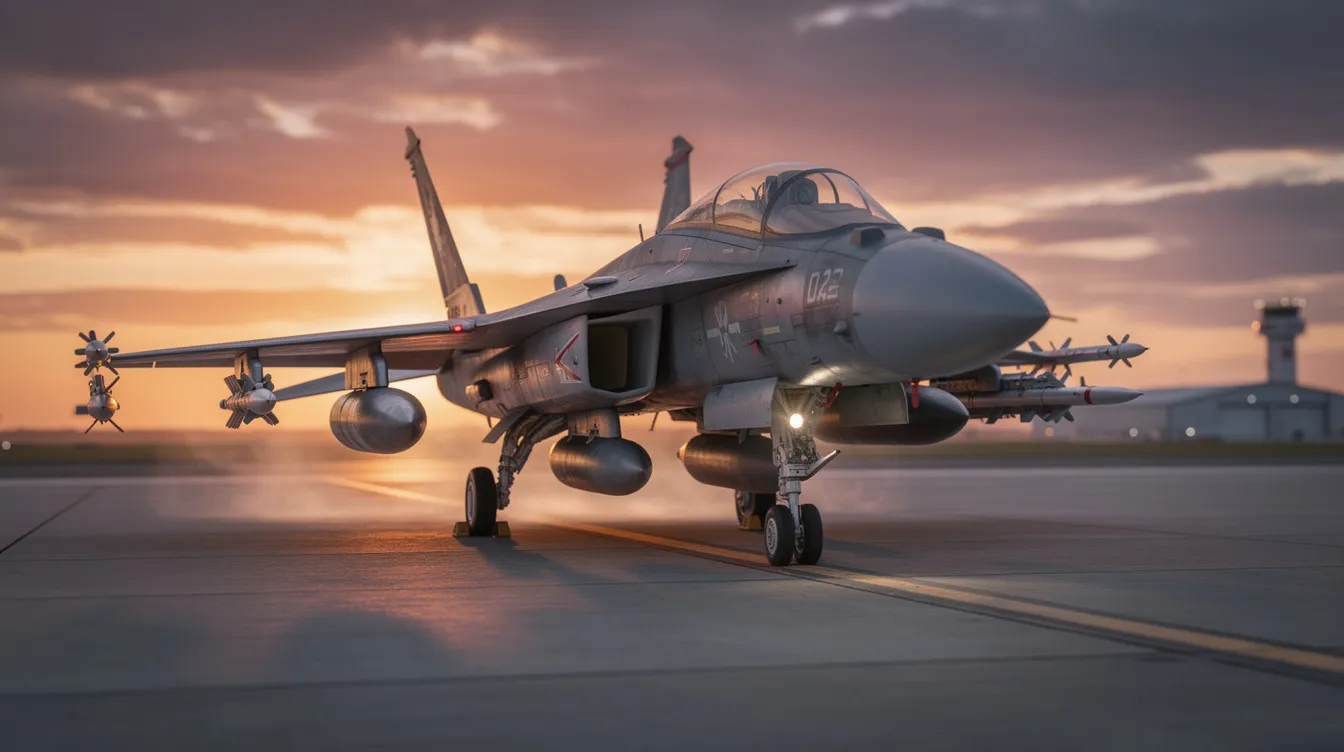
Upgraded legacy platforms: The F-16 Fighting Falcon has 2,102 units currently operational across dozens of nations. Modernized variants like the F-16V feature AESA radar, new mission computers, and advanced weapons integration. The F/A-18E/F Super Hornet, another carrier-based fighter, follows a similar upgrade path. These jets excel in homeland defense, close air support, and theater air policing where advanced stealth is less critical.
From Experimental Aircraft to Sixth Generation Fighters
Several sixth-generation fighters and experimental aircraft programs are underway. The US NGAD (Next Generation Air Dominance) program has reportedly had demonstrators flying in the mid-2020s. The UK, Italy, and Japan collaborate on GCAP/Tempest. France, Spain, and Germany pursue the European FCAS. South Korea's KF-21 Boramae completed its first flight in 2022 and is planned to enter service late in the 2020s.
These future jets emphasize AI-assisted pilots, loyal wingman drones, adaptive engines that alter flow paths for different speed regimes, larger internal weapons bays, and electronic warfare systems beyond anything in current production aircraft. Directed energy defenses and autonomous mission planning are also on the development roadmap.
These aircraft are excluded from "best fighter in 2026" rankings because they are prototypes or pre-series platforms, not yet in regular operational service. Their architectures are software-defined, enabling continuous upgrades after delivery; a philosophy now mirrored in civilian aircraft and high-end business jets whose avionics receive over-the-air updates.
Fighter Jet Technology vs Civilian Aircraft and Business Jets
Military innovation migrates into civilian aircraft and private jets over time. Composite materials that reduce weight and increase strength in fighter airframes now form large sections of business jet fuselages and wings. Fly-by-wire control systems, first proven in military programs, deliver stability augmentation and safety in every modern commercial aviation platform.
Long-range business jets cruise near Mach 0.90 at altitudes above 45,000 feet, using high-temperature turbine materials and aerodynamic refinements originally developed for high-speed military flight. Jet fuel efficiency gains in turbofan engines trace back to military propulsion research.
The design priorities differ. Fighters optimize for air combat performance, survivability, and rapid response. Private aircraft and civilian aircraft optimize for passenger comfort, quiet cabins, range, and operating economics. Both coexist under air traffic control, and civilian aircraft benefit indirectly from secure airspace maintained by national air forces and their advanced sensors.
How Air Force Discipline Informs Private Aviation Safety and Technology
No BlackJet client will ever charter a fighter jet. But the same discipline that keeps an air force operational, from checklist culture and crew resource management to rigorous maintenance schedules, directly shapes how leading private aviation operators run their fleets.
BlackJet works exclusively with operators meeting top-tier safety certifications (ARGUS, Wyvern, IS-BAO). Pilot experience thresholds, maintenance protocols, and continuous training mirror the rigor of air force operations. Broadly, private jets are remarkably safe when operators follow these standards, and [private jet safety](LINK 8) is not an abstract promise; it is enforced through auditable standards.
Advanced technology plays a parallel role. Fighter jets fuse radar, infrared, and electronic warfare data into a single tactical picture. BlackJet integrates aircraft availability, routing, pricing, and safety data into a single, clear decision for the traveler through digital booking platforms and real-time flight tracking. Carbon-neutral flights and sustainable aviation fuel initiatives represent the civilian counterpart to the military's experimentation with more efficient engines and alternative fuels.
Choosing the Right Aircraft: Mission-Based Comparison for Private Travelers
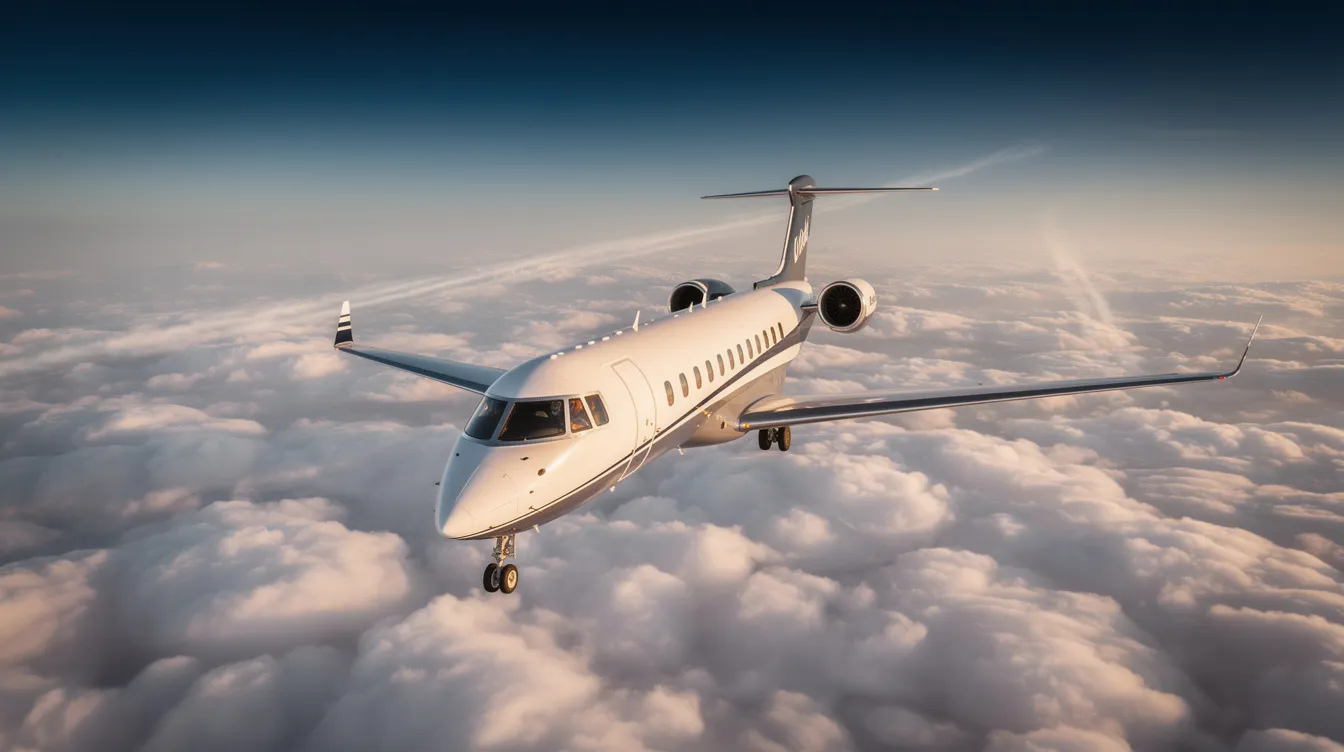
An air force selects aircraft based on mission: interception, strike, ISR. Private travelers should apply the same logic. A weekend flight from Los Angeles to Aspen with four passengers and ski equipment calls for a super-midsize jet with baggage capacity and short-field performance. A board meeting requiring a New York-to-London nonstop demands an ultra-long-range cabin with workspace and privacy, similar to the capabilities highlighted among the top private jets for global travel.
Different types of private jets parallel fighter specialization, and a clear understanding of private jet sizes and capabilities makes it easier to align cabin space, range, and runway performance with each mission profile:
Jet Type | Typical Range | Passenger Capacity | Example Use Case |
|---|
Light jets | Under 1,500 nm | 4-6 | Short regional hops, e.g., Los Angeles to Las Vegas |
Midsize/super-midsize | Up to 3,500 nm | 6-8 | Transcontinental routes, e.g., New York to Dallas; stand-up cabins for comfort |
Large-cabin/ultra-long-range | 5,000+ nm | 8-14 | Intercontinental flights, e.g., New York to London; full lie-flat seating and workspace |
BlackJet's Jet Card programs (25-hour, 50-hour), including the flexible BlackJet 25+ Hour Jet Card, function as the private aviation equivalent of having on-call access to the right airframe for each mission, without the fixed costs of ownership (hangars, crew salaries, maintenance) or the unpredictability of ad hoc charter. The aircraft is matched to mission requirements, not the other way around.
FAQ: Fighter Plane Comparison and Private Aviation
Which is better for air superiority: the F-22 or the F-35?
The F-22 dominates air-to-air combat with faster speed, lower radar cross section, and supercruise at Mach 1.8. The F-35 dominates overall utility: strike, ISR, networked coalition operations, and export across 20+ nations. For pure air superiority, the F-22. For everything else, the F-35.
How do the Eurofighter Typhoon and Dassault Rafale compare?
The Typhoon offers Mach 2 top speed and a massive weapons payload across 13 hardpoints, with strong air superiority roots. The Rafale counters with its SPECTRA electronic warfare suite, omnirole mission flexibility, and proven combat record. Export success is split: Typhoon in the Middle East, Rafale in South Asia and Mediterranean nations.
Can civilians fly in fighter jets?
Not in operational military aircraft. Some companies offer paid flights in jet trainers (L-39, MiG-29) for aerobatic experiences. For practical civilian travel, chartering a private jet offers the closest parallel to fighter-grade performance in a legal, safe, and regulated environment.
How does fighter jet technology improve private jet safety?
Avionics redundancy, fly-by-wire controls, composite materials, advanced weather radar, and noise reduction all trace their origins to military programs. These technologies make modern private jets safer and more comfortable than any previous generation.
How does BlackJet's Jet Card compare to owning a jet or booking ad hoc charters?
Jet Cards provide predictable costs, vetted safety standards, and aircraft matched to mission at a fraction of ownership's fixed expenses. Travelers comparing providers can review the best Jet Cards for frequent flyers to see how availability guarantees and fee structures differ. Ad hoc charter lacks standardization. Ownership involves crew, hangars, and maintenance whether you fly or not. BlackJet's model includes carbon-neutral performance and 24/7 support at no extra cost.
Conclusion: Air Superiority in Combat, Strategic Advantage in Your Schedule
The F-35 Lightning II stands as the most influential fighter jet in 2026 by production volume, allied adoption, and multirole capability. The F-22 Raptor holds the air superiority benchmark. The Eurofighter Typhoon, Rafale, Su-57, J-20, and upgraded 4.5-generation jets like the F-15EX each fill distinct roles that no single platform can replace.
In both military and private aviation, there is no single "best aircraft." There is only the best fit for a clearly defined mission, whether that mission involves contested airspace or a nonstop transatlantic business flight.
BlackJet applies that same mission-first thinking, safety discipline, and advanced technology to private travel. Through its premium private jet cards and charter solutions, digital platforms, real-time support, and carbon-neutral operations, BlackJet creates a travel experience built on the same rigor that keeps the most advanced fighters in the sky.
Explore BlackJet's Jet Card programs and discover how performance-driven thinking about range, reliability, and mission fit can reshape the way you travel.


 Sign up with google
 Sign up with Apple