For executives, founders, and high-net-worth travelers, the business jet has evolved from a convenience into a decisive operational advantage. This comprehensive guide explores the benefits, categories, ownership models, sustainability considerations, and user experience of business jets in 2026. Whether you are a C-suite executive, entrepreneur, or frequent global traveler, understanding the strategic value of business jets is essential for maximizing productivity, privacy, and flexibility in a fast-paced world. In 2026, modern leaders must grasp the nuances of private aviation to make informed decisions that align with their business goals, sustainability values, and personal preferences.
Why Business Jets Matter in 2026
Time-Saving Advantages
Consider the contrast: a commercial New York–Los Angeles day return means at least 90–120 minutes of pre-flight queues, boarding, and potential delays at JFK or LAX—each way. A business jet departure from Teterboro or Van Nuys cuts that to a fraction. Travelers can arrive just 15 to 20 minutes before takeoff at private terminals, board immediately, and fly direct. Business jets save time by avoiding commercial airport delays, and that time compounds across dozens of annual trips. Some individuals travel over 350,000 km annually by private jet, making every saved hour a strategic asset.
Productivity and Privacy
Business aviation is often viewed as a productivity tool rather than a luxury, and the data reinforces that position. Corporate fleet hours rose roughly 3% year-over-year in early 2026, with fractional operators climbing 12%. The demand is clear, and it extends well beyond Fortune 500 boardrooms—small and mid-sized businesses account for 85% of business aviation users, and many value a provider's ability to respond efficiently as travel needs change.
Key advantages that set business jets apart:
Flexible Scheduling: Depart on your timeline, not an airline's.
Regional Airport Access: Reach regional airports, saving travel time and eliminating layovers.
Privacy: Conduct confidential meetings during flights.
Productivity: Maximize executive productivity across operations.
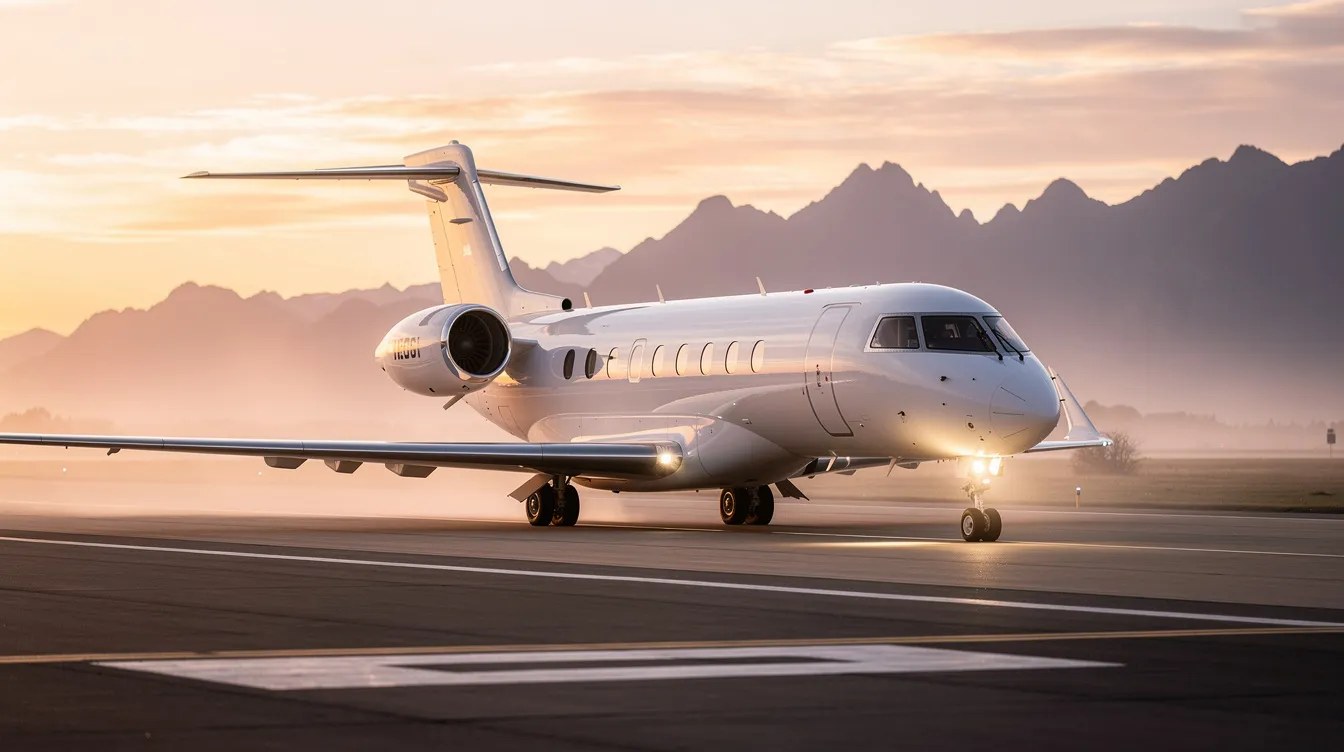
BlackJet delivers these advantages through a tech-enabled, carbon-neutral jet card model—no aircraft purchase, no long-term fractional ownership contract, and no overhead costs that burden equity ownership, while its premium private jet card programs align aircraft choice, cost structure, and service level with each member's travel profile.
User Demographics
Business aviation serves a diverse clientele:
Executives and Founders: C-suite leaders and entrepreneurs who require rapid, flexible travel.
High-Net-Worth Individuals: Those who value privacy, comfort, and time savings.
Small and Mid-Sized Businesses: Companies seeking efficient travel solutions for teams.
Government and Diplomatic Missions: For urgent, secure, and confidential transport.
What Is a Business Jet? Definitions, Roles, and Real-World Users
Definitions
A business jet is a turbine-powered aircraft designed for small group transport, typically carrying 4 to 19 passengers across missions ranging from 90-minute regional hops to 14-hour intercontinental crossings. As business aircraft, they span light jets through large-cabin, ultra-long-range platforms and bizliners, all optimized for corporate, government, and UHNW travel outside fixed airline schedules.
Roles and Use Cases
Business aviation operates through private terminals—FBOs—with flexible routing that connects city pairs like London–Geneva, New York–Miami, or Dubai–Riyadh without the constraints of hub-and-spoke networks. Corporate aircraft can be used for crisis response and urgent business issues, arriving at remote facilities within hours of a call. Business jets support multiple stops in one day for small teams: a CFO can fly Houston–Midland–Oklahoma City–Houston to inspect assets before dinner. A CEO can fly from New York to Chicago in one day for critical negotiations and return the same evening. Rapid response is a key reason companies value business jets.
Terminology Clarifications
Business jets/business aircraft: The aircraft category itself.
Private jets/private aviation: The end-user experience—charter, card, or ownership.
Corporate jets: Fleet aircraft owned or leased by companies.
Business aviation: The broader industry; "private aviation" is how customers experience it.
Key Categories of Business Jets and What They're Best For
Business jets are grouped by cabin size, range, passenger count, and mission profile. Business jets provide higher speeds than commercial airliners across every category, and each tier serves distinct operational needs.
Turboprop aircraft like the Beechcraft King Air 350i handle short runways and efficient regional hops with ranges around 1,800 nmi, exemplifying the considerations outlined in the guide to the best small private aircraft. Very light jets typically accommodate 6–7 passengers on sectors under two hours, and they often feature among the most affordable private jet options for travelers seeking entry-level ownership or charter solutions. Light jets usually accommodate 6–8 passengers over 1,953 nmi range, covering models like the HondaJet Elite II, Cessna Citation CJ3+, and Embraer Phenom 300E. Midsize and super midsize jets such as the Citation Latitude and Gulfstream G280 serve as the workhorses of corporate travel; super mid-size jets typically accommodate 10–11 passengers with 3,420 nmi range. Large cabin jets can carry 9 passengers over 2,540 nmi range, while heavy jets accommodate 12–19 passengers with a 6,500 nmi range on platforms like the Bombardier Global 6500 and Gulfstream G800. At the top, bizliners and Boeing business jets transform commercial jetliners into VIP cabins for heads of state and large delegations.
Each category maps to specific use cases:
Turboprops and light jets: Board meetings in secondary cities, product launches, weekend ski trips.
Super midsize jets and super mid size jets: Cross-country roadshows, multi-city European tours.
Large jets and ultra-long-range jets: Nonstop intercontinental routes, global network tours.
Bizliners: Government delegations, sports teams, large corporate events.
BlackJet jet card members can select different cabin classes trip-by-trip instead of committing to a single aircraft type—a light jet for a regional hop, a large cabin platform for an overseas board retreat.
Turboprop and Light Jets: Smart Choices for Short-Haul Missions
For regional routes under 1,200–1,500 nmi, turboprops and light jets deliver the core benefits of private aviation at a fraction of the cost of larger platforms. A turboprop can be more efficient than a heavy jet on these shorter sectors, both in fuel burn and total trip cost. The King Air 350i seats 6–8 passengers with strong short-field performance for routes like Dallas–Santa Fe or Milan–Cannes.
Light jets step up to jet-speed capability. The HondaJet Elite II offers a cruise speed of 422 KTAS (approximately Mach 0.72) and 1,547 nmi range, powered by over-the-wing-mounted engines that generate thrust while reducing cabin noise. Light jets have a mean price of around $4.4 million, making them the entry point to jet-speed private travel. Ideal missions include New York Teterboro–Miami Opa-locka, Los Angeles Van Nuys–Las Vegas Henderson, and London–Zurich—routes where the time saved versus commercial business class can exceed three hours round-trip.
Cabin experience at this level is compact but premium: club seating, satellite Wi-Fi on most modern airframes, and quieter interiors compared to turboprops. A BlackJet 25-hour jet card optimized around turboprop and light jet flying gives frequent regional travelers cost efficiency without sacrificing privacy or schedule control.
Midsize, Super Mid-Size, and Large Cabin Jets: The Core of Corporate Travel
Midsize and super midsize aircraft are the workhorses for companies regularly flying 6–10 passengers on 3–6 hour legs, while large cabin jets serve senior leadership on long range, multi-time-zone missions. Super mid-size jets average $22.2 million in price, reflecting the capability they deliver and overlapping with the performance and comfort expectations described for 20 million dollar private jets.
Concrete examples illustrate the range: the Embraer Praetor 500 and 600 cover 3,250–4,018 nmi, the Citation Latitude reaches approximately 2,700 nmi, and the Bombardier Challenger 3500 handles transcontinental routes comfortably. Typical missions include New York–Denver, Chicago–San Jose, and London–Dubai on super midsize platforms. For large cabin aircraft, the Bombardier Global 5500/6500 and Gulfstream G600/G700 push ranges to 5,900–6,600+ nmi, enabling routes like Los Angeles–London or Paris–São Paulo nonstop, similar to the aircraft highlighted among the largest private jets for sale.
BlackJet members scale from midsize to large cabin depending on team size, payload requirements, and rest needs:
Midsize: 6–8 passengers, domestic or short international, 3–4 hour legs.
Super midsize: 8–11 passengers, transcontinental, up to 6 hours.
Large cabin: Senior leadership, intercontinental, rest and conference capability.
Cabin advantages scale with category: full-height standing room, separated living and work zones, lie-flat seating, dedicated dining areas, and lower cabin altitude that reduces fatigue on long-range flights. Business jets offer greater comfort compared to commercial flights, particularly when the mission demands arriving rested for negotiations.
Ultra-Long-Range Jets, Bizliners, and Boeing Business Jets
Ultra long range jets represent the pinnacle of traditional business aircraft, capable of linking nearly any two financial centers nonstop, and they often overlap with the newest private jet innovations in speed, range, and cabin technology. The Gulfstream G800 reaches approximately 8,200 nmi at speeds near Mach 0.935. The Bombardier Global 8000 delivers 8,000 nmi at Mach 0.95. And Dassault Aviation continues development of the Falcon 10X, prioritizing cabin comfort for the next decade of long range travel.
Typical missions—New York–Tokyo, Los Angeles–Sydney, London–Singapore—demand aircraft where passengers arrive rested after 14+ hours, the same intercontinental profile that shapes billionaire private jet price trends and ownership decisions in 2026. These platforms play a vital role for board-level travel, diplomatic missions, and global corporate operations where a supersonic pace of business requires leaders to move across continents within compressed windows.
Boeing business jets take the concept further. The boeing company offers VIP variants of the 737 MAX, 787, and 777 airframes, creating large cabin environments with multiple bedrooms, offices, and lounges. These bizliners serve governments, royal families, sports teams moving entire organizations, and global corporations conducting multi-continent tours with staff, security, and media teams on board, fitting the use cases described for private jets carrying up to 50 passengers. Pre-configured interiors like BBJ Select shorten completion time for new orders.
While few private individuals own these aircraft, charter and curated membership networks can place them within reach for special events or large delegations, especially for those evaluating the best private jet for 20 passengers or more. BlackJet connects clients to long-range lift through its operator partners when the mission calls for it.
Ownership, Charter, and Jet Cards: Choosing the Right Access Model
Companies evaluate various factors when deciding on business jet use, and the access model is the most consequential financial decision, whether they are weighing jet cards, charter, or 10 million dollar private jet ownership options. Business jets have high acquisition and operating costs as potential drawbacks—but the right structure mitigates that risk.
Full ownership means purchasing an aircraft outright (tens of millions of dollars for midsize and above), plus crew salaries, hangarage, insurance, and maintenance. An equity owner bears all capital risk. This model suits entities flying 300–400+ hours annually with predictable routes. Fractional ownership splits costs among multiple users: buying an upfront equity share of 1/16 or 1/8, paying monthly management fees and hourly operating charges. Fractional ownership operations are governed by FAA Part 91K or Part 135 frameworks and work well for 50–200 annual hours.
On-demand charter is often more economical for infrequent flights—under roughly 25 hours per year, particularly for travelers who may buy a seat on a private jet via shared or semi-private models instead of chartering the whole aircraft. Hourly charter rates range from USD 2,500 to USD 17,000+, depending on aircraft category. The trade-off: price volatility and limited priority during peak periods.
Jet cards occupy the middle ground, and this is BlackJet's core offering, similar in structure to the best jet cards for frequent flyers that emphasize guaranteed availability and transparent pricing. Prepaid 25- or 50-hour blocks deliver fixed or capped hourly rates across cabin categories, guaranteed availability windows, and transparent pricing, so members can benchmark value against broader jet card cost per hour ranges in the market. Consolidating trips can reduce operational costs in business aviation, and a jet card makes that consolidation easy to plan. Consider a client flying 75 hours annually between New York, Miami, and Aspen: a jet card avoids the capital burden of ownership, the multi-year commitment of fractional, and the pricing uncertainty of ad-hoc charter, while aligning well with the frameworks discussed in comprehensive jet card pricing guides.
Model | Best For | Key Trade-Off |
|---|
Full ownership | 300+ hours/year, fixed config | High capital, ongoing overhead costs |
Fractional ownership | 50–200 hours/year | Multi-year contract, management fees |
On-demand charter | Under 25 hours/year | Price volatility, limited peak access |
BlackJet jet card | 25–100 hours/year | No asset equity, but maximum flexibility |
Safety, Regulation, and Technology in Modern Business Aviation
In business aviation, safety is non-negotiable. Technology has dramatically improved risk management, and regulatory frameworks ensure consistent standards across the fleet.
The FAA governs charter operations under Part 135, with Part 91 and Part 91K covering private and fractional ownership operations respectively. EASA standards apply across Europe. Operator certification, recurrent pilot training, and structured maintenance programs underpin every flight. Newer engines improve operational efficiency in business jets while also increasing reliability margins.
Concrete safety technologies now include emergency autoland systems—the HondaJet Elite II became the first twin-turbine VLJ certified with Emergency Autoland in the U.S. in early 2026—and similar innovations feature prominently in the newest generation of private jets. Advanced avionics suites like Garmin G3000 and Honeywell Primus Elite deliver synthetic vision, enhanced weather radar, and autothrottle capability. Cabin safety features include HEPA-filtered air circulation, improved fire-resistant materials, and post-COVID health protocols.
BlackJet's safety stance is rigorous: partnerships exclusively with audited operators carrying ARGUS or Wyvern ratings, strict aircraft age standards, and 24/7 operations teams monitoring weather and NOTAMs. If a winter Denver–New York flight faces severe icing, a BlackJet operations specialist shows the ability to re-route proactively while preserving both schedule and safety.
Sustainability, Carbon Offsets, and Smarter Aircraft Choices
Environmental Impact
Private jets generate thousands of tons of CO2 emissions annually, and private jets have a disproportionately high carbon footprint compared to commercial jets. Public scrutiny of private jet emissions has increased due to social media, with flight-tracking accounts drawing attention to celebrity and corporate travel patterns. The industry must respond with substance, not deflection.
Industry Response
Practical steps are underway: adoption of Sustainable Aviation Fuel (SAF), newer engine technologies with better specific fuel consumption, aerodynamic improvements, and route optimization. Right-sizing aircraft enhances operational efficiency for specific routes—choosing a turboprop or light jet instead of a heavy jet for a 500 nmi sector materially reduces fuel burn while preserving privacy and speed. Programs like Textron Aviation's SustainableAdvantage and frameworks like CORSIA provide verified emissions accounting.
BlackJet's sustainability approach makes carbon-neutral flights the default—every trip's emissions are calculated and offset through vetted environmental projects at no extra cost to the member. A BlackJet client flying London–Nice on a light jet with a SAF blend and verified offsets is making a measurably better choice. A West Coast tech founder consolidating three trips into two reduces total legs, fuel burn, and emissions while maintaining a demanding schedule.
Traveler Actions
Steps environmentally conscious travelers can take:
Right-size the aircraft to the mission: Avoid flying heavy jets on short sectors.
Consolidate multi-city itineraries: Reduce takeoff and landing cycles.
Choose operators and providers that default to carbon offsets: Ensure offsets are with verified registries.
Request SAF availability: Where it exists, opt for Sustainable Aviation Fuel.
Connectivity, Cabin Experience, and the Onboard Workspace
The cabin is an extension of the boardroom or family office. Business jets allow teams to work without interruptions mid-flight, and business jets enhance productivity for corporate operations while traveling—making the air time itself a productive asset, not dead time.
Work and Productivity
Secure Wi-Fi: Satellite Wi-Fi on Ka/Ku-band enables secure video conferencing and VPN access.
Conference Seating: Club seating and meeting tables for collaboration.
Quiet Cabins: Reduced noise for calls and deep focus.
Rest and Comfort
Lie-Flat Options: Lie-flat seating and suites on long-range flights.
Low Cabin Altitude: Reduces fatigue and jet lag.
Cabin Management Systems: Adjust lighting and temperature for comfort.
Family Travel
Catering Preferences: Personalized menus and refreshments.
Flexible Boarding: Streamlined boarding for families, pets, and personal items.
Spacious Interiors: Room for children, pets, and personal belongings.
The HondaJet Elite II's over-the-wing engine placement reduces cabin noise, while the Bombardier Global 8000 maintains a cabin altitude below 6,000 ft at cruise.

Consider a realistic scenario: a BlackJet client departs New York at 7 a.m. on a super mid-size jet, conducts a video board meeting at 41,000 ft during climb-out, reviews contracts in a quiet cabin, and lands in Dallas by midday—ready for an in-person meeting with no layovers, no lost time, and no fatigue.
Typical Routes, Airports, and How Business Jets Build a Global Network
High-traffic business jet routes tell the story of how private aviation reshapes geography. Teterboro–Opa-locka (NYC–Miami), Van Nuys–Henderson (LA–Las Vegas), London Luton–Nice, Dubai–Riyadh—these city pairs illustrate how access to secondary airports shrinks total travel time by eliminating ground transfers and terminal congestion. Business jets access thousands of regional airports directly, from Westchester County (HPN) near New York to London Farnborough (FAB) to Napa County (APC). Access to remote locations is a benefit that airlines simply cannot match.
Ultra-long-range jets maintain a seamless global network for multinational corporations, allowing executives to link multiple continents within a single week without complex airline itineraries or overnight layovers. Seasonal patterns add another dimension: ski routes (New York–Aspen, London–Innsbruck), summer leisure (Los Angeles–Cabo San Lucas, London–Ibiza) where commercial capacity is constrained, and frequent flights are impractical on airlines' schedules.
BlackJet's digital booking tools surface optimal routing, transit times, and aircraft choices in real time—supporting the fast decision-making that modern leaders require and helping members compare offerings from top private jet companies when structuring their overall aviation strategy. A sample day: depart Boston at 6 a.m., meet in Charlotte by 9, fly to Nashville for lunch, return to Boston by 8 p.m.—three cities, zero commercial connections, one productive day.
Frequently Asked Questions About Business Jets
How do business jets save time compared to commercial flights?
Business jets allow travelers to arrive just 15 to 20 minutes before departure at private terminals, bypassing long security lines and rigid airline schedules. They also access thousands of regional airports directly, eliminating layovers and reducing ground travel time.
What are the main differences between jet cards, fractional ownership, and full ownership?
Full ownership involves purchasing an aircraft outright with high capital and ongoing costs, suitable for those flying 300+ hours annually. Fractional ownership splits costs among multiple users with multi-year contracts, ideal for 50–200 hours per year. Jet cards provide prepaid access with fixed hourly rates and flexibility for 25–100 hours annually without asset equity.
Can business jets be environmentally sustainable?
Yes. Operators increasingly use Sustainable Aviation Fuel (SAF), newer efficient engines, and carbon offset programs. BlackJet makes carbon-neutral flights the default by offsetting emissions through vetted projects at no extra cost to members.
What types of business jets are best for short-haul versus long-haul flights?
Turboprops and light jets are efficient for regional routes under 1,500 nautical miles, offering cost savings and speed. Midsize and super midsize jets suit mid-range trips with more passengers and comfort. Large cabin and ultra-long-range jets handle intercontinental flights with enhanced amenities.
How safe is flying on a business jet?
Business jets operate under strict regulatory frameworks such as FAA Part 135 and EASA standards. BlackJet partners only with audited operators holding ARGUS or Wyvern safety ratings, ensuring rigorous pilot training, maintenance, and operational oversight.
Is Wi-Fi available on business jets?
Most midsize and larger jets offer satellite Wi-Fi capable of secure video conferencing and streaming. Connectivity can vary over remote areas, so it's advisable to confirm availability before booking.
How far in advance should I book a business jet?
Booking 24–72 hours in advance is typical, but same-day bookings may be possible depending on availability. For peak travel periods or international trips, booking at least one week ahead is recommended.
Can I bring pets on a business jet?
Many operators allow pets in the cabin, but cross-border travel may require health certificates or vaccination records. BlackJet can assist in identifying pet-friendly operators for your route.
Working with BlackJet: Jet Cards, Booking Experience, and Support
BlackJet is a membership-based private aviation provider built around jet cards that deliver prepaid access across multiple aircraft categories. The focus is simple: safety, technology, sustainability, and unrivaled service—without the capital commitment of ownership or the rigidity of fractional programs.
Core offerings include 25-hour and 50-hour jet card programs, with selectable cabin classes—light, midsize, super midsize, large cabin—and predictable, all-inclusive hourly rates, complemented by the BlackJet 25+ Hour Jet Card for travelers needing extended annual flying. Members book through 24/7 mobile and web tools: input a route, passengers, and preferred time, see real-time fleet availability, and receive confirmed itineraries, whether they hold a 25-hour block or are evaluating a higher-commitment 100-hour jet card cost structure. A dedicated sales representative and account manager handle everything from in-flight catering to ground transportation, with the ability to manage schedule changes and irregular operations smoothly.
Every flight is carbon-neutral by default, a meaningful distinction in a market often focused on the most expensive private jet options where sustainability can be an afterthought. Operator vetting through BlackJet Certified standards ensures only audited operators with documented safety records fly members. Customers can view safety ratings and environmental impact summaries for each trip, creating transparency that builds confidence over time.
The question isn't whether private aviation makes sense for your schedule—it's which model fits your life.
Why BlackJet over traditional models:
No capital investment or upfront equity share to create financial exposure.
Multiple cabin options per trip—scale up or down as the mission requires.
Fixed-rate pricing eliminates the market volatility of ad-hoc charter.
Carbon-neutral flights and operator vetting are built in, not bolt-on extras.
24/7 human support alongside a leading digital booking platform.
Explore BlackJet's jet card programs and discover how a tailored business jet strategy can elevate your time, privacy, and global reach.


 Sign up with google
 Sign up with Apple


