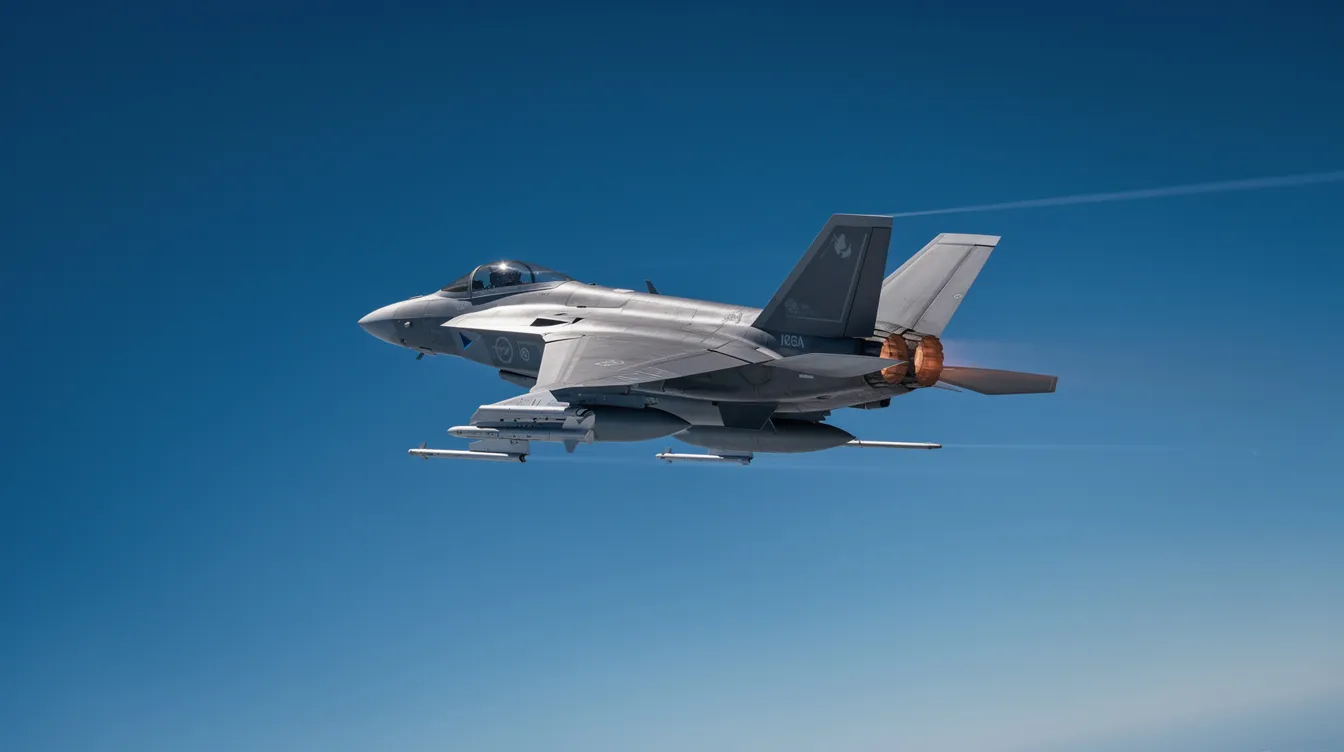
Fighter planes define who controls the skies, and controlling the skies determines who controls the outcome of a conflict. For business travelers and private aviation clients, the connection may not be obvious at first glance. But the technology, safety standards, and airspace infrastructure that make private jet travel reliable all trace their origins to decades of fighter aircraft development. This guide covers the full spectrum: what a fighter plane is, how it evolved, what makes a fifth-generation jet like the F-35 a decisive advantage in combat, and how the DNA of military aviation shapes the private jets you fly in today.
Why Fighter Aircraft Matter in Modern Global Security
A fighter aircraft is a military airplane built to engage enemy aircraft in the air. Its primary purpose is to establish air superiority, the condition in which friendly forces can operate without prohibitive interference from hostile air power. Air superiority is crucial for successful military operations because it unlocks freedom of movement for ground troops, supply lines, bombers, and intelligence-gathering platforms.
The speed and responsiveness of a fighter jet stand apart from anything in commercial or private aviation. A Boeing 777-300ER cruises at Mach 0.84. An F-22 Raptor can sustain Mach 1.7 without afterburners. A fighter can scramble from alert status and be airborne in minutes, perform high-G intercepts, and engage threats across hundreds of miles of airspace. Commercial and private aircraft are designed for efficiency and comfort; fighters are designed to fight, intercept, and dominate.
Air superiority is often established through fighter combat. Once achieved, it underpins economic growth and geopolitical stability. Countries with capable fighter fleets deter aggression, protect trade lanes, and secure the airspace through which commercial goods, business executives, and heads of state travel every day. For BlackJet members who value safety, technology, and reliability in private aviation, understanding how air force capabilities protect global mobility offers context for why the skies remain as safe and navigable as they are.
Defining the Fighter Plane: Core Roles and Capabilities
A "fighter aircraft" or "fighter jet" is a military plane optimized for air-to-air combat. While some fighters focus on a single mission, most modern platforms carry multiple roles: interception, strike, reconnaissance, and electronic warfare. The word "multirole" describes fighters capable of switching between air-to-air and air-to-ground tasks on a single sortie. Here are the core categories:
Air superiority fighters dominate air combat with speed and maneuverability. Aircraft like the F-22 Raptor and Su-27 Flanker are built to win engagements against other fighters. They carry advanced air-to-air missiles, possess high thrust-to-weight ratios, and can pull sustained high-G turns.
Interceptors are designed to engage enemy aircraft quickly, prioritizing climb rate, radar capability, and rapid response. The MiG-31, for example, can reach high altitude and intercept cruise missiles or bombers with minimal warning time.
Escort fighters protect bombers during missions, as was critical during World War II when long-range P-51 Mustangs accompanied B-17 formations deep into Germany. Fighter-bombers conduct ground-attack missions alongside air combat, carrying bombs and precision munitions in addition to air-to-air weapons. Night fighters evolved to operate in poor visibility conditions, using early radar and later infrared sensors to locate targets after dark.
The performance pillars of any fighter plane rest on four columns: speed (measured in Mach numbers), maneuverability (G-load tolerance, roll rates, thrust vectoring), weapons systems (short-range infrared missiles, beyond-visual-range radar-guided missiles, internal guns), and avionics (radar, sensors, electronic warfare suites, and secure data links). Modern fighters carry precision long-range ordnance for air-to-air and air-to-ground combat, enabling them to engage threats at distances that would have been unthinkable a generation ago.
From Canvas and Wood to Stealth: A Brief History of Fighter Planes
The fighter plane was born out of necessity. Early World War I aircraft were unarmed scouts sent aloft to observe enemy troop movements. Pilots soon began shooting at each other with pistols and rifles, and the arms race for airborne firepower began. The Fokker Eindecker, introduced in 1915, was the first aircraft to fire a synchronized machine gun through the propeller arc. This innovation gave Germany a period of air dominance known as the "Fokker Scourge." Fighter engines increased from 180 hp in 1918 to 900 hp by 1936, a fivefold jump in under two decades.
World War II transformed aerial combat into an industrial-scale endeavor. The Supermarine Spitfire, Messerschmitt Bf 109, P-51 Mustang, and Mitsubishi Zero became icons. World War II fighters typically had engines producing 1,000 to 1,400 hp. The Luftwaffe achieved air superiority during the invasion of Poland in 1939, demonstrating how control of the skies enabled rapid ground advances. By 1944, Allied fighters gained air superiority over the Western Front, crippling German logistics and production through relentless bomber escort and ground-attack sorties.
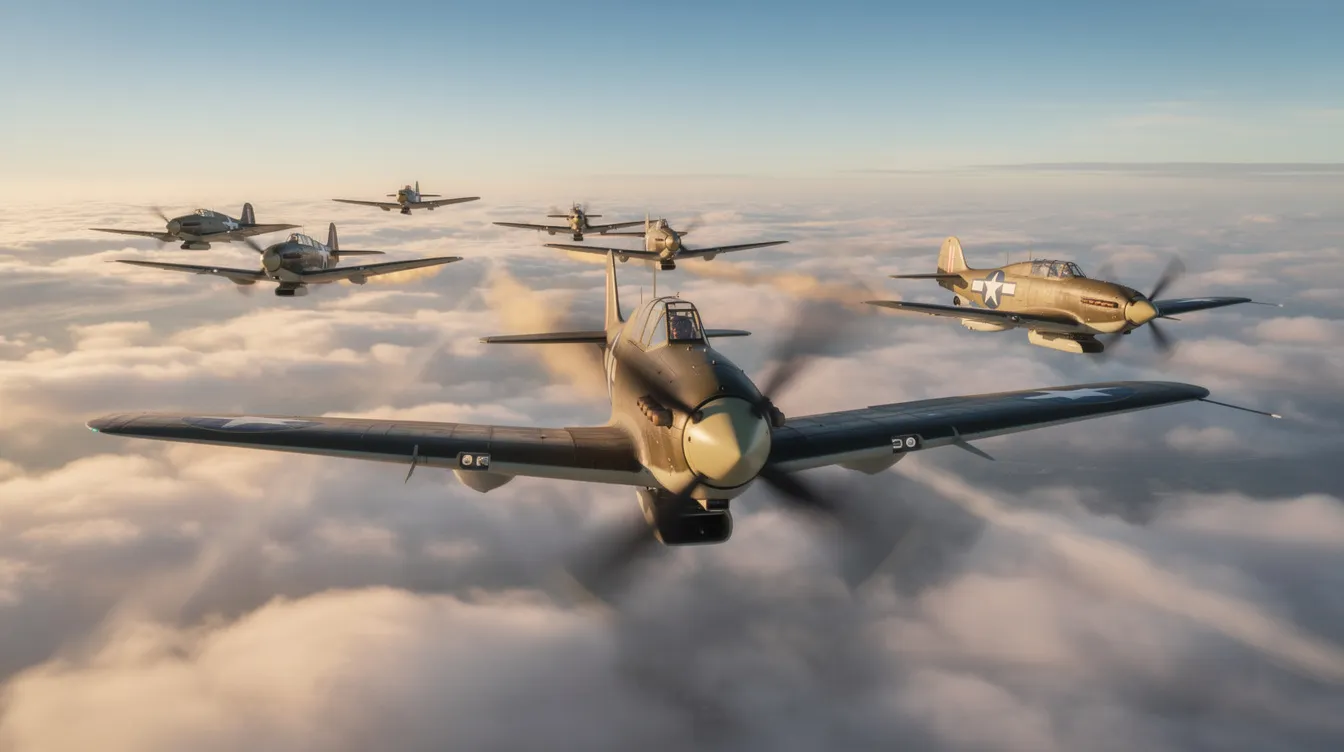
The jet age began before WWII ended. The first operational jet fighter, the Me 262, entered service in 1944, reaching speeds that piston-engine fighters could not match. After the war, Korea saw the F-86 Sabre and MiG-15 clash in the world's first large-scale jet-versus-jet combat. From there, the Cold War drove supersonic flight, radar-guided missiles, and the multirole capabilities that define fighters today.
Generations of Fighter Jets: From First Jet Age to Sixth-Generation Concepts
Fighter planes have evolved through distinct technological generations. The "generation" framework is informal but useful: each leap reflects a combination of propulsion, avionics, weapons, and design philosophy.
The first-generation fighters were subsonic and relied on traditional guns. The F-80 Shooting Star and MiG-15 typified this era, with jet propulsion replacing pistons but limited radar and no guided missiles. Second-generation fighters, arriving in the mid-1950s, broke the sound barrier in level flight. The F-104 Starfighter and Mirage III introduced early guided missiles and improved radar, enabling pilots to engage beyond visual range for the first time.
Third-generation aircraft like the F-4 Phantom II expanded multirole missions. Radar and missile technology improved, but stealth was still absent. Fourth-generation fighters feature fly-by-wire systems and advanced multirole capabilities. The F-16 Fighting Falcon, F-15 Eagle, Su-27, and Mirage 2000 brought pulse-Doppler radar, high maneuverability, and unprecedented pilot situational awareness. Modern engines can supercruise without using afterburners; the F-22 sustains approximately Mach 1.7 in this mode.
Fifth-generation fighters are characterized by extreme stealth, advanced avionics, and network integration. The F-22 Raptor and F-35 Lightning II carry their weapons internally to preserve low-observable profiles. The role of modern fighters has shifted towards information dominance and network integration; sensor data is fused, shared, and acted upon in real time across joint forces.
Emerging sixth-generation fighters emphasize AI integration and autonomous capabilities. Programs include the USAF's NGAD (producing the F-47), Europe's GCAP involving the UK, Japan, and Italy, and the US Navy's F/A-XX. Next-generation fighters may coordinate multiple unmanned systems in combat, acting as command nodes for loyal wingman drones. Directed energy weapons, adaptive cycle propulsion, and all-aspect stealth are among the expected features, with operational fielding targeted for the 2030s and 2040s. Artificial intelligence will play a central role in mission planning, threat assessment, and autonomous decision-making.
The F-35 Lightning II: Benchmark for Fifth-Generation Fighter Aircraft
The F-35 is the most widely fielded fifth-generation connected fighter aircraft in the world. It functions as both a multirole air superiority platform and a strike aircraft. The F-35 is designed for multirole missions, switching between air combat, ground attack, intelligence gathering, and electronic warfare without returning to base.
The F-35 features advanced stealth technology for low observability across multiple radar and infrared spectra. The F-35 is equipped with advanced sensors and information fusion, combining AESA radar, distributed aperture systems, and electronic warfare suites into a single tactical picture. Pilots see one coherent display rather than juggling separate sensor feeds.
The F-35 has conducted over 1 million flight hours. The F-35 is combat-proven and operational with 12 nations, with more than 1,150 aircraft delivered as of mid-2025. It acts as a quarterback in coalition operations: the F-35 integrates air, land, sea, space, and cyber operations, allowing a commander to share fused data across domains in real time to help expose or outmatch an adversary. Allies and partners operating the F-35 gain interoperability that no other platform currently matches.
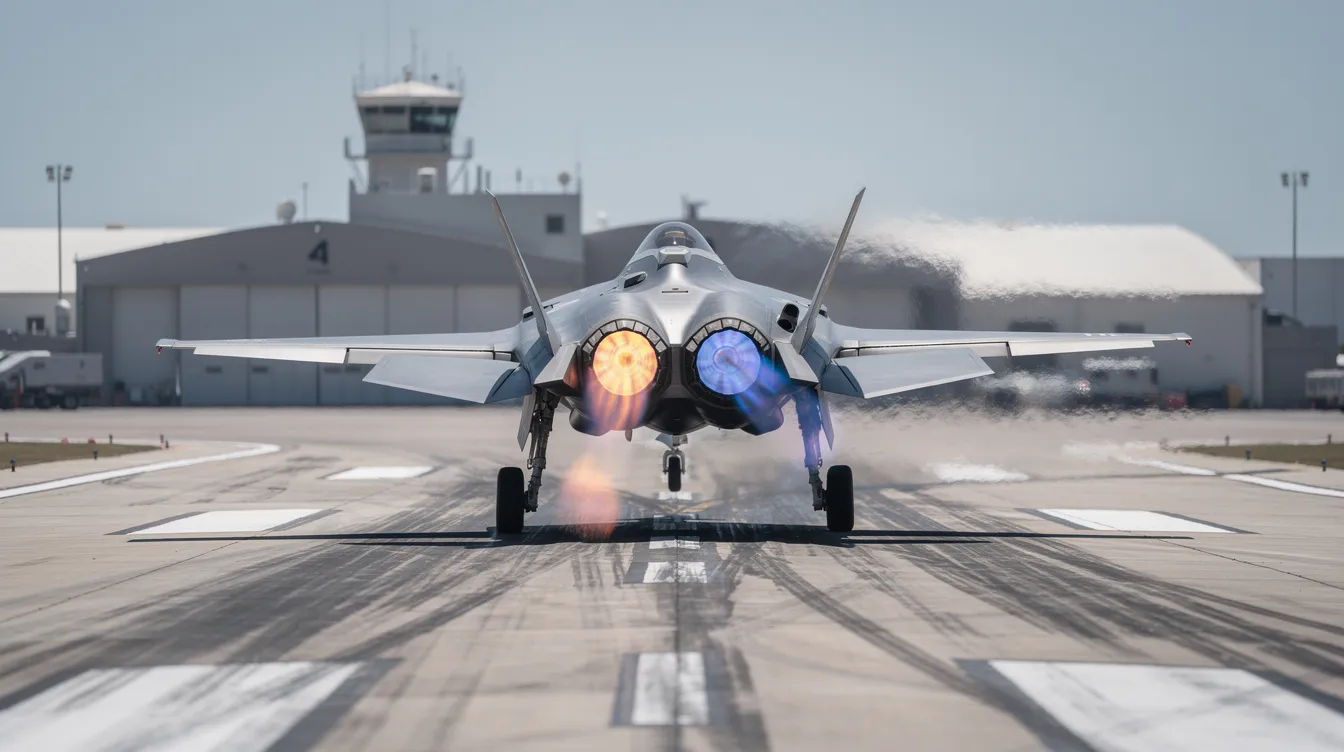
The aircraft's digital backbone includes predictive maintenance systems and software-driven updates. Lockheed Martin reports reducing its portion of operating costs by approximately 50% since 2015. These connected logistics and maintenance architectures echo the type of advanced safety and technology infrastructure that private aviation providers like BlackJet value: real-time monitoring, data-driven decisions, and continuous improvement.
Air Superiority and Global Security: Why Control of the Skies Still Wins Wars
Air superiority means friendly forces can conduct operations without prohibitive interference from enemy air activity. Air supremacy goes further: the adversary's air threat becomes negligible. During Operation Desert Storm in 1991, coalition forces achieved air supremacy within the first 48 hours, enabling ground forces to advance with minimal aerial opposition. Air superiority allows for effective ground attack operations, and every major military campaign of the past century confirms this.
Fighters protect ground forces by suppressing enemy air attacks, securing air corridors for supply and logistics, and guarding critical infrastructure. In peacetime, they serve as a powerful force multiplier for deterrence. NATO conducts continuous air policing over Baltic airspace, protecting Latvia, Estonia, and Lithuania from unauthorized flights. Quick Reaction Alert fighters sit on standby, ready to scramble within minutes.
Consider a concrete scenario: a high-value business aircraft flies a transatlantic route through airspace near a disputed region. Fighter aircraft from allied nations can be scrambled to escort and ensure that commercial and private traffic is not harassed. This is not hypothetical; NATO fighters regularly intercept Russian military aircraft approaching allied airspace. For BlackJet members, these operations are invisible but essential. The safety infrastructure that keeps private aviation reliable rests on the same air dominance framework that fighter fleets maintain.
Key Fighter Aircraft Categories and Missions
Air superiority fighters like the F-22 and Su-57 exist to win the fight for control of the skies. Their mission is fleet air defense, contested airspace dominance, and maintaining the ability to operate freely above the battlefield.
Multirole fighters represent the majority of modern fleets. The F-35, Dassault Rafale, and Eurofighter Typhoon can engage both aerial and surface targets on a single sortie. A Rafale pilot might fire an air-to-air missile at an incoming threat, then deliver a precision-guided bomb to a ground target minutes later. Nations invest in multirole platforms because they reduce fleet complexity while maintaining broad capabilities, much as travelers compare the top private jets in the world to balance range, comfort, and performance.
Interceptor aircraft like the MiG-31 defend large areas against bombers, cruise missiles, and reconnaissance platforms. Electronic warfare and SEAD fighters, such as the Boeing EA-18G Growler, suppress enemy air defenses by jamming radar and firing anti-radiation missiles. Electronic warfare systems detect and counteract hostile threats before strike packages enter contested airspace.
Ground-attack and strike fighters carry heavier payloads of bombs and missiles. Modern fighters can conduct air-to-air combat, electronic warfare, and precision strikes. Precision-guided munitions minimize collateral damage in strikes, a consideration that has grown more important in every conflict since the 1990s. For a deeper look at the platforms themselves, see our guide to cool fighter planes and the latest US top fighter jet rankings.
Technology Inside a Modern Fighter Jet Cockpit
The cockpit of a modern fighter is less about analog gauges and more about managing a flood of digital information. AESA radars allow fighters to track multiple targets at vast distances, steering their beams electronically rather than mechanically. This gives pilots near-instant detection and the ability to track dozens of contacts simultaneously.
Infrared search and track (IRST) sensors detect heat signatures passively, without emitting a radar signal that could reveal the aircraft's position. Helmet-mounted displays project critical data directly into a pilot's line of sight, allowing them to cue weapons at targets simply by looking at them. Fly-by-wire controls replace mechanical linkages with electronic signals, enabling engineers to design aircraft that are aerodynamically unstable (and therefore more maneuverable) while remaining controllable.
Sensor fusion integrates data into a single tactical display for pilots. Rather than checking separate radar, infrared, and electronic warfare screens, the pilot sees one unified picture. Network-centric warfare enables real-time target data sharing among fighters, AWACS platforms, naval vessels, and ground units. Modern fighter planes are networked aerial combat systems, not isolated platforms.
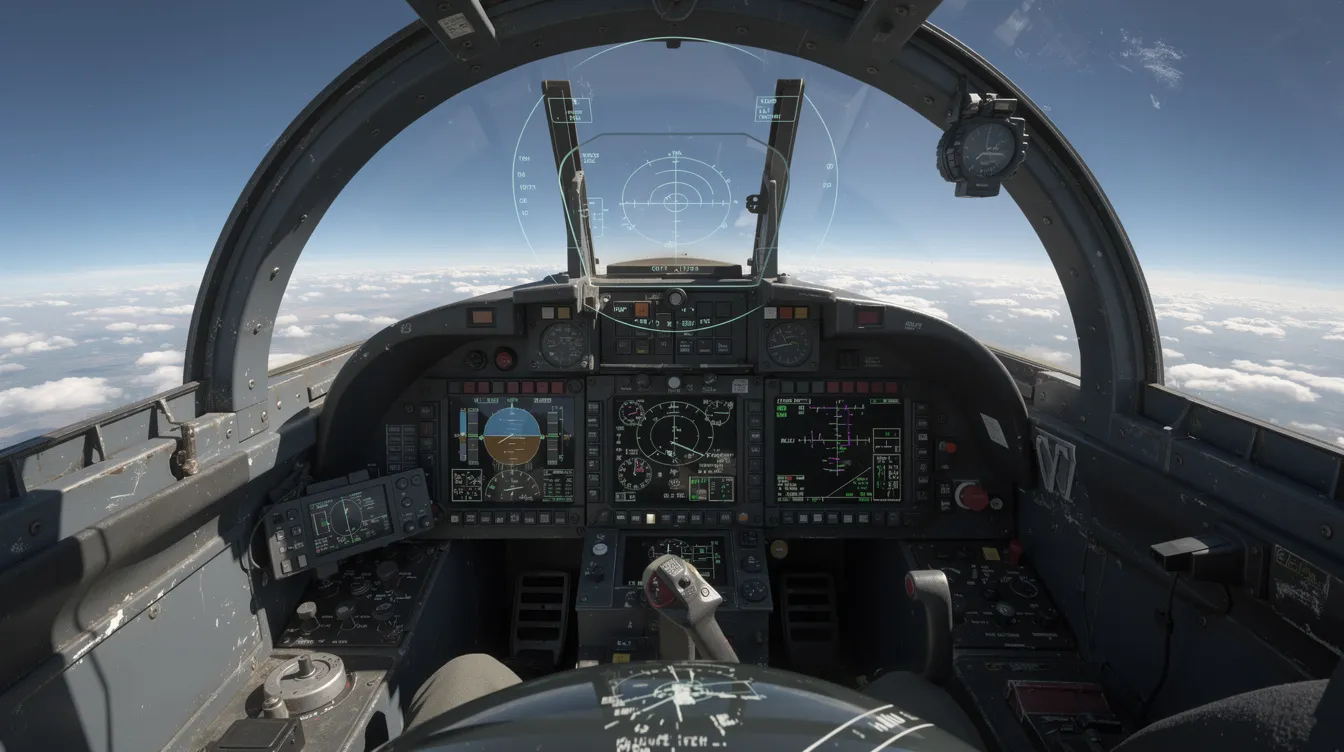
Advanced fighters use high-strength composite materials for improved performance and survivability, reducing weight while increasing structural strength. These same composite technologies now appear in business jet airframes. Private jet cockpit systems like the Honeywell Primus Epic and Collins Pro Line Fusion owe design concepts to military predecessors: redundancy, sensor integration, and automated safety features that reduce pilot workload, especially in the largest private jets for long-range luxury travel.
From Fighter Jet to Private Jet: Shared DNA in Performance and Safety
BlackJet clients fly for business and lifestyle, not combat. But the safest private jets in operation today carry technology and safety culture that originated in military aviation, even when travelers prioritize the cheapest private aircraft options for budget-friendly missions. Aerodynamic advances developed for stealth coatings, composite weight reduction, and engine efficiency improvements all migrated from fighter programs to civil platforms.
Dassault's Falcon 10X, for example, incorporates fighter-derived cockpit technology, including HOTAS (Hands On Throttle And Stick) controls and advanced automation. Lockheed Martin's Auto GCAS terrain-avoidance system, originally built for F-16s, is now being evaluated for civil use.
Safety certifications, redundancy standards, and rigorous maintenance cultures refined under the stress of combat operations now underpin civilian aviation protocols. Many former fighter pilots transition to private aviation, bringing with them the discipline, situational awareness, and training standards that kept them alive at Mach 2. A typical BlackJet member flying New York to London benefits from airspace management, collision avoidance, and communication systems all shaped by military requirements, similar to the rigor seen in established providers whose NetJets Jet Card costs and programs many travelers evaluate.
Economic Impact of Fighter Aircraft Programs
Major fighter programs create industrial ecosystems that span countries and decades. The F-35 program involves the United States, UK, Italy, Japan, and eight other partner nations. More than 21,000 maintainers and over 3,000 pilots operate the platform globally. Thousands of suppliers across America, Europe, and the Asia-Pacific region produce components, generating high-skill engineering jobs and technology spin-offs.
These global partnerships support economic growth beyond defense. R&D investment in materials science, software, propulsion, and systems engineering generates innovations that benefit civil aerospace and private jet manufacturing, including the design of private jets for 20 passengers that support corporate and group missions. Export sales of fighters strengthen political alliances, bring revenue that funds continued production and development, and power continued economic growth.
From BlackJet's perspective, a stable aerospace sector ensures aircraft availability, maintenance expertise, and a pipeline of skilled engineers, much like the diversified fleets maintained by top private jet companies. The same industrial base that builds fighter wings and engines also supports the maintenance infrastructure that keeps private jets airworthy. When a BlackJet member boards a jet, the quality of that experience depends in part on an aerospace workforce trained to the highest standards, many of them shaped by defense production.
Sustainability and Fighter Aircraft: From Fuel Burn to Future Technology
Fighters are fuel-intensive. Afterburners, supersonic flight profiles, and high-thrust maneuvers consume fuel at rates that dwarf commercial aviation on a per-hour basis. A single F-15 burns roughly 25,000 pounds of fuel per hour in full afterburner.
That said, defense research drives aerodynamic and propulsion innovations that eventually reduce emissions across all aviation. Adaptive cycle engines under development for sixth-generation fighters aim to optimize efficiency across subsonic, transonic, and supersonic regimes. Several air forces now test sustainable aviation fuels (SAF) for training flights, reducing lifecycle carbon without modifying existing engines, just as private operators experimenting with the cheapest private jet options weigh efficiency, sustainability, and total ownership cost.
Lighter composite materials, optimized flight profiles, and more efficient engine cycles developed for fighters benefit commercial and private aviation. Travelers evaluating these advances often ask whether private jets are safe. BlackJet's commitment to carbon-neutral flights and sustainable aviation builds on this trajectory: modern, efficient aircraft combined with carbon offset programs and SAF adoption move private aviation toward a lower-emission future.
How Fighter Aircraft Operations Inform Private Aviation Safety Standards
Mission success and safety in fighter operations are non-negotiable. A single failure in maintenance, communication, or decision-making can cost lives and aircraft worth tens of millions of dollars. The same expectation applies to private aviation, where passengers entrust their safety to operators and crew.
Fighter pilot training involves hundreds of simulator hours, scenario-based emergency drills, and strict adherence to checklists. Crew Resource Management (CRM), the structured communication and decision-making process between pilots, originated in military aviation. Private jet operators now enforce CRM protocols as standard practice.
BlackJet aligns with these standards through vetted operators, proprietary certification criteria, and real-time flight monitoring that underpin its premium private jet card programs. Consider a scenario: a BlackJet member requests an urgent cross-country flight during a weather system. Behind the scenes, safety teams verify aircraft readiness, check weather radar returns, confirm avionics functionality, and identify alternate airports. This process mirrors war-mission planning, where fighter pilots never launch without a full threat and contingency assessment.
Jet Cards vs. Owning a Jet: Lessons from Fleet Management in the Air Force
An air force does not assign one aircraft type to every mission. Interceptors handle quick-response threats; multirole fighters deploy for complex operations; strike aircraft hit ground targets. The air force matches the platform to the mission profile, maintaining fleet diversity without requiring every pilot to own every aircraft.
The Jet Card model follows a parallel logic. Members purchase prepaid flight hours, typically in 25-hour or 50-hour blocks through offerings like the BlackJet 25+ Hour Jet Card, and access multiple aircraft categories based on their travel needs. There is no capital outlay for a $40 million airframe. There is no crew payroll, no hangar lease, no depreciation.
Full ownership provides exclusive access but carries fixed costs whether the jet flies or sits idle. On-demand charter offers flexibility but no guaranteed availability or consistent aircraft quality. Jet Cards occupy the middle ground: predictable pricing, guaranteed availability, and the ability to select the right cabin class for each trip, which is why many travelers study Jet Card cost per hour before committing.
BlackJet's approach mirrors how military planners assign a specific fighter type to a specific task. A short business hop from New York to Boston calls for a light jet; a transatlantic group trip to London demands a large-cabin, long-range platform. The member chooses the mission; BlackJet matches the aircraft, from light jets to private jets for 20 passengers or even 50-passenger private charters for large groups.
Choosing the Right Aircraft for Your Mission: Fighter Pilot Logic for Private Travelers
Fighter pilots plan every sortie around four variables: mission distance, required speed, payload (fuel and weapons), and runway environment. Private travelers face analogous decisions: how far are you going, how many passengers and bags do you have, what airports do you need to reach, and are there weather or altitude constraints?
A fighter commander would never send an F-16 on a mission requiring the range and payload of an F-15E Strike Eagle. Similarly, booking a light jet for a nine-passenger transatlantic trip makes no sense. The logic is the same: match the aircraft to the mission.
BlackJet's advisors and digital booking tools simplify this process. Members describe their trip, and the platform recommends the optimal aircraft class based on range, cabin size, runway performance, and availability, similar to how buyers compare the best Jet Cards for frequent flyers to align benefits with their mission profiles. Whether you need a turboprop for a 200-mile island hop or a heavy jet for a 4,000-mile ocean crossing, the selection mirrors mission-fit thinking used by air force planners worldwide and reflects the same logic outlined in our guide to private jet sizes.
Frequently Asked Questions About Fighter Planes and Private Jet Travel
What defines a fighter aircraft? A fighter aircraft is a military plane designed for air-to-air combat. Its primary role is to establish and maintain air superiority. Many modern fighters also perform ground attack, reconnaissance, and electronic warfare missions.
How do fifth-generation fighters differ from earlier generations? Fifth-generation fighters combine extreme stealth, sensor fusion, internal weapons bays, and network integration. Earlier generations lacked stealth and relied on external weapons carriage, which increased radar signature. The F-22 and F-35 are the operational benchmarks for this category.
What does "air superiority" actually mean? Air superiority means friendly forces can conduct air operations without prohibitive interference from enemy aircraft. It does not mean the enemy has no air assets; it means they cannot use them effectively. Air supremacy is the higher standard, where the enemy air threat is negligible. Frequent travelers who rely on this stability often analyze options like a 1100-hourJet Card cost guide to structure their flying efficiently.
How does military aviation influence private jet safety? Training protocols, maintenance standards, CRM procedures, and cockpit technology all trace their roots to military aviation. BlackJet applies rigorous safety protocols derived from these same principles, including operator vetting and real-time flight monitoring.
What is a Jet Card, and how does it compare to owning or chartering? A Jet Card is a prepaid block of flight hours (typically 25 or 50 hours) that gives members access to private jets without ownership costs. Our overview of Jet Card membership pricing explains how programs are structured. Unlike charter, Jet Cards guarantee availability and offer consistent pricing across aircraft categories.
Do former fighter pilots fly private jets? Yes. Many retired military pilots transition to business aviation, bringing training discipline, situational awareness, and thousands of flight hours to private operations.
How does BlackJet achieve carbon-neutral flights? BlackJet offsets the carbon footprint of every flight at no additional cost to members, combining carbon offset programs with a focus on modern, fuel-efficient aircraft. The company also supports SAF adoption and efficiency improvements across its operator network.
What aircraft categories are available through BlackJet? BlackJet offers access to multiple cabin classes, from light jets for short hops to large-cabin, long-range aircraft for international travel, mirroring the range of options outlined in our guide to understanding private jet sizes. Members can explore all options through BlackJet's aircraft categories page.
Fighter aircraft define the boundaries of what is possible in the sky. The same relentless pursuit of performance, safety, and precision that produces a lethal, connected fighter plane at Mach 1.7 also shapes the private aviation world you travel in. From sensor fusion to maintenance culture to airspace management, the fighter's influence is everywhere.
Conclusion: The Enduring Impact of Fighter Aircraft on Aviation and Travel
Fighter planes are more than symbols of military power; they are the technological and operational foundation upon which modern aviation is built. Their relentless evolution in speed, safety, and systems integration has shaped not only the battlefield but also the skies of commercial and private travel. For BlackJet members and discerning travelers, understanding the legacy and innovations of fighter aircraft enriches appreciation for the seamless, secure, and efficient journeys they enjoy.
From the pioneering days of synchronized machine guns to the networked, stealthy multirole jets like the F-35, fighter aircraft have driven advances that ripple through aerospace engineering, pilot training, and airspace management. The industrial ecosystems supporting fighter programs fuel economic growth and innovation that benefit civilian aviation sectors worldwide, as detailed in our section on the Economic Impact of Fighter Aircraft Programs.
As private aviation embraces sustainability, digital transformation, and heightened safety standards, it continues to draw upon the fighter jet’s DNA. Whether choosing the right aircraft for a business mission or valuing the invisible shield of air superiority that secures global airspace, travelers are part of a continuum that links cutting-edge defense technology to everyday luxury and convenience, similar to insights found in our guide on How Fighter Aircraft Operations Inform Private Aviation Safety Standards.
BlackJet invites you to explore premium jet access with the confidence that your journey is supported by the same principles of excellence, innovation, and safety that define the world’s most advanced fighter aircraft. Discover how BlackJet can reshape your travel experience—seamlessly, securely, and sustainably—through our Jet Card Programs and Aircraft Categories designed for every mission profile.


 Sign up with google
 Sign up with Apple