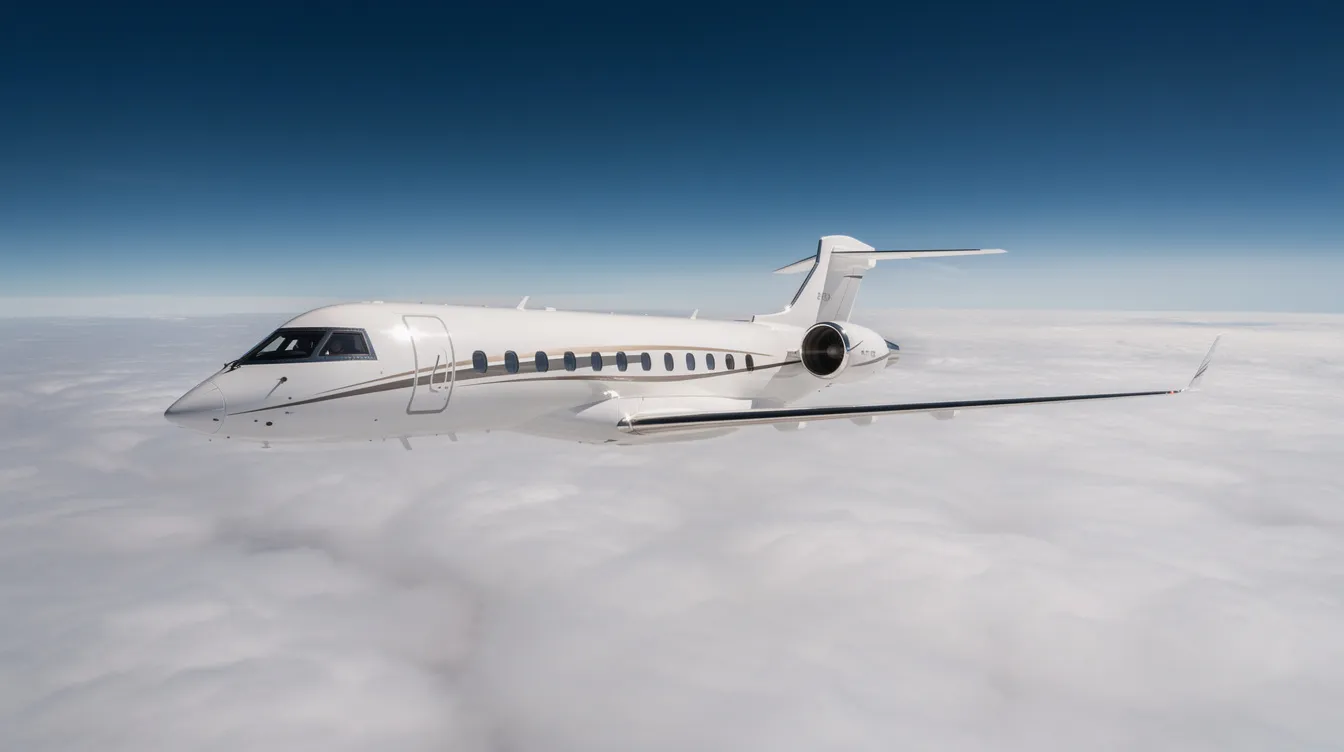
The fastest non-military jet ever flown remains the North American X-15, a rocket-powered research plane that reached Mach 6.7 on October 3, 1967. For travelers who want speed they can actually book, the answer looks different: Concorde was the fastest civil airliner at Mach 2.04, and today the quickest private options include the Bombardier Global 8000, Cessna Citation X+, and Gulfstream G800.
This guide is for business travelers and private aviation enthusiasts seeking the fastest non-military jets available today. Understanding these options helps travelers make informed decisions about speed, comfort, and value in private aviation.
For frequent business flyers and high-net-worth leisure travelers comparing private aviation options, that distinction matters because speed only counts if it fits your mission, access needs, and comfort expectations. Here is what each category holds, from record-setting non-military jets and the fastest business aircraft available through Jet Card programs such as BlackJet to upcoming supersonic civil jets, plus the safety, sustainability, and aircraft-selection factors that shape the right choice for a specific trip.
Fast Answer: What Is the Fastest Non-Military Aircraft Jet Ever Built?
The X-15A-2, piloted by William "Pete" Knight, hit approximately 7,274 km/h (4,520 mph) at 102,100 feet. Because it was rocket-powered and air-launched from a B-52, some aviation historians exclude it from the "jet" category entirely.
The fastest civil airliner in regular passenger service was the Concorde, which cruised at Mach 2.04 (about 2,179 km/h) from 1976 until retirement in 2003.
Among business jets in the world today, Bombardier's Global 8000 is the fastest business jet, while the Cessna Citation X+ (Mach 0.935) and the Gulfstream G800 (Mach 0.925) round out the top tier. Modern civilian speed champions emphasize fuel efficiency and passenger comfort alongside raw performance.
Through Jet Card programs, BlackJet members gain access to these high-performance aircraft categories without the cost and complexity of ownership.
From Concorde to Today: Milestones in Non-Military Speed
The history of fast civil aviation tracks a steady shift from chasing top speed to balancing speed with range, sustainability, and economics.
The X-15 set records across 199 flights between 1959 and 1968. Swept wings delay shockwave formation as aircraft approach Mach 1; advanced aerodynamics help maintain speed while carrying passengers long distances. Fly-by-wire systems, first proven on research planes like the X-15, now improve aircraft stability at high speeds across every class of civil aviation.
Concorde, a joint British-French design, entered service in 1976. British Airways logged its fastest transatlantic crossing on February 7, 1996: London to New York in 2 hours, 52 minutes, 59 seconds. The Soviet-built Tupolev Tu-144 flew supersonic four months before Concorde but suffered reliability failures and left passenger service within a year.
After Concorde's 2003 retirement, the industry pivoted toward ultra-long-range subsonic jets. Civilian jets now utilize advanced high-bypass turbofan engines for efficiency, flying at Mach 0.85 to 0.93 while covering over 7,000 nautical miles nonstop, with many models overlapping the largest private jets for sale and charter.
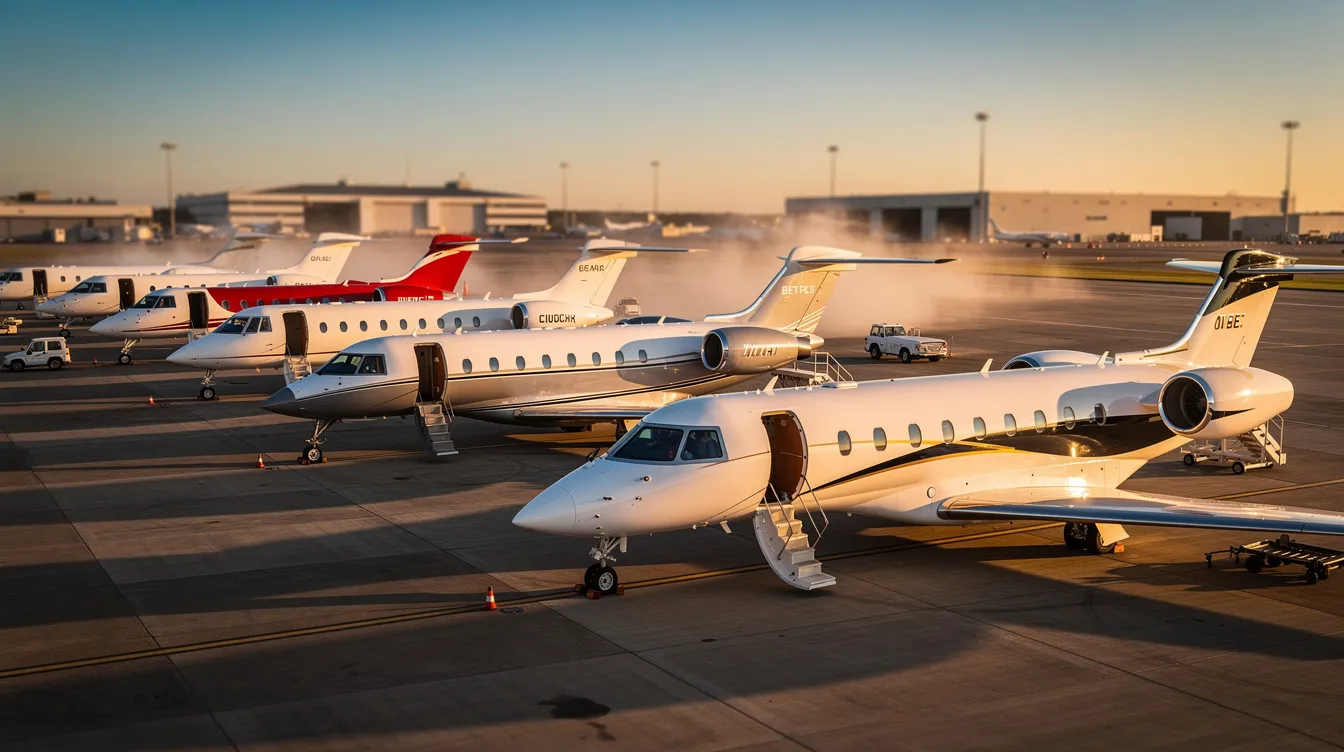
Fastest Business Jets You Can Actually Fly On Today
Top Speed Business Jets
For a private traveler using a Jet Card or on-demand charter, the fastest non-military jet is the fastest business jet certified for civil use, booked through premium private jet card programs from BlackJet.
The Cessna Citation X+ cruises at Mach 0.90 to 0.92, with a certified maximum of Mach 0.935. The Gulfstream G800 reaches Mach 0.925, with a range of 8,000 nautical miles; enough for nonstop New York to Tokyo.
Cabin Comfort and Altitude
The Bombardier Global 8000 features Bombardier's Smooth Flĕx Wing for improved ride comfort and maintains a cabin altitude of 2,691 feet while cruising at 41,000 feet. Many modern jets operate at altitudes of 45,000 to 51,000 feet for efficiency, well above commercial airline traffic.
By comparison, a Boeing 777 cruises near Mach 0.85. Top business jets cover the same route faster, depart on the traveler's schedule, and skip commercial terminal congestion, especially when you look at the best private jets in the world.
Jet Card Access
Jet Card programs offer prepaid access to private jets across multiple cabin types.
Programs typically include options like 25-hour or 50-hour plans, such as the BlackJet 25+ Hour Jet Card.
Jet card users benefit from 24/7 digital booking tools and real-time support as a core feature of every membership.
Supersonic Civil Jets on the Horizon
The future of civil supersonic flight centers on one development program: Boom Supersonic's Overture. A descendant of the historic Concorde in concept, the Overture jet will connect London and New York in 3.5 hours at Mach 1.7 over water. The Overture plane aims for emission-free travel by 2030, designed to run on 100% SAF.
The challenge remains substantial. Sonic boom over land is prohibited in many countries. Engine design for sustained supersonic cruise without afterburners carries heavy certification complexity. The OLGA Project, with a budget of 34 million euros, and other research initiatives are exploring alternative propulsion. Hydrogen is being explored as a power source for aviation alongside sustainable aviation fuel.
What to expect in the next 10 to 20 years:
Limited supersonic business routes, primarily over water
Premium pricing, likely two to three times current first-class fares
Incremental regulatory change in select countries
SAF-compatible engines as a baseline requirement for certification
Speed, Safety, and Sustainability in Private Jet Travel with BlackJet
Benefits of Private Jet Travel
Speed is a strategic asset: same-day international meetings, half the time away from family, reduced fatigue versus multi-leg commercial itineraries.
Depart on your schedule and skip commercial terminal congestion.
Access to a wider range of airports, including regional and less-congested terminals.
But speed without safety is a non-starter, whether you're buying a whole aircraft, a jet card, or simply purchasing a single seat on a private jet.
Safety Standards
Private aviation companies prioritize safety and security measures at every level. Safety certifications are essential for private jet operations, and BlackJet is committed to working only with operators that meet rigorous audit standards. Real-time support enhances safety during private flights through continuous monitoring and instant crew communication, reinforcing the core reality that private jets are a very safe way to travel.
Sustainability Initiatives
On sustainability, BlackJet delivers carbon-neutral flights by default through verified offset programs and increasing access to SAF where available, while some travelers pair these efforts with unlimited private jet flight memberships to maximize usage.
FAQs: Fastest Non-Military Jets and Private Jet Travel
What is the fastest non-military jet available for private travelers?
The Bombardier Global 8000 currently holds the title as the fastest business jet available for private travel, reaching speeds up to Mach 0.94. The Cessna Citation X+ and Gulfstream G800 are also among the top contenders.
How do Jet Card programs like BlackJet provide access to these jets?
Jet Card programs offer prepaid access to a fleet of private jets, including the fastest models, without the need for ownership. Members benefit from digital booking tools, real-time support, and flexible scheduling.
Are supersonic private jets like the Overture available now?
Not yet. Supersonic jets like Boom Supersonic's Overture are expected to debut around 2030, offering emission-free supersonic travel primarily on transoceanic routes.
How does private jet travel ensure safety at high speeds?
Private jets use advanced safety features such as fly-by-wire systems, rigorous safety certifications, and continuous real-time monitoring to maintain stability and security at high speeds.
What sustainability initiatives are in place for fast private jets?
Programs like BlackJet offset carbon emissions through verified programs and promote the use of sustainable aviation fuel (SAF). Upcoming supersonic jets are being designed to run on 100% SAF for emission-free travel.
How do cabin comfort and altitude affect the flying experience on the fastest jets?
Jets like the Bombardier Global 8000 maintain low cabin altitudes (around 2,691 feet) even at high cruising altitudes (41,000 feet), reducing passenger fatigue and enhancing comfort compared to commercial airliners.
What are the typical passenger capacities for different jet categories?
Light jets seat 4 to 8 passengers, mid-size jets 6 to 10, super mid-size jets 8 to 12, and heavy jets over 10 passengers, catering to varying trip lengths and group sizes.
Can I book a single seat on a private jet through BlackJet?
Yes, BlackJet offers options to purchase single seats on private jets, providing flexibility for travelers who do not require an entire aircraft charter.
How do private jets compare to commercial flights in terms of time savings?
Private jets save significant time by allowing travelers to depart on their schedule, access less congested airports, and avoid lengthy security and boarding procedures, making them a strategic advantage for business and luxury travel.
What terms should I consider when choosing a private jet or Jet Card program?
Consider factors such as flight hours included, flexibility of scheduling, access to different aircraft types, safety certifications, sustainability commitments, and support services to ensure the program fits your travel needs.
How to Choose the Right Fast Jet for Your Mission
Private jets are categorized into light, mid-size, and heavy jets. Light jets typically seat 4 to 8 passengers. Mid-size jets can accommodate 6 to 10 passengers comfortably. Heavy jets are designed for long-range travel and can seat over 10 passengers. Super mid-size jets bridge the gap between mid-size and heavy jets, offering greater range and capacity than mid-size jets but not quite matching the size or range of heavy jets.
Category | Typical Seats | Best For |
|---|
Light jets | 4 to 8 passengers | Regional flights under 3 hours |
Mid-size jets | 6 to 10 passengers | Cross-country U.S. routes |
Super mid-size | 8 to 12 passengers | Longer domestic, short international |
Heavy jets | Over 10 passengers | Long-range, intercontinental travel |
Cruise speed interacts with routing and airport choice. Using less-congested private terminals and closer regional airports can save as much time as a few extra knots of cruise speed, especially for larger groups considering private jets for up to 50 passengers. A BlackJet advisor can help compare aircraft options for a specific itinerary, balancing speed, cost per hour, cabin experience, and sustainability preferences.
Explore BlackJet's Jet Card programs to gain reliable access to some of the world's fastest private jets, and turn high-speed aircraft performance into a real advantage for your business and life.


 Sign up with google
 Sign up with Apple