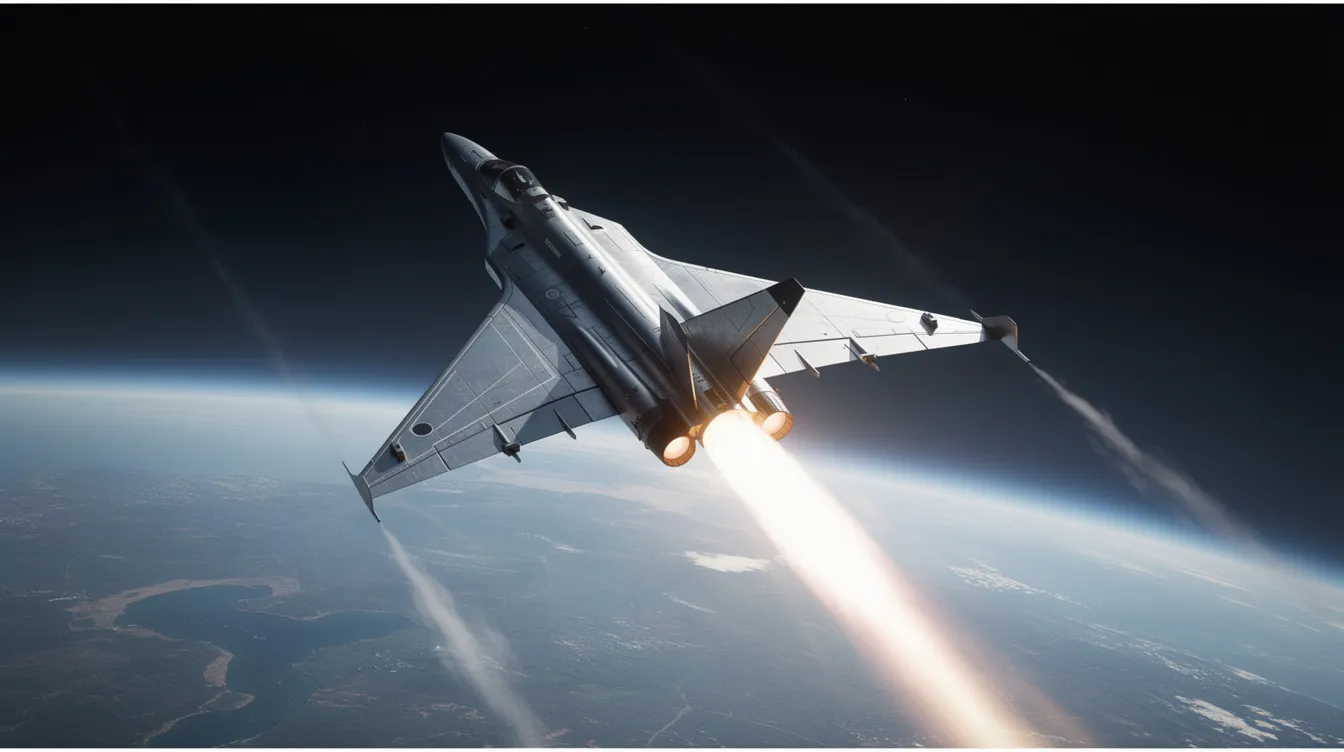
Introduction: Why the Fastest Fighter Jets Still Capture Our Imagination
Picture a modern business jet cruising at roughly 900 km h over the Atlantic, its passengers reviewing documents in a whisper-quiet cabin. Now rewind to 1976, when a Soviet MiG-25 Foxbat could scream past at nearly three times the speed of sound, reaching speeds that turned airframes white-hot and rattled the strategic calculus of entire nations. The gap between these two realities-comfort versus raw velocity-defines one of aviation's most fascinating tensions.
The idea of the fastest fighter jet still matters in 2026. National prestige, air superiority, and the engineering breakthroughs born from pushing a plane to its absolute limits continue to shape how air forces around the world think about defense. Every generation of fighter aircraft inherits lessons from the one before it, and those lessons ripple outward into civil aircraft design, materials science, and even the safety protocols that govern private aviation.
At BlackJet, we don't operate at Mach 2.5. But our commitment to safety, precision engineering, and sustainable performance is rooted in the same aerospace heritage that produced the fastest jets in the world. In this article, we trace the race to build the fastest fighter jet ever, explore why modern combat aircraft have shifted priorities, and connect those insights to what "speed" truly means for today's discerning traveler.
Before we dive in, a few core definitions: a fighter jet is a military aircraft designed primarily for air combat. Top speed refers to the maximum speed an aircraft can reach under ideal conditions. Speed is expressed in Mach, relative to the speed of sound-about Mach 1 at sea level equals roughly 1,225 km h, though the exact figure shifts with altitude and temperature. Speed is expressed in Mach, which is a ratio relative to the speed of sound.
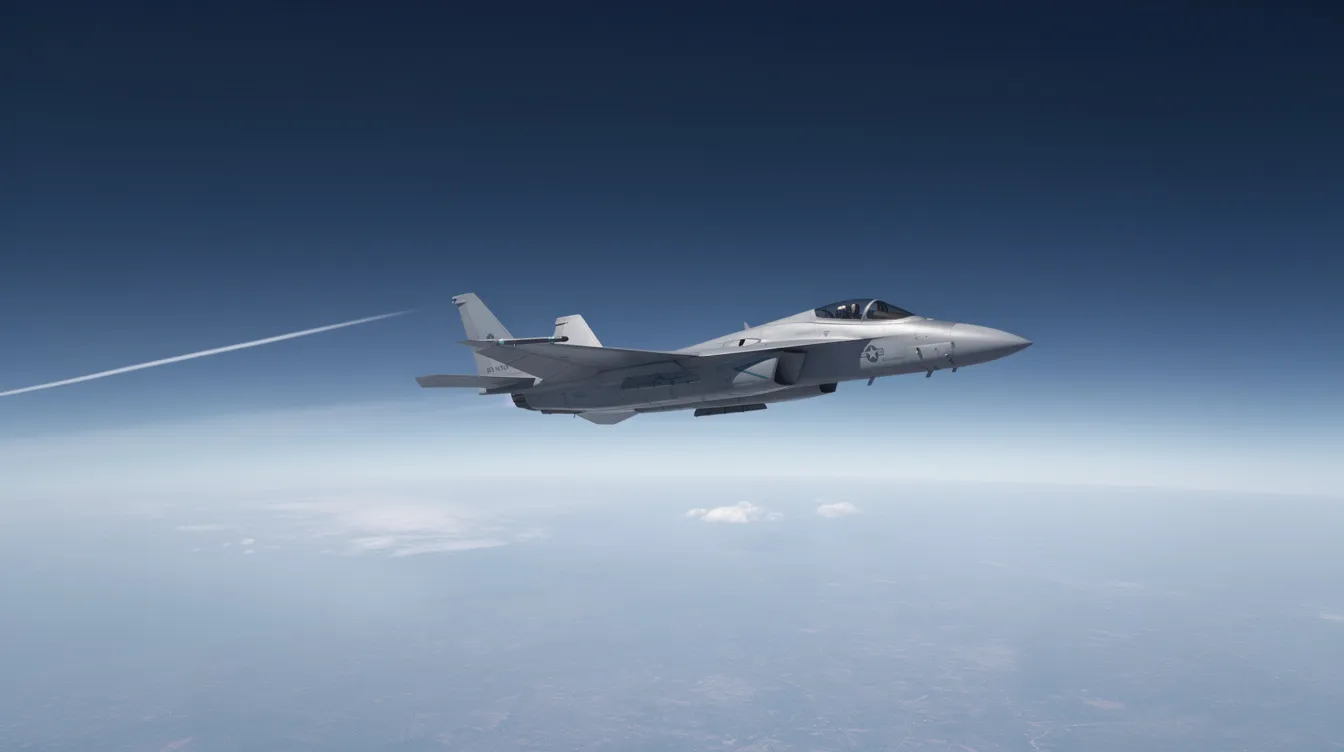
What Is the Fastest Fighter Jet in the World Today?
The answer depends on how strictly you define "fighter jet." The fastest crewed powered aircraft ever built is the NASA/USAF X-15, a rocket-powered experimental vehicle that reached Mach 6.72 (7,274 km h, or about 4,520 mph) on 3 October 1967. However, the X-15 was not a conventional fighter aircraft-it was an aerospace research platform launched from a B-52 bomber and designed to probe the edges of space, not engage in air combat.
Among operational military aircraft built for combat or interception, the MiG-25 Foxbat holds the title of fastest fighter jet in service today, with a top speed of Mach 3.2 (approximately 3,524 km h). Its operational limit, however, was typically capped closer to Mach 2.83 to prevent irreversible engine damage. As of 2026, the MiG-25 remains in limited active service in a handful of air forces, though most operators have retired or replaced it.
In summary: the X-15 is the fastest aircraft ever flown by a human (Mach 6.72, rocket-powered, research role, 1959–1968). The MiG-25 Foxbat is the fastest operational fighter jet at Mach 3.2 (jet-powered, interceptor role, entering service in 1970, now in limited use). These two benchmarks frame the entire conversation around high-speed military aviation.
Understanding Mach: How Fighter Jet Speed Is Measured
Mach 1 is approximately 1,235 km h at high altitude-though the exact value depends on air temperature. At sea level on a standard day (15°C), the sound barrier sits near 1,225 km h. At the tropopause around 11,000 meters, where many jets operate, it drops to roughly 1,062 km h. This is why the same Mach number can represent different ground speeds depending on where the aircraft is flying.
Common benchmarks relevant to the fastest fighters: Mach 1 marks the supersonic threshold. Mach 2.0 translates to about 2,450 km h at altitude. Mach 2.5 reaches approximately 2,655 km h, and Mach 3.0 exceeds 3,200 km h. Fighter jets often achieve high supersonic speeds between Mach 1.5 and Mach 2.5, while only a select few have pushed beyond Mach 3.
Official top speed figures are almost always recorded in clean configuration-no external fuel tanks, no weapons pylons-at high altitude, where thinner air reduces drag. Many fighter jets use afterburners to accelerate rapidly and maintain supersonic speeds during these test runs, but those conditions rarely mirror real combat scenarios. High-thrust afterburning turbofan engines provide enormous thrust bursts for supersonic flight, yet they consume fuel at extraordinary rates.
The sonic boom phenomenon also constrains where supersonic flight is practical. When an aircraft breaks the sound barrier, it generates a pressure wave audible on the ground as a sharp crack-a major reason why supersonic flight over populated areas remains heavily restricted for both military and civil aircraft.
Aerodynamic shaping with swept wings minimizes drag as aircraft approach the speed of sound. The area rule-designing airframes with smooth cross-sectional area changes-further reduces drag during supersonic flight, a principle discovered in the 1950s that remains central to high-speed aircraft design.
The Fastest Fighter Jet Ever: NASA/USAF X-15 (Mach 6.72)
The NASA/USAF X-15 reached Mach 6.72 (7,274 km h, or 4,520 mph) on 3 October 1967, piloted by William J. "Pete" Knight. This remains the current record for the fastest speed ever achieved by a crewed, powered aircraft-a mark that has stood for nearly six decades.
The X-15 was rocket-powered, air-launched from a modified B-52 bomber at approximately 45,000 feet, and designed to operate at the boundary between atmosphere and space. Three aircraft were built, flying from 1959 to 1968. The program was initially designed to study hypersonic aerodynamics, reentry heating, and attitude control at extreme velocities-problems that no other aircraft of the era could investigate.
Data from the X-15 program directly informed the design of spacecraft heat shielding, high-temperature materials research, and control systems used in later programs including the Space Shuttle. Advanced materials like titanium alloys, tested extensively during X-15 flights, proved essential for withstanding high thermal stress during flight at several times the speed of sound.
While the X-15 is not a fighter in any traditional sense-it carried no weapons and could not engage other aircraft-its speed record places it at the absolute pinnacle of human-piloted aviation performance and influenced every high-speed aircraft that followed.
The Fastest Fighter Jets Ever Built (Top Tier Above Mach 3)
A very small number of aircraft have reached or exceeded Mach 3 in level flight. This elite tier includes reconnaissance platforms, prototype interceptors, and dedicated high-altitude speedsters-each representing the extreme edge of what jet propulsion and human engineering could achieve.
Lockheed SR-71 Blackbird. The SR-71 Blackbird was designed for strategic reconnaissance and remains one of the fastest aircraft ever built with air-breathing engines. On 28 July 1976, an SR-71 set the official speed record of 3,529.6km/h- aboutt Mach 3.3. The Lockheed SR-71 Blackbird reached speeds over Mach 3.3 routinely during operational missions. The SR-71 Blackbird could fly at 85,000 feet, entering service in 1966 and operating until 1998 with the USAF and until 1999 under NASA. Its airframe relied heavily on titanium alloys and special materials to handle skin temperatures exceeding several hundred degrees Celsius at cruise speed. Heat-resistant materials were necessary to withstand high temperatures generated at Mach 3 and beyond.
Lockheed YF-12A. A prototype interceptor aircraft derived from the A-12 (the SR-71's predecessor), the YF-12 reached approximately Mach 3.2 (about 3,332 km h) during speed records set on 1 May 1965 at over 80,000 feet. Only three were built, and the program was cancelled in 1968. The YF-12 never entered mass service but proved critical to high-speed interceptor research.
MiG-25 Foxbat and MiG-31 Foxhound. The Soviet Union developed the MiG-25 and its successor, the MiG-31, as direct responses to the perceived threat of North American high-speed bombers and reconnaissance jets like the SR-71. The MiG-25 Foxbat has a top speed of Mach 3.2, while the MiG-31 Foxhound can reach speeds of Mach 2.83. Both traded maneuverability for straight-line speed, relying on heavy structures and powerful engines to reach high altitudes quickly.
MiG-25 Foxbat: The Fastest Fighter Jet Still in (Limited) Service
The MiG-25 Foxbat first flew in 1964 and entered Soviet service in 1970. It was initially designed as a high-speed interceptor aircraft to counter the planned North American XB-70 Valkyrie bomber and fast reconnaissance platforms like the SR-71 Blackbird. When the B-70 program was cancelled, the MiG-25 pivoted toward intercepting other high-altitude threats and performing reconnaissance.
The MiG-25 can reach speeds exceeding Mach 3, with a maximum reported speed of approximately Mach 3.2 (about 3,524 km h). However, sustained flight above Mach 2.83 risked irreversible damage to its Tumansky R-15 engines. Operational limits were therefore imposed closer to Mach 2.8–2.9 for routine missions.
Unlike many Western fighters that used expensive titanium, the MiG-25's airframe was constructed primarily from stainless steel and nickel alloys-materials the Soviet Union could produce domestically at scale. Its large wings were optimized for straight-line speed and high-altitude climbs rather than tight-turn air combat. Several variants were produced, including dedicated reconnaissance and training versions.
As of 2026, the MiG-25 is largely retired from the Russian Air Force and most other operators. A few airframes may remain in limited service or storage in countries that once operated them, but many countries have transitioned to more versatile modern aircraft. For a broader look at current frontline jets, see our guide to the top 10 fighter jets of 2026.
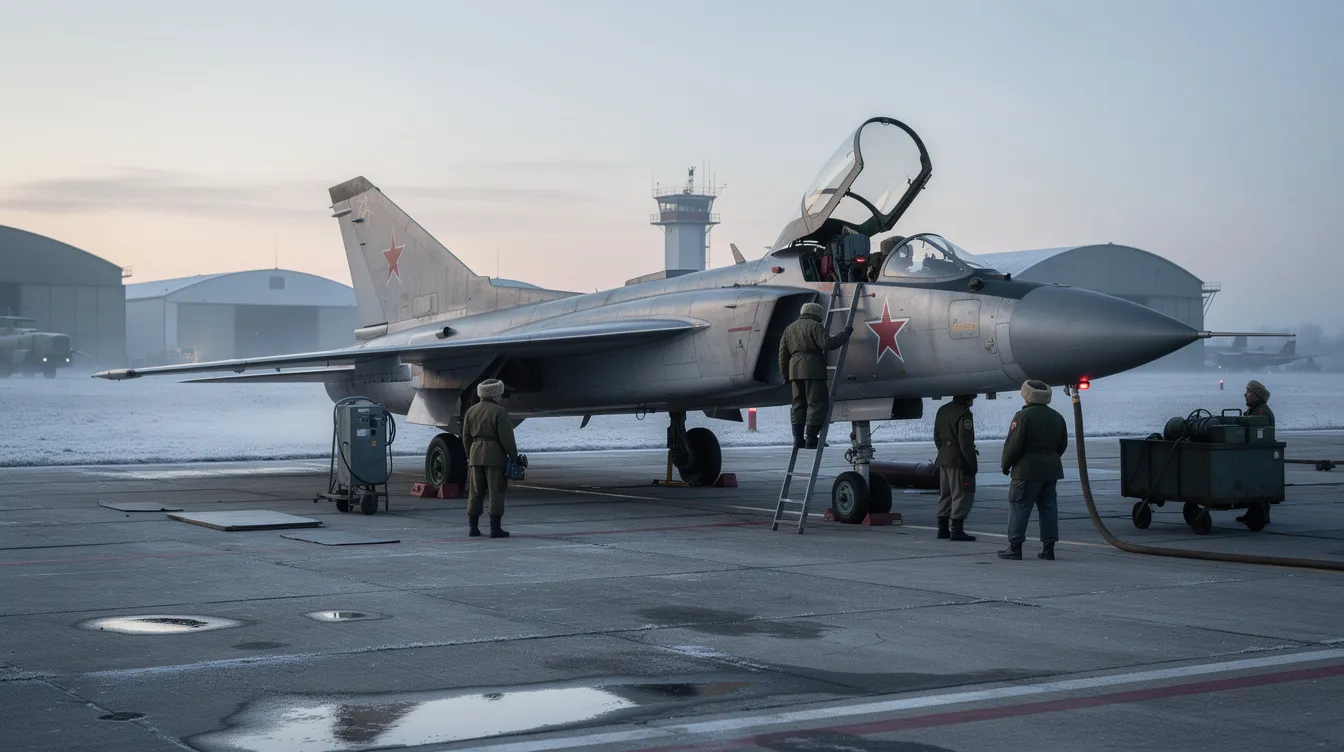
Fastest Fighter Jets in the World Around Mach 2.5–3.0
Below the Mach 3+ tier sits a cluster of remarkably fast fighter jets and interceptors that defined air superiority from the Cold War through the present day. Some specialized interceptors hold the highest top speeds in active military service today, and several of these designs remain operational.
MiG-31 Foxhound. The MiG-31 Foxhound was developed in the 1970s for high-speed interception, entering service in 1981 as a direct replacement for the MiG-25. The MiG-31 Foxhound can reach speeds of Mach 2.83 (approximately 3,000 km h) at altitudes above 21,000 meters. Unlike its predecessor, it featured improved radar capable of tracking multiple targets, better lower altitudes performance, and enhanced endurance. It remains in active service with the Russian Air Force in 2026, modernized with updated avionics and weapons systems. Achieving and sustaining Mach 2+ speeds requires specific propulsion metallurgy and aerodynamic design qualities the MiG-31 was purpose-built around.
F-15 Eagle. The F-15 Eagle has been in service since 1976 at Mach 2.5, making it one of the longest-serving air superiority fighters in history. The F-15 Eagle has a maximum speed of Mach 2.5 (approximately 2,655 km h) at high altitude. Its twin Pratt & Whitney F100 turbofan engines generate thrust by compressing air and burning fuel in the combustion chamber, delivering the power needed for rapid climbs and supersonic dashes. The F-15 Eagle has a top speed of Mach 2.5, though Boeing clarified in 2024 that previous claims of near-Mach 3 performance were overstated. It remains in active service across many countries, including the US Navy and multiple allied air forces.
Other aircraft in the Mach 2.3–2.5 class. The F-111 Aardvark, a multirole combat aircraft with variable-sweep wings, could reach about Mach 2.5 in its bomber/strike configuration. The Su-27 Flanker, a Soviet air superiority platform, topped out near Mach 2.35. The MiG-29 Fulcrum, a lighter multirole fighter, reached approximately Mach 2.3. These jets illustrate how the Vietnam War and Cold War-era doctrine pushed many countries to design aircraft capable of reaching high speeds as a fundamental requirement.
Wedge or cone-type variable intake ramps slow incoming air to prevent engine stall at supersonic speeds-a critical engineering feature shared across nearly all of these high-speed designs.
Modern Fifth-Generation Fighters: Why They Don't Always Fly Faster
Modern fighter jets represent a fundamental shift in priorities. Where Cold War interceptors chased maximum speed above all else, fifth-generation designs emphasize stealth, sensor fusion, networked warfare, and energy-efficient operations. Modern fifth-generation fighters prioritize stealth, sensor fusion, and maneuverability, and modern jets prioritize agility over sheer speed in design.
The F-22 Raptor, for example, has a maximum speed of about Mach 2.0–2.25 (approximately 2,181 km h or higher). But its real advantage lies elsewhere: the F-22 Raptor has featured supercruise capability since 2005, allowing it to sustain supersonic flight at about Mach 1.8 without afterburners. Supercruise is the capability to fly supersonic without afterburners, conserving fuel-a far more tactically useful trait than a brief Mach 2.5 dash that drains tanks in minutes. Modern fighters primarily use low-bypass turbofan engines to reach supersonic flight, optimized for efficiency across a range of speeds rather than peak velocity alone.
Other modern combat aircraft follow the same philosophy. The Eurofighter Typhoon reaches about Mach 2.0. The Dassault Mirage 2000, a multirole fighter still operated by several air forces, achieves approximately Mach 2.2. Russia's Su-57 tops out near Mach 2.0. China's Chengdu J-10 sits in a similar bracket. None of these modern aircraft chase Mach 3.
The reason is straightforward: beyond approximately Mach 2.0, the engineering costs-heat management, structural reinforcement, fuel consumption-escalate dramatically while the tactical returns diminish. A missile traveling at Mach 4+ is always going to fly faster than the plane that launched it. Low-drag delta or swept-wing planforms reduce wave drag at high speeds, but even optimized airframes face punishing thermal and structural penalties above Mach 2.5.
Why Speed Matters in Air Combat: Advantages and Limits
Speed and Control of Engagements
In air combat, speed is a valuable tool but never sufficient on its own. Speed allows control of engagement in air combat: the faster fighter can dictate when to close distance, when to break away, and when to deny an adversary the chance to set up a firing solution.
Speed is crucial for intercepting enemy bombers. During the Cold War, interceptors like the MiG-25 and MiG-31 needed extraordinary climb rates and dash speeds to reach high-flying strategic bombers before they could release weapons over defended territory. The F-15 Eagle, with its Mach 2.5 capability, served a similar role for NATO air forces, reaching altitudes and speeds that allowed it to engage threats before they reached critical airspace.
Survivability and Speed in Combat
Survivability also benefits from speed. High speed reduces the time an aircraft spends inside an enemy's engagement envelope, lowering exposure to surface-to-air missiles and hostile fighters. However, fighter jets often fly slower than their maximum speeds in combat. In practice, fighter jets rarely exceed Mach 1.2 during real combat because sustained high-speed flight burns fuel at unsustainable rates, limits maneuverability, and degrades sensor performance.
The trade-off is clear: speed provides options, but those options must be weighed against endurance, situational awareness, and the ability to maneuver defensively. The fastest fighters in history were often the least agile.
High Speed Versus Technology: Why Modern Fighter Jets Are "Slower"
The Engineering Costs of Extreme Speed
Many of the fastest fighter jets ever built-the MiG-25, MiG-31, and SR-71-class designs-required massive airframes built from steel, titanium, or nickel alloys with enormous fuel loads. Maintenance demands were extreme, and operational costs per flight hour dwarfed those of more conventional fighters.
The technical barriers to sustained Mach 3+ flight remain formidable. Aerodynamic heating at those speeds can push surface temperatures beyond 300°C, demanding special materials and thermal management systems throughout the airframe. Variable-geometry air inlets are necessary to manage airflow at supersonic speeds, adding weight and mechanical complexity. Fuel consumption at Mach 3 is several times higher than at Mach 0.9, cutting range and endurance dramatically and creating additional drag from the large fuel volume required.
Stealth and Modern Design Trade-Offs
Stealth imposes its own constraints. The angular, faceted shapes and radar-absorbent coatings that make fifth-generation fighters nearly invisible to radar are not optimized for extreme speeds. Stealth aircraft often operate most effectively at subsonic or low-supersonic speeds, where their design achieves the lowest possible radar cross-section.
Today's air forces have collectively decided that the ability to see without being seen, strike from beyond visual range, and share targeting data across a network of platforms outweighs the ability to squeeze out an extra Mach 0.3 at the top end. Speed still matters-but it has been rebalanced against technology.
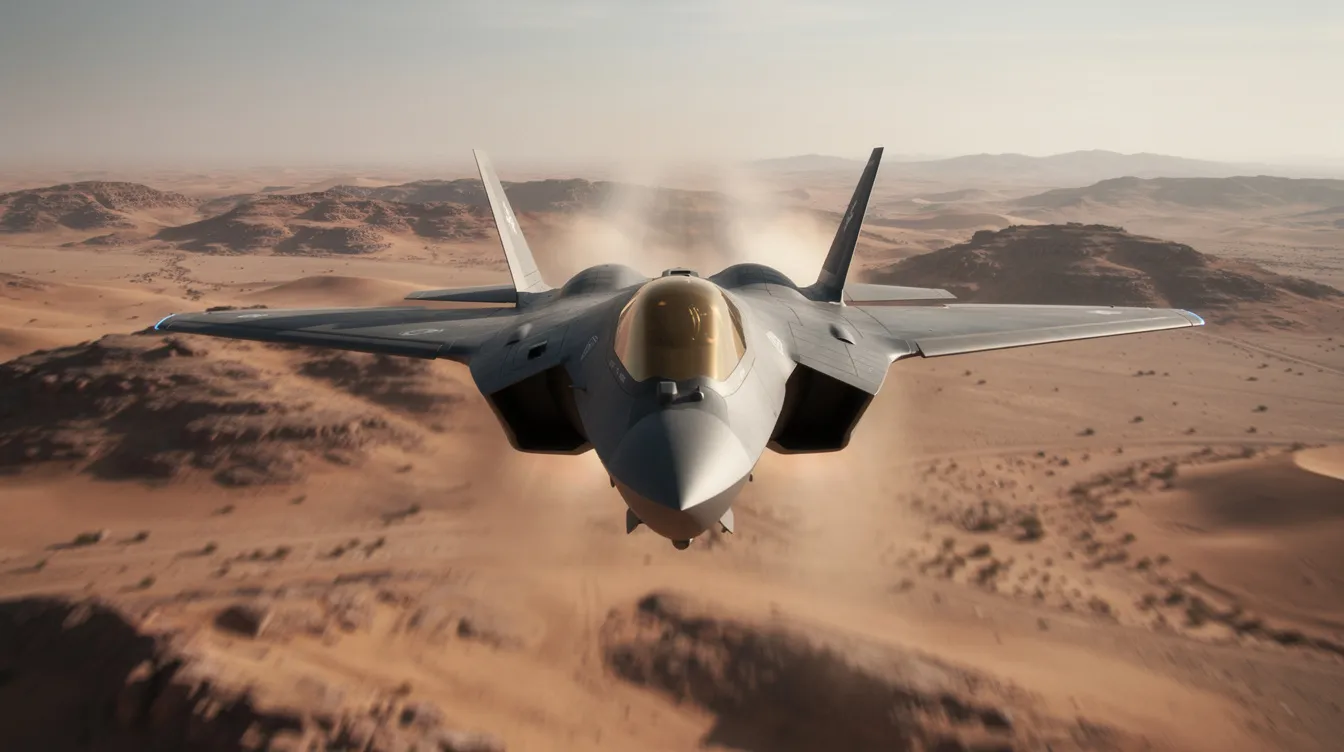
How Top Speed Is Tested: Records, Clean Configurations, and Real Missions
Official speed records for military aircraft follow strict protocols. The aircraft flies in clean configuration-no external fuel tanks, no heavy weapons pylons, no pods-at optimal altitude. Top speeds are measured at optimal altitudes above 30,000 ft, where high-altitude flight reduces aerodynamic drag due to thinner air and allows engines to operate more efficiently at supersonic speeds. Short bursts of afterburner push the aircraft to peak Mach for a measured straight-course run.
The SR-71's official record of 3,529.6 km h, set in 1976, was measured under exactly these conditions over a precisely defined course. Many Cold War speed figures for other aircraft are estimates based on partially declassified test data or pilot reports rather than formally adjudicated records.
In actual missions, the picture differs significantly. Fighters typically operate between Mach 0.8 and Mach 1.2, conserving fuel, reducing engine wear, and maintaining effective sensor coverage. The difference between brochure speed and operational speed is substantial-comparable to the gap between a sports car's claimed top speed on a test track and its real-world highway cruising speed.
Measurement Nuances and Real-World Speeds
There are also measurement nuances. Level flight records differ from speeds achieved in shallow dives. Air density at altitude makes Mach numbers somewhat abstract compared to km h for general readers, which is why both figures are typically cited together. An aircraft's speed at Mach 2.0 at 40,000 feet translates to a different ground speed than Mach 2.0 at 20,000 feet.
From Fastest Fighter Jet to Private Jet: What "Speed" Really Means for Travelers
The military aviation obsession with maximum speed makes for compelling history, but for the discerning traveler, a different kind of speed matters more: total journey efficiency.
Most business jets cruise between Mach 0.75 and Mach 0.90 (approximately 800–950 km h)-far below the Mach 2.0–2.5 realm of fighter jets. Yet these aircraft are optimized for what actually drives value: range, fuel efficiency, cabin comfort, and reliability across thousands of hours of service—the same metrics that define the top 10 best private jets in the world.
Consider a New York–London trip or a regional hop from Karachi by private jet charter. A modern long-range business jet covers the transatlantic distance in roughly 7 hours. A hypothetical supersonic jet might cut that to 3.5 hours-but regulatory constraints, limited range, extreme fuel burn, and noise restrictions over land make supersonic civil travel impractical in 2026 (though NASA's X-59 is working to change the sonic boom equation). A commercial airliner takes about the same 7 hours airborne but adds 2–3 hours of airport processing on each end.
High-net-worth travelers effectively fly faster by eliminating ground delays: private terminals, no security queues, departure on their schedule, and arrival steps from their aircraft—whether they hold a Jet Card or simply buy a seat on a private jet through shared or semi-private models. Working with one of the top private jet companies for luxury travel helps ensure those efficiencies are paired with world-class safety and service. These advantages can save 4–6 hours per round trip compared to commercial first class-an efficiency gain that no amount of additional Mach number can match.
BlackJet's Perspective: Safety, Technology, and Sustainable High-Speed Travel
BlackJet draws from the same aerospace heritage that produced the fastest fighter jets. Our premium private jet card and charter programs are built on precision maintenance, redundant safety systems, and disciplined operational culture—foundations that are not just military concepts but the basis of every flight we operate.
Our safety framework relies on rigorously vetted operators with third-party safety certifications, experienced crews, and continuous operational monitoring. Every aircraft in our network meets standards that reflect decades of lessons learned from high-performance military aviation.
Technology drives the experience. BlackJet's 24/7 digital booking platform, real-time flight support, and intelligent aircraft matching by route and passenger count ensure that every journey is optimized for speed, range, and comfort. These are the same principles of systems integration and efficiency that define modern aircraft capable of complex multi-role missions.
Every BlackJet flight is carbon-neutral through verified carbon offsets and sustainable aviation initiatives, providing high-speed, point-to-point travel with reduced environmental impact, at no additional cost to our members, even when clients choose budget-friendly private aircraft options to optimize cost alongside sustainability.
Jet Cards and Faster, More Predictable Access to the Sky
A Jet Card is a prepaid block of flight time-typically 25 or 50 hours-that guarantees access to specific aircraft categories without the complexity of ownership, and products like the BlackJet 25+ Hour Jet Card package this access into flexible, fixed-rate solutions. It is the most efficient way to convert time into travel without the overhead of managing an aircraft.
BlackJet's Jet Card programs make "flying faster" about total journey efficiency: guaranteed response times, priority aircraft access during peak seasons, and simplified booking via app or concierge, whether you prefer a smaller 25-hour block or a 1,100-hour Jet Card commitment for heavy travel years. Our approach mirrors the principles outlined in our broader guide to understanding Jet Card cost and membership pricing. There are no repeated contracts, no repositioning headaches, and no unpredictable pricing.
How does a Jet Card compare?
Jet Card vs. on-demand charter: Predictable rates, guaranteed availability, and streamlined booking versus negotiating each flight individually—a contrast that becomes clearer when you look at Jet Card cost per hour across programs.
Jet Card vs. full ownership: No maintenance costs, no crew management, no hangar fees-just prepaid hours ready when you are, a compelling trade-off when you compare it to the full private jet price list and ownership costs.
Jet Card vs. commercial first class: Door-to-door time savings of 3–5 hours per trip, complete schedule flexibility, and private terminal access—benefits that align with what frequent flyers seek in the best Jet Cards for regular private travelers.
Consider a CEO flying Los Angeles to Dallas to New York over two days. With a Jet Card, she books both legs through BlackJet's platform in minutes, departs on her schedule from a private terminal, and arrives refreshed-no connections, no delays, no wasted hours. As with any program, understanding Jet Card pricing structures and inclusions helps ensure those time savings come with predictable costs. That is what "faster" means in practice.
FAQ: Fastest Fighter Jets, Modern Speed, and Private Jet Travel
What is the fastest fighter jet in the world?
The fastest crewed powered aircraft ever is the NASA/USAF X-15, which reached Mach 6.72 (7,274 km h) in 1967. Among conventional fighter jets, the MiG-25 Foxbat is the fastest with a top speed of approximately Mach 3.2 (3,524 km h).
Which fighter jet is the fastest still in regular military service?
The MiG-31 Foxhound can reach speeds of Mach 2.83 (about 3,000 km h) and remains in active service with the Russian Air Force. The F-15 Eagle, with a maximum speed of Mach 2.5 (2,655 km h), serves across multiple air forces worldwide.
How fast can modern fighters like the F-22 Raptor fly?
The F-22 Raptor features supercruise capability at Mach 1.8 without afterburners and can dash to about Mach 2.0–2.25 with afterburners. Its design prioritizes stealth and maneuverability over reaching the highest possible speed.
How fast are typical fighter jets compared to private jets?
Fighter jets typically operate at supersonic speeds between Mach 1.5 and Mach 2.5 in training and test scenarios. Private jets cruise at Mach 0.75–0.90 (800–950 km h), optimized for comfort, range, and fuel efficiency rather than outright velocity, and travelers assessing the cheapest private jet options often find that access model and operating costs matter more than raw speed.
Can civilians fly in a fighter jet?
Public supersonic experience flights in aircraft like the MiG-29 have been largely discontinued. Most civilian aviation experiences now involve subsonic jets or decommissioned military trainers, and no civilian operation offers anything approaching the speeds of a dedicated interceptor aircraft.
Why don't private jets fly supersonic?
Noise regulations restrict supersonic flight over land due to the sonic boom. Combined with extreme fuel consumption, high maintenance costs, and the absence of certified civil supersonic aircraft types in 2026, subsonic cruise remains the standard for private aviation.
How does a Jet Card help me travel faster overall? And just as important, how do Jet Card pricing models and fees affect the value you receive for that time savings?
A Jet Card eliminates ground delays-private terminals, instant booking, guaranteed availability, and departure on your schedule. The cumulative time saved per trip often exceeds what even a modest increase in cruise speed could deliver.
Conclusion: From Fastest Fighter Jets to Smarter, Faster Private Travel
From the SR-71 Blackbird holding speed records at Mach 3.3 to the MiG-25 Foxbat reaching speeds that pushed engines to their physical limits, the race to build the fastest fighter jet has produced some of the most extraordinary machines ever conceived. Yet the trajectory of military aviation reveals a clear lesson: raw speed alone does not win. Modern fighters balance velocity with stealth, sensors, and efficiency-because the real advantage lies in how intelligently speed is applied.
For today's traveler, that insight translates directly. The real competitive edge is not Mach 2.5-it is consistent, safe, carbon-neutral access to high-speed, point-to-point travel that bends around your schedule rather than the other way around. BlackJet embeds the precision, safety culture, and engineering discipline born from decades of aerospace innovation into every Jet Card flight.
Elevate your travel-effortlessly. Explore BlackJet's Jet Card programs and discover how premium private jet access can make your journey effectively faster than any commercial alternative. Safety, sustainability, and flexibility-built in from the start.


 Sign up with google
 Sign up with Apple