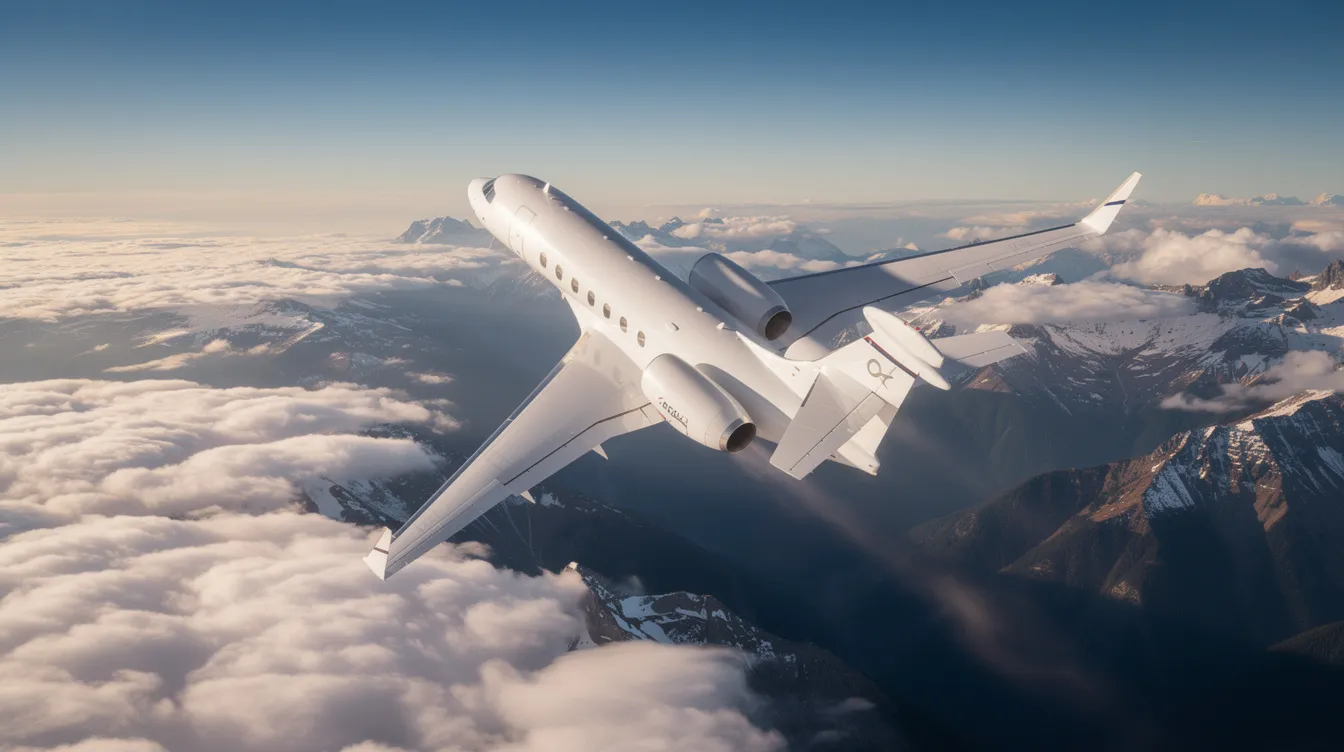
Aircraft engine aviation is the technology and range of aircraft engines that power planes, from piston engines in smaller aircraft to turboprop, turboshaft, and advanced turbofan engines in the private jets used by BlackJet clients. These engines define what any airplane can do: how fast it flies, how far it reaches, how quietly it carries passengers, how efficiently it operates, and how safely it lands.
For frequent business travelers and high-net-worth leisure flyers who want flexible, private access to aircraft without owning one, the engine is not an abstract component buried under a cowling; it shapes trip time, cabin comfort, airport access, operating reliability, and environmental impact. This guide explains the engine types behind modern aviation, how performance, certification, and maintenance affect safety, and how newer technologies such as sustainable aviation fuels and carbon-neutral operations support efficient private jet travel and BlackJet’s Jet Card programs.
Strategic Importance of Aircraft Engines in Modern Aviation
Every flight begins with an engine converting fuel into motion. The type of powerplant on an aircraft determines its cruise altitude, range, climb rate, cabin noise level, and operating cost. Modern aviation engines achieve a 70% reduction in fuel burned per passenger seat compared to early jet designs, a gain that translates directly into longer range, lower ticket costs, and smaller carbon footprints.
Commercial airlines route passengers through hub airports, adding connections, layovers, and ground transfers. Private jets eliminate that overhead. A turbofan-powered super-midsize jet departing Teterboro for Dallas Love Field flies point-to-point, climbs to FL450 in under 20 minutes, and cruises above most weather. The same trip on a commercial carrier involves a connection at a hub, a minimum of two boarding processes, and roughly three additional hours of total travel time.
For BlackJet clients, engine technology is a practical concern. Reliable engines protect tight schedules; a missed board meeting costs more than fuel. Engines with a high thrust-to-weight ratio open access to short-runway, high-elevation airports like Aspen (7,820 ft elevation, 8,006 ft runway) or Jackson Hole. Quieter turbofan designs reduce cabin noise enough that passengers can hold calls or rest during flight, supporting premium private jet cards and Jet Card programs that prioritize comfort and productivity. These outcomes trace back to specific engineering choices in the powerplant, which is why understanding engine types matters even if you never open a cowling yourself.
Fundamentals of Aircraft Engines, Fuel-Air Mixture, and Thrust Generation
An aircraft engine converts the chemical energy stored in fuel into either direct thrust or shaft power that turns a propeller or rotor. The principle is Newton's third law: accelerate a mass of air backward, and the aircraft moves forward. The four stages of the engine cycle are intake, compression, combustion, and exhaust. Incoming air enters the intake system, a compressor raises its pressure and temperature, fuel is injected and ignited in the combustion chamber, and hot exhaust gases exit at high velocity or drive a turbine before exiting.
Jet engines and turbofan engines produce thrust directly by expelling high-velocity exhaust. Piston engines and turboprop engines deliver mechanical power through a crankshaft or shaft that spins a propeller. Turboshaft engines do the same for helicopter rotors. The distinction matters because it determines speed, altitude capability, and efficiency. A turbofan-powered super-midsize jet on a New York to Dallas route climbs quickly above weather and cruises at Mach 0.80; a piston aircraft on the same route flies lower, slower, and with more exposure to turbulence. For a deeper look at how aeroplane jet engines convert fuel to forward motion, BlackJet's resource library covers the core physics.
Reciprocating (Piston) Engines in General Aviation
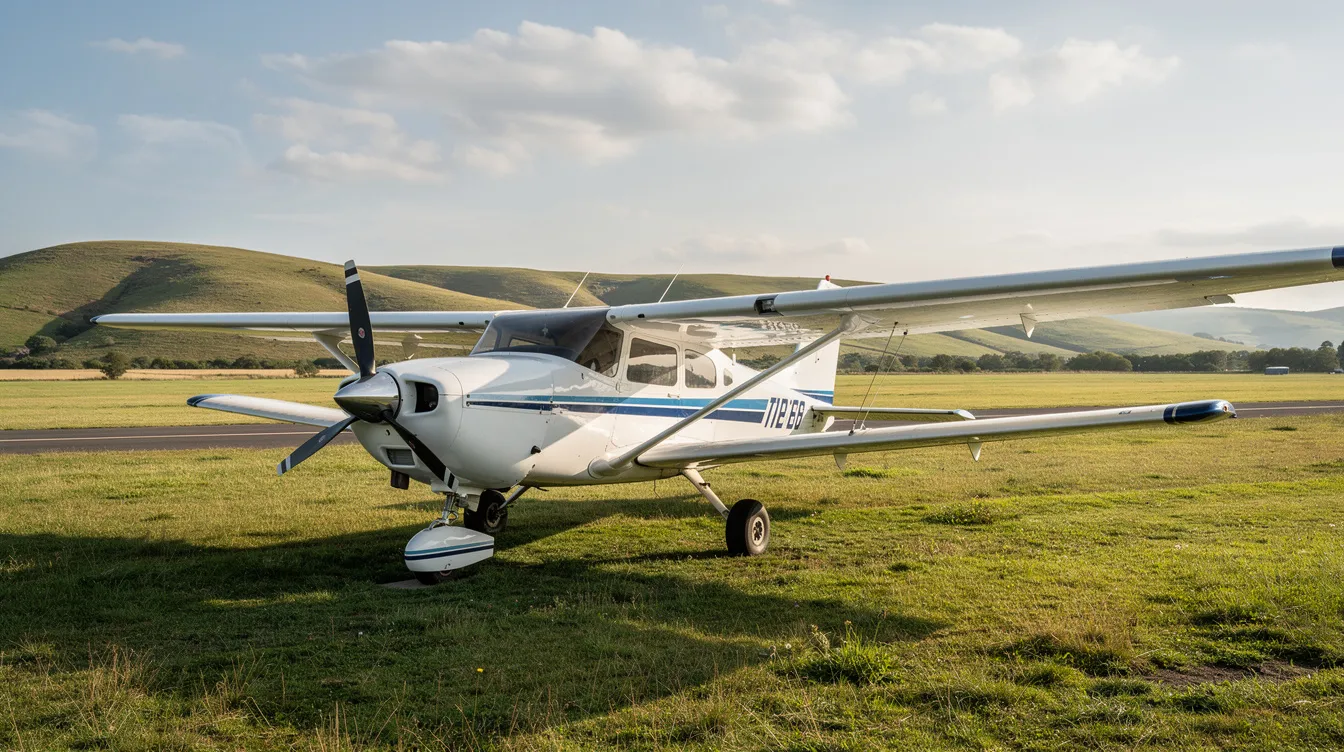
Piston engines still power most training and small general aviation aircraft. They are not what you will find on a BlackJet charter, but they form the foundation every flight instructor teaches, and understanding them clarifies why turbine powerplants dominate business aviation and how to evaluate the best small private aircraft for every need.
Piston engines use a four-stroke cycle for operation. During the intake stroke, the intake valve opens, and a fuel-air mixture enters the cylinders. The piston then moves upward on the compression stroke, compressing the mixture. Spark plugs fire (aircraft engines have two spark plugs in each cylinder, fed by two magnetos for redundancy), igniting the compressed mixture in the power stroke that pushes the piston down and turns the crankshaft. Finally, the exhaust valve opens and burned gases exit.
A typical light-aircraft piston engine is horizontally opposed with four to six cylinders, air-cooled, and runs on 100LL Avgas. Power output ranges from 100 to 350 hp. The intake manifold routes air to each cylinder, and the system's moving parts are mechanically straightforward compared to a gas turbine. Fuel-injected engines are more efficient than carbureted engines, delivering a more precise mixture to each cylinder and reducing the risk of uneven power delivery.
Piston engines have the lowest maintenance costs among aircraft engines, and acquisition prices are a fraction of turbine alternatives. They suit short hops at lower altitudes. Drawbacks include more noise and vibration in the cabin, reduced power at altitude due to thinner air, and dependence on leaded Avgas. The FAA aims for unleaded aviation fuel by 2030 under the EAGLE initiative, affecting roughly 167,000 piston aircraft in the United States. Piston engines also require more frequent overhauls than turboprops, with typical TBO intervals of 1,200 to 2,200 hours. These limitations explain why piston engines are rare in private jet operations but remain essential for pilots building foundational knowledge of engine pressure ratio, mixture control, and powerplant management.
Piston Engine Enhancements: Turbocharging and Supercharging
Forced induction solves the piston engine's altitude problem. As air thins above 8,000 or 10,000 feet, a naturally aspirated engine loses enough power to limit climb rate and cruise speed. Turbocharging and supercharging compress the incoming air before it enters the cylinders, maintaining sea-level power at higher altitudes.
A supercharger is a compressor driven mechanically by the engine's crankshaft. It delivers compressed air to the intake system with minimal lag but draws power from the engine to spin, reducing net efficiency. A turbocharger uses exhaust gases to spin a turbine that drives a compressor, recovering energy that would otherwise be wasted. Turbochargers introduce slight response lag but are more efficient overall because they do not impose a direct parasitic load on the crankshaft.
Performance gains include maintaining climb power over mountainous terrain, improving cruise speed at altitude, and enabling operations from high-elevation airports where naturally aspirated engines struggle to produce enough power. For pilots, the trade-off is higher complexity, added maintenance cost, and additional components that can fail. One operational concern specific to carbureted piston engines is carburetor ice: it can develop at temperatures up to 100°F and is especially likely with humidity above 60% at 50 to 70°F, a range that catches many pilots off guard. Modern prop and engine designs, along with exhaust heat systems, reduce noise around airports and in cabins, though piston aircraft equipped with forced induction remain louder than turbine-powered alternatives.
Gas-Turbine Foundations: Combustion Chamber, From Turbojets to Turbofans
The gas turbine core is the power component behind most aircraft engines flying today. It consists of a compressor, a combustion chamber, a turbine, and an exhaust section. Gas turbines use centrifugal or axial compressors to compress incoming air; axial designs stack many small blade stages to achieve high pressure ratios in a compact, lightweight package, while centrifugal compressors are simpler and common in smaller engines.
A turbojet engine consists of four sections: compressor, combustion chamber, turbine, and exhaust. All air passes through the core, producing high-velocity exhaust and direct thrust. Early airliners like the de Havilland Comet used turbojet engines, which were loud and burned fuel at high rates. Aviation engine technology is currently focused on reducing noise and carbon emissions, and the shift from turbojets to turbofans over the past five decades reflects that priority.
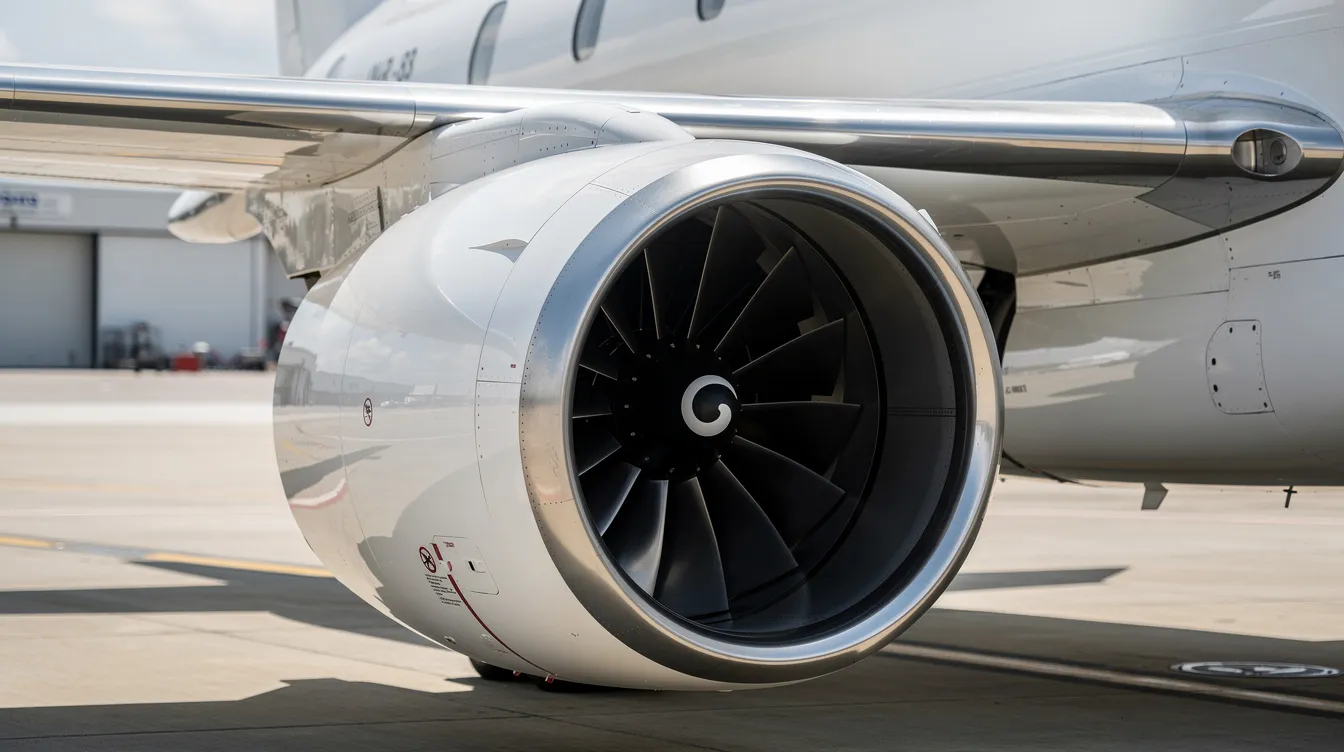
A turbofan engine adds a large fan at the front of the engine that moves a high volume of air around the core. This bypass air produces thrust at lower velocity than the core exhaust, which yields better efficiency at subsonic cruise speeds and less noise. For a detailed comparison, BlackJet's guide to types of jet engines walks through these differences. Modern private jets and airliners rely on turbofan engines from engine manufacturers like Rolls-Royce, Pratt & Whitney, GE, Honeywell, and Safran. Rolls-Royce's BR725 engine, for example, has a 4.2:1 bypass ratio, reducing noise over its predecessor. Manufacturers typically develop certified turbofan cores over around eight years and with billions of dollars in investment, which is why only a handful produce them.
At the other end of the speed spectrum, scramjets operate at supersonic speeds with supersonic combustion, requiring extreme forward velocity to function. These remain experimental and are used primarily in military aircraft and research programs, not civilian transport.
Turboprop and Turboshaft Engines: Powering Regional and Vertical Flight
Turboprop and turboshaft engines share the same gas generator core as turbojets and turbofans but direct their energy to a spinning shaft rather than exhaust thrust. The difference between them lies in application: turboprops drive propellers on fixed-wing aircraft; turboshaft engines are optimized to produce shaft horsepower for helicopter rotor systems, which is an important distinction when comparing types of private jets for every traveler.
A turboprop engine includes an intake, reduction gearbox, compressor, combustor, and turbine. The reduction gearbox converts the turbine's high-speed rotation to the lower RPM a propeller needs. Turboprop engines combine jet power with propeller efficiency, making them ideal for speeds of 250 to 400 mph and altitudes of 18,000 to 30,000 feet. Aircraft like the Pilatus PC-12 and Beechcraft King Air use turboprops to operate from short or unimproved runways, serving regional routes cost-efficiently. Turboprops have longer overhaul intervals than piston engines, with some models reaching 3,000 to 5,000 hours between overhauls. For more on prop planes and their capabilities, BlackJet covers the category in detail.
A turboshaft engine in a helicopter uses a free power turbine that decouples rotor speed from the gas generator speed, allowing precise control under varying loads. A BlackJet journey might pair a turbofan leg from New York to a regional hub with a turboprop or helicopter connection to a remote business site or island resort where no jet-length runway exists.
High-Bypass Turbofan Engines in Business and Private Jets
Bypass ratio is the mass of air moved by the fan around the core divided by the mass flowing through the core. Moving a large volume of air slowly is more efficient and quieter than accelerating a small volume to high speed. Turbofan engines can have bypass ratios up to 12:1 on large commercial airliners. Business jets typically use low- to medium-bypass turbofans with ratios in the 3:1 to 5:1 range, optimized for high-subsonic cruise around Mach 0.80 and steep climb performance.
The Honeywell HTF7000 family, used on aircraft like the Challenger 300/350 and Embraer Praetor series, produces 6,500 to 7,500 lbf of takeoff thrust with a bypass ratio of about 4.2:1 and a fan diameter of 34.2 inches. The Rolls-Royce BR700 series powers several large-cabin jets with similar efficiency goals. For a closer look at how these powerplants convert fuel, BlackJet's article on jet turbine efficiency provides additional context.
Next-generation aviation engines aim for at least a 20% reduction in fuel consumption and CO₂ emissions over current models. Advanced ceramic matrix composites replace traditional metal components in turbine hot sections to withstand higher temperatures, enabling higher thermal efficiency without adding weight. FADEC (Full Authority Digital Engine Control) systems manage fuel flow, monitor engine limits, and optimize the power section automatically, reducing pilot workload and improving fuel efficiency.
Turbofans have the highest maintenance costs among aircraft engines due to their complexity and the number of precision components involved. Engine manufacturers profit from maintenance services over the engine lifespan, which is why programs like Honeywell's MSP and Rolls-Royce CorporateCare exist to spread costs predictably for operators.
Engine Selection and Aircraft Categories in the BlackJet Fleet
BlackJet matches airframe and engine combinations to specific mission profiles. Light jets with compact, efficient turbofans suit regional business trips of 1,000 to 1,500 nautical miles. Super-midsize and large-cabin twins with higher-thrust engines handle transcontinental or transatlantic legs of 3,500 to 5,000 nautical miles. The engine's thrust rating, bypass ratio, and fuel burn curve determine which missions each aircraft category can serve and how they appear on an understanding of the private jet price list when you compare options.
More power allows operations from challenging airports. A jet with strong flat-rated engines maintains full takeoff thrust at high temperatures and elevations, enabling departure from fields like Aspen or Jackson Hole where thinner air and shorter runways demand every pound of available thrust. Cabin comfort also ties to engine design: modern turbofans produce less noise and vibration than older models, and smoother power delivery during climb and descent reduces passenger fatigue.
Private aviation companies often offer Jet Card programs for prepaid access to private jets, and BlackJet's Jet Card membership lets clients select aircraft categories based on trip distance, passenger count, and luggage needs. Guides to the best jet cards for frequent flyers explain how these programs turn engine performance and availability into predictable, on-demand access. Every aircraft in the network meets strict safety and performance standards, so the engine choice is handled before you book.
Safety, Certification, and Maintenance of Aircraft Engines
Engine safety is non-negotiable in private aviation. Aircraft engines must pass exacting safety certifications under FAA and EASA frameworks before they enter service. Type certification verifies performance, reliability, emissions, and durability through thousands of hours of testing, and ongoing Airworthiness Directives mandate corrective actions when issues are identified.
Time Between Overhaul (TBO) is a core metric. Piston engine TBOs run 1,200 to 2,200 hours. Turbine engines range from 3,000 to over 16,000 hours depending on the engine family and maintenance quality. Between overhauls, engine health is tracked through trend monitoring of exhaust gas temperatures, oil pressure, and fuel flow; vibration analysis across engine spools and bearings; and borescope inspections of hot-section components. For more on what these programs cost and involve, BlackJet's guide to private jet maintenance costs breaks down the numbers, and an overview of top private jet companies for luxury travel helps place those standards in a broader market context.
Twin-engine jets carry built-in redundancy. If one engine fails, the remaining engine must provide enough power for continued climb and cruise under One Engine Inoperative (OEI) certification requirements. BlackJet partners only with operators whose aircraft and engines comply with or exceed FAA and EASA standards, a commitment detailed on BlackJet's safety page.
Sustainable Aviation: Fuels, Efficiency, and Carbon-Neutral Operations
Efficient engines burn less fuel per mile, which directly reduces emissions. Sustainable aviation fuels can reduce carbon emissions by up to 80% on a lifecycle basis compared to conventional Jet-A, depending on feedstock and production pathway. Eleven ASTM-approved SAF production pathways exist, including HEFA-SPK and Alcohol-to-Jet processes, making SAF a practical near-term solution rather than a laboratory concept. BlackJet's overview of jet fuels covers SAF compatibility with current engines, while its analysis of the cheapest private jet options for every traveler shows how efficiency and fuel burn shape accessible private flying.
For piston aircraft, the transition away from leaded 100LL Avgas under the FAA's EAGLE initiative removes a health and environmental concern. Turbine-powered jets running on Jet-A avoid lead-related issues entirely.
BlackJet's carbon-neutral flights policy measures emissions for each trip based on fuel burn, flight time, and aircraft type, then offsets them through verified projects at no additional cost to the member. Modern turbofan engines with higher bypass ratios, FADEC optimization, and advanced materials minimize the baseline footprint, so fewer offsets are needed per flight.
Electric and hybrid aviation systems are emerging as alternatives to traditional jet fuels in aviation. Hybrid-electric propulsion integrates electric motors with traditional combustion engines to improve efficiency, and NASA is testing hybrid-electric propulsion for aircraft by 2035. Distributed propulsion, which spreads multiple smaller motors across the airframe, can reduce fuel burn by 20 percent. These technologies target regional aircraft first, with demonstrator programs aiming for the early to mid-2030s. For business jets, the nearer-term gains come from fuel-efficient airframe and engine pairings, SAF adoption, and smarter use of budget-friendly private aircraft options that balance performance with cost.
How Engine Performance Shapes the BlackJet Experience
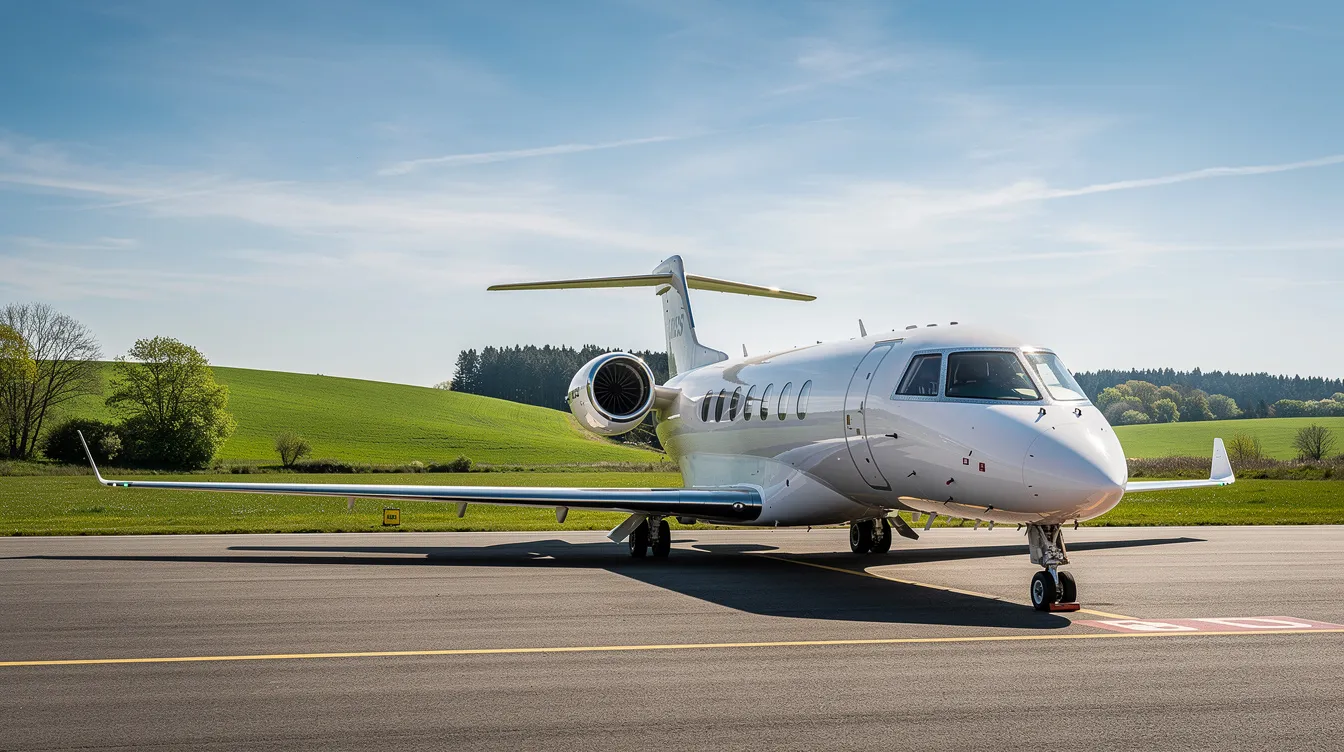
An executive holding a 25-hour Jet Card boards a super-midsize jet at London Luton at 7:00 AM, lands in Zurich at 9:30 AM local time, takes two meetings, and departs Zurich at 4:00 PM for a return landing at Luton by 5:30 PM. That round trip, completed in a single working day, depends on turbofan engines that cruise at Mach 0.80, climb steeply to avoid congested lower airspace, and operate from airports closer to city centers than major commercial hubs—exactly the mission profile the BlackJet 25+ Hour Jet Card is built around.
Higher cruise speed and faster climb reduce block times. An engine that reaches cruise altitude five minutes faster on each leg saves ten minutes on a round trip; over a year of frequent travel, those minutes compound into recovered working days, especially when you are comparing a 50-hour Jet Card cost guide against the value of saved time. Engines with less noise and smoother power delivery improve the onboard environment for confidential calls, focused work, or rest. Vibration levels on modern turbofan-equipped jets are low enough that a laptop screen stays steady during climb.
Compared to commercial first class, a BlackJet flight offers similar or superior cabin comfort plus access to closer airports, flexible departure times, and no security queues. The difference is powered, literally, by the engines under the wing. For travelers analyzing Jet Card cost and membership pricing, those performance gains translate into predictable value. To see how BlackJet's Jet Card programs turn that engine performance into a scheduling advantage, explore the membership options.
Key FAQs on Engine Aviation and Private Jet Access
Which aircraft engines power most private jets? Most aircraft engines on private jets are turbofan engines with low- to medium-bypass ratios, typically between 3:1 and 5:1. These deliver the speed, altitude capability, and fuel efficiency that business aviation demands. Common examples include the Honeywell HTF7000 series and the Rolls-Royce BR700 family.
Are jet engines safe for frequent use? Turbine engines are designed for tens of thousands of flight hours with scheduled maintenance intervals. Twin-engine private jets are certified to fly safely on one engine if the other fails, and engine health monitoring catches issues before they become failures.
How noisy are private jet engines inside the cabin? Modern turbofan engines produce far less noise than older turbojet designs. The bypass air stream acts as a sound buffer around the core exhaust. Cabin insulation on business jets brings interior noise levels to conversational range, allowing passengers to speak without raising their voices.
What is the difference between a jet engine and a piston engine in general aviation? A jet engine uses continuous combustion in a gas turbine to produce thrust or shaft power. A piston engine uses reciprocating cylinders with an intake valve, compression, ignition via spark plugs, and a power stroke where combustion is pushing the piston down before the exhaust valve opens to expel burned gases. Jet engines fly faster and higher; piston engines cost less and suit smaller, slower aircraft.
How does BlackJet ensure aircraft engine reliability? BlackJet partners only with operators who maintain engines under FAA and EASA standards, including regular trend monitoring, borescope inspections, and adherence to manufacturer service bulletins. Every aircraft in the network carries current certifications and complies with all Airworthiness Directives.
Can private jets use sustainable aviation fuel? Yes. SAF is a drop-in replacement for conventional Jet-A at approved blend ratios. Most modern turbofan engines are certified to run on SAF blends, and eleven ASTM-approved production pathways supply SAF today.
What is a Jet Card, and how does it relate to engine performance? A Jet Card provides prepaid access to private jets across multiple cabin and engine categories. Members select the aircraft class that fits their route and schedule, and BlackJet ensures every option meets strict engine safety and performance criteria. If you are comparing programs, an overview of Jet Card cost per hour helps connect engine category and pricing.
For detailed fleet and engine information tailored to your typical routes, contact BlackJet directly or explore the Jet Card membership page, and review BlackJet's guide to Jet Card pricing, costs, and benefits for a deeper look at how engine categories map to hourly rates.
Conclusion: Turning Engine Technology into a Travel Advantage
Engine aviation spans a wide arc of development, from the four-stroke piston powerplant in a training aircraft to the high-bypass turbofan propelling a large-cabin business jet across the Atlantic. Each step in that progression brought more power, better efficiency, less noise, and higher reliability. The technologies covered here are not academic; they determine whether you can depart from a short mountain runway, arrive rested after a quiet cabin flight, or complete a round trip between two countries in a single day.
Choosing BlackJet means accessing those advances without the capital, maintenance, or operational burden of aircraft ownership. Every jet in the network carries certified, monitored engines maintained to the highest standards, and every flight is carbon neutral.
Explore BlackJet's Jet Card programs and discover how modern engine performance, rigorous safety, and carbon-neutral operations become part of every trip you take.


 Sign up with google
 Sign up with Apple