Private aviation is not simply about speed. It is about arriving on your terms—choosing when, where, and how you travel. For regional missions under 1,500 km, the Embraer EMB 120 Brasília remains one of the most strategically valuable turboprop aircraft in the sky. Here is why it still matters in 2027, how its turboprop engine operates, and when BlackJet recommends it to Jet Card members.
Why Embraer Turboprops Still Matter for High-End Regional Travel in 2027
Turboprop aircraft remain a cornerstone of regional connectivity, and the EMB 120 is a prime example. On missions up to roughly 1,500 km, where total door-to-door time, airport access, and cost per hour outweigh raw cruise speed, this aircraft delivers advantages that pure jets cannot match. Turboprops excel on regional routes under 1,500 km precisely because they combine runway flexibility with meaningful fuel savings.
Regional Access Advantages
Consider a Dallas-to-Austin trip via commercial aviation: an airline itinerary might route through a congested hub, adding security queues, a connection, and a 45-minute ground transfer on each end. A direct private EMB 120 flight lands at a secondary airport minutes from downtown, cutting total travel time by two to three hours.
Embraer turboprops allow access to smaller regional airports that midsize jets often cannot serve due to runway length or infrastructure limitations. Turboprops are designed to operate on short and unpaved runways, opening destinations from mountain resorts to remote corporate facilities.
Fuel Efficiency and Emissions
Cabin Flexibility
Cabin flexibility is a differentiator. The EMB 120 can be configured for executive groups, family events, or combined passenger-cargo missions—adapting to what the traveler needs rather than forcing them into a fixed product.
BlackJet pays close attention to Embraer turboprop capabilities when curating aircraft for members who frequently fly regional business and leisure routes, helping each traveler choose from different private jet sizes because the right aircraft for the mission is always the smarter choice.
Overview of Turboprop Aircraft and Engines
A turboprop aircraft is a fixed-wing airplane powered by a gas turbine engine that drives a propeller through a reduction gearbox. Unlike a pure jet engine, which generates thrust from high-velocity exhaust, turboprop propulsion systems convert turbine energy into efficient propeller thrust. This configuration dominates regional and commuter aircraft operations worldwide because it combines jet propulsion technology with the fuel efficiency of propeller-driven flight.
Turboprop Engine Basics
A turboprop engine operates through a sequence of steps:
Air is compressed in the engine.
Fuel is added and ignited.
Rapidly expanding gases flow through turbines, which spin the propeller through a reduction gearbox.
The propeller produces strong thrust at the lower speeds and altitudes typical of regional flights.
Performance and Regional Operations
Turboprops typically cruise at 250–330 knots, compared with 400–500+ knots for modern jet engines. The speed difference shrinks dramatically on short regional routes once you factor in taxi, climb, descent, and ground transfers.
The aircraft engine in a turboprop offers a high power-to-weight ratio optimised for repeated short sectors. Turboprop engines accelerate well from standing starts, handling frequent cycling with less wear than many jet alternatives.
Approximately 34% of airports globally rely exclusively on turboprop aircraft—meaning these machines unlock destinations that jets simply cannot reach.
From a private aviation perspective, turboprops are often the most efficient regional aircraft for linking smaller city pairs that Jet Card members fly multiple times per year, aligning with BlackJet’s premium Jet Card programs that prioritise flexibility, safety, and carbon-neutral travel.
The Embraer EMB 120 Brasilia: Design and Role
The EMB 120 Brasilia was Embraer's flagship 30-seat twin-turboprop regional airliner, and it became a workhorse across North and South American commuter networks from the mid-1980s onward. Embraer developed turboprop aircraft for commercial transportation, and the Brasilia represented the pinnacle of that effort—designed to replace smaller 19-seat aircraft like the EMB 110 Bandeirante, which itself proved versatile for civilian and military applications.
The EMB 120 first flew on July 27, 1983, entered commercial service with Atlantic Southeast Airlines in October 1985, and production of the EMB 120 ended in 2001 after over 350 units were built.
The airframe features a low-wing configuration, T-tail, and pressurized circular cross-section fuselage design optimised for short and medium-haul regional routes. The aircraft is known for its short-haul regional capabilities.
The EMB 120 Brasilia seats 30 passengers in a standard commuter layout (2+1 configuration), though charter operators routinely reconfigure the cabin for lower-density, higher-comfort arrangements suited to groups, sports teams, and corporate shuttles, similar to other private jet options for 30 passengers used on large-group missions.
While Embraer no longer produces turboprop airliners, the EMB 120 remains relevant in 2027 for certain mission profiles BlackJet members request—particularly where runway access and group capacity matter—alongside other affordable private plane options that make regional flying more accessible.
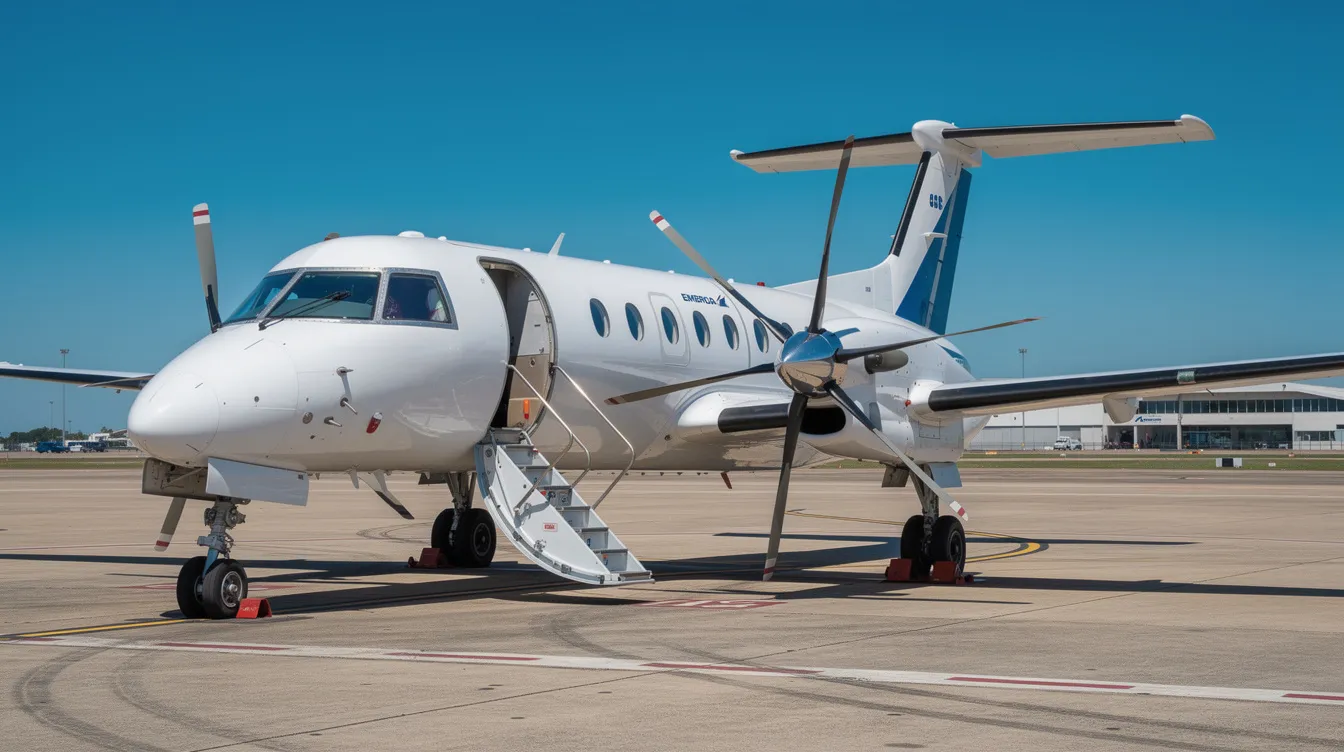
EMB 120 Brasilia at a Glance
Specification | EMB 120 Brasilia |
|---|
Aircraft type | Twin-engine turboprop regional airliner |
Typical airline capacity | 30 passengers |
Typical executive charter layout | Approximately 12–18 passengers, depending on configuration |
Engines | Pratt & Whitney Canada PW118 series (variant-dependent) |
Typical cruise speed | Approximately 298 knots (550 km/h) |
Maximum range | Up to approximately 1,750 km, depending on variant and payload |
Service ceiling | Approximately 29,800 feet |
Production | Ended in 2001 |
Best suited to | Short-haul regional routes, group missions, and airports with limited runway access |
Figures are approximate; actual performance and capacity depend on aircraft variant, operator configuration, weather, runway conditions, and payload.
EMB 120 Turboprop Engine and Performance
The EMB 120 is powered by twin Pratt & Whitney Canada PW118 series turboprop engines, each delivering approximately 1,800 shaft horsepower. Each engine drives a four-bladed Hamilton Standard constant-speed, feathering, and reversible-pitch propeller.
Here is how the turboprop engine works in this aircraft: compressed air mixes with aviation fuel in a combustion chamber, the resulting hot gases spin turbine stages, and a power turbine connected to a reduction gearbox converts that energy into propeller rotation. Propellers generate strong thrust at the moderate speeds and altitudes where regional missions operate.
Turboprop engines are efficient at lower cruising speeds and altitudes. The EMB 120 achieves a typical cruise speed of approximately 298 knots (around 550 km/h), with a range of up to 1,750 km depending on variant and payload, and a service ceiling near 29,800 feet, illustrating how different jet engine types are optimised for distinct speed and altitude regimes.
A modern turboprop typically cruises at altitudes where turboprop engines optimise performance through optimised fuel-air mixtures and efficient power extraction, making these among the most fuel-efficient engines for regional sectors.
Turboprop engines provide good performance across various operating conditions, including hot-and-high airports where the PW118A variant's higher flat-rating temperature keeps payload penalties minimal.
Operators in 2027 pursue modern upgrades including digital engine control systems, glass cockpit avionics, enhanced engine health monitoring, and optimised propeller blade shapes to keep EMB 120 fleets safe and efficient.
Cabin Experience: From Regional Airliner to Executive Turboprop
In its original commuter layout, the EMB 120 cabin is a narrow single-aisle space seating approximately 30 passengers in a 2+1 configuration, optimised for quick boarding and fast turnarounds on short-haul sectors. The cabin measures roughly 2.10 meters wide and 1.76 meters tall—functional but compact.
Executive Cabin Upgrades
Charter and private operators transform this space into something meaningfully different:
Lower-density configurations with 12–18 club-style seats, work tables, and upgraded acoustic insulation turn the EMB 120 into a productive executive environment for flights of one to three hours.
Modern refurbishments include LED mood lighting, refreshed upholstery, improved soundproofing, and contemporary finishes that contrast sharply with the utilitarian "no-frills" reputation of legacy regional layouts.
Amenities typically include a small galley for light catering, an aft lavatory, and hand-luggage stowage. Compared with light and midsize jets, there is more perceptible noise from the propellers—though modern insulation reduces this significantly.
Cabin Flexibility in Practice
Imagine a corporate team of 14 executives needing to travel from a hub city to a resort airport with a 5,000-foot runway at elevation. A midsize jet may face payload restrictions. A refurbished EMB 120 carries the full group with luggage, lands comfortably at the shorter field, and delivers everyone together—with club seating that enables working meetings en route, providing an alternative to 16-seat private jet options when runway performance and cost efficiency take priority. This is turboprop aircraft versatility in practice.
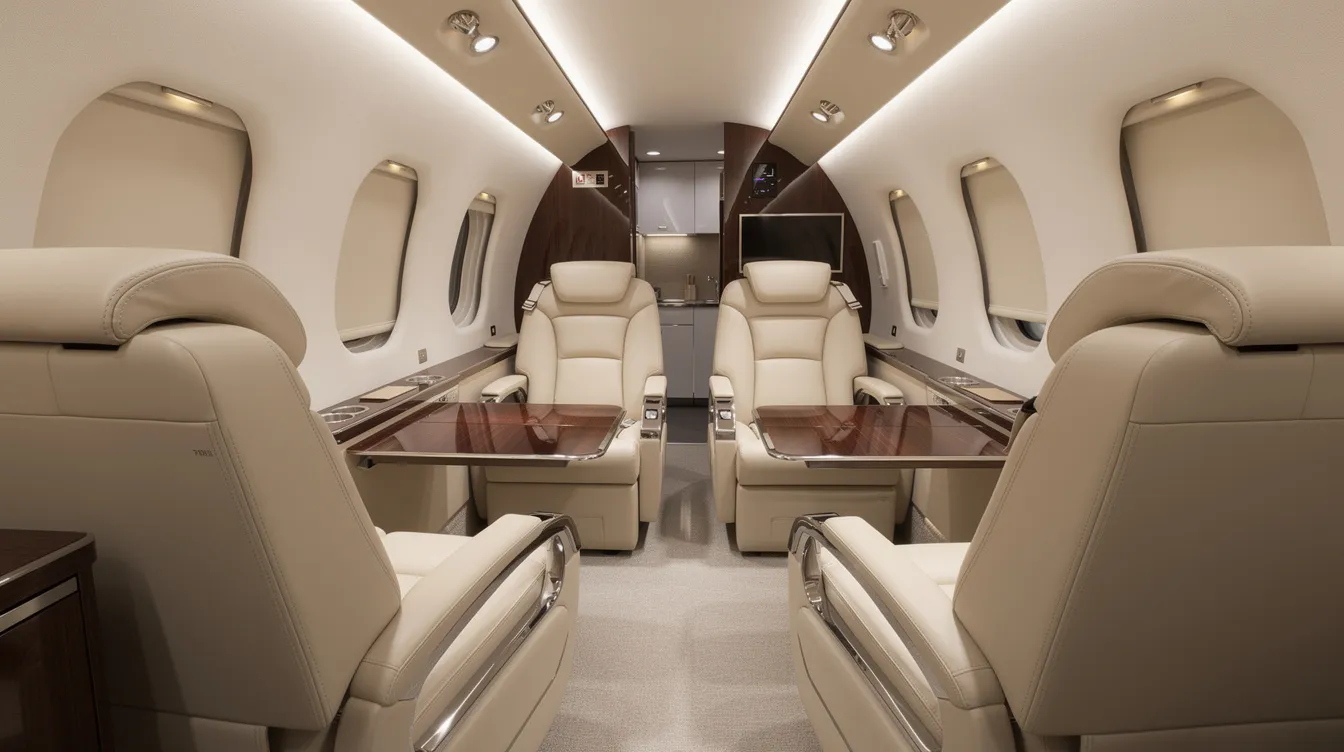
Variants of the Embraer EMB 120 and Their Missions
Embraer produced several EMB 120 variants, each tailored to specific operational demands. Understanding these helps clarify which airframes serve private aviation best.
EMB 120 (Standard): The baseline model with PW115 or PW118 engines and standard airline commuter layout. Adequate for typical short-haul sectors.
EMB 120ER (Extended Range): Enhanced fuel capacity, aerodynamic improvements, and sometimes increased maximum takeoff weight, extending range for longer regional routes. This is the variant most interesting for Jet Card or on-demand charter customers seeking comfort and endurance.
EMB 120RT: Equipped with PW118A engines flat-rated at higher temperatures, optimised for hot-and-high operations and shorter runways. Ideal for destinations at elevation or in tropical climates.
EMB 120FC (Freighter Cargo): Reinforced floors and large cargo doors for dedicated freight missions. Cargo operators use these extensively for regional logistics.
EMB 120QC (Quick Change): Designed for rapid conversion between passenger and cargo roles—valuable for charter operators needing flexibility between group travel and freight missions, including scenarios where private jets for 20 passengers or more may be evaluated alongside turboprops.
VIP/Military Variants: The Brazilian Air Force operates VC-97 variants as VIP transports, confirming that Embraer turboprops can be adapted for passenger and cargo configurations at the highest government standards.
In 2027, passenger- and VIP-configured EMB 120ER and RT airframes are the most relevant for private charter, maximising range, payload, and comfort for discerning travelers who might otherwise charter a small plane for similar regional missions.
Embraer's Turboprop Ambitions and the Cancelled 70–90 Seat Program
Embraer's turboprop story extends beyond the EMB 120. Starting in the late 2010s, the company explored a clean-sheet next-generation turboprop in the 70–90 seat range, with rear-mounted engines designed to reduce cabin noise and improve aerodynamic efficiency. The concept attracted over 250 letters of intent, mostly for a 70-seat version, signaling real market appetite.
Embraer cancelled its 70–90 seat turboprop development on November 5, 2025. The turboprop project was terminated due to engine technology limitations—no supplier could meet Embraer's targets for performance, maintenance costs, and sustainability simultaneously.
Embraer aims to focus on commercial and business jet markets now. The company delivered 148 aircraft in the first nine months of 2025 and plans to meet a delivery target of 222 to 240 civil aircraft in 2025, underscoring its jet-centric strategic pivot and aligning with top next-generation aircraft developments in 2026.
With Embraer out, ATR turboprop aircraft exemplify the remaining new-build options in the larger regional turboprop segment. ATR turboprop aircraft continue to serve airlines seeking efficient regional passenger aircraft.
The industry forecasts that airlines will need 2,100 new passenger turboprops by 2044. Additionally, 500 freighter turboprops are needed over the next two decades—highlighting sustained demand despite the cancellation.
For private and charter markets, fewer large new-build turboprops mean a strong secondary market of proven aircraft like the EMB 120, where refurbishment and modernisation extend value. Early turboprop designs sought reliability and efficiency; modern turboprop aircraft underscore those same principles through updated avionics and maintenance practices.
Why Discerning Travelers Still Choose Turboprops over Jets on Some Routes
On regional missions under 500–700 nautical miles, the performance gap between turboprop aircraft and light jets narrows considerably. When you account for the full journey—ground transfer, boarding, flight, landing, and final transfer—a turboprop into a closer secondary airport can match or beat a jet's total travel time.
Turboprops can operate from runways as short as 1,100 meters, opening access to regional and remote airports where jets face payload penalties or simply cannot land. This is what makes small airplane flights to challenging destinations possible.
Turboprops are preferable for low-density routes with less passenger demand, where scheduling a full jet would be inefficient. Modern turboprops increasingly designed for comfort close the gap with jet interiors on shorter sectors.
Turboprops typically have low maintenance complexity compared to jets, translating into low operating costs and more predictable scheduling for air carriers seeking reliability, much like other cheapest private aircraft options that focus on practical economics over excess luxury.
Cabin trade-offs exist: slightly more vibration and noise than a jet-powered aircraft, but substantially more seats for groups at a comparable trip price. For team travel, golf weekends, or family events, one EMB 120 carrying 14–18 passengers often costs less than two light jets or even larger private jets for 15 passengers on similar routes.
Scenario: A BlackJet member needs to fly a 14-person team from a major hub to a remote resort airport with a short runway at 5,000 feet elevation. Jets face payload restrictions; some cannot operate at all. The EMB 120RT handles the mission with full payload, lands comfortably, and the total charter cost is significantly lower than splitting the group across multiple aircraft.
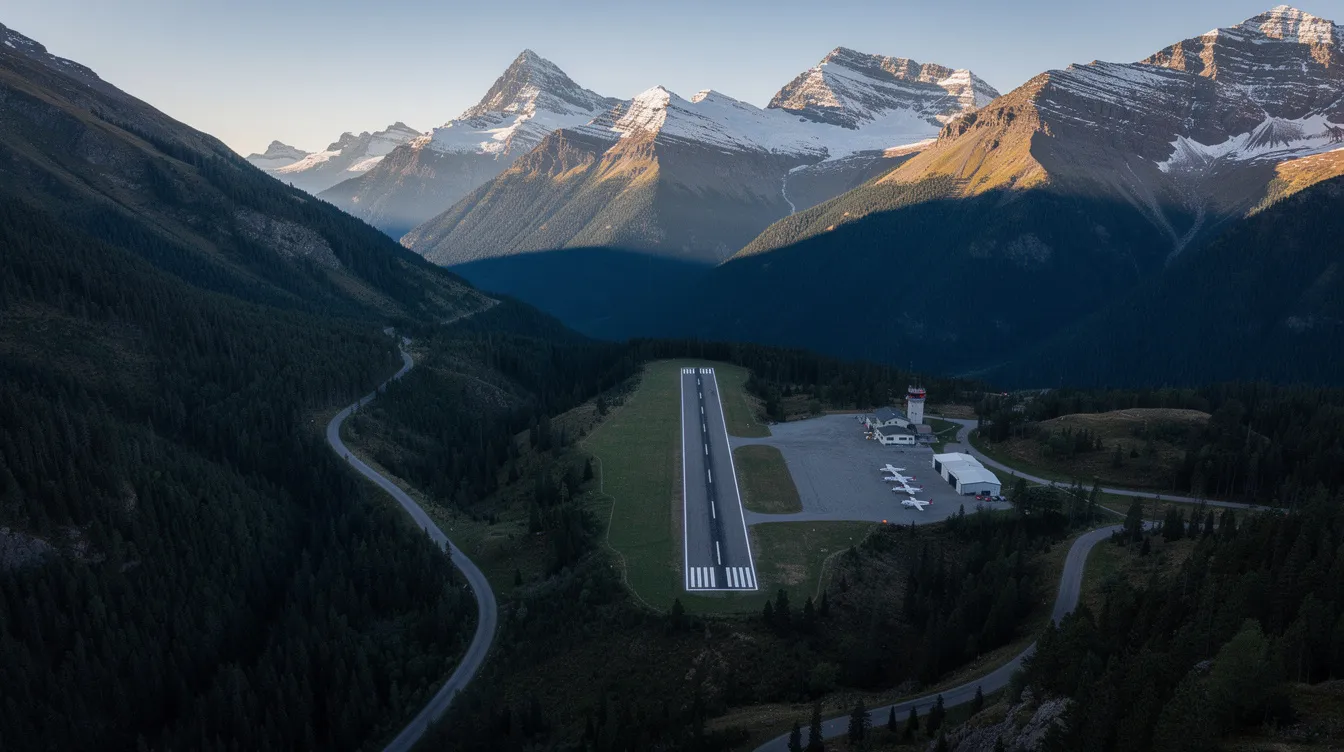
Safety, Certification, and Reliability of the EMB 120 in 2027
The EMB 120 was certified under rigorous Brazilian (ANAC), FAA, and EASA standards and has accumulated millions of flight hours worldwide, confirming the robustness of its turboprop design. The history of turboprop technology dates back to the first practical turboprop engines of the 1940s, and decades of refinement have produced mature, reliable propulsion.
Reputable operators updating these aircraft in 2027 incorporate modern avionics—glass cockpits, enhanced ground proximity warning systems (EGPWS), ADS-B Out, and TCAS—to meet or exceed current regulatory requirements.
BlackJet vets every operator and aircraft, including passenger turboprops like the EMB 120, against strict safety benchmarks: third-party safety audits (ARGUS, Wyvern, or equivalent), crew experience minimums, and documented maintenance histories.
Generation turboprop engines like the PW118 family benefit from decades of field data, predictable overhaul cycles, and global parts support. The history of turboprop technology has built into these powerplants a reliability record that few early jet engines or piston engines could match.
Inherent safety characteristics of turboprop propulsion for regional missions include strong climb performance at lower altitudes, redundant systems, and responsive engine handling during frequent cycling.
Sustainability and Operating Economics of Turboprops
The environmental case for turboprop aircraft is straightforward. Turboprops consume up to 50% less fuel than jets on comparable regional sectors. Modern turboprops can reduce fuel consumption by up to 50%, and turboprops produce fewer CO₂ emissions than regional jets, making them among the most fuel-efficient airplanes in commercial aviation for short-haul missions.
Embraer turboprops offer lower operating costs compared to regional jets. Beyond fuel efficiency compared with jets, smaller airports charge lower landing, parking, and handling fees. These savings compound for frequent travelers.
Fuel efficiency is exceptional: the PW118 engine family achieves exceptional fuel efficiency at regional cruise altitudes, burning significantly less per seat-mile than equivalently sized jet alternatives. These are among the most fuel-efficient airplanes for missions under 1,500 km.
BlackJet's carbon-neutral commitment applies equally to turboprop flights. All EMB 120 or similar turboprop missions are offset to net-zero emissions at no extra cost to Jet Card members, complementing broader strategies for affordable and efficient private jet travel that balance cost with sustainability.
Newer synthetic aviation fuels (SAF blends) and improved maintenance practices further reduce lifecycle emissions. Turboprops generate contrails less frequently than high-altitude jets, adding another environmental advantage. The advent of hybrid-electric propulsion systems may eventually extend turboprop relevance further.
These dynamics create both greener and economically smarter choices. Low-emission turboprop aircraft combine sustainability with practical cost advantages that matter to travelers flying regional routes multiple times per month.
How BlackJet Integrates Turboprops into Jet Card and Charter Solutions
While many BlackJet members favor light, midsize, and large jets, we also leverage vetted turboprop aircraft like the EMB 120 for specific high-value mission profiles. The practical turboprop engines powering these airframes support expanding route networks into airports that jets cannot serve.
A BlackJet flight specialist may recommend a prop jet instead of a pure jet when the mission involves regional routes, larger groups, events, or short-runway fields where turboprop performance is a clear advantage, after reviewing different types of private jets that could also serve the mission.
Through our digital platform, members can request a route, review aircraft category options—including modern turboprop models where appropriate—and receive transparent pricing and flight-time estimates that account for ground transfers.
Every turboprop option presented undergoes the same safety, maintenance, and service-level screening as jets. Airlines choose turboprop aircraft for reliability; BlackJet applies that same logic to its charter curation, ensuring a consistent premium experience for members using the BlackJet 25+ Hour Jet Card or on-demand solutions.
Regional airlines worldwide depend on turboprops to support expanding route networks. BlackJet brings that same proven capability to private aviation, matching the aircraft to the mission so members never compromise on safety, comfort, or access.
Elevate your travel—effortlessly. Explore BlackJet's Jet Card programs and speak with our team to discover how turboprops like the Embraer EMB 120 can optimise your regional travel strategy.
FAQs About Embraer Turboprops, EMB 120, and Private Use
What is a turboprop engine and how does it differ from a jet engine?
A turboprop engine uses a gas turbine engine to drive a propeller through a reduction gearbox, generating thrust efficiently at lower speeds. Jet engines operate by expelling high-velocity exhaust to produce thrust directly. The turboprop combines jet propulsion technology with propeller efficiency, making it ideal for regional flights. Early turboprop designs sought to merge jet and propeller propulsion into a single efficient aircraft engine—and succeeded.
How does a turboprop engine work in the EMB 120?
Air enters compressor stages, fuel is added and ignited, and the resulting hot gases drive turbine stages. A power turbine connected to a gearbox spins the propeller at an efficient speed. Modern turboprop engines use digital engine control systems and optimised fuel-air mixtures to maximise performance. Turboprop engine use in the EMB 120 reflects decades of refinement in the PW118 family—among the most successful engines developed for regional aviation.
What are the range and speed of the EMB 120?
The EMB 120 achieves a cruise speed of approximately 298 knots (around 550 km/h) and a range of up to 1,750 km depending on variant and payload. This makes it an efficient aircraft for regional routes where turboprops typically cruise below 30,000 feet. New-generation turboprop engines continue to improve these benchmarks across the industry, just as modern pre-owned jets around 5 million dollars have pushed performance and efficiency in the light and midsize jet category.
How many passengers does the EMB 120 carry in charter configuration?
In standard airline layout, the EMB 120 Brasilia seats 30 passengers. For private charter or executive use, operators typically reconfigure the cabin to 12–18 seats with club-style arrangements, work tables, and enhanced comfort—ideal for corporate teams and family groups.
Can the EMB 120 land at small or challenging airports?
Yes. The EMB 120 requires approximately 1,420 meters of runway to clear a 50-foot obstacle in standard conditions, and turboprops can operate from runways as short as 1,100 meters at reduced weights. This grants access to regional and remote airports that jets cannot serve—approximately 34% of airports globally rely exclusively on turboprop aircraft.
Is a turboprop aircraft safe for high-net-worth and corporate travelers?
Absolutely. The EMB 120 holds type certificates under FAA, EASA, and ANAC authorities and has logged millions of flight hours worldwide. BlackJet vets every turboprop operator against rigorous safety benchmarks including third-party audits and crew experience minimums. Turboprop aircraft remain among the safest platforms in regional aviation, even when compared with ultra-luxury jets in the 20 million dollar range that dominate long-haul private travel.
How do turboprop operating costs compare with regional jets?
Turboprop engines offer significantly lower fuel burn per seat-mile on routes under 1,500 km, with fuel efficiency compared to jets improving by up to 50% on certain sectors. Combined with lower airport fees and reduced maintenance complexity, a turboprop charter can deliver meaningful savings—especially for group travel where seats multiply the advantage—compared with smaller luxury private jets that prioritise speed and privacy over seat count.
How does BlackJet offset emissions on turboprop flights?
All BlackJet flights, including turboprop missions, are offset to carbon neutrality at no additional cost to Jet Card members. We use verified carbon credits and encourage sustainable aviation fuel where available. Turboprops already produce fewer emissions than jets on comparable routes, so the offset requirement is proportionally smaller, making these flights among the greenest options in private aviation.
For route-specific guidance on whether the EMB 120 or another turboprop fits your travel pattern, contact a BlackJet flight specialist to explore your options.
Conclusion: Choosing the Right Aircraft for Regional Travel
The Embraer turboprop story reflects a broader principle of private aviation: the best aircraft is the one matched to the mission. The EMB 120 Brasilia remains a capable option for regional journeys where group capacity, short-runway access, and operating efficiency matter more than jet speed. Its legacy also illustrates why turboprop aircraft continue to connect communities and serve routes that larger aircraft may not reach.
For travelers, the decision comes down to distance, passenger count, airport access, schedule, and comfort preferences. A turboprop can be a practical choice for a short regional flight, while a light or midsize jet may better suit a longer route or a need for higher cruise speed. BlackJet helps members compare vetted aircraft options, with safety screening, responsive flight support, and carbon-neutral flights built into the experience.
Explore BlackJet’s Jet Card programs to find flexible private jet access for the journeys ahead—and discover how the right aircraft can make regional travel more seamless.


 Sign up with google
 Sign up with Apple