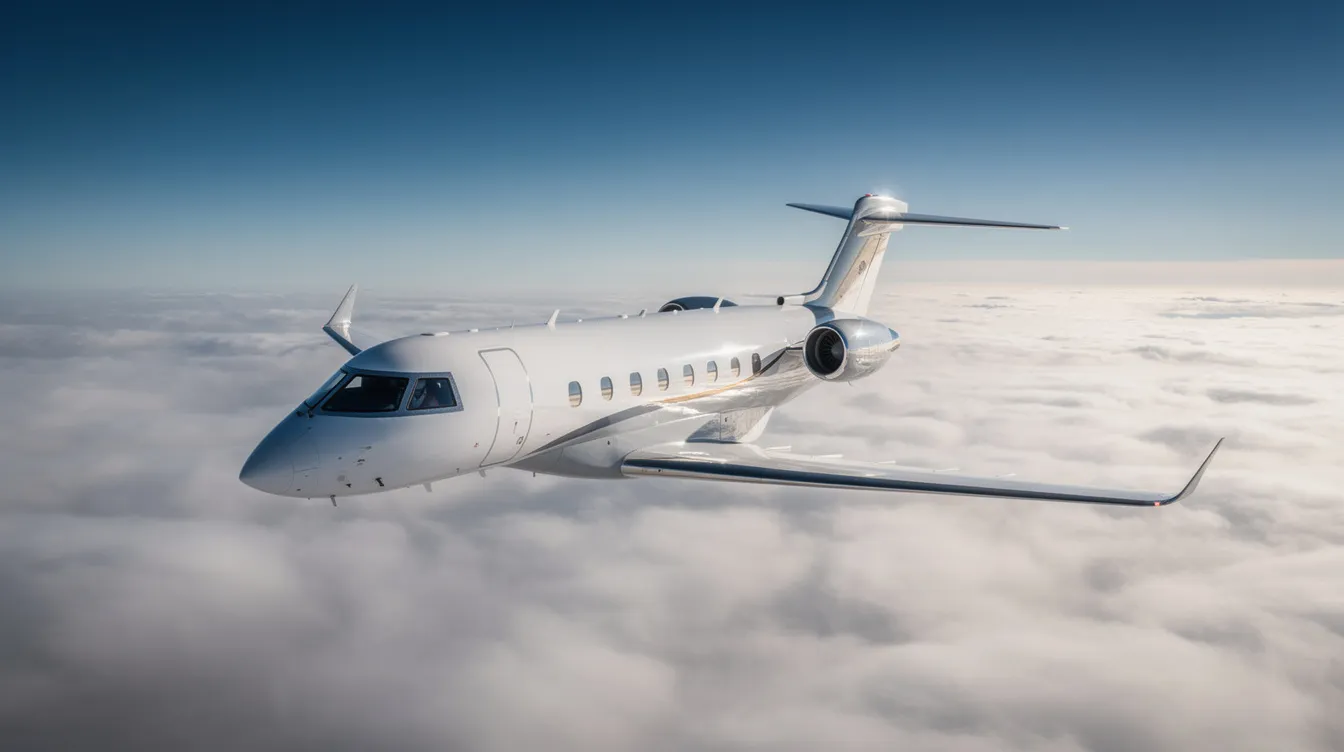
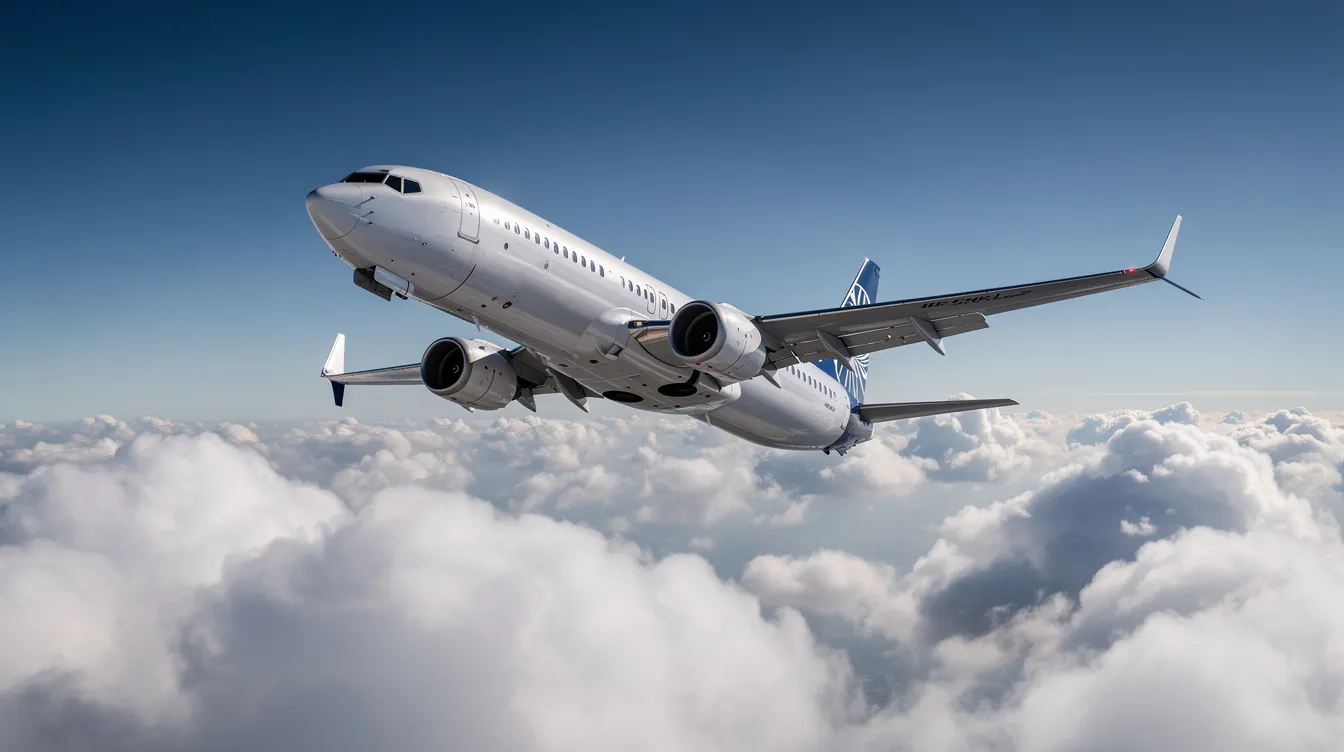
The Boeing 737 is the most widely operated narrowbody jet in commercial aviation. Every day, thousands of 737s carry passengers across short-haul routes and medium-range corridors, and the altitude at which they do so shapes everything from fuel consumption to passenger comfort. This article breaks down the numbers, the engineering, and the operational decisions behind a 737's cruising altitude, then puts that information in context for travelers weighing their options between commercial flights and private jet access.
Quick Answer: Typical Cruising Altitude of a Boeing 737
The Boeing 737 typically cruises at 37,000 feet. Most modern Boeing 737 commercial planes fly between 35,000 and 41,000 feet during the en-route phase of flight, with the exact level depending on aircraft weight, route length, weather conditions, and instructions from air traffic control. The normal cruising altitude for the majority of 737 flights sits in the FL350 to FL390 band (35,000 to 39,000 feet).
The maximum certified altitude for most 737 NG and 737 MAX models is 41,000 feet. That figure represents the aircraft's service ceiling, not where it typically flies on a given Tuesday afternoon. Larger aircraft like the Boeing 747 share a similar ceiling, while long-range private jets used by BlackJet members often cruise between 41,000 and 51,000 feet, placing them above the densest layers of commercial air traffic.
Key altitude benchmarks at a glance:
Boeing 737 typical cruise: 35,000 to 39,000 feet
Boeing 737 maximum altitude: 41,000 feet (NG and MAX)
Most commercial planes: 30,000 to 42,000 feet
Long-range private jets: 41,000 to 51,000 feet
How High Do Commercial Planes Fly vs. Private Jets?
Most commercial aircraft fly between 30,000 and 42,000 feet. Airlines cluster in this band because it offers the best compromise between engine performance and aerodynamic drag for large, passenger-laden airframes. Most commercial planes cruise at around 35,000 feet, where fuel burn per nautical mile reaches near-optimal efficiency for typical loads.
Private jets fly higher. Private jets can fly at altitudes of 45,000 to 51,000 feet on certain long-range, large-cabin models. Even midsize business jets commonly operate at 43,000 to 45,000 feet. Private jets avoid air traffic by flying at higher altitudes, which also means fewer encounters with turbulence and weather systems that concentrate in the upper troposphere.
How the altitude range compares:
Typical Boeing 737 cruising altitude: 35,000 to 39,000 feet
Typical widebody long-haul (777, A350): 35,000 to 43,000 feet
Modern private jets: 41,000 to 51,000 feet
When private jets fly higher, they encounter smoother air, less congestion, and more direct routing. Air traffic controllers maintain at least 1,000 feet of vertical separation between aircraft in cruise, so operating above the commercial airline bands gives private flights fewer constraints and more flexibility.
Altitude Basics: Flight Altitude, Flight Levels, and the Atmosphere
Flight altitude describes an aircraft's height above mean sea level, measured in feet throughout commercial and private aviation worldwide. When a plane is cruising above a country's transition altitude (18,000 feet in the United States), pilots and controllers switch to standardized flight levels rather than raw altitude readings.
A flight level is expressed in hundreds of feet based on a standard barometric pressure setting of 29.92 inHg (1013.25 hPa). FL370 means 37,000 feet under standard atmosphere conditions. This standardization lets air traffic controllers and pilots communicate altitude consistently regardless of local weather or pressure variations.
Commercial airplanes fly in the upper troposphere and lower stratosphere, roughly 30,000 to 42,000 feet. At these altitudes:
Air density is low enough to reduce drag on the airframe
Temperatures hover around minus 50 to minus 60 degrees Celsius
Weather is calmer than at lower altitudes, with fewer convective storms
Jet engines operate efficiently on the thin, cold air
For aircraft like the Boeing 737, this altitude range represents the sweet spot where engine thrust, fuel burn, and passenger comfort converge.
The Boeing 737 Family: Generations and Altitude Capabilities
Boeing launched the 737 in the 1960s, and the plane has evolved through four distinct generation series: Original, Classic, Next Generation (NG), and MAX. Unlike military aircraft, each generation brought new engines, updated wing design, and improved systems while staying within a narrower commercial operating band.
Original and Classic (737-100 through 737-500): These previous-generation aircraft used older turbofan engines and lighter structural designs. The Boeing 737 Classic series is rated to fly at 37,000 feet. In practice, many Classic-era flights cruised in the mid-30,000s.
737 Next Generation series (-600, -700, -800, -900ER): The next generation models introduced the CFM56-7B engine, redesigned wings, and optional winglets. The Boeing 737NG series is certified to fly at 41,000 feet. Commercial operations with these aircraft commonly sit between 35,000 and 39,000 feet.
737 MAX family (MAX 7, 8, 9, 10): The MAX series uses LEAP-1B engines and an advanced technology winglet. These next-generation series aircraft share the 41,000-foot maximum certified altitude with the NG line but deliver lower fuel use per seat. Southwest Airlines was the launch customer for the 737 MAX 8, taking its first delivery in 2017. American Airlines and United Airlines also operate large MAX fleets.
Although the published maximum altitude is 41,000 feet for NG and MAX variants, pilots don't always aim to fly that high. They choose the altitude that is fuel-efficient and safe for that specific flight's weight, distance, and atmospheric conditions.
Maximum Altitude vs. Typical Cruising Altitude for a 737
The maximum altitude (or flight ceiling) of a Boeing 737 is the highest level at which the aircraft can maintain level flight with at least 100 feet per minute of residual climb capability under standard conditions. For the 737 NG and MAX, that figure is 41,000 feet. The Boeing 737-800 has a maximum cruising altitude of 41,000 feet, matching its NG stablemates.
The service ceiling is a certification benchmark. In daily operations, the cruising altitude is affected by aircraft performance limitations, meaning the plane rarely operates at its absolute ceiling. The cruising altitude is the level chosen for sustained flight during the en-route phase, and it sits below the max alt for safety margin and efficiency.
A Boeing 737 may start at a lower altitude and perform step climbs as fuel burns off. Specific examples:
A 737-800 departing heavy (full passengers, bags, and fuel) might initially cruise at FL330 to FL350. After burning fuel for an hour or two, the crew requests a climb to FL370 or FL390.
A lightly loaded 737 on a medium-length route may climb directly to FL380 or FL400 if air traffic allows.
Shorter flights may only cruise at altitudes of 24,000 to 30,000 feet when the route is too short to justify climbing higher.
What Influences the Cruising Altitude of a 737?
There is no single fixed cruising altitude for a 737. Pilots and dispatchers choose from an altitude range based on several factors that shift from flight to flight.
Aircraft weight: Aircraft weight influences a Boeing 737's cruising altitude. A heavier plane at departure cannot reach higher altitudes until fuel burns off, which is why step climbs are standard practice. Aircraft weight affects cruising altitude capabilities on every flight.
Route length: On a four-hour flight, climbing to FL390 pays off in fuel savings. On a 90-minute hop, the climb and descent phases consume most of the trip, so staying at lower altitudes saves time.
Winds aloft: A 100-knot tailwind at FL360 can save 20 minutes on a transcontinental route. Headwinds at that level might push the crew to request FL340 instead.
Temperature: Ambient temperature affects engine performance and lift in aircraft. On a hot day, reduced air density degrades climb performance and can limit attainable altitude by several thousand feet.
Air traffic: Available levels depend on congestion, airspace restrictions, and direction-based rules.
Turbulence and weather: Weather conditions can limit an aircraft's cruising altitude if storms or severe turbulence occupy certain bands.
A 737 flying New York to Denver might start at FL340, ride a jet stream tailwind, then request FL380 after the first hour once fuel burn lightens the plane and controllers clear the level.
These same decision factors apply to private jet cruise planning, though private flights often have more flexibility from air traffic control due to fewer passengers, lighter weights, and aircraft certified for higher altitudes.
Direction, Air Traffic, and the Odd/Even Altitude Rule
Air traffic control assigns specific altitudes based on flight direction. Under the semicircular rule used in North American and European airspace, eastbound IFR flights (magnetic course 000° to 179°) use odd flight levels, and westbound flights (180° to 359°) use even flight levels. This simple convention keeps opposing traffic flows separated by at least 1,000 feet.
Practical examples for 737 flights:
An eastbound 737 from Chicago to New York cruises at FL350 or FL370
A westbound 737 from Atlanta to Dallas flies at FL340 or FL360
On dense North Atlantic or transcontinental corridors, these rules help air traffic controllers organize hundreds of aircraft into predictable layers
Air traffic control dictates cruising altitudes based on traffic separation rules. Controllers can assign non-standard levels when necessary for spacing, weather avoidance, or efficiency, but typical commercial operations follow the odd/even pattern.
For BlackJet clients, this structure creates an opportunity: controllers can often slot private flights at optimal altitudes above or between the busiest airline flows, allowing planes to fly higher and ride cleaner air in different types of private jets.
Air Density, Fuel Efficiency, and Why High Cruising Altitude Matters
Higher altitudes offer reduced aerodynamic drag and save fuel. As altitude increases, air density drops, which means less parasitic drag on the airframe. A 737 pushing through thinner air at FL370 encounters less resistance than the same aircraft at FL250, allowing it to cruise faster on the same thrust or maintain the same speed with less fuel.
The trade-off: jet engines produce less thrust in thinner air, and wings generate less lift. This creates a sweet spot rather than a simple "higher is better" equation. Cruising altitude must balance fuel efficiency and safety considerations.
Key performance numbers for the Boeing 737:
Typical cruise Mach number: 0.78 to 0.79 (about 450 to 460 knots true airspeed)
Maximum operating Mach number (MMO): 0.82
Optimal fuel burn per seat: achieved between 35,000 and 39,000 feet on the 737-800 and 737 MAX 8
Commercial jets often cruise at 35,000 feet for efficiency when loads are moderate
Weight reduction during flight makes step climbs to higher altitudes economical. As fuel burns off, the airplane can climb where drag is lower, and fuel consumption drops further, compounding the savings.
For private jets, smaller planes with fewer passengers and advanced aerodynamics are designed for very high cruise levels, giving travelers excellent range and high speeds. On a fuel-efficient aircraft, the altitude advantage translates directly into longer range and lower cost per hour.
Weather, Jet Streams, and Turbulence Around 737 Cruising Altitude
Weather conditions like jet streams impact altitude selection during flight. The typical 737 cruising altitude band of 30,000 to 40,000 feet sits right where the most powerful jet stream currents flow, and pilots use that to their advantage or work around it.
Jet streams in the upper troposphere can exceed 150 knots. A 737 flying eastbound at FL360 might ride a strong tailwind, shaving 30 to 45 minutes off a coast-to-coast trip. Westbound, the crew might drop to FL340 or FL320 to escape the headwind.
Clear-air turbulence concentrates near the tropopause (roughly 36,000 to 40,000 feet at mid-latitudes). Crews may request altitude changes from FL380 down to FL340 to find smoother air.
Thunderstorms and convective weather can top out at or above typical cruise levels, forcing lateral deviations or altitude adjustments.
Bad weather at destination airports can cascade into en-route altitude restrictions as controllers respace arriving traffic.
Modern 737s carry onboard weather radar, receive real-time turbulence reports from other aircraft, and coordinate with air traffic control to refine altitude choices in flight. This advanced technology reduces passenger exposure to rough air.
Commercial planes fly fixed schedules on set routes, leaving limited room to dodge weather. Private charters through BlackJet can adjust departure times and request altitudes that sidestep the worst turbulence entirely.
Cabin Pressurization: Why 37,000 Feet Still Feels Comfortable
At FL370, outside air pressure drops to about 2.3 to 2.5 psi, roughly 10 to 12 percent of sea level pressure. Without pressurization, a person would lose consciousness within minutes. The Boeing 737's pressurization system compresses outside air and maintains the cabin at a pressure equivalent to approximately 6,000 to 8,000 feet above sea level.
Outside the aircraft at 37,000 feet: air pressure is about 3.1 psi
Inside the cabin: pressure is maintained at the equivalent of 6,000 to 8,000 feet, where breathing is normal, and passenger comfort is preserved
Structural limits of the fuselage set the maximum pressure differential, which directly constrains how high commercial planes can fly
Regulatory certification ties pressurization system performance to the maximum certified altitude
Modern widebody jets and some newer business jets achieve even lower cabin altitudes, around 4,500 to 6,000 feet, which reduces fatigue on long flights. The Boeing Business Jet (BBJ) MAX variant, for example, maintains a cabin altitude of approximately 6,500 feet at its maximum cruise level.
BlackJet selects aircraft for its Jet Card programs with strong pressurization performance and cabin comfort at high cruising altitude, ensuring members arrive feeling less fatigued than they would on a comparable commercial flight.
Advanced Technology on the 737 That Supports High Cruising Altitude
The 737's ability to reach and sustain a high cruising altitude is the product of decades of propulsion and aerodynamic refinement.
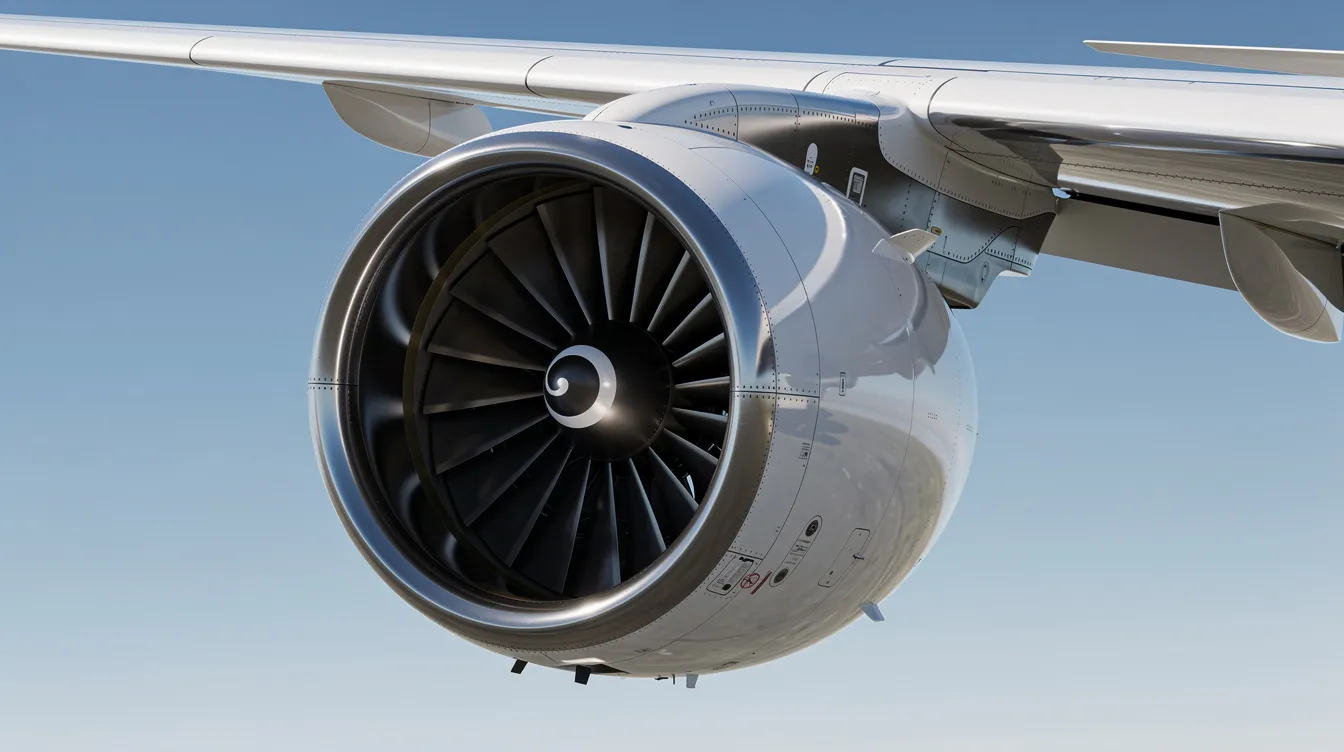
Engines: The 737 NG uses the CFM56-7B, a high-bypass turbofan that balances thrust output and fuel efficiency at altitude. The 737 MAX upgraded to the LEAP-1B, which reduces fuel consumption by approximately 14 to 15 percent compared to the CFM56, allowing planes to operate at the same altitudes with less fuel burn and lower CO₂ output.
Wing design and winglets: Blended Winglets on the NG and the Advanced Technology Winglet on the MAX reduce drag by decreasing wingtip vortices. This lets the aircraft cruise efficiently near 37,000 feet and above, extending range in nautical miles without adding fuel capacity.
Flight management systems: Glass cockpit avionics calculate optimal cruise and step-climb levels based on real-time wind data, aircraft weight, and temperature. Pilots input route parameters, and the FMS recommends the most fuel-efficient altitude for each phase of flight.
These same engineering principles also inform the design of many business jets in BlackJet's premium private jet programs. Propeller planes and early jet engines could not reach these altitudes; modern turbofan and turboprop technology is what makes high-altitude flight routine for most aircraft operating today.
737 Cruising Altitude by Variant: -700, -800, and MAX
While the overall altitude envelope is similar across the current 737 lineup, each variant's weight, range, and mission profile create different operational patterns.
737-700: Lighter and often able to climb higher earlier in the flight. The Boeing 737-700 can reach a maximum altitude of 41,000 feet. On medium-length routes, it commonly cruises at FL370 to FL390. Airlines with fewer passengers per flight, like those operating two class configurations on shorter sectors, often see -700s reach higher levels faster.
737-800: The workhorse of fleets at Southwest Airlines, American Airlines, and dozens of other carriers. The Boeing 737-800 can cruise at a maximum altitude of 41,000 feet. The Boeing 737-800 typically cruises at 37,000 feet on routes of three to four hours. On departure, it may sit at FL330 to FL350 before stepping up as fuel burns off.
737-900/900ER: Heavier than the -800 due to a stretched fuselage and more seats. On shorter flights with a full load, it may cruise at FL330 to FL350 initially, constrained by higher takeoff weight.
737 MAX 8: Shares the 41,000-foot ceiling with the NG. Optimized engines and the advanced winglet reduce fuel consumption, and the aircraft typically flies in the 35,000 to 39,000-foot band. The MAX delivers the same altitude range as the NG but with roughly 14 percent less fuel burn per seat.
For private Boeing Business Jet (BBJ) variants of the 737, typical cruising altitudes match, though lower passenger loads and lighter configurations improve climb performance, allowing the BBJ to reach higher levels more quickly.
Cruising Altitude and Safety: Role of Air Traffic Controllers
Altitude is one of the primary tools air traffic controllers use to maintain safe separation in crowded airspace. Every 737 operating at cruise follows controller instructions that are built on a framework of vertical, lateral, and longitudinal spacing.
Under RVSM (Reduced Vertical Separation Minimum), aircraft between FL290 and FL410 are separated by a minimum of 1,000 feet. Before RVSM, the standard was 2,000 feet in this band, which halved available cruise levels.
Controllers issue climb, descent, and level-off instructions to 737 crews to maintain spacing on busy corridors like the Northeast Corridor or transatlantic tracks.
Air traffic control instructions influence flight altitude decisions; pilots can request altitude changes for comfort or efficiency, but controllers must approve based on current sector workload.
BlackJet works only with certified operators and experienced crews who follow altitude and ATC procedures with precision, which is especially important when you consider whether chartering a private jet is worth it. Safety at cruise altitude is not a feature to market; it is a baseline requirement that every flight, commercial or private, must meet without exception.
Environmental Impact: Fuel Burn, CO₂, and Optimal Altitude
Selecting the right cruising altitude helps reduce fuel consumption and CO₂ emissions. A 737 cruising at its optimal level for current weight and temperature can burn 3 to 5 percent less fuel than one assigned a level 4,000 feet too low or too high.
Winglets on the 737 NG and MAX reduce drag by up to 5 percent, enabling efficient cruise at higher altitudes without increasing fuel capacity.
The LEAP-1B engine on the MAX series generates the same thrust as the CFM56-7B with 14 to 15 percent less fuel, cutting CO₂ output proportionally.
Flying too high forces engines to work harder in thin air with diminishing thrust margins. Flying too low increases drag. The optimal efficiency level sits between these constraints.
BlackJet offsets 100 percent of flight emissions for its Jet Card members, ensuring carbon-neutral flights at no additional cost. For some members, optimizing jet card tax deductions is another part of managing the total cost of high-altitude travel. Efficient altitude planning is part of the broader strategy to keep each journey as environmentally responsible as possible.
Research is ongoing into how cruise altitude choices influence contrail formation and climate impact, particularly in the 30,000 to 40,000-foot band where most 737s and other aircraft operate. Adjusting altitude by even 2,000 feet can, in some conditions, eliminate contrail formation entirely.
Commercial Airline Experience vs. BlackJet Private Jet Experience
Altitude is one piece of a much bigger picture. The real difference between a commercial flight and a BlackJet flight shows up in scheduling freedom, privacy, time saved on the ground, and customized routing.
Commercial 737: Fixed schedules, standardized cruise levels assigned by airline dispatch based on fuel cost targets and dense air traffic. Passengers have no input on altitude, routing, or timing.
BlackJet private jet: Flexible departure times, more choice in cruising altitude, and access to routes and altitudes that bypass congestion. Smaller planes with fewer passengers can often reach higher altitudes faster.
Ground time: Avoiding large hub airports, security queues, and baggage carousels can save 90 to 120 minutes per trip; the aircraft cruises as high as or higher than a 737.
Consider a New York to Miami trip. A scheduled 737 commercial flight cruises around FL360, with boarding starting 45 minutes before departure at a crowded terminal. A BlackJet-arranged midsize jet cruises at FL410, departs from a private terminal with a 15-minute check-in, and arrives with the passenger stepping off directly to a waiting car—illustrating the appeal of simply buying a seat on a private jet.
Both flights are safe. Both reach cruising altitude within minutes. The difference is in who controls the experience, and frequent travelers often evaluate the best jet cards for that flexibility.
How BlackJet Uses Advanced Technology to Optimize Your Cruise
Behind every smooth, high-altitude flight is a blend of data, dispatch planning, and real-time coordination. BlackJet's digital platform connects members to a network of certified operators whose flight planning mirrors the sophistication used by airline dispatch centers managing 737 fleets.
24/7 digital booking where members specify timing and preferences, influencing route and altitude planning from the start
Real-time flight support that monitors weather, winds, and airspace restrictions to help operators choose the most efficient flight altitude
Integration with operators using flight planning software that accounts for weight, temperature, winds, and available flight levels, the same variables that determine where a 737 cruises
The same performance principles that guide a 737's cruising altitude (weight, winds, temperature, air traffic) apply to every BlackJet flight. For travelers comparing private options, it helps to understand jet card pricing structures and benefits. The difference: BlackJet clients benefit directly through smoother rides, shorter times aloft, and reduced environmental impact, because these decisions are made with their specific trip in mind rather than a standardized schedule.
Jet Cards, Aircraft Categories, and Altitude Expectations
A Jet Card is a prepaid block of flight time, available in options like 25-hour and 50-hour programs, across multiple cabin classes, including the BlackJet 25+ Hour Jet Card. Each aircraft category comes with different altitude capabilities that align with different mission profiles.
Light jets: Often cruising in the low to mid-30,000s feet, sometimes below the heaviest 737 traffic. Ideal for shorter flights of two hours or less and often featured among the most affordable private aircraft options.
Midsize and super-midsize jets: Frequently operating in the upper 30,000s and low 40,000s, overlapping and exceeding 737 altitude bands. These aircraft increase capacity for passenger comfort while maintaining high cruising altitude performance, with their hourly rates detailed in jet card cost-per-hour guides.
Long-range large-cabin jets: Capable of 45,000 to 51,000 feet for true high-altitude flight above nearly all commercial planes. Supersonic jets and ultra-long-range models push these boundaries further, and many travelers access them through 25-hour jet card programs.
Jet Card members don't need to manage these details. Understanding overall jet card costs helps put that convenience in context. BlackJet and its operators select the right aircraft and cruising altitude range based on distance, passenger count, and mission profile. Understanding how Jet Cards work means knowing that safety standards and comfort criteria guide all altitude decisions, mirroring and often exceeding those applied to commercial fleets.
Frequently Asked Altitude Questions (FAQ)
What is the typical cruising altitude of a Boeing 737?
Boeing 737 flights typically cruise between 35,000 and 41,000 feet. The most common cruising altitude is around 37,000 feet, with the specific level depending on weight, route length, winds, and controller assignments.
Why don't commercial planes like the 737 always fly at their maximum altitude?
The maximum altitude of 41,000 feet is a certification limit, not an efficiency target. At heavy weights after takeoff, the aircraft cannot sustain flight at that level. Pilots select altitudes where fuel burn is lowest for current conditions, which is usually several thousand feet below the ceiling.
How high can private jets fly compared to a 737?
Private jets can fly at altitudes of 45,000 to 51,000 feet, well above the 737's 41,000-foot ceiling. This puts them above most commercial air traffic and in smoother, less congested airspace.
Is it safer to fly higher?
Safety is not determined by altitude alone. Both commercial and private aircraft are certified for their operating altitudes, and air traffic controllers maintain separation at all levels. Higher altitudes do offer fewer weather hazards, but safety depends on aircraft certification, crew training, and adherence to procedures.
Does a higher cruising altitude mean less turbulence?
Often, yes. Most weather-related turbulence occurs in the troposphere below 40,000 feet. Aircraft that fly higher, above most convective activity, generally encounter smoother air. Clear-air turbulence near the tropopause is an exception, but other factors like updated weather data and pilot reports help crews avoid it.
What cabin altitude will I feel on board?
On a Boeing 737 at 37,000 feet, the cabin is pressurized to feel like 6,000 to 8,000 feet above sea level. On some private jets, cabin altitude can be as low as 4,500 feet, which reduces fatigue and dehydration on longer flights.
Strategic Takeaways: What 737 Cruising Altitude Means for Your Travel Choices
The Boeing 737's cruising altitude of around 37,000 feet is the result of engineering optimization across weight, drag, engine performance, and structural limits. Commercial aircraft typically fly between 30,000 and 42,000 feet because that altitude range delivers the best fuel efficiency for large fleets carrying hundreds of passengers per flight.
For travelers, the key implications are:
Commercial jets like the 737 balance cost efficiency, scheduling, and passenger comfort in the 30,000 to 40,000-foot band, allowing planes to serve high-volume routes reliably, while private travelers weigh these benefits against the advantages outlined in practical private jet charter comparisons
Private jets can climb higher, route more flexibly, and reduce drag at altitudes where commercial traffic thins out, a key consideration for heavy users evaluating 100-hour jet card programs and costs
Understanding how high planes fly helps explain why some flights feel smoother, arrive faster, or burn less fuel than others, and pairs naturally with exploring the cheapest private jet options for accessing those benefits
For readers who appreciate the technical sophistication behind every commercial flight but want control, discretion, and altitude flexibility, a BlackJet Jet Card transforms altitude from an assigned number into a personal advantage. Travelers comparing providers like NetJets can benefit from understanding NetJets jet card costs and features, while those eyeing Flexjet may want a breakdown of Flexjet jet card pricing and options. If your goal is group travel at airline altitudes, guides to the best private jet for 20 passengers or the best private jet for 50 passengers explain how VIP airliners differ from standard 737 service. High-net-worth individuals curious about ownership can explore what a $15 million private jet offers, and value-focused flyers might weigh that against the cheapest private jet choices. Explore how BlackJet can place your next journey above standard commercial cruising altitude.


 Sign up with google
 Sign up with Apple