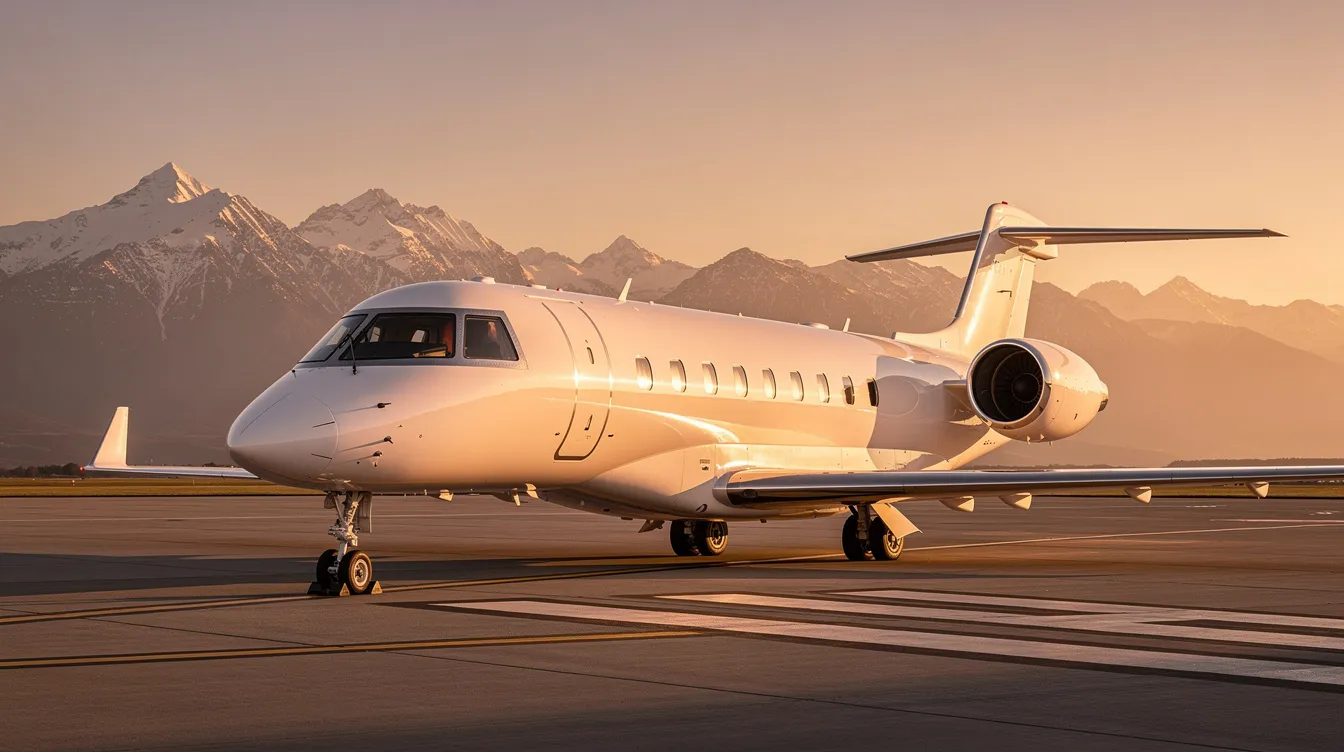
Buying an airplane requires careful planning and research, yet the impulse to purchase has never been stronger. Post-pandemic travel volatility, airline delays, and capacity constraints have pushed many executives toward aircraft ownership as a strategic advantage. Owning delivers unmatched control over scheduling, route flexibility, and privacy that commercial first class simply cannot replicate.
But consider the numbers before signing. Used aircraft prices have surged 15–25% since 2023; a Gulfstream G450 that traded at US$4–6 million three years ago now sells for US$5.5–7.5 million. A 2008 Cessna Citation CJ3 carries direct operating costs of roughly US$2,148 per hour, and total annual ownership can exceed US$1 million. Compare that with a BlackJet 25-hour light jet card at approximately US$7,000–8,000 per hour, all-in, no capital risk, no maintenance surprises.
This article walks a first-time buyer through the full aircraft purchase decision:
Mission clarity - what you actually need from an airplane
Budget reality - purchase price versus lifetime operating costs
Due diligence - pre-purchase inspection, financing, insurance
Alternatives - when a Jet Card beats owning outright
Define Your Mission: Why You Think You Need to Buy an Airplane
Define your aircraft's primary purpose before purchasing. Selecting the right airplane depends on mission profile and budget, not aspiration alone. Define your mission by considering range, speed, and seating capacity, then map those requirements to a particular aircraft or access model.
Your typical mission worksheet should include:
Trip frequency and routes - flying New York–Miami 20 times per year differs entirely from weekend general aviation hops in a Cirrus SR22
Passenger count and luggage - a family of four with ski gear needs more cabin and cargo volume than a solo business traveler
Weather and runway constraints - evaluate runway requirements for your destination airports; short-field operations into Telluride or St. Barts eliminate many aircraft types
General aviation aircraft run on standard aviation fuel, but jet-A versus avgas distinctions affect which plane fits your plan.
Clearly defining your mission often reveals that flexible private jet access via a Jet Card may serve 80–90% of trips without the burdens of full ownership.
Budgeting the True Cost: Purchase Price vs Lifetime Operating Costs
Establishing a budget is crucial for aircraft ownership. New aircraft typically cost over $1 million, while used single-engine propeller planes can cost under $40,000. A new general aviation jet costs upwards of $1 million. The gap between acquisition cost and what you actually pay over the life of the asset is enormous.
Budgeting should include both fixed and variable costs. Total ownership costs include maintenance, insurance, and inspections and should be evaluated alongside aircraft financing options and strategies. Consider aircraft maintenance costs based on frequency of use: a major overhaul on some piston engines can cost around $20,000, and turbine hot-section inspections run far higher.
Concrete example: A used Pilatus PC-12 NG (purchase price US$1.8–4.8 million) carries a total cost of roughly US$1,896 per hour at 325 annual hours. Compare that against a car payment: unlike a car, an airplane's fuel, hangar, crew salaries, and maintenance reserves never stop accumulating.
Financing realities:
Aircraft loans require a 15% to 20% down payment
Loan terms for aircraft range from 5 to 20 years
Interest rates for aircraft loans vary widely based on lender knowledge; current business-jet rates run 6.0–9.0% APR
Some lenders specialize in aircraft loans through the National Aircraft Finance Association
Financing options include loans, leasing, or outright purchase
By contrast, a BlackJet 50-hour Jet Card delivers predictable jet card cost per hour with zero surprise maintenance or repositioning fees, keeping your money working elsewhere.
New vs Used Aircraft: Modern Tech or Value in Older Aircraft?
New aircraft offer full factory warranty, the latest avionics suites (Garmin G3000, Collins Pro Line Fusion), better fuel efficiency, and stronger initial resale value-but capital outlay is steep. Entry-level private jets offer luxury and speed in a single-pilot-friendly design, with models like the Embraer Phenom 300E retaining roughly 75% residual value after five years; understanding the broader private jet price list helps you benchmark these options against your budget.
Used aircraft present a lower purchase price but potentially higher operating costs and exposure to obsolescent avionics or aging interiors. Many aircraft from the 1970s–1990s- low-wing Piper Arrows, high-wing Cessna 172Ns, King Air B200S, can be excellent value if well-maintained but may need avionics upgrades (US$50–250k) to meet current ADS-B and LPV standards; they also compete with the cheapest private aircraft options that may better fit limited budgets. Parts availability on older aircraft varies widely by aircraft type.
Test-fly any aircraft you are seriously considering buying. A test flight reveals handling qualities, noise levels, and cabin comfort that specifications alone cannot convey.
Always engage professional advice from an aircraft broker, aviation attorney, and independent mechanic (A&P/IA) to benchmark pricing against recent 2023–2026 transaction data before finalizing any buying process.
Understanding Performance Specifications and Safety Standards
Key performance specifications every prospective buyer must evaluate:
Range with reserves - a CJ3 delivers ~1,200–1,500 NM; a PC-12 NG covers ~1,600 NM at ~255 knots cruise
Cruise speed - light jets typically achieve 400–480 knots; turboprops sacrifice speed for short-field capability
Runway requirements - flying into Aspen or London City with steep approach limitations eliminates many aircraft; always match performance to your typical airports.
Useful load - passengers plus fuel plus luggage; underestimating this is a common mistake
A pilot planning to fly complex or high-performance aircraft may need additional training beyond what a flight school initially provides. FAA regulations require type ratings for turbine aircraft, and commercial operations demand even higher qualifications, especially when considering large transports such as a Boeing 737 for private or corporate use.
Safety certifications matter. Operator standards like ARG/US, Wyvern, and IS-BAO add layers of accountability. BlackJet mandates proprietary safety standards from every partner operator, removing the due diligence burden that individual owners carry alone when managing a flight department.
Pre-Purchase Inspection and Due Diligence on a Used Aircraft
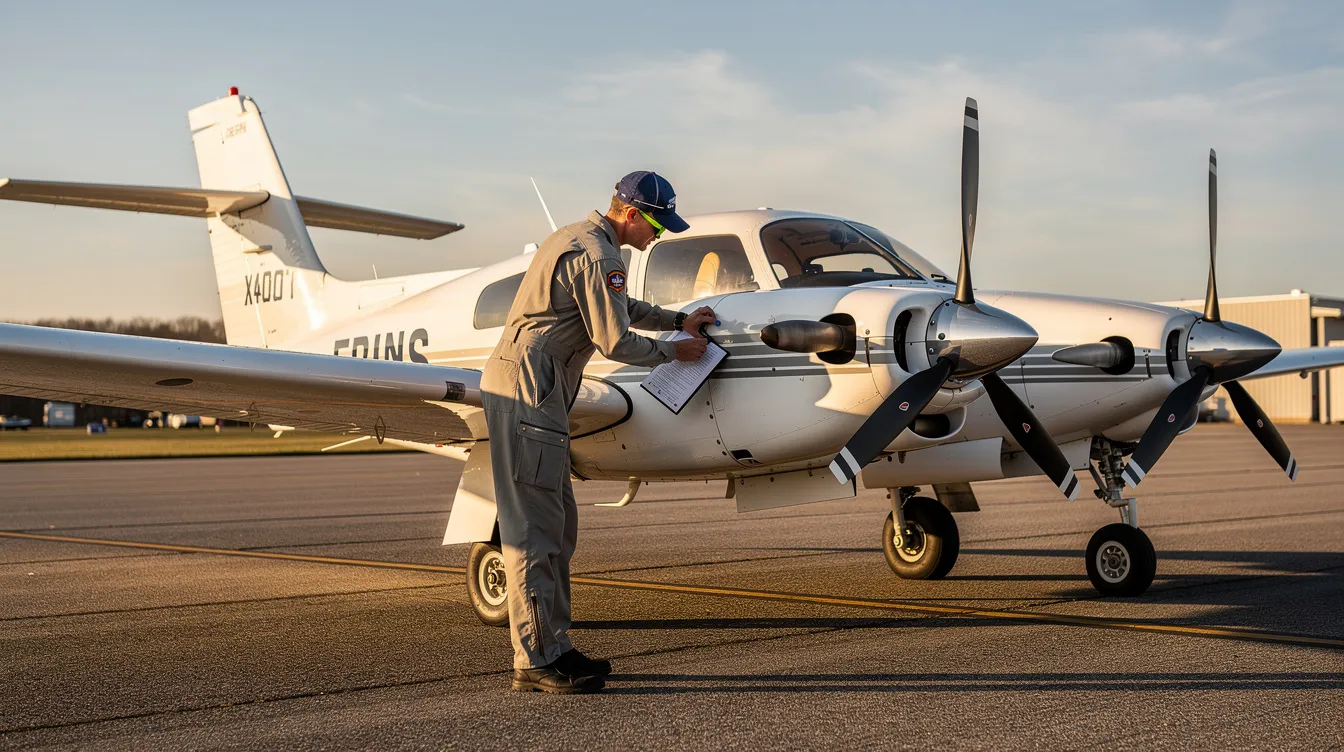
Conduct an independent pre-purchase inspection, performed by a maintenance facility not associated with the seller. Pre-purchase inspections can reveal costly underlying flaws that would otherwise become unexpected expenses post-closing. The number of pre-purchase inspections increased from 10 to 50 monthly in 2020 as buyers recognized their importance.
A thorough pre-buy inspection should cover:
Airframe corrosion and damage history review
Engine borescope inspection: a pre-purchase inspection should include a differential compression check
Compliance with all airworthiness directives (AD compliance)
Logbook continuity: Always use complete logbooks when buying an aircraft
STC paperwork and avionics functionality checks
Major repair and major overhaul records
Buyers should insist on a pre-purchase inspection to avoid unexpected expenses. Findings routinely help negotiate repairs or price reductions, sometimes saving six figures. Typical 2026 costs: US$25,000–75,000 depending on aircraft complexity.
Perform a title search to check for any liens on the aircraft before purchasing. Verify the FAA registry, airworthiness certificate validity, and clean chain of ownership. Non-visible legal encumbrances can carry seven-figure risk, particularly when you combine ownership with private jet leasing structures to offset costs or generate revenue.

Ownership Structure, Compliance, and Insurance
Sole ownership offers maximum flexibility and decision-making control, but exposes you to full liability.
LLC or corporate ownership provides a liability shield and potential tax advantages under current FAA regulations
Partnerships require careful selection of partners and agreements. Scheduling conflicts, cost-sharing disputes, and fractional jet ownership depreciation considerations are common.
Leaseback can turn your airplane into a profit center, though it accelerates wear, complicates insurance, and interacts with potential fractional jet ownership tax benefits
Commercial operations require aircraft with ample cargo space and Part 135 certification; private owners flying under Part 91 must never stray into "illegal charter" territory, and should compare these obligations with the flexibility and costs of chartering a private jet.
Pre-purchase insurance quotes should be obtained early in the buying process. Hull insurance, liability limits, pilot warranties, and training requirements all affect annual premiums. For example, insuring a 2005 Gulfstream G450 with older avionics costs significantly more than accessing similar large-cabin aircraft through a BlackJet Jet Card, where insurance, regulatory compliance, and crew vetting are handled entirely by vetted operators.
Resale Value, Upgrade Paths, and Exit Strategy
Aircraft with strong resale value offer financial flexibility when it's time to sell. But values fluctuate with fuel prices, interest rates, and supply. Many aircraft lose value faster than owners expect.
Key factors that protect resale value:
Popular makes and models (Cirrus SR22, PC-12 NG, Citation XLS+)-you can trade a plane in these categories more easily than niche types
Aircraft with updated technology are easier to resell; current avionics (WAAS, ADS-B, CPDLC) matter
Complete logbooks and neutral, modern interiors
A zero-time engine increases an aircraft's resale value, while high-time engines can lower an aircraft's resale value significantly
Older aircraft often have lower resale values due to age and rising maintenance burden
Plan your exit strategy before the purchase: target a 5–10-year holding period, estimate how many hours you'll fly annually, and identify when it makes sense to sell and shift to Jet Card-only flying. Some BlackJet members maintain a smaller general aviation aircraft for regional leisure while using their Jet Card for longer or international missions, while others mix traditional ownership with buying a single seat on a private jet for occasional trips.
Alternatives to Full Ownership: Jet Cards, Charter, and Fractional
For many prospective buyers interested in private aviation, buying an aircraft is not the only path. Three alternatives deserve serious evaluation, especially once you understand jet card cost structures and membership pricing:
Feature | On-Demand Charter | Fractional Ownership | BlackJet Jet Card |
|---|
Capital required | None | US$1M–5M+ | Prepaid hours only |
Guaranteed access | No | Limited | Yes |
Aircraft flexibility | Varies | Single type | Multiple cabin classes |
Cost predictability | Low | Medium | High (fixed hourly) |
Maintenance | Included, variable | Shared responsibility | Included, no surprises |
Scheduling flexibility | Limited | Restricted by schedule | Highly flexible |
Safety certification | Operator dependent | Managed by a fractional co. | BlackJet certified |
Sustainability | Varies | Varies | Carbon-neutral flights |
Technology access | Depends on operator | Fixed fleet technology | Access to the latest tech |
Booking convenience | Phone or app | Scheduled in advance | 24/7 digital booking |
A Jet Card provides pre-purchased hours-25-hour and 50-hour BlackJet programs-at fixed, transparent rates. A CEO flying New York–Dallas twice monthly or a family taking 4–6 leisure trips per year can determine how many hours they actually need, then compare the total cost against owning.
BlackJet differentiators include 24/7 digital booking, carbon-neutral flights by default, strict operator certification, and the ability to choose from light jets to super-midsize jets per trip, without being locked into a single aircraft, all under transparent jet card pricing structures.
Technology, Sustainability, and the Future of Private Aviation
Modern cockpit and cabin technologies- Wi-Fi connectivity, CPDLC for oceanic routes, synthetic vision, and advanced autopilots-improve both safety and productivity for business travelers. These systems are standard on newer aircraft but often require expensive retrofits on older models.
Sustainability pressure is rising. Carbon offsetting and sustainable aviation fuel (SAF) are reshaping private aviation's environmental profile. BlackJet provides carbon-neutral private flights as a built-in feature of every Jet Card program, at no additional cost, which compares favorably with many unlimited private jet flight memberships that may not include sustainability by default.
Emerging hybrid-electric and electric aircraft projects remain largely developmental, with commercial entry likely in the 2030s. Buyers purchasing an airplane today should consider whether their asset will remain competitive or face obsolescence over the next decade.
Professional Advice: Building Your Acquisition and Advisory Team
Any successful purchase of a used aircraft or new business jet requires assembling the right team:
Aviation attorney - contract negotiation, import/export, regulatory compliance
Tax advisor - depreciation strategies, bonus depreciation timing, entity structuring
Aircraft broker - market valuation, deal sourcing, benchmarking options like the best 10 million dollar private jet choices, enough money saved through negotiation expertise
Independent maintenance shop - pre-purchase inspection oversight, particularly vital when considering assets such as 5-million-dollar private jets
Insurance broker - competitive hull and liability quotes
Even if you decide not to buy a plane, consulting with private aviation experts, including BlackJet's advisory team, can clarify whether a Jet Card or charter strategy better fits your travel profile and which of the best jet cards for frequent flyers aligns with your needs. Many clients who began the buying process expecting to purchase pivoted to a Jet Card after financial modeling showed lower total cost and greater mission flexibility.
When to Buy an Airplane-and When to Simply Buy Access
The decision to buy an airplane comes down to mission clarity, realistic budgeting of operating costs, risk tolerance for the aircraft's condition and age, willingness to manage maintenance and regulatory compliance, and the importance of resale value in your financial plan. For a first-time buyer flying fewer than 150–200 hours annually with variable routes, buying an aircraft may be less efficient than securing guaranteed private jet access with a Jet Card. Run the numbers using your past 12–24 months of travel data to make an informed choice grounded in evidence rather than aspiration.
For those who do buy, the process rewards discipline: define your mission, assemble your advisory team, conduct rigorous due diligence, and plan your exit before you ever sign. For everyone else-and for the growing number of experienced owners who have made the calculation-there is a simpler, more flexible path. Explore BlackJet's Jet Card programs and discover how private aviation access, tailored precisely to your life, can deliver everything ownership promises, without everything ownership demands.
Conclusion: Making the Right Choice in Buying an Airplane
Buying an airplane is a significant strategic decision that extends beyond luxury—it offers unparalleled control, convenience, and privacy for discerning travelers and business use. However, the complexities of ownership, from budgeting for purchase and ongoing maintenance to navigating safety certifications and resale considerations, demand thorough preparation and expert guidance. For many, the evolving landscape of private aviation, marked by rising costs and technological advancements, makes alternatives like BlackJet’s Jet Card programs a compelling option—delivering flexible, carbon-neutral private jet access without the capital commitment or operational burdens of ownership.
Whether you choose to buy or access, the key is aligning your choice with your mission, budget, and long-term travel goals. Discover how BlackJet can elevate your travel experience by offering premier, seamless private aviation access tailored to your unique needs. Explore our Jet Card programs to find the perfect fit for your travel lifestyle and learn more about how BlackJet's innovative private jet access can transform your journeys.


 Sign up with google
 Sign up with Apple