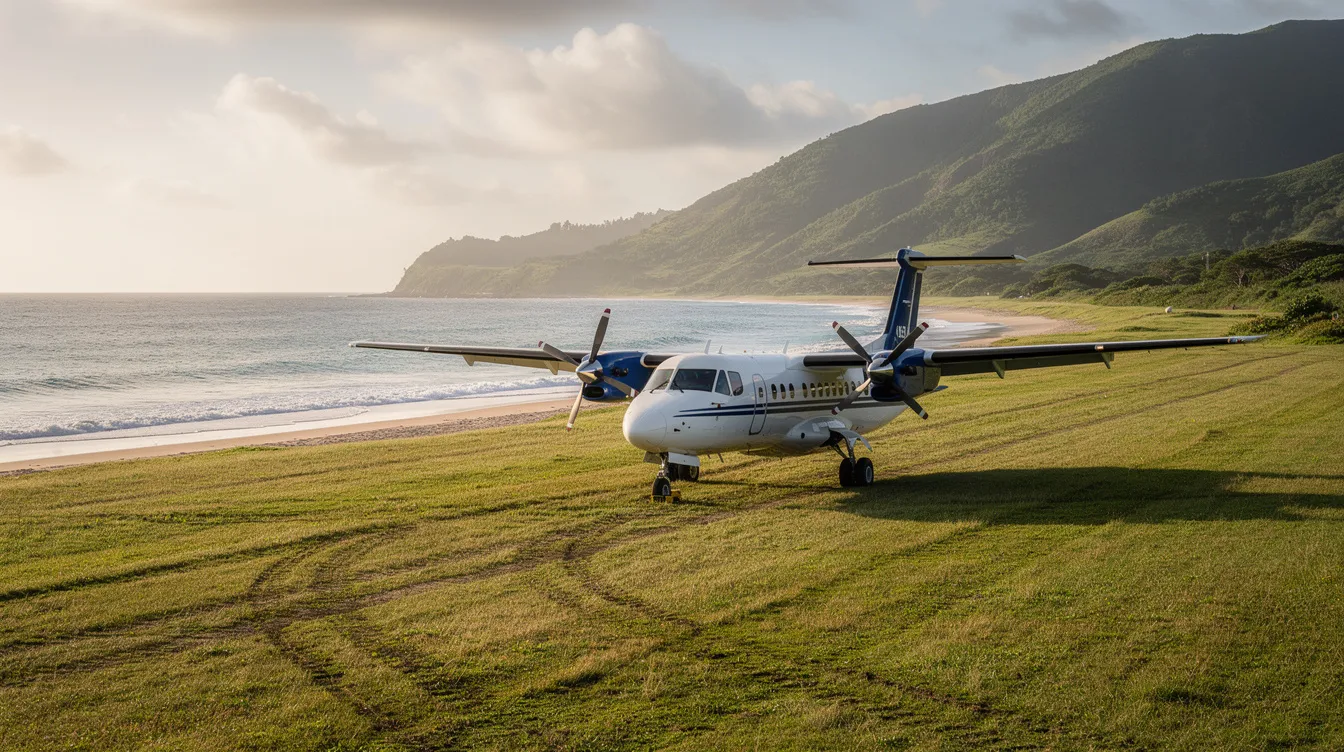
Choosing the best light airplane is never a one-size-fits-all decision: the best choice depends on your mission, budget, and flying needs, though proven options like the Britten-Norman Islander, Quest Kodiak 100, and Cessna 208 Caravan consistently stand out for island hopping and short-runway performance. This guide is for private pilots, aviation enthusiasts, and business travelers considering their best options for light airplane ownership or charter. Choosing the right light airplane can dramatically impact your travel flexibility, safety, and cost-effectiveness. For frequent business travelers, executives, and high-net-worth leisure flyers who want more flexibility, privacy, safety, and comfort from regional or international travel, that decision affects trip efficiency, operating cost, and the overall private aviation experience.
This guide explains how to evaluate the best light airplane for different missions, compares leading aircraft models, and breaks down the design, materials, safety standards, and certification factors that shape performance and reliability. It also looks at when ownership makes sense versus access through a Jet Card, including how BlackJet’s membership model supports convenient private flying with certified service and carbon-neutral options.
Why the "Best" Light Airplane Depends on Your Mission
Choosing a light airplane depends on budget, mission profile, and comfort level. A people-mover for Scottish island hops needs completely different traits than a business shuttle between London and Zurich, and some travelers may find that buying a seat on a private jet suits their needs better than owning the aircraft outright. Today, light airplane travel offers a strategic advantage that a lot of commercial options simply cannot match.
Point-to-point access: to airfields as short as 2,000 ft grass strips bypasses hub-and-spoke airports, cutting typical door-to-door time by 40–60% compared to scheduled airlines.
Mission variety matters: Island hopping demands rugged STOL performance; business shuttles prioritize speed and cabin comfort. No single airplane excels at every type of mission.
BlackJet clients skip the debate: Rather than betting on one airframe, they access a curated fleet through Jet Cards and charter, matched to each trip profile.
Design and safety together define "best": Aircraft materials like carbon fiber, structural weight limits, and operator safety standards all shape which airplane is the right receiver of your trust for a given role.
Key Criteria for Choosing the Best Light Airplane
Before naming specific models, professional operators evaluate aircraft against a clear list of criteria. Certified aircraft provide easier insurance and standardized maintenance, which is why these factors matter as much as raw performance numbers and the broader private jet price list of ownership and access options.
Runway and Performance Requirements
Runway requirements: Can the airplane perform safely from a 2,000 ft grass or gravel strip, or does it need 4,000 ft of paved asphalt?
Useful load vs. gross weight: Look at useful load rather than just maximum gross weight when evaluating an aircraft - it tells you what you can actually carry after fuel.
Cruise speed and range: Determine how far you want to travel with an aircraft. Consider the aircraft's cruising range and payload capacity for trip planning.
Crosswind limits: Coastal UK and Caribbean islands regularly see 15–25 kt crosswinds. A strong demonstrated crosswind component is essential.
Cabin Comfort and Avionics
Structural Materials and Safety
Structural materials: Aluminum vs. composites - how lower airframe weight and a high strength-to-weight ratio translate into better climb and payload.
Safety certifications: The FAA mandates specific safety certifications for private aircraft under standards like Part 23 for light aircraft and Part 135 for charter operators.
Operating Economics
Operating economics: Operating costs include fuel, oil, maintenance, and insurance. Understanding jet card cost per hour is key to comparing ownership with access. A Jet Card with BlackJet absorbs fleet and upkeep complexity so you can find the right aircraft without bearing those burdens alone.
Top Light Airplanes for Island Hopping and Short Runways
If you need an aircraft that can maneuver into 2,000 ft strips in max crosswind conditions while carrying meaningful payload, several proven models stand out. Stall speed and docility are major assets for recreational and short-field flying - the slower and more forgiving the approach, the easier these demanding strips become.
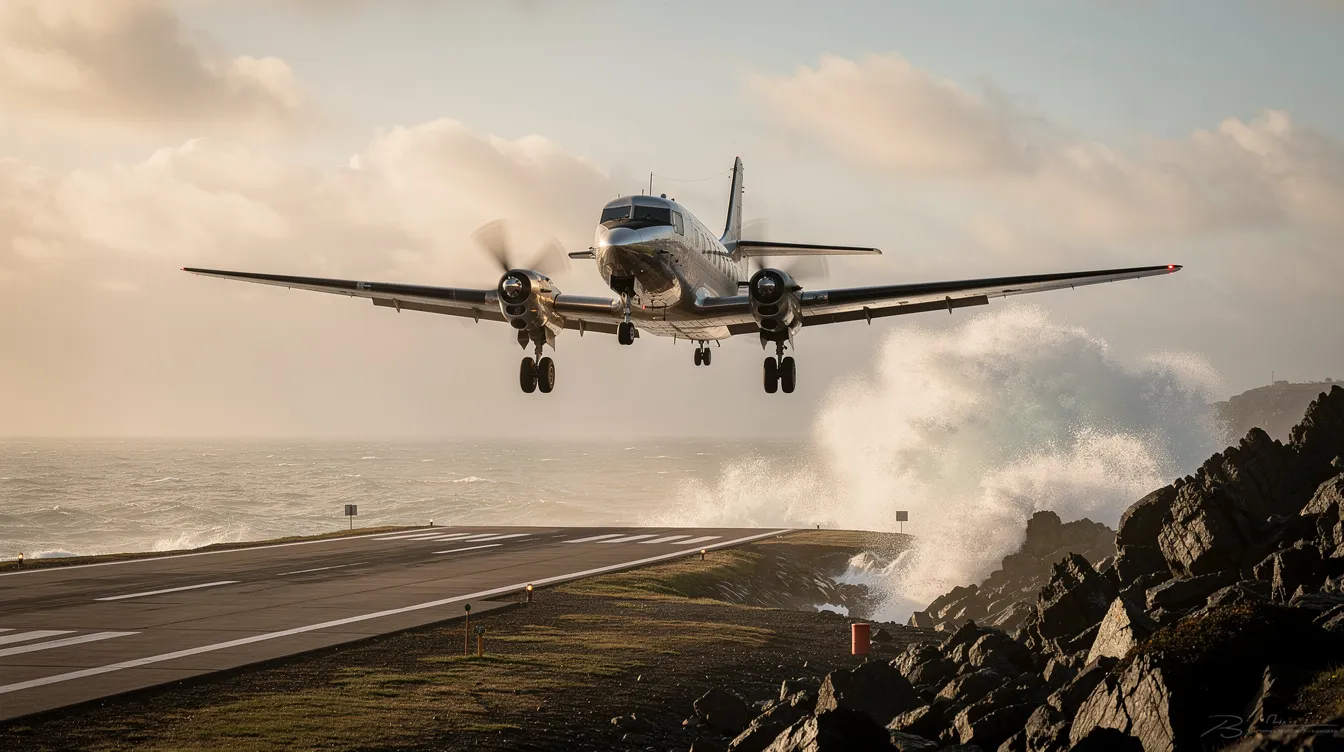
Britten-Norman Islander: This twin-engine, fixed-gear workhorse has been operated on island routes across the UK, Channel Islands, and Caribbean since the late 1960s. Its demonstrated crosswind component is 30 knots, with a takeoff ground roll of roughly 621 ft. It can carry around 1,700 lb of payload - a great benchmark.
Quest Kodiak 100: A high-wing turboprop with approach speeds as low as 76 KTAS at flaps 35°, built to perform from rough surfaces with significant cargo.
Cessna 208 Caravan: Useful load of approximately 3,500 lb, takeoff ground roll around 1,160 ft. High-wing planes like the Caravan offer excellent downward visibility and cooler cabins - critical for bush and island operations.
Tecnam P2012 Traveller, GippsAero GA8 Airvan, SC-7 Skyvan: Each serves niche roles from multi-stop island runs to skydiving ops and rugged utility flying.
BlackJet clients can be placed on Caravan-class or P2012-class aircraft when a trip demands short-runway capability, rather than debating which single airframe to build a life around.
Light Aircraft Design: Materials, Carbon Fiber, and Weight Management
Material choice and airframe weight sit at the core of every performance metric - from takeoff roll to fuel burn. Innovative materials improve fuel efficiency in aircraft design, and the trend is accelerating.
Aluminum and Traditional Materials
Aluminum remains the backbone of most Cessnas, Pipers, and utility prop planes. It is also a common material for ultralight aircraft. Easy to inspect and repair worldwide, it offers proven fatigue properties.
Titanium and Steel
Titanium offers a superior strength-to-weight ratio for aircraft, though cost limits its use to critical structural joints.
Steel is used in larger drones for its structural properties, but certified manned aircraft lean toward composites for weight savings.
Composites and Carbon Fiber
Carbon fiber and composites are reshaping new-generation models. Composite materials enhance flight performance in ultralight aircraft and certified airframes alike. Diamond Aircraft's DA50 RG features a fully carbon fiber airframe - FAA-certified and delivering a lightweight, corrosion-resistant structure with a strong strength-to-weight advantage.
Performance impact: Lower structural weight means shorter takeoff distance, steeper climb rates, improved useful load, and reduced fuel burn. The FAA's AC 20-107B guidance governs composite structure certification.
Electric and Hybrid Aircraft
Electric aircraft can significantly lower noise pollution levels, though battery weight and certification hurdles mean charter use is still emerging. Hybrid motors are being explored but remain pre-commercial.
The FAA's light-sport rules have changed as part of the MOSAIC transition effective July 24, 2026, expanding what lightweight and composite-built aircraft qualify under sport categories. Ultralight aircraft must weigh under 254 pounds, but new rules are widening the definition.
In addition, within BlackJet's network, we evaluate aircraft not just by category but by how their materials and weight characteristics support safe margins on short runways.
From Owning the "Best" Light Airplane to Accessing the Best Fleet with BlackJet
Owning a single light airplane - say a Cessna 208 dedicated to island hops - locks you into one airframe's strengths and limitations. Operating and maintenance costs often outweigh the initial purchase price over the life of ownership, especially when compared with the cheapest private aircraft and other budget-friendly options. Private aviation companies must comply with strict safety regulations, and individual owners bear that entire burden.
Ownership | Jet Card Access |
|---|
Locked into one airframe's strengths and limitations | Access to multiple aircraft types matched to each mission |
Responsible for all operating and maintenance costs | Fixed-rate access, no direct maintenance or crew costs |
Must manage insurance, hangar, and regulatory compliance | Safety and certification handled by operator (e.g., BlackJet) |
Depreciation risk | No depreciation risk |
Best for high-frequency, single-mission flyers | Best for varied missions and flexible travel needs |
BlackJet's Jet Card model: Jet cards offer prepaid access to private jets. Programs typically include 25-hour or 50-hour jet card options across multiple cabin types, equipped with 24/7 digital booking tools and real-time support. The BlackJet 25+ Hour Jet Card provides fixed-rate access to mid, super-mid, and large cabin aircraft.
Safety without the burden: Jet card programs ensure safety certification for flights. BlackJet relies on ARG/US and Wyvern-standard audits. Private jets undergo rigorous safety inspections before each flight, and pilots of private jets require extensive training and certifications, all of which are central to BlackJet's premium private jet card programs.
Sustainability by default: Carbon offset programs help reduce aviation's environmental impact. BlackJet provides carbon-neutral flights through verified offset projects. Sustainable aviation fuels can reduce lifecycle carbon emissions by 80%, further lowering the footprint of modern, lightweight aircraft and many of the cheapest private jet options now entering the market.
Scenario: A client needs a light turboprop for winter island hops in Scotland one month, then a light jet for a London-to-Zurich business shuttle the next. Jet Card access beats betting on a single best light airplane - it's easy, flexible, and the right aircraft meets you at each mission, especially when you understand overall jet card cost and membership pricing.

FAQs: Best Light Airplane Choices and BlackJet Access
What is considered a light airplane vs. a light jet or turboprop? A light airplane typically refers to single- or twin-engine piston or light turbine aircraft under Part 23, seating 1–9 people, cruising at 110–200 KTAS. Light sport aircraft typically have a two-seat configuration and require a Sport Pilot certificate. Turboprops add turbine power; light jets offer pressurized cabins and higher altitude, fitting into several types of private jets for different travelers.
Which light airplane is best for island hopping in the UK? The Britten-Norman Islander remains the benchmark, followed by the Cessna 208 Caravan and Quest Kodiak for heavier loads and rough fields, though some travelers may instead prefer the cheapest private aircraft and budget options accessed via charter.
How do carbon fiber and weight affect safety and performance? Composite materials deliver a strong strength-to-weight ratio, reducing takeoff distance and improving payload. However, they require specialized inspection regimes per FAA guidance, especially in larger airframes such as private jets configured for 30 passengers.
Is it better to own or use a Jet Card? Jet cards provide access to multiple cabin types without hangar, crew, or depreciation costs. For people flying fewer than 100 hours annually across varied missions, access consistently outperforms ownership, especially when you compare jet card cost per hour and evaluate whether a 100-hour jet card cost structure aligns with your flying profile.
How does BlackJet ensure safety and sustainability? Through operator vetting, third-party audits, and carbon-neutral flights at no additional cost to members, whether you’re booking short island hops or longer private jet charters in Karachi.
Conclusion: The Strategic Advantage of Choosing the Best Light Airplane or Jet Card Access
Selecting the best light airplane is a nuanced decision that hinges on mission requirements, budget, and desired travel experience. Whether you prioritize rugged short-field capability for island hopping or speed and comfort for business shuttles, understanding aircraft performance, materials, and safety certifications is essential. However, for many discerning travelers, the ultimate advantage lies in flexible access rather than ownership.
BlackJet’s Jet Card programs deliver the strategic benefits of private aviation without the burdens of maintenance, insurance, and depreciation. By offering a curated fleet matched to each trip’s unique demands, along with rigorous safety oversight and carbon-neutral flight options, BlackJet redefines what it means to travel with confidence and care for the environment.
Elevate your travel—effortlessly. With BlackJet, private flying becomes accessible on your terms through our Jet Card programs, offering stringent safety standards, carbon-neutral operations, and unparalleled flexibility. Discover our Jet Card options and see how the ideal light airplane is always the one tailored to your specific mission.


 Sign up with google
 Sign up with Apple