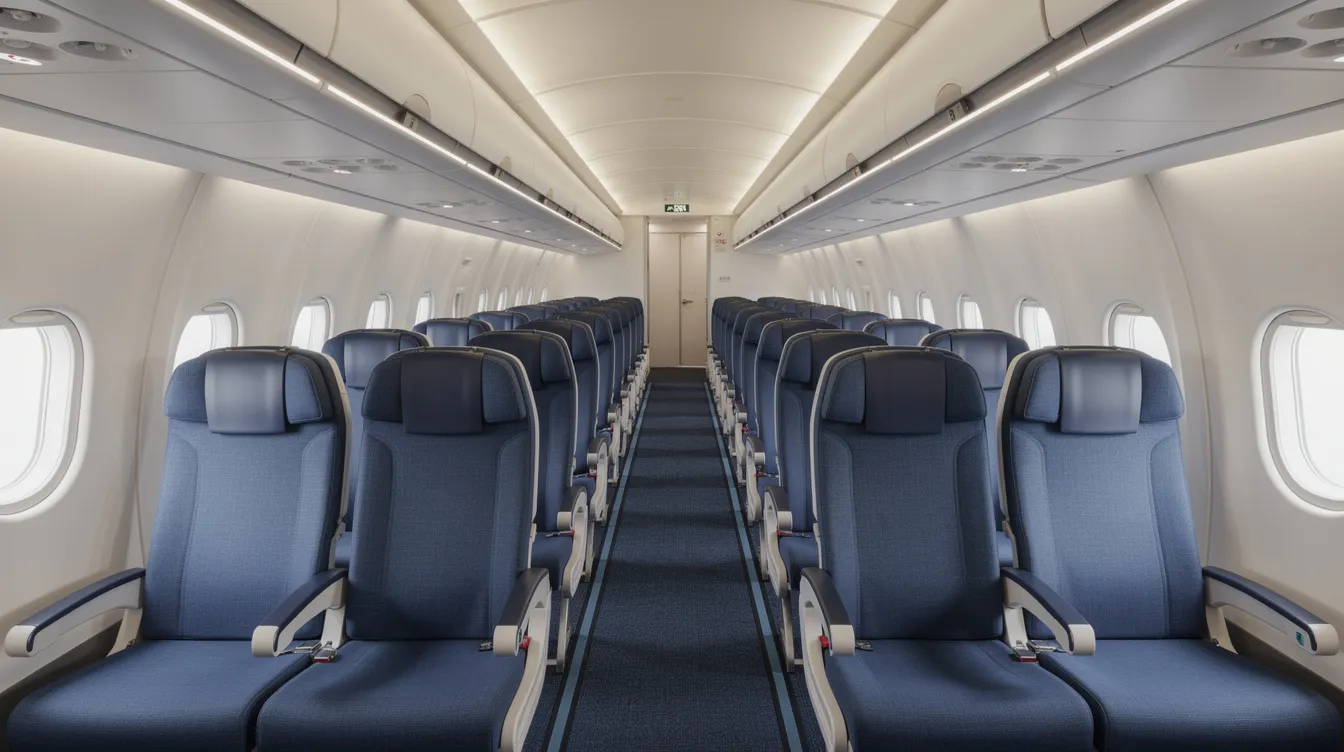
Even travelers with access to private aviation find themselves on a commercial Boeing 737-800 from time to time. Knowing how to decode b738 seating—from row pitch to Wi-Fi quality—turns a potentially frustrating commercial segment into a well-managed one. This guide breaks down everything shown on a 738 seat map, compares it with what you experience on a private jet, and helps you decide when a Jet Card flight delivers more value.
Why B738 Seating Matters for High-End and Frequent Travelers
The Boeing 737-800 remains one of the most frequently operated narrow-body aircraft on 1–5-hour business routes: New York–Chicago, London–Geneva, and Los Angeles–Seattle. That means discerning travelers encounter the aircraft regularly.
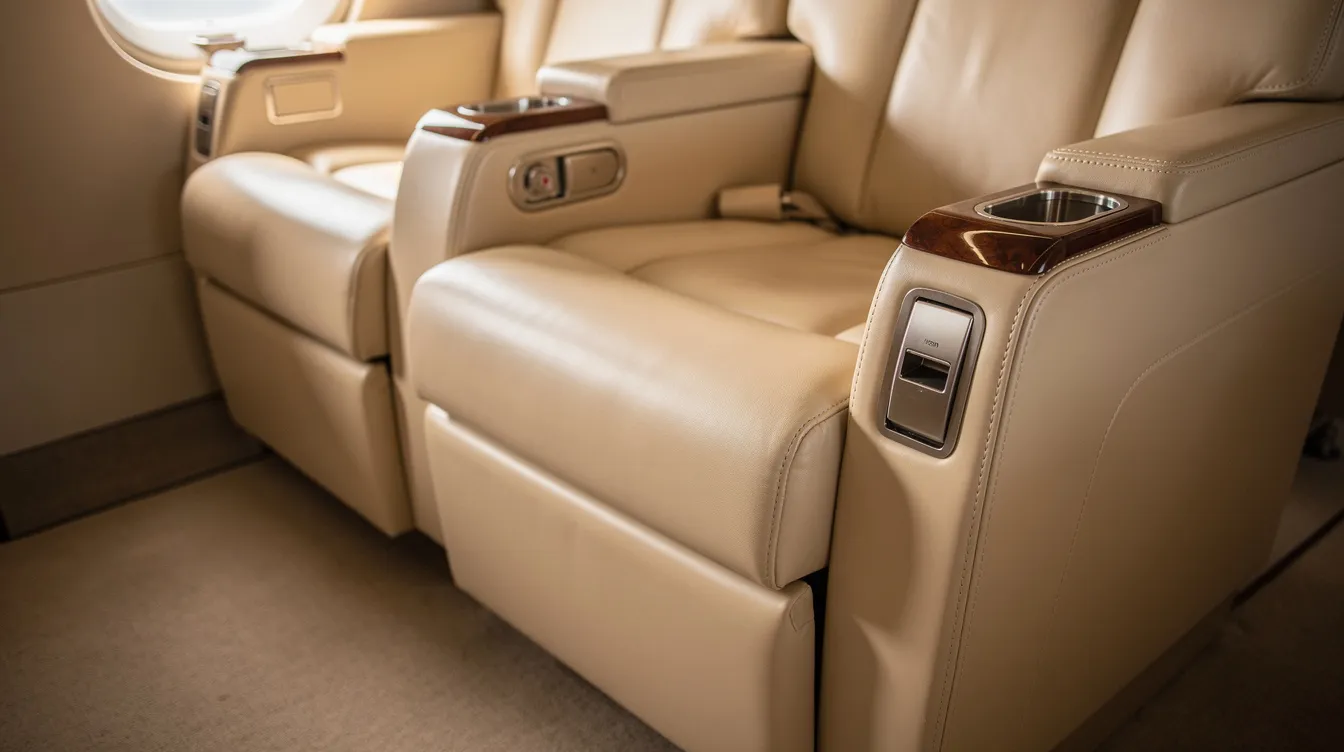
The trade-offs are measurable. A standard Main Cabin seat on a 737-800 offers roughly 30 inches of pitch, about 17 inches of width, and 4–5 inches of recline. A BlackJet midsize or super-midsize jet on the same route delivers 20–22-inch-wide club seats, full leg extension, a private cabin, power at every seat, and no boarding queue or middle-seat neighbor.
Understanding seat data and features on a commercial 738 helps you benchmark exactly what you gain—or sacrifice—on any given flight. When the numbers reveal tight legroom, inconsistent amenities, and unpredictable Wi-Fi, the incremental cost of a Jet Card can look less like a luxury and more like a strategic decision, especially when you understand overall Jet Card cost and pricing.
Overview of the Boeing 737-800 (738) Seat Map
The Boeing 737-800 is a single-aisle, narrow-body aircraft. It typically seats 172 to 189 passengers and can be configured in two-class or all-economy layouts.
Here is what you will typically see when reviewing a 738 seat map:
All-economy, high-density: 189 seats in a 3-3 arrangement with six seats per row, common on European leisure carriers.
Mixed-class: Business or First Class seats up front in a 2-2 layout, followed by economy seating in 3-3. American Airlines' 737-800 has a 3-3 economy layout and a premium cabin forward.
Color blocks and icons: Different airlines use color-coded zones for premium, standard economy, and extra-legroom seats, plus icons for lavatories, galleys, exit rows, and power availability.
737-800 seat-map feature | Typical configuration or indication | What travelers should know |
|---|
Aircraft type | Single-aisle, narrow-body jet | Seat details vary by airline and individual aircraft |
Total capacity | Typically 172–189 passengers | High-density, all-economy versions may carry up to 189 |
Economy layout | 3-3, with six seats per row | A middle seat is present in each three-seat block |
Business or First Class | Commonly 2-2 on full-service airlines | Wider seats and a more spacious premium cabin |
Main Cabin pitch | About 30 inches | Standard economy legroom on American's 737-800 |
Main Cabin Extra pitch | About 33 inches | Offers more legroom than standard Main Cabin |
Economy seat width | Typically 16–17.3 inches | Exact measurements vary by airline and seat model |
American Airlines First Class width | 21 inches | A substantial width increase over economy |
Doors and exits | Four main entry/service doors and overwing exits | Exit locations affect cabin zoning and some seat restrictions |
The aircraft features four main cabin entry/service doors and overwing emergency exits, which are marked on seat maps to show the full cabin layout. Unlike these fixed configurations, BlackJet clients can choose from multiple private aircraft categories—light, midsize, and super-midsize jets—based on party size and mission profile. Learn more about private jet sizes and ideal use cases.
Seat Data and Features: Pitch, Width, Recline
Seat data and features form the backbone of any assessment of overall seat quality on a Boeing 737-800. Here are the key metrics to use when comparing airlines:
Row pitch: Pitch measures the distance from a point on one seat to the same point on the seat in front. Standard Main Cabin seats have a 30-inch pitch; Main Cabin Extra seats have a 33-inch pitch. Exit rows may provide 36–38 inches. WestJet's 737-800 NG exit rows measure 38 inches.
Seat width: Measured between the armrests, economy seat width typically ranges from 16 to 17.3 inches. First Class on American's 737-800 features 21-inch-wide seats—a meaningful difference on 2–4-hour sectors.
Seat recline: Seat recline measures the maximum horizontal extent of the incline from the upright position. Most economy seats allow about 4–5 inches of recline, while some rows do not recline at all.
On a BlackJet private jet, club seats typically span 20–22 inches wide and provide generous legroom and full leg extension. The contrast is especially clear on routes longer than 90 minutes, including when you use a BlackJet 25+ Hour Jet Card.
Seat Amenities and Tech Shown on Seat Maps
Modern 738 seat maps use small icons to show amenities and technology. Check what is available at your specific seat:
Comfort features: The cabin includes adjustable armrests and headrests. Look for individual air vents and reading-light icons; availability can vary on older refits.
Entertainment and connectivity: Many 737-800s do not have seatback screens. Passengers can instead stream entertainment on personal devices, while some aircraft use overhead displays. Seat maps may indicate which rows support streaming.
Power and charging: Universal power sockets are available in the cabin, but may not be installed at every seat. Check for USB or USB-C icons; premium rows may have more charging options than aft economy.
BlackJet aircraft emphasize amenities that commercial seat maps may not guarantee, including privacy, meeting-style seating, bespoke catering, and device charging at every seat. Your Jet Card program and BlackJet private aviation services can help match cabin features to the trip.
Cabin Features Shown on Boeing 737-800 Seat Maps
A 738 seat map is more than a diagram of rows. Cabin features affect noise, comfort, and convenience:
Galleys and lavatories: The aircraft features galley and lavatory facilities. Lavatories are usually located at the front and rear of the cabin, typically three in total. Proximity to these areas can mean more foot traffic and noise.
Special-needs features: Some maps indicate service-animal seating zones, dedicated peanut-allergy sections, and snack stations near the aft galley.
Zones: Forward seats may be quieter; seats over the wing are more stable but offer limited views. Aft seats near galleys and lavatories can experience more noise. Bassinet positions are marked at bulkheads on airlines that accommodate infants.
On a private jet, cabin zoning can be arranged around the trip, with space for quiet work or conversation rather than an airline's fixed layout. In some cases, you can also buy a seat on a private jet instead of chartering the entire aircraft.
Wi-Fi Quality and Onboard Connectivity on 738 Aircraft
The Boeing 737-800 features passenger Wi-Fi, but connection quality varies by airline and installed system. Some seat-map tools use signal bars to indicate the connection quality. Common labels include:
Good: Messaging, email, and basic browsing.
Better: Consistent browsing and light streaming.
Best: Video calls, HD streaming, and cloud-based work.
Systems on 738s include Panasonic eXConnect (Ku-band), Inmarsat GX Aviation, and, increasingly, Starlink. United's Starlink-equipped 737-800s have delivered median downlink speeds around 64 Mbps, although performance still depends on coverage and how many passengers are online.
BlackJet connectivity is curated by fleet category, with fewer users per access point and service suited to work and video conferencing. For confidential meetings and reliable connectivity, compare commercial Wi-Fi with the private cabin options available through Jet Cards tailored for frequent flyers.

Seat Ratings: How to Read “Good,” “Be Aware,” and “Avoid”
Third-party tools assign seat ratings to aircraft in their databases—SeatRecon alone tracks 96 distinct 737-800 configurations. Colors indicate our assessment of overall seat quality based on legroom, proximity to galleys and lavatories, window alignment, recline impact, and other factors. Each aircraft is assessed individually because layouts can vary, even within the same airline’s fleet.
Seat rating | What it usually means | Examples of factors to check |
|---|
Good | Above-average comfort and fewer drawbacks | Legroom, lower foot traffic, aligned windows, full recline, and available power |
Be Aware | One or more trade-offs | Limited recline, galley proximity, or a misaligned window |
Avoid | A notable comfort or convenience issue | Noise, reduced recline, narrow seating, or proximity to a lavatory |
Use these ratings alongside Jet Card cost per hour if you are deciding whether to keep flying commercially or step up to private aviation. For example, emergency exit rows often provide extra legroom, but some may not recline. Bulkhead rows can offer open floor space, though carry-on items must be stowed during takeoff and landing. These trade-offs are worth comparing with the cheapest private aircraft options.
On BlackJet flights, an advisor matches you to an aircraft and cabin layout suited to your travel style, instead of asking you to rely on public seat ratings.
Using B738 Seat Maps to Plan Efficient Commercial Segments
Even frequent BlackJet members sometimes fly commercial 737-800s on dense shuttle routes. Reading a seat map can help protect comfort and productivity. Use this sequence:
Confirm aircraft type. Verify it is a B738, not a 737 MAX or A320 variant; specifications differ.
Identify zones. Locate First Class, extra-legroom, and standard economy sections.
Check amenities. Look for power, USB, and entertainment icons at your seat.
Assess noise. Note galleys, lavatories, and the engine position over the wing.
Compare seat ratings. Use available information about Wi-Fi quality and legroom rather than relying on a “Standard” label.
Scenario: A BlackJet Jet Card member flies privately from Teterboro to Los Angeles, then connects to a commercial 738 to Fresno for roughly 50 minutes. Selecting a well-rated exit-row seat with reliable power and Wi-Fi can preserve a productive work window; avoiding a last-row seat near the lavatory may make the short hop more restful. This is one reason to understand private jet price lists and access models.
From B738 Economy to Private Jet: Why Some Travelers Upgrade
Picture a full 189-seat Boeing 737-800 economy cabin: 30-inch pitch, 16.5-inch-wide seats, limited recline, variable Wi-Fi, and seats flagged as “Avoid” on rating tools. Now picture a six-passenger private jet: wide club seats, privacy, carbon-neutral operation, and a cabin that can function as a flying office.
The constraints shown on typical 738 seat maps—dense row pitch, inconsistent amenities, and crowded boarding—can compound over repeated trips. Compare them with the predictability of a 100-hour Jet Card program.
Use case: A legal team traveling between New York and Dallas for a two-day hearing might find commercial business-class availability limited and the cabin unsuitable for confidential case discussions. A BlackJet Jet Card flight offers a private workspace and schedule flexibility. Depending on airports and itinerary, private aviation can also reduce time spent in terminal procedures. For recurring journeys, a 50-hour Jet Card solution may offer useful access without aircraft ownership.
Clients who understand B738 seating metrics can make a more informed comparison with commercial First Class. For multi-city itineraries, private jet access via Jet Card may suit travelers who value privacy, schedule flexibility, and direct routing. Review program terms with an advisor, including any relevant Jet Card tax considerations.
BlackJet Jet Card vs. Commercial 737-800 Seating: Safety, Sustainability, and Tech
A commercial 738 seat map shows cabin layout, amenities, and Wi-Fi indicators. It does not provide information about an operator’s safety standards, pilot training, or maintenance history.
Safety: BlackJet flights are arranged with audited operators meeting BlackJet’s proprietary certification standards, alongside experienced crews and safety management practices. Evaluate the operator and its safety credentials before any flight.
Technology: A 737-800 seat map may show Wi-Fi and in-seat power, but availability and performance vary. BlackJet can coordinate aircraft and cabin options around the connectivity and charging requirements of the trip.
Sustainability: A seat map does not provide emissions or offset information. BlackJet flights are carbon-neutral by default, with offsets integrated and sustainable aviation fuel sourced where available.
If you are comparing B738 seating for an upcoming trip, explore BlackJet Jet Card membership as an alternative to repeated seat selection—one that combines private access, operational oversight, and sustainability measures.
FAQs: B738 Seating and Private Jet Alternatives
How do I read a 738 seat map to find the best economy seat?
Look for extra-legroom zones such as exit rows and bulkheads, avoid seats near lavatories and galleys if you prefer less noise, and verify power, USB, and recline details. Seat maps may change, so confirm your assignment with the airline before departure.
What do seat ratings like “Be Aware” mean on a Boeing 737-800?
They indicate potential trade-offs, such as limited recline, a misaligned window, or proximity to a galley. An “Avoid” rating often flags a more substantial issue, such as noise or a seat that does not recline.
How accurate are the amenities and technology icons on seat maps?
They reflect published information but may not capture every update. Wi-Fi systems and power outlets can vary by individual aircraft, so check the airline’s current details when possible.
Can I rely on Boeing 737-800 Wi-Fi for video calls?
It depends on the provider and coverage. Starlink-equipped 738s may support video calls, while older systems may be less reliable. Private-aviation connectivity also varies by aircraft and operator, so confirm requirements when booking.
When does a BlackJet Jet Card flight make sense instead of a 737-800 First Class seat?
Consider a Jet Card when privacy, schedule flexibility, direct routing, or coordination across multiple travelers matters more than the lower fare of a commercial seat. Compare the itinerary and total travel time, and review options such as NetJets Jet Card cost and structure alongside BlackJet programs.
How does BlackJet help me plan around commercial segments when my itinerary includes B738 flights?
BlackJet advisors can help coordinate private and commercial legs and discuss seat-map considerations for the commercial portion. Travelers evaluating providers can also compare Flexjet Jet Card cost and options.
Conclusion: Make Every Seat—and Every Journey—Count
Understanding B738 seating helps frequent travelers make informed choices, from selecting an exit-row seat to checking whether power, Wi-Fi, and recline are available on a specific aircraft. Seat maps reveal useful details, but they cannot guarantee a quiet cabin, a productive workspace, or a schedule built around your priorities.
For occasional commercial segments, comparing seat pitch, amenities, and location can make the journey more comfortable. When flexibility, privacy, and time matter across recurring trips, a BlackJet Jet Card offers another level of access: choose an aircraft suited to your route, travel on your schedule, and benefit from rigorous safety standards and carbon-neutral flights.
Whether you are planning a short business hop or a multi-city itinerary, use the seat map to understand the trade-offs—and choose the travel option that best supports the way you need to arrive.
Elevate your travel—effortlessly. With BlackJet, private flight is accessible on your terms through Jet Card programs designed around safety, sustainability, and flexibility. Whether you are moving a small team or considering private jets suitable for 20 passengers or large private aircraft for 50 passengers, [explore our Jet Card offerings](LINK 14) and discover a more considered way to travel.


 Sign up with google
 Sign up with Apple