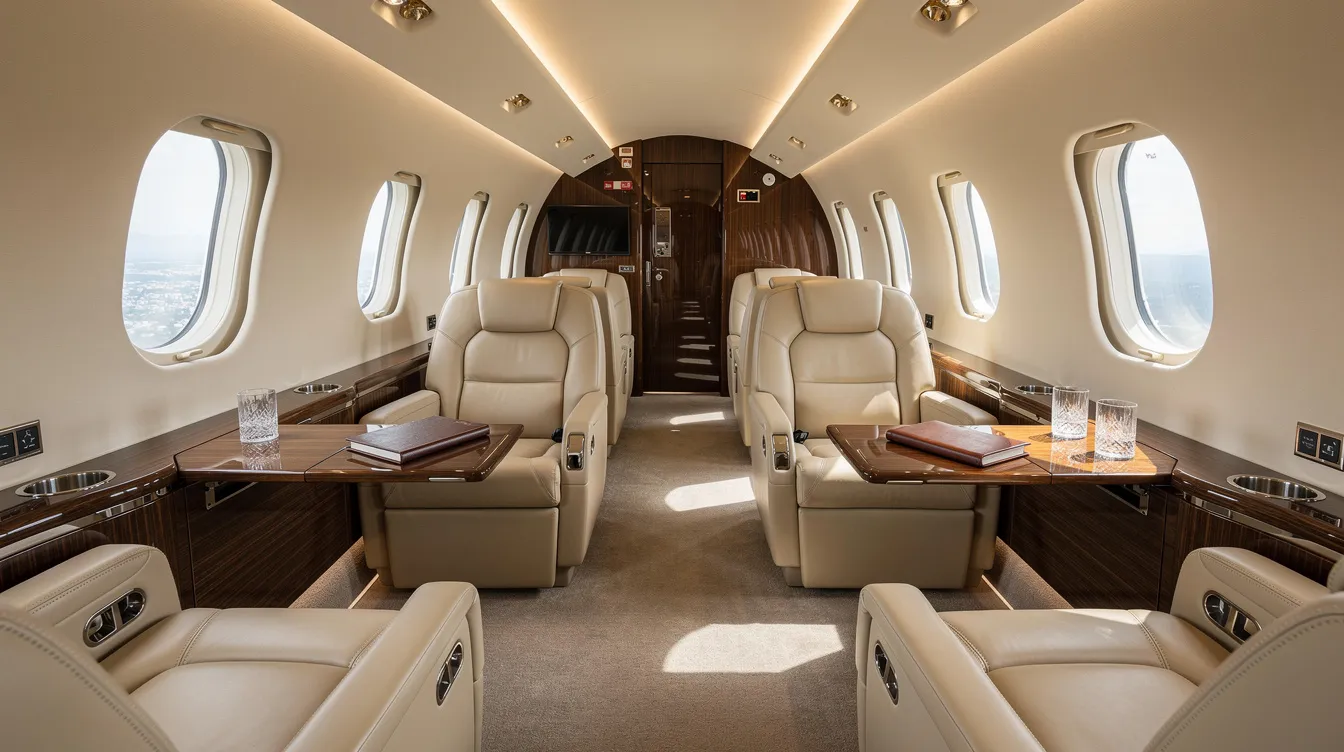
American Airlines first class seat width is a key factor for discerning travelers who measure comfort in inches and minutes. This guide is for plus-size travelers, business executives, and frequent flyers who want to understand how American Airlines first class seat width impacts comfort, productivity, and rest. Seat width refers to the distance between armrests. Domestic first class seats range from 19–21 inches wide. [1] For those who value every inch of space for working, relaxing, or simply enjoying a more comfortable journey, knowing these measurements—and what they mean for your body, your work, and your rest—can reshape how you plan every trip.
Understanding American Airlines' Cabin Hierarchy and Where First Class Fits
American Airlines operates one of the most layered cabin structures of any carrier. Understanding where first class sits in that hierarchy—and what it actually delivers—prevents expensive booking mistakes.
Basic economy: The most restrictive fare class, occupying the same physical main cabin seats but with limited seat selection and last-group boarding.
Main cabin: Standard economy with complimentary snacks and beverages.
Main cabin extra: Slightly more legroom (up to ~34 inches of seat pitch), same seat width as main cabin.
Premium economy: Available on select international flights, offering wider seats (~18.5–19 inches), more recline, and upgraded dining.
Flagship business class: Lie-flat seats on widebody international routes, typically 21–21.9 inches wide. (Lie-flat means the seat converts into a fully flat bed for sleeping.)
Flagship first class: The top-tier cabin, available only on Boeing 777-300ER and A321T aircraft, with lie-flat beds, multi-course meals, and direct aisle access. Flagship First passengers also receive premium ground and onboard benefits beyond the seat itself, including access to Flagship Lounges and, where eligible, Flagship First Dining. (Flagship First includes access to exclusive Flagship Lounges. [8])
Domestic first class—the top cabin on two-cabin narrowbody aircraft—is a different product from long-haul Flagship First. The former offers recliners with complimentary beverages; the latter provides a true international first class experience with privacy dividers and chef-designed meals. After Project Olympus and ongoing fleet retrofits, true Flagship First availability is shrinking, replaced by flagship business on many long-haul international routes.
Savvy travelers often mix American Airlines premium cabins for loyalty points and AAdvantage status earning with BlackJet Jet Card programs for time-sensitive or privacy-critical trips.
Next, let's review the specific seat width measurements and how American Airlines compares to private jet cabins.
Executive Summary: American Airlines First Class Seat Width vs. Private Jet Cabins
Domestic first class seats on American Airlines range from 19–21 inches wide. [1] On the Boeing 737-800/MAX 8, expect roughly 20–21 inches. The A321 family delivers a similar 21-inch cushion width. Move to long-haul Flagship First on the Boeing 777-300ER, and you'll find seats approximately 21–21.5 inches wide with full lie-flat capability. Flagship business class on the 777-200 and 787 Dreamliner stretches to about 21.9 inches.
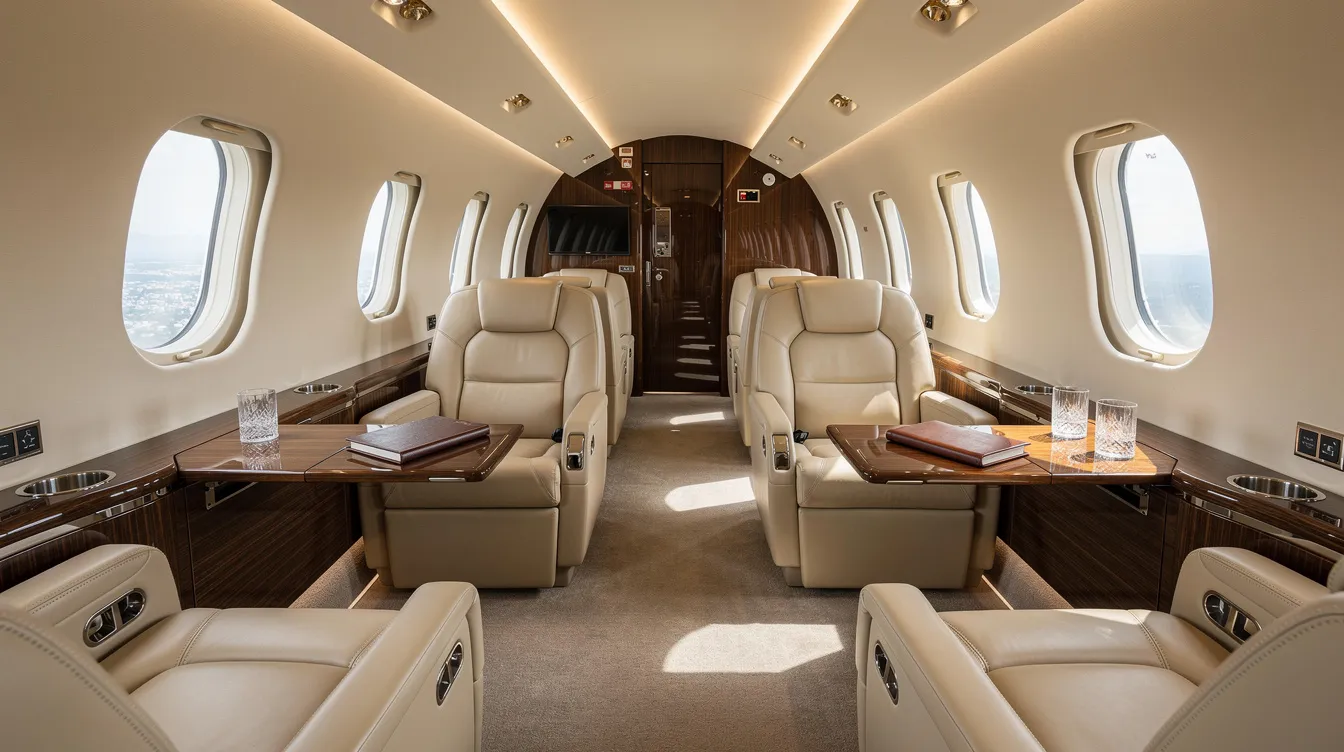
Those numbers tell part of the story. Private jet club chairs on midsize and heavy-cabin aircraft typically offer 21–24 inches of seat width, but the real advantage isn't raw inches—it's the absence of neighbors, the wider aisles, customizable seating positions (including side-facing divans), and the freedom to treat the entire cabin as your workspace or retreat.
American Airlines domestic first class: ~20–21 inches wide, recliner seats, 2-2 layout (Domestic first class seats range from 19–21 inches wide. [1])
Flagship First (777-300ER, A321T): ~21–21.5 inches, lie-flat beds, 1-2-1 or 1-1 layout (Flagship First includes access to exclusive Flagship Lounges. [8])
Flagship Business (787, 777-200): ~21–21.9 inches, lie-flat, higher seat density
Private jet club chairs: ~21–24 inches plus full-cabin privacy, no seatmates, layout flexibility
This guide is built for plus-size travelers, executives who need to work productively in flight, and frequent flyers weighing American Airlines first class against business class or private aviation through BlackJet.
Next, we'll define key terms and provide a quick reference for seat width by aircraft.
American Airlines First Class Seat Width by Aircraft (Quick Reference)
Seat width on American Airlines planes varies meaningfully by airframe. All measurements below refer to cushion width between armrests—not the overall personal space envelope, which can feel tighter when consoles, storage units, or shell walls intrude. (Seat width refers to the distance between armrests. [1])
Boeing 737-800 / 737-MAX 8 (domestic first, 2-2 layout): approximately 20–21 inches wide, ~37 inches of pitch. The Oasis/Kodiak retrofit has standardized these dimensions across the mainline narrowbody fleet. (First class seats have 37–42 inches of pitch. [2])
Airbus A321ceo / A321neo (domestic first, 2-2 layout): approximately 21 inches wide, ~37 inches of pitch. Recliner seats, not lie-flat. (Domestic first class lacks lie-flat seats and lounge access. [4])
A321T (transcontinental routes like New York JFK–LAX, JFK–SFO): Flagship First in a 1-1 layout, approximately 21 inches wide, ~82.5-inch bed length. A distinct product from standard domestic first. (Flagship First includes access to exclusive Flagship Lounges. [8])
Boeing 777-300ER (Flagship First, 1-2-1 layout): approximately 21–21.5 inches wide, ~78-inch bed, full lie-flat.
Boeing 787-8 / 787-9 (Flagship Business): approximately 21–21.9 inches wide, lie-flat, no separate first-class cabin on most configurations.
Embraer E-175 (regional aircraft, First, 1-2 layout): approximately 19.5–20 inches wide, ~37 inches of pitch. Recliner only.
CRJ-200 and smaller regional aircraft: no first class cabin available.
Exact numbers can shift with retrofit cycles. Always double-check seating charts for your specific American Airlines flights before booking.
Next, we'll look at domestic first class seat width and layout in more detail.
Domestic First Class Seat Width and Layout on Key American Airlines Aircraft
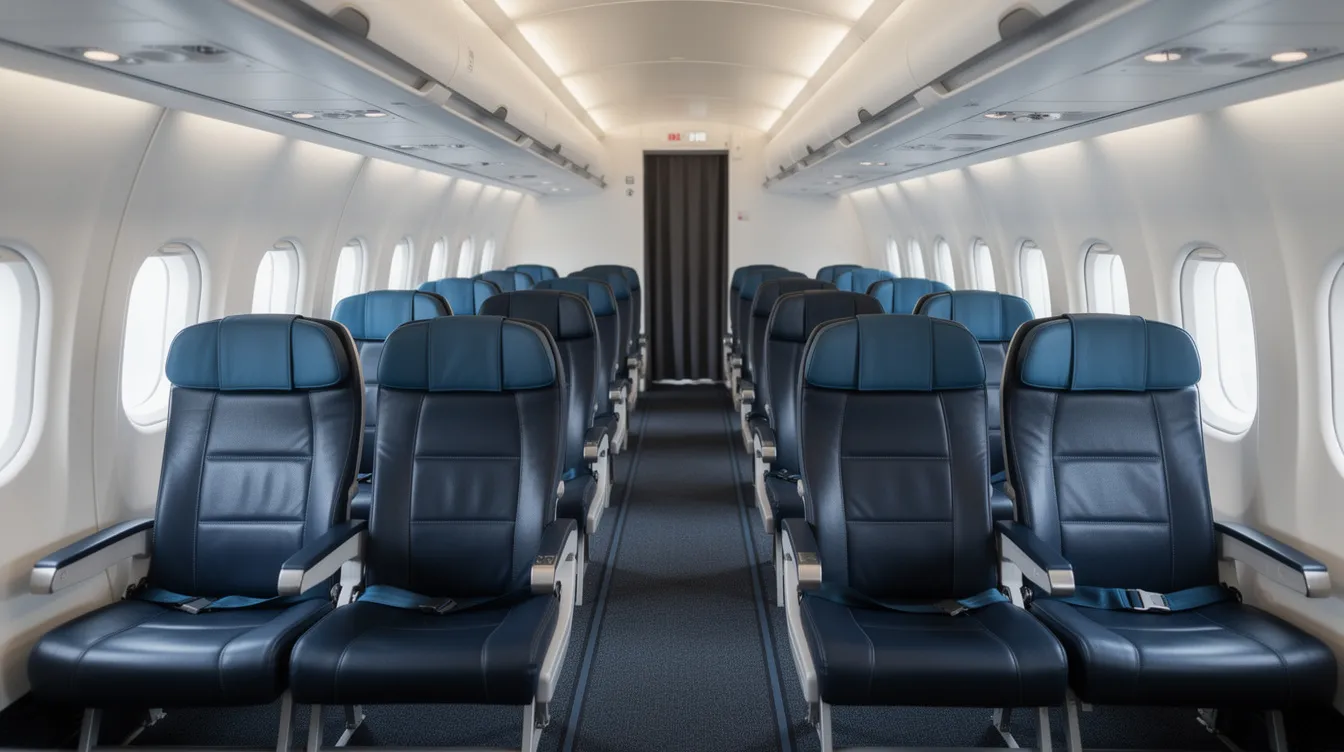
On American Airlines domestic narrowbodies—the A319, A320, A321, 737-800, and MAX 8—first class uses a 2-2 configuration. Two seats on each side of the aisle. This layout determines how much shoulder room you actually get, because the fuselage width and seat count create hard physical limits.
First class seats have 37 to 42 inches of pitch depending on the aircraft (seat pitch is the distance between a point on one seat and the same point on the seat in front; first class seats have 37–42 inches of pitch [2]), while domestic first class features 37 to 40 inches of pitch on most narrowbodies. [3] Width runs 20–21 inches. That's a meaningful upgrade from main cabin and main cabin extra, where seats are typically 17–18.5 inches wide. (Domestic first class seats range from 19–21 inches wide. [1])
Practical Notes:
Bulkhead seats often store tray tables inside the armrests, which can reduce usable hip room by up to an inch.
Fixed armrests on most domestic first class seats mean you cannot lift them for extra space.
Domestic first class lacks lie-flat seats on many flights—recliners only, which limits rest on longer flights (Domestic first class lacks lie-flat seats and lounge access. [4])
Domestic first class includes complimentary beverages on all flights, plus complimentary meals on flights over a certain duration.
First class passengers receive two free checked bags and priority boarding (First class passengers receive two free checked bags. [6]; Priority boarding is available for first class passengers. [7])
Domestic first class seat width makes the biggest difference on transcontinental routes lasting 3–5 hours, when working on a laptop, or when traveling as a pair in two seats side by side. For shorter hops under 90 minutes, the width advantage matters less than the boarding and overhead bin access.
Next, we'll examine how Flagship First and international business class compare in terms of seat width and comfort.
Flagship First and International Business Class: Lie-Flat Seat Width vs True Comfort
Flagship First Seat Features
On the Boeing 777-300ER, American Airlines offers its Flagship First product: eight first class seats in a 1-2-1 layout, each approximately 21–21.5 inches wide. Flagship First seats are fully lie-flat on Boeing 777-300ER aircraft, converting into beds roughly 78 inches long. (Lie-flat means the seat converts into a fully flat bed for sleeping.) Flagship First has a 1-2-1 seat layout with direct aisle access for every passenger—a critical feature for overnight flights. Flagship First features lie-flat seats with direct aisle access, and Flagship First passengers receive enhanced dining and beverage service, with multi-course meals designed by chefs. Passengers can pre-select meals 30 days before departure, adding a layer of personalization that domestic first class cannot match. (Flagship First includes access to exclusive Flagship Lounges. Flagship First includes access to Flagship Lounges at select airports. [9])
On the A321T serving transcontinental routes between New York JFK and Los Angeles or San Francisco, Flagship First occupies a 1-1 layout. Each seat is roughly 21 inches wide with an 82.5-inch bed. This configuration gives every Flagship First passenger both direct aisle access and window proximity—a rare combination.
Business Class Comparison
On retrofitted 777-200 and 787 Dreamliners, flagship business class replaces first class entirely. These lie-flat seats run up to 21.9 inches wide, with multi-course dining options available on select international flights. However, the cabin holds significantly more passengers (often 50 or more in premium cabins), so the privacy gap between business class and a private jet cabin grows wider.
The key nuance: published seat width figures measure cushion between armrests. The shell design and side tables on lie-flat beds can make shoulder and hip width feel narrower than the number suggests. Travelers who sleep on their side often find the effective bed width 1–2 inches less than advertised.
Flagship First offers lie-flat seats and multi-course meals, but it remains a shared cabin. For flying internationally on routes to South America or Europe, that distinction between 50 premium seatmates and zero matters enormously.
Next, we'll discuss seat width considerations for plus-size and broad-shouldered travelers.
Plus-Size and Broad-Shouldered Travelers: Is American Airlines First Class Seat Width Enough?
Tips for Plus-Size Travelers
For many plus-size travelers, 21 inches in American Airlines first class is a meaningful upgrade over the 17–18 inches in main cabin—but "meaningful" doesn't always mean "comfortable." On full domestic flights, hips can touch fixed armrests, and sharing a 2-2 row means no solitude. (Domestic first class seats range from 19–21 inches wide. [1])
Practical Strategies:
On the A321T, select a single Flagship First suite for maximum lateral freedom in a 1-1 layout
Choose aisle seats for easier mobility and the option to lean slightly into the aisle on quiet flights
Avoid bulkhead seats where tray table mechanisms intrude into armrest width
Request a seatbelt extender from flight attendants before departure—no need to wait until you're seated
If first class is unavailable, booking an extra seat in main cabin can sometimes be more effective than premium economy seats for hip room, though some travelers instead explore buying a seat on a private jet for select high-discomfort routes.
Some private jet club seats exceed 22 inches and, more importantly, offer wider aisles and no neighbors, and there are also budget-friendly private aircraft options that still outperform domestic first class on comfort for shorter, regional hops. For travelers who consistently find even American Airlines first class too restrictive, a private cabin layout allows custom seating positions, side-facing divans, and a level of comfort that doesn't require negotiating armrest boundaries with a stranger.
Next, we'll compare seat width to overall space, privacy, and work surface in first class.
Seat Width vs Overall Space: Legroom, Privacy, and Work Surface on American Airlines First Class
Seat width is one dimension of comfort. Seat pitch, recline depth, footwell size, and privacy dividers often matter just as much—especially on longer flights.
Domestic first offers decent legroom (37–40 inches of pitch [3]) and wider seats but limited privacy, no doors, and no lie-flat capability on most routes. (Domestic first class lacks lie-flat seats and lounge access. [4]) Inflight entertainment is typically seatback or wireless streaming, and wi fi quality varies by aircraft.
Flagship First adds adjustable dividers, lie-flat beds, and more space overall on the 777-300ER. Flight attendants deliver multi-course meals and complimentary alcoholic beverages, creating more space between service interactions. (Flagship First includes access to exclusive Flagship Lounges. [8])
Tray table size and stability differ sharply: domestic first class tray tables fold from the armrest, limiting both surface area and laptop stability. Flagship First offers larger, fixed surfaces.
Overhead bin availability is generally better in first class, reducing footwell crowding and giving a greater sense of room even when seat width is fixed.
Contrast this with a BlackJet private cabin: the full aircraft becomes your office, and once you understand how much it costs to rent a private jet, the time and productivity gains often outweigh the fare premium over first class. No seatmates, multiple seating positions (club-four configurations plus a divan), and guaranteed power and Wi-Fi for productivity throughout the flight. For executives who treat travel time as billable hours, private jet amenities deliver more space and functionality than even Flagship First, and understanding overall Jet Card membership cost structures helps quantify those productivity gains.

Next, we'll compare American Airlines seat width across all cabin classes and private jet options.
Comparing American Airlines First Class Seat Width, Business Class, and Basic Economy
Understanding how width scales across American Airlines' cabin ladder helps quantify the class worth of each upgrade:
Basic economy class and main cabin: ~17–18.5 inches wide on narrowbodies; basic economy passengers sit in the same physical seats as main cabin but face restrictions on seat selection, boarding group, and carry-on overhead bin access
Premium economy: ~18.5–19 inches on widebody international aircraft, with upgraded dining, more recline, and premium economy seats that offer incremental comfort over main cabin
Domestic first class: ~20–21 inches, with free alcohol, complimentary meals on eligible fare classes, and two free checked bags (Domestic first class seats range from 19–21 inches wide. [1]; First class passengers receive two free checked bags. [6])
Flagship business class / Flagship First: ~21–21.9 inches, lie-flat beds, lounge access at select locations, and a class product that rivals most international carriers (Flagship First includes access to exclusive Flagship Lounges. [8])
Upgrading from basic economy to domestic first class creates the largest width jump—roughly 3–4 inches of additional shoulder and hip room. Stepping from Flagship Business to Flagship First is more about privacy, service quality, and exclusivity than raw width. American Airlines domestic first class also lacks lounge access on domestic flights—unlike Flagship First, which includes access to exclusive Flagship Lounges [5][8]—one reason some travelers ultimately explore renting a private jet instead of stacking ever-more-premium commercial tickets.
For small executive teams, the math shifts: four last-minute first-class tickets on American Airlines can approach $12,000–$32,000. A 25-hour Jet Card or 50-hour Jet Card can turn those individual seat purchases into a single private cabin with superior width, privacy, and time savings, and a 100-hour Jet Card cost structure can make sense for enterprises or ultra-frequent flyers who want predictable access at scale.
Next, we'll look at how check-in, AAdvantage status, and other perks intersect with seat comfort.
Check-in, AAdvantage Status, and How They Intersect with Seat Comfort
The in-cabin experience starts well before takeoff. American Airlines first class check-in includes priority lanes, expedited security at major hubs, and earlier boarding—advantages that help you settle comfortably and secure overhead space before the cabin fills.
Priority boarding is available for first class passengers, and priority handling of luggage means faster arrivals at your destination (Priority boarding is available for first class passengers. [7])
AAdvantage status at the Platinum Pro and Executive Platinum tiers improves seat selection in main cabin and increases upgrade chances to domestic first or business class, directly impacting your seat width experience across a full year of flying.
Elite status and oneworld alliance perks can combine with first class tickets for Admirals Club lounge access on select routes, though American Airlines first class lacks lounge access on domestic flights unless you hold a separate membership or fly Flagship routes (American Airlines first class lacks lounge access on domestic flights. [5])
Flagship First passengers include access to Flagship Lounges at select airports like Fort Worth (DFW), New York JFK, and other select locations, with Flagship First Dining and upgraded preflight amenities that enhance the journey before long-haul flights (Flagship First includes access to Flagship Lounges at select airports. [9])
BlackJet Jet Cards function as a separate status layer entirely: guaranteed private cabin regardless of airline program, with 24/7 real-time support, safety-vetted operators, and carbon-neutral flights on every leg—plus potential Jet Card tax deductions that can further improve the economics for business travelers. No elite status tiers to earn. No upgrade lottery. No mixed nuts in a shared lounge—just your cabin, your schedule.
Next, let's see real-world comparisons between American Airlines and BlackJet in common travel scenarios.
Case Studies: American Airlines First Class Seat Width vs BlackJet Private Jet Cabins
Scenario | Seat Width | Privacy | Time Savings | Lounge Access |
|---|
New York to Los Angeles (AA Flagship First A321T) | ~21 inches (1-1 layout) | Shared cabin | 8–9 hours door-to-door (includes 45–60 min check-in, 40 min boarding) | Flagship Lounge (Flagship First includes access to exclusive Flagship Lounges. [8]) |
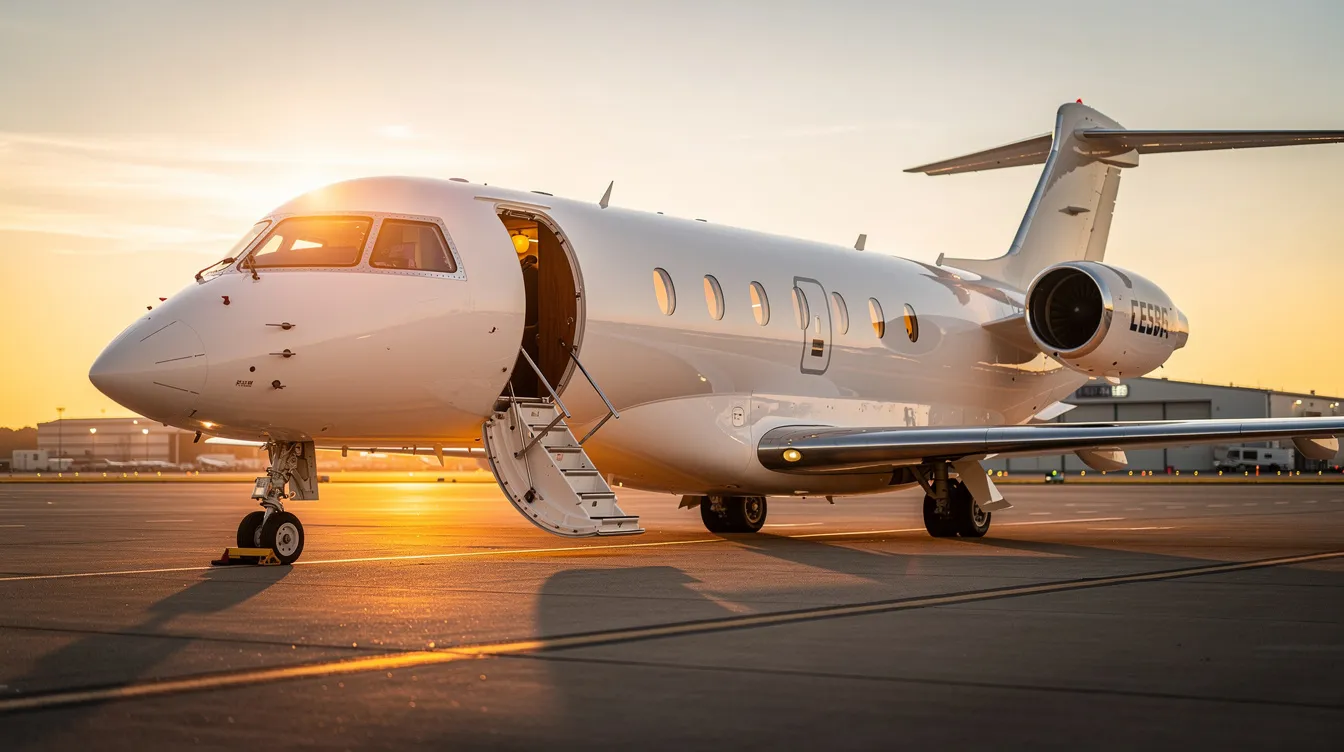
New York to Los Angeles (BlackJet midsize jet) | 21–22 inches (club seats) | Full-cabin privacy | 6.5–7 hours door-to-door (15–20 min FBO arrival) | Private FBO lounge |
Dallas–São Paulo (AA Flagship First 777-300ER) | ~21 inches (lie-flat) | Shared cabin | ~10 hours flight + 2–3 hours airport time | Flagship Lounge (Flagship First includes access to Flagship Lounges at select airports. [9]) |
Dallas–São Paulo (BlackJet heavy jet) | 22+ inches (custom layout) | Full-cabin privacy | ~10 hours flight + minimal ground time | Private FBO lounge |
Next, we'll discuss safety, sustainability, and technology in premium travel.
Safety, Sustainability, and Tech: Beyond Seat Width in Premium Travel
For high-net-worth travelers, safety certification is a critical aspect of private jet services—arguably more important than inches of cushion. American Airlines operates under FAA oversight with rigorous maintenance protocols, and its record as the world's largest airline by fleet size reflects significant operational scale.
BlackJet applies a proprietary safety-first approach that goes beyond minimum regulatory requirements: partnering only with audited operators holding ARGUS Platinum or Wyvern Wingman ratings, and applying additional vetting criteria to every operator in the network, comparable to standards maintained by top private jet companies globally.
On sustainability: American Airlines has publicly stated a goal of net-zero emissions by 2050. Carbon-neutral flights are increasingly offered by private aviation companies, and BlackJet delivers automatic carbon-neutral performance through verified offsets on every leg—at no additional cost to the traveler, even on more affordable private jet options that appeal to cost-conscious flyers stepping up from commercial first class.
Technology matters too. American Airlines offers in-flight Wi-Fi and seatback or wireless streaming entertainment. BlackJet provides a mobile booking platform for scheduling flights in minutes, real-time support for last-minute changes, and private jets that provide guaranteed power and Wi-Fi for productivity throughout the cabin. Mobile booking platforms are common in the private aviation industry, but BlackJet's digital tools are built specifically for the Jet Card experience.
These pillars—safety, sustainability, technology—elevate the travel experience beyond seat dimensions.
Next, we'll help you decide when American Airlines first class seat width is enough—and when to go private.
When American Airlines First Class Seat Width Is "Enough"—and When to Go Private
Choose American Airlines First Class when:
You're traveling solo or as a pair on predictable, hub-to-hub domestic flights where 20–21 inches of width and recliner seats provide adequate comfort (Domestic first class seats range from 19–21 inches wide. [1])
You're building AAdvantage status or loyalty points for future upgrades and want the ecosystem benefits
Flagship First on the 777-300ER or A321T is available, and lie-flat seats on select routes meet your rest needs for longer flights (Flagship First includes access to exclusive Flagship Lounges. [8])
Consider going private when:
You fly coast-to-coast frequently and the cumulative time lost to TSA, boarding, and taxi exceeds your tolerance—especially on same-day multi-city itineraries
You consistently find even American Airlines first class too restrictive for your body size, work requirements, or privacy standard.s
A team of three or more is traveling together, making multiple first class tickets approach the per-hour cost of a private cabin
Frequent business travelers prioritize flexibility and luxury in private aviation, and Jet Card programs typically include access to multiple cabin types for flexibility—from light jets for short hops to heavy jets for long-haul flights, and guides to the best Jet Cards for frequent flyers can clarify which program structure pairs best with your commercial first-class usage. Private aviation companies offer Jet Card programs for prepaid access to jets, turning ad-hoc charters into a predictable travel budget.
The trade-off is clear: American Airlines first class offers better per-seat cost and status benefits. BlackJet delivers superior privacy, time savings, and cabin flexibility.
Next, we'll answer the most common questions about American Airlines first class seat width and upgrades.
FAQs: American Airlines First Class Seat Width, Comfort, and Smart Upgrades
What is the seat width in American Airlines domestic first class on a 737-800 or A321?
Domestic first class seats on the 737-800 and A321 are approximately 20–21 inches wide between the armrests, with 37 to 40 inches of seat pitch. These are recliner seats in a 2-2 layout—not lie-flat. (Domestic first class seats range from 19–21 inches wide. [1]First class seats have 37–42 inches of pitch. [2]Domestic first class lacks lie-flat seats and lounge access. [4])
Is American Airlines first class wide enough for plus-size travelers?
At 21 inches, it's a clear improvement over 17–18 inches in main cabin, but many plus-size travelers still find fixed armrests tight on full flights. The A321T's 1-1 Flagship First layout offers the most space on a single-aisle aircraft. (Domestic first class seats range from 19–21 inches wide. [1])
How does AA business class seat width compare to Flagship First?
Flagship business on the 787 and 777-200 runs approximately 21–21.9 inches wide. Flagship First on the 777-300ER is about 21–21.5 inches. The width difference is minimal; the distinction is density, service level, and exclusivity. (Flagship First includes access to exclusive Flagship Lounges. [8])
Can I check in early and select better first class seats on American Airlines?
Yes. Online check-in opens 24 hours before departure, and AAdvantage elite status holders often receive earlier seat selection windows. Choosing non-bulkhead seats avoids armrest tray-table intrusions. (Priority boarding is available for first class passengers. [7])
Does AAdvantage status improve my chances of moving into wider class seats?
Platinum Pro and Executive Platinum members receive complimentary upgrade eligibility to domestic first and, on select routes, business class. Status doesn't guarantee the upgrade, but significantly improves odds—especially on off-peak American Airlines flights.
What dining is available in Flagship First?
Flagship First passengers can pre-select meals and receive the highest-end dining treatment on eligible routes. Flagship First dining features multi-course meals designed by chefs, with options passengers can pre-select 30 days before departure. On select international flights, expect multi-course dining with wine pairings and mixed nuts or grain bowls as lighter options. (Flagship First includes access to exclusive Flagship Lounges. [8])
At what point is a BlackJet Jet Card more practical than repeatedly buying first class tickets?
When you're booking 8–12 or more roundtrip first class tickets per year—especially last-minute—the cost begins to approach Jet Card program pricing or even the hourly rates you’d see when you rent a private jet outright. Factor in time saved (60–90 minutes per departure), guaranteed privacy, and carbon-neutral flights, and the value equation shifts decisively toward private aviation for frequent travelers.
Conclusion and BlackJet Call to Action: Move Beyond Inches to a Truly First-Class Cabin
American Airlines first class seat width—approximately 20–21 inches on domestic flights, up to 21.9 inches on Flagship Business and Flagship First—represents a substantial step up from main cabin. For many travelers on eighty small airlines and major carriers alike, that upgrade is meaningful. Flagship First on the 777-300ER and A321T delivers lie-flat comfort, direct aisle access, and a class review that competes with the best international carriers. (Flagship First includes access to exclusive Flagship Lounges. [8])
But for discerning travelers, the limiting factor was never just width. It's privacy. It's schedule control. It's the ability to treat the entire cabin as a workspace or retreat—without compromise.
BlackJet Jet Card programs deliver guaranteed private cabins, carbon-neutral flights, and curated safety standards that transform travel hours into productive or restorative time.
Every flight includes real-time support, access to multiple aircraft categories, and the flexibility that frequent business travelers demand.d
No upgrade lottery, no shared armrests, no overhead bin negotiations—just your cabin, your schedule, your terms
Elevate your travel—effortlessly. Explore BlackJet's Jet Card programs and discover how refined, meaningful travel becomes your new standard.


 Sign up with google
 Sign up with Apple