The type of aircraft you step onto determines far more than your cruising altitude. Whether you are boarding a commercial airline plane or a private jet, the airframe itself dictates your comfort, privacy, productivity, and the total time a trip consumes. For business executives and discerning leisure travelers, understanding how airline planes compare to private jets is no longer optional - it is a strategic advantage.
Commercial airline planes are classified by size, range, and cabin configuration. Consider a New York–London overnight flight. On a widebody aircraft like a Boeing 777 or Airbus A350, even a premium business class seat means arriving at the terminal two to three hours early, navigating security, and sharing a cabin with hundreds of passengers. On a large-cabin private jet accessed through a BlackJet Jet Card, the same route can save two to three hours per leg thanks to private terminals, zero boarding queues, and direct ground-to-aircraft access. Commercial airline planes are classified by size, range, and cabin configuration, and each class of airplane - narrow-body, widebody, regional jet - shapes the passenger experience differently. Wide-body aircraft are used for long-haul flights, while single-aisle workhorses dominate shorter routes in every major airline fleet.
This guide walks through the main types of airline planes, explains how airline fleets are structured, and shows when shifting certain trips to private aviation - through a program like BlackJet's premium Jet Card programs - delivers a measurable return on your time. Along the way, we will cover everything from Airbus aircraft cabins and Boeing jets to overhead bins, the role of United Express feeders, legacy manufacturers like McDonnell Douglas, and the question every traveler eventually asks: how many passengers are really on that plane?
How Airline Fleets Are Built (and Why That Matters to You)
An airline fleet is the complete inventory of aircraft types a carrier operates. Airlines select aircraft based on flight distance, airport size, and passenger capacity, balancing domestic workhorses like the Boeing 737 and Airbus A320 families with long-haul widebodies such as the Boeing 787 Dreamliner and Airbus A350. The airline's economic focus is on low operating cost per passenger, which means every fleet decision revolves around filling seats efficiently across a route network.
Regional affiliates like United Express operate smaller jets and turboprops - Embraer E175s, CRJ-700s - to funnel passengers from secondary cities into hubs where they connect onto larger aircraft. Airlines choose aircraft based on operating costs, efficiency, and demand, so the planes you encounter on any given itinerary are rarely random.
Fleet composition directly shapes your travel experience: departure frequency, cabin layout, overhead bin volume, seat width, and whether a premium cabin even exists on your route. Airline planes are built to carry many people and run on strict schedules, which is efficient at scale but inflexible for individual travelers.
BlackJet takes the opposite approach. Instead of assigning a one-size-fits-many airplane, Jet Card members select an aircraft category - light, midsize, super-midsize, or large cabin - matched to trip profile and group size. A corporate team of six flying Dallas to Chicago on a busy Monday can board a midsize private jet from a regional airport near their office, depart 20 minutes after arrival, and land directly - while a 737 or A320 commercial flight demands two hours of pre-departure time and zero schedule control.

Narrow-Body Airline Planes: The Single-Aisle Workhorses
Narrow-body airliners are also known as single-aisle aircraft, and they are the most common planes in the sky. Narrow-body aircraft are typically used for short to medium-haul flights, covering routes up to roughly 3,500–4,000 nautical miles.
The dominant models include:
Boeing 737 family - from the 737 NG through the 737 MAX
Airbus A320 family - A319, A320, A321, and their NEO variants
Airbus A220 - featuring a maximum range of 3,600 nautical miles
Embraer E-Jet E2 - bridging the gap between regional and mainline service
The Airbus A320 is the world's best-selling single-aisle aircraft, and Airbus and Boeing dominate the narrow-body and wide-body markets globally. Narrow-body airliners typically seat 100 to 240 passengers; a typical two-class layout carries 140–200, while high-density configurations push beyond 220 on select variants.
The cabin experience follows a predictable pattern: 3–3 seating in economy, an optional 2–2 domestic first or business section, and overhead bins that fill quickly on full flights. Single-aisle aircraft connect domestic routes while twin-aisle planes fly long distances, so these are the planes you encounter most on sectors like New York–Miami, London–Athens, or Dallas–Denver.
Airlines favor narrow-bodies for their fuel efficiency on high-frequency routes and their flexibility to serve both major airports and shorter runways at secondary fields. For private flyers, the contrast is stark: a light or midsize jet carries a small number of passengers - often four to fourteen - with seating arranged for conversation and work, no competition for overhead bin space, and departure times set by you, not an airline schedule, making it important to understand private jet sizes and categories when planning your trips.
Widebody Aircraft: Twin-Aisle Giants for Global Routes
Widebody aircraft are twin-aisle jets built to fly long-haul international flights, typically carrying 250–400+ passengers with ranges exceeding 6,000 nautical miles. Wide-body aircraft are used for long-haul flights. The Boeing 747 was the first wide-body airliner, and the category now includes some of aviation's most recognizable models:
The Airbus A380 is the world's largest passenger aircraft, while older icons like the Boeing 747 continue in limited passenger and freight service. Wide-body aircraft can seat between 220 and 853 passengers depending on configuration, though real-world multi-class layouts on most airlines fall between 250 and 500 seats, whereas a private jet for 15 passengers delivers comparable group capacity with an entirely different level of privacy and control. Very large aircraft are suited for high-demand hub-to-hub routes like London–Dubai or Los Angeles–Sydney, while corporate groups and large families often choose 16-seat private jet options when they want similar capacity in a private cabin.
Typical economy seating runs 2–4–2, 3–3–3, or 3–4–3, while premium cabins offer lie-flat business seats, private first-class suites, and premium economy - a middle ground that many airlines have expanded in recent years. On these larger frames, wingspan commonly ranges from 35 to 80 meters, supporting the aerodynamic performance needed for nonstop sectors of 10 to 17 hours.
For private travelers, long-range business jets like the Gulfstream G650/700 or Bombardier Global 6500/7500 function as personal-scale widebodies - covering similar ranges with 10–16 passengers in ultra-private cabin environments. A 14-hour New York–Hong Kong sector on a Boeing 777-300ER in business class is comfortable; the same route on a BlackJet-accessed large-cabin jet eliminates shared cabins entirely, offers sleeping arrangements designed for a small group, and enables confidential meetings at altitude - advantages no commercial cabin can replicate.
Regional Jets, Turboprops, and United Express-Style Operations
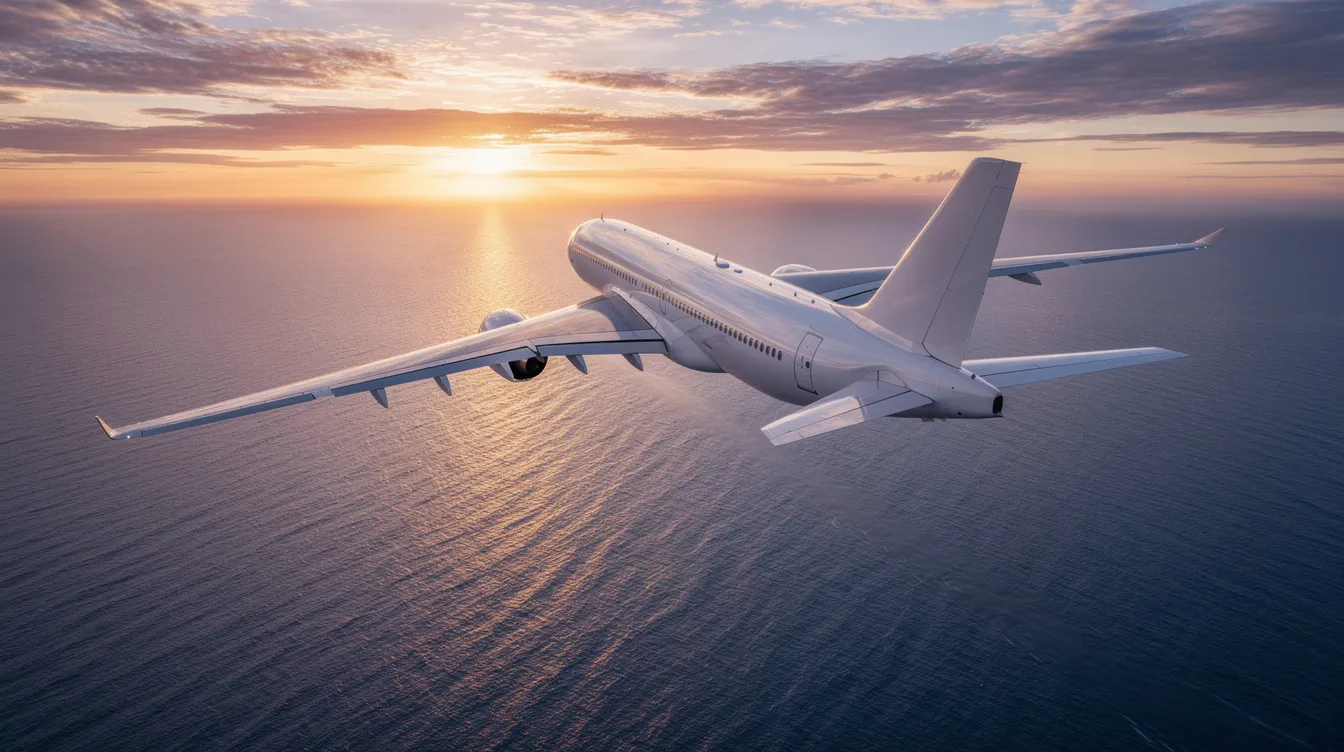
Regional jets connect smaller cities to major airline hubs, forming the spoke-and-spoke infrastructure that feeds passengers onto mainline flights. United Express is a textbook example: smaller carriers like SkyWest, Mesa, and Republic fly under the United brand with aircraft seating 50–76 passengers.
Common regional types include:
These planes carry passengers from cities like Fargo or Boise into hubs such as Chicago O'Hare or Denver, where they board mainline narrow-body or widebody jets for onward travel, while larger groups may instead charter private jets for around 20 passengers to fly point-to-point on their own schedule. Pilots often train on these regional aircraft before moving into larger airline operations. Airline planes typically carry 50 to 850 passengers depending on the model, and regional aircraft occupy the lower end of that spectrum with tighter cabins, shorter seat pitch, limited or nonexistent premium cabins, and smaller overhead bins that often force gate-checking of carry-on luggage.
For private aviation users, these are precisely the routes where Jet Card access delivers outsized value. A BlackJet light jet can fly direct between two regional airports, bypassing hubs and eliminating layovers entirely.
Consider a law firm team needing to visit clients in two midwestern cities on the same day. Commercial regional flights would require an overnight stay and hub connections both ways. A private itinerary covers both cities and returns the team home by dinner - same day, no connections, no lost billable hours.
Classic Commercial Jets: Boeing, Airbus, and McDonnell Douglas Legacies
Modern airline fleets are descended from a handful of pioneering manufacturers. Boeing defined the jet age with the 707 and 727 in the late 1950s and 1960s. McDonnell Douglas contributed the DC-9, MD-80 series, and the wide-body MD-11 before merging with Boeing in 1997. Airbus entered the market with the A300 - the world's first twin-engine widebody - and steadily expanded into the global force it is today. British manufacturers like de Havilland and BAC also played early roles, though consolidation left Boeing and Airbus as the dominant OEMs.
Several older aircraft remain active in the 2020s, mostly in cargo roles. Cargo aircraft are designed exclusively for transporting goods and freight, and converted MD-11 freighters, aging 767s, and early A330s continue hauling goods worldwide; at the other end of the spectrum, VIP-configured airliners serve as private jets for up to 50 passengers, blending airline-scale capacity with bespoke interiors. A few legacy passenger types linger in limited service, but most have been retired in favor of newer, quieter, and more efficient airframes.
To enhance cruise efficiency, commercial aircraft typically feature swept wings - a design innovation that became standard in the jet era and persists across every modern airliner. Airliner designs prioritize fuel efficiency over speed or maneuverability, a philosophy that has driven each successive generation toward lower fuel consumption and less fuel burned per seat mile.
For high-net-worth travelers, the lesson is straightforward: newer aircraft offer measurably better cabins, lower noise, and higher safety margins. BlackJet's vetted operator partners use up-to-date, safety-certified jets rather than aging airframes, ensuring every flight reflects current-generation standards and aligns with what most travelers learn when they explore how safe private jets really are.
The Boeing 737: The Ubiquitous Narrow-Body
The Boeing 737 is one of the most widely produced commercial jets in history. Boeing 737 Next Generation planes were introduced in 1965, and the family has evolved through multiple generations:
Classic series: 737-300, -400, -500
Next Generation (NG): 737-600, -700, -800, -900 - the Boeing 737 family includes models like the 737-700 and 737-900
MAX family: 737 MAX 7, 8, 9, 10
Typical seat counts range from roughly 130 to 215 in two-class layouts, with the 737-800 and MAX 8 being the most common variants across many airlines worldwide. Southwest operates the largest fleet of 737s of any carrier, while Delta, United, and dozens of international airlines rely on the type for domestic and short-haul routes.
The passenger experience on a 737 follows a familiar template: 3–3 economy seating, overhead bins sized for standard roll-aboard bags (larger on MAX variants), and in-flight Wi-Fi on many carriers. The cockpit features modern glass-panel avionics on NG and MAX versions, and pilots transitioning between generations benefit from significant commonality in procedures and systems.
Safety improvements across each generation have been substantial, and the rigorous certification process that the MAX program underwent mirrors the exacting safety culture found in top-tier private aviation operations.
For a CEO flying weekly between Seattle and San Francisco, the 737 shuttle is predictable and affordable. But when schedule flexibility, confidentiality, or door-to-door speed matters, a BlackJet Jet Card flight on a light or midsize jet delivers the time savings and privacy that no commercial shuttle can match - departing from a closer regional field and arriving ready to work, not waiting at baggage claim.
Airbus Aircraft Families and the Modern Passenger Experience
Airbus builds a comprehensive range of passenger aircraft, each targeting a specific slice of the route-distance and demand spectrum:
Family | Typical Seats | Role |
|---|
A220 | 100–150 | Short/medium-haul, thinner routes |
A320 family | 140–240 | Short/medium-haul workhorse |
A330neo | 250–300 | Medium/long-haul widebody |
A350 | 300–480 | Long-haul, next-generation widebody |
A380 | 450–600 (typical) | Ultra-high-capacity hub-to-hub |
The Airbus A320 remains the world's best-selling single-aisle aircraft. The A350 family uses 25% less fuel than previous models, thanks to advanced composite structures, aerodynamic refinements, and next-generation engines. The Airbus A350 uses 25% less fuel than previous-generation aircraft, making it capable of serving long-haul markets for carriers like Air France, Delta, and Singapore Airlines.
Airbus's "Airspace" cabin concept delivers wider single-aisle cabins than comparable Boeing jets, larger overhead bins, customizable LED lighting, and advanced air filtration - all designed to elevate the passenger experience across economy, premium economy, and business class. Cabins on A350s and A330neos feel noticeably more spacious and quieter than older widebodies.
Where airlines optimize for how many passengers they can fit per flight, BlackJet optimizes for how effective each individual trip is for a small group. Many BlackJet clients fly commercial on long-haul trunk routes - often on Airbus widebodies - and use private jets for regional, multi-stop, or time-critical segments. The two modes complement each other when deployed strategically.
Cabin Configurations, Overhead Bins, and Onboard Comfort
Airlines configure cabins differently on the same airframe, balancing revenue per seat against passenger comfort. An Airbus A321, for instance, can be set up as an all-economy high-density layout or a two-class aircraft with a spacious domestic first cabin. Airliners typically have first, business, and economy classes, though the specific seat products vary enormously by carrier.
Key cabin characteristics by class:
Economy: Economy class seats are often placed close together for more capacity - typically 28–32 inches of pitch, 17–18 inches of width.
Premium Economy: 36–38 inches of pitch with wider seats and better recline.
Business: Lie-flat beds on widebodies, angled-flat on narrow-bodies, often with direct aisle access.
First: Enclosed suites on select airlines, the most private option in commercial aviation.
Exit row seats usually offer more legroom than standard seats, and around or above passenger seats you'll typically find reading lights and air vents, while cabins also include lavatories for comfort. Airlines can customize overhead bin sizes and designs; newer aircraft like the 737 MAX and A321neo feature redesigned bins that accommodate more standard carry-on bags, though full flights still lead to gate-checking. Airline planes include features for passenger comfort like climate control and galleys, but the experience varies sharply depending on which specific airplane and configuration you draw.
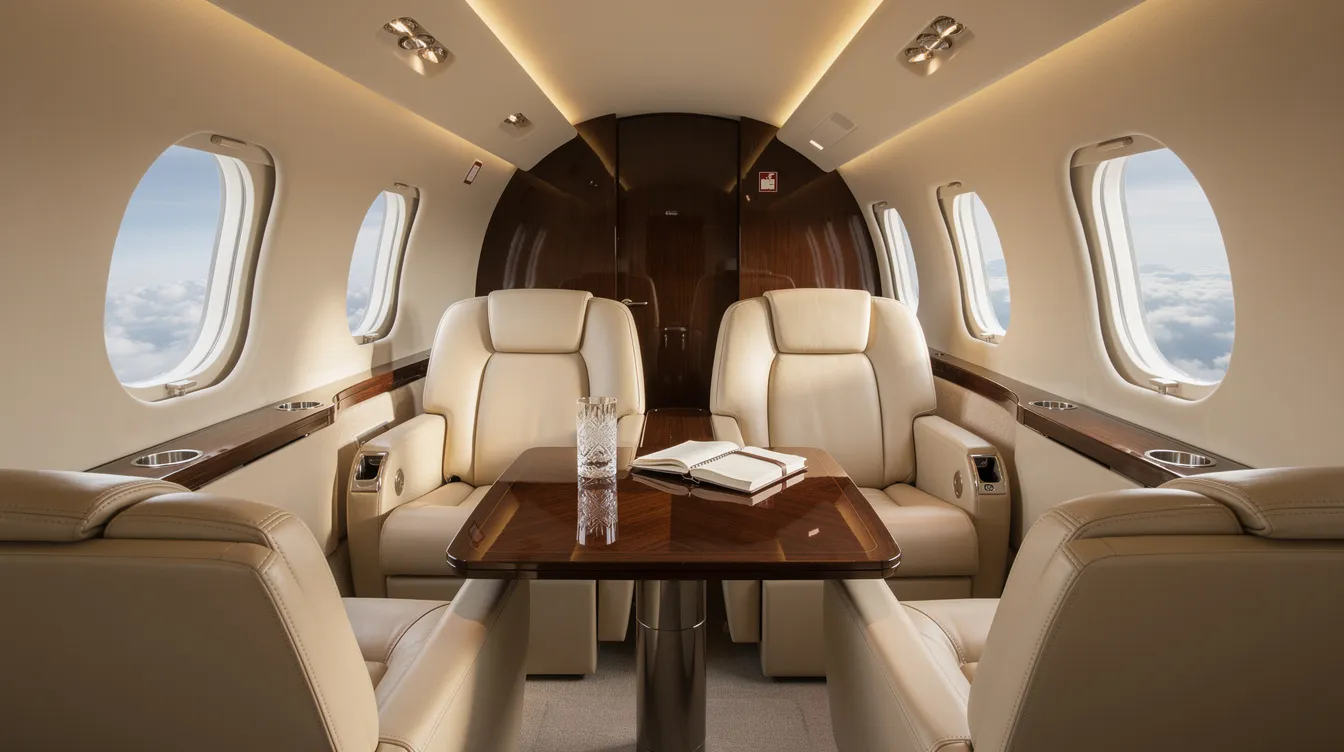
For affluent travelers, the pain points of commercial cabins are consistent: limited privacy, difficulty working on sensitive materials in a shared space, and dependence on airline schedules, which leads some to evaluate the best personal planes for their own use when maximum control becomes a priority. A BlackJet midsize jet cabin flips this equation - club seating around a conference table, guaranteed luggage space, boarding minutes before departure, and personalized catering that turns travel time into productive or restorative time.
Picture a founder flying with a small team of four to a board meeting, having weighed the most affordable private jet options to balance budget with the need for privacy and flexibility. In a midsize private jet, the cabin functions as a confidential flying boardroom - documents reviewed, strategy finalized, arrival calm and prepared. No commercial cabin, regardless of class, can truly replicate that environment.
Pressurization, Climate Control, and Passenger Well-Being
Pressurized cabins ensure safety at high altitudes in airliners. When a commercial plane cruises through the clouds at 35,000–40,000 feet, onboard systems maintain cabin pressure equivalent to an altitude of roughly 6,000–8,000 feet. On many older aircraft, cabin altitude sits near 8,000 feet - high enough to cause noticeable fatigue, dry eyes, and dehydration, especially on long flights.
Modern widebodies have changed this picture. The Boeing 787 Dreamliner and Airbus A350 use composite fuselage structures that tolerate higher pressure differentials, allowing cabin altitude to drop to around 5,000–6,000 feet. The 787's bleed-less air system uses electrically driven compressors rather than traditional engine bleed air, improving both humidity and air quality. Humidity levels on conventional airliners hover around 10–20%, far below comfortable norms - a key contributor to jet lag and post-flight fatigue.
Many newer private jets maintain cabin altitudes of 4,500–6,000 feet at cruise, with better perceived air quality and higher humidity. For executives hopping time zones multiple times per month, the cumulative difference in rest quality is material. Arriving at a meeting in London or Tokyo feeling rested rather than depleted can influence outcomes in ways that are difficult to quantify but easy to recognize.
BlackJet works only with operators whose fleets meet strict maintenance and safety standards, ensuring that pressurization and environmental control systems - the invisible systems that determine how you feel when you land - are rigorously inspected and certified through every service interval, a level of diligence that becomes clearer once you understand the broader private jet price list and ownership options.
Safety, Certification, and Operational Standards in Airline Planes
Commercial aircraft must adhere to stringent airworthiness standards enforced by regulators like the FAA and EASA. Safety in commercial aviation is a multi-layered system:
Type certification: Every airplane design undergoes exhaustive testing before its first flight with passengers.
Airworthiness directives: Ongoing mandatory inspections and modifications issued by regulators.
Crew training: Pilots complete recurrent simulator checks; every flight attendant is trained in emergency procedures.
Maintenance regimes: Airliners are expected to fly many hours daily with extensive maintenance schedules, and airline operating economics focus on minimizing maintenance and training costs without compromising safety.
Airline planes require long, reinforced runways for operations, and the infrastructure supporting commercial aviation - from air traffic control to ground support - is among the most regulated in the world. Major manufacturers invest heavily in technologies like fly-by-wire controls, enhanced warning systems, and redundant hydraulic architectures. When an aircraft has crashed in the past, the resulting investigation almost always leads to systemic safety improvements that reduce future accident risk across the entire industry.
In private aviation, top-tier operators follow equivalent or stricter standards. BlackJet partners exclusively with safety-certified operators whose aircraft meet or exceed commercial-grade requirements. Third-party audit frameworks like IS-BAO and ARGUS ratings provide independent verification of crew training, maintenance practices, and operational procedures.
For safety-conscious travelers comparing options, the key factors are consistent: operator track record, audit certifications, crew experience, insurance coverage, and aircraft age. Structured Jet Card programs impose these standards systematically, while ad-hoc charter bookings may not, which is why many travelers study a detailed guide to overall Jet Card costs before committing to a program.
Sustainability and Modern Airline Planes
Aviation's environmental footprint is a legitimate concern, and the industry is responding with tangible - if incremental - progress. The main levers in commercial aviation include more efficient airframes, improved flight path planning, and the adoption of sustainable aviation fuel.
High-bypass turbofan engines are used for fuel efficiency in commercial aviation, and turbofan engines are designed to operate efficiently at high altitudes, where thinner air reduces drag. Latest-generation jets like the A320neo, 737 MAX, A350, and 787 reduce fuel burn per seat by roughly 20–25% compared with the older aircraft they replace, just as newer very light and light jets highlighted in budget-friendly private aircraft guides help make private flying more efficient and accessible.
Sustainable aviation fuel can reduce CO₂ emissions by up to 80% over its full lifecycle. The chemical reaction during combustion is similar to conventional jet fuel, but SAF feedstocks - used cooking oil, agricultural byproducts - absorb carbon during growth, dramatically lowering net emissions. All Airbus aircraft can fly using a 50% SAF blend today, and Airbus is conducting flight tests for 100% SAF capability, targeting full certification by 2030. Airbus aims for 30% SAF in its global fuel mix by 2030.
Sustainability in private aviation requires candor: per-passenger emissions are higher when aircraft carry fewer people, so understanding Jet Card cost per hour and aircraft efficiency is essential when weighing environmental impact against time savings. But efficient fleet selection, route optimization, and carbon offset programs can materially reduce total impact. BlackJet's commitment to carbon-neutral flights includes verified offsets and prioritization of fuel-efficient aircraft categories for every trip - at no extra cost to the member.
When evaluating sustainability claims from any provider, look for verified offset standards, transparent reporting, and a realistic roadmap rather than vague promises.
How Many Passengers Can Airline Planes Carry? (From Regional to Superjumbo)
Passenger capacity varies enormously across the commercial fleet:
Aircraft Category | Typical Seat Count | Example Models |
|---|
Regional turboprop | 30–80 | ATR 72, Dash 8 |
Regional jet | 50–100 | ERJ-145, E175 |
Narrow-body | 100–240 | A220-100 (~100–130), 737-800 (~160–180) |
Widebody | 250–500+ | A330 (~250–300), 777-300ER (~350–400) |
Superjumbo | 450–853 | A380 (certified up to 853 all-economy) |
The Airbus A380 is the world's largest passenger aircraft, though actual airline layouts usually configure 450–600 seats in multi-class arrangements. Airlines customize seat counts aggressively to balance comfort, revenue, and route strategy, so published maximums rarely match what you encounter on board.
Private jets occupy the opposite end of the spectrum:
Light jets: 4–8 passengers
Midsize: 8–10 passengers
Super-midsize: 10–12 passengers
Large cabin: up to 16–19 passengers
The emphasis shifts entirely from headcount to personal space and productivity. When a small group of four to eight executives needs to travel together, the per-hour cost of a private jet begins to look very different from the per-seat cost of premium commercial tickets - especially when you factor in the value of time saved and the ability to work, rest, or hold meetings without interruption, which is precisely the calculus explored in depth in 100-hour Jet Card cost analyses.
Commercial Airline Planes vs Private Jets: Time, Control, and Experience
Here is where the comparison becomes concrete. On a 500–1,500 mile trip, the differences between commercial and private aviation stack up quickly:
Time:
Commercial airlines require arriving 1.5–3 hours before departure. Private aviation requires 15–30 minutes.
Boarding, taxiing, and disembarking add 30–60 minutes on each end for commercial. Private terminals eliminate virtually all of this.
Connection risks on commercial itineraries can add hours or even overnight stays. Private flights are point-to-point.
Privacy and Productivity:
On a commercial plane, you share a cabin with dozens or hundreds of passengers. Sensitive conversations, screen work, and strategy sessions are compromised.
A private jet cabin seats only your group. Wi-Fi is dedicated, catering is customized, and the environment supports focused work or genuine rest.
Flexibility:
Airlines operate fixed schedules on fixed routes. If your meeting runs long or a second city needs to be added, rebooking is cumbersome and often expensive.
A Jet Card flight departs when you are ready, lands at airports closer to your final destination, and can accommodate last-minute changes without dismantling your itinerary.
Imagine a BlackJet Jet Card member running a three-city roadshow: Los Angeles to Phoenix, Phoenix to Denver, Denver back to Los Angeles - all in a single day, enabled by a BlackJet 25+ Hour Jet Card that locks in rates and guarantees access. On commercial flights, that itinerary is functionally impossible without overnight stops. On a private midsize jet, the crew and airplane are staged and waiting at each stop. You cover three markets and sleep in your own bed.
Many sophisticated travelers use a hybrid model: commercial for long-haul trunk routes on widebody aircraft - where lie-flat business class on a 14-hour sector represents genuine value - and private aviation for regional, multi-stop, or time-critical segments. The goal is not to choose one mode over the other but to deploy each where it delivers the highest return. Understanding the cost dynamics of private aviation and how they translate into Jet Card pricing per hour makes this portfolio approach practical rather than theoretical.
Jet Cards, On-Demand Charter, and Airline Tickets: Choosing the Right Tool
Three primary options exist for air travel:
Airline tickets - priced per passenger per segment, with fixed schedules and route networks
Ad-hoc private jet charter - priced per aircraft per hour plus positioning and other fees, booked trip by trip
Jet Card programs - prepaid blocks of flight hours at fixed rates, with priority access and simplified budgeting
Jet Cards are particularly suited to travelers who fly privately 25 or more hours per year and want pricing predictability, and a detailed look at Jet Card pricing structures can clarify which program model fits best. A 25-hour Jet Card might cover eight to ten regional round-trips or four to five transcontinental journeys for a family or executive team, while a traveler anticipating heavier usage may find that a 50-hour Jet Card cost structure delivers better value over the year. A 50-hour card extends that runway significantly, offering even greater flexibility and value per hour.
The economics differ fundamentally from commercial tickets, and many travelers benchmark those numbers against NetJets Jet Card costs and similar programs to understand relative value. An airline seat is priced per person, so a group of six buying business class tickets on a popular route may spend a combined amount that approaches the cost of a private midsize jet - while getting none of the time savings, privacy, or flexibility. Charter pricing can be opaque and variable; Jet Cards bring the transparency of fixed hourly rates to an industry that has historically lacked it.
Understanding aircraft types, ranges, and cabin characteristics helps Jet Card vs charter vs fractional decisions become clearer, especially when paired with an overview of the best Jet Cards for frequent flyers. When business class on an A350 is optimal for a 12-hour trans-Pacific sector, use it. When a Tuesday-morning hop to three cities in the southeast needs to happen seamlessly, deploy your Jet Card hours. Think of your annual travel as a portfolio, intentionally allocating segments between commercial airline fleets and private jets for maximum efficiency.
Technology, Booking Platforms, and Real-Time Flight Support
Airlines and private aviation providers both rely increasingly on digital platforms, but the degree of control they give passengers differs dramatically.
Commercial airline apps let you select a seat, store a boarding pass, and receive disruption alerts. What they do not give you is control over departure time, aircraft type, exact routing, or the ability to redirect mid-journey during irregular operations. When storms ground flights across the northeast, the airline app notifies you that your flight is canceled and offers automated rebooking - often hours or a day later.
BlackJet's 24/7 digital platform operates differently. Jet Card members request flights, select aircraft categories, view pricing, and coordinate special requests - catering, ground transfers, specific cabin configurations - from a mobile device. Behind the platform, dedicated specialists monitor weather, slot restrictions, and airport conditions in real time, proactively suggesting alternative airports or departure windows before problems escalate.
Consider a scenario: widespread afternoon thunderstorms close Teterboro and several commercial airports around New York. A BlackJet member with a critical dinner meeting in Washington, D.C. receives a call from their flight support team suggesting a departure from a nearby field in Connecticut that remains open. The crew repositions, the member boards 40 minutes later than planned, and arrives in D.C. on time. A commercial traveler on the same afternoon is still standing in a terminal, refreshing an app.
Technology also gives private aviation clients visibility into aircraft details - tail numbers, aircraft model, maintenance history, and operator safety record - empowering travelers who care about exactly which jet they are stepping onto.

Frequently Asked Questions About Airline Planes and Private Jets
What are the main types of commercial airline planes and how do they differ? Commercial airline planes fall into three broad categories: regional jets and turboprops (30–100 seats, short routes), narrow-body or single-aisle aircraft (100–240 seats, short to medium-haul), and widebody or twin-aisle aircraft (220–853 seats, long-haul). Each category serves a different route length and demand profile.
How many passengers can typical airline planes carry compared with private jets? A narrow-body like the 737-800 carries about 160–180 passengers. A widebody like the 777-300ER seats 350–400. Private jets, by contrast, carry 4–8 in light jets up to 16–19 in large-cabin models - the focus is personal space, not capacity.
Are private jets safer than airline planes? When you fly with audited, certified operators, private aviation safety is comparable to commercial standards. Programs like BlackJet vet operators through third-party frameworks such as ARGUS and IS-BAO, ensuring crew training, maintenance, and operations meet or exceed commercial-grade benchmarks.
How does cabin comfort on a modern widebody compare with a large-cabin private jet? A modern widebody like the A350 offers excellent business class products with lie-flat seats, lower cabin pressure altitude, and good air quality. A large-cabin private jet goes further: complete privacy, configurable cabin layouts, dedicated Wi-Fi, and the ability to board minutes before departure with no shared space.
Can private jets fly as far as long-haul widebody aircraft? Yes. Global-range business jets like the Gulfstream G700 and Bombardier Global 7500 can fly 6,000–7,500+ nautical miles nonstop, overlapping with the range of commercial widebodies while carrying 10–16 passengers.
Are airline planes more eco-friendly than private jets? On a per-passenger basis, full commercial flights are more efficient due to higher load factors. However, private operators can reduce their footprint through SAF usage, carbon offsets, and efficient aircraft selection. BlackJet ensures every flight is carbon neutral through verified offset programs.
What is the difference between a Jet Card and a traditional charter? A Jet Card provides prepaid hours at fixed rates with guaranteed availability and consistent service standards. Traditional charter is booked trip by trip with variable pricing and less predictability. For frequent travelers, Jet Cards offer better budgeting and access.
For personalized route and aircraft planning, BlackJet advisors are available to help design a travel strategy that fits your specific needs - treated as a consultative service, not a sales call.
Conclusion: Designing a Smarter Travel Strategy Around Aircraft Types
Understanding airline planes - from regional turboprops to superjumbo widebodies - and how they compare to private jets gives you a practical framework for better travel decisions. Every flight you take involves trade-offs between time, cost, comfort, privacy, and environmental impact. The more precisely you understand the aircraft involved, the more deliberately you can optimize those trade-offs.
The central themes are consistent across every section of this guide: time savings compound, privacy enables better outcomes, safety is non-negotiable, sustainability demands transparency, and technology makes informed choices easier than ever.
BlackJet is positioned as a strategic partner in this equation - not a replacement for commercial aviation but a complement to it. The goal is helping clients identify when commercial airline fleets serve them well and when deploying Jet Card hours delivers outsized value in saved time, gained productivity, or protected well-being.
A practical next step: audit your past 12 months of travel. Identify the routes where you arrived exhausted, where connections cost you half a day, or where privacy would have changed the quality of a meeting. Those are the segments where private aviation earns its place in your travel portfolio.
Explore BlackJet Jet Cards or speak with an advisor about building a tailored private aviation plan that complements your preferred airlines, your schedule, and the way you want to move through the world.


 Sign up with google
 Sign up with Apple


