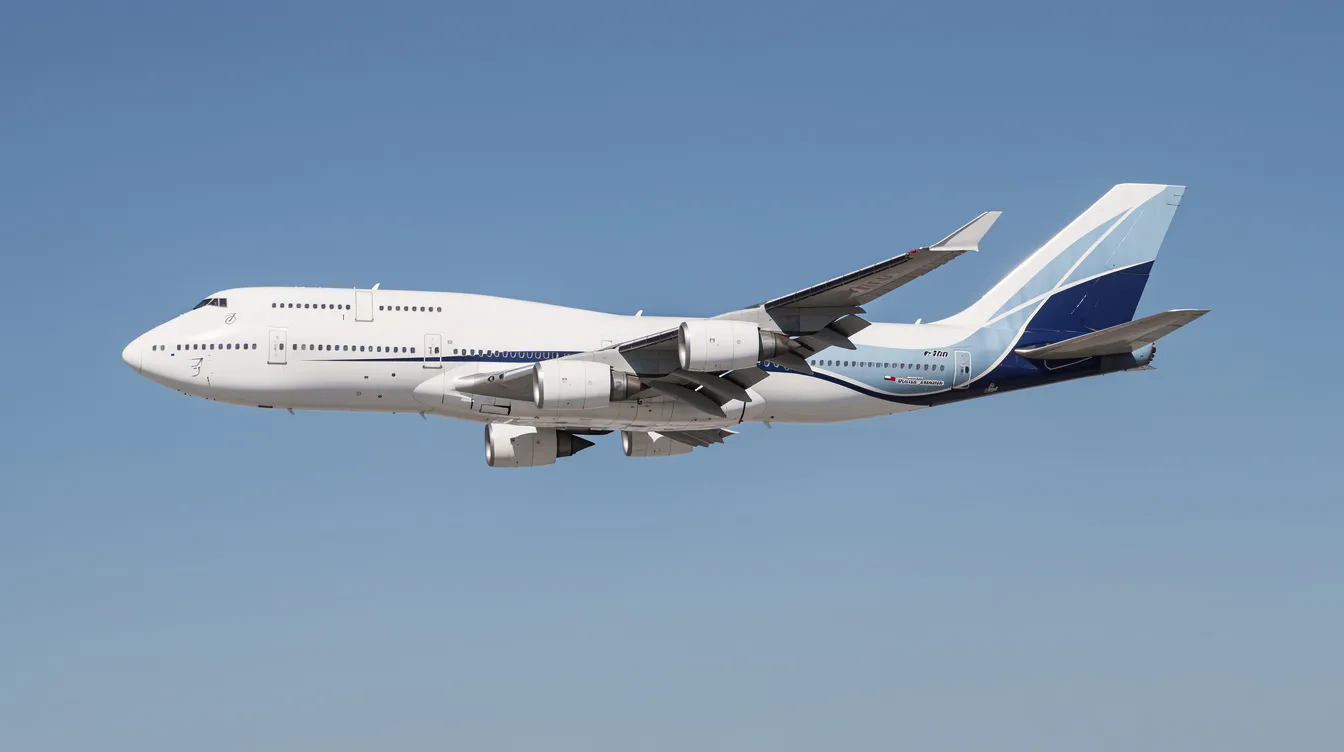
The Boeing 747-8 is 76.3 meters long (250 feet 2 inches), making it the longest commercial airliner ever built and about 5.6 meters longer than the 747-400. The Boeing 747 remains one of the most recognizable shapes in aviation, and its latest iteration pushed that silhouette further than ever before—literally.
For executives, frequent business flyers, and high-net-worth leisure travelers comparing aircraft and private aviation options such as BlackJet Jet Card programs, that length is more than a headline dimension. It shapes passenger capacity, range, airport operations, cargo capability, and the onboard experience—factors that matter when deciding between a large commercial aircraft, a freighter, a special-mission platform, or a more private, flexible way to fly.
This guide looks at how the 747-8’s design evolved, how its passenger and freighter variants differ, and how its dimensions, engines, safety, sustainability, and operating profile compare with the tailored experience private aviation can offer.
747-8 Length At a Glance
The Boeing 747-8I is 76.3 meters long-250 feet 2 inches-making it the longest variant in the entire Boeing 747 family and the longest commercial airliner to enter service. The 747-8I is 5.6 meters longer than the 747-400, its immediate predecessor.
The Boeing 747-8 is available in two versions: the 747-8I passenger variant for intercontinental commercial service and the 747-8F freighter variant optimized for cargo. Both share the same stretched fuselage length of 76.3 meters, though they differ substantially in upper deck configuration and internal layout.
Key figures at a glance:
Fuselage length: 250 ft 2 in / 76.3 m
Stretch over 747-400: approximately 18 ft 3 in / 5.6 m
747-400 and earlier models: approximately 231 ft 10 in / 70.7 m
The 747-8I has a maximum capacity of 467 passengers in a three-class configuration
Only three passenger airlines operate the 747-8I today: Lufthansa, Korean Air, and Air China
How the 747-8 Length Evolved from Earlier Boeing 747 Generations
The original Boeing 747-100 entered commercial service in 1970 with a fuselage length of roughly 231 feet 10 inches (70.7 m). That dimension stayed remarkably consistent through three decades and multiple variants. The 747-200 and 747-300 kept the same baseline length, while the 747-SP deliberately shortened the airframe by about 48 feet for ultra-long-range missions.
When the 747-400 arrived in 1989, Boeing upgraded the cockpit technology, added blended winglets, and improved range-but the fuselage remained at approximately 231 feet 10 inches. The airplane's external dimensions had essentially frozen for 20 years.
Then, in November 2005, Boeing launched the 747-8 program, evolving from an internal concept called the "747 Advanced." Boeing announced that the stretched fuselage would add roughly 5.6 meters over the 747-400. The company officially launched two variants simultaneously. The first freighter rolled out at Paine Field in Everett, Washington, with its first flight in 2010. The passenger version followed in 2011.
Key milestones in fuselage length evolution:
1970: 747-100 enters service at ~231 ft 10 in
1970s–80s: 747-200, 747-300 maintain that length
1989: 747-400 keeps the same fuselage, upgrades wing and avionics
2005: Boeing launched the 747-8 with an 18 ft 3 in stretch
2010–2011: First flight of freighter variant, then passenger version
747-8I vs 747-8F: Same Length, Very Different Upper Decks
Both the 747-8I and 747-8F measure approximately 76.3 meters in fuselage length. How they use that length, however, diverges sharply based on mission profile.
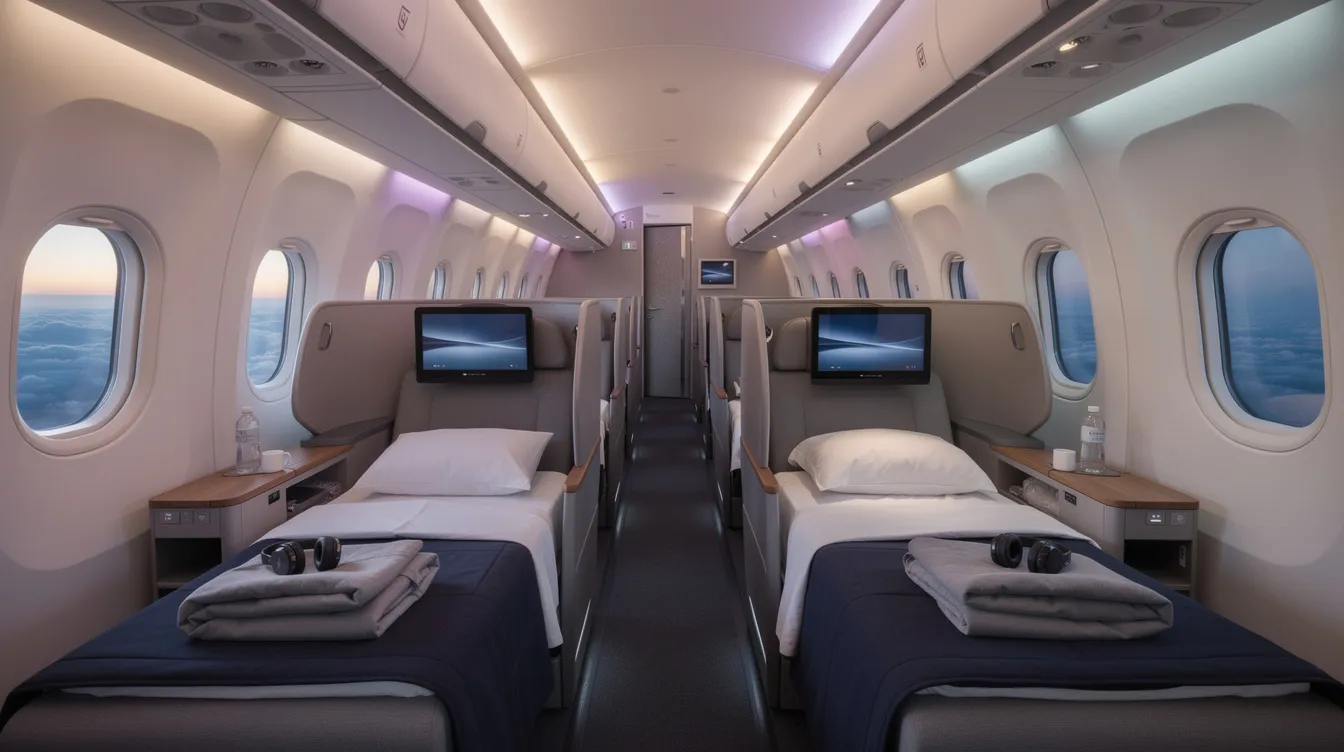
The 747-8I features an extended upper deck-the longest in the 747 family-stretching nearly to the wing root. This creates generous cabin space for premium seating, quiet business class zones, and lounge-style configurations that airlines like Lufthansa use to differentiate their long-haul routes.
The 747-8F, by contrast, retains a shorter upper deck reminiscent of older 747 freighters. This design choice preserves a long, unobstructed main deck for palletized freight and maintains the nose loading capability that makes the 747 freighter irreplaceable for oversized cargo aircraft operations.
How the two variants compare:
747-8I: Full-length upper deck, maximum passenger capacity of 467, optimized for intercontinental travel with a range of 7,790 nautical miles
747-8F: Shorter upper deck, main deck configured for cargo, maximum structural payload of 132,630 kg, nose door for outsized freight
Primary operators of the 747-8F: Atlas Air (the largest operator), UPS, Cargolux, and Nippon Cargo Airlines
Launch customer for the freighter was Cargolux; for the passenger variant, Lufthansa.
The 747-8 as a Wide-Body Icon: Dimensions Beyond Just Length
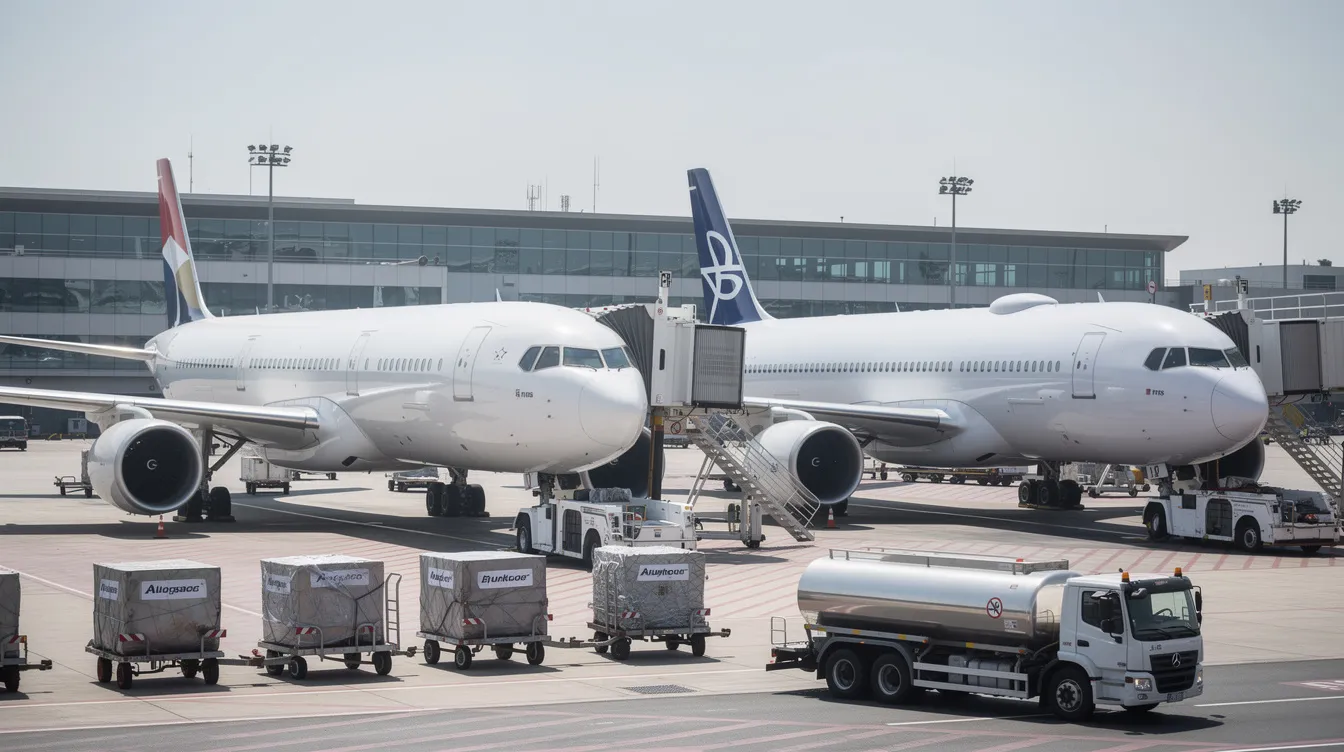
The Boeing 747-8 is a four-engine, wide-body airplane with a twin-aisle cabin. In practical terms, "wide body" means a cabin width of 20 feet-enough for seating arrangements of 3-4-3 in economy, with substantial aisle space on both sides.
Beyond fuselage length, the key dimensions tell the story of an aircraft engineered for high capacity and long range:
Wingspan: 224 feet 5 inches to 224 feet 7 inches (~68.4 m), incorporating raked wingtips for improved efficiency
Height: 63 feet 6 inches (~19.4 m)
Cabin width: 20 feet
Maximum takeoff weight: approximately 987,000 lb (447.7 metric tons)
Typical seating: 467 passengers in a three-class configuration
Maximum range: 7,790 nautical miles (14,310 kilometers)
Empty weight: approximately 485,300 lb for the passenger variant
The stretched fuselage and high maximum takeoff weight enable the 747-8I to serve the world's most demanding long-haul routes, connecting cities like Frankfurt to San Francisco or Seoul to New York nonstop with full passenger loads. The aircraft features next-generation aluminium alloys throughout its structure, contributing to both durability and weight management over the airframe's service life.
Upper Deck Length: Design, Experience, and Prestige
The upper deck is the Boeing 747's signature design element-the distinctive "hump" that separates it from every other commercial airplane. On the 747-8I, that upper deck reaches its longest configuration ever, creating a cabin environment that airlines have turned into a prestige product.
What the extended upper deck delivers:
Quiet separation: Passengers seated on the upper deck experience noticeably less engine noise and foot traffic, creating a more private atmosphere
Premium cabin layouts: Lufthansa places its entire Business Class on the 747-8I's upper deck, taking advantage of the extra length to offer lie-flat seats without overcrowding
Structural engineering: Stretching the upper deck adds weight to the top of the fuselage, requiring careful center-of-gravity management and reinforced frames-challenges Boeing addressed with advanced materials and aerodynamic refinements
For travelers accustomed to the privacy and exclusivity of private aviation, the 747-8I upper deck represents commercial aviation's closest attempt at replicating that experience. Understanding the types of private jets for every traveler highlights how dedicated business aircraft can deliver that same sense of separation and comfort without the scale of a jumbo jet. The longer hump allows airlines to seat fewer passengers per row in premium cabins, with larger windows and a genuine sense of being in a separate aircraft altogether.
GEnx-2B67 Engines and How They Complement the 747-8's Extended Fuselage
The Boeing 747-8 is powered by four General Electric GEnx-2B67 turbofan engines-the exclusive powerplant for both variants. The engine choice is inseparable from the airframe's stretched dimensions: a longer, heavier fuselage demands engines that deliver both raw thrust and fuel efficiency at scale.
Key engine specifications:
Thrust per engine: 66,500 lbf (~296 kN)
Bypass ratio: approximately 8.0 at takeoff
Technology lineage: shares core architecture with the General Electric GEnx family used on the 787 Dreamliner
The GEnx-2B67 engines meet the latest reliability standards set by regulatory authorities
Composite fan blades reduce weight while improving durability
How four turbofan engines serve the stretched airframe:
The 747-8I offers 16% better fuel efficiency than the 747-400, largely driven by the GEnx-2B67 and the redesigned wing with raked wingtips
Lower fuel burn per seat-mile makes the longer fuselage economically viable on high-demand corridors
Reduced NOx emissions and a smaller noise footprint compared to older 747 engines benefit both communities near airports and regulatory compliance.ce
From the cabin, passengers experience quieter climbs and smoother cruise conditions-a tangible benefit of improved efficiency in the powerplant design
The combination of these fuel-efficient engines with the aerodynamic improvements of the raked wingtips offsets much of the drag penalty that comes with stretching any fuselage by 5.6 meters.
How 747-8 Length Influences Airport Operations and Route Choices
The 747-8's length and wingspan push it into ICAO Aerodrome Reference Code F territory, restricting operations to major international airports with infrastructure built for the largest aircraft in commercial service.
Airports regularly handling 747-8 operations include:
Frankfurt (FRA)-Lufthansa's primary hub and home base for its 747-8I fleet
Seoul Incheon (ICN)-Korean Air's intercontinental gateway
Beijing Capital (PEK)- Air China's long-haul hub
New York JFK and San Francisco (SFO)-key U.S. gateways for transpacific and transatlantic services
Operational considerations driven by the 747-8's dimensions:
Runway requirements: minimum 45 m (150 ft) width, with heavily loaded freighters needing field lengths of 3,000–4,500 m depending on temperature and altitude
Gate infrastructure: jet bridges must accommodate two-deck boarding, and stand spacing must account for the 224-foot wingspan.
Taxiway clearance: larger turning radii require wider taxiway shoulders and careful routing
These constraints naturally channel the 747-8 toward high-demand, long-range corridors where passenger capacity or cargo volume justifies the infrastructure investment-routes in direct competition with the A380 and, increasingly, newer twin-engine wide-body types like the 777X and A350.
747-8F Length and Global Cargo: Atlas Air and Other Major Operators
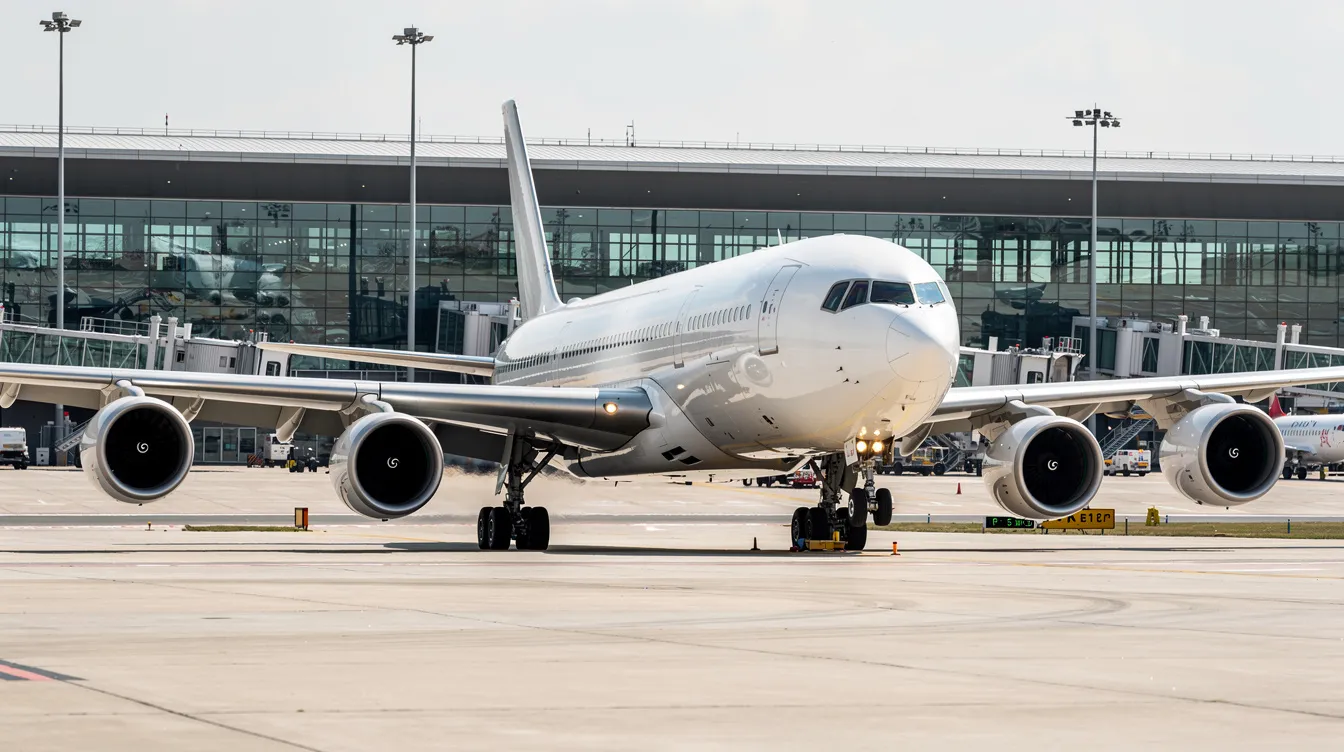
The Boeing 747-8F represents the freight variant of the 747-8 platform, and its 76.3-meter fuselage length is engineered specifically for maximum cargo capacity. The long, continuous main deck accommodates up to 46 standard pallets, plus additional container positions in the lower hold-a configuration that outclasses every earlier 747 freighter version.
The numbers behind the world's air freight workhorse:
Maximum structural payload: 132,630 kg (approximately 292,400 lb)
Main deck volume: roughly 692.7 m³ (24,462 ft³)
Max payload capability enables full payload operations on most intercontinental cargo routes.
The 747-8F has over 100 units delivered since the program began
As of mid-2025, 86 747-8F aircraft are active, part of a broader fleet of 166 Boeing 747 freighters in active service worldwide
The final Boeing 747-8F-and the final Boeing 747 ever produced-was delivered to Atlas Air on January 31, 2023
Among the primary operators and cargo carriers, Atlas Air stands as the largest operator of the type. Other significant operators include UPS, Cargolux, and Nippon Cargo Airlines. These airlines deploy the 747-8F on high-volume corridors linking Asian manufacturing centers with North American and European distribution hubs, where the nose loading capability and sheer volume make the first freighter choice for oversized and heavy shipments.
The strategic reality: no other cargo aircraft currently in production matches the 747-8F's combination of payload capacity, volume, and range. Its retirement from production makes existing airframes increasingly valuable to cargo carriers managing global supply chains.
Special Missions: 747-8 Length in Government and Air Force Roles
The Boeing 747-8's combination of fuselage length, internal volume, and intercontinental range has made it the platform of choice for the most demanding government and Air Force missions.
The U.S. Air Force selected a 747-8-based airframe for the next generation of presidential transport-the successor to the VC-25A "Air Force One" aircraft, which were built on 747-200B platforms. The 747-8's additional length provides room for secure communications suites, conference facilities, staff accommodations, and defensive systems within a single airplane.
Beyond the presidential mission, Sierra Nevada Corporation has contracted to convert five 747-8I airframes (acquired from Korean Air's fleet) into the Survivable Airborne Operations Center (SAOC), replacing the E-4 "Doomsday Plane." The 747-8's stretched fuselage and long-range performance are central to making an airborne command center viable for extended operations.
These special-mission applications reinforce a straightforward principle: when a mission profile demands maximum internal space, redundant systems separation, and global reach, the 747-8 airframe-the largest aircraft Boeing has ever produced-remains the benchmark.
747-8 Length vs Private Jet Experience: Where BlackJet Fits In
A Boeing 747-8I carrying 467 passengers across 7,790 nautical miles is an extraordinary feat of engineering. But for the executive, family office principal, or UHNW traveler making that same journey, the calculus looks different.
Consider a concrete scenario: a BlackJet member flying from New York to San Francisco. On a commercial 747-8I flight, the journey involves navigating terminal crowds, fixed departure schedules, connecting through a hub, and sharing the cabin with hundreds of other passengers. Door-to-door time easily stretches past eight hours.
With a BlackJet Jet Card, that same member departs from a private terminal, boards in minutes, and arrives in under six hours-with the flexibility to choose an aircraft sized precisely for the trip. Resources that break down Jet Card cost and membership pricing help travelers evaluate that flexibility against the economics of flying on large commercial wide-bodies. No wasted capacity. No compromise on privacy.
Where private aviation wins over jumbo-jet scale can be seen clearly when you examine whether chartering a private jet is worth it compared with buying a seat on a high-capacity aircraft:
Point-to-point flexibility: Access to thousands of airports versus the handful that can accommodate a 747-8
Right-sized aircraft: A curated fleet across multiple cabin classes means you fly the airplane that fits your passenger count and route, drawing on a deep understanding of private jet sizes and their ideal missions
Time efficiency: No security lines, no boarding queues, no connecting flights
Privacy and personalization: Every flight is yours alone
The 747-8 is a benchmark of scale. BlackJet is a benchmark of precision.
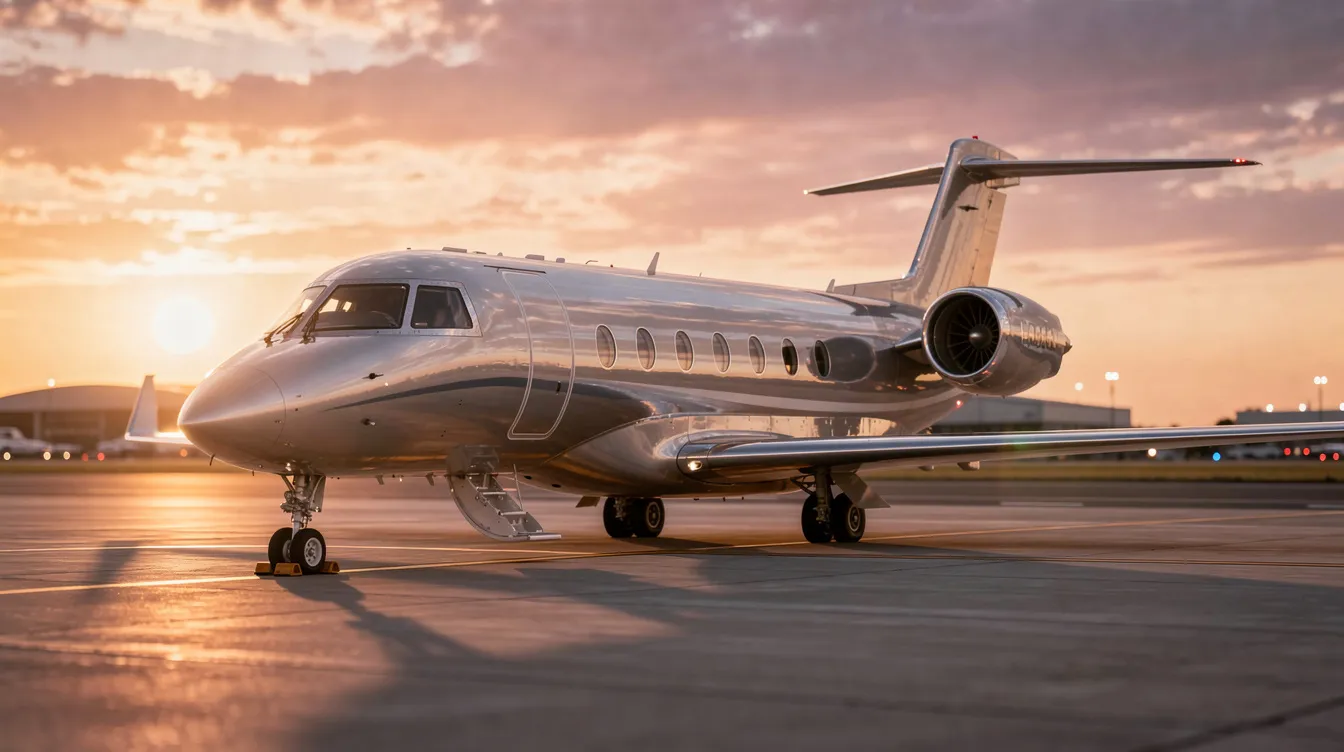
Safety, Certification, and Sustainability: Large Wide-Bodies vs Modern Private Jets
The Boeing 747-8 holds one of the strongest safety records in the aviation industry. The aircraft has had zero fatal accidents since entering service in 2012. A total of 155 Boeing 747-8 airframes were manufactured, and the type is among the safest widebody aircraft ever produced. It received its FAA type certificate and subsequent amended type certificate through one of the most rigorous certification processes in commercial aviation history.
In private aviation, the safety equation is different but equally critical. BlackJet works exclusively with operators that meet leading third-party safety standards-including Wyvern Wingman and ARGUS certifications-ensuring that every flight meets or exceeds the stringent benchmarks set by the commercial aviation industry, whether you're evaluating the charter cost of a small plane or booking a larger jet.
On sustainability:
The 747-8's GEnx engines deliver measurably lower emissions than older four-engine jets, and the 16% fuel efficiency gain over the 747-400 translates to meaningfully reduced carbon output per seat
On a per-passenger basis, a fully loaded wide-body benefits from economies of scale-but partially filled jumbo jets lose that advantage quickly.
BlackJet commits to carbon-neutral flights through verified offset programs and sustainable aviation fuel initiatives, narrowing the efficiency gap between private and commercial travel while still offering budget-friendly private aircraft options for cost-conscious flyers.s
Both categories of aircraft operate under comprehensive regulatory oversight. The difference lies in how that safety culture manifests: commercial widebodies rely on systemic redundancy and scale, while private aviation demands operator-level vetting and personalized oversight.
FAQs About the Boeing 747-8 Length and Private Jet Travel
What makes the Boeing 747-8 the longest commercial airliner?
The Boeing 747-8 features a fuselage length of 76.3 meters (250 feet 2 inches), which is about 5.6 meters longer than its predecessor, the 747-400. This stretch allows for increased passenger capacity and cargo volume, making it the longest commercial airliner ever built.
How do the 747-8 passenger and freighter variants differ in length and design?
Both variants share the same overall length of 76.3 meters, but the 747-8I passenger version has an extended upper deck for premium cabin space, while the 747-8F freighter retains a shorter upper deck to maximize cargo volume and maintain nose-loading capabilities.
Which airlines currently operate the 747-8I passenger variant?
Only three airlines operate the 747-8I today: Lufthansa, Korean Air, and Air China. These airlines use the aircraft primarily on long-haul, high-capacity routes.
How does the 747-8 compare to private jet travel?
While the 747-8 excels in volume and range for commercial and cargo operations, private jet travel offers more flexibility, privacy, and access to smaller airports. BlackJet's Jet Card programs provide tailored, right-sized aircraft options with predictable pricing and personalized service.
What safety features does the Boeing 747-8 have?
The 747-8 has an excellent safety record with zero fatal accidents since its introduction. It incorporates advanced materials, fly-by-wire control surfaces, and engines that meet the latest certification standards, making it one of the safest widebody aircraft.
How does the 747-8's length impact airport operations?
The 747-8's large size requires airports with specific infrastructure, such as wide runways, taxiways, and gates capable of handling its length and wingspan. This limits its operation to major international hubs.
Why might a frequent traveler choose a Jet Card over flying on a 747-8?
Jet Cards offer more scheduling flexibility, access to thousands of airports, and the ability to select the perfect aircraft size for the trip, avoiding the inefficiencies of flying a large 467-seat aircraft on routes with moderate demand.
Choosing the Right Aircraft Size: When a 747-8 Scale Makes Sense-and When a Jet Card Wins
The 747-8's fuselage length and high capacity serve a specific set of missions exceptionally well: ultra-high-demand commercial routes, major assembly of large passenger groups, and heavy cargo operations where no other aircraft matches its volume and payload.
But for the vast majority of executive and luxury travel, that scale creates inefficiency rather than value. Flying a 747-8 on routes with moderate demand means empty seats, higher per-passenger costs, and inflexible scheduling-exactly the friction that private aviation eliminates.
A Jet Card program-such as BlackJet's 25-hour or 50-hour blocks-offers a fundamentally different model, and comparing Jet Card cost per hour to the economics of filling a 467-seat airliner quickly shows where private aviation can be more efficient:
Predictable pricing across a curated fleet, without the fuel burn penalties of operating a four-engine wide-body at partial capacity-and with the transparency outlined in guides to the best Jet Cards for frequent flyers
Guaranteed availability with 24/7 digital booking, versus fixed airline schedules dictated by hub-and-spoke networks
Mission-matched aircraft: fly a light jet for a short regional hop, a large-cabin aircraft for a transatlantic crossing-always the right airplane for the trip, whether you prioritize the best small private aircraft for each mission or focus specifically on small private jets for luxury travel
Access to smaller airports closer to your origin and destination, cutting ground time that commercial flights on the world's largest aircraft cannot avoid-an advantage maximized by the BlackJet 25+ Hour Jet Card
Understanding the Boeing 747-8-its 76.3-meter length, its engineering ambition, its role in reshaping long-range commercial and cargo aviation-gives informed travelers the context to make smarter decisions about their own travel, including when to consider the cheapest private jet options instead of a seat on a jumbo.
The 747-8 proves that bigger can be extraordinary. BlackJet proves that smarter is better-whether that meansstructuring a 100-hourr Jet Card cost strategy, optimizing a 50-hour Jet Card investment, arranging a charter for 100 passengers, or selecting the best private jet for 15 passengers, the ideal jet for 20 passengers, a top private jet for 30 travelers, or even VIP private jets for 50 passengers, as well as exploring unlimited private jet flight memberships for maximum flexibility.
Explore how BlackJet's Jet Card programs can reshape your travel →


 Sign up with google
 Sign up with Apple