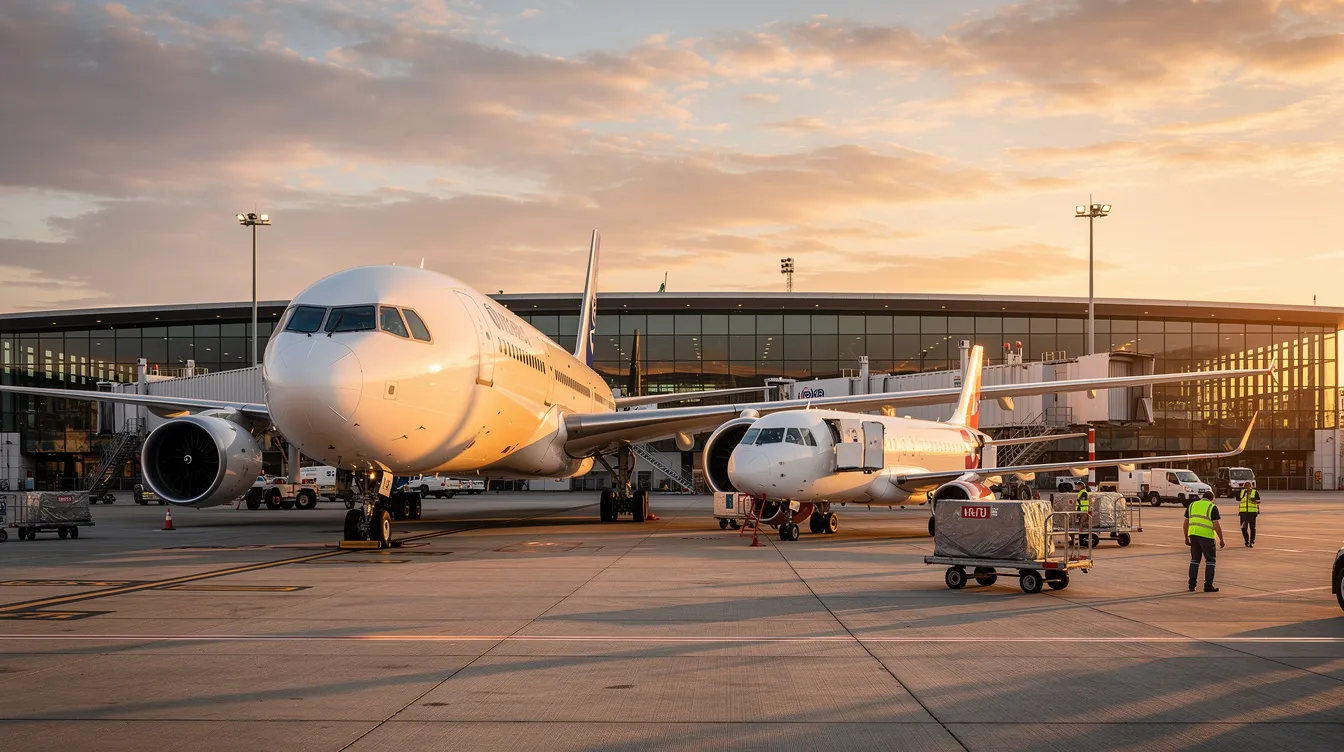
Strategic overview: why 737 vs 747 matters for elite travelers
Passenger Capacity and Range
The Boeing 737 was designed primarily for short-to-medium-haul flights—regional hops, point-to-point connections, high-frequency operations. The Boeing 747, by contrast, was engineered for long-haul intercontinental routes, carrying massive passenger loads across oceans. Both aircraft are designed for high-speed passenger transportation, yet they serve entirely different missions. That distinction matters enormously when you're deciding how to structure your travel.
Consider the numbers. A typical Boeing 737- 800 in two classes accommodates 162 to 189 passengers with a range of approximately 2,935 nautical miles—enough to cover New York to Los Angeles or London to Marrakech. The 747 generally carries between 350 and over 600 passengers, depending on configuration, and the 747-8 Intercontinental can reach roughly 7,730 nautical miles nonstop, connecting Frankfurt to Buenos Aires or Hong Kong to New York without refueling.
Specification | Boeing 737-800 | Boeing 747-8 Intercontinental |
|---|
Typical Seating | 162–189 (two classes) | ~410 (three-class), up to ~467 |
Range | ~2,935 nm | ~7,730 nm |
Engines | 2 turbofan engines | 4 turbofan engines |
Maximum Takeoff Weight | 174,200 lb | 987,000 lb |
Mission Profile | Short/medium-haul | Ultra-long-haul |
Private Jet Parallels
For BlackJet clients, this comparison maps directly onto travel decisions. Many private jets mirror “737-style” missions: a super-midsize jet flying a CEO from Teterboro to Chicago Midway, or a light jet shuttling between Los Angeles and Las Vegas. “747-style” missions—intercontinental flights with larger parties, heads of state, or VIP delegations—call for large-cabin or ultra-long-range aircraft like the Gulfstream G650 or Global Express family.
The contrast between commercial premium cabins and private access is where the arithmetic becomes compelling. Even first class on a jumbo jet requires fixed schedules, hub connections, security queues, and check-in windows. Private aviation companies offer jet card programs for prepaid access to jets, enabling direct routing, departure from secondary airports, and elimination of the ground-time overhead that scheduled airlines cannot avoid. For frequent business travelers who fly multiple segments per week, that time saving compounds into a strategic advantage.
Design intent: different missions from day one
The 737: A Short-Haul Workhorse
Boeing conceived the 737 in the early 1960s as a short-haul complement to the 727, designed for quick turnaround and high-frequency flights at smaller airports that lacked the infrastructure for larger jets. The Boeing board approved the 737 program on 1 February 1965, targeting airlines that needed an economical workhorse for dense regional networks. The aircraft was optimized for simplicity: two engines, a narrow single-aisle body, minimal ground support requirements, and fast gate turns.
The 747: An Intercontinental Flagship
The 747 emerged from an entirely different ambition. Launched later in the decade for Pan American World Airways, this iconic aircraft was built for increased capacity and long-distance travel. It was the airplane that would democratize intercontinental flight, carrying hundreds of passengers over oceans at speeds previously reserved for smaller, less efficient jets. The 747 was historically used for mass transit on international routes, fundamentally reshaping how the world connected across continents.
How the Original Missions Shaped Each Aircraft
Those original design missions still echo today. The 737 typically accommodates between 130 and 230 passengers across its various generations, serving as the backbone of domestic and intra-continental schedules for many airlines. The 747, even in its twilight passenger years, remains synonymous with long-range prestige and sheer scale. Understanding this lineage helps explain why each airframe evolved the way it did—and why the lessons they teach apply well beyond commercial aviation.
First flight milestones: 737 and 747 take to the skies
Boeing 737 First Flight
The 737's maiden voyage was a measured, workmanlike affair. On 9 April 1967, prototype N73700 lifted off from Boeing Field (BFI) in Seattle for a first flight lasting roughly 10 to 15 minutes—not the two-and-a-half hours sometimes cited in popular accounts. A minor electrical breaker issue caused a brief delay before takeoff, but the aircraft performed well. Early flight testing continued at BFI with a second airframe painted in United Airlines livery, reflecting the carrier's role as launch customer.
Boeing 747 First Flight
The Boeing 747 first flew on February 9, 1969, departing from Paine Field in Everett, Washington, and the contrast in spectacle could not have been more dramatic. Approximately 50,000 Boeing workers—nicknamed the “Incredibles”—had spent roughly 16 months bringing the massive aircraft from concept to flight readiness. The media frenzy surrounding the “Queen of the Skies” debut reflected the public's fascination with an airplane so large it seemed almost implausible.
First Flight Timeline
Aircraft | First Flight Date | Location |
|---|
Boeing 737-100 | 9 April 1967 | Boeing Field (BFI), Seattle |
Boeing 747-100 | 9 February 1969 | Paine Field (PAE), Everett |
The pragmatism of the 737's launch versus the grandeur of the 747's debut encapsulates their respective identities. One was a tool; the other, a statement. Both entered service within a few years of their first flights and proceeded to reshape aviation history in fundamentally different ways.
Size, weight,t and capacity: how much bigger is a 747 than a 737?
Comparing Dimensions and Weight
The physical gulf between these two Boeing aircraft is staggering when laid out in raw numbers. Comparing the Boeing 737-800 against the Boeing 747-8 Intercontinental—the final and largest passenger variant of the jumbo jet—reveals just how much larger the 747 truly is.
The Boeing 747-8 is 250 feet 2 inches long, nearly double the Boeing 737-800's length of 129 feet 6 inches. The 747-8 has a wingspan of 224 feet 5 inches compared to the 737-800's 117 feet 5 inches with blended winglets. In terms of sheer mass, the maximum takeoff weight gap is enormous: the 747-8 has a maximum takeoff weight of 987,000 pounds (448 tons), while the 737-800 has a maximum takeoff weight of 174,200 pounds (79 tons)—the jumbo jet outweighs the narrowbody by more than five to one.
Specification | Boeing 737-800 | Boeing 747-8I |
|---|
Length | 129 ft 6 in | 250 ft 2 in |
Wingspan | 117 ft 5 in (with winglets) | 224 ft 5 in |
Height | ~41 ft 2 in | ~63 ft 6 in |
MTOW | 174,200 lb (79 tons) | 987,000 lb (448 tons) |
Typical Seating | 162–189 (two-class) | ~410–467 (three-class) |
How Size Affects Passengers
These dimensions translate into tangible differences for passengers. Boarding a fully loaded 747 through multiple doors takes considerably longer than filing onto a 737. Baggage volume, overhead bin space, and the sheer feeling of interior space all favor the widebody. Even before seat pitch enters the equation, the 747's twin aisles and double-deck configuration create a sense of openness that no single-aisle narrowbody can replicate.
Cabin experience: single-aisle workhorse vs double-deck flagship
737 Cabin Layout
Step aboard a 737-800 or 737 MAX and you enter a cabin approximately 11 feet 7 inches wide, arranged in a six-abreast economy layout with a 3-3 configuration separated by a single aisle. Airlines like Southwest Airlines, American Airlines, and Ryanair operate these planes on high-frequency routes where efficiency takes priority over spaciousness. The cabin height sits around 7 feet 3 inches—adequate, but compact.
747 Cabin Layout
The 747 cabin is a different world entirely. The lower main deck spans roughly 20 feet in interior space, accommodating two aisles and up to ten-abreast seating in a 3-4-3 economy arrangement. The Boeing 747 has a distinctive upper-deck design near the cockpit, and that upper level has been used for everything from business-class suites to onboard lounges and bars. The sense of separation between cabin zones gives the 747 a multi-room quality that narrowbodies simply cannot match.
Comfort and Boarding
From a comfort standpoint, frequent flyers find 747s smoother and quieter on long sectors. Four engines distributed across a wider wingspan produce less localized vibration, and the aircraft's mass dampens turbulence more effectively than a lighter narrowbody. Boarding flow benefits from multiple doors and two aisles, reducing the bottleneck effect that plagues single-aisle loading.
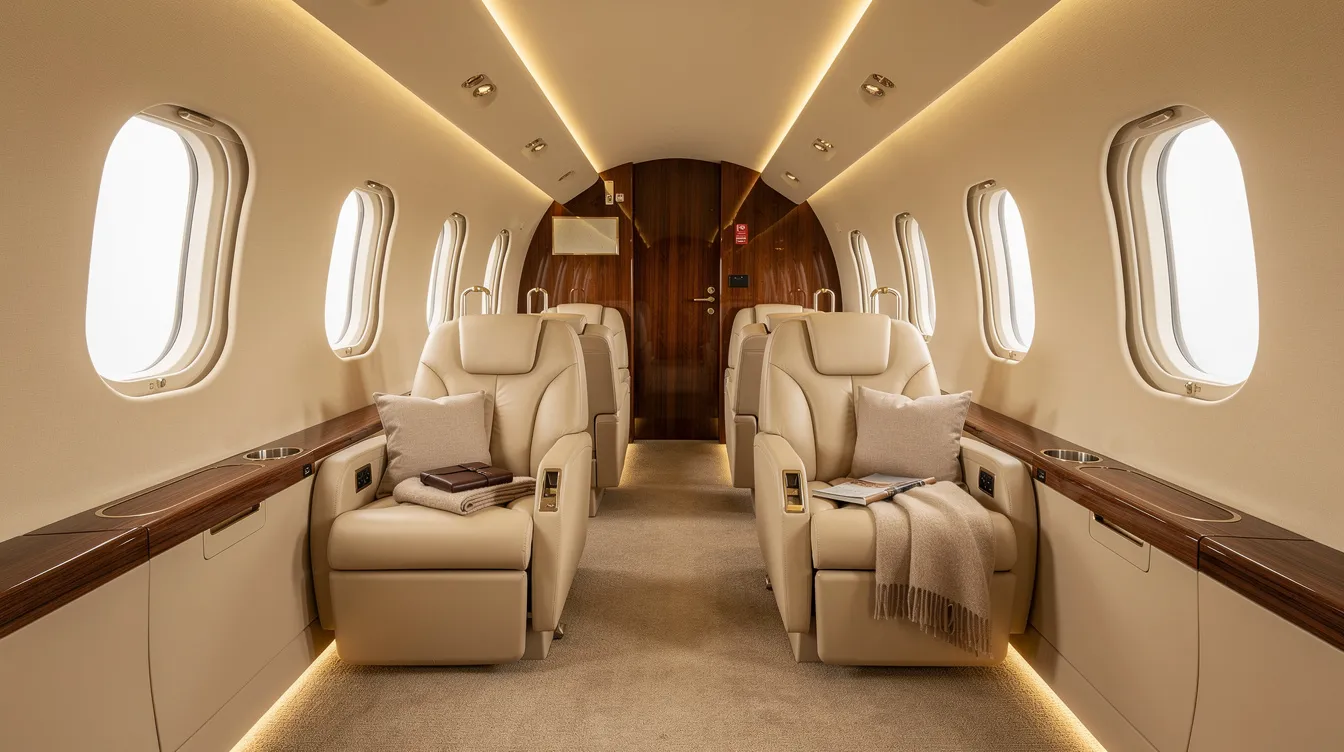
For travelers accustomed to these distinctions, large-cabin private jets offer a compelling parallel to the 747 experience: separated work and rest areas, dining configurations, and stand-up cabins—but with complete privacy and the flexibility of a dedicated aircraft.
Typical 737 Cabin: Compact six-abreast layout, single aisle, smaller overhead bins, fast turnaround boarding
Typical 747 Cabin: Twin-aisle main deck with two aisles, iconic upper deck for premium zones, larger bins, quieter cruise environment
Engines and performance: two engines vs four engines
Engine Configuration and Thrust
The engine count is one of the most fundamental differences between these two planes. The 737-800 relies on two CFM56-7B turbofan engines, each producing approximately 24,000 to 27,300 pounds of thrust, for a combined total near 54,600 lbf. The 737 MAX series upgraded to the LEAP-1B, a more fuel-efficient powerplant that contributes to the MAX being 10 to 12 percent more efficient than previous models.
The 747-8 mounts four GE GEnx-2B67 high-bypass turbofan engines, each rated at roughly 66,500 lbf, pushing combined thrust beyond 266,000 lbf. That power enables the 747 to take off at its enormous maximum takeoff weight and sustain high cruise speeds over intercontinental distances with high-capacity payloads. But four engines also mean substantially higher fuel consumption. The 747-8 burns roughly nine times the fuel load of a 737-800 on a comparable operating basis—a ratio that makes the jumbo jet economical only when passenger or cargo loads justify the expense.
Efficiency and Changing Engine Technology
The 737-800 burns around the same amount of fuel as the Airbus A320-200, its direct competitor, yet the 737-800 can carry more payload than the A320-200, giving it a slight edge in fuel efficiency per revenue unit. Meanwhile, improvements in twin-engine aircraft reliability, combined with Extended-range Twin-engine Operations (ETOPS) certifications, have undercut much of the rationale for four engines on overwater routes. Airlines increasingly prefer the Boeing 787, 777X, and Airbus A350 for long-haul missions that once demanded a 747.
Specification | Boeing 737-800 | Boeing 747-8I |
|---|
Cruise Speed | Mach ~0.79 | Mach ~0.855 |
Range (max payload) | ~2,935 nm | ~7,730 nm |
Fuel Capacity | ~6,875 US gal | ~63,000 US gal |
Engine Type | 2× CFM56-7B | 4× GE GEnx-2B67 |
Speed, range and typical routes
Speed and Range
At cruise altitude, the Boeing 747-8 holds a meaningful speed advantage, traveling at approximately Mach 0.855 compared to the 737-800's Mach 0.79—a difference of roughly 40 to 50 knots. That gap matters less on short sectors but becomes significant over oceanic distances where the 747's speed compounds into hours saved.
Range is where the two aircraft diverge most decisively. The range of Boeing 737 variants is generally between 2,500 and 3,800 nautical miles, depending on the model and configuration. The 747 has a range exceeding 7,700 nautical miles in its -8 Intercontinental form, enabling nonstop flights that the 737 could never attempt.
Typical 737-Style Routes
New York to Chicago (~740 nm)
Los Angeles to Las Vegas (~225 nm)
London to Madrid (~680 nm)
Tokyo to Seoul (~730 nm)
Typical 747-Style Routes
New York to Hong Kong (~6,900 nm)
Frankfurt to Buenos Aires (~6,100 nm)
London to Singapore (~5,900 nm)
Los Angeles to Sydney (~6,500 nm)
These route profiles shape airline fleet strategy: carriers like American Airlines deploy 737s on dense domestic networks, while airlines such as Lufthansa and Korean Air have relied on 747s for flagship intercontinental passenger service.
For BlackJet members, these range classes have direct analogs. A light jet charter mirrors the 737's regional mission profile, while the longest-range private jets can approximate 747-style intercontinental reach for smaller groups—without the fixed schedules and hub-and-spoke constraints of commercial airlines.
What air traffic control sees: Heavy vs Medium
Wake Turbulence Categories
When a 747 checks in with air traffic control, pilots include the word “Heavy” in their callsign—a regulatory requirement for any aircraft with a maximum takeoff weight exceeding 136,000 kg (approximately 300,000 lb). The 747-8, at 448 tons, comfortably qualifies. The 737-800, classified as “Medium” at 79 tons, requires no such modifier.
This distinction has real operational consequences. Wake turbulence generated by a Heavy aircraft is far more powerful than that of a Medium, forcing air traffic control to impose greater separation intervals on final approach and during takeoff sequences. An aircraft following a 747 on approach must maintain several additional miles of spacing compared to one following a 737, directly impacting runway throughput.
Airport Infrastructure and Access
Airport infrastructure requirements differ as well. Under ICAO aerodrome reference codes, the 747-8 falls into Code F—the highest category—requiring wider taxiways, reinforced pavements, and larger gate areas. The 737-800 sits at Code C, compatible with thousands of airports worldwide. The 747 requires large airports with specialized heavy infrastructure, limiting it to major hubs.
747: Wake category “Heavy,” ICAO Code F, limited to major international airports
737: Wake category “Medium,” ICAO Code C, operates at smaller airports and regional fields
Private jets: Often Code A or B, accessing executive airports and secondary fields that neither airliner can reach
The 737 can land at smaller regional airports, giving it vastly more routing flexibility. Private jets extend this advantage further, operating from thousands of additional fields.
Generations of the Boeing 737: from Original to 737 MAX
The Boeing 737 family spans four distinct generations, each representing a major change in technology and capability:
Original (737-100/200)
First flight: 1967. Powered by Pratt & Whitney JT8D engines, these compact narrowbodies served as feeders for larger aircraft on short routes. The -200 became the volume seller and entered service with airlines like Lufthansa and United Airlines.
Classic (737-300/400/500)
First flight in 1984. The generation series introduced the CFM56 high-bypass turbofan engines, a redesigned wing with greater area, and an updated flight deck. Fuel economy improved substantially, and passenger capacity grew.
Next Generation (737-600/700/800/900)
First flight in 1997. The next generation series brought a completely new wing design, split scimitar winglets (on later retrofits), Boeing Sky Interior, glass cockpit avionics, additional fuel tanks, and increased range. The Boeing 737-800 became the defining variant, with roughly 4,989 total deliveries to airlines worldwide. Southwest Airlines, Ryanair, United Airlines, and American Airlines all built their fleets around it.
737 MAX (MAX 7/8/9/10)
First flight January 2016, FAA certification March 2017. The MAX series features LEAP-1B engines, a further redesigned wing, and advanced technology flight systems. The 737 MAX was grounded after two crashes—Lion Air Flight 610 in October 2018 and Ethiopian Airlines Flight 302 in March 2019—that caused 346 deaths, linked to the MCAS software system. After extensive modifications and enhanced regulatory oversight, the MAX returned to service from late 2020 onward. Airlines like Alaska Airlines, United Airlines, and Southwest Airlines now operate the type.
The Boeing 737 has over 12,400 aircraft delivered by 2026, and the 737 became the highest-selling commercial aircraft by 2019—a testament to the fourth-generation platform's enduring appeal across more than five decades on the production line.
Boeing 747 evolution: from -100 to 747-8
Major Passenger Variants
The 747's production arc spans 54 years, from the first delivery in 1969 to the final aircraft rolling off the line in January 2023. Boeing built 1,574 units of the 747 by January 2023, with each successive variant pushing the airframe further.
The 747-100 entered service with Pan Am in 1970, establishing the jumbo jet as the queen of intercontinental air travel. The 747-200 added higher-thrust engines and increased fuel capacity for greater range. The 747-300 extended the iconic upper deck, adding seating and improving aerodynamics.
The 747-400 was the most popular variant, with 694 built. Introduced in the late 1980s, it featured winglets, a two-crew glass cockpit eliminating the flight engineer, and significant MTOW increases. It dominated long-haul markets for over two decades, becoming the flagship of carriers like British Airways, Singapore Airlines, Lufthansa, and Qantas.
The Final 747-8 and Production End
The 747-8, the final variant, incorporated composite structures, raked wingtips derived from 787 technology, and GEnx engines. Passenger -8I orders were modest—approximately 48 aircraft—while the 747-8F freighter attracted over 100 orders. First delivery of the passenger variant occurred around 2012.
Production ended in December 2022, with the last 747-8F delivered to Atlas Air in January 2023, closing one of the most consequential chapters in aviation history.
Military applications: 737-based specialists vs 747-based flagships
737-Based Military and Government Aircraft
Both the 737 and 747 airframe families serve in military and government roles, though in vastly different capacities.
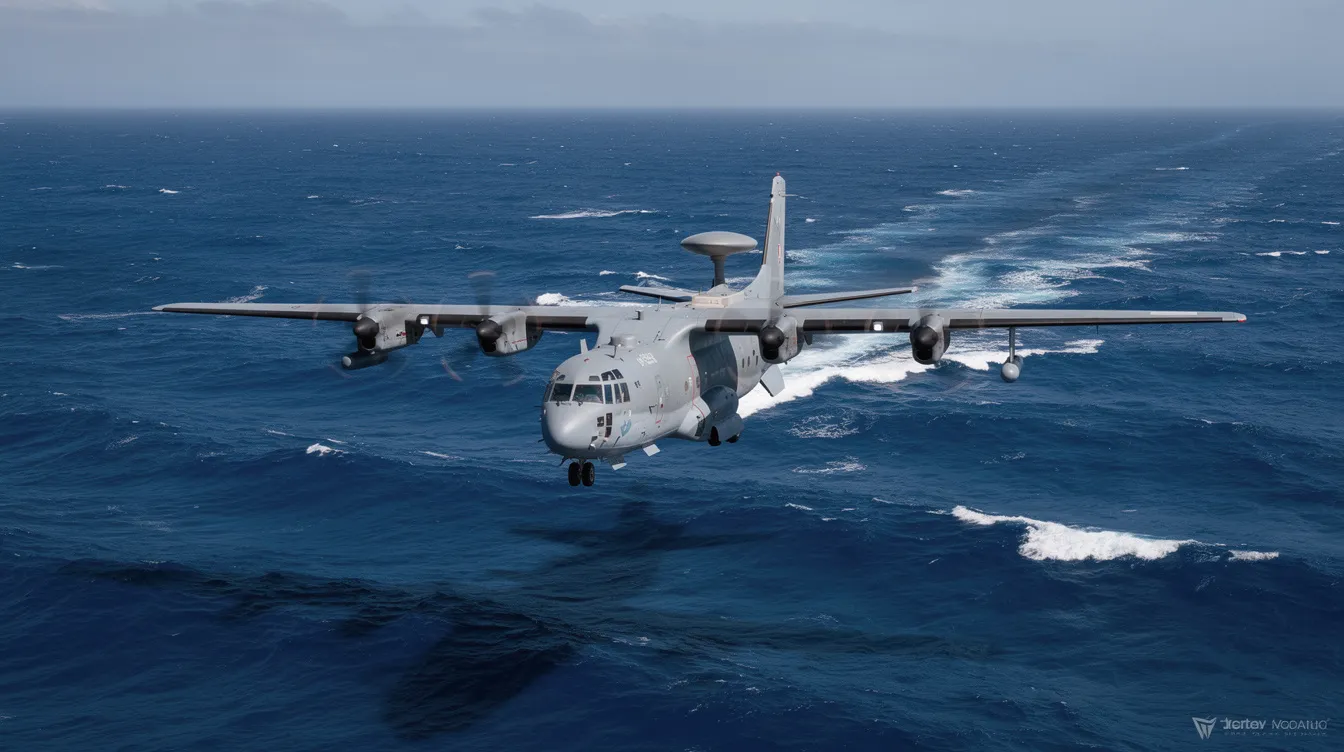
The Boeing C-40 Clipper is a military 737 variant used by the US Navy and US Air Force for logistics and VIP transport, offering the flexibility to operate from smaller airports that larger military transports cannot reach. The P-8 Poseidon is a maritime patrol aircraft based on the 737, operated by the US Navy, Royal Australian Air Force, Royal Air Force, and Indian Navy for anti-submarine warfare and surveillance. The E-7 Wedgetail is an airborne early warning version of the 737, carrying a large dorsal radar array and serving air forces including Australia, Turkey, South Korea, and—under current procurement—the US Air Force and Royal Air Force. The Boeing Business Jet series, derived from 737-700, -800, and -900ER airframes, serves as VIP and government transports worldwide.
747-Based Military and Head-of-State Aircraft
On the 747 side, the scale of military applications matches the aircraft's size. The VC-25, known as Air Force One, is a modified 747-200 serving as the flying White House for the President of the United States. The 747-8 is being modified for use as the next Air Force One (designated VC-25B), ensuring the jumbo jet's continued role in the highest echelons of government aviation. Other nations have used 747s as head-of-state transports, and the E-4B “Nightwatch” serves as an airborne command post for the US military.
737 military applications: C-40 Clipper (transport), P-8 Poseidon (maritime patrol), E-7 Wedgetail (AEW&C), BBJ VIP variants
747 military and head-of-state roles: VC-25A/B (Air Force One), E-4B (command post), government VIP transports for royal families and heads of state
Air force and government operators choose the 747 when they need command centers, large staff complements, and communications suites that only a widebody's interior space can accommodate. The 737's military applications favor agility, cost efficiency, and access to a wider range of airfields.
Safety records and accident history: 737 vs 747
Understanding the Numbers
Safety comparisons between aircraft families require careful context. Over 180 hull losses have occurred in the 737 family since 1967, while the 747 has experienced around 61 hull losses since 1968. However, these raw numbers cannot be compared directly: the 737 fleet exceeds 12,400 deliveries versus roughly 1,574 for the 747, making per-flight and per-hour accident rates the more meaningful metric.
Notable Accidents and Safety Improvements
The 737's safety narrative includes the rudder-hardover issues of the 1990s and, more recently, the 737 MAX grounding. The 737 MAX was grounded after two crashes caused 346 deaths—Lion Air Flight 610 in October 2018 and Ethiopian Airlines Flight 302 in March 2019—both linked to the MCAS flight control system. The subsequent global grounding, software revision, and enhanced pilot training protocols represented the most extensive recertification effort in modern aviation. The MAX has since returned to service with strengthened oversight.
The 747's accident history includes the Tenerife disaster, which resulted in 583 fatalities in 1977 when two 747s collided on the ground, and Japan Airlines Flight 123 in 1985. Many of these incidents involved early variants; the 747-400 and 747-8 have compiled decades of strong safety records in modern operations.
Despite these historical episodes, the 737 remains one of the safest narrowbody jets in history when measured against flight hours and departures. Modern variants of both families benefit from vastly improved certification regimes, maintenance standards, and crew training.
Key Safety Takeaways:
Both aircraft families have matured significantly; modern variants have strong safety records
Per-flight-hour rates, not raw hull-loss counts, provide the meaningful comparison
ARG/US and Wyvern safety auditing standards—used by BlackJet—evaluate operator quality, aircraft maintenance, and crew experience beyond just airframe type
Aircraft age, maintenance regime, and operator standards matter more than fleet-wide statistics.
Operational economics: why airlines favored the 737
Economic Considerations
The 737's dominance is fundamentally an economic story. The Boeing 737 generally has lower operating costs compared to the 747—lower fuel burn from two engines instead of four, simpler maintenance scheduling, smaller crew requirements, and lower airport handling fees. These economics translate into profitable high-frequency operations on routes where demand may not fill 400 seats but comfortably fills 180.
The 747, by contrast, demands consistently strong demand to justify its high trip costs. Four engines consume substantially more fuel, specialized pilot training is required, maintenance complexity scales with engine count, and airport charges are proportional to weight and size. After fuel price spikes in the 2000s, the business case for four-engine jumbos eroded sharply.
Fleet Evolution and Market Demand
Delivery figures tell the same story from the demand side. Nearly 5,000 Boeing 737-800s were delivered to airlines worldwide, compared to just 48 passenger 747-8I orders. The market overwhelmingly favored the narrowbody's economics. Rising point-to-point flying patterns, combined with smaller but efficient widebodies like the 787 and A350 from Airbus, further eroded the 747's passenger market. McDonnell Douglas's exit from the widebody market decades earlier had already narrowed the competitive field, but it was twin-engine economics that ultimately retired the jumbo jet.
For private travelers, the lesson is the same story in miniature: right-sizing the aircraft to the mission yields better economics. A Jet Card program allows clients to match light jets to short hops and large-cabin jets to intercontinental trips, bypassing hub-and-spoke connections entirely.
Boeing 737 vs 747 from the flight deck
Cockpit Technology and Crew
The cockpit evolution of these two aircraft mirrors broader trends in aviation technology.
Early 737 Originals and Classics featured analog “steam gauge” instrument panels—round dials for altitude, airspeed, and attitude. The next generation 737 NG introduced glass cockpits with large multifunction displays, reducing pilot workload and improving situational awareness. The 737 MAX advanced further with even larger LCD screens, fly-by-wire spoilers, and the MCAS flight augmentation system. Throughout all four generations, Boeing maintained strong cockpit commonality, allowing pilots to transition between variants with minimal additional pilot training—a feature airlines value enormously.
The 747's flight deck evolution was more dramatic. Early -100 and -200 models required a three-personcrewe,w including a flight engineer who managed engines, fuel, and systems from a dedicated panel. The 747-400 eliminated this position with a full glass cockpit and Engine Indicating and Crew Alerting System (EICAS), bringing the crew complement down to two. The 747-8 refined avionics further with updated flight management systems and advanced technology displays.
Handling and Visibility
Pilots who have flown both note striking differences beyond the instruments. The 747's cockpit sits on the upper deck, offering a commanding, elevated view during taxi and on final approach. The 737's lower position feels closer to the runway. Handling characteristics differ profoundly as well: the 747's mass and inertia demand longer-term planning for speed and altitude changes, while the 737 responds with the relative agility of a much lighter airframe. Rotation speeds, approach speeds, and landing gear deployment timing all reflect the fundamental size disparity between simple flying in a narrowbody versus commanding a jumbo jet.
Airline operators and where you still see 737s and 747s today
Current 737 and 747 Operators
The Boeing 737 remains ubiquitous across global airline fleets. Southwest Airlines operates one of the world's largest 737 fleets, alongside United Airlines, American Airlines, Ryanair, Delta, and dozens of carriers on every continent. Although 737 NG production ended in early 2020, hundreds of 737-800s continue in frontline passenger service, and many are being converted into 737-800BCF freighters to extend their operational lives.
The 747's passenger presence has contracted to a handful of operators. As of mid-2026, only a small group of airlines continue to operate 747s in scheduled passenger service: Lufthansa (both 747-400 and 747-8I), Korean Air (747-8I), and Air China (747-8I), along with Rossiya operating legacy 747-400s. Most remaining passenger 747s are expected to retire through the early 2030s.
Regional Snapshot
North America: 737s dominate domestic fleets; passenger 747s are effectively gone, replaced by 787 and 777 variants. Cargo 747s remain active with Atlas Air and UPS.
Europe: 737s fly across budget and legacy carriers; Lufthansa remains the continent's last 747 passenger operator, with retirement of its 747-400s planned for the late 2020s.
Asia: 737s serve dense intra-regional networks; Korean Air and Air China operate 747-8I passenger aircraft on premium long-haul routes. Cargo 747s are widespread.
The contrast is clear: the 737 remains a frontline commercial workhorse, while the 747 has transitioned primarily into cargo and specialized roles.
737 vs 747 in cargo and freighter roles
747 Freighters
The 747's dominance in air cargo is one of its most enduring legacies. The 747-400F and 747-8F, with their hinged nose cargo doors, enormous volumetric capacity, and intercontinental range, became the backbone of global freight networks. Operators like Atlas Air, Cargolux, and UPS fly 747 freighters on routes such as Shanghai to Anchorage to Chicago, moving high-value and time-sensitive cargo across continents.
737 Freighters
The 737's freighter role is smaller in scale but growing in importance. The 737-300F, 737-400F, and more recently the 737-800BCF (Boeing Converted Freighter) serve regional parcel and e-commerce networks. These aircraft fly shorter stage lengths—intra-European routes, domestic US runs—with the same high-frequency operating model that defines the 737 passenger fleet. Amazon Air and several express carriers have built networks around 737 freighters.
Typical Cargo Routes and Future Roles
747 freighter: Shanghai → Anchorage → Chicago (~5,800 nm total), Frankfurt → Hong Kong (~5,100 nm)
737 freighter: Memphis → Dallas (~420 nm), Paris → Rome (~690 nm)
Cargo conversions have become a significant second life for aging 737-800s, extending the useful service of these airframes well beyond their passenger airline retirement. The 747 freighter, meanwhile, faces the same replacement pressure from twin-engine widebodies as the passenger variant—though its unique nose-loading capability ensures it will remain in cargo service for years to come.
Private and VIP conversions: from airline cabin to flying palace
Boeing Business Jets
Both Boeing airframes have been transformed into extraordinary private and VIP aircraft, though the results differ dramatically in scale and ambition.
The Boeing Business Jet series—based on 737-700, -800, and -900ER airframes—offers corporate and government clients a wide-body-like cabin volume in a narrowbody footprint. BBJ interiors typically feature lounges, private offices, bedrooms, and full galley facilities, all within a fuselage that can operate from thousands of airports worldwide. Several governments and royal families operate BBJs as head-of-state transports where a full-sized 747 would be impractical.
VIP Boeing 747s
The 747, with its upper deck and enormous main-deck floor area, enables VIP conversions of a different magnitude entirely. Multi-level suites, conference rooms, dining halls, and separate staff quarters become possible in an airframe that offers more interior space than many apartments. Select royal families and ultra-high-net-worth individuals have commissioned fully custom 747 interiors.
Choosing a Practical Private Jet Alternative
For most BlackJet members, however, neither a BBJ nor a VIP 747 represents the optimal solution. These ultra-large conversions require dedicated crews, specialized maintenance, and operate from limited airports. The more agile path—a large-cabin or ultra-long-range private jet accessed through a Jet Card—delivers comparable comfort and privacy for smaller groups, with far greater airport flexibility and lower support overhead. The aircraft is the right size for the mission, not a statement piece requiring its own infrastructure.
Comparing commercial premium cabins vs private jet travel
The question facing many elite travelers is not 737 vs 747 but commercial premium cabin vs private access. The comparison is instructive.
Two Sample Journeys
Consider two journeys. First, New York to Los Angeles: a domestic first-class seat on a 737-800 involves arriving at JFK or LaGuardia 90 minutes early, clearing security, boarding in a compressed timeline, and sharing the cabin with 160+ other passengers. The same trip on a super-midsize private jet departs from Teterboro or White Plains on your schedule, skips security lines entirely, and arrives at Van Nuys or Santa Monica—closer to most Los Angeles destinations than LAX.
Second, New York to London: business class on a 747-400 (or its replacement widebody) offers a lie-flat seat and lounge access, but still requires two-plus hours of ground time on each end, fixed departure windows, and immigration queues. A long-range Gulfstream or Global-class jet via a BlackJet 25-hour Jet Card departs when you're ready, arrives at Farnborough or Luton—20 to 40 minutes from central London—and clears customs on the ramp.
Commercial Premium vs Private Jet
Consideration | Commercial airline | Private jet |
|---|
Schedule flexibility | Fixed departures | Departure on your timeline |
Ground time | 2+ hours per end | 15–30 minutes |
Airport access | Major hubs only | Thousands of airports, including executive fields |
Privacy | Shared cabin | Dedicated aircraft |
Productivity | Limited confidential work | Full-privacy meetings, calls, and briefings |
Consistency | Different aircraft and crews per flight | Consistent cabin experience |
Private aviation services cater to frequent business or high-net-worth leisure travelers who recognize that time is the one resource that cannot be repurchased. The comparison with even the finest commercial cabin becomes less about comfort and more about control.
Technology, sustainability, and the future beyond 737 and 747
Aircraft Replacing the 747 and 737
The aircraft replacing 747s on long-haul routes—the Boeing 787 Dreamliner, the 777X, and the Airbus A350—achieve 15 to 25 percent better fuel burn per seat than the jumbo jet through composite airframes, advanced aerodynamics, and modern high-bypass engines. In the single-aisle market, the 737 MAX and A320neo family compete with similar efficiency gains over their predecessors, incorporating next-generation materials and engine technology.
For the 737 MAX specifically, the LEAP-1B engines and refined aerodynamics deliver fuel savings of 14 to 20 percent per seat compared to the NG family. The industry's direction is unmistakable: fewer engines, lighter structures, and purpose-built efficiency for each mission profile.
Private Aviation and Sustainability
BlackJet integrates this philosophy into its private aviation approach. Carbon-neutral flights via verified offsets come at no additional cost to members. Where available, sustainable aviation fuel (SAF) blends are used to reduce lifecycle emissions. And aircraft selection prioritizes modern, fuel-efficient platforms that balance range, comfort, and environmental responsibility. For travelers who once relied on 747s for intercontinental flagship routes, the future is less about new mega-jumbos and more about flexible, right-sized aircraft—a philosophy mirrored by Jet Card access and on-demand private aviation.
How BlackJet maps “737 vs 747” thinking to private jet categories
Matching Aircraft to the Mission
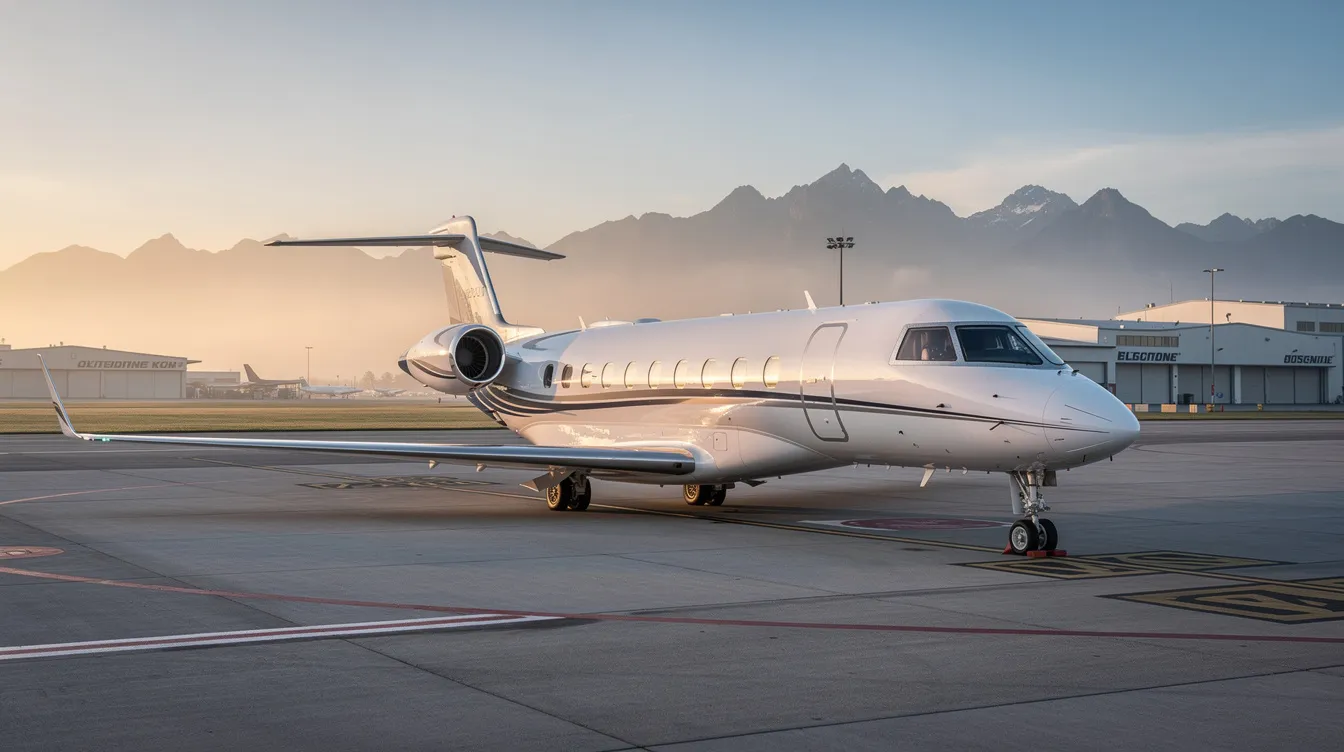
The 737 vs 747 framework translates neatly into private aviation categories. Light and midsize jets handle “737-style” missions: high-frequency, regional flights with smaller passenger groups. Large-cabin and ultra-long-range jets serve “747-style” missions: intercontinental reach, larger parties, and the need for separated work, dining, and rest areas.
BlackJet's Jet Card membership allows clients to access multiple cabin classes without being locked into a single aircraft type. The right tool for each trip replaces the airline model of one-size-fits-all scheduling.
Example Private Jet Missions
Case Study 1: A CEO conducting a multi-city US tour—New York, Chicago, Dallas, Denver, San Francisco over five days—books a midsize jet through BlackJet's digital platform. Each 737-style hop takes under three hours; the jet repositions overnight. No hub connections, no airline schedule constraints.
Case Study 2: A family of six traveling from Los Angeles to Paris for a three-week holiday books a large-cabin jet with full lie-flat seating and onboard dining. This 747-style mission, covering roughly 5,600 nautical miles, requires an aircraft with intercontinental range but not 400 seats.
Case Study 3: A board retreat with 10 to 12 executives flies from Teterboro to a Caribbean resort. A super-midsize jet provides conference-style seating, catering for the group, and direct access to the destination airport—something no airline 737 or 747 route would cover.
Mobile booking platforms and real-time flight support make this kind of adaptive trip planning possible. BlackJet's technology matches each mission profile with appropriately certified aircraft and crews, turning airline-scale thinking into bespoke private travel planning.
FAQs: practical questions about 737 vs 747 and private jet alternatives
Is a 747 safer than a 737?
Both families have strong safety records in their modern variants. The 747-400 and 747-8 have operated for decades with excellent safety performance, and the 737 remains one of the safest narrowbody jets in history. Per-flight-hour statistics, not raw accident counts, provide a more meaningful comparison.
Which aircraft is more comfortable on long flights?
The 747's twin aisles, wider cabin, and upper-deck premium zones generally offer a more spacious experience than any single-aisle 737 configuration. For private travelers, a large-cabin private jet provides comparable or superior comfort with complete privacy.
Why did airlines stop ordering new 747s?
Economics drove the decision. Four engines, higher fuel costs, and the advent of efficient twin-engine widebodies like the 787 and A350 made the 747 uneconomical on most routes. Passenger demand increasingly favored point-to-point service over hub-based jumbo jet operations.
What replaced 747s on flagship routes?
The Boeing 777, 787 Dreamliner, and Airbus A350 now serve the intercontinental trunk routes once flown by 747s. These twin-engine widebodies offer comparable range with significantly lower per-seat costs.
Can I charter a 737 or 747 privately?
Yes, though it is rare and expensive. BBJ variants of the 737 are available for charter, and a handful of VIP-configured 747s exist. For most missions, a purpose-built private jet accessed through a Jet Card is more practical, cost-effective, and available from more airports.
What private jet best replaces the 747 experience for a small group?
Ultra-long-range jets like the Gulfstream G650 or Bombardier Global 7500 offer ranges exceeding 6,000 nautical miles with stand-up cabins, multiple living zones, and lie-flat sleeping—the closest analog to a 747 first-class suite, but entirely private.
How does a 737 or 747 compare to a private jet on air traffic control priority?
Private jets are typically categorized as “Light” or “Medium” wake turbulence, requiring less separation than a “Heavy” 747. This often translates to faster sequencing on final approach and departure at busy airports.
How does BlackJet's Jet Card compare to owning a share in a 737 or 747?
Fractional ownership of a large aircraft ties capital to a single airframe with fixed costs regardless of utilization. A Jet Card offers prepaid access across multiple cabin types with no ownership burden, enabling flexibility trip by trip—combined with BlackJet's safety certification, carbon-neutral performance, and 24/7 support.
Conclusion: choosing the right aircraft, and why private access wins
The Boeing 737 earned its place as the most prolific narrowbody in aviation by doing one thing exceptionally well: moving passengers efficiently on short and medium routes with relentless frequency. The Boeing 747 carved its legend through sheer scale and ambition, connecting continents as the original jumbo jet and serving as the “Queen of the Skies” for more than half a century. Together, these two iconic aircraft define the poles of commercial flight—agility versus grandeur, frequency versus range, efficiency versus presence.
For today's premium traveler, however, the decision is no longer which airliner to book. It is whether scheduled airline service—constrained by fixed routes, shared cabins, and hub logistics—still serves your needs when bespoke private access exists. BlackJet's Jet Card programs deliver the strategic precision that both aircraft represent: the right aircraft for the right mission, every time. Carbon-neutral flights, rigorous safety and certification standards through ARG/US and Wyvern protocols, seamless digital booking, and 24/7 support combine to turn the “737 vs 747” question into something more personal: how do you want to fly?
Elevate your travel—effortlessly. Explore BlackJet's Jet Card programs and discover how refined, flexible private aviation becomes your new standard.


 Sign up with google
 Sign up with Apple