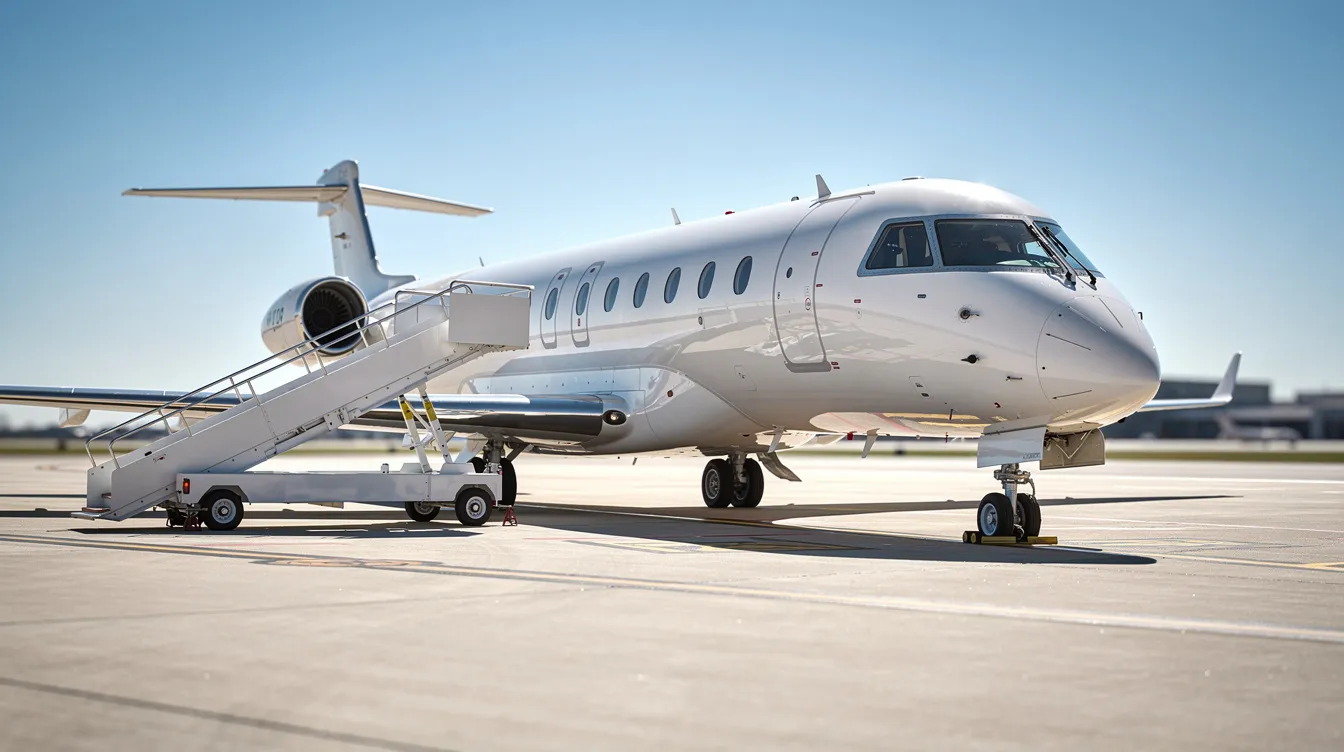
When you need to move an entire executive team, a full sports roster, or a multi-generational family to the same destination at the same time, the 30-passenger plane occupies a uniquely powerful position. Too large for a handful of business jets, too lean for a widebody airliner, this aircraft class delivers unified group travel with the precision and privacy that commercial alternatives simply cannot match.
Key Takeaways: Why a 30 Passenger Plane Is a Strategic Advantage
A 30-passenger plane sits at the intersection of operational efficiency and private aviation luxury. It eliminates the need to split your same group across multiple flights, multiple aircraft, or multiple confirmation codes. For corporate groups, sports teams, entertainment groups, and families traveling to destination weddings, this format keeps everyone together on one manifest with one departure time.
Here is what makes this aircraft class stand out:
Regional jets and turboprops commonly used in 30-seat charter configurations include the Embraer ERJ-135, ERJ-145, Saab 340B, and ATR 42-600, each offering full schedule control and private-terminal access for a seamless group charter flight experience.
Hourly rates for 30-passenger jets range from $5,000 to $9,000 per flight hour, and the resulting cost-per-seat often undercuts 30 commercial business class tickets on the same route, especially during peak travel seasons.
BlackJet provides premium Jet Card access to a vetted network of 30-seat private aircraft, with carbon-neutral flights by default, 24/7 support, and real-time digital booking tools.
Chartering one 30-passenger plane instead of booking three or four smaller jets or a block of commercial tickets saves time, simplifies logistics, and delivers measurably better cost efficiency for group travel.
What Is a 30 Passenger Plane in Private and Commercial Aviation?
A 30-passenger plane is a regional-class private aircraft or turboprop typically configured with 25 to 34 seats for short- to medium-haul routes. Originally designed as regional airliners for commercial airlines in the late 1980s and 1990s, many of these airframes-including the ERJ family, CRJ-200, and Saab 340-have been redeployed into charter operations and corporate shuttles as commercial carriers upgraded to larger equipment.
The cabin architecture is narrow-body with 1–2 or 2–2 seating and no middle seats. Pressurized cabins provide typical cruise altitudes between 25,000 and 37,000 feet, with a cruise speed ranging from roughly 350 to 520 mph depending on whether the aircraft is a turboprop or a jet.
Baggage capacity on these aircraft generally accommodates around 3,000 to 4,000 pounds of total luggage, translating to approximately two to three bags per passenger. Sports gear, production equipment, or oversized items require advance coordination to ensure weight restrictions and hold dimensions are accounted for.
In the broader landscape of commercial and private aviation, 30-seat aircraft occupy the space between light jets and super midsize jets on one end and large jets and bizliners on the other. Their ability to access smaller airports with shorter runways makes them more agile than larger commercial operations while offering far greater passenger capacity than a single business aircraft.
Why Choose a 30 Passenger Plane for Group Charter Flights?
Chartering a 30-passenger plane provides enhanced control and privacy over commercial travel, and that difference compounds across every element of the journey. When every decision-maker, athlete, or family member boards a single private plane, you eliminate the coordination chaos of juggling multiple commercial flights with separate itineraries, connection risks, and staggered arrivals.
The concept is straightforward: one aircraft, one schedule, one arrival. Aircraft in this category are ideal for travelers needing to arrive together, whether that means a board meeting in Aspen or a wedding in Turks and Caicos. 30-passenger aircraft provide flexible scheduling, allowing departure times to be controlled by the group rather than dictated by an airline timetable. If a client's dinner runs late or the weather shifts, you adjust without change fees.
Traveling together on one aircraft saves two to four hours per trip compared to commercial aviation, thanks to private terminals, 30-minute pre-departure arrivals, no security queues, and direct routing to the destination. Privacy on 30-passenger planes enables confidential discussions during flights, transforming transit time into productive strategy sessions.
The softer benefits matter too: consistent service standards, personalized catering and ground transportation arrangements, branding opportunities with company-logo menus and welcome signage, and the ability to turn flight time into celebration time for leisure travel groups.
Types of 30 Passenger Aircraft: Regional Jets vs. Turboprops
Two main categories define the 30-seat charter market: faster regional jets and highly efficient turboprops. Each suits different mission profiles, airport constraints, and budget priorities.
Regional jets in this segment are typically 28–37-seat airframes reduced to approximately 30 seats for charter, with cruise speeds around 430 to 520 mph. They handle legs of 700 to 1,800 nautical miles comfortably-think New York to Dallas or London to Rome-and fly at altitudes up to 37,000 feet for a smoother ride above weather.
Turboprops seat 25 to 34 passengers with lower fuel burn and markedly shorter runway performance, making them suited to islands, industrial sites, ski resorts, and airports that jets simply cannot reach. Ranges typically fall between 500 and 900 nautical miles. 30-passenger airplanes can operate from shorter runways compared to larger jets, and these aircraft can directly access over 7,000 regional airports across the United States alone.
Key trade-offs at a glance:
Jets offer speed, a quieter ride, lower cabin noise, and higher perceived prestige
Turboprops deliver better fuel efficiency, access to challenging runways, lower operating costs, and strong reliability on short sectors.
BlackJet's flight advisors help members choose between regional jet and turboprop options based on route distance, runway length at destination, baggage allowance needs, and desired arrival times.
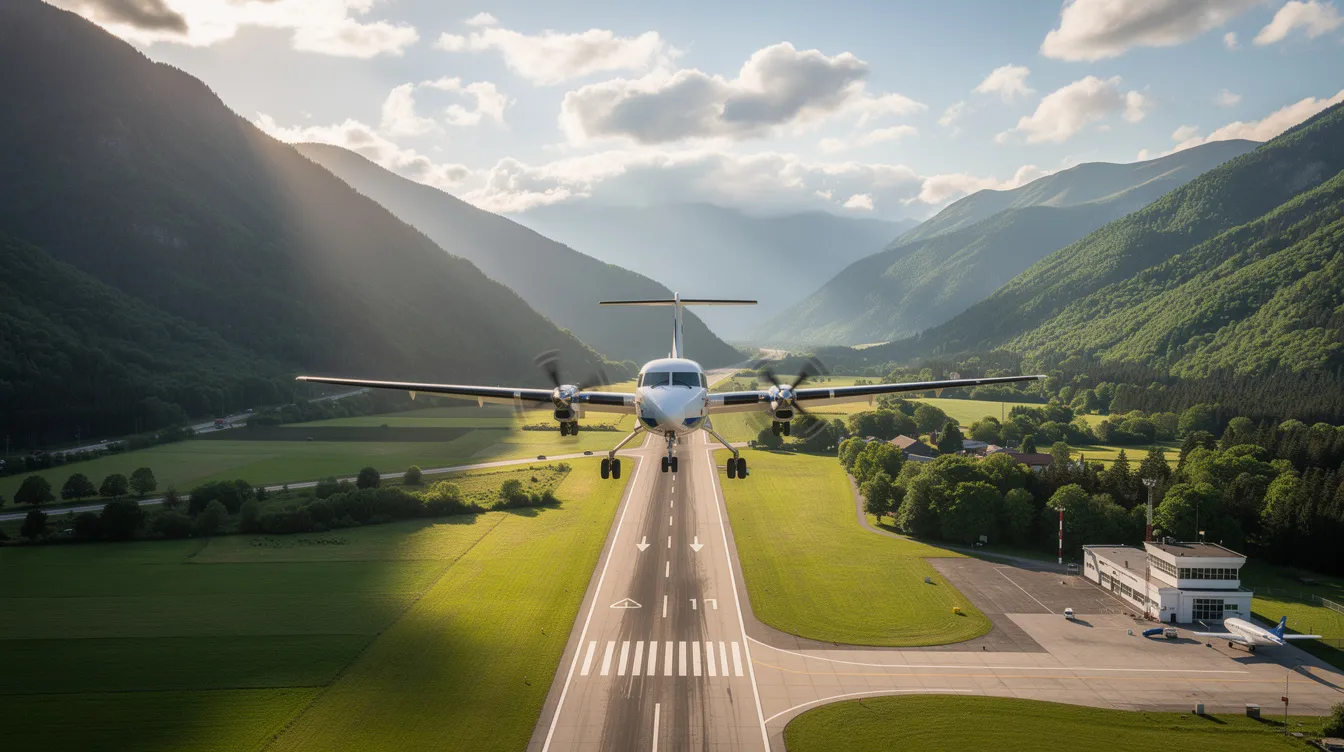
Popular 30 Passenger Regional Jets
Regional jets dominate the 30-passenger segment for corporate shuttles, sports travel, and premium group plane charter operations. They combine the structural robustness of commercial operations with the flexibility and customization of private jet charter.
The Embraer ERJ family and Bombardier CRJ-200 form the backbone of many 30-seat charter fleets worldwide. The Bombardier CRJ-200 typically accommodates 30 passengers with a range of 3,200 nautical miles, making it a strong option for cross-country and international legs. The Dornier 328 has short takeoff capability, making it suitable for regional operations and time-sensitive travel into constrained airfields. Regional jets are often used for high-end charter services where schedule precision and cabin quality are paramount.
The cabin feel is distinctly more refined than commercial economy: stand-up aisles for most passengers, 1–2 or 2–2 seating with no middle seats, overhead bins sufficient for carry-ons, and seat pitch typically in the 31 to 36-plus-inch range when configured for 30 passengers.
Modern refurbished regional jets frequently include Wi-Fi, in-seat power outlets, LED cabin lighting, and upgraded lavatories. These upgrades in aircraft technology bring the experience closer to that of large business jets while maintaining the capacity advantages that make this aircraft type so cost-effective for groups.
Spotlight: Embraer ERJ-135 and ERJ-145 in 30-Seat Layouts
The ERJ-135 and ERJ-145 are the workhorses of 30-passenger charter, relied on by corporations, universities, and sports organizations for dependable shuttles and multi-city tours.
ERJ-135 highlights:
Typical 30-seat charter configuration with approximately 6-foot cabin aisle height
Embraer ERJ-135 seats 30 passengers with a range of 3,250 nautical miles, sufficient for most North American coast-to-coast routes
Cruise speed around 515 mph, competitive with smaller business jets
ERJ-145 highlights:
Embraer ERJ-145 can be configured for 30 to 50 passengers; charter operators frequently de-rate to 30–36 seats for increased legroom and a more spacious cabin experience
Range in the 3,300 to 3,700 nautical mile band, suitable for routes like New York to Mexico City or transatlantic sectors to the Middle East or North Africa
Strong commonality of engines and systems (~96%) with the ERJ-135, reducing maintenance complexity for charter operators
VIP or corporate shuttle configurations often remove additional seats to create lounge-style zones with work tables and generous recline, trading maximum capacity for a true private jet travel experience. BlackJet's network includes ERJ operators vetted for safety, modern avionics, and cabin refurbishments, and Jet Card members can specify Wi-Fi and layout preferences during the booking process.
Efficient Turboprop Options for 30 Passengers
Turboprops are chosen for short sectors, challenging airfields, or missions where runway length and cost efficiency take priority over outright speed. 30-passenger planes often have lower operating costs for turboprops compared to jets, which makes them compelling for frequent shuttle routes.
Key models seen in charter service:
Saab 340B: 30–34 seats with strong short-field performance. The Saab 340 is highly prized for fuel efficiency on short-haul routes, cruising at approximately 271 to 283 knots with a service ceiling around 25,000 feet.
ATR 42-600: Up to 48 seats in airline layouts, often configured around 30–36 for charters. The ATR 42-600 is designed for short-haul, regional routes with excellent fuel efficiency and takeoff distances as short as 3,200 feet.
Embraer EMB 120 Brasilia: Approximately 30 seats with a range around 800–1,000 nautical miles, well suited to Caribbean island-hopping or connecting smaller regional business hubs.
Turboprops are valued for their ability to operate from challenging runways with low fuel consumption. For distances under roughly 500 miles, door-to-door flight time on a turboprop may be nearly identical to a jet, while burning less fuel and sometimes offering lower hourly rates. Mission types range from Caribbean charter flights to shuttling staff to remote energy projects not served by commercial airlines.
Passenger experience trade-offs include somewhat higher cabin noise compared to jets and slower cruise speeds (250–300 knots), but fully pressurized cabins, comfortable seating, and equivalent catering and service standards keep the experience firmly in the premium category.
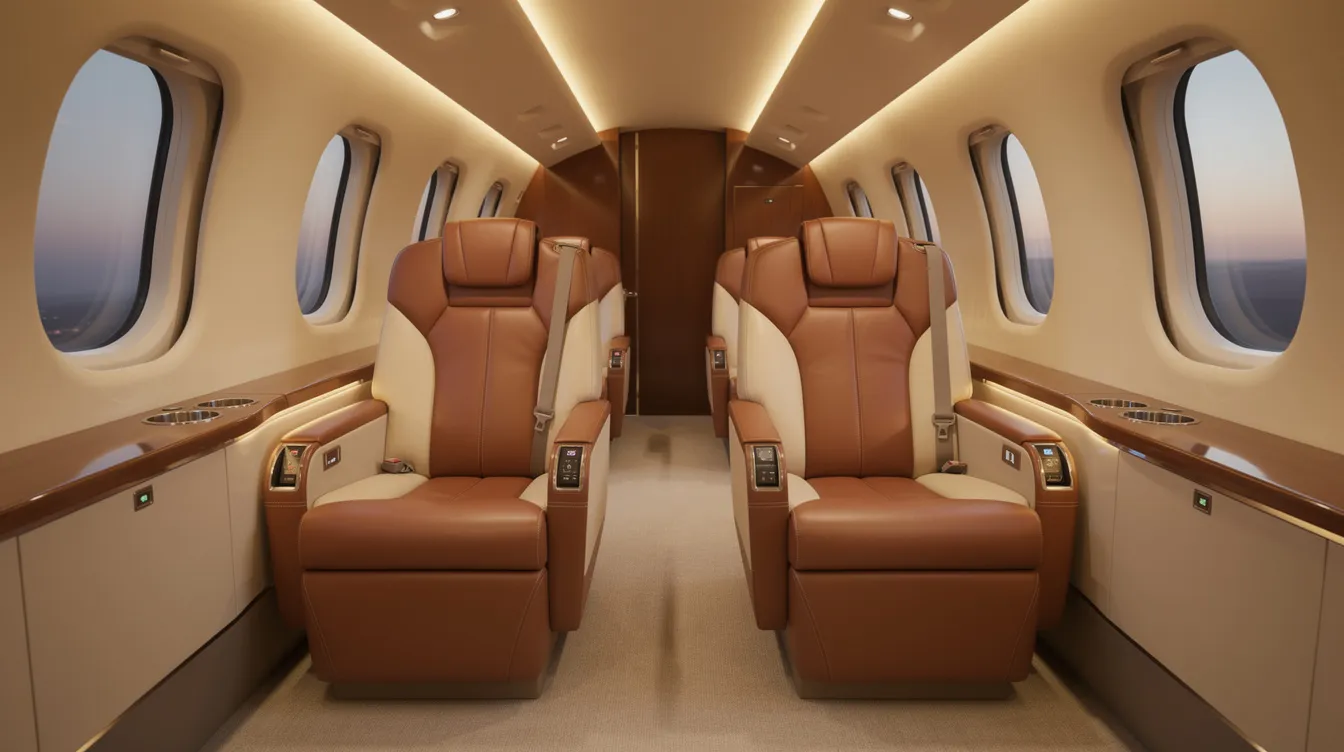
Cabin Layout, Seating, and Onboard Experience
The onboard environment of a 30-seat charter is more structured than a smaller aircraft but retains the personalization that defines private aviation. The cabin can be tailored to the group's purpose, whether that is a productive working session, a celebratory flight, or a relaxed family journey.
Seating options:
Standard 1–2 or 2–2 rows with no middle seats
Charter layouts with reduced seat counts for extra legroom, often achieving 34–36-inch pitch
VIP or corporate shuttle arrangements with club seating zones and fold-out work tables for meetings
30-passenger aircraft often feature business-class seating arrangements that rival premium commercial cabins
Amenities commonly available:
Wi-Fi on a majority of charter-configured regional jets
AC and USB power outlets at most seats
Integrated audio-visual systems for presentations or entertainment
Galleys capable of serving full hot meals for all passengers
Baggage handling follows a straightforward pattern: checked luggage is stored in external holds, carry-ons go in overhead bins and under-seat storage. Advance notice is required for oversized items such as AV gear, musical instruments, or sports equipment to manage baggage capacity and weight restrictions.
Catering for 30 passengers needs advance planning. One or more experienced crew members serve as flight attendants, managing curated catering menus tailored to the group. Working breakfasts for board meetings, kid-friendly options for family charters, and dietary accommodations are standard. The ability to customize cabin branding for corporate groups elevates a charter service from transport to an all-inclusive experience tailored to the occasion.
Cost of Chartering a 30 Passenger Plane: Hourly Rates and Real-World Examples
While the total cost of a 30-seat charter can appear significant at first glance, chartering a 30-passenger plane reduces per-passenger costs significantly when the aircraft flies close to capacity. The math frequently favors charter over commercial alternatives or multiple private jets.
Typical hourly rate ranges:
Turboprops: approximately $4,000–$6,500 per flight hour
Regional jets: typical hourly rates for 30-passenger jets range from $5,500 to $9,000 per flight hour, depending on aircraft size, age, configuration, and region
Real-world trip estimates:
Route | Flight Time | Estimated All-In Cost | Cost Per Passenger (30 pax) |
|---|
New York → Chicago | ~2 hours | $14,000–$18,000 | $467–$600 |
Los Angeles → Denver | ~2.5 hours | $15,000–$20,000 | $500–$667 |
London → Zurich | ~1.5 hours | $10,000–$15,000 | $333–$500 |
Effective cost-per-passenger often falls in the $500 to $700 range for domestic routes when the plane is close to full. Compare that to 30 flexible or last-minute commercial business class tickets on the same sectors, which can easily run $800 to $2,000 per seat during peak travel seasons-and the cost savings become clear.
BlackJet Jet Card members benefit from fixed or capped hourly rates, transparent additional fees, and no surprise surcharges. This simplifies budget forecasting for recurring corporate shuttles, seasonal sports travel, or annual company retreats. Understanding the true cost to charter and broader private jet charter pricing is essential for making informed decisions.
Additional Fees, Taxes, and How to Manage Them
Beyond the base hourly rate, predictable additional fees can materially affect total trip cost. Understanding them upfront prevents surprises and enables more accurate comparison against commercial alternatives.
Common fee categories:
Positioning fees: When the aircraft must ferry to your departure airport, you pay for those legs. Choosing a home-base aircraft eliminates or reduces this cost.
Fuel surcharges: Can add $600 to $1,500 per hour on top of the base rate, fluctuating with market fuel prices.
Crew overnight fees: Range from $200 to $400 per crew member when trips require overnight stays.
Cleaning fees: Can cost between $250 and $500 or more per flight.
Landing fees: Vary based on airport authority and aircraft size; some private terminals charge significantly less than major hub airports.
De-icing: A variable cost in winter conditions that depends on aircraft type and temperature.
International cost components include overflight permits, landing permits, customs and immigration handling, and government taxes. International flights require complex permit arrangements that can add several hundred to several thousand dollars depending on the region and route.
Mitigation strategies:
Select aircraft based near your departure city to reduce positioning fees
Schedule flights to avoid peak de-icing periods
Choose efficient airports with lower landing fees
Consolidate multi-leg itineraries to reduce daily minimum charges
BlackJet provides full, line-item cost visibility before you commit. Jet Card members enjoy standardized fee structures and negotiated rates designed for frequent travelers and corporate accounts.
30 Passenger Charter vs. Commercial Airlines and Multiple Business Jets
A 30-seat charter puts you in control of the schedule, the manifest, and the onboard environment. In commercial aviation, you adapt to airline constraints. With a private jet charter of this size, the airline adapts to you.
Against commercial airlines: Travelers evaluating private options often benefit from a detailed cost comparison of chartering a private jet versus flying commercially.
Longer check-in and security queues add 90–120 minutes per direction
Fragmented itineraries mean missed connections and lost luggage for large groups
No privacy for sensitive discussions; no flexibility on departure times
These inefficiencies translate into wasted executive hours and diluted team cohesion during a critical business trip
Against multiple private jets:
Chartering three or four multiple private jets to carry 30 people means higher combined hourly rates, multiple crews, split arrival times, and more complex ground transportation arrangements at both ends
Coordination across multiple aircraft creates logistical friction that a single 30-seat charter eliminates entirely
Scenario: A 30-person management off-site in Scottsdale. Using staggered commercial flights from three hub cities requires a full travel day, with the earliest arrivals waiting hours for the last connections. A single 30-passenger plane departs at 8:00 AM, lands at 10:30 AM, and the entire team is in the conference room by noon-saving an entire workday of productivity. This kind of operational efficiency is why 30-passenger airplanes are commonly used for corporate shuttles and group charters.
For groups in the 18–35 passenger range, the 30-seat aircraft delivers the best blend of cost efficiency, operational control, and comfort. Below that threshold, midsize or super midsize jets may be optimal, and travelers can evaluate 16-seat private jet options as an alternative for smaller executive groups. Above roughly 40 passengers, larger aircraft options come into play.
Ideal Use Cases: Who Gains the Most from 30 Passenger Planes?
While anyone can charter a 30-seat private aircraft, certain group profiles extract disproportionate strategic and financial value from this format, while others may be better matched to private jets designed for 15 passengers.
Corporate and institutional shuttles: Board meetings, annual leadership conferences, multi-city investor roadshows, and recurring weekly or monthly shuttles between headquarters and satellite offices. 30-passenger planes provide unified logistics for group travel that keep corporate events running on schedule, and the same logic scales up to chartering aircraft for 100 passengers when organizations need even larger movements.
Sports teams: Full rosters, coaching staff, medical teams, and equipment traveling on one schedule. Teams can depart immediately after games, maintain competitive routines, and avoid the delays and split arrivals of commercial flights or multiple smaller jets, though some organizations may occasionally opt for private jets configured for 20 passengers when rosters are smaller.
Entertainment groups and production crews: Film units, touring musicians, and TV crews moving with gear on tight timelines. These groups need privacy, direct routing, and access to smaller airports near remote shooting locations or concert venues.
High-net-worth family events: Destination weddings, milestone birthdays, or family reunions where the travel itself is a curated part of the experience. Customized catering, kid-friendly services, and synchronized ground transportation on arrival transform charter flights into the maiden flight of the celebration itself.
Corporate retreats and incentive travel: Companies using company retreats to reward top performers benefit from the shared experience of traveling together, with consistent service and seamless coordination from door to door.

Planning and Logistics for 30-Passenger Group Travel
A successful 30-passenger charter begins weeks in advance, especially for peak travel seasons or complex itineraries. Meticulous planning eliminates friction and ensures the experience matches expectations.
Recommended booking timelines:
Book 60 to 90 days in advance for best aircraft availability on domestic trips
Allow 60–90 days for international or multi-stop tours to accommodate overflight permits and customs logistics
Last-minute bookings may incur premium pricing and limit aircraft type options
Same-week departures are possible but depend on aircraft availability and route demand
Key logistical elements to coordinate:
Aircraft selection based on route distance, runway length, and passenger count
Route design including alternate airports and potential tech stops
Passenger manifest collection with ID details for security and customs
Catering preferences, dietary requirements, and meal timing
Ground transportation coordination is essential for large groups-coaches, sprinter vans, or chauffeured cars need to align precisely with arrival times.
Aligning air and ground: The value of a charter collapses if 30 passengers land and then wait 45 minutes for ground transport. Professional coordination ensures vehicles are staged before touchdown so that the group moves seamlessly from aircraft door to hotel or venue.
BlackJet's 24/7 operations team coordinates these moving pieces-including changes to departure times, late passenger additions, and special security requirements-so organizers have a single point of contact rather than managing such arrangements across multiple vendors, whether they're arranging a 30-seat charter or exploring the cost to charter a small plane for more intimate groups.
Safety, Certification, and Aircraft Technology Standards
For aircraft carrying 30 passengers, safety and regulatory compliance are non-negotiable. BlackJet applies stringent vetting standards that exceed the legal minimums required by Part 135 certification, working with operators that also fly some of the best private jets in the world in terms of safety, technology, and performance.
Part 135 certification is required for charter operations in the United States, as defined by FAA 14 CFR Part 135. This regulatory framework governs everything from pilot licensing and recurrent training to maintenance programs and hours-of-service limits. Two pilots are required for 30-passenger aircraft operations, and operators must maintain detailed maintenance programs under Part 135 that include manufacturer-specified inspection intervals and component overhauls.
Regular inspections ensure compliance with safety standards, and insurance coverage minimums exceed $100 million per occurrence across BlackJet's operator network. A new requirement for formal Safety Management Systems becomes mandatory for many Part 135 operators by May 2027, and BlackJet prioritizes partners already implementing these programs.
Modern aircraft technology in the fleet includes:
Glass cockpits with advanced avionics
TCAS (Traffic Collision Avoidance System) and terrain awareness warning systems
Performance-based navigation for precision approaches
Advanced autopilot systems improving both safety and schedule reliability
Third-party audits from organizations like ARGUS, Wyvern, and IS-BAO add an independent layer of oversight. BlackJet's safety philosophy is simple: only partner with charter operators that meet or exceed top-tier safety ratings, maintain high insurance limits, and have proven track records across both commercial and charter operations. Single-pilot operations are never permitted on aircraft in this category.
Sustainability and Carbon-Neutral Group Travel with 30-Seat Aircraft
Private aviation faces environmental scrutiny, and rightly so. But well-filled 30-seat aircraft often have better per-passenger emissions than multiple flights on smaller aircraft or fragmented commercial itineraries with connections.
Fuel and emissions dynamics:
A larger airframe spreading fuel burn across 30 passengers improves per-person fuel efficiency dramatically compared to dispatching three light jets carrying ten passengers each. When flights are close to capacity, the carbon math shifts meaningfully in favor of a single 30-seat charter.
Practical sustainability levers:
Modern, efficient turboprops like the ATR 42-600 emit approximately 45% less CO₂ than similarly sized regional jets on comparable routes
Optimized direct routing reduces holding patterns and taxi time
Sustainable aviation fuel (SAF) blends are increasingly available at major U.S. and European hubs
BlackJet's carbon-neutral commitment means automatic carbon offsetting for every flight at no extra cost to the Jet Card member. Offsets fund high-quality, audited environmental projects, and transparent reporting supports corporate ESG documentation. Organizations can learn more about BlackJet's approach to sustainable private aviation and how it fits into a broader private jet price framework that balances cost with ESG goals.
For companies that need in-person collaboration, secure travel, and schedule control, integrating 30-passenger charter into a broader sustainability narrative is not just feasible-it is increasingly expected by stakeholders and investors.
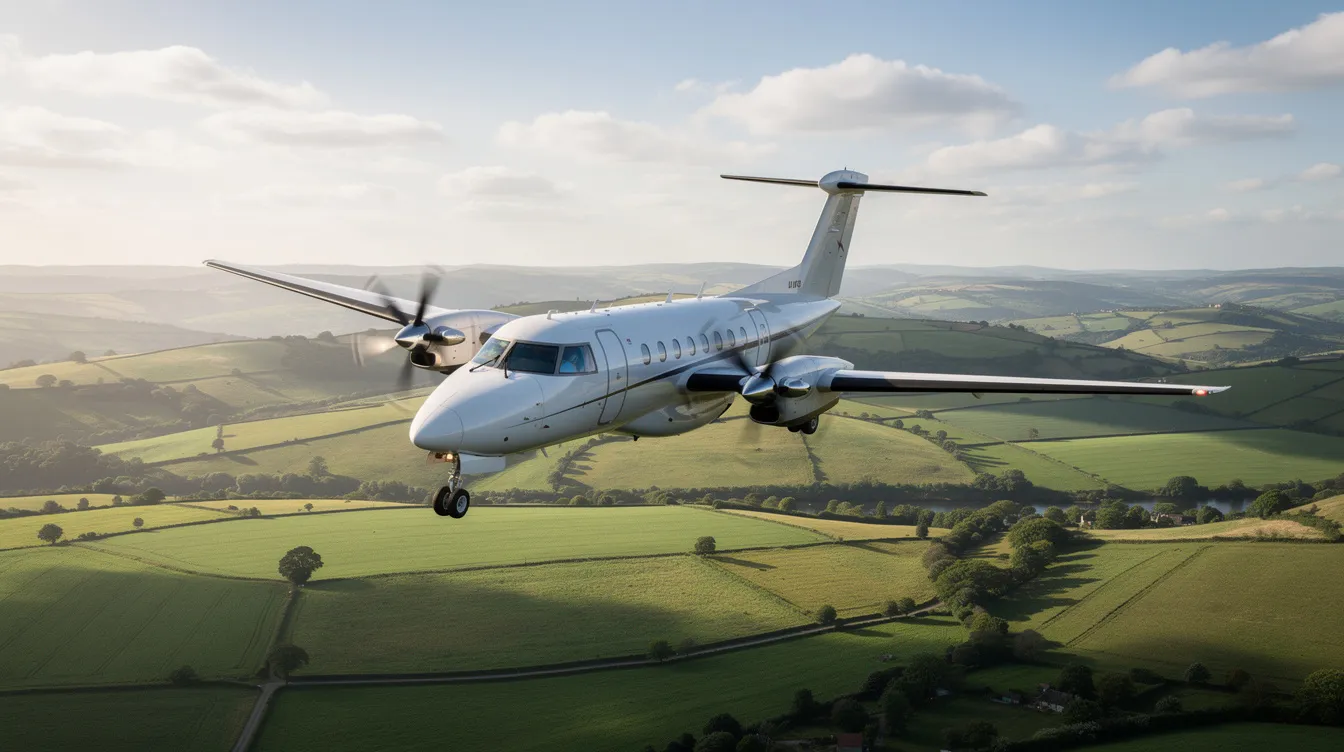
BlackJet Jet Cards and 30 Passenger Plane Access
BlackJet's Jet Card model is designed for frequent group travelers who require predictable pricing, priority access to 30-seat aircraft, and a frictionless experience from first inquiry to final touchdown, building on the broader suite of premium private jet card programs the company offers.
Key Jet Card features: Travelers comparing membership options should also understand general jet card pricing structures to see how BlackJet's model aligns with their usage.
Prepaid flight hours with transparent hourly rates across cabin categories, including regional jet and large aircraft tiers
No ownership obligations, no management headaches, no depreciation risk
24/7 digital and phone-based booking with real-time aircraft availability visibility
Carbon-neutral flights included by default
How Jet Cards simplify recurring group charters: For frequent flyers, evaluating the best jet cards for regular travel helps clarify when a program like BlackJet's delivers more value than ad hoc chartering.
Fixed rate logic reduces exposure to ad hoc pricing fluctuations
Consolidated reporting gives finance teams and executive assistants clear visibility into travel spend
Standardized fee structures minimize surprise costs from positioning fees, crew expenses, and handling charges
Members can specify aircraft type, cabin configuration, and amenity preferences at the time of booking
Platform technology includes online and mobile tools that display aircraft options, estimated costs including all known additional fees, real-time flight status, and integrated management of passenger lists and special requests, especially for members using the BlackJet 25+ Hour Jet Card. The booking process is designed to feel as effortless as booking a single seat-except you are coordinating an entire group.
For organizations that routinely move groups of 10 to 30 travelers and want carbon-neutral, safety-led, premium access without the complexity of owning a private jet, exploring BlackJet's Jet Card programs is a natural next step. Understanding jet card cost per hour helps quantify the value. The model delivers what matters most: a cost-effective solution with the flexibility to scale up or down as travel needs evolve.
Frequently Asked Questions About 30 Passenger Plane Charters
This FAQ addresses the most common operational and cost questions that arise when moving 20 to 35 passengers together on a single charter. For deeper exploration, visit our guide to chartering flights or a focused breakdown of 100-hour jet card costs for very frequent travelers.
How far in advance should I book a 30-passenger charter? For domestic routes, 45 to 60 days is ideal, and travelers planning recurring usage may want to understand 50-hour jet card pricing to lock in consistent access. International or multi-stop itineraries benefit from 60 to 90 days of lead time to secure the right aircraft and handle permit logistics. Same-week departures are achievable, but aircraft availability narrows, and pricing may carry a premium.
How far can a 30-seat aircraft fly nonstop? It depends on the aircraft type. Regional jets like the ERJ-135 and CRJ-200 offer ranges of approximately 3,200 to 3,250 nautical miles-enough for transcontinental U.S. flights or transatlantic legs. Turboprops typically range from 500 to 1,000 nautical miles. For longer missions, tech stops are planned into the itinerary with minimal disruption. Travelers comparing access models—including fractional options and NetJets jet card costs—can use range as a key deciding factor.
What is the baggage allowance? Standard baggage allowance accommodates two to three checked bags per passenger. Total hold capacity is generally 3,000 to 4,000 pounds. Sports equipment, musical instruments, or production gear requires advanced coordination to manage weight restrictions and ensure it fits the aircraft hold dimensions.
What is included in the quoted price? Base quotes typically cover the aircraft, two pilots, standard fuel, and insurance. Variable items billed separately include catering and ground transportation, de-icing, international customs fees, and fuel surcharges. BlackJet provides itemized quotes so every cost is visible before commitment.
Is a 30-seat charter really more affordable than 30 business-class tickets? For many domestic routes, yes. When the aircraft is full, per-passenger costs in the $500 to $700 range are common-often well below the price of 30 flexible or last-minute business-class fares, especially during peak seasons. The time saved and unified arrival add further value that pure ticket price comparisons do not capture, particularly when you factor in the broader context of how much it costs to rent a private jet across different aircraft sizes.
Conclusion: Is a 30 Passenger Plane Right for Your Next Group Trip?
A 30-passenger plane is the optimal solution for groups of roughly 18 to 35 travelers who value schedule control, privacy, and cohesive arrival-and who currently rely on multiple commercial flights or several smaller business jets to get everyone to the same place at the same time. Whether the occasion is a business trip, a tournament, a roadshow, or a family celebration, this aircraft category consistently delivers the best balance of capacity, cost, and experience.
The strategic benefits are concrete: cost-per-seat efficiency that rivals or beats commercial alternatives, reduced logistical complexity through unified travel on a single manifest, enhanced productivity from reclaimed hours, and the ability to turn leisure travel or corporate transit into meaningful collaboration time.
BlackJet's differentiators reinforce every aspect of this value proposition: safety-first operator selection with insurance exceeding $100 million per occurrence, carbon-neutral flights at no extra cost, Jet Card pricing advantages that reward frequent travelers, and always-on expert support for complex itineraries and last-minute changes.
If you are planning an upcoming board meeting, tournament, investor roadshow, destination wedding, or company retreat, speak with a BlackJet flight advisor to explore how a 30-passenger charter can elevate both the experience and the efficiency of your next group journey.


 Sign up with google
 Sign up with Apple