For decades, the X 125 aircraft family—including the British Aerospace 125 and later Hawker variants—has occupied a defining position in private aviation as a midsize twin-engine jet line built for regional trips of roughly 2,500 nautical miles, balancing cabin comfort, range, and reliability. From the original de Havilland prototype to the Hawker 1000, these aircraft have carried heads of state, corporate leaders, and military crews across every continent.
For executives, frequent business flyers, and high-net-worth leisure travelers weighing jet cards, charter, or ownership, understanding this lineage is less about nostalgia than about matching aircraft capability to real travel needs. This guide looks at the x 125 aircraft family’s history, design, major variants, cabin features, performance, military use, market impact, regulatory considerations, and specifications—along with why it remains a practical choice in modern private aviation for travelers who want more time efficiency, comfort, and flexibility than commercial flights or smaller jets typically provide.
Strategic Value of the BAe 125 / Hawker 800 Family for Private Jet Travelers
Filling the Gap Between Light and Large Jets
The BAe 125 / Hawker family fills a critical gap between light jets that sacrifice comfort and large-cabin aircraft that overshoot most regional missions. For travelers who fly multiple times per month, this class translates directly into measurable time and productivity advantages - the kind that redefine how work gets done.
Time Efficiency and Productivity Advantages
Consider a London-to-Geneva trip. A commercial first-class ticket still requires early check-in, security queues, and hub connections that stretch door-to-door time past five hours. A midsize jet in the 125-class departs from a closer executive airport, skips the terminal entirely, and completes the mission in roughly half that time. New York to Chicago follows the same logic: commercial schedules impose rigid timetables, while a business jet departs on your clock.
Alignment with Common Missions and Jet Card Value
The BAe 125 is used for corporate transport and military purposes worldwide, and its cabin, range, and reliability align with the most common missions BlackJet members fly - regional trips up to approximately 2,500 nautical miles. Jet cards cater to high-net-worth leisure travelers and busy executives alike, providing flexible access to this exact category without the burden of ownership; understanding overall jet card cost and membership pricing is key to evaluating that value. BlackJet positions aircraft in this class within its Jet Card fleet mix, ensuring every option meets strict safety certification, carbon-neutral operation standards, and 24/7 digital access.
Design Origins of the British Aerospace 125
The aircraft that would become one of the world's most prolific business jets began as a project at de Havilland's Hatfield facility in 1961 - a jet replacement for the piston-twin Dove light transport. The British Aerospace 125 first flew on 13 August 1962 as the DH.125, marking a turning point in European business aviation.
The sole prototype carried the early name "Jet Dragon" before the designation shifted to HS.125 when de Havilland was absorbed into Hawker Siddeley in 1963. The BAe 125 evolved through manufacturers including Hawker Siddeley and British Aerospace, gaining the BAe 125 name after nationalization in 1977 and later being marketed under Raytheon as the Hawker 800 and 1000.
Designers chose a low-wing, rear-mounted engine layout - a deliberate contrast with the high-wing configuration used on some military or utility types intended for STOL or rough-field access. Rear-mounted turbofans kept the cylindrical fuselage quieter, left the cabin floor free of structural intrusions from the wing joined to the centre section, and kept the tail clear of the main pitch/control arrangement.
Early powerplants were Bristol Siddeley Viper turbojets (Series 1–3), which critics noted produced very poor flight characteristics at hot-and-high airports due to limited climb margins. The transition to Garrett TFE731 turbofans in later variants addressed those shortcomings, improving fuel efficiency, thrust, and noise levels considerably.
Variants and Evolution: From HS.125 to Hawker 1000
The x 125 aircraft family evolved through multiple series numbers - from the original Series 1 through the 700, 800, and 1000 - with ongoing development across successive series, each responding to demands for greater range, passenger comfort, and regulatory compliance. The 125 series includes variants like the 125-800 and 125-1000, each representing substantial leaps in capability.
Series 1–3 (early 1960s): Powered by Viper turbojets, these carried six passengers in basic executive layouts with analog avionics. Range and payload were modest.
Series 400/600 (late 1960s–1970s): Introduced improved Rolls-Royce Viper 601-22 engines, extra fuel capacity via dorsal tank fairings, and increased gross weight limits. Modified aerodynamic lines improved climb and cruise performance.
BAe 125-700: Refinements in cabin comfort and aircraft systems, widely adopted by corporate and government operators.
BAe 125-800 (first flight 26 May 1983): Reshaped nose and windscreen, longer wingspan, ventral fuel tank, more powerful engines. Over 275 were produced and later marketed as the Hawker 800 - the midsize benchmark of its era.
BAe 125-1000 (first flight 16 June 1990): A fuselage stretch of approximately two feet nine inches, equipped with Pratt & Whitney Canada PW300 series engines and a digital avionics suite. The 125-1000 variant had intercontinental range capabilities, and Raytheon rebranded it as the Hawker 1000 after acquiring production rights. Roughly 50–60 units were produced.
Cabin capacity shifted across the line: earlier configurations seated six passengers in executive layouts, while later models accommodated up to twelve passengers in high-density or shuttle arrangements. Some special-mission versions like the U-125/U-125A and Peace Krypton shared the basic Hawker 800 airframe but were structurally modified with sensor fairings and fuselage pods shared across multiple reconnaissance and rescue roles.
Cabin Layout, Comfort, and Accommodation for Twelve Passengers
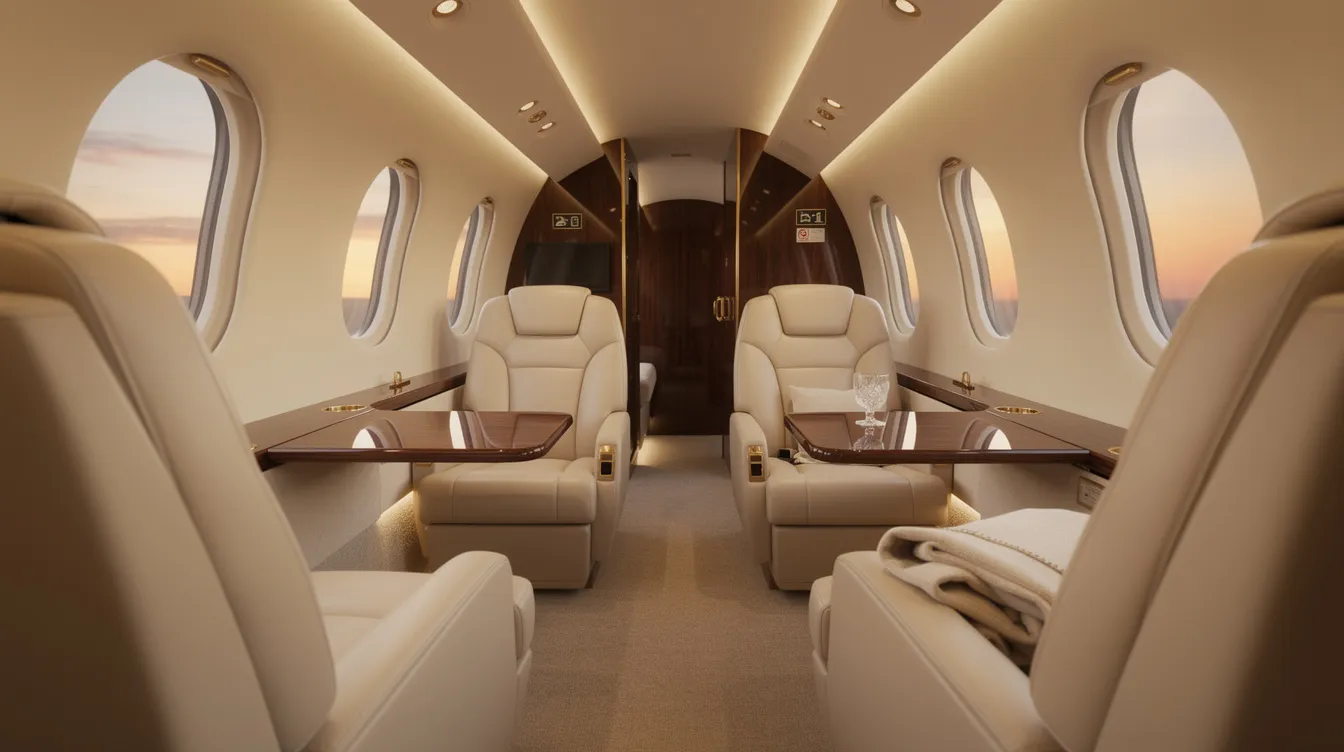
From the 1970s onward, the BAe 125 and its Hawker successors set a benchmark for midsize business jet cabin comfort - enough space for a small team to work, dine, or rest with amenities that rivaled much larger aircraft of the period, a standard echoed in BlackJet's premium private jet card programs built around similar midsize cabins.
Cabin Dimensions
Cabin dimensions on the 800 series offer roughly 18–20 feet of usable length, 68–72 inches of width, and stand-up height near 5 feet 9 inches. This is practical for most passengers to move freely and provides a comfortable environment for both work and relaxation.
Seating Configurations
Cabin layouts accommodate six to nine passengers in typical club-and-divan configurations with fully reclining leather seats and fold-out worktables. The featured accommodation includes an enclosed lavatory in the rear, a refreshment centre or galley, and early options for satellite phone and data systems. Later models and high-density arrangements can seat up to twelve passengers, making the aircraft versatile for both business and leisure missions.
Modern Amenities
Modern operators retrofit these aircraft with Wi-Fi, streaming capability, power outlets, improved insulation, and updated lighting. These upgrades turn a decades-old cabin into a capable mobile office. Rear-mounted engines keep the cabin notably quieter than wing-mounted alternatives, and pressurization supporting a service ceiling of 41,000 feet means flights cruise above most weather turbulence.
Productivity and Comfort at Altitude
For executives who need to run meetings at altitude, this combination of accommodation and quiet makes the class exceptionally productive. This is a core element of BlackJet's value proposition, ensuring that travelers can work efficiently and comfortably while in the air.
Performance, Range, and Flight Characteristics
The x 125 aircraft family delivers a performance envelope that positions it firmly in the capable midsize category - fast enough for time-sensitive missions, efficient enough for regional economics.
Cruise Speed and Range
A representative Hawker 800 cruises at approximately 430–450 knots with a service ceiling around 41,000 feet. The maximum operational range of the BAe 125 is between 1,500 and over 3,000 nautical miles depending on variant, payload, and conditions. Later 800/1000 models typically achieve 2,400–2,700 nautical miles with eight passengers and reserves.
Takeoff, Landing, and Runway Performance
Early variants suffered from poor flight characteristics at demanding airports: Viper-powered models had longer takeoff runs and limited single-engine climb performance, particularly in hot-and-high conditions. Later turbofan variants addressed these issues with greater thrust, improved speed margins, and aerodynamic refinements including reshaped nose profiles and, on some sub-variants, winglets, improving handling at higher angles of attack.
Runway performance matters for private users. The Series 600 requires approximately 4,400 feet for takeoff under standard conditions and around 3,400 feet for landing. These lengths are compatible with executive airports like Teterboro and Farnborough, and many secondary fields closer to city centers.
Real-World Advantages for Frequent Flyers
For BlackJet members flying sub-3-hour legs or conducting multi-city days—a morning board meeting in one city, afternoon client site in another—this performance class delivers meaningful advantages over turboprops and light jets in both speed and cabin comfort. This aligns closely with what many travelers seek when comparing the best jet cards for frequent flyers.
Military and Government Use: Dominie T.1, U-125 and Peace Krypton
The BAe 125 platform proved its structural and systems versatility well beyond the corporate cabin, transitioning into demanding military and government special-mission roles across multiple decades in more than one country.
Royal Air Force and Navigation Training
The Royal Air Force's Dominie T.1, based on the HS.125 Series 2, entered service in 1965 as a navigation and radar trainer. A fleet of 20 aircraft served for over 45 years - the 125 series was used by the Royal Air Force for 45 years - before retirement in January 2011. The first aircraft is now preserved at RAF Museum Cosford.
Special Mission Variants: U-125 and U-125A
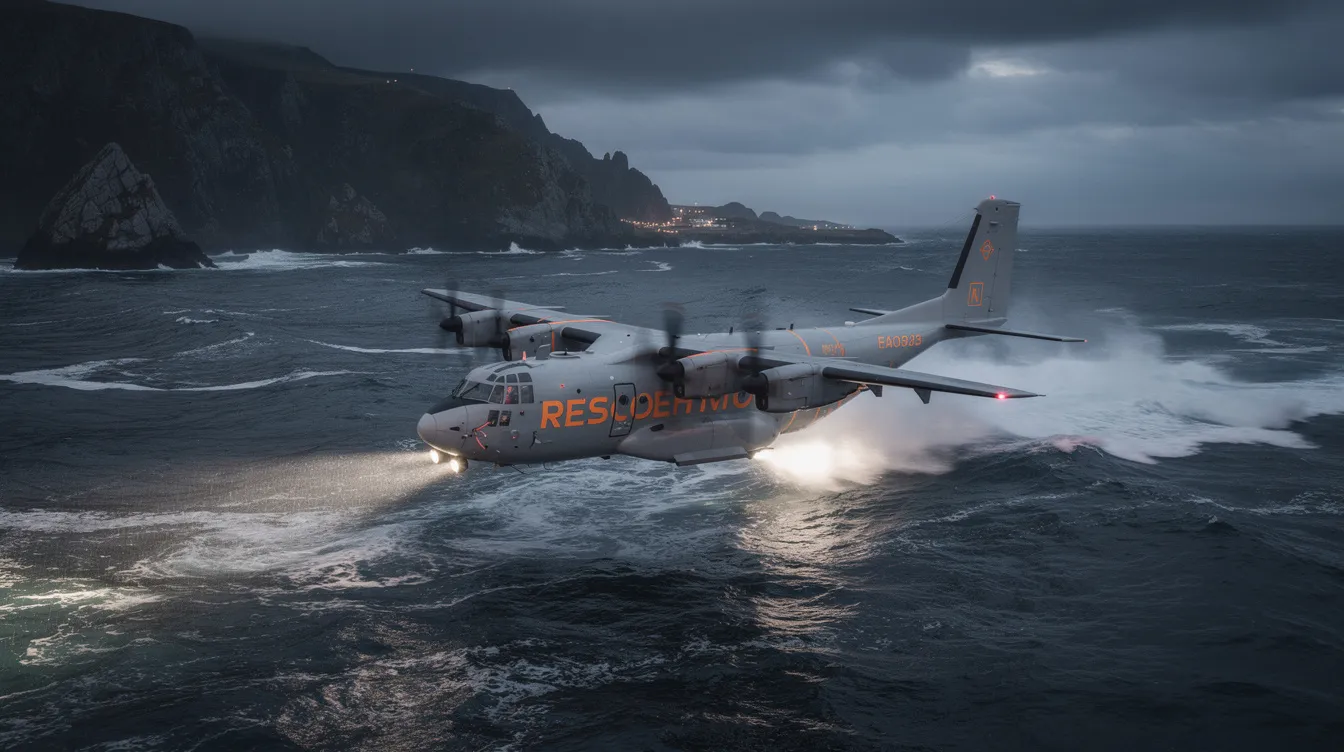
The Hawker 800 is a special mission variant of the 125, forming the basis for Japan's U-125 and U-125A. The U-125 conducted flight inspections and navaid calibration, while the BAe 125 is utilized for medical evacuations and flight inspections by military forces operating the type globally.
Japan's U-125A modifications for search-and-rescue are extensive: large observation windows, a 360-degree radar system for search operations mounted in a ventral radome, thermal imaging sensors, flare dispensers, and advanced communication suites. The U-125A can air-drop inflatable boats for rescue missions via the mainwheel bay - a capability that underscores the structural robustness of the base airframe.
Peace Krypton and Reconnaissance Roles
The Peace Krypton program for South Korea saw Hawker 800 airframes modified by Lockheed Martin with SAR systems, ELINT/COMINT capabilities, and defensive countermeasures for long-range reconnaissance and surveillance. A helicopter could not match the speed or endurance required for such missions.
These military variants are not available for private charter, but their existence validates the reliability, structural integrity, and adaptability of the 125 platform for the most demanding operating environments—attributes also valued in private jet charters in Karachi.
Operational History and Market Impact
By the late 1980s, the BAe 125 / Hawker family had established itself as one of the most commercially successful business jets ever built. The125 series was produced for over four decades, with total production reaching approximately 1,700 units across all civil and military variants.
Global Sales and Operator Mix
At peak production, one aircraft was sold roughly every seven working days. About 60–70 percent of sales went to North America, with the remainder distributed across Europe, the Middle East, Asia, and the Republic of nations operating government fleets.
The operator mix spanned aircraft flown by corporate flight departments, charter operators, heads of state, and air forces for liaison, training, VIP transport, and research missions. The BAe 125 offers a charter and corporate shuttle service role that persists in business aviation today, making it a useful reference point when reviewing any private jet price list and access options.
Market Influence and Longevity
The type helped establish Britain's presence in the global business aviation market and set a template for midsize jets competing with American designs from Learjet and Gulfstream.
Today, many of these aircraft remain in service with upgraded avionics, interiors, and hush kits. Where they meet safety and refurbishment standards, they may appear on fleets accessible through BlackJet and similar private jet safety-focused providers, including regional offerings such as private jet charters in Lahore.
Accidents, Incidents, and Regulatory Changes
Like all long-running aircraft families, the BAe 125/Hawker line has recorded notable incidents and accidents that shaped regulations and reinforced the importance of operational oversight.
Notable Incidents
The British Aerospace 125 was hijacked in 1967 during a flight carrying former Congolese Prime Minister Moïse Tshombe - often cited as the only business jet known to have been hijacked. The incident raised early questions about flight security for VIP transport on smaller aircraft.
A British Aerospace 125 survived an air-to-air missile strike in 1988: a 125-800 carrying Botswana's President Quett Masire was struck by two R-60 missiles from an Angolan MiG, losing the starboard engine and suffering explosive decompression. The crew managed an emergency landing near Cuíto, Angola, and all aboard survived. The plane was later rebuilt - a testament to the airframe's structural resilience and cockpit crew training.
Regulatory Evolution
The FAA modified rules for jets under 75,000 pounds in 2013, requiring older 125-series aircraft to meet Stage 3 noise standards or be fitted with hush kits to continue operating in contiguous U.S. airspace. Later Stage 4 and Stage 5 certification requirements further tightened the regulatory environment.
Regulatory compliance for large aircraft is governed by FAA Part 125, which covers aircraft with a seating capacity of 20 or more passengers - a threshold relevant to some high-density configurations of modified 125-type aircraft and their operation standards.
BlackJet's position is clear: only aircraft meeting modern noise and safety standards, with current maintenance records and operational oversight, are admitted into its partner fleet.
Specifications of a Representative Model (HS.125 Series 600 / Hawker 800)
While many variants exist, the HS.125 Series 600 and Hawker 800 represent the typical performance and cabin attributes that define the family for modern aircraft evaluators, especially when contrasted with the top private jets in the world for luxury and performance.
Powerplant and Weight
The Series 600 was powered by two Rolls-Royce Viper 601-22 turbojets producing approximately 3,750 lbf of thrust each; later Hawker 800/1000 variants used Garrett TFE731 and PW300-series turbofans. The 125 has a maximum takeoff weight exceeding 25,000 pounds in later versions, with some 800/1000 variants reaching 29,000–30,000 pounds.
Speed, Range, and Crew
Typical cruise speed is approximately 430–450 knots at altitude, with a service ceiling near 41,000 feet and range of 2,400–2,700 nautical miles with reserves in later models.
The standard crew is two pilots, with an optional cabin attendant depending on the operator. Executive seating typically accommodates eight to nine passengers, with some configurations certified for up to twelve passengers in denser shuttle layouts, making the type a useful benchmark for buyers browsing UK private jets for sale.
Avionics and Upgrades
Avionics evolved from analog "steam gauge" panels in early models to integrated digital flight decks with EFIS, FMS, and modern navigation/communication suites in retrofitted aircraft. This is a display of how continuous investment keeps older airframes operationally relevant, even for owners focused on the cheapest private jet options.
Sources like Jane's All the World's Aircraft provide baseline data, though individual aircraft vary depending on operator upgrades. This is a factor BlackJet's partners weigh carefully when vetting specific airframes for their fleet and comparing them with alternatives such as NetJets jet card programs and costs.
Role of the 125-Class Aircraft in Modern Private Aviation & Jet Cards
The historical BAe 125/Hawker 800 family maps directly onto today's midsize jet category - the class most frequently selected by Jet Card members for regional and medium-range missions. Jet cards provide prepaid access to private jets, and the midsize cabin remains central to that value proposition.
Jet Card Program Structure
Jet card programs typically offer 25-hour or 50-hour options, allowing members to select the appropriate cabin class for each trip while weighing jet card pricing structures and benefits. Missions like New York–Miami (approximately 1,200 nm), Dallas–Chicago (approximately 900 nm), or London–Marrakech (approximately 2,100 nm) fit squarely within this aircraft category's capability and are well served by 25-hour jet card features and costs.
Cost, Flexibility, and Environmental Considerations
Compared to owning a legacy Hawker outright - with acquisition cost, hangarage, crew salaries, insurance, and maintenance liability - prepaid hours on newer or refurbished aircraft through a Jet Card eliminate capital risk while ensuring access to properly maintained, safety-vetted planes. Mid-range 50-hour jet card pricing and value often hit the sweet spot for frequent regional flyers.
Carbon-neutral flights are offered by some private aviation companies, including BlackJet, which ensures every itinerary is offset through verified programs. While legacy designs were not optimized for emissions, verified carbon offsets and, where available, Sustainable Aviation Fuel reduce the environmental footprint of each mission.
Jet card users can access multiple cabin types for flights, meaning a corporate team of six booking quarterly regional board meetings can use a midsize block one trip and scale up or down the next. No asset is locked in a hangar between uses, especially when structured as a 100-hour jet card program for maximum flexibility.
Choosing the Right Aircraft Class: 125-Type vs Light and Super-Midsize Jets
Travelers often choose between light, midsize, and super-midsize jets depending on trip distance, passenger count, and expectations. Understanding where the 125-type fits prevents overspending - or arriving uncomfortable.
Cabin and Range Comparison
The 125-class offers more cabin width, length, and headroom than typical light jets, plus amenities like an enclosed lavatory and galley. Super-midsize or large-cabin aircraft offer more, but at significantly higher hourly rates and fuel burn, which is why many value-focused travelers also consider the cheapest private aircraft options when comparing categories.
Range-wise, the 125-type is ideal for legs of 1.5 to 4 hours (up to approximately 2,500 nm). Step up to super-midsize for transcontinental U.S. or North Atlantic segments with full payload.
Operational Flexibility and Buying Guidance
Operational flexibility matters: 125-class jets access shorter runways than many larger aircraft, cruise faster than turboprops, and support multi-city itineraries in a single day. This is relevant for time-sensitive executives who need to be in three cities before dinner and are evaluating different ways to buy a seat on a private jet without committing to ownership.
BlackJet advisors help members match trip patterns to aircraft categories within their Jet Card, using real-time availability and pricing to ensure no one over-buys capacity they rarely need. They can even benchmark options like Flexjet jet card pricing and programs when comparing the broader market.
How BlackJet Integrates 125-Class Capabilities into a Modern, Seamless Experience
BlackJet is a technology-enabled, safety-driven private aviation provider that leverages the strengths of midsize jets - including aircraft comparable to the BAe 125/Hawker line - while maintaining standards that reflect the demands of today's discerning traveler.
Digital Booking and Real-Time Support
Jet cards include 24/7 digital booking tools for convenience: BlackJet's app and web portal provide instant pricing across cabin classes, with the ability to select aircraft category in a few taps. Real-time runway performance assessments and weather integration prevent issues before they arise.
Flight specialists available around the clock can advise whether a midsize jet is appropriate for a given runway length, weather forecast, or passenger load. This prevents scenarios involving poor flight characteristics at demanding airports and helps clients weigh BlackJet solutions against top private jet companies in the market.
Safety, Sustainability, and Future-Ready Operations
Safety pillars include proprietary vendor vetting, ongoing audits, crew training standards, and rigorous maintenance, avionics, and noise/emissions compliance requirements. Older airframes enter the network only when they meet every threshold. Learn more about BlackJet's safety commitment and how those standards extend even to large private jets for 20 passengers.
Sustainable aviation aims to reduce carbon emissions from flights, and BlackJet applies automatic carbon offsets to every itinerary at no surcharge. Research programs like NASA's X-57 Maxwell - an all-electric experimental aircraft - along with the X-48B, which demonstrated technology concepts for cleaner commercial air travel, and the X-56A, which tests technologies for environmentally friendly transport aircraft, are shaping the future. In the present, BlackJet sources operators using more efficient engines and SAF wherever possible, including partners capable of operating private jets for groups of up to 50 passengers on longer missions.
Frequently Asked Questions (FAQs) about the X 125 Aircraft Family
What is the typical passenger capacity of the British Aerospace 125 and its Hawker variants?
The cabin layouts typically accommodate six to nine passengers in executive configurations, with some high-density arrangements seating up to twelve passengers, making the aircraft versatile for both business and leisure missions.
How does the BAe 125 compare to other midsize jets in terms of range and performance?
The BAe 125 family offers a maximum operational range between 1,500 and over 3,000 nautical miles depending on the variant, with cruise speeds around 430–450 knots and a service ceiling near 41,000 feet, positioning it well for regional and some intercontinental missions.
Are there any special mission or military variants of the BAe 125?
Yes, variants like the U-125 and U-125A serve search-and-rescue, flight inspection, and reconnaissance roles. The Peace Krypton program modified Hawker 800 airframes for long-range surveillance missions.
What safety certifications and regulations apply to the BAe 125 series?
The aircraft must comply with FAA Part 125 regulations for large aircraft, including noise and emissions standards. BlackJet ensures all partner aircraft meet modern safety and maintenance requirements.
How do Jet Cards provide access to the BAe 125 class jets?
Jet Cards offer prepaid flight hours (commonly 25 or 50 hours), providing flexible, on-demand access to midsize jets like the BAe 125 without ownership responsibilities, supported by 24/7 digital booking and real-time flight support.
Is sustainability considered in operating these aircraft?
Yes, BlackJet offsets carbon emissions for every flight and partners with operators using more efficient engines and Sustainable Aviation Fuel (SAF) when available, aligning with broader sustainable aviation goals.
Can the BAe 125 operate from smaller airports?
The BAe 125 class jets require runway lengths around 4,400 feet for takeoff and 3,400 feet for landing, allowing access to many executive airports and secondary fields closer to city centers.
What technological upgrades are common in modern BAe 125 jets?
Modernized avionics suites include digital flight decks with EFIS, FMS, and advanced navigation and communication systems. Cabin upgrades often include Wi-Fi, power outlets, and improved noise insulation for passenger comfort.
Conclusion: The Enduring Appeal of the X 125 Aircraft Family in Private Aviation
The British Aerospace 125 and its Hawker variants stand as a testament to enduring design, operational versatility, and strategic value in private aviation. For discerning travelers seeking a midsize jet that balances cabin comfort, range, and reliable performance, the 125-class offers a proven solution that meets a wide spectrum of mission profiles—from regional business trips to specialized government roles.
Its cabin spaciousness, efficient flight characteristics, and ability to operate from convenient executive airports provide a level of time savings and productivity unmatched by commercial aviation or smaller jets. When paired with modern Jet Card programs like those offered by BlackJet, travelers gain flexible, prepaid access to this class without the complexities and costs of ownership.
Moreover, the integration of rigorous safety standards, ongoing technological upgrades, and carbon-neutral flight initiatives reflects a forward-looking approach that respects both passenger well-being and environmental responsibility. Whether for corporate executives, high-net-worth leisure travelers, or government agencies, the X 125 aircraft family continues to offer a premier private aviation experience—one that combines legacy strength with modern sophistication.
Elevate your travel experience with the 125-class aircraft through BlackJet’s seamless Jet Card access, where safety, sustainability, and convenience converge to redefine what private flight can be. Explore more about our Jet Card programs, the safety standards, and aircraft categories that include the 125-class. Discover how carbon-neutral flights are integrated into every journey and why choosing private jet charter with BlackJet elevates your travel beyond expectations.


 Sign up with google
 Sign up with Apple