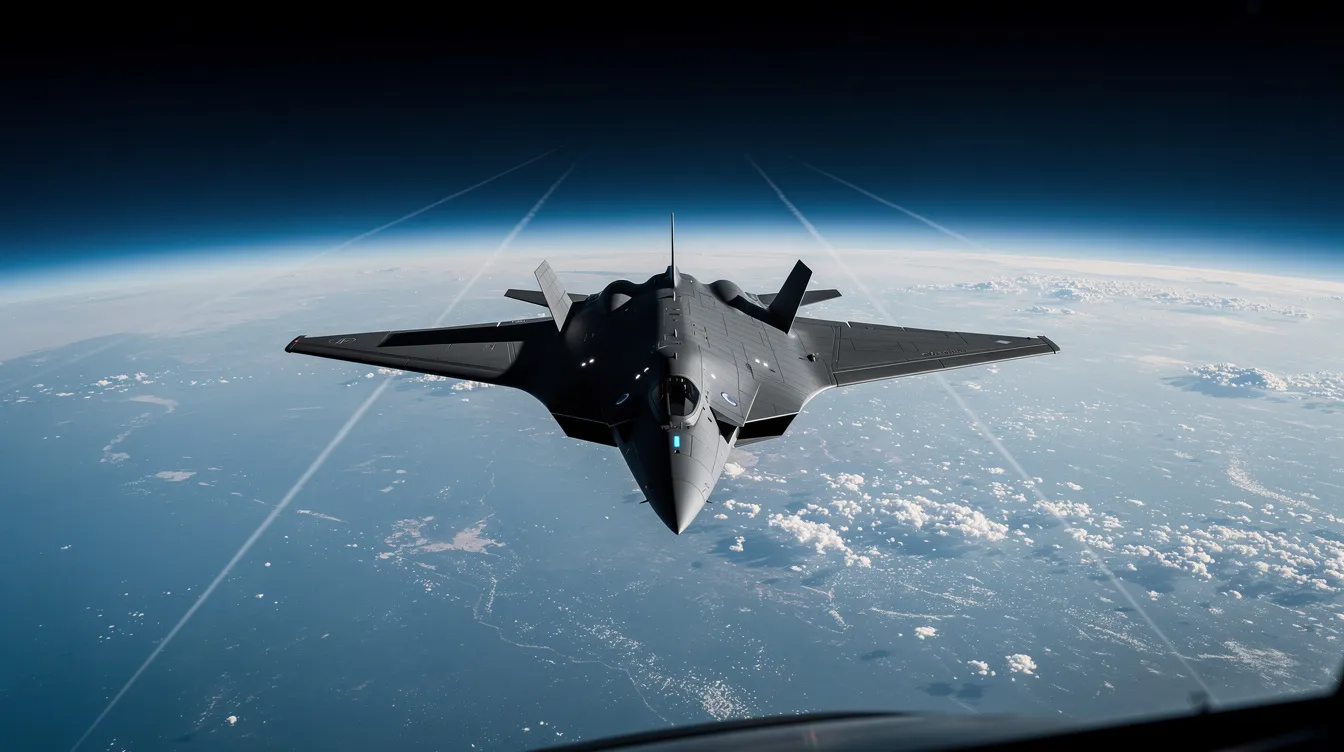
Speed has always separated the exceptional from the ordinary in aviation. From the moment Chuck Yeager shattered the sound barrier in 1947 to today's scramjet-powered vehicles slicing through the upper atmosphere at nearly ten times the speed of sound, the pursuit of velocity has reshaped what we consider possible. The world's fastest hypersonic plane, the NASA X-43A, reached approximately Mach 9.6 in 2004 and remains the undisputed record holder among air-breathing aircraft. Understanding this frontier is not just an academic exercise-it reveals where private aviation is heading and why every incremental gain in speed, safety, and efficiency matters for those who value their time above all else.
Strategic Speed: Why Hypersonic Flight Matters for Elite Travelers
Hypersonic speeds begin at Mach 5-five times the speed of sound-and represent a category of flight so extreme that it demands entirely new materials, engines, and design philosophies. For the discerning traveler considering premium private jet cards and Jet Card programs, these numbers translate into something visceral: the difference between a six-hour transatlantic crossing and arriving in under sixty minutes.
Consider the math:
New York to London (≈3,500 miles): A top-tier private jet cruising at Mach 0.92 covers this in roughly 6.5 hours. At Mach 9.6-the X-43A's top speed-that same distance could theoretically be crossed in approximately 31 minutes.
Los Angeles to Tokyo (≈5,500 miles): Today's fastest business jets need about 11 hours. A sustained hypersonic vehicle at Mach 5 could halve that.
New York to Los Angeles (≈2,450 miles): Currently about 5 hours by private jet; at Mach 5, roughly 38 minutes.
These comparisons are theoretical-no passenger-carrying hypersonic aircraft exists today. But the technologies being proven at the extreme end of aviation directly influence the aircraft, avionics, and safety systems that BlackJet clients rely on every day. Route optimization, thermal-resistant materials in engine components, and advanced flight planning tools all trace lineage back to hypersonic flight research programs-and increasingly shape the premium UK private jets for sale highlighted in curated ownership guides.
What Is the Fastest Hypersonic Plane Ever Built?
The NASA X-43A, developed under the Hyper-X program, holds the record at Mach 9.6-the fastest air-breathing aircraft ever flown. On its final flight, November 16, 2004, the X-43A achieved this speed at an altitude of approximately 110,000 feet (33,500 meters) over the Pacific Ocean.
Key data points:
Speed: Approximately Mach 9.6 (≈6,800 mph / 10,950 km/h)
Altitude: ~110,000 ft (~33,500 m)
Powered duration: Roughly 10 seconds of scramjet engine operation
Propulsion: Hydrogen-fueled supersonic combustion ramjet (scramjet)
Status: Uncrewed flight test vehicle; not recovered
The X-43A was an uncrewed experimental vehicle designed to test hypersonic technologies, and its record was recognized by Guinness World Records as the fastest aircraft powered by an air-breathing engine.
It is important to distinguish this record from the fastest aircraft overall. Weapons systems like Russia's Avangard hypersonic glide vehicle reportedly reach speeds of Mach 27, and the CAIC WU-14 (DF-ZF) can reach Mach 10. However, these are missile-borne warheads or glide bodies-not reusable aircraft performing controlled, powered, aerodynamic flight with an air-breathing engine. The X-43 holds its record in the specific and technically demanding category of scramjet-powered, aerodynamic, atmospheric flight.
From Supersonic to Hypersonic: Key Milestones in Aviation History
The path from breaking the sound barrier to achieving high-speed flight near Mach 10 took humanity just 57 years. Each leap demanded new propulsion, materials, and courage-and it has opened the door to point-to-point private jet charters in cities worldwide, including luxury private jet charters in Karachi.
1947 - Bell X-1: Pilot Chuck Yeager broke the sound barrier, reaching Mach 1.06 in level flight. It was the first aircraft to achieve supersonic flight in controlled conditions, and it set the foundation for every speed record that followed.
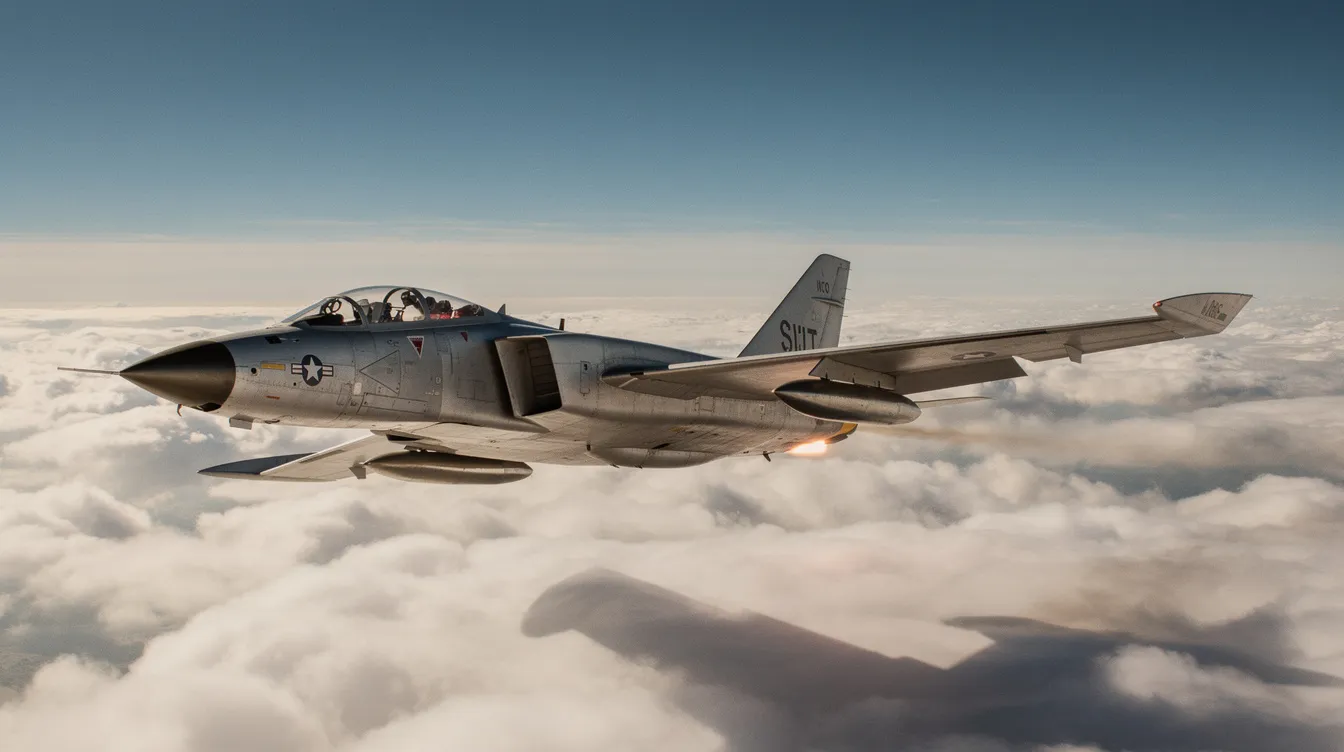
1960s - North American X-15: This rocket-powered research aircraft pushed into the hypersonic regime. The X-15 achieved a speed of Mach 6.7 in 1967, flown by pilot Pete Knight at roughly 102,100 feet. The X-15 reached Mach 6.7 in 1967, a major milestone in manned flight that stood as the fastest piloted, winged aircraft for decades. X-15 pilots formally qualified as astronauts by crossing the Kármán line, reaching altitude records above 354,200 feet (67 miles). The X-15 program ended in 1968 after 199 test flights.
1969–2003 - Concorde: Supersonic passenger service at approximately Mach 2.0 enabled transatlantic crossings in about 3.5 hours-the only era when civilians routinely experienced supersonic speeds, along with the characteristic sonic boom.
1976 - SR-71 Blackbird: The Lockheed SR-71 set the official crewed, air-breathing speed record at Mach 3.3 (~2,193 mph), with a service ceiling near 85,000 feet. It remains the fastest production crewed vehicle ever operated by the Air Force.
2004 - NASA X-43A: The X-43 achieved Mach 9.6 in 2004, setting speed records that no air-breathing aircraft has matched since, and marking the first time a scramjet engine produced positive thrust in free flight at nearly ten times the speed of sound.
Each progression required breakthroughs in thermal protection, engine design, and structural materials. The transition from supersonic speeds to Mach speeds above Mach 5 was not incremental-it was a fundamental shift in engineering philosophy.
Defining Hypersonic Flight and Hypersonic Speeds
Hypersonic flight officially begins at Mach 5. At sea level, where the speed of sound is approximately 767 mph (1,235 km/h), that means hypersonic planes travel at speeds of Mach 5 or above-roughly 3,800 mph or 6,100 km/h. The Mach number itself is simply the ratio of an aircraft's speed to the local speed of sound, which varies with altitude and temperature.
What makes hypersonic flight fundamentally different from supersonic flight:
Extreme aerodynamic heating: Hypersonic flight creates temperatures exceeding 650°C, and at the highest Mach speeds, leading edges of vehicles can experience temperatures above 1,650°C (3,000°F). Hypersonic aircraft require advanced thermal protection due to extreme aerodynamic heating.
Active cooling: Active cooling systems are necessary for aircraft to withstand temperatures at hypersonic speeds, particularly around engine inlets and structural joints.
Air chemistry changes: At high-temperature conditions above Mach 7, atmospheric gases begin to dissociate and ionize, creating plasma effects that interfere with sensors, communications, and telemetry data transmission.
Shockwave complexity: Multiple shock reflections and boundary layer interactions make aerodynamic prediction far more difficult than in supersonic regimes.
Control challenges: Control surfaces behave differently under extreme dynamic pressure; flight stability in pitch, yaw, and roll requires specifically designed systems.
For the educated non-specialist, the key takeaway is this: crossing Mach 5 is not merely flying faster-it is entering a regime where the physics of flight itself changes.
The NASA X-43 Program (Hyper-X): Contents, Goals, and Partners
The NASA Hyper-X program managed the X-43A's experimental flights from concept development in the mid-1990s through the final mission in November 2004. The program's lead center was NASA's Langley Research Center in Virginia, with flight operations conducted from Dryden Flight Research Center (now Armstrong) in California.
Vehicle: The NASA X-43 refers to a family of low, uncrewed experimental vehicles-specifically the X-43A, designed to validate scramjet propulsion at speeds of Mach 7 to Mach 10.
Partners: Key industry contractors included ATK GASL (scramjet engine fabrication), Boeing Phantom Works (thermal protection and control systems), and Orbital Sciences (Pegasus booster rocket). The Air Force Research Laboratory contributed supporting research.
Contents of research plan: Trajectory design and flight envelope expansion; scramjet engine ignition and performance measurement; thermal protection material validation; stage separation dynamics under high dynamic pressure; aerodynamic stability data collection across the hypersonic envelope.
Test location: All flights were conducted over the Pacific Ocean test range, west of Edwards Air Force Base, ensuring minimal risk during these high-speed experimental operations.
Design feature: The X-43A used a waverider design to generate lift through its own shockwaves, an aerodynamic approach that becomes efficient only at hypersonic speeds.
The Hyper-X program set out to answer a single critical question: can an air-breathing scramjet engine produce net positive thrust in actual flight, not just in ground-based wind tunnels?
How the X-43's Air-Breathing Scramjet Engine Worked
A scramjet-short for supersonic combustion ramjet-is an air-breathing engine that operates on a deceptively simple principle: unlike rockets, which carry both fuel and oxidizer, scramjet engines operate by scooping up atmospheric oxygen to burn fuel at hypersonic speeds. The airflow through the engine remains supersonic throughout the entire combustion process.
Here is how it works in practice:
Compression: At hypersonic speeds, incoming air is compressed by the vehicle's forward body and inlet geometry through shockwave interactions-no moving parts required.
Fuel injection and combustion: Gaseous hydrogen fuel is injected into the compressed airstream and ignited. Maintaining stable combustion at hypersonic speeds presents monumental engineering challenges, because the air passes through the engine in milliseconds.
Exhaust and thrust: The expanding combustion gases exit through a nozzle, producing forward thrust. The entire underside of the X-43A functioned as part of the engine's exhaust expansion surface.
Key specifications of the X-43A's propulsion:
Fuel: Gaseous hydrogen
Operating range: Mach 7 to Mach 10 (two vehicles designed for Mach 7 flights, one for approximately Mach 10)
Burn duration: Approximately 10–11 seconds per flight
Ignition requirement: The scramjet engine only functions at very high speed, which is why a Pegasus rocket booster was needed to accelerate the vehicle to ignition conditions above Mach 5
The contrast with a conventional ramjet is important: in a ramjet, incoming air is decelerated to subsonic speeds before combustion. In a scramjet, everything stays supersonic-a far more demanding engineering feat but one that enables operation at much higher Mach speeds.
Flight Testing the X-43A: From Failure to Record-Breaking Success
The X-43A flew three times. Each test flight expanded the boundaries of aviation history, and each carried enormous risk.
Flight 1 - June 2, 2001 (Failure)
The first flight ended in destruction. Approximately 13 seconds after the drop from the NB-52B mothership, the Pegasus booster experienced a loss of control. The vehicle was destroyed for safety; the scramjet engine never ignited.
Root cause: booster flight control system models were insufficiently conservative for the actual aerodynamic loads encountered.
Flight 2 - March 27, 2004 (Mach 6.83)
The first aircraft to achieve powered, free-flight with a scramjet engine. NASA's X-43A achieved Mach 6.83 in 2004. The X-43A reached Mach 6.83 at 29,000 meters (~95,000 ft).
The scramjet engine burned for approximately 11 seconds. After the powered phase, the vehicle performed parameter identification maneuvers for about 17 seconds, then glided unpowered before splashdown.
Data collected during this flight validated ground-test predictions and confirmed that the scramjet produced net positive thrust-more thrust than drag.
Flight 3 - November 16, 2004 (Mach 9.6)
NASA X-43A achieved its record speed on November 16, 2004. This last flight reached a speed of Mach 9.6 at approximately 110,000 feet.
The scramjet engine burn lasted roughly 10 seconds. After the powered phase, the vehicle performed an unpowered hypersonic glide covering about 850 miles west of the Southern California coast, collecting extensive telemetry data on thermal loads, structural response, and aerodynamic stability.
The vehicle was not recovered.
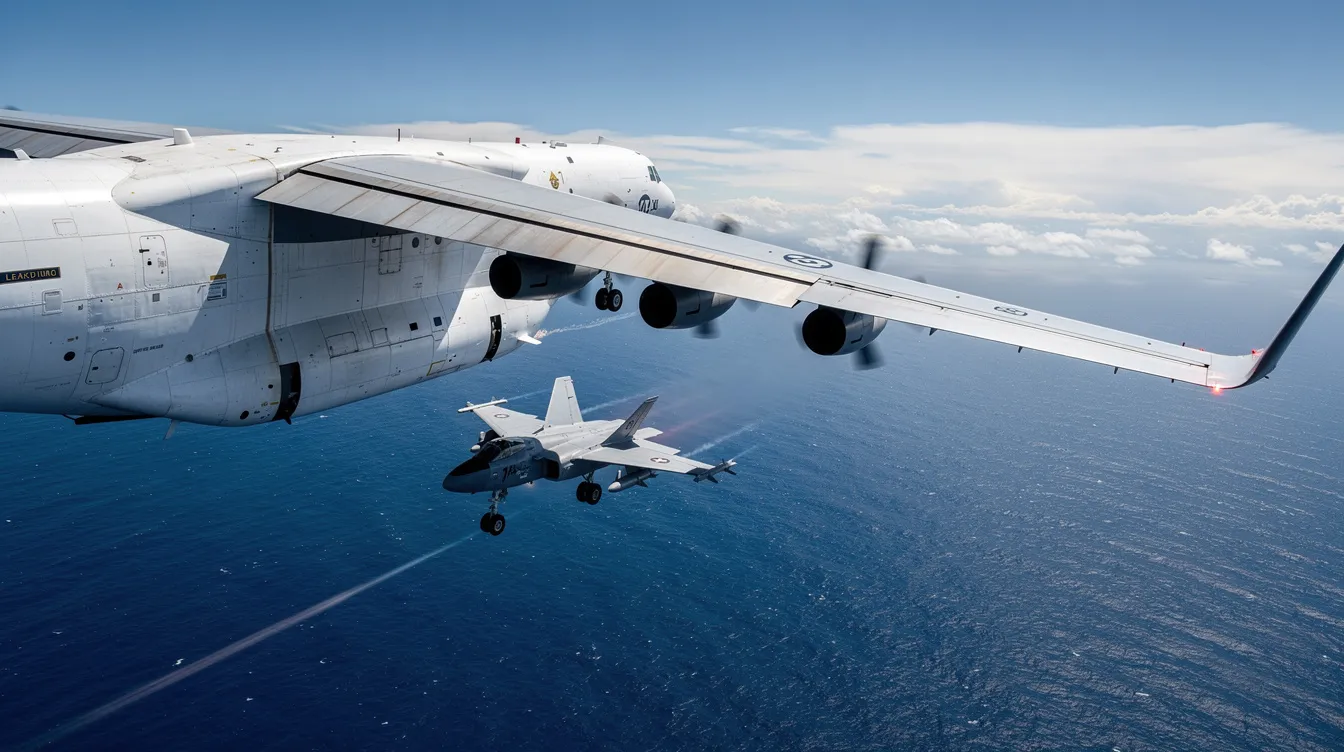
The launch sequence for each test was the same: the X-43A, mounted on a modified Pegasus rocket, was carried aloft by NASA's NB-52B mothership to approximately 40,000 feet. The Pegasus booster then accelerated the vehicle to the target altitude and speed before separation and scramjet ignition. Air-breathing hypersonic aircraft are typically drop-launched from a mothership because scramjets cannot operate from a standing start-they require the vehicle to already be moving at supersonic speeds.
Why the X-43 Is Considered the Fastest Aircraft with an Air-Breathing Engine
The distinction matters. The X-43 holds the record for the fastest air-breathing aircraft at Mach 9.6-but this is a specific category, and understanding it prevents confusion with faster but fundamentally different systems.
Category comparisons:
Vehicle | Top Speed | Propulsion | Type |
|---|
NASA X-43A | Mach 9.6 | Scramjet (air-breathing) | Uncrewed research aircraft |
North American X-15 | Mach 6.7 | Rocket | Crewed research aircraft |
SR-71 Blackbird | Mach 3.3 | Turboramjet (air-breathing) | Crewed vehicle (reconnaissance) |
Avangard (Russia) | Mach 27 | Boost-glide (no engine in glide) | Hypersonic glide weapon |
CAIC WU-14 / DF-ZF | Mach 10 | Boost-glide | Hypersonic glide weapon |
The Avangard hypersonic vehicle reportedly reaches Mach 27, and hypersonic glide vehicles can reach speeds of Mach 27 during re-entry. However, these are not aircraft in any conventional sense. They carry no air-breathing propulsion, perform no sustained powered flight, and are designed as single-use weapons rather than reusable platforms for flight research.
The X-43A flew faster than any air-breathing vehicle before or since, using atmospheric oxygen rather than onboard oxidizer. It achieved controlled aerodynamic flight with lift surfaces, not a ballistic trajectory. That is what makes it the fastest plane in its category-and the distinction between air-breathing versus rocket, crewed versus uncrewed, and research versus weapons platforms is essential to understanding where aviation technology actually stands.
Other Landmark Hypersonic and High-Speed Programs
The X-43 did not emerge in isolation. Several programs contributed critical data to hypersonic technology development, just as growing demand supports dedicated services such as private jet charters in Lahore.
North American X-15 (1959–1968): The first reusable hypersonic research aircraft. The X-15 set a record of Mach 6.7 in 1967 (pilot Pete Knight) and reached altitudes above 100 km, qualifying pilots as astronauts. The program completed 199 test flights before ending in 1968, generating foundational data on high-temperature structural behavior, pilot physiology, and stability at extreme speeds. It was the first plane to routinely operate in the hypersonic regime.
Boeing X-51A Waverider (2010–2013): The X-51 Waverider first flew in May 2010 and demonstrated sustained scramjet-powered flight using JP-7 hydrocarbon fuel-a significant departure from the X-43's hydrogen. The X-51 Waverider reached Mach 5.1 on its final flight in May 2013, maintaining scramjet power for over three minutes. This longer burn duration, though at lower speed, represented progress toward practical, sustained hypersonic propulsion using hydrocarbon fuel.
India's HSTDV: The Hypersonic Technology Demonstrator Vehicle, developed by DRDO, aims for Mach 6.5 at an altitude of 20 miles. It represents one of many countries pursuing indigenous scramjet flight capabilities, reflecting the global strategic importance of hypersonic technology, much as modern travelers evaluate options through comprehensive jet card cost guides.
Germany's SHEFEX: Focused on re-entry heat shield testing and sharp-edged aerodynamic shapes, contributing materials data for future operational hypersonic vehicles.
Each program addressed different facets of the puzzle: fueling, guidance, thermal endurance, and high-altitude aerodynamics, just as buyers evaluating NetJets jet card cost and options balance availability, pricing, and service.
From Military Projects to Future Hypersonic Travel
Today, hypersonic technology development is driven primarily by defense priorities. Many countries-including the United States, Russia, China, and India-are investing heavily in hypersonic glide vehicles, high-speed strike weapons, and advanced scramjet demonstrators.
Looking beyond military applications, the same desire for predictable access and time savings drives interest in the best jet cards for frequent flyers:
Lockheed Martin SR-72 concept: A proposed Mach 6 reconnaissance and strike platform, sometimes described as the successor to the SR-71. Status: concept phase, with combined-cycle engine research ongoing, echoing how evolving platforms like Flexjet jet card programs adapt to new aircraft and propulsion technologies in private aviation.
Reaction Engines SABRE: A synergetic air-breathing rocket engine designed for the Skylon spaceplane concept, intended to transition from atmospheric air-breathing mode to rocket mode for space exploration access. Status: ground testing of precooler technology completed, while in private aviation, jet card pricing structures evolve to make high-performance travel more accessible.
Point-to-point hypersonic transport concepts: Several organizations have studied civilian routes (New York to Tokyo in approximately 2 hours) using combined-cycle propulsion. These remain speculative and face enormous certification, noise, and cost barriers.
The lessons from the NASA X-43 and the broader Hyper-X program make routine hypersonic flight more technically plausible, even if decades of engineering work remain. The data collected from these programs-on thermal loads, scramjet performance, materials degradation, and control at extreme Mach speeds- forms the technical foundation on which any future operational hypersonic vehicle will be built.
What Hypersonic Research Means for Today's Private Jet Travelers
The gap between Mach 9.6 and Mach 0.92 is vast. But the engineering advances that emerge from hypersonic flight research do not stay locked in laboratories-they migrate into the aircraft that BlackJet's Jet Card members fly on today.
Trickle-down benefits include advances in propulsion, materials, and operations that mirror how travelers weigh options in an in-depth private jet price list guide:
Materials: Carbon-carbon composites and heat-resistant alloys developed for hypersonic leading edges now appear in turbine blades and structural components of modern business jets, improving durability and performance.
Aerodynamics: Computational fluid dynamics tools refined through hypersonic modeling produce more efficient wing and fuselage designs for subsonic aircraft, enhancing many of the top private jets in the world.
Avionics and sensors: Instrumentation designed to function in plasma-generating environments has advanced sensor reliability across all speed regimes.
A practical comparison: A BlackJet 25-hour Jet Card member flying New York to London on a large-cabin jet completes the trip in roughly 6.5 hours-compared to 8+ hours on a commercial carrier after accounting for check-in, security, and boarding. For frequent flyers, understanding 50-hour jet card cost and value helps align budgets with expected usage. A theoretical hypersonic crossing would take under an hour. But today, the real time savings for private travelers come from eliminating ground delays, bypassing hub connections, and accessing direct routing to thousands of airports commercial carriers cannot serve.
The same engineering mindset that drove the X-43 program-test rigorously, measure precisely, optimize relentlessly-is what separates exceptional private aviation from the ordinary.
Safety, Certification, and Flight Research: Lessons from Hypersonic Programs
Hypersonic test programs tolerate almost no margin for error. The X-43A's first flight failure in 2001 demonstrated what happens when models are insufficiently validated. The response-exhaustive root cause analysis, redesigned control models, and methodical flight envelope expansion-exemplifies the safety culture that all high-performance aviation inherits.
Key safety principles from hypersonic research that apply to private aviation:
Redundancy: Every critical system on hypersonic vehicles has backup pathways. BlackJet applies this philosophy by selecting operators with ARGUS Platinum ratings and rigorous third-party safety certifications.
Flight envelope expansion: Hypersonic programs expand speed and altitude incrementally, validating each step before proceeding. The same principle underlies jet card safety standards that require operators to meet strict maintenance, crew training, and operational benchmarks.
Data-driven operations: The hundreds of thermocouples, pressure sensors, and accelerometers on the X-43A were not decorative. Real-time telemetry data informed every decision. Modern private jet operations similarly rely on real-time flight monitoring, weather data integration, and 24/7 dispatch support.
Remote range operations and risk mitigation: Hypersonic tests were conducted over unpopulated ocean ranges. In private aviation, risk mitigation translates to careful route planning, alternate airport selection, and conservative fuel reserves.
The test, certify, and monitor philosophy is not unique to experimental programs-it is the engineering foundation of every safe private flight and a key differentiator among top private jet companies for luxury travel.
Sustainability and High-Speed Aviation
Higher speeds demand more energy. This is a physical reality that no amount of engineering can fully overcome, and it is one reason hypersonic vehicles have remained experimental or military rather than commercial.
The challenge: A scramjet burning hydrogen at Mach 9.6 consumes fuel at rates incompatible with economic passenger service. Even subsonic private jets burn more fuel per passenger-mile than commercial airliners.
BlackJet's approach today: Every BlackJet flight is carbon neutral through verified carbon offset programs-at no additional cost to the client. This does not eliminate emissions, but it provides a meaningful, measurable response while sustainable aviation fuel (SAF) and more efficient airframe technologies mature, complementing strategies outlined in guides to the cheapest private aircraft and budget-friendly options.
Future considerations: Emerging sustainable aviation concepts-SAF blends, electric and hybrid propulsion for shorter ranges, and more efficient aerodynamic designs-offer a path to reducing the environmental footprint of high-speed private travel without waiting for hypersonic airliners that may be decades away.
The tension between speed and sustainability is real. Acknowledging it honestly, and acting on it today, is more valuable than waiting for a theoretical clean-energy hypersonic future.
Fastest Private Jets Today vs. Hypersonic Concepts
For travelers who want speed now, the best private charter jets available offer meaningful advantages over commercial aviation-even if they operate far below hypersonic speeds. Those flying in larger groups can also explore the best private jet for 20 passengers to balance comfort, range, and cost.
Aircraft | Typical Cruise Mach | Approximate Speed (mph) | Range (nm) |
|---|
Gulfstream G700 | 0.90 | ~690 | 7,500 |
Gulfstream G800 | 0.90 | ~690 | 8,000 |
Bombardier Global 8000 | 0.94 | ~720 | 8,000 |
Cessna Citation X+ | 0.935 | ~717 | 3,460 |
For even larger teams, guides to top private jets for 30 passengers illustrate how similar performance principles scale to regional airliners. These are the de facto fastest plane options in private aviation today. Resources covering top private jets by luxury and performance and the cheapest private jet options for every traveler show how the market spans from ultimate speed to smart value. On a transcontinental leg like New York to Los Angeles, a Citation X+ or Global 8000 saves 30–60 minutes compared to a standard commercial jet-and hours when you factor in the eliminated ground time.
BlackJet Jet Card members can choose aircraft by type to match the mission: a light jet for a quick regional hop, or a large-cabin, long-range aircraft for intercontinental travel. Travelers comparing options often consult an understanding private jet price list guide to balance cost, range, and comfort. The goal is not to chase raw Mach numbers like experimental hypersonic programs, but to optimize total door-to-door time through intelligent aircraft selection, direct routing, and seamless scheduling.

Will Hypersonic Business Jets Ever Become Reality?
The honest answer: not soon, but the trajectory is promising.
Technical barriers:
Thermal protection systems capable of surviving repeated flight cycles at Mach 5+ do not yet exist in commercially viable form
Combined-cycle engines (turbine-to-ramjet-to-scramjet) remain in early demonstration stages
Sonic boom restrictions over populated areas would limit hypersonic routes to overwater corridors
Certification for passenger-carrying vehicles at these speeds would require entirely new regulatory frameworks
Research that moves the needle:
NASA and the Air Force continue investing in scramjet and combined-cycle propulsion
Quiet supersonic technology (e.g., NASA's X-59 QueSST) may reopen overland supersonic flight, a stepping stone toward eventual hypersonic corridors.
Advanced computational tools and new high-temperature materials are steadily closing the gap between experimental and operational readiness.
A balanced outlook: Hypersonic business jets are unlikely within the next 15–20 years. But incremental advances-quiet supersonic travel, higher subsonic cruise speeds, lighter and stronger materials-will continue to improve private aviation performance. The path from the first plane to break the sound barrier in 1947 to the X-43's Mach 9.6 in 2004 took 57 years. The path from experimental scramjet to operational hypersonic transport will likely follow a similar generational timeline.
How BlackJet Helps You Capture the Value of Speed Today
You do not need to wait for Mach 5 to reclaim your time. BlackJet's Jet Card programs deliver the most practical expression of speed available in private aviation today-on-demand access to the fastest aircraft categories in service, without ownership costs or asset risk.
Sample itinerary: A BlackJet 50-hour Jet Card member based in New York flies to Silicon Valley for a morning board meeting, returns the same evening, and is home for dinner. Travelers weighing a larger commitment may look at an in-depth 100-hour jet card cost guide to understand how pricing scales with usage. Total flight time: approximately 10 hours round trip. Total time saved versus commercial: an entire business day, recovered.
The pillars that make this possible-rigorous safety certification, real-time 24/7 support, digital booking, and carbon-neutral performance-are the practical extension of decades of flight research and space exploration pioneered by programs like the NASA X-43, and they underpin every option outlined in guides on how to buy a seat on a private jet.
The world's fastest hypersonic plane proved that an air-breathing engine could power controlled flight at nearly ten times the speed of sound. That achievement pushed the boundaries of what aviation can be. BlackJet applies the same relentless pursuit of performance-optimized for the routes, schedules, and standards that matter to you right now.
Frequently Asked Questions About the World's Fastest Hypersonic Plane
What is the Guinness World Record held by the NASA X-43?
The NASA X-43A holds the Guinness World Record for the fastest air-breathing aircraft, reaching speeds of approximately Mach 9.6 during its 2004 flight.
How does the NASA X-43 compare to hypersonic vehicles from the World War II era?
World War II aircraft were propeller- or early jet-powered and flew at subsonic speeds, far slower than the hypersonic speeds achieved by the X-43. The X-43 represents a breakthrough decades beyond those early aviation milestones.
What role did NASA play in developing the X-43?
NASA led the Hyper-X program that developed the X-43, managing its design, testing, and flight operations. The program was based at NASA's Langley Research Center and Dryden Flight Research Center.
How is the X-43 related to the Space Shuttle program?
The X-43's hypersonic flight data contributed to understanding thermal protection and flight dynamics, which are critical for spacecraft like the Space Shuttle during re-entry.
What are the contents of NASA's research plan for the X-43 program?
The research plan included scramjet engine ignition and performance, thermal protection validation, aerodynamic stability, and flight envelope expansion to safely reach hypersonic speeds.
Why can't hypersonic planes like the X-43 be used for commercial passenger travel yet?
Technical challenges such as thermal protection, sonic boom regulations, engine technology, and certification hurdles currently prevent commercial hypersonic passenger flights.
What is the difference between the X-43 and hypersonic glide vehicles like the Avangard?
The X-43 is an air-breathing, powered research aircraft performing controlled aerodynamic flight, while vehicles like the Avangard are boost-glide weapons without air-breathing engines.
How does hypersonic research benefit private jet travelers today?
Advances in materials, propulsion, and avionics from hypersonic research improve the safety, efficiency, and performance of today's fastest private jets.
Are there any sustainability concerns with hypersonic flight?
Yes, hypersonic speeds require high fuel consumption and energy use. Companies like BlackJet offset carbon emissions today while sustainable aviation fuel and technologies evolve.
Will hypersonic business jets be available soon?
Hypersonic business jets are unlikely within the next 15-20 years due to technical and regulatory challenges, but incremental advances in speed and materials continue to improve private aviation.
Conclusion: The Enduring Legacy of the World's Fastest Hypersonic Plane
The NASA X-43A stands as a pinnacle of aerospace achievement, redefining the boundaries of speed and engineering in hypersonic flight. While the dream of commercial hypersonic travel remains on the horizon, the technological breakthroughs from the X-43 program ripple through today’s private aviation landscape, enhancing safety, efficiency, and performance for discerning travelers. BlackJet’s commitment to leveraging cutting-edge advancements—from materials science to real-time flight support—ensures that the spirit of innovation embodied by the X-43 continues to elevate the private jet experience.
As the aviation industry balances the demands of speed, safety, and sustainability, the X-43’s legacy reminds us that progress is a relentless pursuit. For those who value time as their most precious asset, understanding and embracing these advances is not just about flying faster—it’s about flying smarter, safer, and more responsibly. With BlackJet’s Jet Card programs, you gain access to the forefront of this evolution, making premier private flight a seamless extension of your lifestyle today and into the future. Explore our rigorous safety certification and carbon-neutral flights that reflect decades of aerospace innovation. Learn more about our real-time flight support and digital booking tools designed for the discerning traveler.


 Sign up with google
 Sign up with Apple