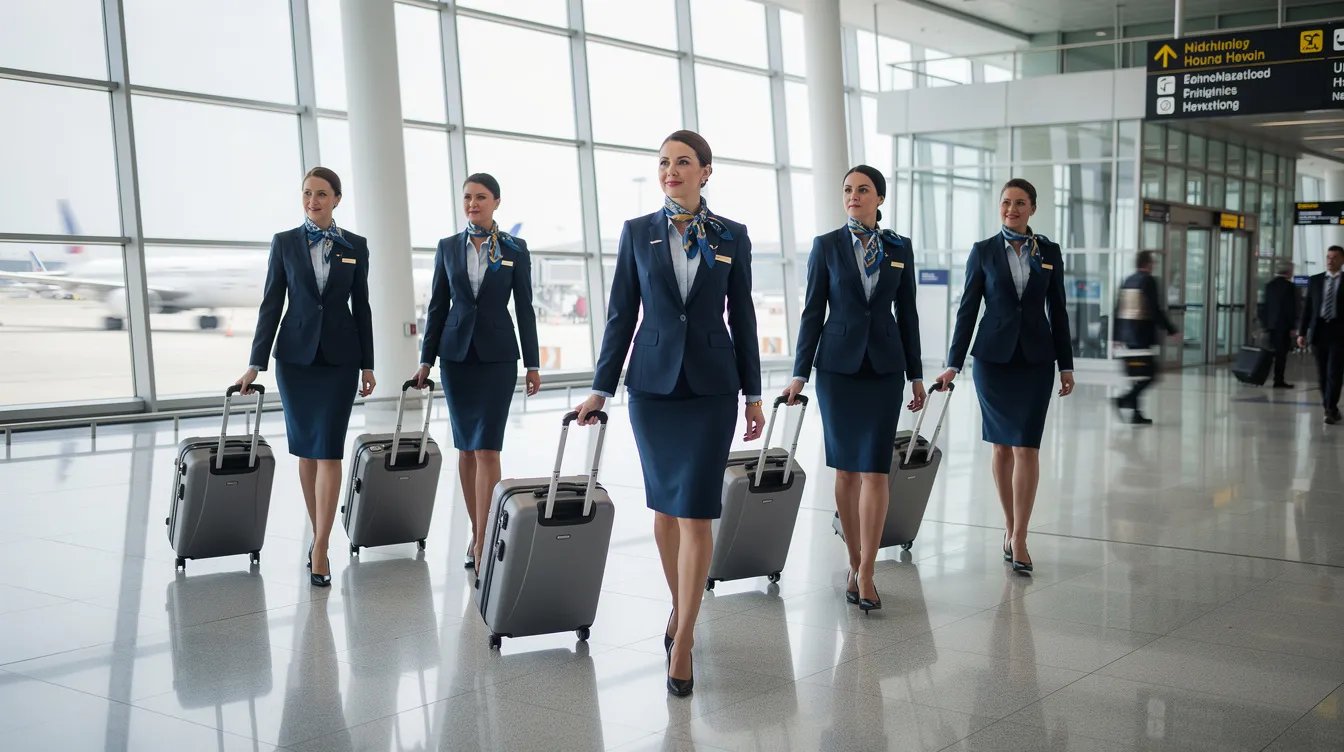
Flight attendant pay has surged to historic levels. A wave of new contracts, retroactive raises, and the introduction of boarding pay across major US airlines has reshaped flight attendant compensation in ways that would have seemed unlikely just five years ago. Whether you are a prospective flight attendant weighing career options or a frequent traveler curious about the economics behind your cabin crew, this guide breaks down exactly which airlines pay the most — and what those numbers really mean once you look past the headline hourly rate.
Quick Answer: Highest-Paying Airlines for Flight Attendants in 2026
The airlines that currently pay flight attendants the most are concentrated among the major US airlines with recently ratified or updated contracts. United Airlines leads in raw top-of-scale hourly rate at $87.47 per hour as of July 2026, with scheduled increases that will push United Airlines flight attendants' top pay to nearly $100 per hour by 2030. Delta Air Lines follows closely at $86.32 per hour for its 12-year top-of-scale crew members. American Airlines flight attendants can earn $84.50 per hour after 13 years of service under a new contract ratified in late 2024. Southwest Airlines flight attendants received significant pay increases in 2026, with senior crew reaching approximately $82.14 per TFP — roughly equivalent to mid-$80s per flight hour. Alaska Airlines rounds out the top tier with a published top rate of $78.77 per TFP by 2027, offset by what many consider the highest boarding pay in the industry.
Senior flight attendants at these carriers earn approximately $83 to $86 per hour in base flight pay, and major legacy carriers offer the highest hourly rates for flight attendants among all scheduled airlines. But "which airline pays most" depends heavily on total flight attendant compensation — not just the advertised hourly rate. When you factor in boarding pay, per diem, profit sharing, and premiums, the rankings shift. Delta's profit sharing alone has historically added thousands of dollars per year, and American's new profit sharing program jumped to roughly 10% of eligible earnings.
This article focuses on major carriers because their contracts are publicly available and directly comparable. That said, VIP and private aviation cabin crew may exceed these numbers on a per-trip basis, and BlackJet, as a private aviation provider, operates with a fundamentally different compensation model and work rhythm — something we will explore later.
How Flight Attendant Pay Really Works
Most flight attendants are not paid for the full time they spend at work. Understanding this distinction is critical for anyone evaluating a cabin crew job, comparing airlines, or assessing a flight attendant's salary as total earnings rather than hourly wages alone.
Flight time vs. duty time: Flight pay starts when the aircraft door is closed — not when crew members report for duty, board passengers, or handle pre-flight safety checks. "Duty day" covers everything from report to release, but most airlines only pay the hourly rate for block hours (taxi out to engine shutdown at the gate).
Credit hours: Some carriers use "credit hours" or TFP units instead of straight block hours. These can be calculated differently from actual time aloft, making direct airline-to-airline comparisons tricky for new flight attendants who see only a single number.
Boarding pay: Where offered, boarding pay compensates part of the unpaid ground work, but usually at a reduced rate — commonly 50% of the regular hourly rate. Boarding pay is additional compensation for pre-flight duties and has become a major differentiator among carriers since 2022.
Per diem: Flight attendants earn per diem for hours away from home base. This is separate from flight pay and is often untaxed or partially untaxed, adding hundreds of dollars monthly. Per diem rates typically range from $2.00 to $3.00 per hour in 2026.
Union vs. non-union: Flight attendant pay is usually union-negotiated at legacy carriers like American Airlines and United Airlines via labor unions such as AFA-CWA and APFA. Delta Air Lines is non-union but historically adjusts pay preemptively to remain competitive.
Key Components of Flight Attendant Compensation
Flight attendant compensation is heavily tied to seniority, hourly flight pay, and profit sharing. Here are the building blocks that determine what crew members actually take home.
Flight pay: The core hourly rate paid per block hour or credit hour. Each airline uses a fixed pay scale with step increases by year of service, topping out around year 12 to 14. Hourly pay increases with seniority at most airlines.
Boarding pay: Now offered at Alaska Airlines, American Airlines, Delta Air Lines, and United Airlines. The typical structure pays 50% of the base flight pay rate during scheduled boarding time — meaning the minutes before the aircraft door closes are no longer entirely unpaid.
Per diem / diem pay: Paid for every hour away from base, domestic and international. United's current contract sets domestic per diem at $2.97 per hour and international at $3.54 per hour. A four-day trip can add roughly $150 to $240 in per diem alone.
Premiums: Language pay, lead flight attendant or purser pay, galley premiums, and international sector premiums typically add $2 to $10 per flight hour when applicable. Flight attendants earn additional pay for roles such as international pursers or service directors.
Profit sharing: Major airlines commonly provide profit-sharing bonuses to enhance total annual compensation. Delta's profit sharing is legendary, sometimes equaling multiple weeks' pay. American's new contract boosted its profit-sharing program to approximately 10% of eligible earnings.
Other benefits: Compensation packages for flight attendants may include housing, transportation, and travel benefits — plus retirement contributions, health insurance, and standby travel privileges that collectively make the "best airline" decision about far more than hourly pay.
Flight attendants typically log 75 to 100 flight hours monthly, which means even small differences in hourly rate, per diem, or premiums compound into meaningful annual gaps.
American Airlines: Industry-Leading Top-Out Pay
American Airlines emerged from its 2024 contract negotiations with one of the most competitive pay structures in the airline industry. The APFA-negotiated agreement included immediate raises of 18 to 20.5%, introduced boarding pay, and delivered over $514 million in retroactive pay to crew members.
The pay scale starts in the mid-$30s per hour for first-year flight attendants and rises annually. After 13 years of service, American Airlines flight attendants can earn $84.50 per hour — placing the carrier among the highest paid in base flight pay. Contracts often improve compensation structures, enabling higher pay for senior crew members, and AA's deal is a textbook example.
Boarding pay at American is calculated at 50% of the regular hourly rate for scheduled boarding minutes. For crew flying multiple short legs per day — common on domestic routes — this adds up substantially.
The profit sharing jump is arguably the most significant change: from roughly 1.1% under the old deal to approximately 10% under the new contract. In a profitable year, that can translate into several thousand additional dollars.
New hires start on reserve status for at least one year, with a monthly guarantee of around 75 to 80 flight hours. First-year total earnings at AA typically land in the high $40,000s to low $50,000s when including per diem and boarding pay. Senior flight attendants with premium international flying and profit sharing can approach or exceed six figures, most often on premium international flights and in strong profit-sharing years.
Delta Air Lines: High Pay plus Elite Profit Sharing
Delta Air Lines is consistently ranked among the best airlines for flight attendants — not because it has the single highest hourly rate, but because its total compensation package is exceptionally strong.
Delta Air Lines offers flight attendants up to $86 per hour at the 12-year top-of-scale mark. New hires start at $38.40 per hour, with aggressive step increases: by year 6, crew members reach approximately $62.94 per hour. Despite being non-union, Delta regularly implements annual raises of around 4% and adjusts benefits preemptively. Delta's own internal data shows its current pay environment is designed to match or exceed union-negotiated contracts at other major carriers.
Delta Air Lines offers boarding pay at 50% of hourly pay during scheduled boarding periods — a policy it pioneered among US flight attendants in June 2022. Combined with language-of-destination pay (around $2.75 per block hour on qualifying routes), Delta flight attendants see meaningful income beyond base flight pay.
What sets Delta apart is profit sharing. Over the period from September 2021 to May 2026, a top-of-scale flight attendant at Delta earned nearly $49,900 more in total compensation than a United peer, largely driven by profit sharing, boarding pay, and Shared Rewards payouts.
Scheduling is another advantage. Delta's ADAYS system gives lineholders predictable schedules and allows senior crew to bid on the most lucrative international routes and premium trips. The trade-off: Delta is one of the hardest airlines to get hired at, with acceptance rates rivaling Ivy League universities.

United Airlines: Rapidly Rising Pay to Compete at the Top
United Airlines has made the most aggressive contractual moves among major carriers in 2026. The ratification of its TA2 contract in May 2026 delivered a 31% base pay hike, the introduction of boarding pay, per diem increases, and improved scheduling rules for United Airlines flight attendants.
The new pay scale, effective July 30, 2026, sets starting pay at $38.21 per hour and top-of-scale (13+ years) at $87.47 per hour. United Airlines flight attendants' top pay will reach nearly $100 per hour, with multiple scheduled raises through 2030 projected to push the ceiling past that milestone.
United's addition of formal boarding pay closed a major gap with Delta and American. Per diem stands at $2.97 per hour domestic and $3.54 per hour international — among the highest in the industry.
Reserve flight attendants at United receive a monthly hours guarantee and are compensated for airport standby, deadhead legs, and minimum-day rules. This provides meaningful income protection for crew members who have not yet accumulated enough seniority to hold regular lines.
For those focused on long-haul international routes, United is difficult to beat. Purser and International Service Director roles carry substantial premiums, and senior crew flying international destinations regularly achieve total compensation over $120,000 to $140,000 per year — industry-leading compensation by any measure.
Alaska Airlines: Best Boarding Pay and Strong Overall Packages
Alaska Airlines is a smaller major carrier that punches above its weight in flight attendant pay, particularly in one critical area: Alaska Airlines offers the highest boarding pay in the industry for domestic narrow-body operations.
Under the 2025–2028 contract, Alaska adds +0.5 TFP per flight that boards and departs, on top of base TFP rates. This effectively boosts total compensation by approximately 9 to 10% — a margin that narrows the gap between Alaska and carriers with higher base hourly rates.
The pay scale features step increases annually, with the top standard scale reaching $78.77 per TFP by 2027 for Year 14 crew. Converting TFP to block-hour equivalents, senior Alaska flight attendants earning 85 to 90 TFP monthly take home roughly $78,000 to $82,000 in base W-2 compensation before premiums and per diem. With international allowances ($1.50 per TFP), lead flight attendant premiums ($4.00 per TFP), and longevity bonuses, experienced crew members can approach low six figures.
Alaska's contract also preserves a scheduled duty-day cap of 10 hours and 30 minutes — among the shortest at any US carrier. For many flight attendants, the combination of competitive pay, manageable schedules, and West Coast base locations makes Alaska one of the best airlines for quality of life alongside strong earnings.
Southwest Airlines: Unique Pay System and Strong Mid-Career Earnings
Southwest Airlines uses a TFP-based pay structure that differs from the straight hourly flight pay at legacy carriers. Understanding how Southwest flight attendants are compensated requires translating TFP into block-hour equivalents — and when you do, the numbers are more competitive than many assume.
As of May 1, 2026, Southwest's top scale (Step 13) sits at approximately $82.14 per TFP. When converted, this puts senior Southwest Airlines flight attendants in the mid- to high-$80s effective hourly range. Entry-level rates start around $32.62 per TFP with the 2026 adjustment.
Reserve flight attendants at Southwest have guaranteed minimums of 78 TFP per month, while lineholders are guaranteed at least 80 TFP. These floors ensure base income even in slower months. Southwest's estimate for a first-year FA, including per diem and extra flying, is roughly $38,000 per year.
Southwest's point-to-point network means many short legs per day. High leg counts can boost TFP earnings for motivated flight attendants who pick up trips and maximize boardings. Work rules including minimum-day pay and trip rigs protect income on irregular operations and cancellations.
While Southwest might not always post the single highest top-out rate among other major airlines, its pay structure can produce high total income and a stable quality of life — especially for crew who value more home nights and fewer international overnights.
International & VIP Cabin Crew: When "Best Airline" Isn't a US Major
Many prospective flight attendants look beyond US airlines when evaluating the best airline for cabin crew pay. The global picture adds important context.
In the UK and Europe, standard cabin crew pay starts considerably lower — around £21,000 to £30,000 for most carriers. VIP cabin crew roles in Europe can push above £29,000, but the gap with US majors remains substantial.
Gulf carriers like Emirates, Qatar Airways, and Etihad take a different approach. Base salaries may appear modest, but they are often tax-free and bundled with housing, transportation, and layover allowances. International long-haul carriers often provide generous layover allowances that effectively raise net compensation for crew willing to relocate, though overall earnings may still trail some budget-friendly private aviation options when total time and flexibility are considered.
The most dramatic contrast is between scheduled airline cabin crew and VIP or corporate cabin crew roles on private jets, which can range from ultra-long-range aircraft to more affordable private jet options that still deliver a premium experience. In the private jet stewardess salary space, daily or trip rates can exceed commercial flight attendant pay, but positions are fewer, expectations are higher, and schedules are less predictable.
Private jet roles, including those within the broader ecosystem served by BlackJet, typically offer more individualized schedules, higher per-trip responsibility, and compensation negotiated case by case, especially on larger aircraft like private jets configured for around 20 passengers or even large private jets that can carry up to 50 passengers.
The "best airlines" globally for pay are not always the largest brands — they are the ones that align with a flight attendant's desired lifestyle, base location, and career goals.
Entry-Level vs. Senior Flight Attendants: How Pay Grows Over Time
Seniority affects flight attendant pay rates significantly — more than almost any other single factor. The difference between a first-year hire and a 13-year veteran is not incremental; it is transformational.
First-year flight attendants earn an average salary of $28,000 at many carriers, and new flight attendants earn under $40,000 per year even at the highest-paying airlines. Starting pay at the major carriers in 2026 ranges from roughly $32 to $38.50 per hour, but reserve status, limited flight hours, and lack of premium route access keep annual totals modest.
Hourly pay increases annually based on years of service. The jumps are steep: at Delta, a year-6 flight attendant earning $62.94 per hour will reach $86.32 per hour by year 12. At United, the path from $38.21 to $87.47 per hour unfolds over 13 years.
A senior flight attendant's salary is much easier to understand with a simplified comparison: a new hire flying 80 block hours per month at $38 per hour earns $3,040 in base flight pay. A 13-year veteran at $87 per hour flying the same 80 hours earns $6,960, plus $750 or more in per diem and premiums. Total annual compensation for senior flight attendants can reach $107,000 to $109,000 at the major carriers, and experienced flight attendants can earn over $100,000 annually when factoring in all compensation elements.
Seniority also controls schedules, routes, and the ability to bid premium trips — the difference between middle-income and six-figure earnings. And because seniority is not transferable between airlines, many flight attendants stay with the same specific airline long-term rather than risk restarting at the bottom of another carrier's pay scale.
Boarding Pay, Per Diem, and Premiums: The "Hidden" Income Drivers
The airlines paying "the most" often lead in supplemental categories — not just base flight pay. These hidden income drivers can shift the ranking when comparing airlines for flight attendant pay.
Boarding pay comparison:
Alaska Airlines: +0.5 TFP per boarding/departure — the most generous domestic boarding pay
American Airlines: 50% of hourly rate during scheduled boarding minutes
Delta Air Lines: 50% of hourly rate, in place since 2022
United Airlines: introduced formal boarding pay in May 2026
On a long-haul international trip, boarding pay can add an extra hour or more of paid time per segment. For short-haul domestic crew flying four or five legs per day, the cumulative effect is even more dramatic.
Per diem: Flight attendants earn $2.00 to $3.00 per hour in per diem. Per diem is paid for hours away from home base, and a four-day pairing with 80+ hours away can add $180 to $240 per trip — potentially $700 to $900 per month for most flight attendants.
Premiums: Language-of-destination pay and lead or purser premiums commonly add $2 to $10 per hour during flight time only. Multilingual flight attendants on international routes can see total pay jump significantly.
Mini-example - a single 4-day international trip at United:
Base flight pay: 20 block hours × $87.47 = $1,749
Boarding pay (6 boardings, ~35 min each at 50%): ~$305
Per diem (80 hours away × $3.54): ~$283
Lead/purser premium: ~$60
Trip total: approximately $2,397
When evaluating which airlines offer the best flight attendant pay, these extras are critical for serious candidates to analyze.
Quality of Life vs. Pure Pay: What "Best Airline" Really Means
The highest hourly pay is only one variable in choosing the best airline for a cabin crew job. Unlike pilots, who can sometimes optimize purely on compensation, most flight attendants weigh lifestyle factors equally.
Reserve length: Some carriers keep new hires on reserve days for two or more years. Others, like Southwest, may offer lineholder status more quickly depending on base.
Duty-day caps: Alaska's 10h30m scheduled cap is among the shortest. Other airlines routinely schedule 12- to 14-hour duty days.
Base locations: Where you live relative to your base determines whether you commute or live in base — a factor that can erase thousands in annual earnings.
Union protection: At American, United, and Alaska, labor unions provide contract enforcement, grievance processes, and negotiated work rules. Delta's non-union model relies on management discretion, which has historically been generous but offers fewer formal protections.
Network design: Hub-and-spoke carriers create different layover patterns than point-to-point operators like Southwest. Many flight attendants prefer one model over the other based on personal priorities.
Serious candidates should balance flight attendant pay tables with lifestyle considerations, using airline-specific forums, current crew feedback, and a clear-eyed assessment of what "best" means to them personally.
Commercial Airline Cabin Crew vs. Private Jet Cabin Crew
The comparison between commercial airline flight attendant ranks and private plane stewardess jobs reveals two fundamentally different career models.
Commercial model: Scheduled routes, union pay scales (at most airlines), predictable step raises, and standardized benefits across thousands of flight attendants. The pay structure is transparent, the progression is known, and great benefits like travel privileges and retirement contributions are standard.
Private jet / VIP cabin crew: Smaller teams — often a single crew member on a given aircraft — with bespoke service responsibilities for ultra-high-net-worth clients. Schedules are less predictable, but per-trip pay and responsibility are both higher. Experienced crew members in the private aviation sector can earn more on a single long international charter than many commercial flight attendants earn in a month.
While commercial airlines like American Airlines or Delta Air Lines may top charts in published hourly pay, private jet roles can exceed these figures on a per-flight or annual basis for experienced crew in the right programs, particularly aboard top-tier private jets known for luxury and performance. For cockpit crew, a private jet pilot salary can range from competitive six-figure incomes to even higher earnings at the top end of the market. The trade-off is stability: commercial careers offer guaranteed minimums and a minimum age requirement often paired with a high school diploma as a baseline, while private roles demand adaptability and often prior airline experience.
BlackJet operates in the private jet ecosystem, where elite cabin crew and ground professionals work together to deliver a highly curated experience that differs fundamentally from mass-market air travel.
Why High-Net-Worth Travelers Leave the "Best Airlines" for Private Jets
The same structural realities that make flight attendant pay complex — unpaid boarding time, long duty days, tight scheduling — also shape the passenger experience on even the best airlines. When boarding pay exists because crew was historically working 30 to 50 minutes unpaid before every flight, it signals something about the inefficiency passengers also endure.
Consider a senior flight attendant working a multi-leg domestic day at a legacy carrier: report at 5:30 AM, board passengers for 40 minutes, fly a 90-minute segment, turn the aircraft in 35 minutes, repeat three more times, release at 7:00 PM. That crew member earns well — but the passengers on those flights endure the same boarding chaos, connection stress, and schedule fragility.
Flexible travel options are crucial for high-net-worth travelers in private aviation, whether that means traditional charters, jet cards, or newer models that let you simply buy a seat on a private jet. First or business class on the best airlines cannot fully replicate the privacy, security, and time savings of a direct private flight, which is why many travelers examine whether chartering a private jet is worth it compared with sticking solely to commercial cabins. A corporate traveler flying New York to Dallas to Los Angeles and back over three days on commercial faces six segments, four boarding processes, two connections, and hours of airport time, which is precisely the kind of scenario where chartering a private jet can be worth it from both a cost and productivity standpoint. The same itinerary on a BlackJet Jet Card eliminates connections entirely, with curb-to-airborne times often under 20 minutes.
While commercial crews work hard under complex pay systems, private jet travelers benefit from crews whose entire focus is a single party — not a full cabin of 150 to 300 people.
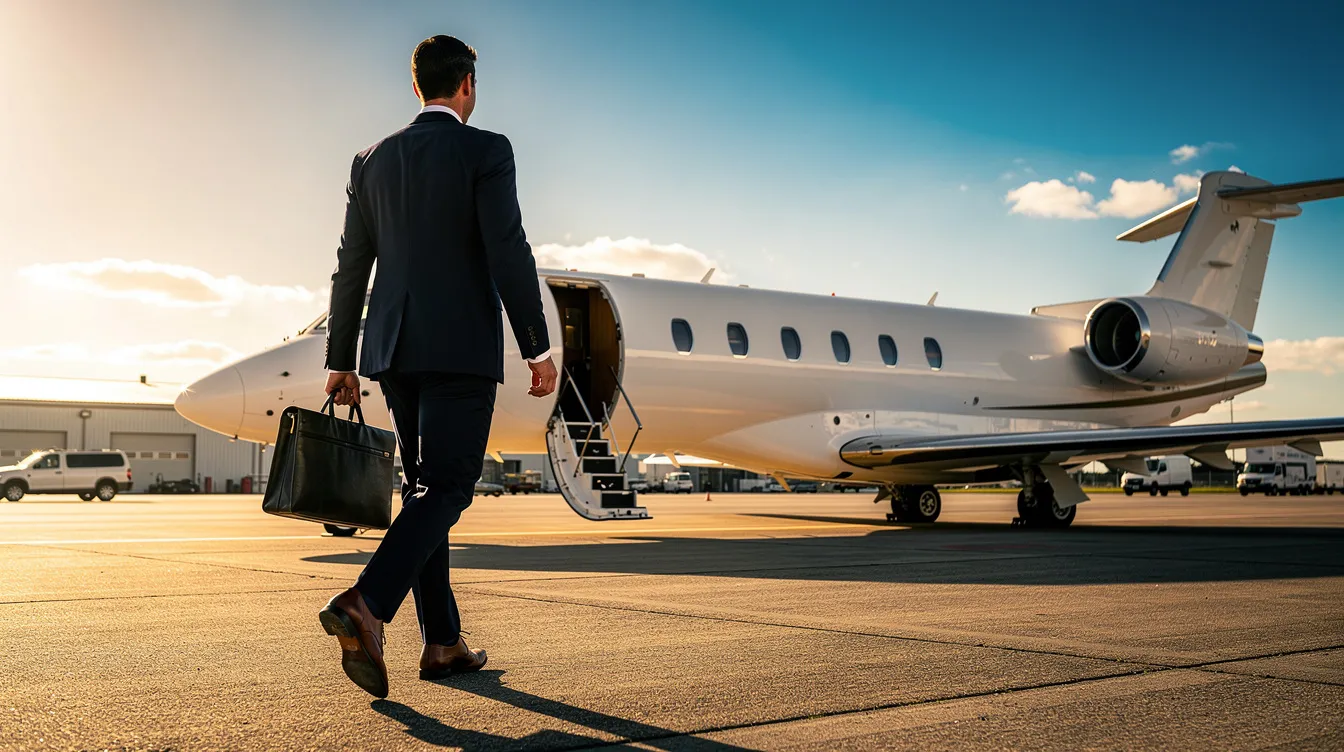
How BlackJet's Jet Card Model Reframes the Value of Air Travel
A Jet Card is prepaid access to private jet hours — think of it as a deposit account for flight time, with fixed rates, transparent terms, and no aircraft ownership headaches, making it one of the most straightforward jet card pricing models for accessing private aviation whether you fly occasionally or are evaluating 10 million dollar private jet ownership options.
BlackJet offers 25-hour and 50-hour Jet Card options across multiple aircraft cabin classes: light, midsize, super-midsize, and large cabin, and the BlackJet 25+ Hour Jet Card expands these flexible membership choices even further. Rates are fixed per hour with clear pricing — eliminating the equivalent of "boarding pay confusion" that travelers experience in the commercial aviation industry, where the actual cost of a ticket rarely reflects the true price of delays, rebookings, and lost time when compared with BlackJet premium private jet card programs.
Safety is foundational. BlackJet's proprietary operator-vetting standards and third-party safety ratings ensure crew qualifications meet or exceed commercial standards. Every flight operates under Part 135 regulations with operators that pass rigorous certification.
Sustainability matters. BlackJet's commitment to carbon-neutral flights through verified carbon offset programs comes at no added cost to cardholders — a standard that few commercial carriers match at any fare class.
Real-time support and digital booking tools are essential features for private jet services. BlackJet's 24/7 digital platform enables booking, itinerary changes, and proactive disruption management that consistently outperforms most commercial airline rebooking experiences, while its transparent structure makes it easier to understand jet card pricing, costs, and benefits.
Case Study: From Top-Tier Airline Elite to BlackJet Jet Card Member
Consider a CEO based in Chicago who flies monthly between ORD, LGA, and LHR. For years, she optimized around United Airlines — choosing the carrier for its Polaris cabin, extensive international network, and high-paid purser-led service. She held top-tier elite status and knew many of the experienced crew members by name.
But even with United's best product, the math told a different story. Connecting through Newark added 90 minutes each way. Security and boarding consumed another 60 to 90 minutes per segment. Over a quarter, she estimated losing 40+ hours to airport logistics — time that could have been spent in boardrooms or with her family.
After joining BlackJet's 50-hour Jet Card, her routine changed. Direct access to private terminals (FBOs), tailored departure times, and fast boarding through efficient booking reduced her door-to-seat time to under 20 minutes on domestic legs. Over a single quarter, she reclaimed nearly 35 hours — the equivalent of an extra work week.
The shift reframed her definition of "best airline." It was no longer about which carrier had the highest-paid flight attendants or the most comfortable business class. It was about which way of flying best served her goals. For her, that answer was BlackJet.
FAQ: Flight Attendant Pay, Best Airlines, and Private Jet Alternatives
Which airline currently pays flight attendants the most?
United Airlines holds the highest published top-of-scale base rate at $87.47 per hour as of July 2026. However, when total flight attendant compensation or a flight attendant's salary is considered, Delta Air Lines and American Airlines are extremely competitive.
How much does a first-year flight attendant make in 2026?
Starting pay across major carriers ranges from approximately $32 to $38.50 per hour. With reserve guarantees and per diem, first-year flight attendants typically earn $28,000 to $40,000 annually.
What is boarding pay, and which airlines offer it?
Boarding pay compensates crew for time during passenger boarding before the aircraft door is closed. Alaska, American, Delta, and United all now offer boarding pay, with Alaska widely considered to offer the most generous structure.
Can flight attendants make over $100,000 a year?
Yes, the highest totals usually go to senior crew who hold premium international flights. Senior flight attendants at American, Delta, and United regularly exceed $100,000 in total annual compensation when combining flight pay, boarding pay, per diem, premiums, and profit sharing.
How does per diem work?
Per diem is paid for every hour a flight attendant is away from their home base, regardless of whether they are flying. Rates in 2026 range from $2.00 to $3.00 per hour depending on carrier and whether the trip is domestic or international.
Do private jet cabin crew earn more than airline flight attendants?
On a per-trip basis, often yes. But annual stability, benefits, and schedule predictability vary widely. For a detailed look at private aviation compensation, see our guide to how much airline attendants get paid across sectors.
Why do premium travelers switch from first class to private jets?
Time savings, privacy, direct routing, and schedule control. Even the best commercial first-class product cannot eliminate connections, boarding delays, or security lines — factors that BlackJet's Jet Card model directly addresses.
How to Choose Your Airline - or Your Jet Card - Based on What You Value Most
For prospective flight attendants, the decision comes down to weighing flight attendant pay scales, boarding pay, per diem, base locations, initial training requirements (including a high school diploma as a baseline at most airlines and a minimum age of 21 at many carriers), and career progression. Airlines offer distinct advantages: American and United for highest eventual hourly pay, Delta for profit sharing and scheduling, Alaska for boarding pay and quality of life, and Southwest for schedule stability and mid-career earnings. There is no single answer about which is the best airline — only the best fit for an individual's priorities and career horizon. In the near future, as contracts continue to push compensation upward, even other airlines outside the Big Five will need to compete on these terms.
For high-net-worth travelers, the decision framework is different but equally personal, especially when comparing top-tier commercial loyalty programs with the best jet cards for frequent flyers, assessing how much it costs to rent a private jet, evaluating a broader private jet price list of access options, and even researching the top private jet companies that can deliver the right mix of safety and service:
When a legacy carrier makes sense: Occasional travel, when airline status aligns with travel patterns, or when direct routes on commercial airlines are convenient.
When a mix works: Maintaining elite status for personal travel while using private jets for time-sensitive business trips.
When a full Jet Card is the most strategic choice: Frequent travel across multiple cities, a premium on privacy and time, and a desire for predictable, transparent pricing with no hidden fees.
BlackJet's Jet Card programs deliver safety, sustainability, and seamless digital booking that mirrors or exceeds the best airline standards — without the compromises of commercial air travel.
Whether you are choosing your first airline or your next way to fly, the smartest decision is the one that aligns with what you value most - your time, your ambitions, and the way you define excellence in the air.
Explore BlackJet's Jet Card programs and discover how private aviation can reshape the way you travel.


 Sign up with google
 Sign up with Apple