Choosing the right airplane seat starts with understanding what "seat A" actually means and where it sits in the cabin. Here is everything you need to know.
Quick answer: Where is seat A on a plane?
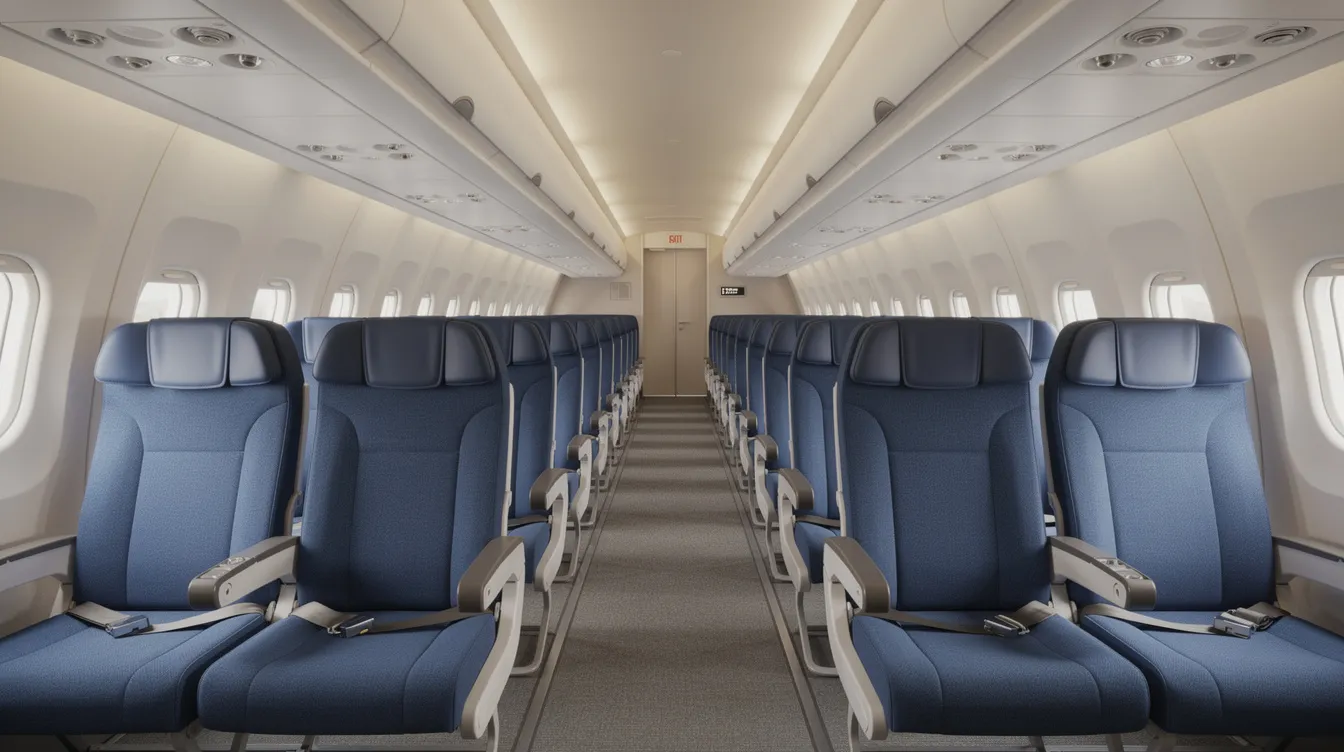
Seat A is typically a window seat on the left side of the aircraft when you face the front of the plane. In standard 3-3 seating arrangements found on Boeing 737 and Airbus A320 aircraft, airlines label seat columns alphabetically from left to right: A is the left window, B the middle seat, C the aisle seat, then D (aisle), E (middle), and F (right window).
On wide-body aircraft, seat A remains the far-left window seat. In a 3-3-3 or 2-4-2 cabin layout, the left block still starts with A; the remaining letters shift based on how many seats span each row. In regional jets with a 2-2 configuration, seat A is typically a left window seat as well. Seat A consistently remains on the left side regardless of aircraft type.
Airlines sometimes skip row numbers (row 13, for superstition) or omit letters like I and O to avoid confusion with numerals. Checking the airplane seat map for your exact flight number is always safest.
For BlackJet members, this complexity disappears. Premium private jet card programs from BlackJet let private jet passengers choose a cabin zone or aircraft category rather than decoding a strict seat letter grid.
How airplane seat numbering works (rows, letters, and cabin layout)
Every airplane seat combines a row number with a seat letter to form a unique seat number. Row 7, seat A becomes "7A." Airplane seat maps show rows numbered from front to back, with lower numbers closer to the nose. Seat letters indicate window, middle, and aisle positions across each row.
In a narrow-body 3-3 layout, the pattern runs:
Left block | Aisle | Right block |
|---|
A (window) | | D (aisle) |
B (middle) | | E (middle) |
C (aisle) | | F (window) |
In a 2-2 layout (common on smaller regional aircraft), seats run A-B on the left and C-D on the right; A and D are windows. In wider configurations like 2-4-2, the left block may hold seats A and C, the center block D through G, and the right block H and K. Some airlines reserve row 1 for first class and start economy at row 10 or higher.
On a typical New York to Los Angeles Boeing 737 in economy, 12A would be a left-side window seat just ahead of the wing area. By contrast, private plane layouts used by BlackJet feature club seating and divans instead of dense rows; guests select zones rather than coded seat numbers.
Where seat A is on different types of aircraft
While seat A always means a left window seat, its physical position relative to wings, exit rows, and galleys shifts with each aircraft model.
Narrow-body planes (Boeing 737, Airbus A320 family): Boeing 737 typically has a 3-3 seat layout. Seats 6A or 7A sit near the front, often just ahead of or over the wing. These A seats are popular among solo travelers who want a window view with minimal disturbance.
Wide-body planes: Boeing 777 usually features a 3-4-3 seat configuration, while an Airbus A350-900 in economy often uses 3-3-3. Row 30A could be a window seat by the wing; row 45A might be near the tail, closer to lavatories and engine noise. Some premium cabins may alter seat letter assignments for consistency across the cabin, but A still anchors the left window. In business class on long-haul routes like New York to Paris, seat 2A often occupies a staggered suite with direct aisle access.
The exact layout may vary based on the specific airline and aircraft configuration. Different aircraft models can have varying seat layouts even within the same fleet. Always verify with the seat map for your reservation.
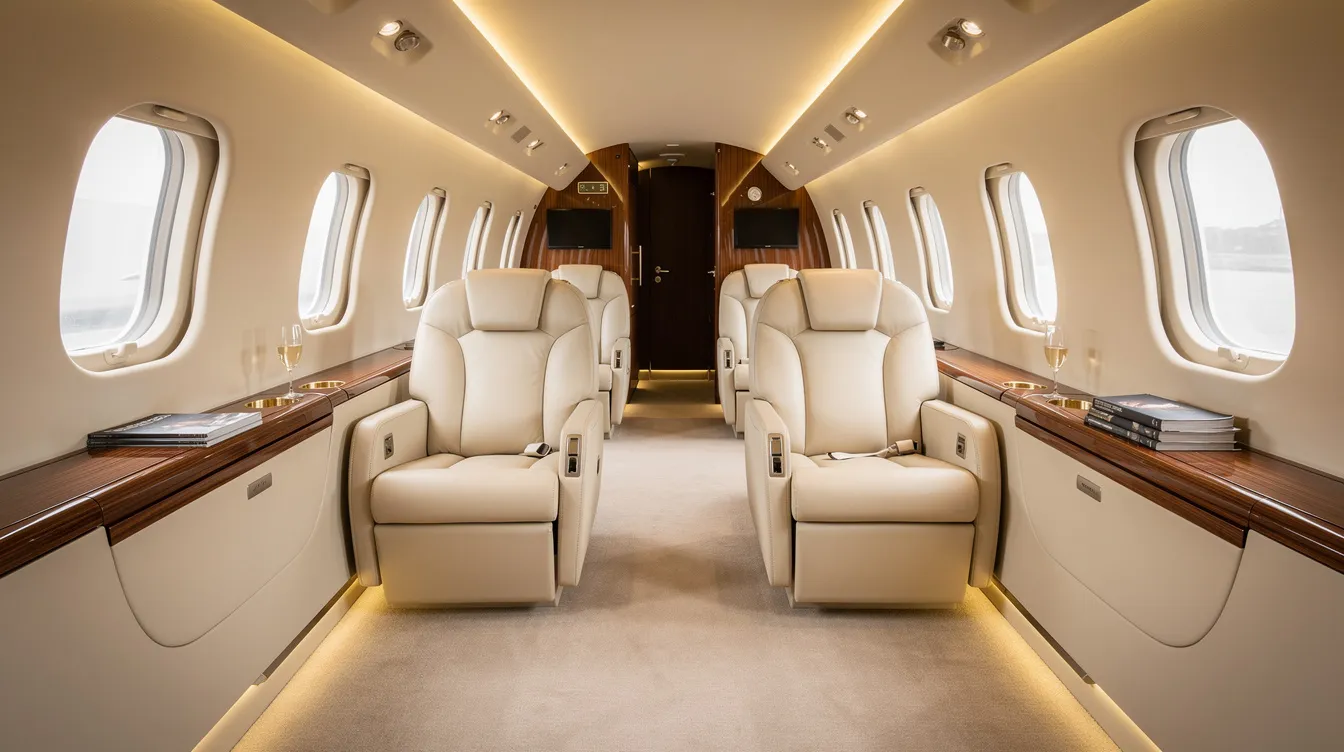
In BlackJet's fleet, aircraft categories range from light jets to large-cabin jets, mirroring the broader spectrum of private jet sizes available on the market. None label seats A, B, or C; clients pick forward-facing singles, rear club seats, or side-facing divans.
How to read an airplane seat map to locate seat A, wings, and exit rows
Airplane seat maps are the most reliable tool for locating your seat and everything around it. Here is how to read one:
Log in to your airline's website or app with your booking reference.
Open the seat selection page to view the live seat map for your aircraft and date.
Find your seat number (e.g., 14A) and note its row, position, and proximity to wings and exits.
Wings typically appear as a shaded or highlighted zone around mid-cabin. Seats directly over the wing (like 18A on many narrow-bodies) sit near the aircraft's center of gravity, which means less turbulence, though the window view may be partially obstructed by the wing itself. Missing windows can occur next to seat A due to fuselage design; the seat map or traveler reviews often flag these.
Exit rows are marked with special icons. Seat A in an exit row (say, 20A) often provides extra legroom, but passengers must meet safety eligibility requirements and may face limited recline.
SeatGuru provides detailed seat maps for various airlines, including notes on restricted recline, galley proximity, and obstructed views. Cross-reference these with your airline's own map, since third-party tools can lag behind fleet changes.
BlackJet's digital platform replaces this process entirely. Members see clear cabin layouts by aircraft category, reflecting the same distinctions you find across types of private jets, and can book their preferred seating position with a few taps.
Is seat A a window, aisle, or middle seat? (By layout)
Seat A is a window seat in every standard commercial configuration. What changes is where the aisle seats and middle seats fall around it:
2-2 layout: A and D are windows; B and C are aisle seats. No middle seat exists.
3-3 layout: A and F are windows; B and E are middle seats; C and D are aisle seats.
2-4-2 layout: A is a window seat; B is an aisle seat; center seats D, E, F, G are split between aisle and middle positions.
Window seats provide a surface to lean on while sleeping and control over the shade. Aisle seats offer more legroom and easier access to the aisle, particularly on long-haul flights where mobility matters. Middle seats are the least popular due to limited access and views; a 2026 Verasight survey of 1,000 U.S. adults found only 2.5% prefer the middle, compared to 63.7% for the window.
A concrete example: on a 3-3 flight from Los Angeles to Chicago, 14A gives you a window view and a wall to lean against for sleep. Seat 14C provides easy access to lavatories and faster movement during boarding but no view. The balance depends on personal priorities.
With BlackJet, every seat functions like an aisle seat and a window seat combined. For travelers accustomed to buying just one spot instead of a whole cabin, understanding how to buy a seat on a private jet can be a useful bridge into this world. No neighbors, no armrest negotiations, and no middle seat compromise.
How to use seat maps and seat selection tools to choose the best seat A
Once you know where seat A is, the next step is deciding whether it is the best seat for your specific route and aircraft.
Pull up the airline's own seat selection interface during booking to see live availability.
Cross-check with third-party seat map tools for comments on specific rows (limited recline, proximity to lavatories, missing windows).
Reconfirm your seat map during check-in. A flight number alone does not guarantee a fixed layout; airlines swap aircraft, shifting where exit rows and wings sit relative to seat A.
Tips for specific preferences:
Best views: Choose seat A just ahead of the wing, on the side with the most scenic approach.
Quieter flight: Select forward rows away from galleys and lavatories.
More space: Look for bulkhead seats, premium economy, or exit rows, bearing in mind reduced under-seat storage.
A business traveler flying New York to London on a wide-body might weigh 11A (bulkhead window, more legroom, but a wall instead of under-seat storage) against 21A (standard window over the wing, less turbulence, steady window view). The model of aircraft and service class determine which trade-off wins.
For those who are tired of this calculus, a BlackJet Jet Card replaces seat-by-seat optimization with guaranteed cabin-wide comfort, carbon-neutral flights, and rigorous safety certification, all while providing the predictable pricing structure outlined in our guide to jet card membership costs.
Choosing the best seat for your needs: views, comfort, and safety
The "best seat" depends on whether you prioritize best views, extra legroom, reduced turbulence, or fastest boarding.
Views: Window seats in the front half offer smoother rides and better views. Avoid rows flagged for no window on the seat map. Consider which side of the aircraft faces the scenery on your route.
Comfort: The average seat pitch has dropped from 35 inches to 31 inches over the past two decades, making legroom a premium commodity. Exit row seats typically have extra legroom but may not recline. Bulkhead seats offer space but often have fixed armrests and no under-seat storage, which is why frequent flyers compare jet card pricing structures as an alternative route to more comfortable cabins.
Turbulence and noise: Seats over the wings experience less turbulence during flights because they sit near the aircraft's center of gravity. Seats near the front are quieter and allow faster deplaning. Rear rows feel more movement and sit closer to engines and lavatories.
Safety: Cabin crew relies on clear seat numbers to manage emergency procedures and weight balance. Passengers assigned to exit rows must follow crew instructions and meet eligibility requirements.
Private jet perspective: why seat letters matter less with BlackJet
Decoding "where is seat A" matters in a 180-seat economy cabin. In a light jet or midsize jet, every seat offers direct aisle access, panoramic windows, and personal space that no commercial seat selection can match, especially when you understand jet card cost per hour and how it compares to premium cabin fares.
Private jet cabins use club seating (four seats facing each other around a table), forward-facing armchairs, and occasional side-facing divans. For larger groups, 16-seat private jet options offer layouts where seats are arranged for comfort, privacy, and conversation rather than labeled with letters.
BlackJet's Jet Card programs let members pre-purchase flight hours across multiple aircraft categories. Products like the BlackJet 25+ Hour Jet Card make it easy to lock in fixed hourly rates while booking happens via a digital platform or 24/7 support. Travelers choose departure time, aircraft type, and routing. Every BlackJet flight is carbon neutral, with offsets built into the program. Only safety-certified operators and vetted crews fly BlackJet missions.
No fighting over aisle seats or middle seats. No reliance on public airplane seat maps. The entire cabin is yours, delivering best views, full recline, and zero concern about neighbors.
Discover how a BlackJet Jet Card can replace seat-number stress with consistent comfort, privacy, and flexibility on every flight, especially when you compare the best jet cards for frequent flyers and see how features and costs align with your travel patterns.
Frequently asked questions
Where is seat A on a plane?
Seat A is typically the window seat on the left side of the aircraft when you face forward. Confirm the exact position on your airline’s seat map, since cabin layouts can vary.
Is seat A always a window seat?
In standard commercial layouts, seat A is generally a left-side window seat. Some premium cabins may use different letter assignments, and a window may not align with every seat because of the aircraft’s fuselage design.
How can I find seat A on my flight?
Open the seat map on your airline’s website or app and match it to your specific flight and aircraft configuration. The airline may change the aircraft, so check again before departure or request help from the airline if the map is unclear.
Is seat A a good seat?
Seat A can be a good choice if you want a window view and a wall to lean against while resting. For easier aisle access, choose an aisle seat; for a smoother ride, consider a seat near the wings. The best option depends on your priorities and the aircraft layout.
How is choosing a seat different on a private jet?
Private jet cabins typically offer spacious seating arrangements rather than dense, lettered rows. With a BlackJet Jet Card, travelers can select an aircraft category and enjoy the privacy of the entire cabin, with booking support available through digital tools and 24/7 assistance.
Conclusion: Choose the seat—and travel experience—that fits
On a commercial flight, seat A is typically the left-side window seat, but the exact position depends on the airline and aircraft layout. Check your flight’s seat map before departure, especially if you value a clear view, extra legroom, or a quieter spot. For more guidance, explore BlackJet’s tips on private plane layouts and choosing the right private jet size.
For frequent travelers, private jet access offers a different level of flexibility: instead of choosing among individual seats, you can select a cabin and schedule that suit the trip. Explore BlackJet’s Jet Card programs to discover a more seamless way to travel, with vetted operators and safety standards, responsive support, and carbon-neutral flights.


 Sign up with google
 Sign up with Apple