The airline industry moves 5 billion passengers a year, generates over a trillion dollars in revenue, and connects nearly every populated region on the planet. Yet the word "airline" gets used loosely, blurring the line between commercial carriers, cargo operators, charter services, and the broader aviation world. This guide breaks down what an airline actually is, how different airline types work, and where private aviation fits alongside scheduled air service.
Quick Answer: What Is an Airline?
An airline is one of the airline companies that provides air transport services for passengers, cargo, or both, using aircraft on scheduled or non-scheduled routes. Airlines are commercial entities operating within the broader aviation sector and typically fly jets, though some use turboprops or helicopters for shorter routes.
Airlines can be passenger-focused and carry passengers between cities, cargo-focused (moving freight), or mixed operations handling both.
The spectrum ranges from global network airlines like Delta Air Lines and Emirates to small regional airlines connecting rural communities with major hubs, and from full-service carriers to low-cost airlines with stripped-down fares.
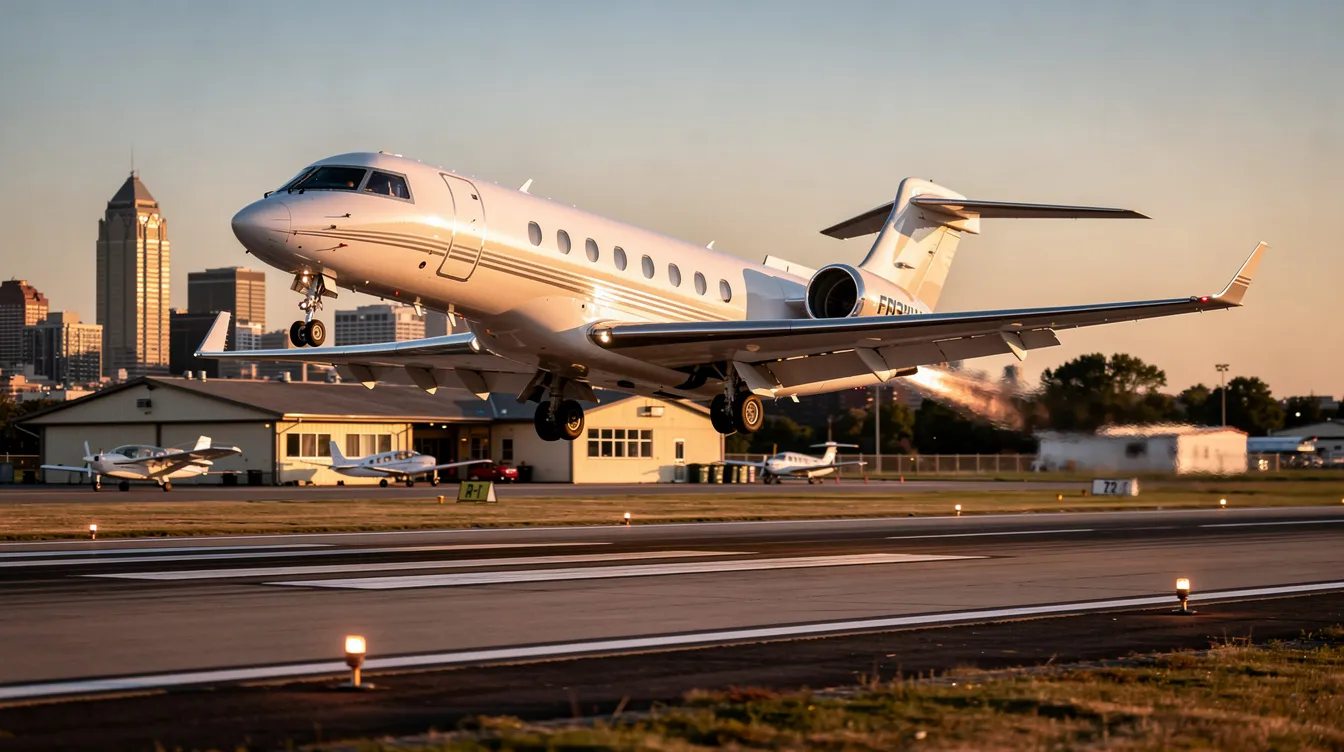
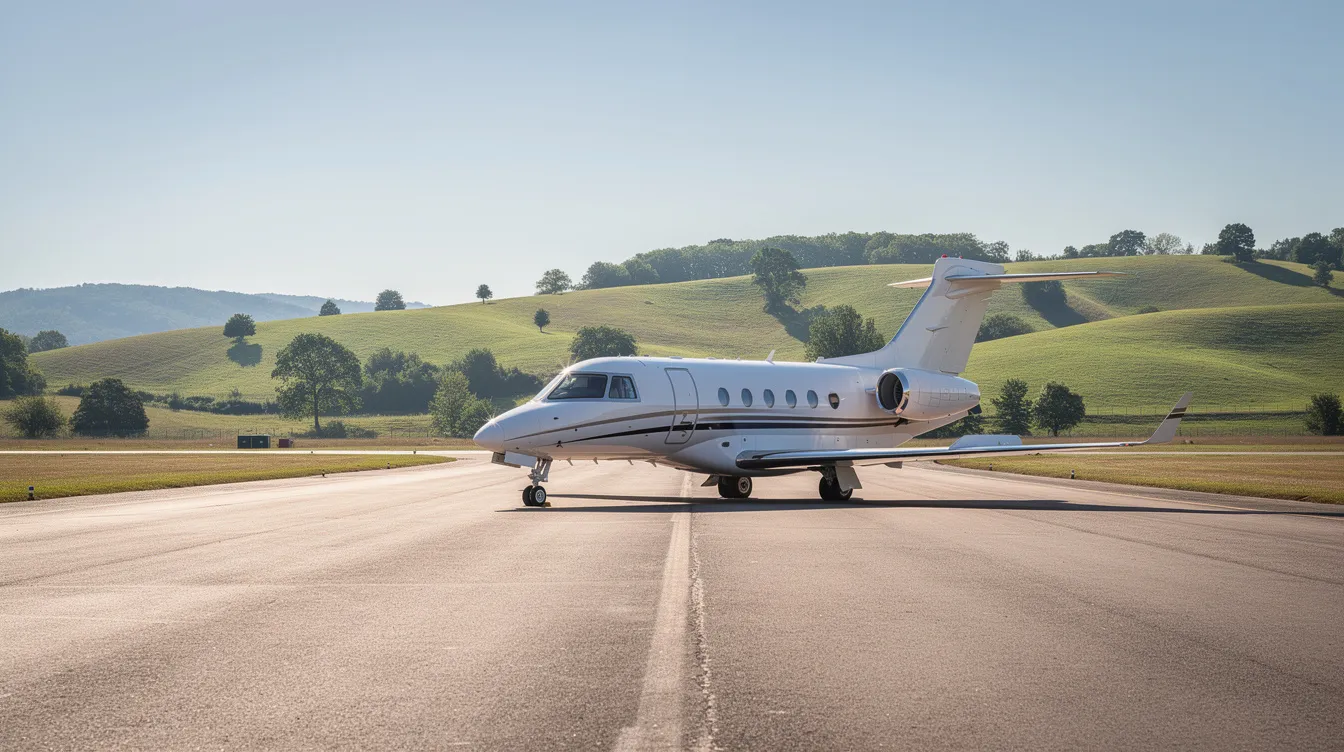
Private jet and business aviation providers like BlackJet sit outside the traditional airline model. They offer non-scheduled, highly personalized air transport separate from mass-market airline services; think on-demand charter and prepaid jet card memberships rather than published timetables and boarding gates.
Two numbers illustrate the scale of modern air transport: the International Air Transport Association projects 5.2 billion passengers carried in 2026, with global airline revenues reaching approximately $1.053 trillion that same year.
Airline Industry vs. Aviation Industry vs. Business Aviation
The terms "airline industry," "aviation sector," and "business aviation" overlap but describe different things.
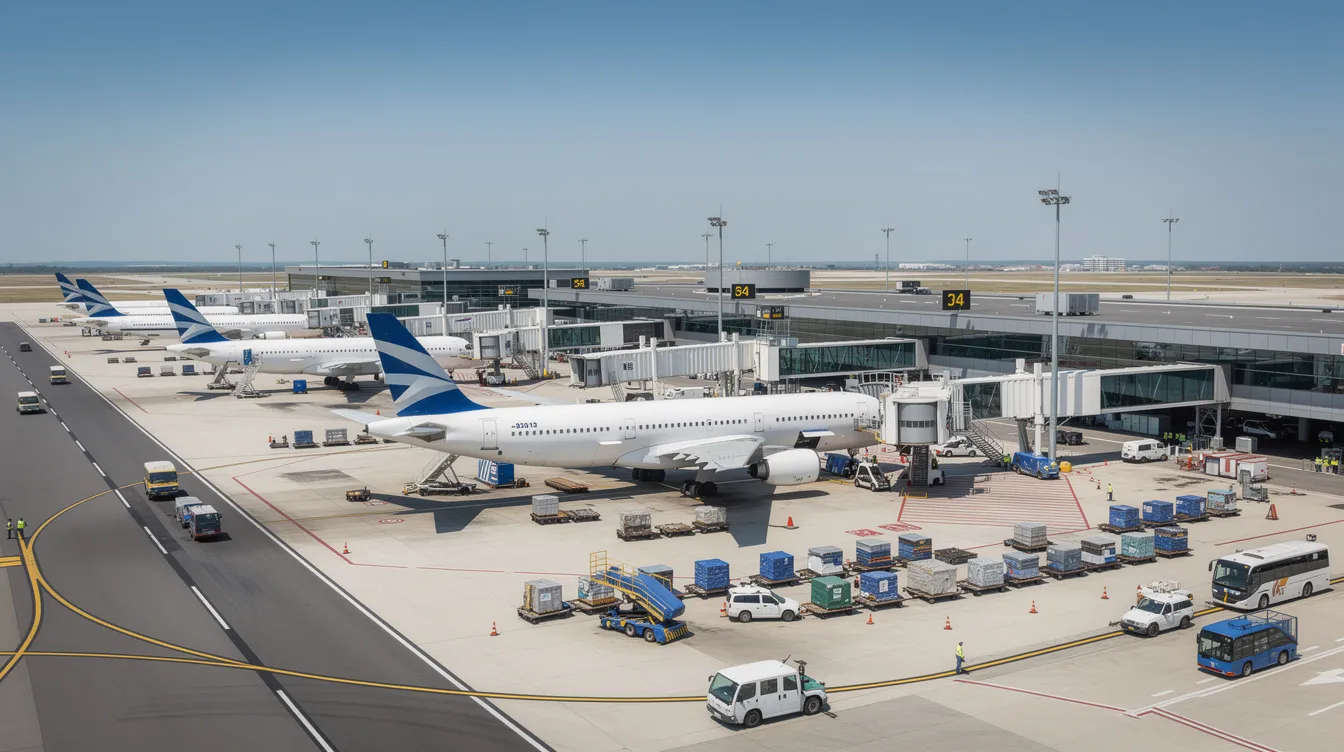
The airline industry is the part of the air transport industry consisting of air carriers that sell seats or cargo capacity to paying customers. It includes passenger airlines, cargo airlines, charter airlines, and every variation in between.
The aviation industry encompasses a broader set: aircraft manufacturing (Boeing, Airbus), airports, air traffic control systems, regulators like the Federal Aviation Administration, maintenance/repair/overhaul firms, military aviation, and business aviation. Airlines operate as part of this larger aviation ecosystem, relying on airports, air traffic control, and manufacturers to function.
Business aviation is a distinct segment. It includes private jet operators, corporate flight departments, jet card providers, and on-demand charter, none of which publish fixed timetables or sell individual airline tickets to the public.
Real-world examples make the boundaries concrete. Delta Air Lines is an airline; it sells scheduled flights to passengers. Airbus is an aerospace manufacturer; it builds the planes airlines fly but is not itself an airline. BlackJet is a private aviation provider; it offers prepaid jet card memberships for private flights, placing it in business aviation rather than the airline sector.
How Airlines Work: Core Functions in Air Transport
Airlines are the operators connecting aircraft, airports, and passengers within the air transport system. Airlines manage complex logistics and operations, including maintenance and safety, and they must coordinate dozens of moving parts to get a single flight airborne.
Route Planning and Scheduling
Route planning and scheduling: Airlines decide which air routes to fly, how often, and at what times. Network airlines build hub-and-spoke systems; low cost carriers often run point-to-point direct flights.
Fleet Management
Fleet management: Selecting the right aircraft types (narrowbody for domestic flights, widebody for international flights) and managing leases, ownership, and retirement schedules.
Pricing and Ticket Sales
Ground Operations
Ground operations: Airlines must effectively manage ground operations at airports, including check-in, baggage handling, gate assignments, and boarding.
Air Traffic Integration
Airlines operate as scheduled airlines or charter operators for business and leisure markets, serving two primary passenger segments. Business travelers need frequency, flexibility, and premium cabins. Leisure travelers focus on price, often booking during seasonal peaks. Some airlines also operate dedicated cargo aircraft or carry freight in the belly of passenger jets, making them part of global logistics chains that transport high-value or perishable goods efficiently across distances.
Main Types of Airlines by Business Model
Airlines can be grouped into four core business models: full service carriers, low-cost airlines, charter airlines, and cargo airlines. Each corresponds to a different cost structure, service level, and target customer segment.
Full Service Carriers (FSC): Offer multiple cabin classes and amenities as standard, with global connectivity and inclusive services.
Low Cost Airlines and Ultra-Low-Cost Carriers: Focus on reducing operational costs to offer cheaper fares, charging separately for add-ons.
Charter and Holiday Airlines: Operate non-scheduled flights based on demand, primarily for tour operators, sports teams, and group travel.
Cargo Airlines and Integrated Freight Carriers: Focus primarily on transporting freight, not passengers, using freighter aircraft to move goods across continents.
Hybrid models exist; several full-service carriers operate low-cost subsidiaries, and some low-cost carriers have added premium cabins. But the four core categories still frame most airline strategies.
The following subsections detail each model with concrete examples.
Full Service Carriers (FSC)
Full service carriers offer multiple cabin classes, inclusive services (meals, checked baggage, in-flight entertainment), and global connectivity through hub-and-spoke networks. Full-service carriers offer multiple cabin classes and amenities. A passenger purchasing a transatlantic ticket on British Airways or Singapore Airlines expects a bundled experience that includes seat selection, meals, and loyalty benefits.
Concrete examples: American Airlines, Delta Air Lines, United Airlines, British Airways, Lufthansa, Air France, Singapore Airlines, and China Southern Airlines.
Key features that define the FSC model:
Multiple cabin classes: Business class and first class cabins alongside economy, sometimes with premium economy as a middle tier
Frequent flyer programs: (AAdvantage, SkyMiles, Flying Blue) that reward repeat purchases with upgrades, lounge access, and partner airline benefits
Membership in airline alliances: Star Alliance (United, Lufthansa, Singapore Airlines), SkyTeam (Delta, Air France, KLM), and Oneworld (American, British Airways, Qantas)
Higher operating costs: Offset by premium fares, corporate contracts, and ancillary revenue streams
Many national airlines and traditional "flag carriers" fall into this full-service carriers category. Their business models depend on capturing both the price-sensitive economy passenger and the high-yield corporate traveler on the same aircraft.
Low Cost Airlines and Ultra-Low-Cost Carriers
Low cost airlines focus on reducing operational costs to offer cheaper fares, charging separately for add-ons that full-service airlines include by default. Low-cost carriers strip the product to its core: a seat from A to B.
Operational traits that keep costs down:
Single aircraft type: (often Boeing 737 or Airbus A320 family), which simplifies maintenance and crew training
High aircraft utilization: Sometimes 12+ hours of flying per day
Point-to-point networks: Avoiding expensive hub infrastructure
Use of secondary airports: (London Stansted instead of Heathrow, Chicago Midway instead of O'Hare)
Fast turnarounds: Often 25-30 minutes at the gate
Low cost carriers include Southwest Airlines, Ryanair, EasyJet, and JetBlue. Ultra-low-cost carriers like Spirit Airlines, Frontier Airlines, and Allegiant Air push unbundling further; even carry-on bags and seat assignments carry fees.
Southwest Airlines is an iconic low-cost airline that still includes two free checked bags, an exception in the low cost model that has persisted for decades. Low-cost business models reshaped the global airline sector by stimulating price-sensitive demand and forcing legacy carriers like US Airways and legacy airlines across Europe to adapt by adding "basic economy" fare classes.
Charter and Holiday Airlines
Charter airlines operate non-scheduled flights based on demand, primarily for tour operators, sports teams, and group travel. Routes and schedules are defined by contracts rather than public timetables, and tickets are often sold as part of vacation packages bundled with hotels and transfers, while private heavy jets designed as the best private jet for 20 passengers serve smaller, more exclusive groups.
Examples include TUI Airways in Europe and various seasonal leisure carriers serving Mediterranean and Caribbean destinations. The service level typically falls between full-service and low-cost airlines: basic meals may be included, but frequent flyer programs and lounge access are absent, and some high-end groups instead opt for dedicated aircraft such as private jets for 50 passengers.
A clear distinction matters here: large charter airlines operating 200-seat jets for package holidays are a different business from small private jet charter operators in business aviation. A charter flight on a holiday airline serves hundreds of passengers per departure. A private charter flight serves one client or group on a dedicated aircraft.
Cargo Airlines and Integrated Freight Carriers
Cargo airlines focus primarily on transporting freight, not passengers. They use freighter aircraft (often converted passenger jets like the Boeing 747F) to move goods across continents.
Examples: FedEx Express, UPS Airlines, DHL Aviation, Emirates SkyCargo, Lufthansa Cargo. Each cargo airline handles different niches; some focus on express parcels, others on heavy industrial equipment or temperature-sensitive pharmaceuticals.
Integrated carriers like FedEx and UPS manage door-to-door logistics, controlling ground pickup, sorting, air transport, and last-mile delivery. Traditional cargo airlines operate airport-to-airport, handing shipments to third-party trucking at each end.
Air cargo supports global e-commerce and time-sensitive shipping. Airlines transport high-value or perishable goods efficiently across distances; fresh seafood from Norway reaches Tokyo restaurants within 48 hours of harvest. Cargo airlines share runways and airspace with passenger airlines, influencing air traffic planning and airport capacity allocation, while private group charters for up to 100 passengers offer an alternative for time-critical movements of people rather than freight.
Types of Airlines by Operational Scale: International, National, Regional
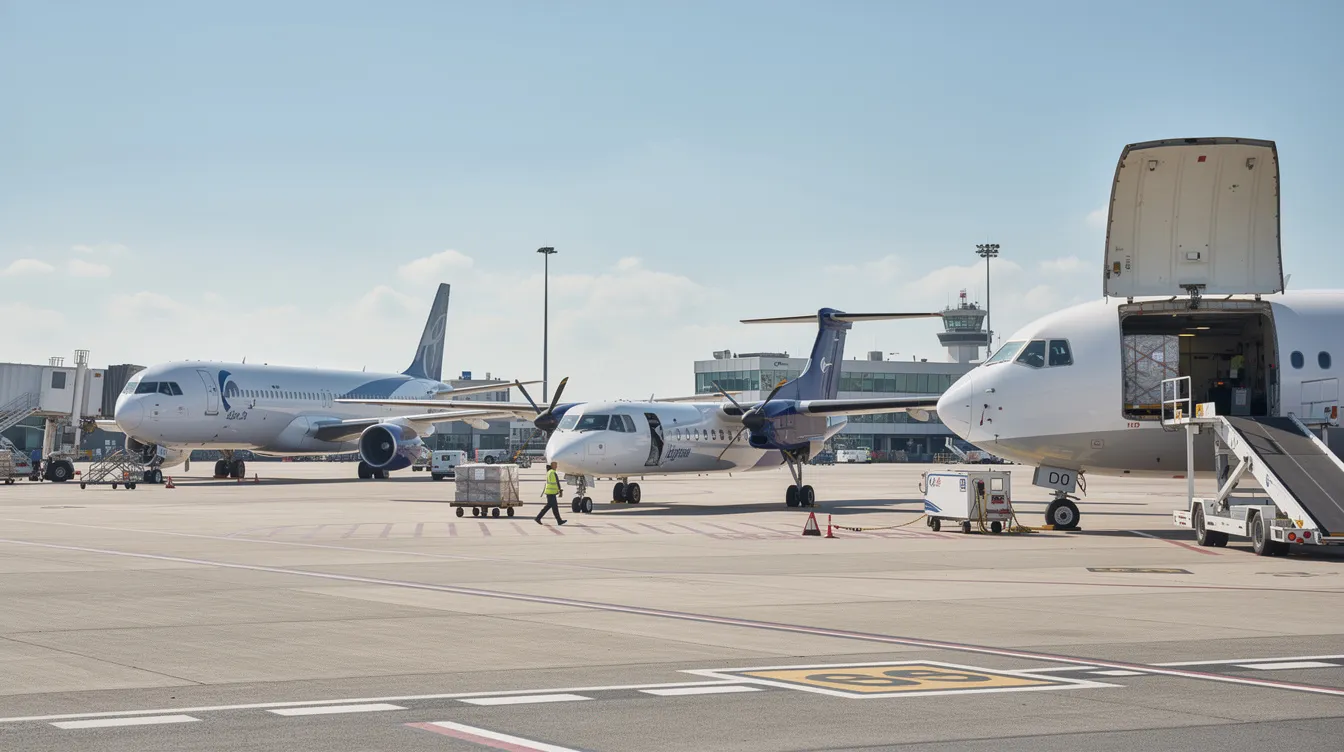
Airlines can be categorized into major, national, and regional types. Airlines can be categorized into major, national, and regional types based on their operational scale, fleet size, and revenue. The U.S. Department of Transportation uses revenue thresholds to distinguish these groups, and similar classifications appear in regulatory frameworks worldwide.
International (major) airlines: Operate globally with multiple hubs.
National airlines: Focus primarily on domestic markets with selective international routes.
Regional airlines: Connect smaller cities to larger airport hubs, often under codeshare agreements with larger carriers.
International (Major) Airlines
International airlines are major airlines generating over $1 billion in annual revenue. They fly large mixed fleets of widebody jets (Boeing 777, Airbus A350) for long-haul routes and narrowbody jets (Boeing 737, Airbus A320) for domestic and short-haul service.
Examples: American Airlines, Delta Air Lines, United Airlines, Emirates, Qatar Airways, China Southern Airlines, Air China. American Airlines is among the largest airline operations globally by fleet size and destinations served.
These carriers operate extensive route networks across multiple continents, often anchored by hub-and-spoke systems. Delta concentrates at Atlanta Hartsfield-Jackson; Emirates funnels traffic through Dubai International Airport; United builds connections through its hubs in Chicago, Houston, Newark, and San Francisco.
Multiple cabin classes (economy, premium economy, business, first), global alliance memberships, and corporate travel programs define the major airline experience.
National Airlines
National airlines focus primarily on domestic markets with selective international routes, typically generating roughly $100 million to $1 billion in annual revenue. Fleets lean toward narrowbody aircraft like the Boeing 737 and Airbus A320 families.
Examples: Alaska Airlines in the U.S., Qantas's domestic operations in Australia, Copa Airlines connecting the Americas from its Panama City hub.
Many national airlines are or were "flag carriers" representing a country, sometimes with partial state ownership. They tend to offer fewer cabin classes than major airlines but still maintain loyalty programs and partnerships with larger global carriers. Alaska Airlines, for instance, joined the Oneworld alliance in 2021, giving its passengers connecting access to partner airlines like British Airways and Japan Airlines.
Regional Airlines
Regional airlines are smaller carriers operating short-haul scheduled flights between secondary cities and major hubs. Their fleets consist of turboprops (ATR 72, Dash 8) and regional jets (Embraer E175, CRJ series), typically seating 30 to 100 passengers.
Examples: American Eagle (operated by multiple regional partners including Envoy Air and PSA Airlines), Horizon Air (serving Alaska Airlines' regional network), and SkyWest Airlines, the largest regional operator in North America with over 500 aircraft.
Regional airlines feed passengers into national and international airlines' networks, making smaller communities part of the global airline sector. Airlines may partner with other companies through codeshare agreements, and regional carriers often fly under the livery and brand of their major airline partner while being independently owned and operated.
The Airline Business Model: How Airlines Make Money
Most airlines operate on thin margins and rely on sophisticated business models to remain profitable. The International Air Transport Association forecasts a net industry margin of 3.9% in 2026, translating to roughly $41 billion in net profit across an industry generating over $1 trillion.
Revenue Streams
Airline revenue comes from three primary streams:
Passenger fares: The base ticket price, still the largest revenue source for most passenger airlines
Cargo revenue: Belly cargo on passenger jets or dedicated freighter operations
Ancillary services: Baggage fees, seat selection, onboard food and beverage sales, priority boarding, and loyalty program credit card partnerships. Ancillary revenue is expected to reach approximately $145 billion in 2026, about 14% of total airline revenue.
Airlines offer loyalty programs to incentivize frequent travel; these programs also generate revenue through partnerships with banks, hotels, and retailers.
Cost Drivers
Cost drivers are equally complex:
Fuel: The single largest variable cost. U.S. carriers paid $6.5 billion on fuel in April 2026 alone.
Labor: Pilots, cabin crew, maintenance technicians, and ground staff
Aircraft ownership or lease payments
Airport fees and air traffic charges
Maintenance, distribution, and marketing
The key performance metrics that determine whether an airline turns a profit are load factor (percentage of seats filled, expected at 83.8% industry-wide in 2026) and yield (revenue per passenger-kilometer). Low-cost airlines and full service carriers structure their pricing and service bundles differently, but both live or die by these numbers.
Revenue Management and Dynamic Pricing in Airlines
Airline revenue management is the practice of selling the right seat to the right customer at the right time and price. Airlines use computerized yield management systems for pricing, constantly adjusting fares based on demand forecasts, historical booking curves, and competitive behavior.
Fare classes and booking codes: Divide a single aircraft cabin into multiple price tiers. Even within economy, a flight from New York to Los Angeles might have eight or more fare buckets, each with different refund rules, change fees, and loyalty point accrual rates.
Dynamic pricing algorithms: Adjust ticket prices in real time. A seat that costs $180 six weeks before departure may cost $450 three days out if demand spikes.
Seasonal patterns and events (a Formula 1 race weekend, a World Cup match), and business travel peaks shape pricing strategies. A Monday morning flight between financial centers carries higher fares than the same route on a Saturday afternoon.
Profit per passenger: Despite this sophistication, average profit per passenger segment remains razor-thin: about $7 globally as of mid-2025.
Similar dynamic pricing principles apply in business aviation and private jet charter, though on a smaller scale. Jet card programs offer a different approach: members lock in hourly rates when they purchase a block of hours, whether 25, 50, or 100 jet card hours, removing the fare volatility that defines commercial airline tickets.
Global Airline Industry Size and Economic Importance
Industry Revenue
The airline industry generated $754 billion in revenue in 2017, rising to $1.053 trillion projected for 2026.
In 2016, air transport generated $704.4 billion in revenue.
Passenger Volume
Economic Impact
The airline industry accounts for 3.6% of global GDP.
Air transport supported 65.5 million jobs in 2016, spanning flight crews, maintenance technicians, airport workers, air traffic control, and corporate functions.
Role in Globalization
Global air travel now involves over 4 million flights per week across thousands of active airports.
Airlines support economic globalization by facilitating travel and trade. A pharmaceutical company in Basel ships clinical trial samples to labs in Singapore within 24 hours via air cargo. A technology executive in San Francisco closes a deal in Frankfurt by flying there and back in four days. Tourism-dependent economies in the Caribbean, Southeast Asia, and southern Europe rely on airline service to fill hotel rooms and generate local employment. Airlines play a role in supporting tourism and hospitality sectors that few other industries can match.
Low Cost vs Full Service Airlines: Passenger Experience Comparison
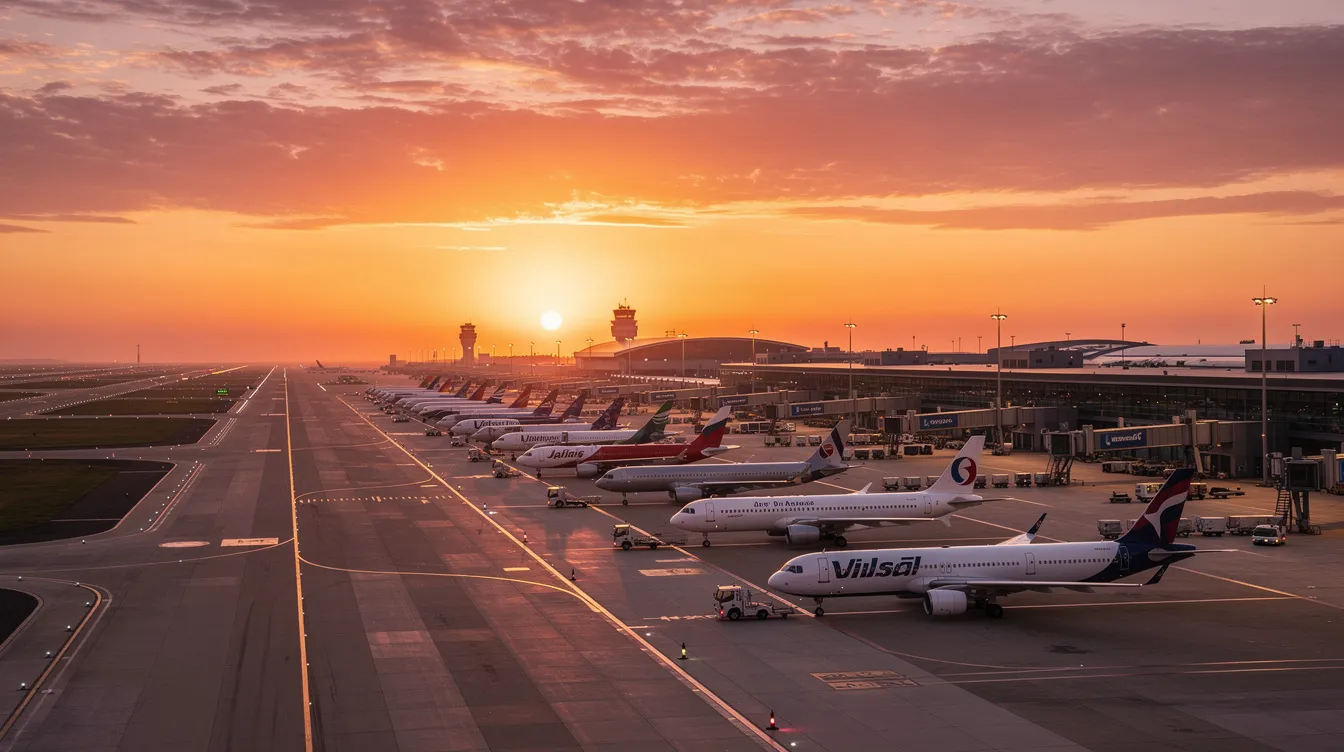
Consider two travelers flying London to Barcelona. One books British Airways; the other books Ryanair.
The British Airways passenger gets a seat assignment at booking, a checked bag included in the fare, complimentary meals and drinks onboard, and access to the carrier's frequent flyer program. Airlines provide in-flight services including meals, entertainment, and Wi-Fi, and ffull-servicecarriers bundle these into the ticket price. The flight departs from Heathrow, a primary hub airport with rail connections to central London.
The Ryanair passenger pays a base fare that may be one-third the price but adds fees for a checked bag, seat selection, and priority boarding. Food and beverages are sold onboard at retail prices. The flight may depart from Stansted, 40 miles northeast of central London, adding ground transit time.
A comparable split exists in the U.S. American Airlines on Dallas to Chicago offers multiple cabin classes, lounge access for premium passengers, and alliance benefits through Oneworld. Southwest Airlines on the same route offers open seating and two free checked bags but no assigned seats, no first class, and no global alliance partnership.
For business travelers who value flexibility and comfort, full service airlines or premium cabins remain the default commercial choice. Leisure travelers with flexible schedules often prioritize the lower base fare of low-cost carriers.
A third option exists: private jets and business aviation. For travelers who value time and privacy more than either cabin service variation, a charter flight or jet card membership eliminates the tradeoffs entirely. No security lines, no gate changes, no middle seats.
Comparison Table: Low Cost vs Full Service Airlines
Feature | Full Service Airlines | Low Cost Airlines |
|---|
Base Fare | Higher, includes amenities | Lower, bare minimum |
Seat Assignment | Included at booking | Extra fee |
Checked Baggage | Included | Extra fee |
Meals/Drinks | Complimentary | Extra fee |
Frequent Flyer | Loyalty programs, upgrades | Limited or none |
Airport Used | Major hubs | Often secondary airports |
Cabin Classes | Multiple (economy, business, first) | Usually one class |
Onboard Services | Entertainment, Wi-Fi, etc. | Minimal or none |
Boarding | Assigned gate, priority for premium | Priority boarding for fee |
Route Networks, Hubs, and Air Traffic Patterns
Two dominant route structures shape global air travel:
Hub-and-spoke: Passengers fly from a spoke city to a hub airport, then connect to their final destination via another spoke. Delta's hub at Atlanta handles over 1,000 departures daily; Emirates at Dubai International Airport connects passengers from over 150 destinations worldwide.
Point-to-point: Passengers fly directly between two cities without connecting. Low-cost airlines favor this model; Southwest Airlines built its network around nonstop direct flights between city pairs.
Network airlines rely on hubs because they consolidate demand from many small markets into high-frequency trunk routes. But hubs also create bottlenecks. A thunderstorm over Dallas/Fort Worth (American Airlines' hub) can cascade delays through the airline's entire network.
Regional airlines feed hubs by operating short routes from secondary markets. Low-cost airlines bypass hubs by operating point-to-point between secondary airports, reducing air traffic congestion exposure.
Private jet and business aviation operators take a different approach entirely: direct routing between smaller airports. A BlackJet member flying from Teterboro (outside New York City) to Nantucket avoids JFK's congestion and LaGuardia's slot restrictions, arriving at an airfield minutes from their destination.
National Airlines, Flag Carriers, and Government Roles
A "flag carrier" is a national airline historically representing a country's brand and international connectivity. Air France for France, British Airways for the United Kingdom, Japan Airlines for Japan, Emirates and Etihad for the UAE; these carriers often received government support in their founding decades.
Many European airlines were state-owned until waves of privatization and deregulation began in the late 1970s (U.S. Airline Deregulation Act of 1978) and continued through the 1990s and 2000s in Europe and Asia. The European Union pushed for open skies within its member states, forcing formerly protected flag carriers to compete on price and service with low-cost carriers and foreign airlines.
Government involvement persists. During the COVID-19 crisis, governments provided billions in subsidies and emergency loans to national airlines: Lufthansa received €9 billion from Germany, Air France-KLM received €10.4 billion in French and Dutch support, and US airlines received over $50 billion through the CARES Act.
In liberalized markets, national airlines must compete head-to-head with low-cost airlines, foreign carriers, and other full-service carriers on overlapping routes. Government support remains a subject of international airline industry debate, particularly in the Middle East, where state-backed carriers like Emirates and Qatar Airways face accusations of unfair competitive advantage from US airlines and European airlines alike.
The Rise and Impact of Low-Cost Airlines
Southwest Airlines launched its first flights in 1971, flying three routes within Texas with a simple proposition: low fares, frequent flights, no assigned seats. That model became the template for low-cost carriers worldwide.
Ryanair adopted and intensified the concept in Europe beginning in the 1990s, using secondary airports (London Stansted, Frankfurt-Hahn, Paris Beauvais) and aggressive cost-cutting to offer fares below £20 on some routes. EasyJet followed a similar path. By the mid-2000s, low-cost airlines accounted for over 30% of intra-European traffic.
In Asia, carriers like AirAsia (founded 2001) and IndiGo (founded 2006) applied the LCC model to rapidly growing markets. In Latin America, GOL and Viva Aerobus filled a similar niche.
The impact on legacy carriers was structural. US Airways merged with American Airlines in part because competitive pressure from low-cost carriers squeezed margins on domestic routes. Delta, United, and American all introduced "basic economy" fare classes, stripped-down tickets designed to match LCC pricing on price-sensitive routes.
Low-cost airlines changed pricing expectations across the airline business, driving fares down and making global air travel accessible to hundreds of millions of people who previously could not afford to fly. By the 2020s, LCCs and ULCCs held substantial domestic market share in the U.S., Europe, and Southeast Asia.
Safety, Regulation, and Certification in the Airline Industry
Aviation has the strongest safety record of any mass-transit mode. In 2017, airlines carried 4.1 billion passengers safely, and the International Civil Aviation Organization sets global safety standards that every signatory nation must implement.
Airlines must comply with strict regulatory and safety standards enforced by national regulators:
The Federal Aviation Administration: Governs all U.S. airline operations, covering aircraft certification, pilot licensing, maintenance standards, and operational procedures.
The European Union Aviation Safety Agency (EASA): Performs the equivalent role across EU member states.
Major airlines: Invest heavily in safety training and fleet modernization, with mandatory recurrent simulator training for pilots and continuous airworthiness programs for aircraft.
Commercial airlines operate under Part 121 of the FAA's regulations (scheduled carriers) or Part 135 (charter and on-demand operators). Airlines must comply with FAA Part 135 certification for safety when operating charter services, including private jet charter.
In business aviation, safety depends heavily on the operator. Third-party auditing fills a critical verification role. ARGUS rates operators at Gold, Platinum, and Platinum Elite levels; the Platinum Elite rating requires captains with at least 5,000 flight hours, full on-site audits, and active safety management systems. Wyvern Wingman certification involves periodic two-day on-site audits and per-flight crew and aircraft verification. IS-BAO (International Standard for Business Aircraft Operations) aligns with ICAO standards and certifies operators in three stages, with Stage 3 representing the highest maturity of safety culture.
ARGUS and Wyvern provide third-party safety audits for operators that go beyond the regulatory baseline. BlackJet partners only with operators holding these elevated certifications, ensuring that private jet safety matches or exceeds the standards of scheduled commercial aviation.
Sustainability and the Airline Sector's Environmental Impact
Aviation contributes approximately 1.6% of global greenhouse gas emissions annually. While that figure is modest relative to road transport or power generation, the airline sector faces growing environmental scrutiny because its emissions are rising as air travel expands.
Key data points frame the challenge:
CO2 emissions per passenger: On a 3,200 km flight, roughly 353 kg.
EU aviation emissions: Increased by 87% from 1990 to 2006, driven by rapid growth in European airlines' capacity and passenger numbers.
Private aviation emissions: Rose 46% from 2019 to 2023, totaling at least 15.6 million tonnes of CO2 from the global fleet of nearly 26,000 private aircraft.
Mitigation strategies are advancing across both commercial and business aviation:
Fleet renewal: New-generation aircraft (Airbus A321neo, Boeing 787) burn 15-25% less fuel per seat than the models they replace.
Sustainable Aviation Fuel (SAF): Airlines are investing in sustainable aviation fuel to reduce emissions. Boeing estimates biofuels could reduce flight-related emissions by 60-80% on a lifecycle basis. Scalability and distribution remain limiting factors.
Carbon offsetting and CORSIA: ICAO's Carbon Offsetting and Reduction Scheme for International Aviation requires airlines to offset emissions growth on international routes above a 2019 baseline.
Industry targets: IATA member airlines committed to net-zero carbon emissions by 2050.
In private aviation, the per-passenger emissions footprint is higher due to fewer occupants per flight. BlackJet addresses this directly: every jet card and charter flight includes automatic, verified carbon offsets so members fly carbon neutral without extra steps or added cost, even for more economical options among the cheapest private aircraft. Where available, SAF is integrated to further reduce lifecycle emissions.
Technology in Airline Operations and Passenger Experience
Passenger-Facing Technology
Paper tickets gave way to e-tickets in the early 2000s. Mobile boarding passes replaced printed ones for most airlines by the mid-2010s. Biometric boarding (facial recognition at gates) is now deployed at dozens of airports worldwide.
Skyscanner launched in 2002 as a flight comparison tool, allowing travelers to search fares across hundreds of airlines. Kayak was founded in 2004 and tracks flight prices across carriers and dates. Expedia connects with global distribution systems for flight data, and Travelocity was an innovator in online travel ticket sales during the late 1990s. These platforms transformed how passengers discover and buy airline tickets.
Airline apps now handle booking, real-time flight updates, seat selection, in-flight Wi-Fi access, and loyalty program management from a single interface.
Behind-the-Scenes Technology
Revenue management and route planning rely on big data, AI, and predictive analytics. Airlines forecast demand by route, season, and even day of the week, using machine learning models to set prices and allocate crew.
Private Jet Technology Platforms
Private jet technology platforms serve a parallel function. BlackJet offers 24/7 digital booking tools, real-time flight availability, and trip management features that mirror or surpass airline app convenience for private travel. The difference: instead of choosing from published flight schedules, a member requests a departure time and route, and the platform confirms aircraft and crew.
Airline Jobs and Careers Within the Airline Industry
The airline sector supports an enormous variety of careers beyond the cockpit:
Flight operations: Pilots, cabin crew, dispatchers
Maintenance: Aircraft mechanics, avionics technicians, engineers
Ground operations: Ramp agents, baggage handlers, gate agents
Commercial roles: Revenue management analysts, marketing teams, airport lounge staff
Corporate functions: Finance, legal, HR, IT, sustainability officers
Career paths differ by airline type. Full service carriers offer international route networks and long-haul flying; low-cost airlines often feature rapid-cycle domestic flights with faster upgrade timelines for pilots. Regional airlines serve as a common entry point for new commercial pilots building flight hours.
Business aviation and private jet operators offer alternative career opportunities. Roles tend to emphasize high-touch passenger service, bespoke flight planning, and close relationships with repeat clients. A cabin attendant on a private jet handles five passengers rather than 180, and the service expectations reflect that ratio, which aligns with the specialized nature of private plane stewardess jobs.
Business Aviation and Private Jets: Beyond Traditional Airlines
Business aviation is a parallel segment to commercial airlines, serving corporations, high-net-worth individuals, and government officials who need air transport on their terms rather than on a published schedule, within a global fleet of tens of thousands of private jets.
Access models range from full aircraft ownership to fractional shares, on-demand charter, and jet card memberships. Each model trades off cost, flexibility, and commitment, and understanding jet card pricing structures helps travelers choose the right balance of cost and flexibility:
Whole ownership: Highest control, highest fixed cost ($3-5 million per year for a midsize jet before flight hours)
Fractional ownership: Purchasing a share (1/8 to 1/2) of a specific aircraft; guaranteed access, lower capital than full ownership, but still a multi-year commitment
On-demand charter: Booking individual flights as needed; maximum flexibility but variable pricing and availability
Jet cards: Pre-purchasing a block of flight hours (e.g., 25 or 50 hours) at locked-in hourly rates, with guaranteed availability and predictable costs
Key advantages vs. airlines: customized departure times, the ability to use smaller airports closer to final destinations, complete privacy, and the ability to reach multiple cities in a single day.
Consider a CEO who needs to visit manufacturing facilities in Wichita, Tulsa, and Little Rock in one day. Commercial airline connections between those three cities would require layovers and likely an overnight stay. With private air flights on the best small private aircraft for the mission, the CEO departs at 7:00 AM, completes all three site visits, and returns home by 8:00 PM.
A survey of over 1,000 private aviation users found respondents expected to fly an average of 42.7 private flight hours over the next 12 months, and 95.5% of those who began flying privately since 2020 continued to do so, making it essential to understand jet card cost per hour when evaluating long-term private travel budgets.
How Private Jets and Airlines Complement Each Other
Many high-value travelers combine airline and private jet flights within a single trip. This hybrid strategy uses full-service carriers or low cost airlines for long-haul trunk routes and private jets for regional or last-mile legs.
A specific example: a London-based investor flies American Airlines business class from Heathrow to New York JFK (a well-served route with competitive fares and flatbed seats). On arrival, instead of connecting through a commercial airline to reach a private equity portfolio company in Burlington, Vermont, the investor boards a private light jet from Teterboro, landing 50 minutes later at Burlington International, a 10-minute drive from the meeting.
This combination reduces total trip time, increases productivity, and provides access to airports with no scheduled airline service.
BlackJet members regularly integrate airline and private flights in a single itinerary. BlackJet manages the private segments, including aircraft selection, crew coordination, and ground logistics, while the member handles (or has an assistant handle) the commercial airline booking.
Where BlackJet Fits in the Airline and Aviation Landscape
BlackJet is not an airline. It is a private aviation provider operating within the broader aviation sector alongside airlines, offering a fundamentally different travel product.
The BlackJet Jet Card model works as follows: members pre-purchase blocks of flight time, such as 25 hours or 50 hours, usable across light, midsize, and large cabin jets. Hourly rates are locked in at purchase, removing the price volatility of on-demand charter and the capital commitment of aircraft ownership. For context, a 25-hour light jet card typically costs in the range of $199,500, while a heavy jet card for the same hours runs approximately $349,500; pricing that reflects full costs including fuel, crew, maintenance, and repositioning.
Key advantages vs. airline premium cabins and first class:
Door-to-door time savings: 2-4 hours per trip by departing from smaller airports and avoiding terminal congestion
No hub connections, security lines, or gate changes
Full control over schedule and passenger list
Access to 5,000+ airports in the U.S. alone: Compared to roughly 500 airports with scheduled airline service
Safety credentials underpin the offering. BlackJet partners only with operators holding ARGUS Platinum or Platinum Elite ratings, Wyvern Wingman certification, or IS-BAO Stage 3 accreditation. Every operator must also hold FAA Part 135 certification at minimum.
Sustainability is integrated by design. Every BlackJet flight is carbon neutral through automatic, verified carbon offsets included in the membership, with SAF options where available.
On the technology side, BlackJet provides 24/7 digital booking tools and real-time support, giving members the same instant-access convenience they expect from the best airline apps, applied to private aviation.
Frequently Asked Questions (FAQs) About Airlines and Private Jets
What is the difference between an airline and a private jet provider?
An airline operates scheduled or non-scheduled flights carrying passengers or cargo on published routes, often serving hundreds of travelers per flight. Private jet providers offer on-demand, non-scheduled flights with full aircraft access, personalized service, and flexible scheduling, typically catering to individuals or small groups.
How do full service carriers differ from low cost airlines?
Full service carriers offer multiple cabin classes, inclusive amenities like meals and baggage, and global route networks. Low cost airlines focus on minimizing operational costs to offer lower fares, charging extra for services such as baggage and seat selection.
What types of airlines exist?
Airlines are commonly categorized as major (international), national, regional, charter, and cargo airlines, each with distinct operational scales, fleet types, and service models.
Are jet cards more cost-effective than owning a private jet?
For travelers flying fewer than 200-300 hours annually, jet cards provide predictable hourly rates without the fixed costs and management burdens of ownership, making them more cost-effective.
How do airlines generate revenue?
Airlines earn revenue from passenger fares, cargo transport, and ancillary services such as baggage fees, seat upgrades, and loyalty program partnerships.
What safety standards do airlines and private jet operators follow?
Commercial airlines comply with strict regulatory standards like FAA Part 121, while private jet operators follow Part 135 certification and often pursue additional third-party safety audits such as ARGUS and WYVERN.
How is sustainability addressed in aviation?
Airlines invest in sustainable aviation fuel, fleet modernization, carbon offset programs, and operational efficiencies. Private aviation providers like BlackJet include verified carbon offsets automatically for all flights, ensuring carbon-neutral travel.
Can I combine commercial airline travel with private jet segments?
Yes, many travelers use commercial airlines for long-haul routes and private jets for regional or last-mile legs, optimizing time, convenience, and comfort.
What technology advances have impacted airline booking?
Online platforms like Skyscanner, Kayak, and Expedia revolutionized flight search and booking. Airlines also use dynamic pricing algorithms and mobile apps to enhance passenger experience.
How do airlines manage route networks?
Major airlines use hub-and-spoke models to consolidate traffic through central airports, while low-cost carriers often operate point-to-point routes. Regional airlines feed passengers into hubs, and private jets fly direct between smaller airports.
Explore how BlackJet’s Jet Card program can complement your airline travel for seamless, safe, and sustainable journeys.
Choosing the Right Option: Airlines vs Private Jets for Your Travel Strategy
The right choice between airlines and private jets depends on route length, group size, schedule demands, security needs, and total trip time relative to ticket price.
Scenario 1: Corporate roadshow, four cities in two days. A CFO and IR team need to visit institutional investors in Boston, Philadelphia, Charlotte, and Atlanta over 48 hours. Commercial airline connections would require at least one overnight and risk delays cascading through tight connection windows. A midsize jet departing on the CFO's schedule completes all four stops without a single airline boarding pass.
Scenario 2: Family holiday to a remote resort. A family of five flying from Chicago to a Caribbean island with limited scheduled airline service faces connections through Miami or Fort Lauderdale, plus a short inter-island commuter flight. A direct charter flight on a large cabin jet eliminates the layovers and lands at the resort airstrip.
Scenario 3: Urgent same-day site visit. A construction executive in Denver receives word of a problem at a project site in Bozeman, Montana. The next commercial flight involves a connection through Salt Lake City and arrives five hours later. A light jet from Centennial Airport reaches Bozeman in 90 minutes.
For frequent business or high-end leisure travelers flying roughly 25 to 200 hours per year, a jet card often delivers better economics and operational predictability than ad-hoc charter, while avoiding the capital and management burden of owning an aircraft; options like the BlackJet 25+ Hour Jet Card are designed for this use case. Below 25 hours annually, on-demand charter may suffice. Above 200-300 hours, fractional ownership or whole ownership becomes worth evaluating.
Airlines remain the most efficient option for long-haul trunk routes (New York to London, Los Angeles to Tokyo) where scheduled flights offer competitive business class products and the volume of airline service keeps pricing reasonable. The strategic advantage of private aviation lies in the benefits of private jet travel on regional routes, multi-stop itineraries, and time-critical trips where airline schedules do not align with the traveler's needs.
Explore how a BlackJet Jet Card can complement your airline travel and reshape how you move around the world. When your schedule sets the pace, commercial constraints become optional.


 Sign up with google
 Sign up with Apple