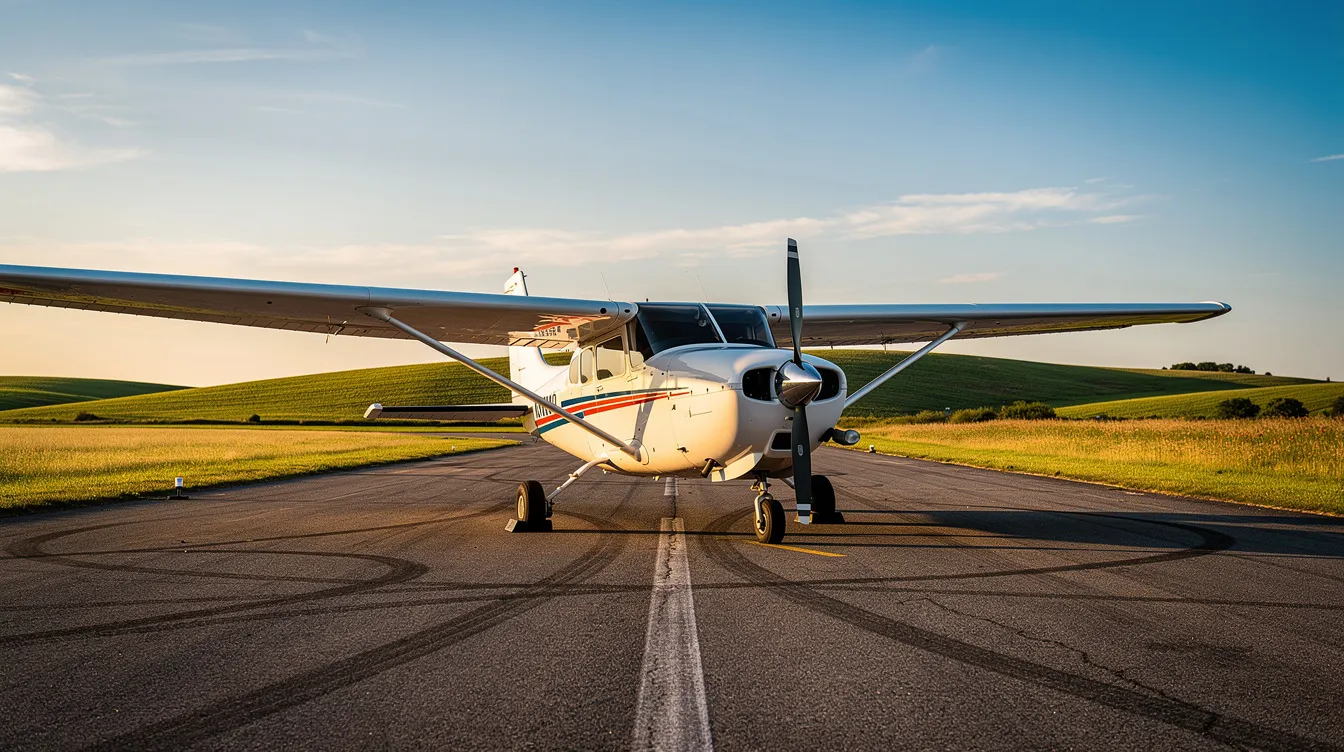
Most people who spot a compact airplane overhead or taxiing at a regional airport share the same question: what is that small plane called? The answer depends on the engine, the mission, and how you plan to fly. This guide breaks down every category — from classic piston trainers to sleek personal jets — and shows how each one fits into private aviation today.
What Is A "Small Plane" Called? (Answer The Query Fast)
In everyday conversation, most small planes are called light aircraft. The term covers a wide range of fixed-wing aircraft used for personal flying, business travel, training, and aerial work. Within that umbrella, pilots and industry professionals use more specific names based on powerplant and size: single engine piston, turboprop, very light jet, and light jet.
From a regulatory standpoint, the Federal Aviation Administration defines a small aircraft as having a maximum takeoff weight of 12,500 pounds or less. That single threshold captures everything from a two-seat trainer to a pressurized turboprop carrying nine executives.
Here are the names you will encounter most often, each tied to a recognizable aircraft:
Single-engine piston - Cessna 172 Skyhawk, Cirrus SR22
Single-engine turboprop - Pilatus PC 12, Cessna Caravan
Very light jet (VLJ) - Cirrus Vision Jet SF50
Light jet - HondaJet Elite II, Embraer Phenom 300
These aircraft are the backbone of general aviation and much of the private jet world, clearly distinct from the large commercial airliners used in scheduled commercial flights.
Official Definitions: Small Airplane vs Light Aircraft vs General Aviation
The phrase small airplane is a regulatory term. Under FAA Part 23 certification standards, it applies to any airplane with a maximum certificated takeoff weight at or below 12,500 lb (5,670 kg). This covers normal, utility, and acrobatic categories.
Light aircraft is a broader, commonly used label. While it generally aligns with the same weight ceiling, it is more of an industry and cultural descriptor than a legal one.
Key distinctions worth knowing:
Small airplane - FAA-defined weight class; regulatory and certification context.
Light aircraft - industry shorthand for small airplanes that carry few passengers, typically 2–10 seats, used for personal, business, flight training, and aerial work.
General aviation (GA) - all non-military, non-scheduled-airline civil flying. General aviation encompasses nearly all civilian flying outside scheduled commercial airline operations, including everything from a Cessna 172 to the cheapest private jet options and high-end business jets operating under charter rules.
Light Sport Aircraft (LSA) - a category of simple, lightweight, and easy-to-fly aircraft with even lower weight limits, aimed at recreational flying.
Ultralight aircraft - extremely lightweight and often hold one or two people, operating under separate rules with fewer certification requirements.
While helicopters and small rotorcraft can also be classified as light aircraft, this article focuses mainly on fixed-wing airplanes - the types most travelers, students, and private flyers will encounter.
Common Names For Small Planes You'll Hear Pilots Use
Walk into any fixed-base operator (FBO) lounge, and you will hear specific aircraft type labels rather than the generic word "plane." Here are the terms pilots actually use and what they mean:
Piston single - a single engine, piston-powered airplane. The workhorse of flight training and recreational flying. Examples: Cessna 172, Piper Cherokee, Diamond DA40.
Piston twin - twin piston engines for added redundancy and speed. Example: Beechcraft Baron.
Turboprop - a turbine engine turning a propeller; faster, higher-flying, and often pressurized. Example: Pilatus PC 12.
Very light jet (VLJ) - a compact jet seating 4–6, designed forsingle-pilott operation and short regional hops. Example: Cirrus Vision Jet.
Light jet - a step up in range and speed from VLJs, seating 6–8 with professional grade cabins and often appearing among the cheapest private aircraft for cost-conscious travelers. Example: HondaJet Elite II.
Business jet - a broader umbrella that includes VLJs and light jets as well as midsize and large-cabin types used for corporate travel.
Many people casually call any small piston airplane a "Cessna" even when it might be a Piper Cherokee or a Diamond DA40. Similarly, "jet" gets applied loosely to any turbine-powered plane.
Sample phrases you might hear: "We're flying up in a light aircraft this weekend" or "We booked a light jet instead of a big commercial airliner." The proper name always pairs the manufacturer with the model — for example, "Cessna 172 Skyhawk" or "Cirrus Vision Jet."
Light Aircraft: The Core Category Of Small Planes
Light aircraft refers to small airplanes that carry few passengers — typically 2–10 seats — with a maximum takeoff weight of 12,500 lb or less. They are the most numerous aircraft in the sky and the foundation of general aviation worldwide.
Common roles include:
Personal and family travel - weekend trips, visiting relatives, flying to vacation homes.
Flight training - where nearly every pilot earns a pilot's license.
Aerial photography and survey - cameras and sensors replace passengers, though many travelers instead focus on how to buy a seat on a private jet for point-to-point trips.
Medical supplies delivery - reaching remote communities faster than ground transport.
Bush flying and short-field operations - small aircraft can operate from runways as short as 3,000 feet, and some turboprops handle even shorter strips, which is important context when evaluating whether a 50-hour jet card program matches your typical routes.
Short-range business trips - efficient regional travel without airline connections, especially for executives weighing options like a 100-hour jet card cost structure against ad-hoc charter.
Compared with large commercial airliners, light aircraft are smaller, slower, and carry far fewer people. Cruise speed for piston aircraft runs 120–200 knots versus 450–500 knots for a Boeing 737. However, light aircraft are often more fuel-efficient per hour, though fuel consumption per seat can be higher than a fully loaded airliner due to scale.
Most Popular Small Plane Example: Cessna 172 Skyhawk
When someone asks "what is that small plane called?" at a local airport, the answer is almost always the Cessna 172 Skyhawk. The Cessna 172 is the most produced aircraft, with over 44,000 built since the mid-1950s, and it remains in production in 2026.
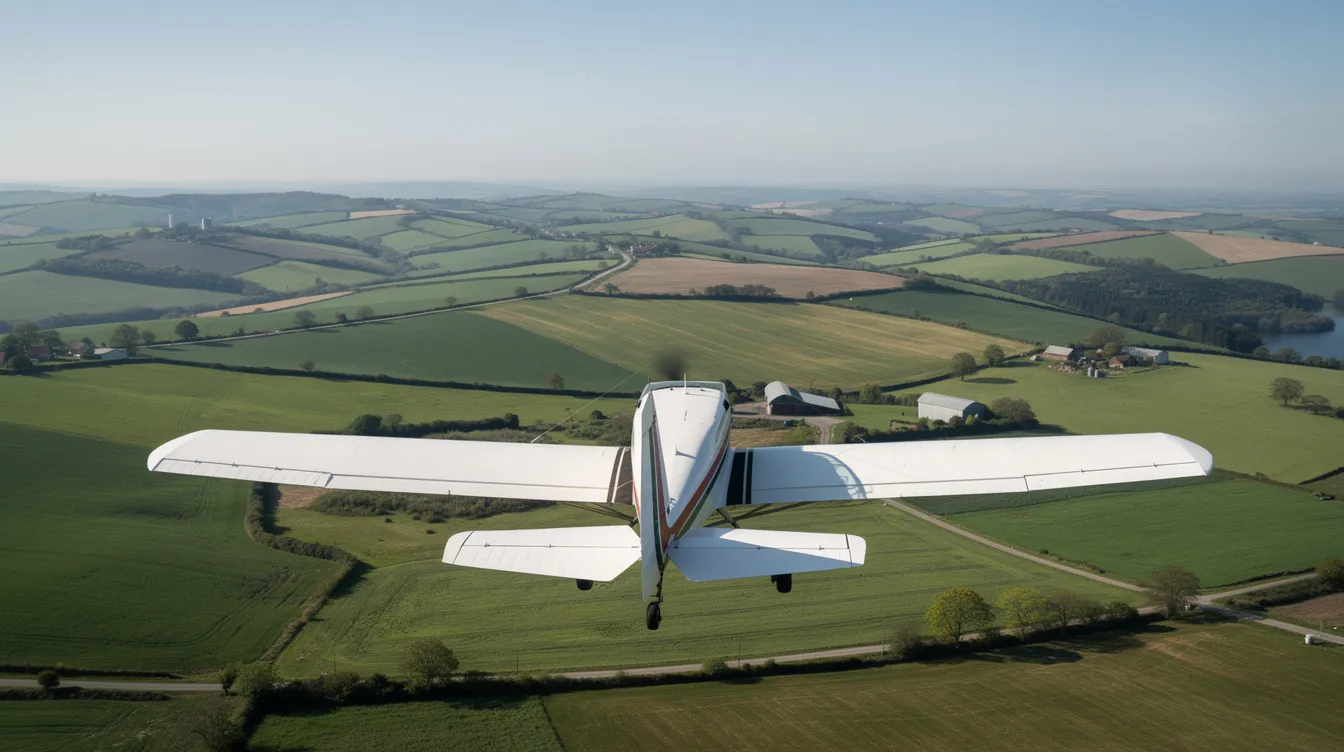
Key facts about the Cessna 172 Skyhawk:
Seats: Piston aircraft like the Cessna 172 seat 2–4 passengers (one pilot plus up to three).
Engine: Single-engine piston, naturally aspirated or fuel-injected.
Cruise speed: Approximately 120 knots (about 138 mph), varying by model.
Range: Roughly 600–700 nautical miles with standard fuel.
Role: Dominates flight training and recreational flying worldwide.
The 172's significance extends beyond numbers. It is the airplane most student pilots learn in, the benchmark against which other aircraft in the small private aircraft category are measured, and a cultural icon of general aviation. Its high-wing design, forgiving flight characteristics, and simple systems make it the standard entry point into flying.
Other Well-Known Small Planes: From Piper Cherokee To Pilatus PC 12
The "small plane" label covers a surprisingly wide range of aircraft design philosophies. Here are some of the most recognizable names, each serving a different mission:
Piper PA-28 Cherokee - 2–4 seats, single-engine piston, low wing. A direct rival to the Cessna 172 in pilot training and personal travel.
Diamond DA40 NG - 4 seats, single engine, known for fuel efficiency. The Diamond DA40 NG burns approximately 5–6 gallons per hour, making it an owner pilot favorite for cost-conscious flying.
Cirrus SR22 - 4–5 seats, high-performance single piston (~310 hp), cruise speed around 183 KTAS, composite airframe, and equipped with the Cirrus Airframe Parachute System. The best small private aircraft list often features this model.
Beechcraft Bonanza - 4–6 seats, high-performance piston single, long production run, prized for speed and build quality.
Beechcraft Baron - 6 seats, piston twin, faster and more redundant, requiring more advanced pilot training.
Cessna Caravan - single-engine turboprop, 9–14 seats in commuter or cargo layouts, rugged short-field capability for bush and cargo operations.
Pilatus PC 12 - single engine turboprop, 6–9 seats in executive configurations, cruise speed around 290 KTAS, capable of operating from runways as short as 2,500 feet. One of the most versatile modern turboprops in private aviation.
The differences are dramatic. A two-seat trainer and a pressurized turboprop with an executive cabin are both "small planes," but they serve entirely different travelers. Turboprops can operate from runways as short as 2,000 feet, giving them access to airstrips that even some other aircraft cannot reach.
Very Light Jets And Accessible Personal Jets (Cirrus Vision Jet, HondaJet)
Very light jets represent the intersection of jet performance and small-plane accessibility. These are compact business jets typically seating 4–6 passengers, optimized for short to medium regional routes.
Cirrus Vision Jet SF50 - the defining accessible personal jet. Single-engine, 5–7 occupants, cruise speed around 311 KTAS, range approximately 1,200–1,275 nautical miles. Equipped with the CAPS whole airframe parachute system, it brings true jet performance to owner-pilots who step up from piston singles. Very light jets like the Vision Jet seat 4–6 passengers and cruise at 300–400 KTAS.
HondaJet Elite II - twin turbine, cruise speed above 422 KTAS, NBAA IFR range around 1,547 nautical miles, FAA-certified Emergency Autoland, and over-the-wing engine mounts that reduce drag and cabin noise. Factory list price approximately $6.95 million. Frequently seen in premium light jet charter fleets.
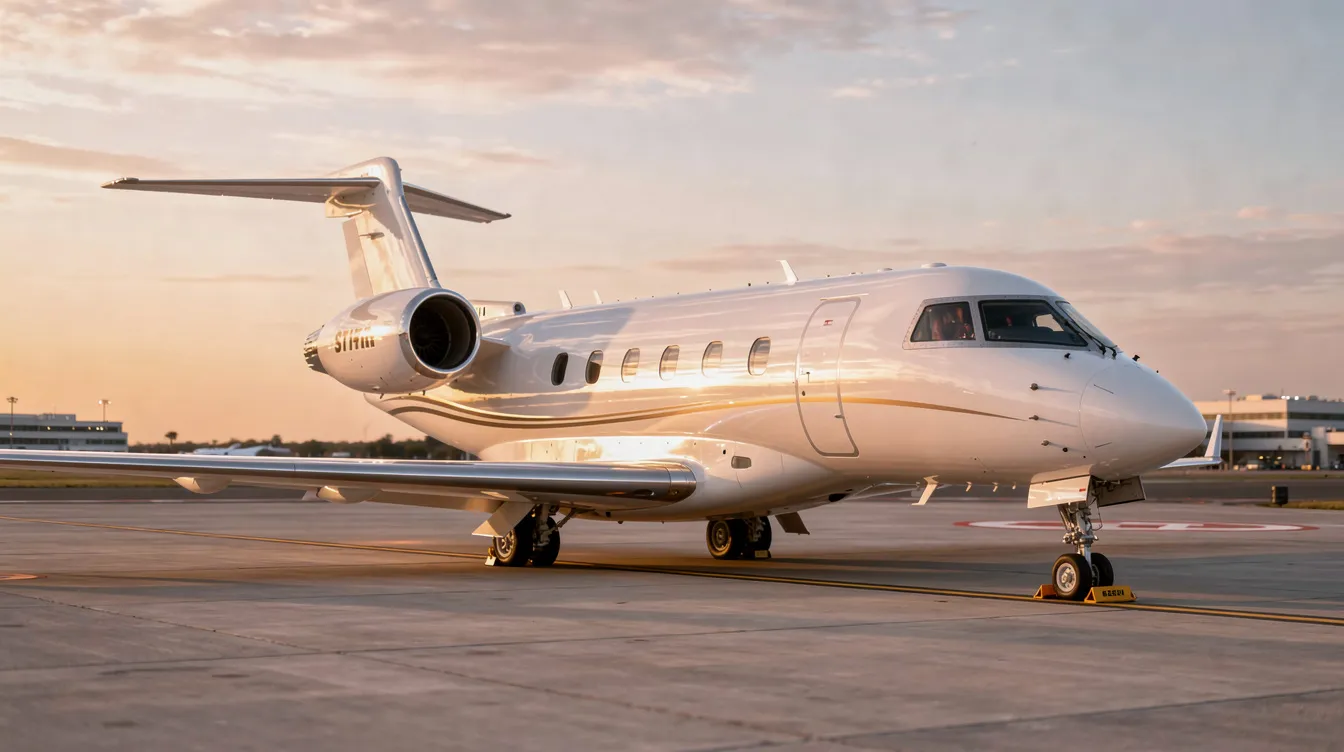
How VLJs differ from pistons and turboprops:
Speed - VLJs cruise 2–3× faster than piston singles.
Altitude - pressurized cabins allow flight above most weather, typically FL280–FL410.
Fuel consumption - significantly higher hourly fuel burn than pistons, but shorter trip times offset the cost on longer missions.
Cabin - while compact, VLJ cabins deliver climate control, noise insulation, and modern avionics closer to traditional business jets than to training airplanes.
How Small Planes Compare To Commercial Airliners
The gap between a small plane and a commercial airliner is vast on paper — yet for the right traveler, the small plane wins on total trip time every time.
Metric | Small Planes | Commercial Airliners |
|---|
Passenger capacity | 2–10 | 100–300+ |
Cruise speed | 120–450 KTAS | 450–500 KTAS |
Airports accessible | 5,000+ in North America | ~500 major hubs |
Ground time (security, boarding) | 10–15 minutes | 1.5–3 hours |
Schedule flexibility | Depart on your timeline | Fixed schedules |
Private aircraft access over 5,000 smaller airports in North America, enabling direct routes that bypass major hubs entirely. Traveling by private jet eliminates security lines and layovers - the two biggest drains on a business traveler's day.
Consider a real-world example: a round trip from New York to Miami. Chartering small aircraft can save 4–6 hours on trips like this compared to commercial aviation when you factor in early airport arrival, potential connections, and taxi time at congested terminals, and similar logic applies when evaluating charter plane costs for 100 passengers on larger group missions. Private jets cut typical business trip times by 50%, turning multi-day commercial itineraries into same-day missions.
The strategic advantage is not raw speed — light jet cruises slightly below an airliner —but total door-to-door time, privacy, and the ability to land closer to your actual destination.
Key Small-Plane Categories By Aircraft Type
For travelers evaluating their options, small private jets and light aircraft fall into four practical categories:
Piston light aircraft - 2–6 seats, cruise 120–200 KTAS, ideal for flight training, family trips, and short hops under 500 nautical miles. Examples: Cessna 172, Cirrus SR22.
Modern turboprops — 10 seats, cruise 260–300 KTAS, pressurized cabins on many models, strong short-field capability. Single-engine turboprops like the Pilatus PC-12 cruise at 260–330 KTAS. Twin turboprops can reach speeds over 450 miles per hour.
Very light jets - 4–6 seats, cruise 300–400 KTAS, single-pilot operation certified, designed for efficient regional travel. Examples: Vision Jet, Eclipse 550.
Light business jets - 6–10 seats, cruise 400–450+ KTAS, longer range, professional-grade cabins. Light jets typically cruise at speeds of 400–450 KTAS. Examples: HondaJet Elite II, Citation CJ4.
All of these can be generically called "small planes," but aviation professionals tend to use the specific aircraft type. Some larger jets exceed light aircraft weight thresholds and sit outside the "small plane" scope, even though they are privately operated. For a deeper comparison, see our guide to the top 10 cheapest private jets.
Small Planes In Business Aviation And Private Travel
Light aircraft, turboprops, VLJs, and light jets form the entry and mid-tier of business jets used for corporate and high-net-worth travel. For routes where airline schedules are poor or require connections, these aircraft serve as precise replacements for inefficient commercial flights.
Example scenario: A four-person executive team flying New York to Chicago (~700 nm). On a light jet, the door-to-door experience takes roughly 4–5 hours - including ground transport at both ends. The commercial alternative, with check-in, security, potential delays, and taxi from O'Hare, stretches to 8–10 hours. Private flights can save 4–6 hours per round trip on routes like this.
Advantages beyond speed:
Privacy - confidential conversations and work happen freely in-flight without seatmates.
Flexibility - depart when ready, adjust schedules in real time.
Access - land at secondary airports closer to your meeting, hotel, or event.
Productivity - a 90-minute flight replaces a lost travel day, freeing time for other aircraft to serve purposes like client meetings or family.
These benefits explain why aircraft availability and on-demand access matter so much to frequent travelers. The question is not whether to fly privately, but how to access it efficiently.
Safety And Maintenance: Are Small Planes Safe?
Safety depends on operator quality, maintenance discipline, pilot training, and weather decision-making - not aircraft size alone. Modern small aircraft meet rigorous safety standards and regulations at every level of certification.
Key safety factors:
Operator standards - charter flights operated under Part 135 rules follow strict inspection cycles, crew training requirements, and operational procedures. Operators must meet ARGUS, Wyvern, and IS-BAO certification standards to fly in premium charter fleets.
Pilot training - pilots on charters complete recurrent training every 6–12 months, covering emergency procedures, weather decision-making, and aircraft-specific systems.
Maintenance cycles - annual inspections check airframe structure, corrosion, engine health, and avionics. Engines undergo scheduled overhauls at manufacturer-specified intervals.
Safety technology - glass cockpits, synthetic vision, terrain awareness and warning systems (TAWS), traffic alerts, and envelope protection are now standard in many small planes.
Whole airframe parachutes - the Cirrus Airframe Parachute System has saved over 240 lives since introduction. Whole airframe parachutes have achieved 95%+ survival rates in emergencies, making systems like the CAPS whole airframe parachute a defining safety feature on aircraft like the Cirrus SR22 and Vision Jet.
Emergency autoland - the HondaJet Elite II is FAA-certified with emergency autoland capability, a feature once exclusive to larger jets.
According to FAA safety data, the GA fatal accident rate in FY 2024 reached approximately 0.68 per 100,000 flight hours - the lowest since records began. For travelers concerned about safety, the combination of professional crews, certified operators, and modern safety technology makes well-operated small planes a sound choice. Learn more about BlackJet's safety standards and how they apply even on regional routes like private jet charters in Karachi.
Performance Basics: Cruise Speed, Range, And Fuel Consumption
Understanding three numbers —cruise speed, range, and fuel consumption —elps you match the appropriate aircraft to any mission.
Cruise speed is the typical speed an aircraft maintains at altitude on longer legs:
Piston singles: ~120–180 KTAS (e.g., Cirrus SR22 at 183 KTAS)
Turboprops: ~260–300 KTAS (e.g., Pilatus PC 12 NGX at 290 KTAS)
VLJs and light jets: ~300–450 KTAS (e.g., HondaJet Elite II at 422 KTAS)
Range depends on fuel capacity, payload, and weather:
Piston: 500–1,—00 nautical miles (SR22 can reach ~1,200 nm at reduced power)
Turboprops: 1,500–1,800 nm (PC-12 NGX with reduced payload)
Light jets: 1,300–1,700 nm
Fuel consumption varies by powerplant:
Piston singles burn avgas at relatively lower fuel burn - the Diamond DA40 NG burns approximately 5–6 gallons per hour, while a Cirrus SR22 burns ~14–16 gal/hr.
Turboprops burn Jet-A at higher hourly rates but cover more ground faster. Modern turboprops burn 20–30% less fuel than older jets, making them an efficient performance sweet spot.
Jets burn more fuel per hour but offer lower fuel burn per nautical mile at altitude, and trip times are dramatically shorter.
Example leg: Dallas to Santa Fe (~500 nm). A piston like the SR22 handles it nonstop in about 3 hours of flight time. A light jet like the HondaJet covers it in roughly 75 minutes. The commercial alternative, with connections through a major hub, often stretches beyond 5–6 hours.
How To Access Small Planes: Charter, Jet Cards, And Ownership
Non-pilots typically access small planes through three models, each supported by BlackJet's premium private jet card programs:
Full ownership:
Makes financial sense at 200–300+ flight hours per year. Below that threshold, the fixed costs -hangar, crew, insurance, maintenance, regulatory compliance - —reate ownership complexity that outweighs the benefits.
You are locked into one specific aircraft type, even when a different plane would better suit a given trip.
On-demand charter:
Jet card membership programs:
Prepaid blocks of flight time —jet cards typically require a minimum of 25–50 flight hours —with fixed or predictable pricing per aircraft category.
Guaranteed aircraft availability within set notice windows, simplified digital booking, and no logistics burden.
The most efficient access model for travelers flying 50–200 hours annually who want consistent pricing without the overhead of ownership, especially once you understand jet card membership pricing and cost structures.
Understanding what a jet card is, how jet cards work, and the nuances of jet card pricing, costs, and benefits is the first step toward smarter private travel.
BlackJet Perspective: Using Small Planes Strategically With A Jet Card
BlackJet's jet card model gives members access to an optimized mix of light aircraft, turboprops, and business jets matched to each trip - —rather than tying you to a single aircraft type. The result is efficient performance across every mission profile.
How it works in practice:
Right-sized aircraft selection - a turboprop for a 400 nm hop to a mountain airstrip, a light jet for a 1,200 nm nonstop executive day trip. BlackJet matches the appropriate aircraft to each leg, optimizing for passenger count, baggage, schedule, and operating costs.
Fixed hourly rates - transparent pricing across cabin and aircraft type categories, with no hidden positioning fees or fuel surcharges on most programs.
24/7 digital booking - request, confirm, and manage flights through BlackJet's platform with real-time support from aviation specialists.
Guaranteed availability - aircraft availability within defined notice windows for both regional and transcontinental missions.
Safety is non-negotiable. BlackJet partners exclusively with operators holding ARGUS, Wyvern, and IS-BAO certifications, and every pilot and maintenance history undergoes rigorous vetting by professional crews and safety teams.
All BlackJet flights are carbon-neutral through verified offsets - —at no extra cost to members. Combined with fuel-efficient aircraft selection and, where available, sustainable aviation fuel, BlackJet aligns private flying with environmental responsibility.
For travelers logging 75–200 hours per year, a BlackJet 25+ Hour Jet Card eliminates ownership complexity while delivering better flexibility and lower operating costs than ad-hoc charter.
Matching Small Plane Types To Real-World Trip Scenarios
The beauty of access models like a jet card is the ability to switch aircraft categories seamlessly. Here are four common scenarios and the aircraft type each calls for:
1. Short 300 nm family weekend (e.g., Los Angeles to Napa Valley)
Aircraft: turboprop or piston single
Cruise speed: ~200–290 KTAS
Flight time: ~1–1.5 hours
Commercial alternative: 4–5 hours including connections and ground transport
2. 700 nm executive day trip (e.g., New York to Chicago)
3. 1,200 nm nonstop regional run (e.g., Miami to Dallas)
Aircraft: light jet or fast turboprop
Cruise speed: ~300–422 KTAS
Flight time: ~3–4 hours nonstop
Key: no fuel stop required, maintaining schedule integrity
4. Remote lodge or short-runway access (e.g., mountain resort or island strip)
Aircraft: Pilatus PC 12 or similar turboprop with short field capability
Runway requirement: as little as 2,000–2,500 feet
Advantage: reach destinations that larger jets and commercial airliners simply cannot serve

Each scenario illustrates why no single aircraft serves every mission - —nd why on-demand access to a curated fleet, rather than owning one plane, is the more strategic advantage for most travelers, particularly for frequent flyers comparing the best jet cards and their benefits.
Synonyms And Related Terms For "Small Plane" (Helpful For Learners And SEO)
If you have been searching for information about small planes, you have likely encountered several overlapping terms. Here is a quick clarification: aircraft naming expanded quickly after World War II, and today these are some of the most common labels:
Broad terms: small airplane, light aircraft, personal aircraft, private plane, prop plane, light aircraft types
Technically specific: single-engine piston, twin turboprops, sisingle-engineurboprop, very light jet, light jet, business jet
Category labels: general aviation aircraft, small private aircraft, personal jet, accessible personal jet
"Private jet" is especially broad —it can describe anything from a Cirrus Vision Jet to a Gulfstream G700, or branded membership offerings like NetJets jet card programs and their costs. When precision matters, using the manufacturer and model (e.g., "Cessna 172 Skyhawk," "HondaJet Elite II") provides clarity.
For anyone comparing specific aircraft models, our guide to the best small airplanes covers other aircraft across every category, while frequent travelers may also explore unlimited private jet flight memberships as an alternative way to access them.
Small Planes, Technology, And Sustainability
Modern avionics and safety systems in small planes now rival features once exclusive to larger business jets and commercial airliners. Glass cockpits with synthetic vision, advanced autopilot, terrain awareness, and even emergency autoland have migrated down to aircraft weighing under 12,500 lb.
On the sustainability front, meaningful progress is underway:
Sustainable aviation fuel (SAF) - SAF availability is projected to reach 10–20% of supply by 2026, and more FBOs are offering blended jet fuel to private operators.
Fuel efficiency by design - innovations like the HondaJet's over-the-wing engine mounts reduce drag and lower fuel burn. Modern turboprops deliver 20–30% lower fuel consumption than older jets of comparable size.
Carbon offset programs —carbon offset programs are standard in private aviation, with verified programs covering emissions from every flight. Green private jet initiatives are no longer niche —they are expected.
Right-sizing - selecting a turboprop instead of an oversized jet for short regional hops is itself a sustainability lever, reducing unnecessary fuel consumption.
BlackJet integrates sustainability by ensuring carbon-neutral flights as standard, aligning private flying in small planes with environmentally conscious values. For travelers who take environmental responsibility seriously, this is no longer optional - it is the baseline.
Frequently Asked Questions About Small Planes
What is a small plane officially called? Regulatory agencies like the FAA use the term "small airplane" for any aircraft with a maximum takeoff weight of 12,500 lb or less. In common usage, these are simply called light aircraft. Specific types include piston singles, turboprops, and very light jets.
How many people can fit in a small plane? Passenger count depends on the aircraft type. Piston singles like the Cessna 172 carry 2–4 passengers. Turboprops like the Pilatus PC 12 seat up to 9 in executive layouts. VLJs carry 4–6, and light jets seat 6–8 with a passenger capacity suited to small teams or families.
Are small planes safe for families and business travelers? Yes, when operated by certified professionals. Modern small aircraft meet rigorous safety standards, and charter operators must hold certifications like ARGUS, Wyvern, and IS-BAO. Features like whole airframe parachutes, synthetic vision, and emergency autoland add layers of protection that did not exist a generation ago.
Can small planes fly in bad weather? Pressurized turboprops and jets can climb above most weather, typically flying at FL250–FL410. Piston singles are more weather-sensitive due to lower altitude ceilings and limited de-icing. Professional pilots on charter flights are trained to make conservative weather decisions, and recurrent training every 6–12 months keeps skills current.
Do small planes have Wi-Fi and business amenities? Many light jets and some turboprops offer Wi-Fi, power outlets, enclosed lavatories, and refreshment centers. VLJs like the HondaJet Elite II feature climate-controlled cabins and quiet interiors designed for productive work. Piston singles and trainers typically do not offer these amenities.
How far can light aircraft fly without stopping for fuel? Range varies widely. Pistons typically cover 500–1,000 nautical miles, turboprops reach 1,500–1,800 nm, and light jets fly 1,300–1,700 nm nonstop, while larger group aircraft designed for up to 50 private jet passengers can cross continents without refueling. Payload and weather conditions always affect actual range.
What is an accessible personal jet like the Cirrus Vision Jet? The Cirrus Vision Jet is a single-engine VLJ seating 5–7, with a cruise speed around 311 KTAS and a range of roughly 1,200 nautical miles. It features the CAPS whole-airframe parachute and is designed for single-pilot operation, making it a truly accessible personal jet for owner-pilots transitioning from pistons to true jet performance.
What is a jet card and how does it relate to small jets? A jet card is a prepaid membership that buys a block of flight hours - typically 25–50 hours -—across specified aircraft categories. Members get fixed pricing, guaranteed availability, and simplified booking without the cost or commitment of owning a plane. It is the most practical way for frequent travelers to access everything from turboprops to light business jets while comparing jet card cost per hour and value. Learn more about 25-hour jet card features and costs.
Conclusion: Understanding Small Planes - And The Easiest Way To Fly Them
Whether the world calls them light aircraft, personal jets, or simply small planes, these aircraft - from the iconic Cessna 172 Skyhawk to the Cirrus Vision Jet and beyond—represent the most flexible way to travel. They turn rigid, time-consuming commercial flights into precise, point-to-point journeys that respect your time and your priorities.
Safety technology, modern avionics, and sustainability commitments are now central to how these aircraft operate, especially within premium, safety-screened charter fleets. The era of viewing small planes as compromises is over. Today, they are strategic tools.
For travelers ready to move beyond commercial airlines, BlackJet's Jet Card programs offer curated access to the right small plane for every trip —with safety, carbon-neutral operations, and seamless booking built in.
Discover how BlackJet can reshape your travel. Explore premium jet access today.
Learn more about the best small private aircraft to understand your options.
Explore the benefits of jet card membership programs for flexible flight access.
Understand the importance of private aviation safety standards in ensuring secure travel.
See how carbon-neutral flights contribute to sustainable aviation.
Discover detailed ssmall-planeripscenarios that match aircraft to your travel needs.


 Sign up with google
 Sign up with Apple