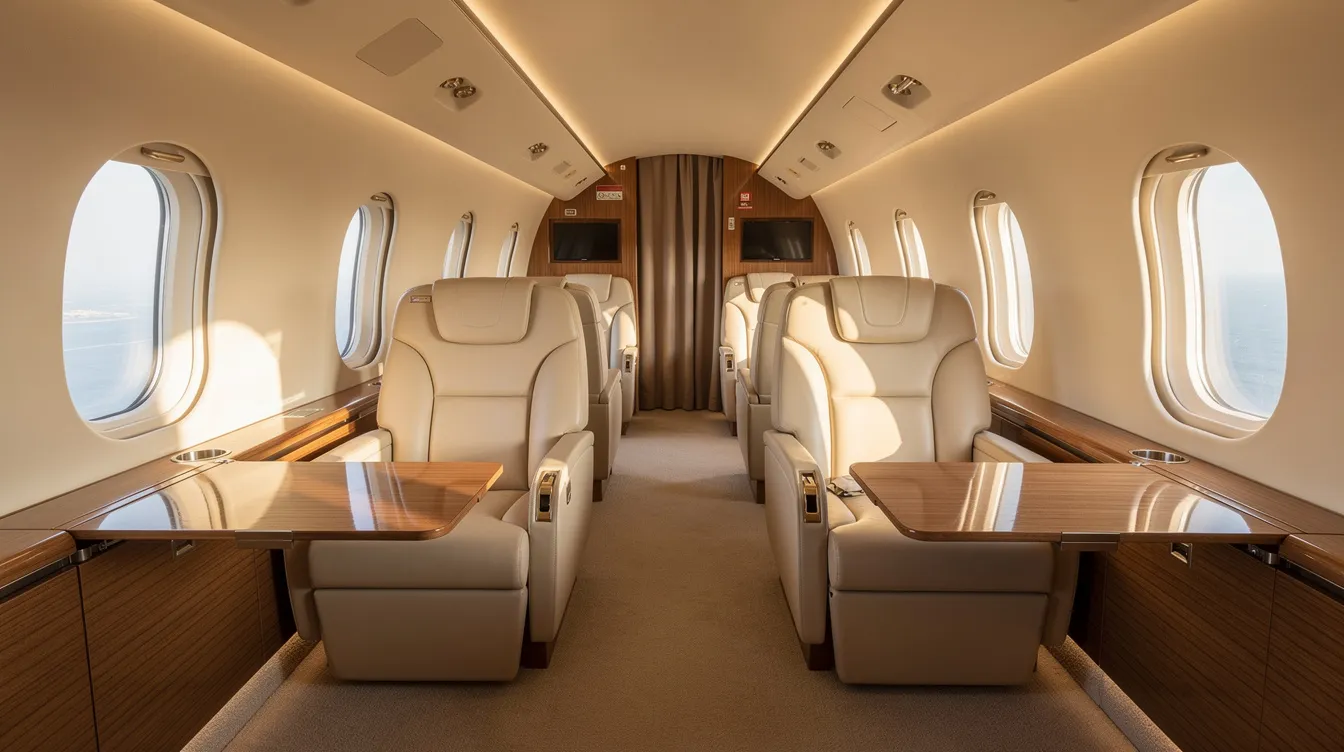
If you fly WestJet regularly between Canada and Europe - or even across the country - you already know the airline inspires strong opinions. This WestJet review cuts through the noise with real fare data, cabin breakdowns, and an honest look at what works, what doesn't, and when the smartest move is skipping commercial entirely.
Quick Verdict: Is WestJet a Good Airline Compared to Air Canada and Private Jets?
WestJet enters 2026 as Canada's second-largest airline behind Air Canada, carrying millions of passengers annually on domestic, transborder, and transatlantic routes. It holds an average customer rating of 2.1 out of 5 across major review platforms, and many customers report poor customer service experiences with WestJet - particularly during disruptions. Some customers feel WestJet has declined in quality since 2018.
Who WestJet still works for: price-driven leisure travelers booking off-peak transatlantic fares (think Dublin–Toronto premium economy around $550–600, or London–Halifax economy under £400 return flight), and budget-conscious domestic flyers willing to tolerate inconsistency for a good price.
Who should look elsewhere:
Time-sensitive executives who can't absorb a cancelled flight or 24-hour rebooking delay
Families on a once-a-year trip where disruption ruins the entire trip
High-net-worth travelers who value privacy, schedule control, and consistent service
At BlackJet, we're a private aviation company - but we fly commercial too, and we evaluate carriers like WestJet objectively. This review is for readers who want to know exactly what they're buying, and when a jet card might be the sharper strategic choice.
Who Is WestJet? History, Network and Position vs Air Canada
WestJet launched in 1996 as a scrappy low-cost carrier based in western Canada, initially serving a handful of domestic routes with a small fleet. Three decades later, it operates as a hybrid between a discount airline and a full-service carrier, with economy, premium economy, and business class cabins across its fleet.
Its primary hub is Calgary (YYC), which serves as the launchpad for long-haul routes to Europe, Asia, and - starting November 2026 - São Paulo. Toronto Pearson (YYZ) functions as its eastern gateway, with growing transatlantic service through Halifax.
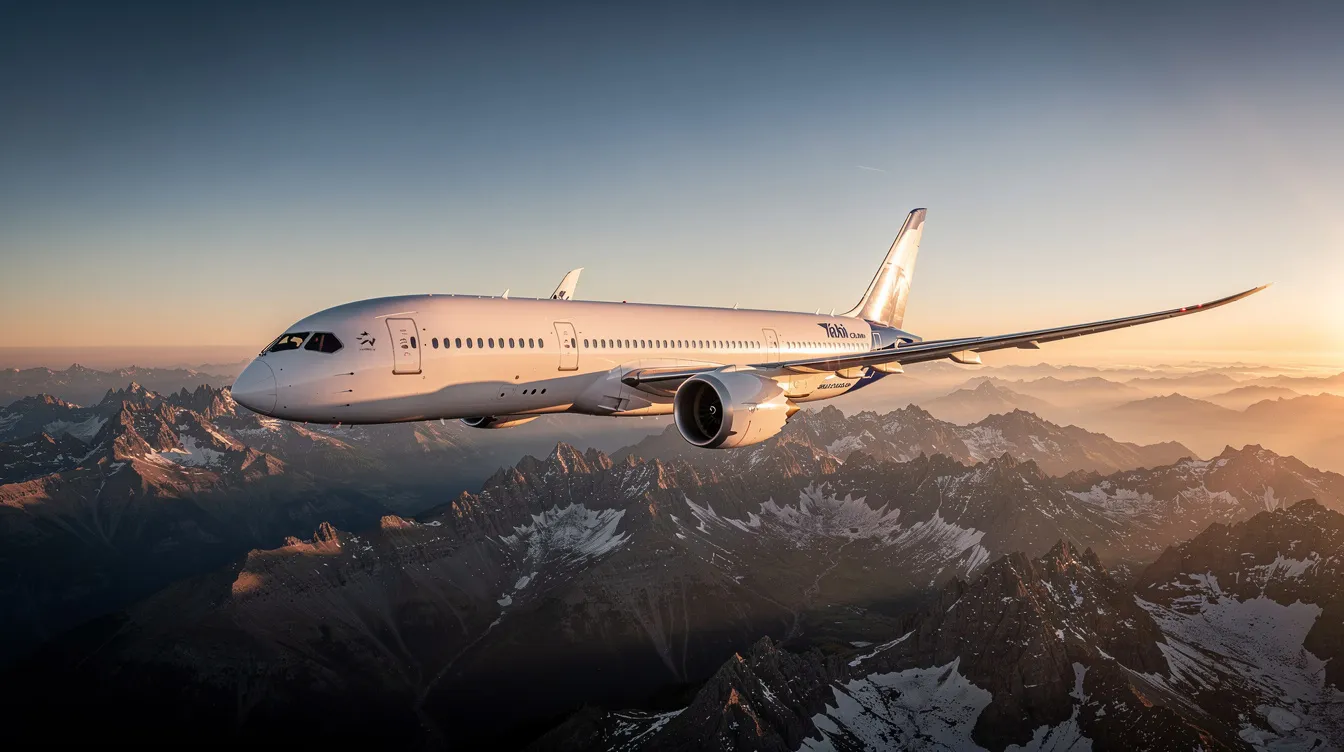
Fleet composition: WestJet runs an all-Boeing mainline - 737-700s, 737-800s, and 737 MAX variants handle domestic and North American routes, while Boeing 787-9 Dreamliners cover intercontinental flying. The airline recently firmed up orders for additional 787-9s, signaling widebody expansion.
Compared to Air Canada, WestJet's long-haul fleet is smaller and less diverse (no 777s or A330s), and its network reach is narrower. Codeshare partnerships with Delta, KLM, and Air France help fill gaps for connectivity into the US and deeper into Europe, but the airline's own daily flights remain limited on many routes.
Public review scores tell a blunt story: Trustpilot ratings hover around 1.3–1.5 out of 5, with roughly 80–85% of reviews at one star.
Fare Types and Cabin Classes: Economy, Premium Economy and Business Class
Economy Fare Tiers
WestJet's fare structure in 2026 spans multiple tiers, and understanding them is essential before you book.
WestJet's economy fares include Ultrabasic, Econo, and Econoflex tiers:
Fare Tier | Carry On | Checked Bags | Seat Selection | Changes |
|---|
Ultrabasic | One personal item + one carry on | Pay per bag | Pay to select | No changes |
Econo | Carry-on bag included | 1st bag included | Limited free | Fee + fare diff |
EconoFlex | Included | Included | Included | Flexible |
The Ultrabasic fare includes one personal item and one carry-on - but no checked luggage and no seat selection, meaning you could end up in a middle seat with zero flexibility. The airline has faced criticism for additional fees related to baggage and seat selection, and flyers often express frustration over the strict enforcement of baggage policies leading to surprise fees.
Premium Economy Features
Premium tickets include two free checked bags and priority boarding, plus enhanced meals and wider seats. Premium economy is only available on select aircraft.
Business Class Overview
Cabin classes vary by plane:
737/MAX narrowbodies: Economy (basic fare through EconoFlex) plus a "Premium" section with recliner-style seats - not true business class
787 Dreamliner: Economy, premium economy, and lie-flat business class in a 1-2-1 pod configuration
The trap for bargain-seekers: once you add bags, seats, and food to an Ultrabasic ticket, the cost often rivals EconoFlex or even other airlines' standard fares. Contrast this with a BlackJet jet card - where baggage, catering, and schedule flexibility are built into every hour, with no add-on fees.
Booking WestJet: Direct vs OTAs, Points and When It's Actually a Deal
Direct Booking
The most economical way to book is typically direct through westjet.com or the WestJet app.
Third-Party OTAs
Third-party OTAs occasionally beat direct pricing on basic fare options, but they complicate changes and refund requests - a real concern given WestJet's disruption track record.
Loyalty and Points
WestJet offers economy tickets starting at $250 on domestic routes, and premium economy tickets cost around $500 on competitive corridors. Many passengers appreciate WestJet's competitive fares during sales, particularly on transatlantic routes. WestJet introduced daily flights from Dublin to Toronto recently, and seasonal services to Rome, Madrid, and Copenhagen expand summer options.
Booking Strategies by Traveler Type
Leisure travelers: Book 8–12 weeks out for best pricing; target EconoFlex to avoid change fees
Business travelers on tight schedules: The limited frequency on many routes means a cancellation can push your next flight back 24+ hours - a risk that makes private jet charter worth evaluating for critical trips, especially once you understand when chartering a private jet is really worth it
Frequent flyers: WestJet Rewards points and Delta SkyMiles earning on codeshare routes offer some loyalty value, but given persistent service complaints, loyalty here is a pragmatic calculation rather than an emotional one.
The fee structure - baggage on basic and Econo, seat selection charges, and round trip change fees by tier - can quietly erase the "cheap ticket" appeal. Always calculate total cost, not headline fare.
Check-In and Boarding: App Experience, Airport Counters and Real-World Issues
Online and App Check-In
The check-in experience with WestJet is reported as smooth and easy when everything works as designed. Passengers can check in online or at the airport, with web check-in opening approximately 24 hours before departure and mobile boarding passes available through the app.
Airport Counters
WestJet offers different tiers of tickets affecting check-in options - priority boarding is available for premium ticket holders, business class passengers, and WestJet Rewards elites. Economy passengers board in later zones based on seat location.
Boarding Process
Boarding is organized by ticket class and seat location, with premium and elite passengers boarding first, followed by economy zones.
Common Issues
Where things break down:
App freezes during check-in, particularly when scanning travel documents
Passengers report being forced into early baggage payment due to technical glitches
Strict cutoff enforcement at the gate - travelers denied board for arriving minutes past cutoff, even when boarding started late
Document rigidity: an agent told one passenger their interim driver's licence was unacceptable, resulting in denied boarding and rebooking costs
Practical tips if you still choose WestJet:
Arrive at the airport earlier than you think necessary
Carry backup ID
Screenshot your boarding pass
Don't assume the phone app will work flawlessly at the gate
The contrast with private aviation is stark. BlackJet members arrive at an FBO 20–30 minutes before departure - no queues, no zones, no app crashes. Learn more about how jet cards work and how to evaluate jet card cost per hour for a fundamentally different boarding experience.
Onboard Experience in Economy: Seats, Space, Cleanliness and Amenities
Seating and Comfort
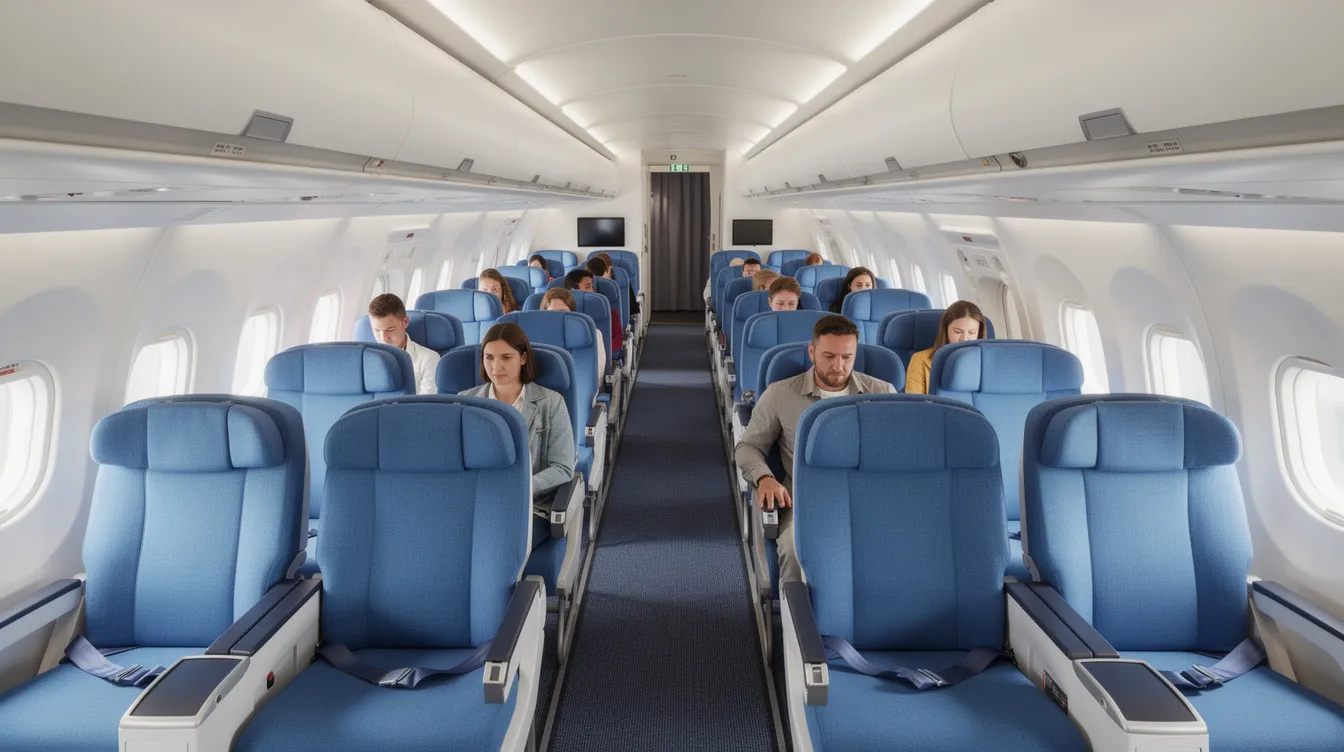
WestJet's economy class has 162 seats arranged in a 3-3 configuration on its 737/MAX fleet, with roughly 30–31 inches of pitch and 17 inches of seat width; passengers report mixed reviews on comfort, saying the cabin is tolerable for a 2-hour hop but grows increasingly uncomfortable as the flight takes longer on transcontinental or transatlantic sectors.
Cabin Condition
Cabin condition: Recent traveler feedback flags worn upholstery, tray table scratches, limited lavatory access on full flights, and occasional cleanliness issues. Leg room in standard economy is tight enough that passengers over 6 feet will feel compressed, especially in a middle seat.
In-Flight Entertainment
In-flight entertainment: In-flight entertainment is often streamed to personal devices, not available on seat screens. Many travelers find the WestJet Connect streaming app unreliable for in-flight entertainment - buffering, crashes, and system outages are common complaints. You can stream entertainment when it works, but don't count on it.
Wi-Fi runs approximately CA$20–25 per long flight, adequate for messaging but inconsistent for video calls or heavy browsing.
Tips for Economy Flyers
Survival kit for WestJet economy:
The plane won't provide what you need for comfort on longer sectors.
By comparison, even a light or midsize private jet offers dramatically more space per passenger, dedicated power outlets, and reliable connectivity - and for larger groups, 16-seat private jet options move you into a different category of experience entirely.
Premium Economy and Business Class on WestJet: Is the Upgrade Worth It?
Premium Economy Details
WestJet's Premium Economy features 12 recliner seats in a 2-2 configuration on 737/MAX aircraft, with meaningfully more pitch and width than standard economy. Passengers receive a blanket, pillow, and amenity kit in Premium Economy, plus upgraded meals on longer flights. On the 787 Dreamliner, the premium cabin expands to a 2-3-2 layout with approximately 36–38 inches of pitch.
Fare examples: Dublin–Toronto in premium economy runs roughly $540–580 when booked in advance. The step up from Econo (~$300–350) buys you tangible comfort - but not transformation.
Business Class Details
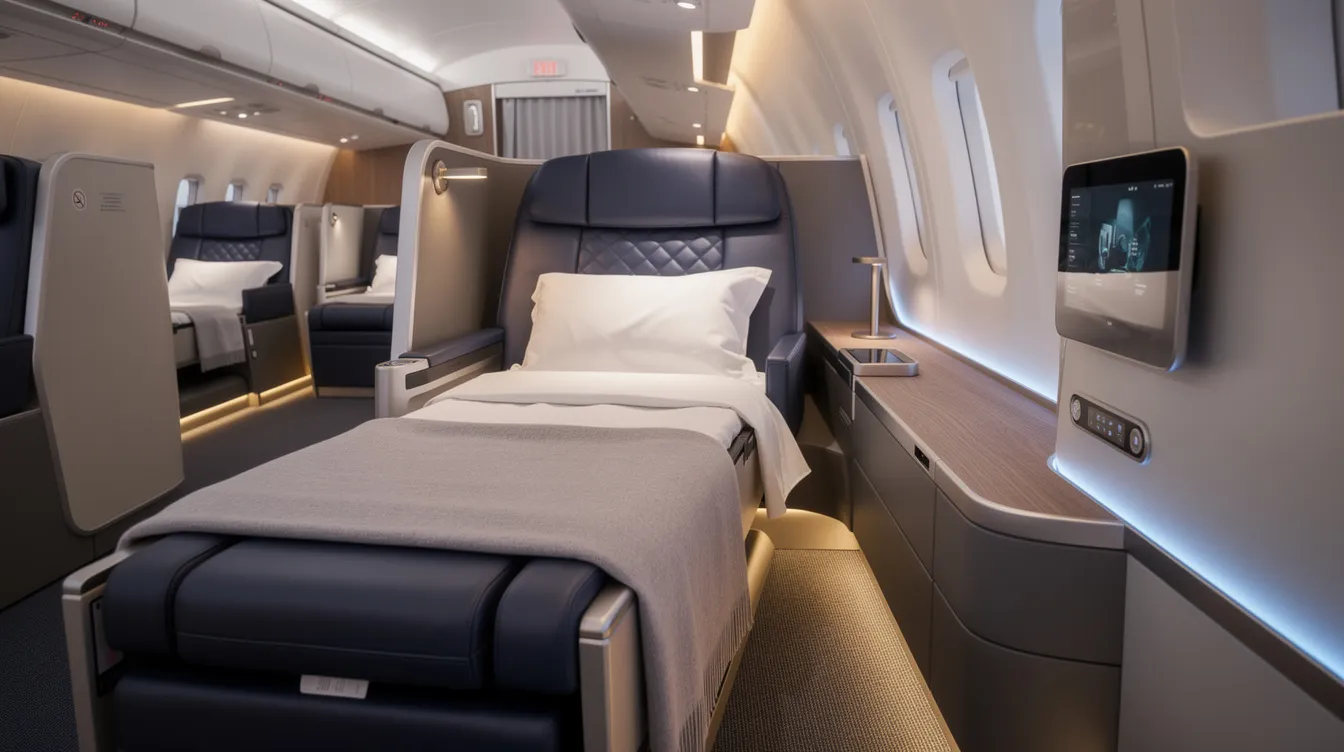
Business class on the 787 Dreamliner is WestJet's flagship product: Collins Super Diamond lie-flat pods in a 1-2-1 reverse-herringbone layout, direct aisle access, approximately 22-inch-wide seats, 18.5-inch entertainment screens, and premium dining with Canadian-sourced amenity kits. It competes reasonably with Air Canada's long-haul business product, though with fewer route options.
Upgrade Value Analysis
The caveats: Reviews flag broken entertainment systems even in premium cabins, unmotivated crew on certain sectors, and limited meal choices that undercut the "premium" promise. When meals on WestJet flights can be limited - sometimes offering only one option - the upgrade feels less justified.
For executives currently spending $2,500–4,000 on WestJet business class tickets for transatlantic sectors, the math deserves scrutiny. A 25-hour BlackJet jet card converts that spend into true privacy, bespoke catering, carbon-neutral flights, and schedule control that no commercial airline can match; travelers with even heavier usage can evaluate a BlackJet 25+ Hour Jet Card for additional flexibility and fixed-rate access.
Food, Drinks and Service Culture: Flight Attendants and Onboard Hospitality
Economy Class Catering
What's included in economy: Complimentary non-alcoholic beverages are generally provided on economy flights, alongside a basic meal on medium- and long-haul sectors (typically a wrapped sandwich or hot entrée). Additional food and alcohol are available for purchase. Don't expect to be impressed by the food - or to have choices.
Premium and Business Class Catering
Premium and business class catering: Plated hot meals, complimentary wine and spirits, and better snack selection. But inconsistencies abound - passengers report single-choice entrées, microwaved items, and limited refills on drinks during overnight transatlantic services.
Service and Crew Experience
The crew factor: Passenger experiences with WestJet Airlines are mixed, with reports of both friendly cabin crews and frequent complaints about customer service. Skytrax rates WestJet's short-haul economy products as average despite recognizing its cabin staff quality - meaning individual flight attendant performance varies widely.
Concrete complaints surface regularly: arguments between crew and passengers at boarding gates, lack of apology when entertainment systems fail, and an attendant dismissing legitimate concerns during disruption. Balanced against this, some transatlantic flights draw praise for attentive, professional crew who elevate the experience with WestJet.
The takeaway: WestJet as a budget-leaning airline cannot reliably deliver hospitality at the level of top global carriers. If consistent, personalized service matters to you, understand that terrible service is a real possibility on any given flight - and plan accordingly.
Delays, Cancellations and Customer Support: Where WestJet's Reputation Suffers
Delay and Cancellation Trends
This is where WestJet earns its harshest criticism. Overall passenger sentiment reflects a tilt towards dissatisfaction with customer service during disruptions, and the data supports it: on-time arrival rates have fallen well below industry targets, with some measurement windows showing only ~36% of flights arriving on schedule.
Passengers experienced significant delays, including a 29-hour delay on one flight - and stories of cancelled connecting flight itineraries with no hotel coverage, no meal vouchers, and hours of waiting on the phone are common across review platforms.
Customer Support Issues
Recurring pain points:
WestJet's customer service is often described as unhelpful and frustrating, with long hold times (often several hours) to reach an agent
Customer support complaints revolve around long wait times and difficulty obtaining compensation
The airline frequently attributes delays to weather or "crew rest" to limit compensation obligations under Canada's Air Passenger Protection regime.
Threats to cancel return segments when outbound flights are missed on basic fare tickets
Confusing rebooking links during operational disruption that feel unreliable to customers
Many reviewers now label WestJet the worst airline in Canada for disruption handling - a reputation that's hard to shake when horrible customer service stories dominate every review forum.
Mitigation Advice
Mitigation advice:
Build buffer time for any critical meeting or connection
Consider higher fare classes with flexibility
For trips where a cancellation means real financial or professional consequences, evaluate whether private jet travel eliminates the risk entirely.
Is WestJet Really a Budget Airline? Value vs Risk for Different Travelers
Cost Structure
WestJet is often called a budget airline, but the label is misleading. It functions as a low-cost hybrid - fares can start low, but once you check bags, select seats, add hand luggage beyond the basic allowance, and pay for food, costs approach what other airlines charge for a standard ticket; at that point, exploring the cheapest viable private jet options can be a more strategic comparison than chasing marginal fare savings.
Value by Traveler Profile
Value by traveler profile:
Traveler Type | WestJet Verdict |
|---|
Backpackers/students | Viable for off-peak Europe hops if you tolerate delays and minimal frills |
Families (once-a-year trip) | Risky - cheap tickets don't justify a ruined vacation from missed connections. |
Business travelers | Lost time from disruption dwarfs any ticket savings |
High-net-worth individuals | Evaluate time, privacy, and control vs. ticket cost - often better served by private aviation. |
Market Context
The Canadian market context matters: limited airline competition, high airport taxes, and a perceived duopoly between WestJet and Air Canada mean customers have fewer alternatives. When a good airline option doesn't exist on your route, frustration compounds, and alternatives like buying a seat on a private jet or evaluating when chartering a private jet is worthwhile start to enter the conversation.
Contrast the commercial model with BlackJet's jet card approach: prepaid hours at fixed rates, guaranteed availability windows, transparent pricing without nickel-and-diming, and the ability to fly direct to thousands of airports commercial carriers don't serve. For travelers who've outgrown the constraints of hybrid airlines, resources like this guide to understanding jet card cost show that the cost difference is often smaller than expected - and the experience is incomparably better.
Safety, Sustainability and Technology: How WestJet Compares to Private Aviation
Safety Certification
WestJet Airlines is certified as a 3-Star Airline by Skytrax, and it operates under Canadian aviation safety regulations with a modern fleet. The 737 MAX fleet, globally grounded until 2020, has been recertified and is subject to ongoing inspections - no outstanding safety concerns exist at the aircraft level, despite operational frustrations in service and customer care.
Sustainability Initiatives
Sustainability: WestJet has made public commitments to fuel-efficient aircraft and occasional use of sustainable aviation fuel (SAF), but standard economy fares carry no guaranteed carbon offset. Sustainability remains an opt-in add-on, not a default.
Technology Experience
Technology: The mobile app handles booking and check-in adequately in most cases, but glitches during check-in, entertainment system failures mid-flight, and inconsistent Wi-Fi mean the tech experience frequently breaks at the moments passengers need it most.
How BlackJet differs on these pillars: if you're already comparing major providers, it can help to understand NetJets jet card costs and structure alongside BlackJet’s own programs.
Proprietary safety vetting of operators and aircraft beyond regulatory minimums (Wyvern, ARGUS certifications)
Carbon-neutral flights as standard for jet card members - at no extra cost
24/7 real-time digital support that books aircraft, not seats, giving travelers control over schedule and routing
For high-level travelers, safety, sustainability, and technology are no longer nice-to-haves - they're strategic factors in choosing how you fly, especially if you're considering the best private jets in the world as part of a broader travel strategy.
Frequently Asked Questions About WestJet
Q: What types of fares does WestJet offer?
A: WestJet offers multiple economy fare tiers including Ultrabasic, Econo, and Econoflex, each with varying baggage allowances and flexibility. Premium Economy and Business Class options are also available on select aircraft.
Q: How reliable is WestJet's customer service?
A: WestJet's customer service receives mixed reviews, with many passengers reporting long wait times and frustration during disruptions. The airline has an average rating of 2.1 out of 5 across major platforms.
Q: Does WestJet provide in-flight entertainment?
A: WestJet primarily streams entertainment to personal devices via the WestJet Connect app, but passengers often report reliability issues. Seatback screens are generally not available.
Q: Are meals included on WestJet flights?
A: Complimentary meals and beverages are typically offered in Premium Economy and Business Class. Economy passengers may receive basic snacks or beverages depending on route and flight duration.
Q: How does WestJet compare to private jet travel?
A: While WestJet offers competitive pricing, private jet travel provides superior flexibility, privacy, and service consistency. Frequent travelers or those with critical schedules may benefit from jet card programs like BlackJet’s.
Q: What should travelers expect during check-in and boarding with WestJet?
A: Check-in is usually smooth online or at airport counters. Priority boarding is available for premium ticket holders. However, technical glitches and strict gate policies can occasionally cause issues.
Q: Is WestJet a sustainable airline?
A: WestJet has taken steps toward sustainability with fuel-efficient aircraft and occasional use of sustainable aviation fuel, but carbon offsets are not standard and typically require an additional fee.
Q: What aircraft does WestJet operate for long-haul flights?
A: WestJet uses Boeing 787-9 Dreamliners for intercontinental routes, featuring Economy, Premium Economy, and Business Class cabins.
WestJet vs Private Jet Travel: When Commercial Makes Sense and When to Go Private
Scenario Comparisons
The honest answer: WestJet still has a role for certain trips. But the gap between commercial unpredictability and private aviation widens every year, especially for travelers evaluating whether a 100-hour jet card cost makes more sense than repeatedly flying premium cabins on airlines like WestJet.
Scenario comparisons:
Executive: Toronto–New York–Toronto in a single day
WestJet or Air Canada requires arriving 90+ minutes early, potential delays, rand igid scheduling. A private jet departs on your timeline, lands at Teterboro (15 minutes from Manhattan), and returns when your meeting ends. Total time saved: 4–6 hours.
Family: London to Calgary for a once-in-a-decade ski vacation
WestJet premium economy on the 787 is functional - but a cancelled or delayed direct flight means hotel scrambles, rental car rebookings, and lost ski days. Splitting a private charterEurope orpeor from it with extended family can be surprisingly cost-effective per person, particularly if you look at private jets that comfortably seat around 20 passengers.
Entrepreneur: Calgary to Silicon Valley, monthly
Fly WestJet economy for routine trips. Use a 25-hour jet card for the high-stakes pitch meetings where arriving rested, on time, and focused directly affects the outcome, and compare it with a 50-hour jet card cost structure if your private flying needs are more frequent.
Intangible ROI
The intangible ROI matters: missed deals, lost sleep, and accumulated stress from relying on a carrier with an expect-the-unexpected reputation during disruptions add up over a year of travel.
Who Should Consider Private Jet Travel
BlackJet isn't a replacement for every flight. It's an upgrade path for travelers who are outgrowing the constraints of commercial aviation - and who recognize that their time, privacy, and peace of mind have measurable value, making it worth understanding jet card pricing structures alongside traditional ticket costs.
If you currently spend heavily on WestJet business class or premium economy, explore how BlackJet's jet card programs can reshape your most important journeys - with carbon-neutral, on-demand access and a standard of service no commercial airline can reliably match.


 Sign up with google
 Sign up with Apple