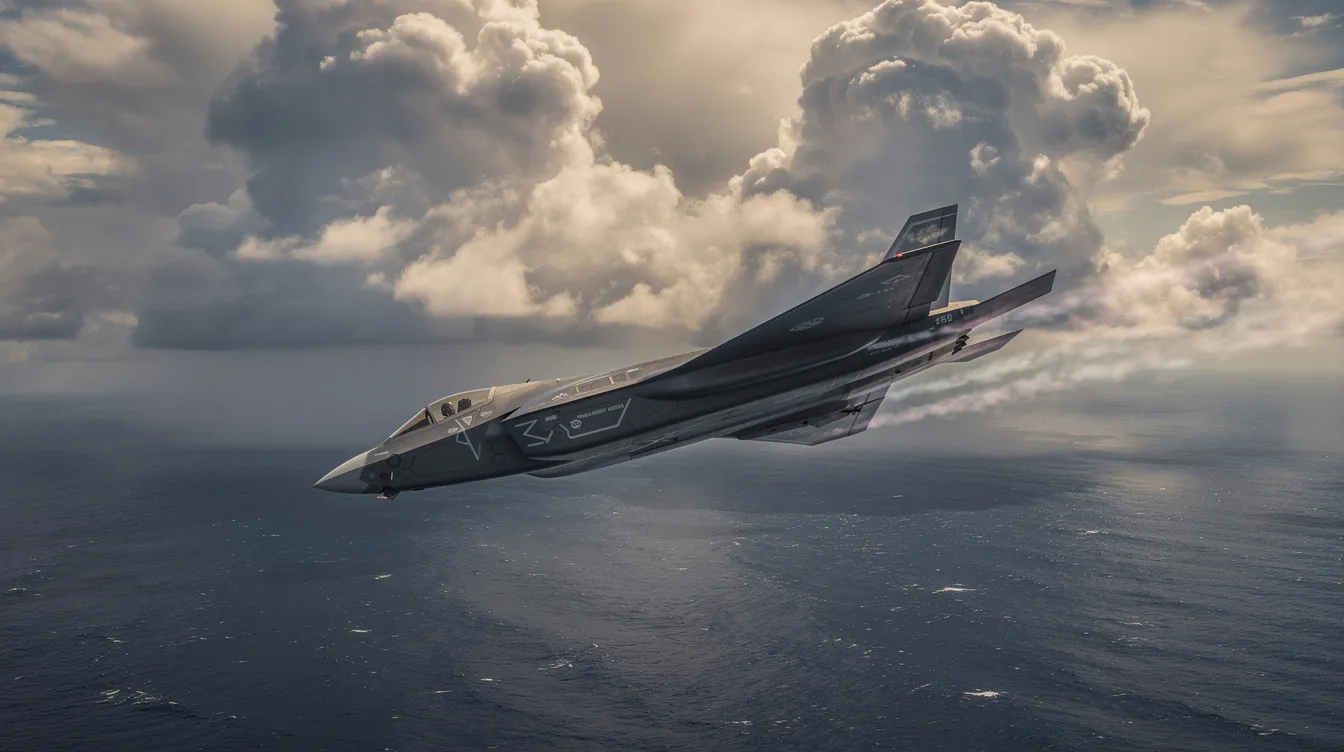
The United States operates the most formidable fleet of fighter aircraft on Earth. From stealth jets patrolling contested airspace to carrier-based strike fighters projecting power across oceans, US military fighter aircraft remain the backbone of American defense strategy. This article examines the current frontline fleet, the numbers behind the force, future sixth-generation programs, and how military aviation innovation quietly shapes the broader aerospace world-including private jet travel.
Overview: Why US Fighter Aircraft Still Dominate the Skies
American air superiority rests on a force structure unlike any other nation possesses. The Air Force, Navy, and Marine Corps collectively field over 2,000 fighter and strike aircraft across active duty, Guard, and Reserve components. The US operates 47 major types of fighter aircraft, and this vast inventory enables the country to project power globally, enforce deterrence, safeguard allies, and protect naval and ground forces in every theater.
A fighter aircraft in US military terminology carries an "F-" designation and is capable of air-to-air combat, ground attack, suppression of enemy air defenses, and reconnaissance. This stands distinct from dedicated close air support platforms like the A-10 and strategic bombers like the B-2. Over the decades, the US military has shifted from fielding specialized air superiority fighters and attack aircraft separately to deploying multirole fighter jets that can switch between air-to-air combat and ground-attack missions in a single sortie. Fighter aircraft also support ground forces with close air support and are crucial for rapid global mobility operations.
This article covers current frontline US fighter jets-the F-22A Raptor, the F-35 family, F-15 variants, F-16C/D, F/A-18E/F, and EA-18G-alongside inventory figures, future programs like NGAD/F-47 and F/A-XX, and how these aircraft protect US interests worldwide. BlackJet operates in the private aviation realm, offering premium private jet card programs and charter access, but draws on the same aerospace ecosystem-manufacturers like Lockheed Martin and Boeing (heir to McDonnell Douglas)-and the same safety culture that shapes US military aviation.
From P-80 to F-35: A Compressed History of US Fighter Aircraft Since 1945
Since World War II, the United States has operated more than 40 major fighter types, beginning with the Lockheed P-80 Shooting Star-an aircraft initially designed as America's first operational jet fighter, entering service in 1945-and continuing through to the F-35 variants fielded from 2015 onward. Over 2.4 million personnel served in the Army Air Forces during World War II, laying the foundation for the air power doctrine that followed. The U.S. Army Air Corps was established in 1926, eventually evolving into an independent service when the USAF was formally established on September 18, 1947.
Key eras shaped the operational history of American fighters:
Early jets: The F-86 Sabre was prominent in the Korean War, dominating MiG Alley and proving supersonic combat viable. The F-100 Super Sabre became the first USAF supersonic fighter in level flight.
Vietnam War era: The F-4 Phantom II served as both an air superiority and strike platform across the Pacific theater and beyond. The F-105 Thunderchief specialized as a penetration fighter for deep strike missions.
Late Cold War icons: The F-14 Tomcat redefined Navy service fleet defense, the F-15 Eagle became the benchmark air superiority fighter, and the F-16 Fighting Falcon introduced affordable, agile multirole combat to the United States Air Force.
Doctrine evolved accordingly-from specialized interceptors and single-mission planes to flexible multirole fighter aircraft capable of air-to-air engagement, precision strike, electronic warfare, and close air support. Many retired platforms, such as the F-4 and F-14, still influence current designs and tactics. The A-10 Thunderbolt II remains in limited CAS service despite not being a pure fighter. Even the country's early experiments with jet aviation continue to echo in every cockpit designed today.
US Air Power by the Numbers: Inventory, Roles, and Force Structure (2026)
The United States Air Force alone operates roughly 4,800–5,000 active aircraft. Fighters and attack aircraft make up approximately one-third of total strength. As of the most recent reporting, the USAF has 1,610 fighter aircraft in total, complemented by around 140 bombers, nearly 300 close air support aircraft, 450+ aerial tankers, and a large fleet of trainers, transports, and helicopters.
Within this structure, the distinction between "fighter jets" and other aircraft matters:
Fighter jets in US usage cover air superiority, multirole, and interceptor missions.
Dedicated CAS aircraft (e.g., A-10C) and strategic bombers (B-52H, B-1B, B-2A, and the future B-21A) occupy separate categories.
Fighter jets also conduct intelligence, surveillance, and reconnaissance missions alongside their combat roles.
The Air Force reported 1,271 combat-coded fighters in fiscal 2026. "Combat-coded" means aircraft assigned to operational units ready for deployment, distinct from the broader Total Active Inventory. Critically, the USAF is slightly below its legally mandated minimum: under 10 U.S.C. §9062, the Air Force must maintain at least 1,145 fighters in its Primary Mission Aircraft Inventory by October 2026, yet as of May 2026, it reported only 1,098-roughly 47 aircraft short. The service aims to grow to 1,558 combat-coded crewed fighters by 2035 to address the gap.
The United States Air Force and Air Superiority Doctrine
The US Air Force's mission-to fly, fight, and win airpower anytime, anywhere-places air superiority at the foundation of every operation. Since 1947, USAF doctrine has held that gaining and maintaining control of the air is a prerequisite for all other military actions: ground maneuver, naval operations, logistics, and strategic strike all depend on friendly skies.
Air superiority fighters are designed to gain and maintain air dominance over contested airspace. Fighter aircraft perform air superiority missions as their primary task, but they also enable global strike, nuclear deterrence, ISR, and command and control. This doctrinal emphasis drove the development of:
The F-15 Eagle in the 1970s as a dedicated air superiority platform with unmatched speed, radar power, and combat radius.
The F-22A Raptor as the first fifth-generation stealth air superiority fighter, combining low observability with supercruise and sensor fusion.
Current USAF fighter fleets mix stealth platforms (F-22A, F-35A) with upgraded fourth-generation jets (F-15EX, F-16C/D) in a deliberate "high-low" approach that balances cost, capacity, and capability. This model ensures that while stealth fighters handle the most contested environments, legacy aircraft provide the numerical depth required for sustained operations across the globe.
Stealth Vanguard: Lockheed Martin F-22A Raptor and F-35A Lightning II
Stealth fighters revolutionized air superiority and precision strike for the USAF. Fifth-generation fighters prioritize stealth and sensor fusion over raw speed, using internal weapon bays and radar-absorbent materials for stealth. Stealth technology reduces the radar cross-section of fifth-generation aircraft, making them nearly invisible to adversary defenses.
F-22A Raptor. The F-22A Raptor reached initial operating capability in December 2005. Powered by twin Pratt & Whitney F119 engines, the F-22 Raptor can supercruise above Mach 1.5 without afterburner. Its internal weapons include AIM-120 AMRAAM, AIM-9 Sidewinder, and a 20 mm cannon. Production was capped at 187 operational aircraft; the F-22A has 183 operational units as of 2026. The airframe's extremely low radar cross section makes it the premier air dominance platform, though costly upgrades and retirement timelines into the 2030s remain topics of debate.
F-35A Lightning II. The F-35A is a multirole strike fighter-the USAF's primary stealth workhorse. A single Pratt & Whitney F135 engine delivers approximately Mach 1.6 top speed. The F-35A has a range of over 1,350 miles on internal fuel. Its advanced sensor fusion-Distributed Aperture System, Electro-Optical Targeting System, and AESA radar-allows the pilot to see a unified tactical picture across all sensors. Sensor fusion allows modern fighters to present a unified tactical picture to pilots, and AESA radars in modern aircraft enable flexible tracking and electronic warfare capabilities.
The F-35A is the most purchased variant of the F-35, with over 1,300 delivered globally by 2025. However, Block 4 and TR-3 modernization delays persist, and only about 25% of the fleet was fully mission-capable in FY2025 due to spare parts shortages and software issues. The F-35A is intended to replace many legacy F-16 and A-10 roles over the coming decade.
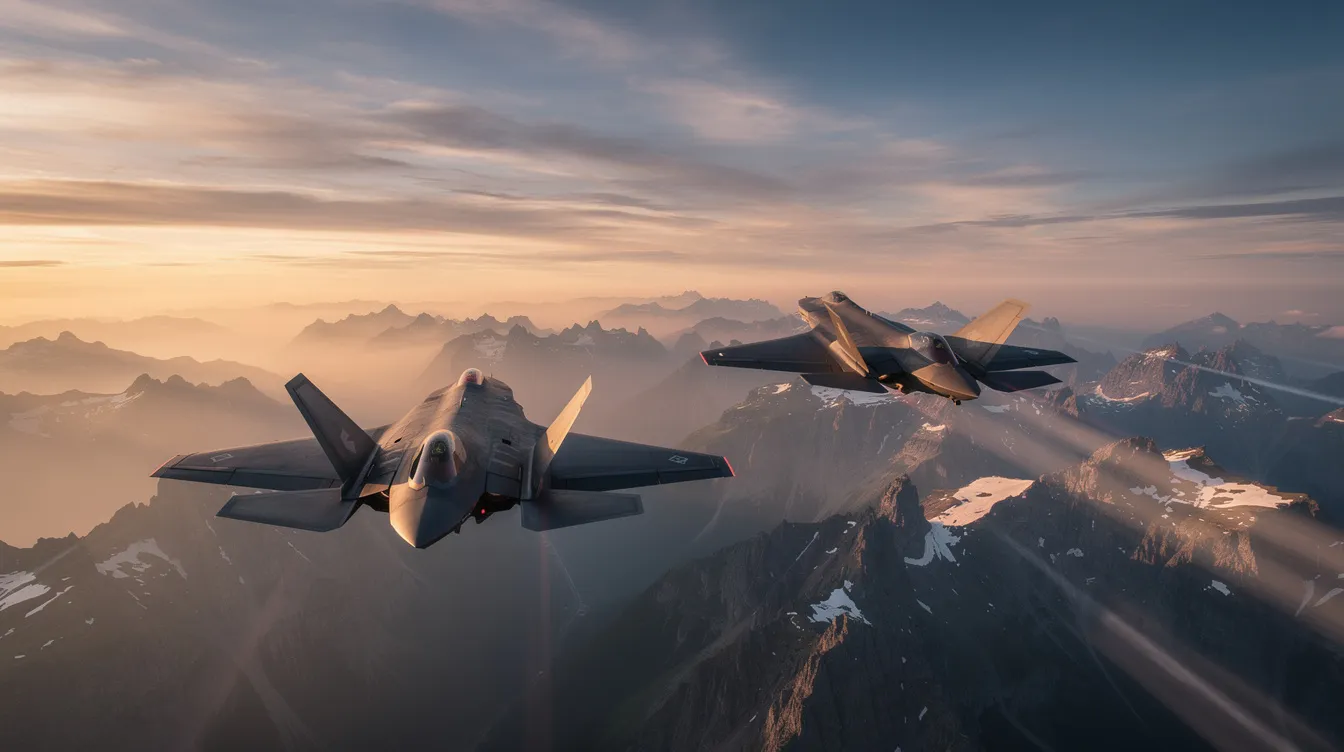
Carrier and Amphibious Power: F-35B and F-35C for Navy and Marine Corps
The F-35B and F-35C extend fifth-generation stealth to sea-based operations, giving the US Navy and Marine Corps unprecedented strike reach from carrier decks and amphibious assault ships.
F-35C. The F-35C is designed for carrier operations with larger wings, reinforced landing gear, and a tailhook for catapult launches and arrested landings. The Navy plans to acquire around 273 F-35Cs, with the Marine Corps adding additional airframes. Its larger wing area gives it greater range and endurance compared to the B model, making it the preferred variant for blue-water power projection.
F-35B. The F-35B's short takeoff and vertical landing system-featuring a shaft-driven lift fan and swiveling rear nozzle-trades internal fuel and ordnance capacity for extraordinary basing flexibility. The Marine Corps plans approximately 200+ F-35Bs, enabling expeditionary operations from amphibious assault ships and austere, short runways. This capability bridges traditional fighter roles and close air support in contested littoral environments, ensuring Marines ashore always have fifth-generation air cover.
Both variants share major stealth features, sensors, and the F135 engine family. Fifth-generation fighters integrate stealth technology and sensor fusion across all three F-35 models, ensuring interoperability whether the aircraft launches from a supercarrier, an amphibious deck, or a forward operating strip.
Fourth-Generation Workhorses: F-15EX, F-15E, F-16C/D, and F/A-18E/F
Upgraded fourth-generation fighter aircraft still carry a massive share of US combat sorties, often teaming with stealth fighters in "high-low mix" formations that combine survivability with sheer numbers.
Boeing F-15EX Eagle II. Derived from a 1970s airframe but digitized for the 2020s, the F-15EX features twin engines, Mach 2.5 top speed, open mission systems architecture, and an enormous external missile capacity-the F-15EX can carry up to 12 AIM-120 AMRAAMs. The F-15EX Eagle II was first delivered on March 11, 2021. The first USAF squadron service unit achieved IOC in July 2024 with the Air National Guard. The F-15EX is planned to have 8 units in service currently, with procurement goals of 260+ jets over time.
F-15E Strike Eagle. A two-seat, dual-role strike and air superiority platform that entered service in 1989. With conformal fuel tanks, precision strike capability, and the F-15E has a top speed of 1,875 mph, this airframe proved itself from Desert Storm through the Global War on Terror. Approximately 217 remain in the USAF inventory.
F-16C/D Fighting Falcon. The F-16 Fighting Falcon is the most numerous fighter in the US inventory. The F-16C makes up 762 units of the inventory (with over 826 total F-16s across active, Guard, and Reserve). This single-seat, fly-by-wire, Mach 2-capable multirole fighter equipped with AESA radar upgrades and modernized mission computers will keep hundreds flying into the 2030s and potentially the 2040s. Average fleet age: approximately 33.9 years.
Boeing F/A-18E/F Super Hornet. The F/A-18E/F Super Hornet is a carrier-based multirole fighter used by the Navy, capable of Mach 1.8 and operating in both the fighter and attack aircraft roles. Block III upgrades enhance cockpit displays, radar, and networking. Production is winding down by approximately 2027, with roughly 575 single-seat E and two-seat F models in the fleet.
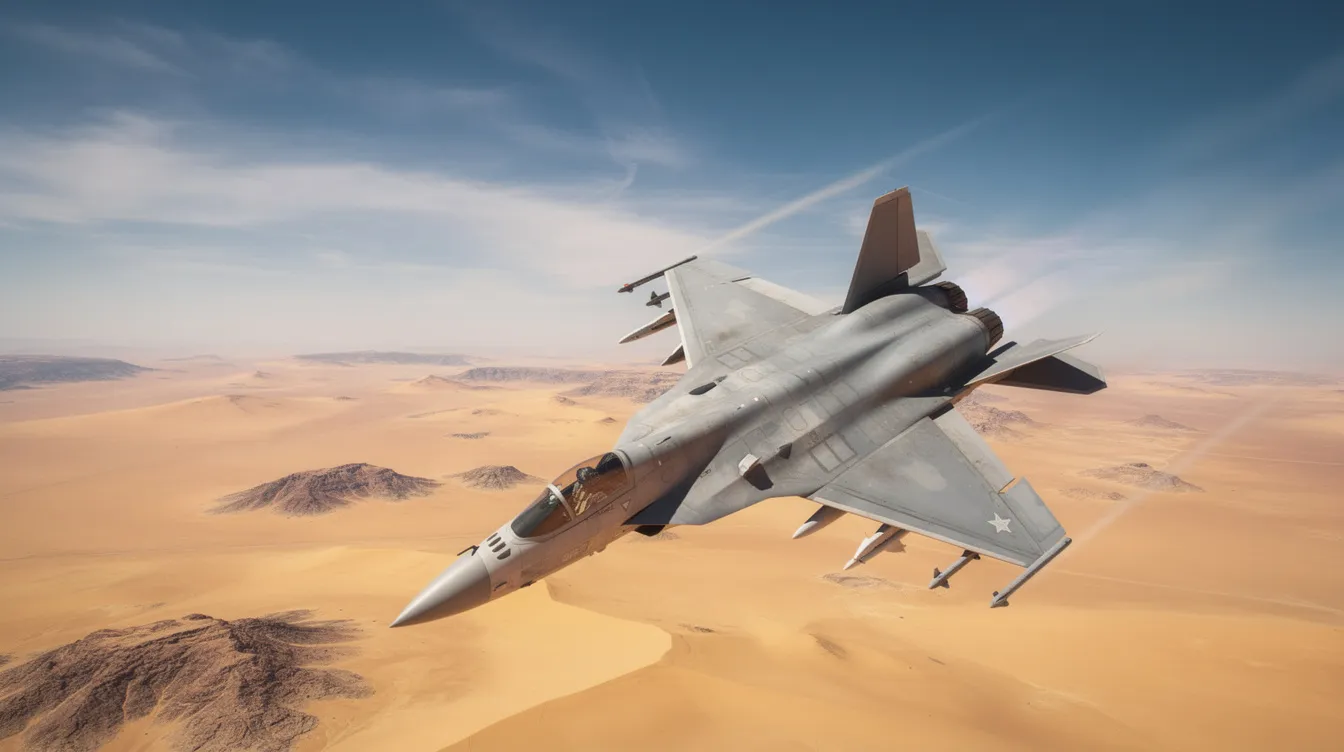
Specialized Electronic Warfare and Legacy Hornets: EA-18G, F/A-18C/D, and F-15C/D
Not all military aircraft designated as fighters focus on dogfighting. Some provide critical electronic warfare and escort roles within US air packages.
Boeing EA-18G Growler. Electronic warfare aircraft like the EA-18G Growler jam enemy radar to protect strike packages. Built on the Super Hornet airframe, the Growler carries ALQ-99 and next-generation jammer pods, operating as the Navy's only broad-spectrum airborne electronic attack platform. Approximately 160 airframes are in service, and demand consistently exceeds supply.
F/A-18C/D Hornet (Legacy). The legacy Hornet served as the first all-weather Navy fighter/attack aircraft of its generation, compiling a combat record from Libya to Desert Storm. The single-seat C and two-seat D variants are now largely retired from frontline Navy service, with Marine Corps use tapering toward 2030. Most surviving airframes serve in adversary or reserve roles.
F-15C/D Eagle. The F-15C/D-a dedicated air superiority fighter, flew its last active-duty sortie in January 2025. Remaining Air National Guard fleets are scheduled for phase-out by 2031. These variants lacked the ground-strike capabilities of the F-15E, and their retirement marks the end of an era for the designation that once defined American air dominance.
Carrier, Land, and Expeditionary Operations: How US Fighters Are Based and Employed
US fighters operate from three primary basing concepts, each shaping how air power is employed:
Continental US and permanent overseas bases (USAF, ANG, USMC): Fixed installations for training, maintenance, readiness, and regional deterrence.
Nuclear-powered aircraft carriers (US Navy): Carrier Air Wings typically include F/A-18E/F Super Hornets, F-35C, EA-18G Growlers, and E-2D Hawkeye early-warning aircraft for blue-water operations.
Expeditionary forward operating locations (Marine Corps, some USAF units): Amphibious ships for F-35B, plus austere land bases in allied or contested environments, enabling dispersed, survivable basing.
Air Force fighter wings rely heavily on tanker support-KC-135R and KC-46A aerial refueling aircraft-to project air superiority worldwide. Without tankers, even the longest-range fighters would be tethered to bases within a few hundred miles of the fight. Logistics, overflight rights, and allied basing agreements are as critical to operating American fighters as the aircraft themselves.
Future US Fighter Programs: NGAD F-47 and Navy F/A-XX
The shift toward sixth-generation air dominance platforms is well underway, driven by advanced threats from China and Russia. Sixth-generation fighters aim for advanced stealth, range, and connectivity with drones.
NGAD / F-47 (USAF). Boeing won the contract to produce the Air Force's Next Generation Air Dominance fighter, now officially designated F-47. First flight is projected for around 2028, with estimated per-unit cost in the $250–300 million range. Expected features include optionally manned capability, advanced stealth, stand-in electronic warfare, and next-generation fighters designed to coordinate with unmanned aircraft- specifically, uncrewed Collaborative Combat Aircraft.
F/A-XX (Navy). On September 29, 2026, the Navy selected Boeing to build the F/A-XX, its sixth-generation carrier-based fighter. Northrop Grumman was a primary competitor. The F/A-XX will replace or augment F/A-18E/F Super Hornets and EA-18G Growlers beginning in the 2030s, incorporating stealth, advanced radar, long range, and deep integration with drones.
Both programs will eventually complement and partially replace F-22, F-35, and F/A-18 fleets, defining the development trajectory of American air power for decades.
Electronic Warfare, Network-Centric Combat, and the Role of Special-Mission Aircraft
Modern fighter aircraft rarely fight alone. They rely on a "system of systems" including tankers, AWACS, and electronic warfare platforms. Networking allows modern fighters to operate collectively rather than independently; secure data links connect fighters, bombers, drones, and command centers in real time.
Aircraft like the EA-18G Growler, EC-130, and RC-135 variants support fighters through jamming, signals intelligence, and airborne early warning, enabling safer penetration of defended airspace. F-35s often act as stealthy sensor hubs for other aircraft in the formation, feeding targeting data to older jets like the F-16 and F-15EX that carry heavier weapons loads.
This integration of electronic warfare, cyber operations, and airborne sensors is as critical to air superiority as raw aircraft performance. No single pilot or platform wins a modern air campaign-networks do.
What Counts as a Fighter? Distinguishing Fighters, Attack Aircraft, and Trainers
The U.S. military categorizes fighter aircraft based on operational design, and the U.S. military organizes fighter aircraft by primary mission type and generation. The designation system works as follows:
"F-" = Fighter (air superiority or multirole)
"A-" = Attack (primarily ground strike, CAS)
"B-" = Bomber
"T-" = Trainer
Hybrids: "F/A" = Fighter/Attack; "EA" = Electronic Attack
Some famous aircraft fall outside strict fighter lists. The A-10 Thunderbolt II specializes in close air support for ground forces-it's an attack aircraft, not a fighter. The F-117 Nighthawk was retired in 2008 but still flies for testing; despite its "F" designation, it was a stealth attack jet rather than a dogfighter.
Jet trainers like the T-38, T-45, T-7A, and T-1 are not true fighters, even though some can carry weapons. These other aircraft serve essential roles in pilot development but lack the engines, radar, and combat capabilities of frontline fighters. Multirole fighters like the F/A-18 and F-15E blur the boundaries, performing both air-to-air and ground-attack missions with a single fighter equipped for either task.
How Many Fighter Jets Does the US Have, and How Old Are They?
Across all services, the United States fields roughly 1,600+ fighter units. Key inventory figures for the USAF alone include:
Aircraft | Units in Inventory |
|---|
F-16C/D | 762+ |
F-35A | 302 |
F-15E Strike Eagle | ~217 |
F-22A Raptor | 183 |
A-10C (CAS) | ~163 |
F-15EX Eagle II | 8 (growing) |
The average USAF fighter age is approximately 25–27 years, with some F-15C and F-16C airframes approaching or exceeding 8,000 flight hours. The Air Force fell about 47 aircraft short of its statutory minimum of 1,145 combat-coded fighters in 2026-a gap that modernization initiatives aim to close.
Procurement of F-35As, increased F-15EX buys, and future NGAD/F-47 deliveries are intended to reduce fleet age while enhancing capability. CBO projects the total DoD fighter fleet to grow from approximately 3,000 in 2029 to around 3,600 by 2040, driven primarily by USAF expansion.
From Combat to Commerce: How Military Aviation Influences Private Jet Travel
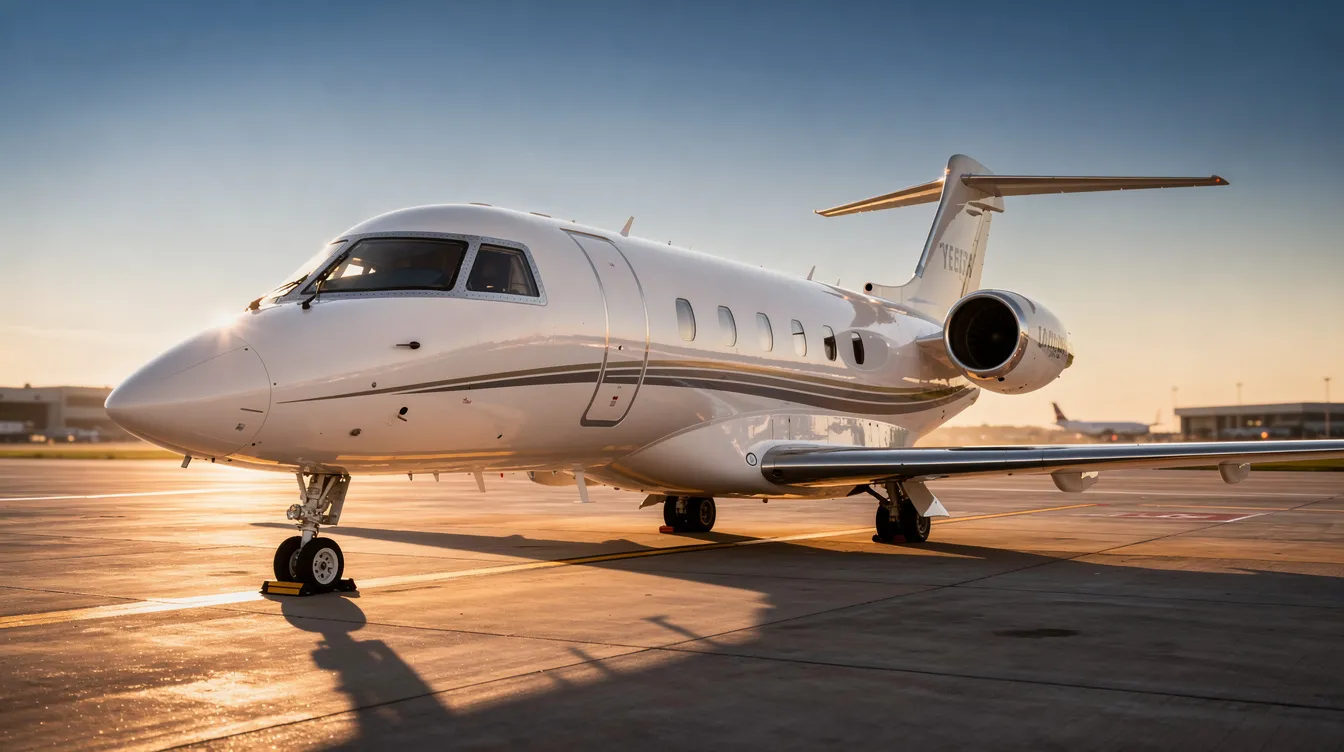
While US fighter aircraft and private jets serve very different missions, they share manufacturers, safety standards, and many core technologies. Avionics miniaturization, fly-by-wire controls, composite materials, and advanced navigation systems all migrated from military platforms like the F-16 and F-22 into modern business jets available in commercial aviation today.
Rigorous military certification, maintenance culture, and training standards influence the broader aerospace ecosystem. The same industrial base-Lockheed Martin, Boeing heritage, and top-tier engine manufacturers-builds both combat aircraft and the civilian jets that carry executives across continents. Global airspace procedures pioneered by military aviation ensure that every flight, whether military or civilian, operates within a tested safety framework.
BlackJet does not operate military aircraft, but benefits directly from this shared ecosystem, and its clients navigate the same market dynamics discussed in guides to the broader private jet price list and access models. The discipline that keeps a fighter fleet combat-ready translates into the safety standards, the focus on understanding jet card cost per flight hour, and the operational rigor that brands like BlackJet apply to private jet charter. For those curious about privately owned military jets or about how to buy a seat on a private jet, the crossover between combat aviation and private flight is closer than most people realize.
Private Air Superiority: How BlackJet Jet Cards Compare to Military-Grade Readiness
Just as the United States Air Force and Navy maintain fighter readiness to respond on demand, BlackJet's Jet Card members enjoy on-demand, priority access to private aircraft-no ownership required, no long-term fleet commitments.
BlackJet's Jet Card model-available in prepaid 25-hour or 50-hour blocks and built on a predictable jet card membership pricing structure-mirrors the military concept of guaranteed sortie generation: aircraft availability is assured when you need it, with 24/7 digital booking and real-time support.
Safety is non-negotiable. BlackJet applies proprietary certification standards, third-party safety ratings, and recurrent crew training that echo the disciplined maintenance and training culture surrounding military aircraft, reflecting the reality that private jets are exceptionally safe when operated under rigorous standards. Every operator in the network is vetted to standards that go beyond baseline regulatory requirements.
Sustainability matters, too. BlackJet commits to carbon-neutral flights through offsets and sustainable aviation fuel programs-reflecting the broader defense and aviation sector's increasing focus on emissions and fuel efficiency-while also helping clients explore more economical private aircraft and access options that balance cost and performance.
Discover how BlackJet's Jet Card programs give you a private version of air superiority-on your schedule, with military-inspired rigor and business-class discretion, similar to the options outlined in the best jet cards for frequent flyers.
FAQs on US Fighter Aircraft and Private Aviation Links
What is the difference between air superiority fighters and multirole fighters? Air superiority fighters like the F-22A are optimized to control the skies by defeating enemy aircraft. Multirole fighters like the F-35A and F-16 can handle both air-to-air combat and ground-attack missions, giving commanders more flexibility with fewer airframe types.
Why does the US operate both stealth and non-stealth fighter jets? Stealth fighters excel in highly contested space, but they are expensive to procure and maintain. Non-stealth fourth-generation jets like the F-15EX and F-16 provide numerical depth, heavy weapons capacity, and cost-effective sortie generation-essential for sustained campaigns.
How long does a typical fighter aircraft remain in service? Most US fighters serve 30–40 years with upgrades. The F-16 fleet averages nearly 34 years, while newer types like the F-35A are expected to serve into the 2060s with planned modernization.
What is the United States entering into next regarding fighter development? The Air Force's F-47 (NGAD) and the Navy's F/A-XX represent the next frontier-sixth-generation fighters with advanced stealth, autonomous teaming with drones, and capabilities that remain classified.
Do private jets use the same manufacturers or technologies as US military aircraft? Yes. Boeing, Lockheed Martin, and their suppliers build both military fighters and components found in business jets. Avionics, composite materials, fly-by-wire systems, and engine technology all flow between the defense and civilian sectors. Gulfstream and Bombardier also draw on aerospace heritage shaped by decades of military development.
Are private jets as safe as commercial airlines? When operated under rigorous standards, private jets are exceptionally safe. BlackJet's vetted operator network, proprietary safety certification, and recurrent pilot training ensure that every flight meets or exceeds the benchmarks set by the broader aviation industry.
Where can I learn more about Jet Card programs? For travelers who value the reliability and performance long associated with American air power, BlackJet offers a refined private flight experience. Explore BlackJet's Jet Card options and discover seamless, premium private travel-safety, sustainability, and flexibility built in.
Conclusion: The Enduring Power and Innovation of US Military Fighter Aircraft
US military fighter aircraft represent more than just cutting-edge technology; they embody a strategic advantage that underpins American global influence and defense readiness. From the stealth and sensor fusion of fifth-generation jets like the F-22A and F-35 family to the proven reliability and firepower of fourth-generation platforms such as the F-15EX and F/A-18E/F, the US maintains a balanced, capable, and adaptable air combat force.
Looking ahead, sixth-generation programs like the F-47 NGAD and F/A-XX will continue this legacy by integrating advanced stealth, autonomous teaming with drones, and network-centric warfare capabilities. These developments ensure that US air superiority will remain unmatched well into the future.
The influence of military aviation extends beyond the battlefield, shaping the safety, technology, and operational standards of private and commercial aviation. BlackJet leverages this heritage by offering Jet Card programs that echo the military's commitment to readiness, safety, and innovation—delivering private jet access with the same rigor and reliability.
For discerning travelers and aviation enthusiasts alike, understanding the evolution, capabilities, and future of US fighter aircraft offers insight into the very fabric of American air power and its broader impact on aerospace technology and luxury travel.
Elevate your travel experience with BlackJet—where military-grade rigor meets private aviation excellence.


 Sign up with google
 Sign up with Apple