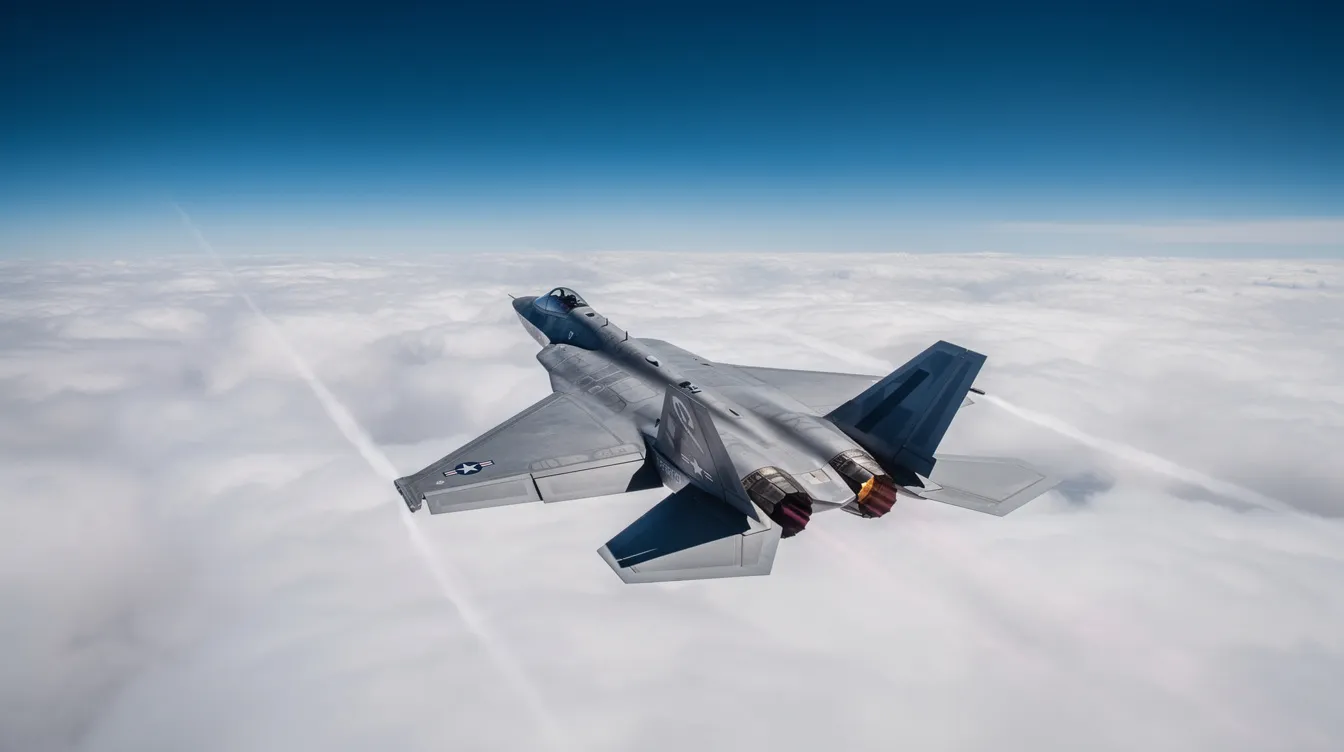
Introduction to US Fighter Jets
US fighter jets are advanced military aircraft operated mainly by the United States Air Force, Navy, and Marine Corps, and they have defined air combat for nearly eight decades, from early post–World War II planes like the F-80 Shooting Star to today’s stealth-driven fifth-generation aircraft such as the F-22A Raptor and F-35 Lightning II. These jets are the backbone of US air power, underpinning air superiority, deterrence, and rapid global response, and the USAF ranks number one out of 160 air forces worldwide, with an AIRS Index score of 100.0 out of 100.
For military aviation enthusiasts, defense analysts, and readers interested in how combat aircraft technology shapes national security and broader aviation, this guide examines the mix of 4th-generation and 5th-generation fighter jets serving across the Air Force, US Navy, and Marine Corps. It covers historical evolution, generational technology shifts, major aircraft models, current fleet size and modernization programs, stealth, sensors, weapons, training and safety, future fighter development, and contrasts between military and private aviation, including how BlackJet operates in the civilian space, offering premium private jet cards and on-demand private flights.
Historical Timeline: From Early Jets to Stealth Fighters
The story of US fighter jets tracks closely with the threats each era presented.
Late 1940s–1950s: The creation of the independent United States Air Force in 1947 formalized American air power as a separate service branch within the Department of Defense. The F-80 Shooting Star, originally a straight-wing subsonic design, gave way to swept-wing jets like the F-86 Sabre. Republic Aviation built the F-84 Thunderjet, which served in fighter and fighter-bomber groups assigned to NATO allies. The Korean War led to the world's first jet-versus-jet battles, where the F-86 proved decisive against Soviet-built MiGs.
1960s–1970s: The F-4 Phantom II, built by McDonnell Douglas, became the defining combat aircraft of the Vietnam War. It flew missions for the USAF, Navy, and Marines simultaneously. Early reliance on missile-only armament led to hard lessons about maneuverability and the need for guns, which shaped subsequent fighter programs.
1980s–1990s: Fourth-generation jets arrived: the F-15 Eagle, F-16 Fighting Falcon, F-14 Tomcat, and F/A-18 Hornet. Operation Desert Storm in 1991 demonstrated US air dominance, with coalition planes establishing air superiority within days. These platforms introduced fly-by-wire controls, pulse-Doppler radar, and multirole flexibility.
2000s–2020s: Fifth-generation fighters entered service. The F-22 Raptor achieved initial operational capability in 2005, and the F-35 Lightning II followed with USAF IOC in 2016. Both were intended to counter advanced surface-to-air missile systems and near-peer adversaries fielding integrated air defenses.
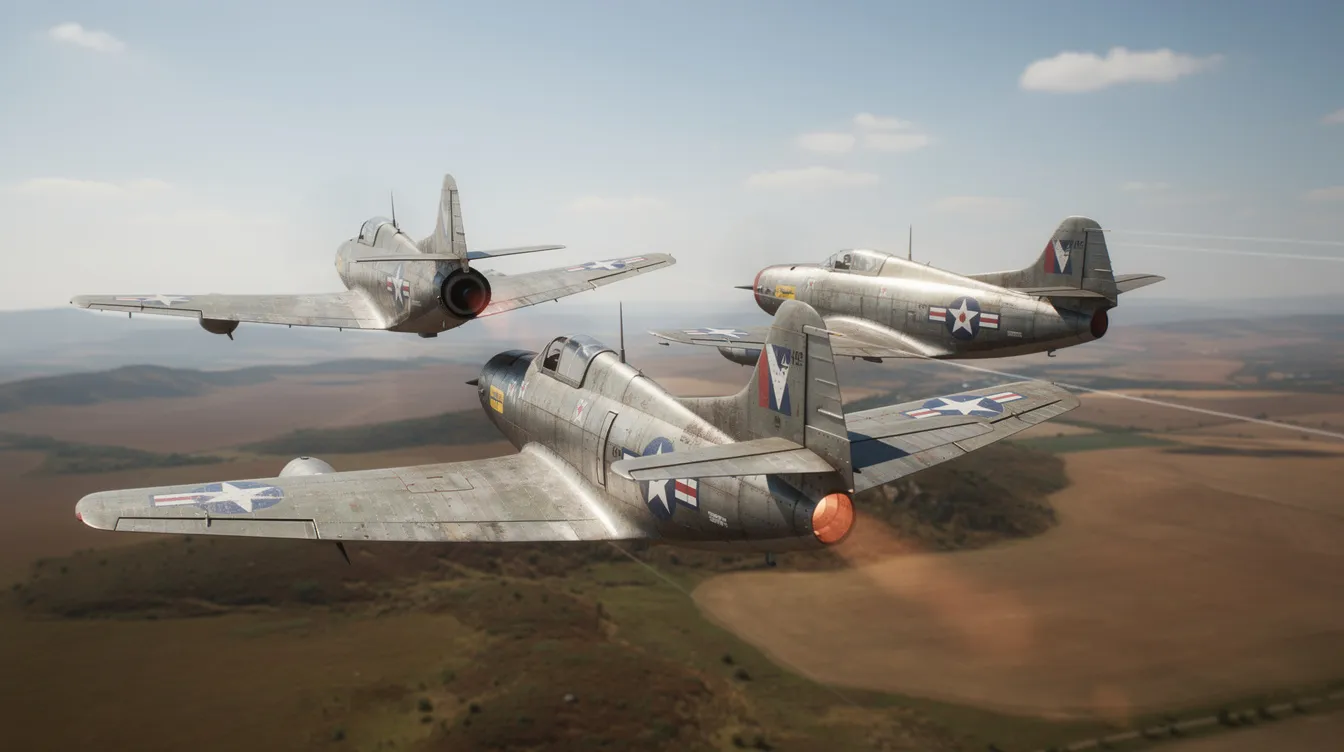
Generations and Key Technologies in US Military Aircraft Fighter Design
The "generation" concept groups fighter designs by shared technologies and capabilities, making it easier to compare aircraft across eras.
Second generation (late 1950s–early 1960s): Swept wings, early infrared-homing missile systems, and basic fire-control radars. The F-100 Super Sabre was the first USAF fighter to achieve supersonic speed in level flight. The F-104 Starfighter pushed altitude and speed further.
Third generation (1960s–1970s): Beyond-visual-range missile capability, improved radar, and dual air-to-air and strike roles. The F-4 Phantom II is the archetype, able to conduct reconnaissance, long-range strike, and air defense in a single sortie.
Fourth generation (mid-1970s–1990s): Fly-by-wire flight controls, high thrust-to-weight engines, look-down/shoot-down radars, and digital cockpits. The F-15, F-16, and F/A-18 remain in service today. 4th-generation and 4.5-generation fighters remain essential for high-volume sorties due to their proven capabilities and lower cost per flight hour.
Fifth generation (2000s–present): 5th-generation fighters utilize radar-evading shapes and advanced sensor fusion. Fifth-generation aircraft prioritize low-observable stealth design, internal weapons bays, and secure data links. The F-22 and F-35 define this category.
Emerging sixth generation: Next-generation fighters are being developed under the Next Generation Air Dominance program. Concepts include optionally crewed aircraft, manned-unmanned teaming, and AI-assisted decision-making, with fielding measures targeted for the 2030s.
Major US Fighter Jets by Era
Rather than an exhaustive list, here are standout models that shaped each period.
Era | Aircraft | Service and defining role or feature |
|---|
Early Cold War (1940s–1950s) | F-86 Sabre | Swept-wing fighter; prominent in Korean War air combat |
Early Cold War (1940s–1950s) | F-84 Thunderjet | Republic-built fighter-bomber used by the US and NATO partners |
Early Cold War (1940s–1950s) | F-100 Super Sabre | First USAF fighter to fly supersonically in level flight |
Vietnam and post-Vietnam (1960s–1970s) | F-4 Phantom II | Twin-engine multirole aircraft used by the Air Force, Navy, and Marines |
Vietnam and post-Vietnam (1960s–1970s) | F-8 Crusader | Navy carrier-based fighter known as the “last of the gunfighters” |
Fourth generation (1970s–1990s) | F-14 Tomcat | Navy fleet-defense fighter with variable-sweep wings |
Fourth generation (1970s–1990s) | F-15 Eagle / F-15E | Air superiority; F-15E also performs long-range precision ground attack |
Fourth generation (1970s–1990s) | F-16 Fighting Falcon | Lightweight multirole fighter with fly-by-wire controls |
Fourth generation (1970s–1990s) | F/A-18 Hornet | Carrier-based multirole aircraft, developed into Super Hornet and Growler variants |
Fifth generation (2000s–present) | F-22A Raptor | Stealth air-superiority fighter combining maneuverability and supercruise |
Fifth generation (2000s–present) | F-35A Lightning II | Air Force multirole stealth fighter for strike and reconnaissance |
Fifth generation (2000s–present) | F-35B Lightning II | Marine Corps short-takeoff-and-vertical-landing variant |
Fifth generation (2000s–present) | F-35C Lightning II | Stealth variant designed specifically for Navy carrier operations |
Early Cold War (1940s–1950s): The F-86 Sabre entered service in the late 1940s, while the F-84 Thunderjet served in ground-attack and escort roles. The F-100 introduced supersonic speed in level flight for the USAF.
Vietnam and Post-Vietnam (1960s–1970s): The F-4 Phantom II carried a heavy payload for air-to-air and strike missions across three services. The Navy's F-8 Crusader became known as the “last of the gunfighters” for its gun-centric armament.
Fourth-Generation Heavyweights (1970s–1990s): The F-14 Tomcat served Navy fleet defense, while the F-15 Eagle focused on air superiority. The F-15E supports long-range precision ground attack and air-to-air combat missions. The F-16 remains a lightweight multirole platform, and the F/A-18 evolved into the carrier-based F/A-18E/F Super Hornet and EA-18G Growler electronic-attack variant.
Fifth-Generation Icons (2000s–Present): The F-22A Raptor is a premier air-superiority fighter combining stealth and maneuverability; the USAF operates 183 as of 2026. The F-35A is a multirole stealth fighter designed for strike and reconnaissance missions, and the USAF plans to acquire 1,763. The F-35B serves the Marines, while the F-35C is designed for Navy carrier operations with advanced stealth capabilities.
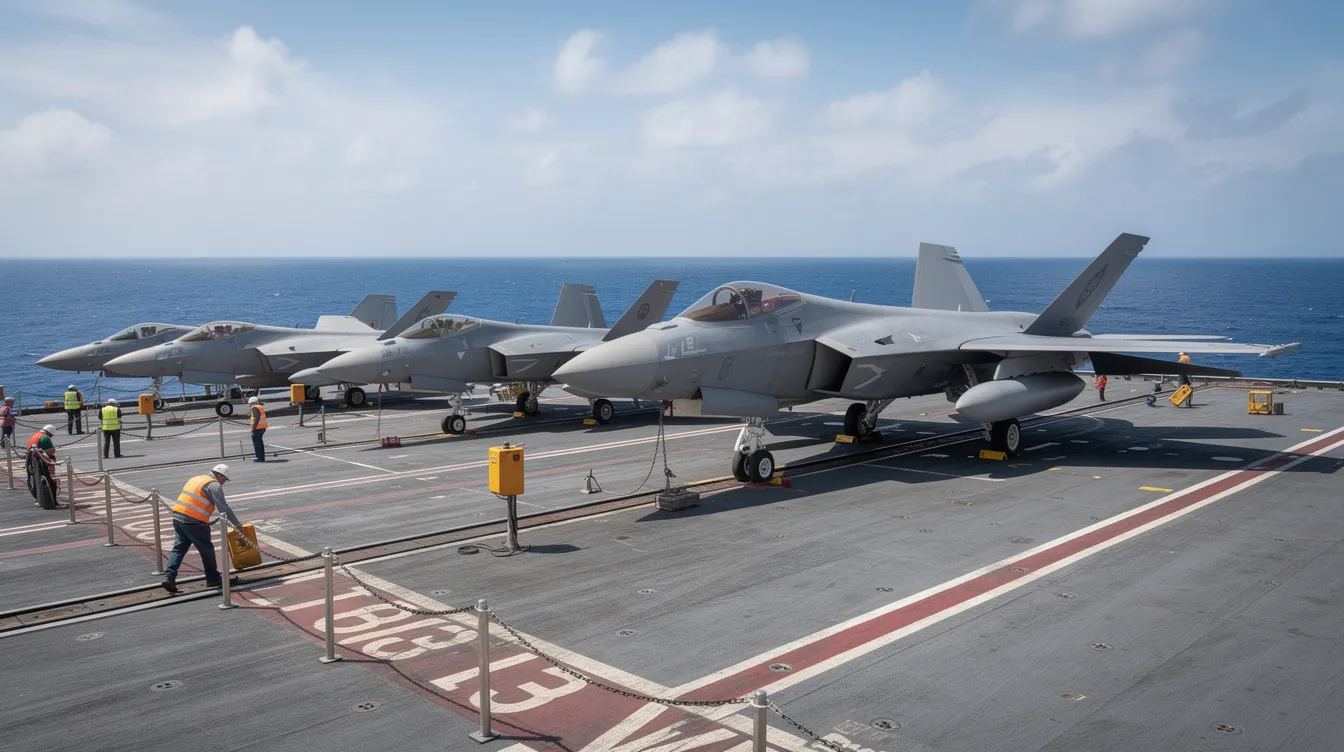
The Role of Fighter Jets in the United States Air Force and Navy
US fighter jets operate primarily under the United States Air Force and the US Navy, including Marine Corps aviation. Each branch uses them differently based on doctrine and operational needs.
USAF fighter missions include air superiority, defensive and offensive counterair, suppression of enemy air defenses, and close air support. Major commands organize assets into operational groups based on mission and geography. F-22s and F-35As handle air dominance and long-range strike, while F-15EX and F-16 squadrons fill multirole gaps.
Navy and Marine Corps roles center on carrier air wings, sea control, and power projection. The F/A-18E/F Super Hornet and F-35C deploy from carriers, while F-35Bs give Marines organic air power from amphibious ships. Fighters integrate with other military aircraft—AWACS for early warning, tankers for range extension, and electronic warfare platforms like the EA-18G Growler—rather than acting alone.
While BlackJet operates in private aviation rather than combat, both military and civilian sectors rely on rigorous safety standards, advanced avionics, and highly trained pilots. That shared commitment to safety and certification connects both worlds.
Current US Fighter Jet Inventory and Modernization Programs
The United States Air Force operates 12,894 military aircraft in 2026, making it the largest air fleet on the planet. Within that total, the USAF has 3,005 combat aircraft, including fighters and attack jets, 147 bombers in its active fleet, and 5,505 military helicopters for various missions. Another 3,080 aircraft are currently on order.
Despite these numbers, the fighter inventory sits below the statutory minimum. The Air Force is addressing this through several parallel efforts:
Legacy retirements and upgrades: Older F-15C/D models are being retired while the F-15EX features a modern digital cockpit and large weapons-carrying capacity, filling the gap. The A-10C Thunderbolt II is extended through 2030. F-16s are receiving mission-computer upgrades to keep the fleet relevant into the 2040s.
F-35 growth: More than 1,335 F-35s have been delivered globally. The Navy's primary aircraft authorization for F-35 is rising steadily, and the program is projected to become the most numerous US combat aircraft by the mid-2030s. Readers comparing access models for civilian travel can explore 50-hour jet card programs and 100-hour jet card costs.
Next-generation programs: The USAF's Next Generation Air Dominance program is pursuing a crewed sixth-generation fighter. The Collaborative Combat Aircraft program aims to pair crewed fighters with autonomous uncrewed aircraft, multiplying capability without proportionally increasing pilot risk. In April 2025, the Air Force demonstrated manned-unmanned teaming using MQ-20 Avenger drones alongside F-35s.
Budget realities: Industrial capacity, supply-chain fragility, and near-peer threats raise questions about whether production can keep pace with retirement timelines. In March 2026, a watchdog report highlighted challenges tracking millions of F-35 spare parts.
Stealth, Sensors, and Weapons: What Makes Modern US Fighters Lethal
Modern US fighters integrate advanced sensors and sensor fusion for improved situational awareness, turning individual jets into nodes in a larger combat network.
Stealth: Reduced radar cross-section comes from shaping, internal weapons bays, and radar-absorbing materials. The F-35 program has improved radar-absorbing materials and detection-signature management. Multirole stealth fighters like the F-35A can carry weapons internally to preserve stealth. Composite skins and material advances can also help reduce maintenance requirements.
Sensors: AESA radars provide rapid beam steering and jam resistance. The F-35's distributed aperture system offers spherical infrared coverage. Helmet-mounted displays let pilots cue weapons by looking at a target.
Weapons: AIM-120 AMRAAM supports medium-range air-to-air engagements, while AIM-9X Sidewinder is used in close-in missile fights. JDAM, Small Diameter Bomb, and standoff weapons such as AGM-158 JASSM enable precision strikes at different ranges.
Networking: Advanced networking allows modern aircraft to exchange information with other military platforms, including ships, ground forces, and satellites. Fighters become flying command nodes within a wider force.
Electronic warfare: Electronic warfare systems are central to aircraft survivability and situational awareness in modern combat. Jamming, decoys, and secure communications help fighters operate in contested environments where GPS and data links may be degraded.
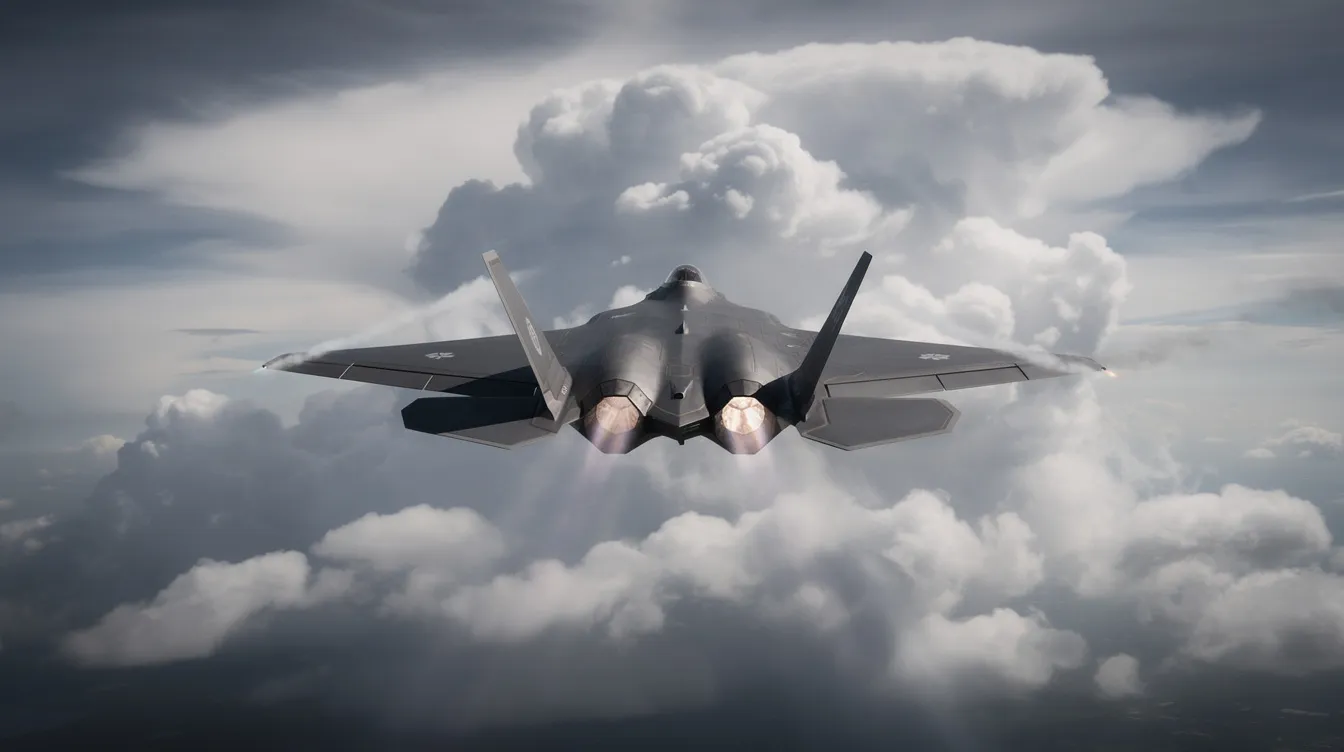
Training, Safety, and Support Infrastructure
Fighter jets are only as effective as the pilots, maintainers, and support systems behind them. Training videos and simulator sessions complement live flying to reduce cost and risk.
Pilot pipeline: Undergraduate pilot training at bases like Sheppard AFB in Texas, selection for fighters based on performance, then advanced training in the T-38 Talon or T-7A Red Hawk before operational conversion to platforms like the F-16, F-22, or F-35. In private aviation, pilots often come from airlines or premier fleets at top private jet companies known for safety and service.
Simulators: High-fidelity systems replicate complex combat scenarios, allowing pilots to practice sensor employment, threat reactions, and tactical decision-making without using flight hours. Civilian operators also assess training and service investments when choosing small private aircraft and operators.
Safety culture: Standardized procedures, constant evaluations, and strict maintenance regimes keep high-performance jets airworthy despite extreme stresses. The average age of USAF fighters is roughly 31.7 years, making disciplined inspection programs critical. Similar principles inform private jet safety and risk management.
BlackJet applies a parallel philosophy to private aviation: certified crews, rigorous audits, and modern avionics support passenger safety and operational reliability. The mission is passenger comfort rather than combat, but both worlds depend on strong standards and risk management.
US Fighter Jets vs. Private and Business Aviation
The contrast between military fighter jets and private jets comes down to mission. Fighters prioritize speed, maneuverability, and weapons carriage. Business jets optimize cabin comfort, range, noise reduction, and fuel efficiency, whether a traveler is considering entry-level private jet options or a larger aircraft.
Design trade-offs: A fighter accepts extreme g-loads and sacrifices cabin refinement. A large-cabin private jet, such as those in BlackJet's fleet, prioritizes passenger space, quiet interiors, and intercontinental range.
Technology crossover: Avionics, composite materials, navigation systems, and flight-management software developed for demanding aviation environments influence civilian platforms over time.
Regulatory frameworks: Military operations follow military specifications; private aviation adheres to FAA civil standards focused on passenger safety and aircraft certification.
Access models: BlackJet offers Jet Card programs, including its 25+ Hour Jet Card, giving frequent travelers prepaid access to private jets with 24/7 digital booking. This differs from government procurement and aircraft ownership while emphasizing reliability and operational readiness.
Future of US Fighter Jets and the Broader Aviation Ecosystem
The future of US fighter jets centers on tighter integration with AI, autonomous platforms, and networked operations. Fighter jets are transitioning to operate as integrated components of a larger combat network, with the pilot increasingly serving as a mission commander rather than a solo operator.
AI and autonomy: AI systems are increasingly used for flight management and sensor-data analysis in military aviation. US military aviation focuses on distributed teaming and networked wartime operations, with CCAs acting as force multipliers.
Sustainability: Research into sustainable aviation fuels and more efficient engines is gaining momentum in military and civilian sectors. For private aviation travelers, providers like BlackJet offer carbon-neutral flight options.
Manned-unmanned teaming: The Air Force envisions a future where a single pilot coordinates multiple autonomous wingmen, increasing the number of platforms available to support a mission.
US fighter jets remain central to national security, driving innovation across the aviation ecosystem. Whether you follow military developments or value safe, flexible private travel, both fields depend on technology, training, and performance. Frequent flyers can compare jet cards for cost and convenience.
Frequently Asked Questions About US Fighter Jets
What are the main US fighter jets in service?
The US military operates a mix of fourth- and fifth-generation fighters. Key aircraft include the F-15 Eagle and F-15EX Eagle II, F-16 Fighting Falcon, F-22A Raptor, and F-35 Lightning II. The Navy and Marine Corps also operate carrier-capable variants, including the F-35C and F-35B.
What is the difference between fourth- and fifth-generation fighter jets?
Fourth-generation fighters such as the F-15 and F-16 emphasize agility, proven multirole performance, and high-volume sorties. Fifth-generation aircraft such as the F-22 and F-35 combine low-observable design with advanced sensors and sensor fusion, helping pilots detect and respond to threats while sharing information across a combat network.
How many combat aircraft does the US Air Force operate?
The USAF has 3,005 combat aircraft in its 2026 inventory, including fighters and attack aircraft. The wider fleet comprises 12,894 active military aircraft, with 3,080 more on order. Inventory totals can change as aircraft are delivered, upgraded, or retired.
What is the F-22 Raptor designed to do?
The F-22A Raptor is a premier air-superiority fighter combining stealth, maneuverability, and advanced sensors. Its primary role is to establish air dominance, while its networked systems support coordination with other military platforms.
What is the role of the F-35 Lightning II?
The F-35 is a family of stealth multirole fighters designed for missions including strike, reconnaissance, and air defense. The F-35A serves the Air Force, the short-takeoff-and-vertical-landing F-35B serves the Marine Corps, and the carrier-capable F-35C is designed for Navy operations.
How are US fighter jets changing?
Modernization is moving toward networked operations, AI-assisted analysis, and collaboration between crewed fighters and autonomous aircraft. The Next Generation Air Dominance program is developing future air-dominance capabilities, while the Collaborative Combat Aircraft program aims to pair crewed fighters with uncrewed aircraft. Electronic warfare and secure data sharing remain central to survivability and situational awareness.
How does private aviation differ from military fighter aviation?
Fighter jets are built for combat missions, speed, maneuverability, and weapons carriage. Private jets are civil aircraft designed for passenger comfort, efficient travel, and range. They operate under civil aviation regulations and safety requirements rather than military specifications. For travelers seeking flexible private access without owning an aircraft, BlackJet Jet Cards offer prepaid flight time, digital booking, and real-time support.
Conclusion: What US Fighter Jets Reveal About Modern Air Power
US fighter jets have evolved from early jet-age interceptors into networked platforms that combine stealth, sensor fusion, electronic warfare, and precision weapons. The Air Force, Navy, and Marine Corps rely on a complementary mix of fourth-generation aircraft, fifth-generation fighters, and developing autonomous systems to meet different operational demands. As the USAF modernizes its fleet and pursues Next Generation Air Dominance and Collaborative Combat Aircraft, connectivity and adaptability are becoming as important as an individual aircraft’s speed or maneuverability.
That mission differs fundamentally from civilian travel, but both military and private aviation depend on disciplined maintenance, capable crews, and dependable technology. For travelers who value flexibility without aircraft ownership, BlackJet’s Jet Card programs provide prepaid access to private flights, supported by digital booking, real-time assistance, rigorous safety standards, and carbon-neutral flights. Explore premium jet access and discover a more seamless way to travel.


 Sign up with google
 Sign up with Apple