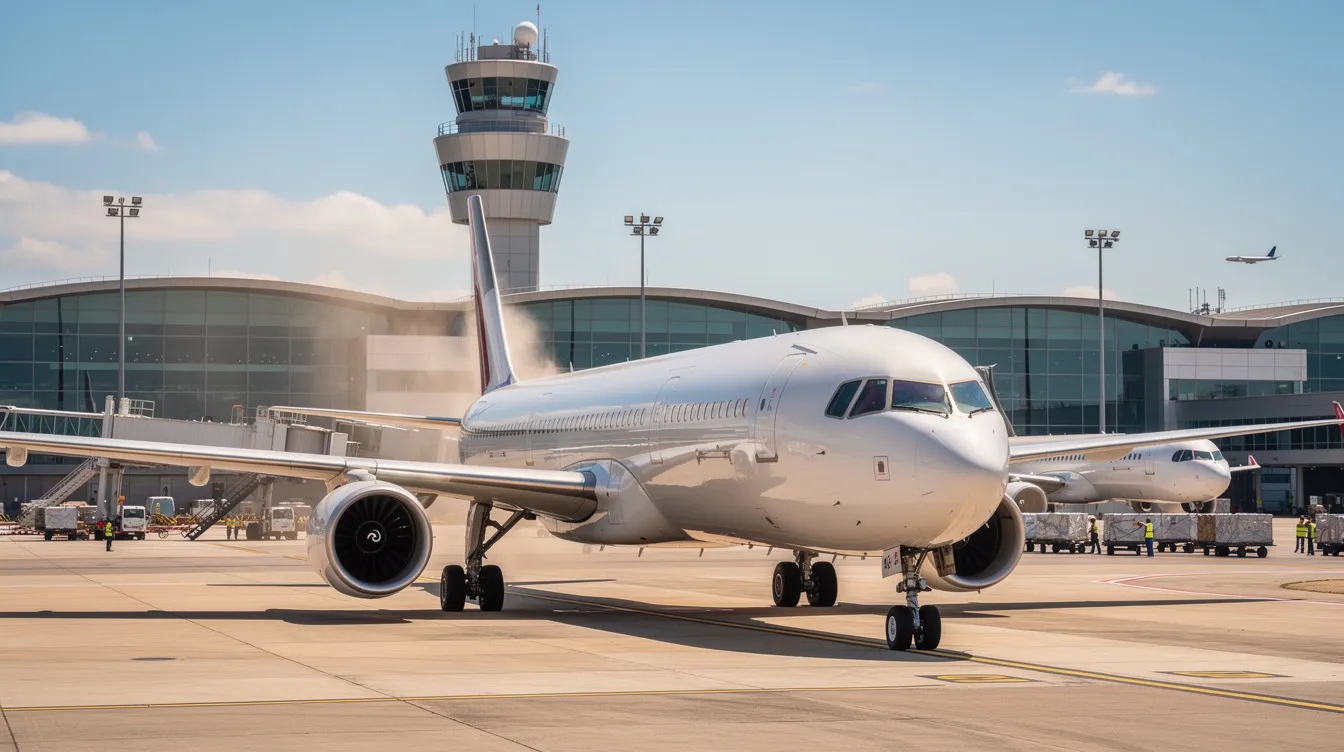
Executives and high-net-worth travelers rarely book travel impulsively. Most begin by pricing United Polaris, United Business, and United Premium Plus before evaluating whether a private jet solution might deliver more value per hour spent in transit. That comparison is the starting point for this guide.
Why High-Value Travelers Compare United Airlines With Private Jets First
United Airlines is a major U.S. legacy carrier with a broad domestic and international network, and on routes where it offers Polaris or business-class service, the real comparison for premium travelers is not just fare versus charter price, but commercial convenience versus private-aviation efficiency. The calculus is straightforward: what does each minute of travel actually cost you? For executives, high-net-worth individuals, and other premium flyers weighing United’s commercial product against BlackJet private jet access, that answer often comes down to time, privacy, and control as much as seat comfort.
Consider a New York–Chicago route. Flying commercial—even in a premium cabin—the door-to-door timeline typically stretches to four or five hours once you account for the drive to the departure airport, recommended two-hour early arrival, security screening, boarding groups, taxi time, deplaning, and ground transport on the other end. On a private jet departing from a nearby executive airport, total trip time compresses to roughly two hours.
Now scale that to long-haul international flights. A San Francisco to London journey in Polaris delivers genuine comfort during cruise, but the surrounding friction—customs queues, connections if routed through a hub, and arrival logistics—can add hours. A private charter eliminates most of those layers.
Here is a snapshot of the key differences:
Factor | United (Polaris / Business) | BlackJet Private Jet |
|---|
Airport arrival time | 2–3 hours before departure | 15–30 minutes |
Security & boarding friction | TSA lines, boarding groups | Direct ramp access |
Connection risk | Moderate (hub-dependent) | None (point-to-point) |
Productivity in-flight | Good, but shared cabin | Full cabin control |
Schedule flexibility | Fixed timetable | Depart when ready |
This comparison goes beyond cabin comfort: we examine United’s cabin options and network against private jet travel on schedule flexibility, airport and boarding procedures, inflight connectivity and service, disruption resilience, loyalty programs versus Jet Card models, safety standards, and environmental considerations. For travelers who put a premium on saved time, privacy, and productive travel hours, those distinctions shape whether United Airlines or private aviation delivers better overall value.
United Airlines Overview: Scale, Network, and Market Position
United Airlines is a major U.S. legacy carrier headquartered in Chicago, Illinois, operating under the umbrella of United Airlines Holdings. The airline traces its origins to 1931, when Boeing Air Transport and Varney Air Lines merged - historically known as United Airlines before later rebranding. Key milestones include the absorption of Capital Airlines in 1961, the introduction of the Boeing 247 in 1933 as the first all-metal airliner for non-stop transcontinental travel, and the transformative 2010 merger with Continental Airlines.
United Airlines was formed through the merger of several aviation entities and airlines, and today it operates an extensive domestic and international route network across six continents. United Airlines is a founding member of the Star Alliance, the world's largest global airline network, giving passengers access to over 1,300 destinations worldwide through partner carriers.
As of 2026, United's global network centers on major hubs including Chicago O'Hare, Denver, Houston Intercontinental, Newark, San Francisco, Washington Dulles, Los Angeles, and Guam for Asia-Pacific coverage. The carrier's mainline fleet stands at roughly 1,090 aircraft, making it one of the largest in the world by available seat-miles.
United Express, the regional network, feeds smaller cities into these hubs through partners like Mesa Airlines, SkyWest, and Republic Airways, contributing approximately 6% of total capacity in 2024. This hub-and-spoke architecture is powerful, Chicago-scale, but structurally different from the point-to-San Francisco/Washington that private aviation members typically use - departing from secondary airports minutes from their home or office, bypassing hubs entirely.
Cabin Classes on United: From Basic Economy to Polaris
United structures its cabin hierarchy across six tiers, each designed for a different traveler profile and budget:
Basic Economy
The most restrictive fare. Basic Economy has restrictions like no advance seat assignment, limited carry-on options, and no upgrade eligibility. Built for price-sensitive, one-way leisure trips.
United Economy
Standard economy seats with full access to onboard service, earlier seat selection, and more flexibility for changes.
Economy Plus
Extra-legroom seating toward the front of the economy cabin. Economy Plus seats offer 5 to 6 inches more pitch than standard economy, appealing to travelers who want comfort without paying for a premium cabin.
United Premium Plus
The international premium economy product with wider recliner-style seats, upgraded meals, and enhanced amenities.
United First / United Business
Domestic first class (recliner seats) and select premium transcontinental or international routes with fully flat seats.
United Polaris
The flagship long-haul international business class with lie-flat beds, elevated dining, and Saks Fifth Avenue bedding.
These cabins differ not just in seat size but in pricing logic and flexibility. Even within economy, multiple fare buckets determine whether you can change flights, select seats in advance, or access upgrades. The April 2026 rollout of base, standard, and flexible tiers in premium cabins added further complexity - even a Polaris ticket may not include lounge access unless you purchase the right fare level.
For luxury and corporate travelers considering private jets, the relevant comparison points are the top three tiers: United Premium Plus, United Business/First, and Polaris.
United Polaris: International Business Class vs Private Jet Cabins
United Polaris is the carrier's premier long-haul international product. Polaris seats convert into a 6-foot-6-inch flatbed, and on most Boeing 767, 777, and 787 wide-body aircraft, passengers enjoy direct aisle access via a 1-2-1 configuration. Saks Fifth Avenue bedding, multi-course dining with wine pairings, and premium amenity kits define the in-cabin experience.
United Polaris features lie-flat seats for long-haul flights, and the newest variant - Polaris Studio - raises the bar further. Debuting on 787-9 deliveries with the "Elevated interior" after 2026, these suites include sliding privacy doors, a companion ottoman, wireless charging, and a 27-inch 4K OLED screen - the largest seatback display among U.S. carriers. Premium cabins include amenity kits with eye masks and toiletries, and Polaris passengers can request pajamas on long-haul flights to regions like Asia and the Middle East.
The ground experience is equally elevated. Polaris passengers receive priority check-in and boarding, dedicated security lanes where available, and access to Polaris Lounges at major gateways - featuring à la carte dining, shower suites, and quiet rest areas.
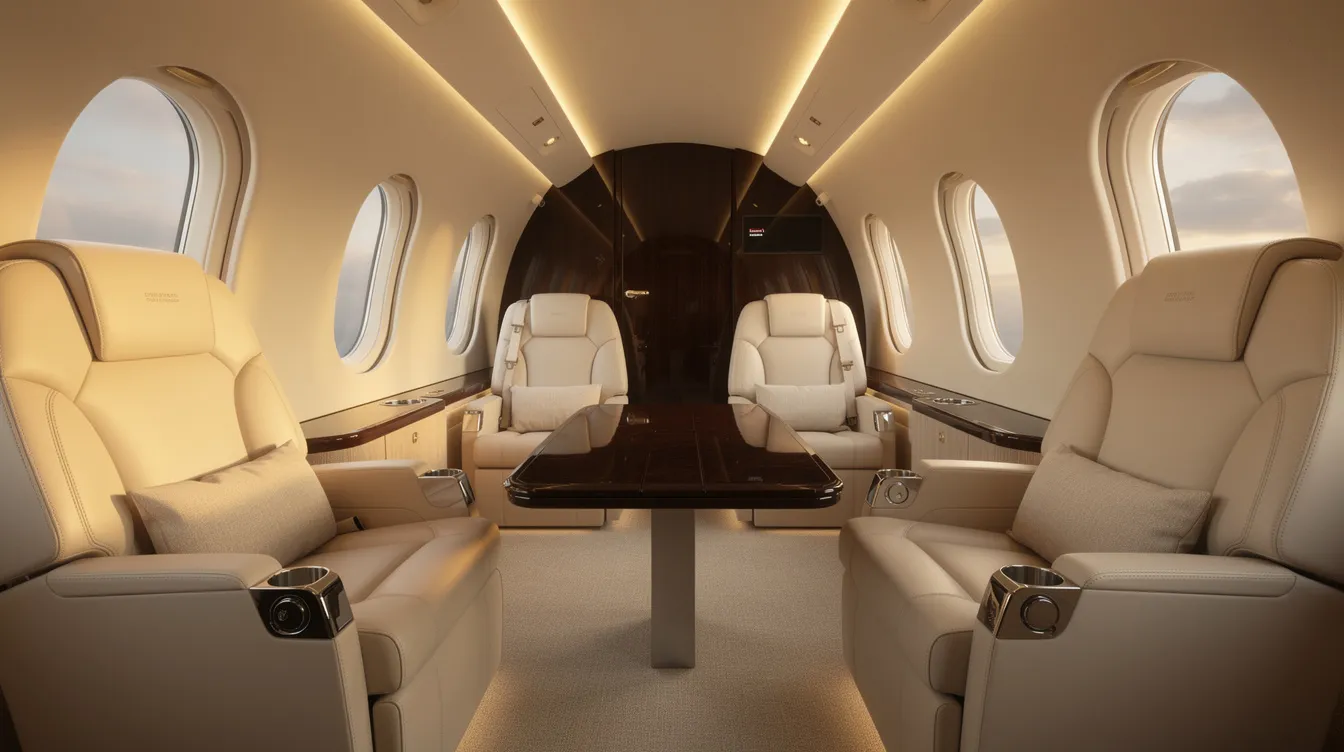
Yet even at this level, Polaris remains a shared cabin. Contrast that with a BlackJet midsize or large-cabin private jet: total privacy for confidential discussions, bespoke meal service tailored to individual preferences, full-cabin control of lighting, temperature, and schedule, and direct routing into smaller airports closer to city centers. For travelers whose time carries a measurable cost, those distinctions matter.
United First and United Business: Premium Service on Domestic and Mid-Haul Routes
United First on domestic routes delivers wider recliner seats - United First offers a 38-inch seat pitch on narrowbody aircraft - with complimentary meals on longer flights, free alcoholic beverages, and priority boarding. United business class appears on select premium transcontinental routes (such as York–Los Angeles or York–San Francisco) and some international segments, often featuring fully flat seats on 777-200ER configurations.
These cabins come with dedicated check-in lines, priority baggage handling, and enhanced meal service. United has also introduced premium seating on regional aircraft like the CRJ550, signaling its intent to capture higher-yield passengers who might otherwise choose private aviation or competitors.
For a practical comparison, consider a New York–Los Angeles premium transcontinental route. United First delivers roughly five hours of comfortable, lie-flat travel - after roughly two hours of airport friction on each end. A super-midsize charter through BlackJet's large cabin fleet covers the same distance with 20 minutes of pre-departure time, complete cabin privacy, and the option for six to eight passengers to split the cost - making the per-person economics surprisingly competitive with business-class fares.
United Premium Plus: United's Premium Economy and How It Compares
United Premium Plus provides wider seats with up to 7 extra inches of legroom compared to standard economy, enhanced dining, two free checked bags, and upgraded bedding. United Premium Plus features wider seats and more legroom across United's wide-body fleet.
Layout configurations vary by aircraft type:
Boeing 767 - 2-2-2 seating
Boeing 787 - 2-3-2 seating
Boeing 777 - 2-4-2 seating
Pitch hovers around 38 inches with meaningfully wider seat widths than economy. The product sits between economy and Polaris as a comfort compromise. Future 787-9 deliveries are expected to feature privacy dividers and improved cabin lighting, narrowing the aesthetic gap with business class.
For travelers who want more than economy but aren't ready to invest in Polaris or private jet access, United Premium Plus is a rational mid-tier option. On popular transatlantic routes, however, the price delta between Premium Plus and a BlackJet 25-hour Jet Card may be narrower than expected - especially for frequent travelers who value predictable hourly rates and cabin exclusivity and want to understand jet card cost per hour across providers.
Economy Plus, United Economy, and Basic Economy: Mass Market vs Personalization
Here is how United's three economy tiers break down:
Economy Plus - seats toward the front of the economy cabin with five to six inches of additional pitch. Higher-tier MileagePlus members receive complimentary Economy Plus seating.
United Economy - standard 31-inch pitch with full access to onboard service, earlier seat selection than Basic, and moderate change flexibility.
Basic Economy - the most restrictive fare. Limited changes, smaller carry-on allowances, and generally last to board.
For high-net-worth travelers, these cabins are typically reserved for short domestic hops or last-minute necessities - not core travel strategy. The difference between a standard economy seat and a fully tailored private cabin is not incremental; it is categorical.
One strategic use case: a family of four flying in Economy Plus to connect at a hub airport with a BlackJet private charter for the long-haul leg. This hybrid approach captures commercial efficiency on short segments and private-jet comfort where it matters most - demonstrating more ways to optimize a trip without defaulting to a single mode of travel.
Loyalty and Miles: United MileagePlus vs Jet Card Models
MileagePlus is United Airlines' frequent flyer program. MileagePlus membership is free, and miles never expire, making it accessible to any traveler. Members earn 5 to 11 miles per dollar spent on base fares depending on Premier status tier, and miles earned can be redeemed for flights and upgrades across United and Star Alliance partners.
Transfer partnerships - notably with Chase Ultimate Rewards - allow MileagePlus members to pool everyday spend into meaningful award balances. Long-haul premium-cabin redemptions, such as booking a Polaris round trip to Europe for 120,000 miles, remain one of the program's most compelling uses. You can also book award travel for partner airlines through your MileagePlus account.
Contrast this with BlackJet's Jet Card model: prepaid hours across specific cabin categories - light, midsize, super-midsize, or large cabin - at fixed hourly rates with guaranteed availability, similar to other jet card membership pricing models. No dynamic award pricing, no capacity controls, no blackout dates. You purchase access; you use it when you need it.
A sophisticated traveler can leverage both systems. Accrue MileagePlus miles through commercial flights and credit MileagePlus for occasional Polaris redemptions. Reserve BlackJet Jet Card hours for critical business trips where timing, privacy, or multi-stop itineraries make commercial aviation impractical, using a solid grasp of jet card pricing, costs, and benefits to benchmark value.
Elite Status on United: Premier Tiers and How They Work
United's public Premier tiers - Silver, Gold, Platinum, and 1K - are qualified through two metrics: Premier Qualifying Flights (PQFs) and Premier Qualifying Points (PQPs). There are also unpublished tiers above 1K, including Global Services and Chairman's Circle, offered by invitation only.
2026 Qualification Thresholds:
Tier | PQF + PQP Path | PQP-Only Path |
|---|
Silver | 15 PQF + 5,000 PQP | 6,000 PQP |
Gold | 30 PQF + 10,000 PQP | 12,000 PQP |
Platinum | 45 PQF + 15,000 PQP | 18,000 PQP |
1K | 60 PQF + 22,000 PQP | 28,000 PQP |
Premier status offers benefits like free checked bags, complimentary upgrades on eligible routes, Economy Plus access, priority check-in and boarding, and Star Alliance reciprocal recognition. But earning 1K status requires either 60 qualifying flights or $28,000 in qualifying spend annually - a substantial commitment that resets every year.
Compare that effort with the predictability of a Jet Card, which delivers premium service immediately upon purchase rather than after meeting annual thresholds, offering many of the same advantages highlighted in the best jet cards for frequent flyers. No status anxiety, no year-end mileage runs, no wondering whether your next move will qualify.
Check In and Airport Experience: United vs Private Terminals
United's check-in options span the United app, airport kiosks, standard counter lines, and Premier Access counters for Polaris, United Business, United First, and higher Premier elites. The travel ready center within the app lets passengers verify documents before arriving, while the bag drop shortcut expedites checked luggage for those who check in digitally.
Premier Access offers priority check-in, priority security lanes, and priority boarding - though the separately purchased version does not always include priority baggage handling. Even with these perks, United still recommends arriving two hours before domestic departures and three hours for international, and you still navigate the same terminal as every other passenger.
Now picture the private alternative through BlackJet's experience. You arrive at an FBO - a Fixed-Base Operator terminal - 20 to 30 minutes before departure. No lines, no kiosks, no TSA queues. Your vehicle pulls up; you walk across the ramp to your aircraft. Luggage is handled directly.
A side-by-side scenario makes this tangible: a 7:00 a.m. Monday departure from Chicago O'Hare on United means a 5:00 a.m. arrival, security, gate navigation, and boarding group waiting. A 7:00 a.m. private departure from nearby Chicago Executive Airport means arriving at 6:40 a.m. and being airborne by 7:05, whether you’ve chartered the whole aircraft or simply bought a seat on a private jet. That difference compounds across a year of travel.

Boarding Process and Turn Times
United's boarding groups follow a structured sequence:
Pre-boarding: Passengers needing assistance, families with young children, active-duty military, Global Services, and Premier 1K members
Group 1: Polaris, United First, United Business, Premier Gold, Platinum, Star Alliance Gold
Group 2: Premier Silver, Star Alliance Silver, purchased Premier Access, eligible credit card holders
Groups 3–6: Remaining passengers, ordered by seat location (window, middle, aisle); Basic Economy boards last
The boarding progression can take 30 to 45 minutes on a full plane. Overhead bin competition drives many travelers to pay extra for earlier boarding or maintain elite status year after year, simply to secure storage near their row.
On a private jet, passengers board immediately upon arrival - no groups, no overhead bin anxiety, no waiting in the jet bridge. Turnaround times between flights can be as short as 15 to 30 minutes. For executives managing back-to-back meetings in multiple cities, this difference isn't a luxury; it's an operational necessity.
Lounges and Ground Comfort: United Club and Polaris vs FBO Lounges
United operates several lounge tiers. The United Club network spans major domestic and international hubs, accessible via annual membership, same-day premium cabin tickets, or Star Alliance Gold status. The Polaris Lounge - available at hubs like ORD, EWR, SFO, IAH, LAX, and IAD - offers restaurant-quality à la carte dining, premium bar service, shower suites, and quiet rest spaces designed for long-haul business travelers.
United also operates smaller United Club Fly lounges for quick connections and an Arrivals Lounge at London Heathrow.
FBO lounges used by BlackJet clients occupy a different category entirely: low crowd levels, direct tarmac views, private meeting rooms, high-speed connectivity, and dedicated staff who coordinate catering, ground transport, and last-minute schedule changes on your behalf. There's no membership card to flash, no crowded buffet - just quiet, purposeful space.
For travelers making confidential calls or managing high-profile clients, lounges aren't a perk. They're part of the total journey's privacy equation.
Wi Fi and Inflight Connectivity on United Flights
United's wi fi coverage spans most mainline aircraft, with free messaging available on many domestic and international flights. Full internet access starts around $8 or 1,600 miles for MileagePlus members, and some T-Mobile customers receive complimentary connectivity on select flights.
Speed and reliability, however, remain variable. The carrier is transitioning toward faster satellite systems under the United Next initiative - including planned Starlink integration - but current-generation equipment can struggle with video chat or large file transfers during peak usage.
Private aviation connectivity tends to be more consistent. On business-configured jets, passengers can expect reliable high-speed service suitable for secure video conferences and real-time data collaboration. The cabin is yours, so bandwidth isn't shared with 200 other passengers.
Consider a working example: a CFO needing to finalize a cross-border acquisition during a Newark–Frankfurt flight. In Polaris, she has a lie-flat seat and screen privacy - but cabin noise, neighboring passengers, and intermittent bandwidth may force her to defer critical calls. On a BlackJet super-midsize charter, the same flight becomes a six-hour private office with guaranteed connectivity and zero interruptions.
In-Flight Entertainment and Productivity
United's entertainment portfolio includes seatback screens with on-demand movies and DIRECTV on over 200 aircraft, plus streaming via the United app on 450-plus planes. Passengers need to update the United app before travel to access content. The system supports accessibility features including audio descriptions and closed captions, and passengers can even play games on longer flights to pass the time.
These systems serve leisure travelers well. But for those trying to work, cabin noise, tray table limitations, and seat proximity create friction. The shared environment makes it difficult to spread documents, take calls, or hold strategy sessions.
On a private jet, your devices are your entertainment system - or your workspace. You can dim cabin lights, hold an in-cabin planning session with colleagues, review sensitive data on a large screen, or simply rest without interruption. For frequent flyers, a 100-hour Jet Card cost analysis helps determine whether this level of productivity justifies a larger precommitted block of private flying. The cabin adapts to your agenda, not the other way around.
Dining, Catering, and Onboard Service
Polaris and United Business
United First (domestic)
Premium Plus
Economy
Long-haul international (all cabins)
Flight attendants deliver these services on a fixed schedule, optimized for cabin-wide efficiency rather than individual preference. Polaris passengers receive Saks Fifth Avenue bedding, amenity kits, and can request pajamas on ultra-long routes - subject to availability and early requests.
Compare this with BlackJet's fully bespoke inflight catering: customized menus accommodating dietary restrictions, specific wine or champagne labels, and meals staged around your meeting and sleep schedule. If you need a working lunch at 14:00 and a light dinner at 19:00 before landing, the cabin crew builds around your timeline - not the other way around- and many travelers pair this level of personalization with strategies to fly private more affordably through cards, memberships, or opportunistic charter.
United App, Digital Tools, and Travel Management
Booking and Check-In
Booking and Check-In: The United app allows users to book flights easily, manage a reservation, and handle most travel logistics from a single interface. Users can check in and get boarding passes via the app, reducing the need for counter interaction.
Real-Time Updates
Bag Tracking
Terminal Guide
Account Management
Other features include:
Transfer time estimates for connections
Seat changes, upgrade requests, and self-serve rebooking during disruptions
Lock screen widgets for quick access to your boarding pass and real-time updates
In-app wi fi purchase and entertainment streaming
The app helps passengers navigate complex itineraries, though some users report intermittent login issues and occasional crashes - friction points the airline continues to address.
BlackJet's digital experience takes a different approach: a streamlined booking interface for Jet Card members, real-time trip support, and human concierge backup available 24/7 to handle complex multi-leg private itineraries. When you need to add a stop, shift a departure by two hours, or arrange ground transport at a secondary airport, a person - not an algorithm - handles it, reflecting the broader suite of premium private jet card programs and services BlackJet offers.
Safety, Regulation, and Operational Oversight
United Airlines Safety
United operates under FAA Part 121, the most stringent regulatory framework for commercial airlines. Crew training, maintenance protocols, and operational standards are subject to continuous internal and external audits. Unionized pilots (ALPA), flight attendants, and maintenance staff contribute to a deeply structured safety culture refined over decades of operations.
Historical incidents - including high-profile accidents and operational disruptions - have driven ongoing improvements in training, technology, and passenger handling procedures.
BlackJet Safety
BlackJet applies its own rigorous safety framework through BlackJet Certified, a proprietary operator-vetting process that includes third-party audits, ARGUS or Wyvern-style ratings, and strict aircraft and crew qualification standards, comparable to leading private jet companies for luxury travel and exceptional service. Private charter flights operate under Part 135 regulations, which carry their own comprehensive safety requirements, and should be evaluated alongside a clear understanding of the broader private jet price list and access options.
Regulatory Frameworks
Both commercial and properly curated private aviation can be extremely safe when managed to the highest standards. The key is transparency: knowing exactly who operates your aircraft, how they maintain it, and what oversight exists beyond the regulatory minimum.
Environmental Initiatives: United vs Carbon-Neutral Private Aviation
United Airlines Environmental Initiatives
United's greenhouse gas emissions are over 98% from jet fuel, making fleet efficiency and alternative fuels the most impactful levers. The airline flew the first commercial flight on biofuel in 2011 and invested $30 million in Fulcrum BioEnergy in 2015 to accelerate sustainable aviation fuel development.
United's alternative fuel can reduce lifecycle carbon emissions by over 80%, and the carrier became the first airline to use sustainable fuel overseas in 2022. Under the United Next initiative, the airline plans to produce 180 million gallons of sustainable fuel annually while taking delivery of over 250 new, more efficient aircraft by April 2028.
Additional efforts include replacing paper manuals with iPads, repurposing amenity kits, and forming corporate sustainability partnerships. United Airlines is heavily investing in passenger experience, including modernizing cabin interiors and enhancing connectivity - improvements that also support operational efficiency.
BlackJet Sustainability Approach
BlackJet takes a complementary approach: every flight is carbon neutral by default through verified carbon-offset programs, at no extra cost to members. Clients can also choose enhanced sustainability options such as SAF contributions for specific trips. For eco-conscious travelers, the optimal strategy may combine both: leveraging United's large, relatively efficient mainline fleet for some routes while using carbon-neutral private flights for critical segments where schedule and access are paramount, recognizing that private jets remain a highly safe mode of travel when operated under robust standards.
Controversies, Incidents, and Brand Perception
Several high-visibility incidents have shaped United's public image among premium travelers. The 2017 forced removal of passenger Dr. David Dao from Flight 3411 drew global media coverage and led to revised compensation policies and customer-service training. The "United Breaks Guitars" viral campaign years earlier left lasting impressions on brand perception. Enforcement actions, including a 2021 mail-scan fraud fine, added to the narrative.
On the security front, the 2019 DataSpii exposure raised concerns about the handling of check-in data, prompting United to launch a bug bounty program. Historic safety events like Flight 232 remain part of aviation's collective memory, though United's operational reliability has improved substantially since.
These episodes help explain why some high-profile individuals and corporations diversify their travel exposure. A mix of commercial and private aviation allows them to manage reputational, operational, and security risk - choosing the right tool for each country, date, and context.
When United Makes Sense – and When Private Jets Are the Better Strategy
When United Airlines Makes Sense:
Solo long-haul in Polaris: Using MileagePlus miles or a co-branded credit card for a return flight to Europe or Asia, where Polaris comfort is strong, and cost per seat-mile is low.
Routes with high frequency: Multiple daily departures between major hubs, reducing risk from delays or missed connections.
Schedule flexibility: When your itinerary allows you to arrive at the airport well ahead of departure and tolerate potential disruptions.
When Private Jets Are the Better Strategy:
Multi-city same-day itineraries: Flying Los Angeles to Aspen to San Jose in a single day, which would require an overnight on commercial schedules.
Confidential deal-making: When the cabin needs to double as a boardroom.
Team travel: Transporting four to ten executives where shared cost makes private per-person economics competitive, especially when you quantify jet card cost per hour for larger cabins and compare it with premium fares.
Remote airports: Reaching destinations like Seattle-area secondary fields, mountain resorts, or island strips where commercial service is limited or nonexistent; in these cases, access to the largest private jets for sale or charter can unlock nonstop reach and true door-to-door efficiency.
A London–Frankfurt–Zurich client roadshow on United requires two separate commercial itineraries across Seattle-area plus ground transport and hotel stays. On a BlackJet business jet charter, the same roadshow compresses into a single travel day - departing each city on your schedule, not the airline's.
BlackJet is not a replacement for United in every scenario. It is a strategic, high-leverage complement for the moments when time, privacy, and control matter most, even for travelers exploring the cheapest private jet options and entry-level aircraft as a starting point or weighing whether 10 million dollar private jet options, 15 million dollar private jet features, or a 20 million dollar private jet and other ultra-expensive private jet options and full ownership better match their mission profile.
Frequently Asked Questions about United Airlines and Private Jet Travel
What destinations does United Airlines fly to?
United Airlines flies to over 1,300 destinations worldwide through its global network and Star Alliance partners, covering six continents and serving major hubs like Chicago O'Hare, Denver, Newark, and San Francisco.
How does United Airlines' Polaris business class compare to private jet cabins?
United Polaris offers lie-flat seats, premium dining, and lounge access on long-haul international flights. However, private jets provide full cabin privacy, bespoke catering, flexible schedules, and access to secondary airports closer to your final destination.
What is United’s MileagePlus program and how does it differ from a Jet Card?
MileagePlus is United's frequent flyer program that earns miles redeemable for flights and upgrades, subject to award availability and dynamic pricing. A Jet Card offers prepaid private jet hours with fixed rates and guaranteed availability, prioritizing flexibility and privacy.
Can I use the United app to manage my flights and check in?
Yes, the United app allows you to book flights, check in, get boarding passes, track bags, view real-time updates, and navigate terminals with built-in maps.
What are the environmental initiatives of United Airlines compared to private jets?
United invests in sustainable aviation fuels and fleet modernization to reduce emissions. Private jet companies like BlackJet offer carbon-neutral flights through verified offsets and sustainable fuel options, supporting eco-conscious travel choices.
How does the boarding process differ between United Airlines and private jets?
United boards passengers in multiple groups, often requiring 30–45 minutes, while private jet passengers board immediately upon arrival with no lines or waiting.
When is flying United Airlines more advantageous than using a private jet?
United is ideal for solo long-haul travel in Polaris, frequent routes with multiple daily departures, and when schedule flexibility is less critical.
When should I consider private jet travel over United Airlines?
Private jets are preferable for multi-city same-day itineraries, confidential meetings, team travel, and access to remote or secondary airports not served by commercial flights.
How BlackJet's Jet Card Model Compares to United's Frequent Flyer and Credit Card Ecosystem
A Jet Card is a pre-purchased block of private jet hours - typically in 25- or 50-hour programs - across multiple cabin sizes. Members lock in fixed hourly rates, receive guaranteed aircraft availability, and avoid the unpredictability of on-demand charter pricing, with many evaluating programs using detailed 50-hour Jet Card cost guides. You select flights based on mission requirements, not fare class availability.
United's co-branded credit cards and MileagePlus redemptions earn miles on everyday spend, which can offset the cost of commercial flights. But those miles are subject to dynamic pricing, capacity controls, and peak-travel constraints. A Polaris award seat to Spain or Canada during high season may cost double the off-peak rate - or simply not be available on your preferred page of search results, which is why many premium travelers also compare NetJets jet card costs and structures as an alternative store of travel value.
Here is a practical use case: an executive who uses a premium United credit card for everyday purchase activity, accumulating miles for occasional Polaris trips. For quarterly global roadshows and urgent board meetings, she relies on a BlackJet Jet Card across super-midsize and large cabin categories, having first reviewed a detailed 100-hour Jet Card cost comparison to benchmark long-term value. Last year, this hybrid approach saved her roughly 40 hours of total travel time across 12 private trips - time reinvested in the business decisions that justify the travel in the first place.
The smartest travel strategy isn't choosing one mode exclusively. It's understanding exactly when each tool serves you best - and having both available when the moment calls for it.
Discover how BlackJet's Jet Card programs can reshape the way you travel. Explore premium jet access designed for travelers who already understand what commercial aviation delivers - and where it falls short.


 Sign up with google
 Sign up with Apple