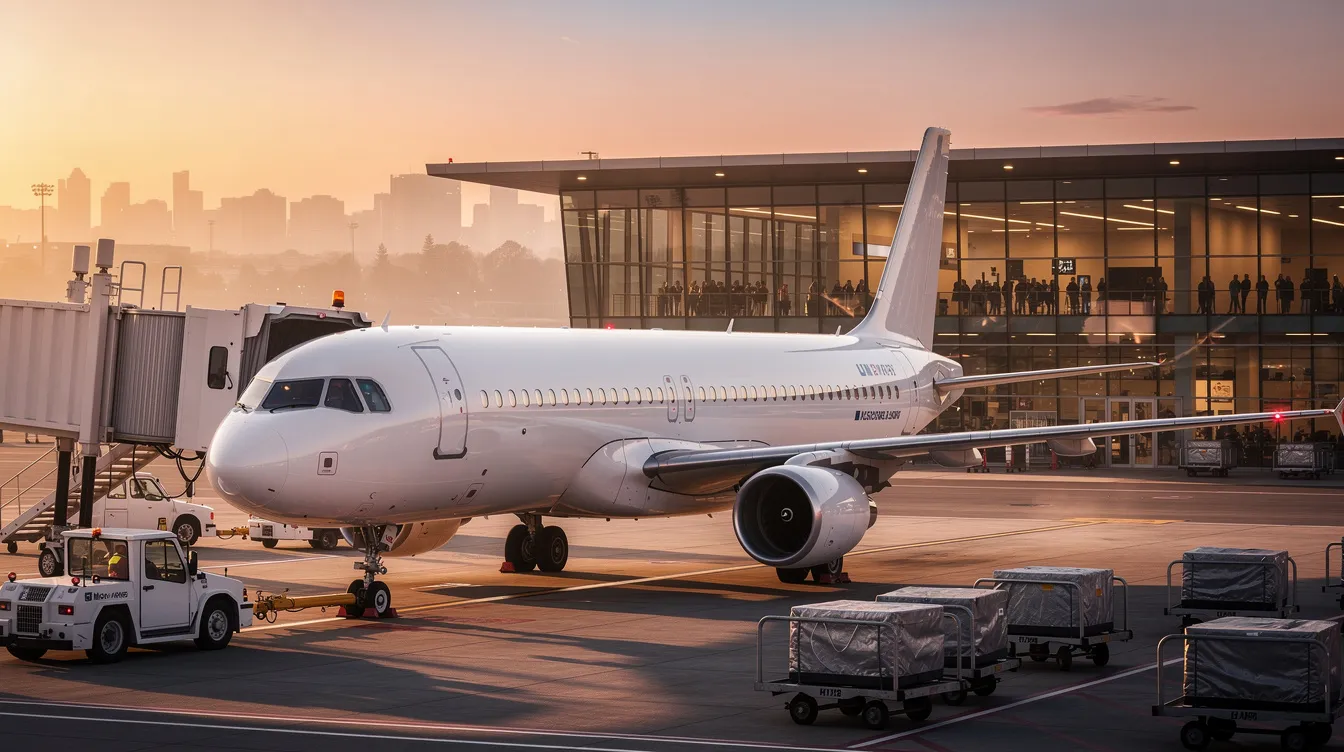
For the executive who treats time as a non-renewable resource, every flight decision carries a cost that extends well beyond the ticket price. This guide is tailored for high-end travelers and executives evaluating the trade-offs between United's 737 MAX 8 premium cabins and private jet solutions. Choosing the right travel solution can have a significant impact on productivity, comfort, and overall travel experience for discerning flyers. United Airlines now operates one of the most ambitious narrowbody route maps in North America, stretching the 737 MAX 8 across seasonal transatlantic services and ultra-long domestic segments that were unthinkable a decade ago. The Boeing 737 MAX 8 is a modern, fuel-efficient narrowbody aircraft with a typical passenger capacity of 166 seats. The 737 MAX 8 is designed for short- to medium-haul routes. Yet for frequent flyers who've sat in row two of a 166-seat aircraft for nearly eight hours, the question inevitably surfaces: is there a better way to cover the same ground with more control, more privacy, and fewer compromises?
This post examines how United deploys its MAX 8 fleet in 2026, what the aircraft's safety record and grounding history mean for today's traveler, and how the onboard experience stacks up against private jet access through a Jet Card program like BlackJet's. The goal is not to dismiss commercial aviation but to give discerning travelers the data they need to make a strategic decision about where their hours are best spent.
United's Boeing 737 MAX 8 Operations in 2026: Key Routes and Role in the Network
United Airlines operates approximately 123 Boeing 737 MAX 8 aircraft as of mid-2026, making it one of the largest MAX 8 operators in the world. These aircraft are configured with a typical passenger capacity of 166 seats across two cabin classes and are powered by CFM International LEAP-1B engines, which deliver roughly 14% better fuel efficiency than their predecessors. The Boeing 737 MAX 8 cruises at approximately Mach 0.79 with a range of approximately 3,500 nautical miles — enough to push the aircraft well beyond the short- to medium-haul routes it was originally designed for.
From hubs at Newark (EWR), Chicago O'Hare International Airport, Houston Intercontinental (IAH), and Washington Dulles (IAD), United has systematically deployed the MAX 8 on longer narrowbody routes that open "thinner" markets where widebody aircraft would fly half empty. The strategy has reshaped what a single-aisle Boeing can do in a major airline's network.
The Longest 737 MAX 8 Flights United Operates
As of the July–December 2026 schedule, United's longest MAX flight is 7 hours and 55 minutes — the seasonal service from Santiago de Compostela to Newark. That route, inaugurated in May 2026, operates three times weekly and represents one of the most aggressive narrowbody deployments over the Atlantic.
Here's how United's longest MAX 8 segments compare:
Route | Approx. Flight Time | Notes |
|---|
Santiago de Compostela (SCQ) → Newark (EWR) | 7h 55m | Longest overall MAX flight; seasonal 3x weekly |
Newark (EWR) → Anchorage (ANC) | 7h 50m | Longest domestic MAX flight; seasonal May–Sept |
Newark (EWR) → Madeira (FNC) | 7h 45m | Seasonal transatlantic to Portuguese islands |
Dulles (IAD) → Anchorage (ANC) | 7h 45m | Second hub serving Alaska nonstop |
Glasgow (GLA) → Newark (EWR) | ~7h (varies by wind) | Glasgow to Newark is now operated by the MAX for the first time |
United's longest MAX flights include four to Anchorage from various hubs, underscoring how the aircraft's range lets United serve remote domestic destinations without widebody economics. ORD–Anchorage and other long domestic segments further illustrate this operational range. Flight times, block times, and seasonal schedules can shift due to winds and payload decisions, so this data should be read as representative of the July–December 2026 window.
Thin Routes and the Widebody Alternative
The logic is straightforward: cities like Santiago de Compostela, Madeira, and Anchorage don't generate enough demand year-round to justify a 250-seat widebody. The MAX 8 lets United serve these markets profitably on a seasonal basis, capturing premium leisure and business traffic without oversupplying seats. It's a working model that depends on the aircraft's range, efficiency, and lower operating cost per flight.
But a 166-seat narrowbody still means a fixed schedule, a single departure time, and the same airport congestion whether you're in row one or row thirty. For executives and high-net-worth travelers who currently rely on these long-haul MAX 8 services, BlackJet's Jet Card model offers a fundamentally different proposition: access to multiple aircraft categories — light, midsize, super-midsize, or large cabin — tailored to the mission at hand. Where United must choose one aircraft for an entire route, BlackJet matches cabin size and range to each client's itinerary, providing the control and privacy that no commercial cabin can replicate.
Safety, Grounding History, and How the 737 MAX 8 Is Flown Today
The 737 MAX cannot be discussed without acknowledging the events that fundamentally altered public trust in Boeing's best-selling narrowbody. The grounding followed two fatal crashes — Lion Air Flight 610 in October 2018 and Ethiopian Airlines Flight 302 in March 2019 — killing over 346 people. The Boeing 737 MAX series was grounded for over six months while regulators worldwide investigated the Maneuvering Characteristics Augmentation System (MCAS), the flight-control software at the center of both tragedies.
The Grounding and Its Aftermath
While much of the mid-2019 media coverage centered on the MAX 8 and MAX 9, United Airlines stored 14 Boeing 737 MAX 9 aircraft in Arizona — in the desert near Phoenix and Goodyear — where dry conditions preserved airframes during the prolonged grounding. United's MAX operations resumed amid ongoing safety scrutiny, with both the airline and Boeing working to rebuild confidence through transparency, technical fixes, and revised crew training programs.
What Changed: Recertification and MCAS Redesign
The FAA's recertification process involved substantive engineering and procedural changes that went well beyond a software patch. The Boeing 737 MAX series underwent rigorous safety redesigns following global regulatory scrutiny after its grounding. Key updates include:
The Maneuvering Characteristics Augmentation System (MCAS) is redesigned to limit authority compared to earlier models. It now activates only once per elevated angle-of-attack event, rather than repeatedly as before.
The Boeing 737 MAX 8 features an advanced flight-control system with dual Angle-of-Attack sensors. If those sensors disagree by more than approximately 5.5 degrees, MCAS is automatically inhibited.
Flight Control Computer software was updated with cross-channel monitoring to detect faults and prevent runaway trim.
Pilots already type-rated on the 737 NG received difference training, including full flight simulator sessions on MCAS failure scenarios — now part of recurrent training requirements.
These changes represent a meaningful engineering response. But for travelers who still associate the MAX family with those events, perception is its own reality.
Real-World Emergency Response: UA2092
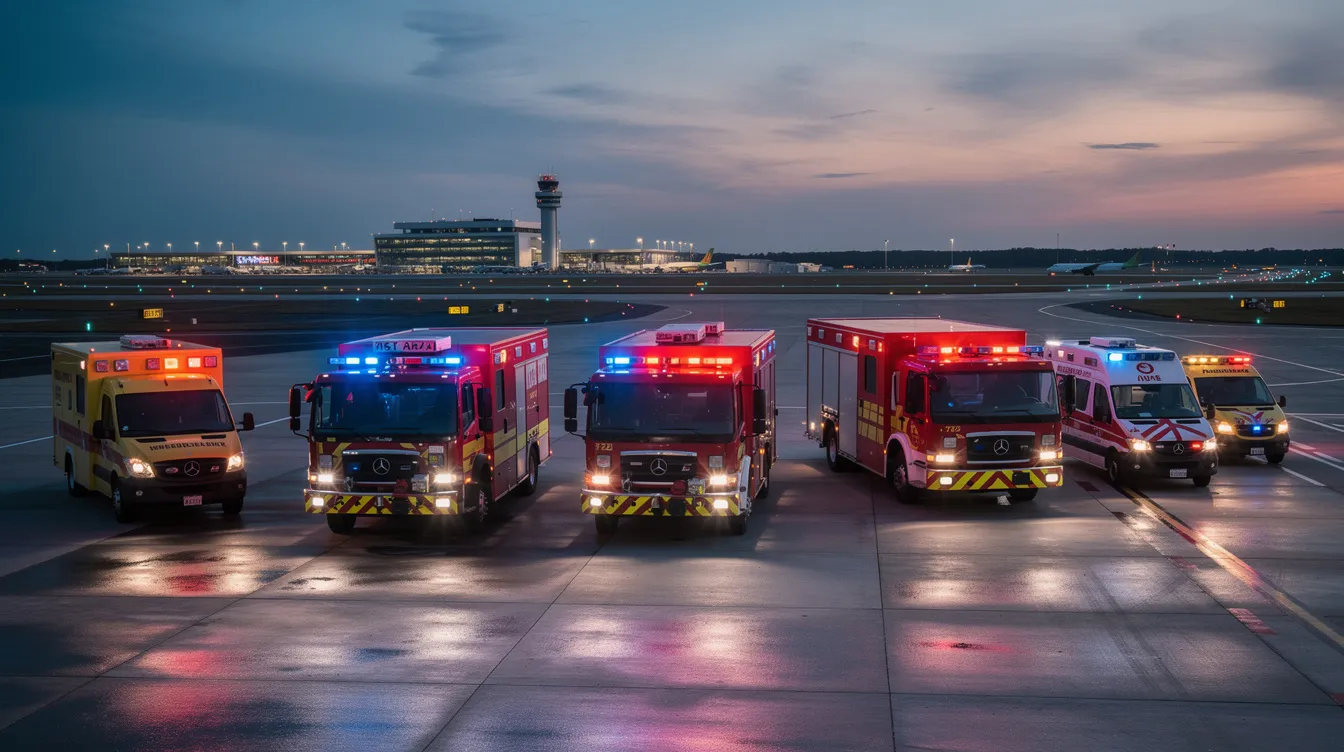
Safety systems are only as effective as the crew and response protocols behind them. A recent example illustrates how those systems work in practice. United flight UA2092 declared an emergency mid-air due to a bomb threat. The crew activated Squawk 7700 to signal a general emergency, and air traffic control immediately coordinated with ground agencies. Emergency vehicles were stationed for a potential high-risk landing at Pittsburgh International Airport. The aircraft touched down at approximately 12:04 local time, and passengers evacuated using emergency slides after landing in Pittsburgh. Flight UA2092 declared an emergency due to a bomb threat — not an aircraft system failure — but the incident demonstrated the multi-agency coordination, crew discipline, and rapid response that modern airline operations demand.
How BlackJet Approaches Safety Differently
Commercial airlines like United operate under FAA Part 121, which mandates continuous oversight, internal audits, and regulatory reporting across thousands of daily flights. The scale is impressive, but it is, by nature, standardized. Every passenger on a MAX 8 receives the same safety framework regardless of their needs.
BlackJet's approach is more granular. Through its proprietary BlackJet Certified process, fewer than 30% of the more than 575 Part 135 charter operators in the United States meet BlackJet's certification standards. Each flight receives a Pre-Flight Safety Report — visible in the app — that covers the specific operator, tail number, crew credentials, and aircraft maintenance status assigned to that mission. A Safety Advisory Board and independent audits add additional layers.
For ultra-high-net-worth or corporate travelers concerned about crowded cabins or high-profile incidents, private jet access via BlackJet can reduce exposure to public security risks while maintaining or exceeding airline safety standards. Fewer passengers, fewer touchpoints, controlled environments at private FBOs rather than mainline terminals — these are not abstract advantages. They're operational realities that matter when your image, your schedule, or your personal safety is non-negotiable.
Passenger Experience: United 737 MAX 8 vs. BlackJet Private Jet Access
What You Get Inside a United MAX 8
The cabin configuration on United's 737 MAX 8 follows a three-tier layout. United First class features 16 seats arranged in a 2-2 layout with 37-inch pitch — more personal space than the rows behind, but still a single-aisle cabin shared with 150 other passengers. Economy Plus has 54 seats with a configuration of 3-3 and extra legroom, typically around 34–35 inches of pitch. The United Economy cabin has 96 seats with a 3-3 layout and standard pitch of roughly 31–32 inches.
The cabin includes modern LED mood lighting and power outlets at every seat. The MAX 8 features larger overhead storage bins to accommodate more carry-on bags than previous models, and seatback IFE screens with Bluetooth connectivity and high-speed Wi-Fi are standard across the fleet. These are genuine improvements over older 737 variants. The aircraft is quieter, brighter, and more comfortable than what it replaced.
But it is still a narrow-body commercial aircraft with 166 people on board.
The Airport Experience: Terminal vs. FBO
Consider the difference between a departure from Chicago O'Hare International Airport on a United MAX 8 and a private jet departure from a dedicated FBO. At ORD, you're navigating security queues, concourse crowds, gate-area seating, group boarding, and overhead bin competition — arriving at least 90 minutes before departure for domestic flights, longer for international. Delays from congestion, weather, or air traffic control are routine, even though private jets often cruise higher than commercial traffic to avoid some of that en-route congestion. The same dynamic applies at EWR, IAH, or any major hub.
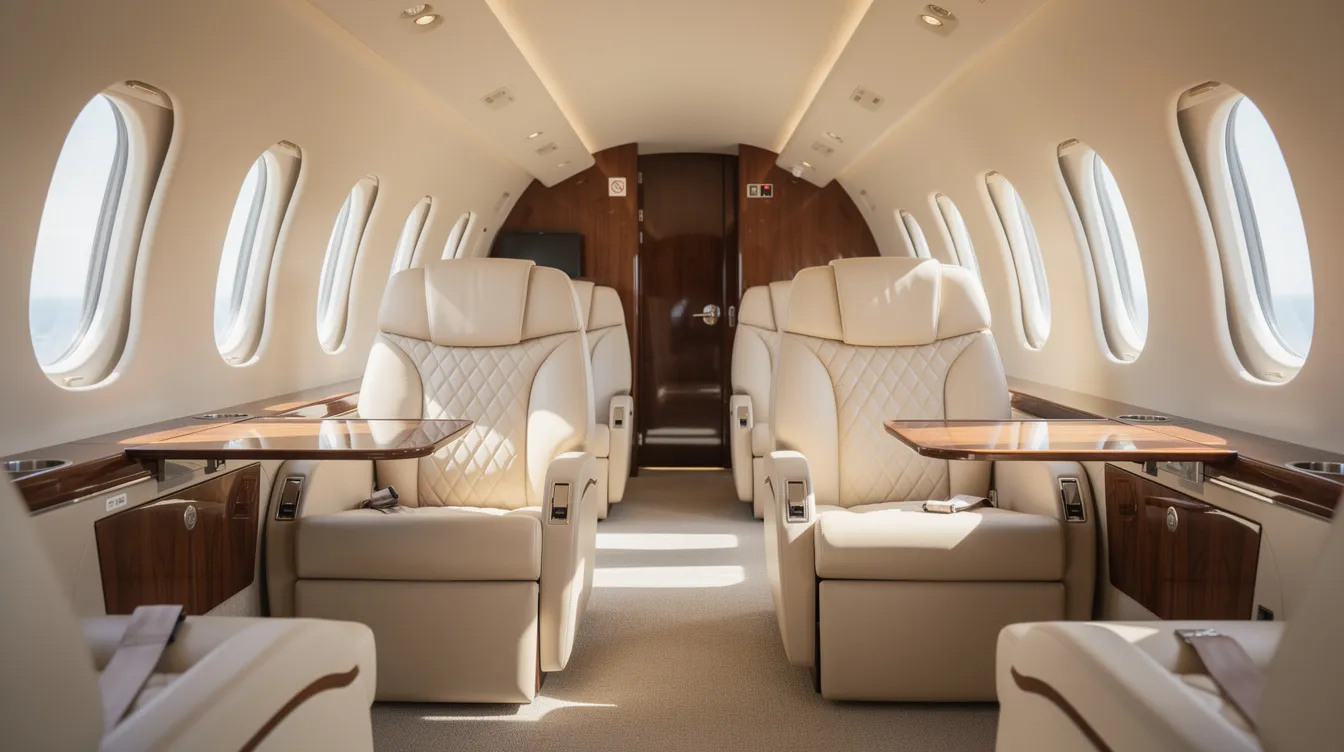
A BlackJet departure from a regional FBO inverts the entire process. Arrive 15–30 minutes before departure. Walk from your car to the aircraft. Your bags are handled immediately. There is no security line, no boarding group, no middle seat. The time savings compound over dozens of trips per year.
Use-Case: The Frequent EWR–Glasgow Traveler
Imagine a CEO who flies the Newark–Glasgow route regularly during United's seasonal MAX 8 service. She books United First: 37 inches of pitch, a single-aisle cabin, a fixed mid-morning departure, and a landing at Glasgow International followed by customs, baggage claim, and ground transport. Door-to-door time from Manhattan office to Glasgow hotel: roughly 12–14 hours.
With a BlackJet 50-hour Jet Card, the same executive could depart from Teterboro — fifteen minutes from Midtown — aboard a super-midsize or large-cabin jet optimized for 16 passengers. She selects a departure time that aligns with her meeting schedule, works in a quiet private cabin with lie-flat capability, lands at a smaller airport closer to her destination, clears customs with minimal wait, and is at her hotel in roughly 9–10 hours door-to-door. The route is the same. The experience is not.
Schedule Control and Disruption Risk
United's MAX 8 flights operate on fixed timetables. If your EWR–Anchorage flight is cancelled due to weather or a maintenance decision, you're rebooking on the next available departure — which, on a seasonal route, may not be until the following day. Connections through hubs add another layer of risk.
BlackJet members can adjust departure times within a window, choose alternate airports, and often avoid missed-connection risk entirely. For multi-city business itineraries — say, Denver to Chicago to Boston in a single day — a Jet Card eliminates the backtracking and hub dependency that commercial schedules impose, while still offering predictable Jet Card cost structures that make budgeting straightforward.
Matching Aircraft to Mission
The MAX 8 is one aircraft serving dozens of missions. BlackJet's model works the other way around: the mission defines the aircraft. A light jet handles Boston–Newark stage lengths. A midsize jet covers Chicago–Denver with greater comfort and a quieter cabin. A super-midsize or large-cabin jet serves New York–Europe with sleeping berths, dedicated work areas, and privacy that no commercial first-class seat on a narrowbody can approach, similar in spirit to ultra-long-range private jets designed for nonstop intercontinental travel. BlackJet's aircraft categories are structured precisely for this kind of flexibility.
On the technology and sustainability front, United deserves credit for deploying the MAX's fuel-efficient LEAP-1B engines across its fleet. But BlackJet layers on digital booking tools, real-time flight support, and carbon-neutral flights as standard — offsetting 300% of emissions (including non-CO₂ climate impacts like water vapor, aerosols, and nitrous oxide) at no additional cost to the member, while still enabling clients to fly private more affordably through smart strategies. That's a level of environmental commitment that goes further than what any commercial airline ticket currently includes.
Jet Cards, Sustainability, and Strategic Travel Choices Beyond the 737 MAX 8
What a Jet Card Actually Is
A Jet Card is a prepaid hourly access model. You purchase a block of flight hours — typically 25, 50, or 100 — and draw against them as needed, across multiple aircraft categories. BlackJet's Jet Card programs provide guaranteed availability, predictable pricing, 24/7 support, and scheduling flexibility that neither ad-hoc charter nor commercial premium fares can match, and resources like Jet Card cost-per-hour guides help benchmark those rates. There's no aircraft to maintain, no crew to employ, no hangar to rent. You pay for the hours you fly.
Three Options Compared
For a frequent traveler currently booking United First on long MAX 8 routes several times per quarter, the strategic question is not just comfort — it's total cost of time.
Factor | Aircraft Ownership | On-Demand Charter | BlackJet Jet Card | Commercial (United MAX 8 First) |
|---|
Upfront cost | Very high (acquisition, crew, hangar) | None | Prepaid block of hours | Per-ticket |
Flexibility | Maximum | High, but variable pricing | High with guaranteed access | Fixed schedule only |
Per-flight cost | Low marginal if utilized heavily | Variable, often premium | Predictable hourly rate | Lowest per-seat cost |
Privacy | Full | Full | Full | Shared cabin |
Schedule control | Full | Near-full | Near-full | None |
Maintenance burden | Owner's responsibility | Operator's | BlackJet-managed | Airline's |
For most executives who fly 30–80 hours per year, a 25-hour or 50-hour Jet Card strikes the most efficient balance of cost, flexibility, and control, especially when compared against other leading Jet Card programs for frequent flyers.
Sustainability: MAX 8 vs. Carbon-Neutral Private Aviation
The Boeing 737 MAX 8 is genuinely more fuel-efficient than older narrowbodies. Boeing and independent analysts estimate roughly 14% lower fuel burn compared to the 737 NG series, thanks to the LEAP-1B engines, advanced winglets, and aerodynamic refinements. For a commercial aircraft carrying 166 passengers, that per-seat efficiency is meaningful.
BlackJet takes a different approach to the same problem. Since early 2021, every Jet Card flight has been fully offset — not just for CO₂, but for non-CO₂ climate impacts including water vapor, aerosols, and nitrous oxide, amounting to 300% offsets at no extra cost to the member. Where available, sustainable aviation fuel (SAF) contributions are part of the strategy. The result is that a BlackJet member can fly privately without adding net emissions, a proposition that matters increasingly to institutional investors, boards, and family offices scrutinizing travel footprints, even when they are also exploring more economical private aircraft options.
Safety as a Strategic Asset
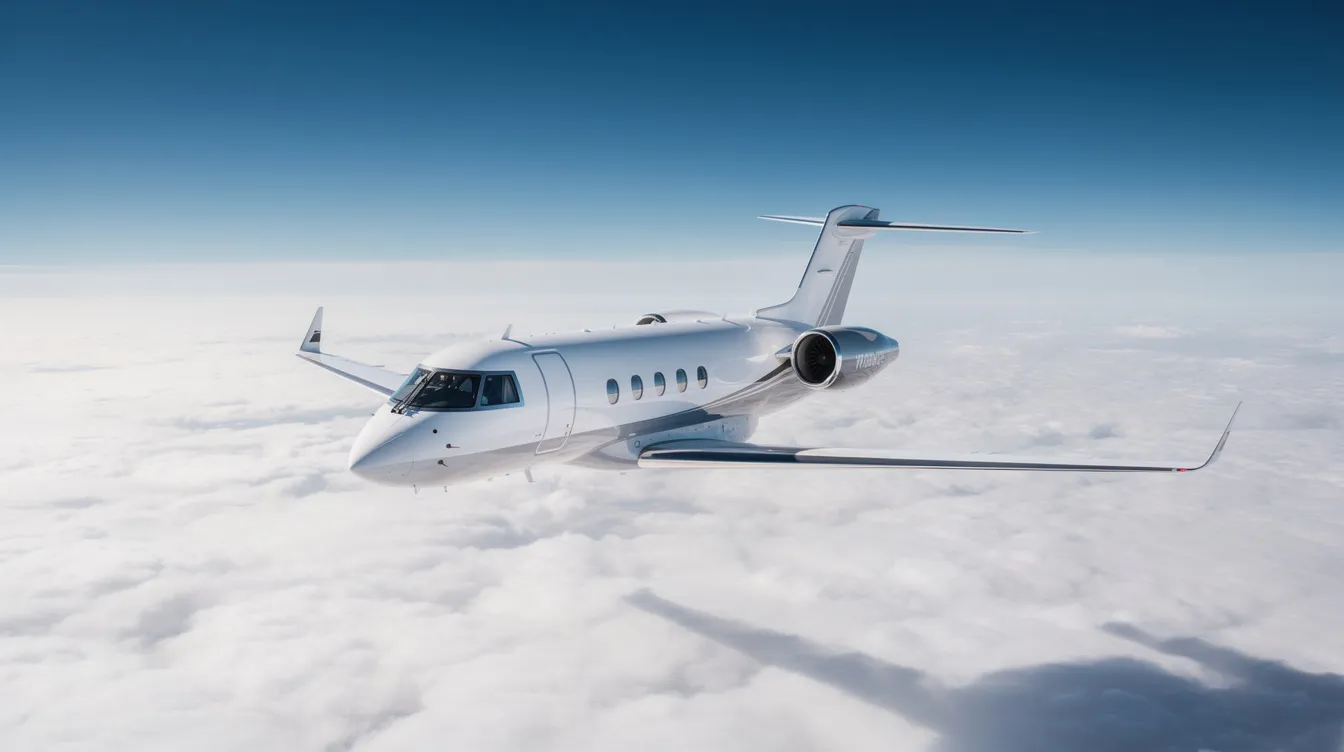
From a strategic traveler's perspective, safety is not just about surviving the flight — it's about reducing variability and risk across every dimension of travel. United's MAX 8 operations run under rigorous FAA Part 121 oversight with experienced pilots, recurrent training, and continuous audits. That framework is sound, and it parallels what you'll find when you examine how safe private jets are in practice.
But BlackJet's proprietary vetting and operational standards add a layer of individualized oversight that even well-run commercial operations cannot personalize for each traveler. Every flight is verified at the operator, aircraft, and crew level. A dedicated support team is working around the clock. The Pre-Flight Safety Report in the app means you know exactly who is flying your aircraft, when it was last maintained, and what certifications the operator holds — before you board, which can be particularly reassuring to travelers concerned about turbulence and comfort on private jets.
Practical Questions, Answered
The minimum Jet Card commitment at BlackJet typically starts at 25 hours, with higher tiers like 50 and 100 hours unlocking better availability and rate stability. Booking lead times vary: many flights can be arranged with as little as several hours' notice, depending on the aircraft category and region. Compare that with trying to rebook after a 737 MAX disruption on a seasonal route where the next flight may not depart for 24 hours or more.
For multi-city business itineraries, a Jet Card eliminates hub dependency. A member can fly Denver to Chicago for a morning meeting, continue to Boston for an afternoon session, and return home to New York by evening —all on a single mid-size jet, all without backtracking through a commercial hub or adjusting to someone else's timetable, and with the option to graduate from simply buying a seat on a private jet to controlling the entire aircraft.
The 737 MAX 8 has earned its place in United's network. It opens routes that didn't exist five years ago. But for travelers who measure value in minutes saved, privacy preserved, and flexibility gained, the calculus shifts toward a model built around you rather than around a schedule.
If you currently depend on United's 737 MAX 8 network for your most demanding routes, consider how a BlackJet Jet Card can replace or strategically complement your commercial schedule. Speak with an advisor for a tailored route and aircraft analysis—and discover what travel looks like when every detail is designed around the way you work and live, leveraging BlackJet's premium private Jet Card programs as your core platform.
Conclusion: Elevate Your Travel Beyond the United 737 MAX 8
The United 737 MAX 8 exemplifies how modern narrowbody aircraft have expanded the boundaries of commercial aviation, enabling longer, more efficient routes that serve diverse markets. For many travelers, it represents a reliable and cost-effective way to connect key destinations with improved fuel efficiency and enhanced onboard amenities.
However, for the high-net-worth individual or corporate executive who values time, privacy, and control above all, the commercial experience—even on the latest MAX 8—carries inherent limitations. Fixed schedules, crowded cabins, and airport congestion add layers of complexity and unpredictability that can erode the value of every minute saved in the air.
BlackJet's Jet Card programs offer a strategic alternative: a seamless, flexible, and bespoke private aviation experience that aligns with the demands of today's elite traveler. By matching aircraft to mission, prioritizing safety through proprietary certification, and committing to carbon-neutral flights, BlackJet redefines what it means to fly well. Whether your itinerary spans domestic business hubs or transatlantic leisure destinations, private jet access through BlackJet transforms travel from a necessary chore into a competitive advantage.
Explore how BlackJet can reshape your travel. Discover the freedom, efficiency, and prestige that come with private jet access tailored to your schedule, your standards, and your success. Learn more about our Jet Card programs, our approach to private jet safety, the benefits of carbon-neutral flights, and how we match aircraft to mission for every journey.


 Sign up with google
 Sign up with Apple