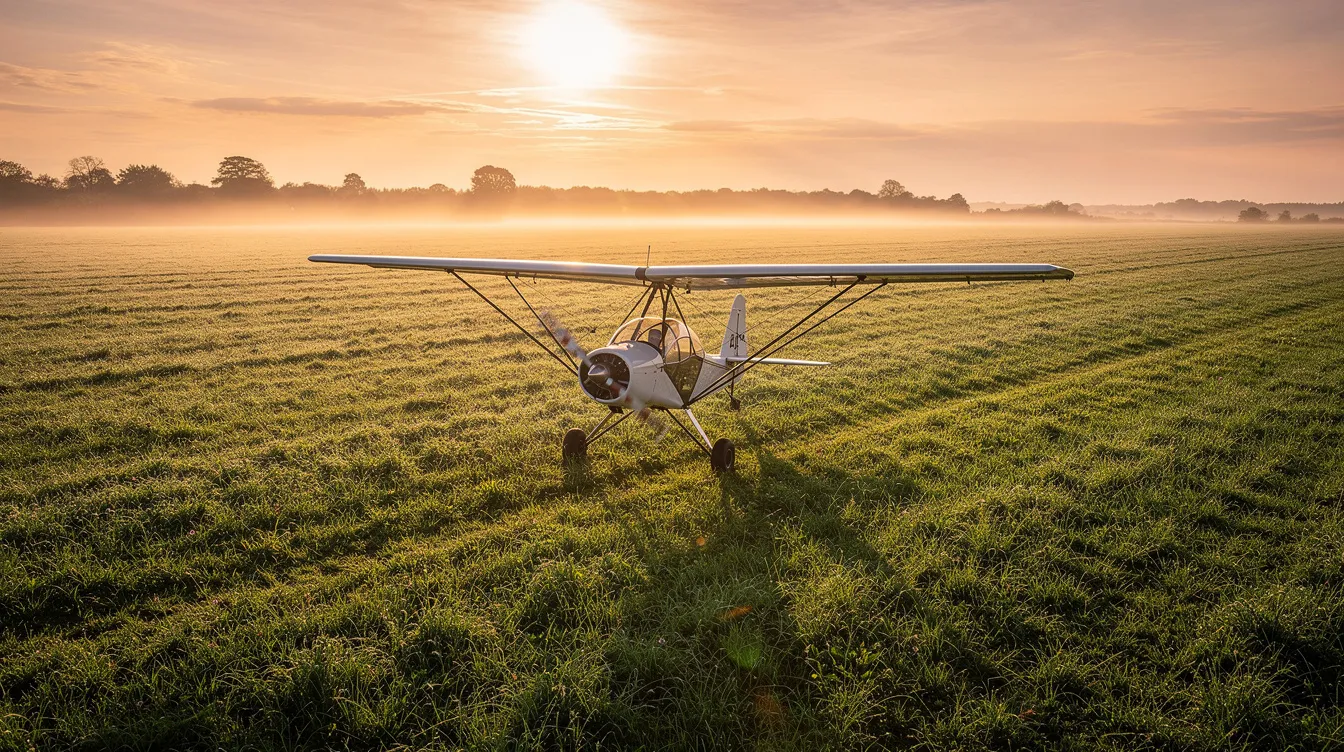
An ultralight airplane is a lightweight single-seat aircraft designed for recreation, and it remains the most accessible gateway into aviation anywhere in the world. While commercial air travel demands long security lines and rigid schedules, ultralight flying offers pure, unfiltered freedom in the air.
This guide is crafted for aspiring pilots, aviation enthusiasts, and anyone curious about how grassroots flying can lead to advanced private jet travel. Whether you’re just beginning your journey in aviation, looking to understand the basics of ultralight aircraft, or considering how early flying experiences can evolve into private jet access, this article is for you. We’ll cover ultralight fundamentals, regulations, main types, pilot profiles, and how ultralight flying connects to a broader private jet strategy—helping you chart your own path in the skies.
Why Ultralight Aircraft Matter for Modern Aviators
Many career and recreational ultralight pilots first discover the joy of flight in these simple machines before progressing to certified aircraft or private jets. At BlackJet, we specialize in private jet access and jet cards, yet we recognize ultralight aviation as the grassroots spirit that fuels the entire industry. Understanding where flying begins helps you appreciate where it can take you.
Defining Ultralight Aircraft and Regulations (Part 103 Focus)
Under Federal Aviation Regulation Part 103, the FAA classifies ultralights as vehicles, not standard aircraft. This single regulation governs ultralight operation in the US and sets strict limits:
Parameter | Limit |
|---|
Empty weight (powered) | Under 254 pounds (excluding floats and safety devices) |
Max fuel capacity | 5 US gallons |
Max level-flight speed | 55 knots (~63 mph) |
Max power-off stall speed | Not exceeding 24 knots |
Ultralights are only allowed for recreational and sport use, and they are typically single-seater vehicles that cannot carry passengers. No FAA pilot certificate, no written test, no medical exam, and no license is required to operate them. Ultralight aircraft require neither a US nor a foreign airworthiness certificate. Ultralights must be flown over uncongested areas during daylight hours and cannot operate over congested areas without special permission. These rules make ultralights inexpensive and easy to enter, but place full safety responsibility on the pilot. In Europe, similar category aircraft often require registration and licensing, making the US regulations uniquely accessible.
Main Types of Ultralight Aircraft
Ultralight aviation includes several distinct designs. Ultralight designs include powered fixed-wing, weight-shift trikes, and powered parachutes, each offering a different style of adventure.
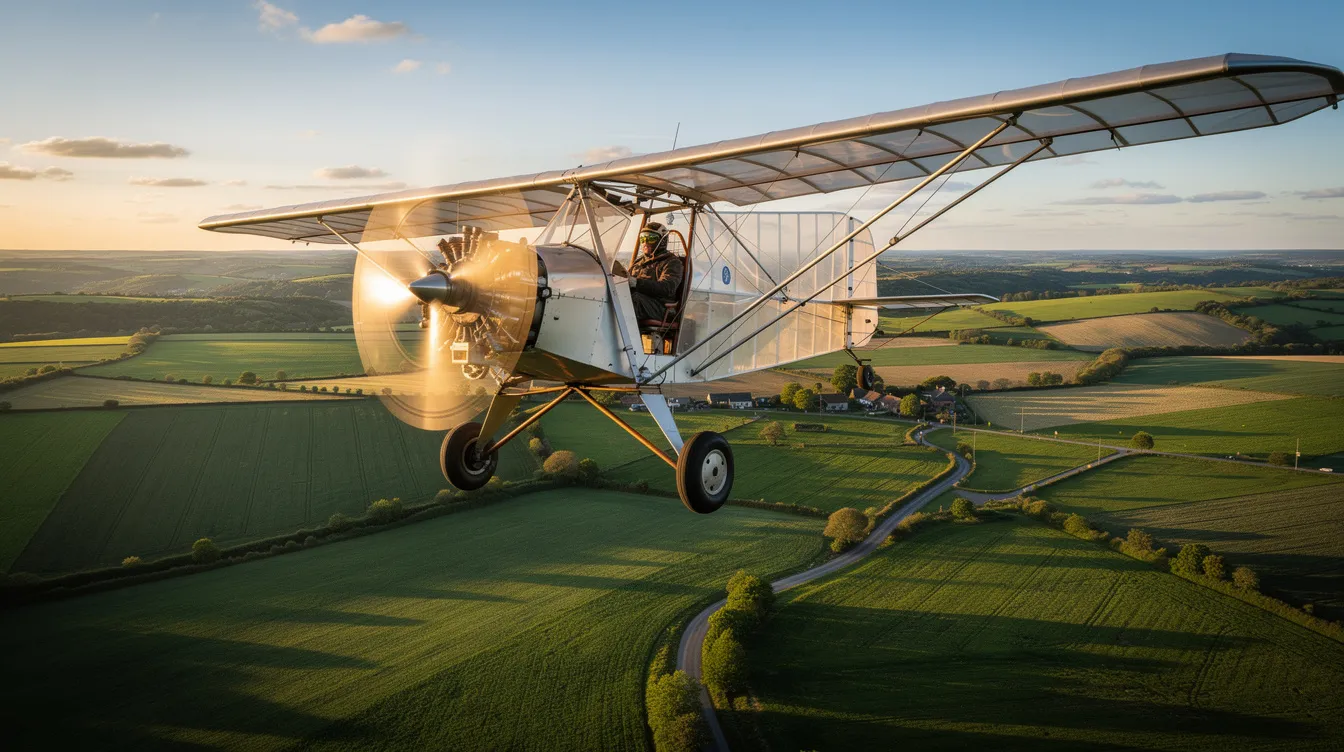
Fixed-wing ultralights resemble small airplanes with three-axis controlled flight, cruise speeds around 45–65 mph, and short-field landing capability.
Trikes (flex-wing ultralights) have a delta wing design and are controlled by shifting weight through a bar, giving an open-air experience similar in sensation to a helicopter but at a slower speed.
Powered parachutes use a soft parafoil wing for the slowest, most forgiving flight, perfect for calm-weather sightseeing.
Powered paragliders use a motor strapped to a paragliding wing, requiring nothing more than an open field to launch on foot.
Gyrocopters have an unpowered rotor and a conventional engine for thrust, delivering special short-takeoff performance.
As pilots look toward larger, faster certified aircraft and eventually private jets, the aerodynamic principles learned in these types carry over directly.
Who Ultralight Flying Is For: Profiles of Ultralight Pilots
Ultralight pilots range from teenagers buying their first time in the air to retirees seeking controlled, low-altitude fun. The first-time aviator values simplicity and affordable access. The experimental builder enjoys assembling kit aircraft in a garage, often relying on factory support and craftsmanship. The seasoned aviator with a private pilot license turns to ultralights for relaxed country sightseeing. And some high-net-worth owners maintain an ultralight for weekend enjoyment while using BlackJet's jet card programs for business and long-range family travel.
Training, Safety, and Best Practices in Ultralight Aviation
Training is essential for all ultralight pilots, even though no licensing is required. High-quality professional flight training for ultralights can be hard to find, so pilots should seek local instructors, sport pilot CFIs, or EAA chapter mentors. Ultralight pilots are exposed to physical elements during flights, and safety risks are present due to ultralights' vulnerability to wind and turbulence.
Core skills to learn and master include short-field takeoffs, energy management, basic navigation, and emergency procedures. Pre-flight inspections are crucial for safety in ultralight flying: watch for worn control linkages, fabric condition, fuel system integrity, and propeller wear. Fly early morning or late afternoon when thermals settle, and the weather is controlled.
This culture of personal responsibility mirrors the safety standards BlackJet demands from partner operators, where third-party audits and experienced crews ensure every flight meets the highest performance benchmarks.
Costs, Ownership, and Operating Realities
Owning an ultralight is considered comparable in cost to a personal watercraft. Current market ranges:
Used Part 103 ultralights: $6,000–$20,000
Kit-built models: $20,000–$40,000
Factory-built Light Sport Aircraft: $150,000–$200,000+
Recurring expenses include fuel (2–3 gallons per hour), engine maintenance, hangar fees ($200–$500/month), and optional insurance. Building a kit demands 200–500 hours of labor, giving results beyond the sticker price. Compared to the substantial overhead of owning a certified airplane or business jet, ultralight ownership is remarkably affordable. As missions grow, frequent regional trips, passengers, and weather flexibility, a jet card becomes more strategic than buying larger aircraft.
From Grassroots to Jet Cards: How Ultralight Pilots Evolve
Picture an entrepreneur who starts in a fixed-wing ultralight near Scottsdale. Over the years, she earns her private pilot license, flies a Cirrus SR22 for regional trips, then discovers the limits of personal flying: night operations, winter weather, international travel. She now uses a BlackJet 25-hour jet card for Scottsdale-to-San Francisco business trips and Cabo family weekends, while still enjoying ultralight flights on Saturday mornings. The dream of flight evolves; the tools scale with it.
Safety, Certification, and Technology: Ultralights vs Private Jets
Ultralights maximize freedom and simplicity. Private jets emphasize layered safety, redundancy, and certification. Ultralight safety relies on voluntary checklists, peer mentorship, and community rules. Business jets operate under strict maintenance schedules, crew training requirements, and third-party audits like ARGUS and Wyvern that BlackJet requires from every operator.
The technological gap is stark: analog instruments and handheld radios versus advanced avionics, terrain awareness, de-icing, and cabin pressurization. BlackJet's 24/7 digital booking and real-time flight support provide a structure that no individual ultralight pilot can replicate alone. Both realms share the same sky but serve very different mission profiles.
Sustainability in Light Aviation and Private Jet Travel
Many aviation enthusiasts increasingly care about environmental impact. Ultralight flying is inherently fuel-efficient, with modest engines burning minimal fuel on short local flights. Emerging electric ultralights like the Corsair e-motion now offer up to 2.5 hours of flight on a 14 kWh battery, pointing toward a cleaner future. BlackJet addresses sustainability at scale through carbon-neutral flights, purchasing verified offsets, and integrating emissions calculations into every journey.
Ultralight Flying vs Other Ways to Travel
Ultralight aircraft are reserved for recreation, not practical transport. They lack the range, speed, and weather capability of even a basic Cessna 172. The fastest way to leverage aviation as a strategic tool is through private jets. A weekend ultralight sightseeing flight at 500 feet over water and fields is a different experience from a Monday morning private jet departure from Teterboro to Miami-but both express personal aviation freedom.
How a Jet Card Complements a Passion for Ultralight Aviation
Many BlackJet members already enjoy ultralight flying close to home. A jet card removes the complexity of long-distance travel-crew scheduling, maintenance, and repositioning that individual pilots face. Accessible aircraft categories range from light jets for regional hops to midsize jets for coast-to-coast trips. Ultralight aviation nurtures a love of flight; a jet card with BlackJet turns that passion into a tangible strategic advantage.
Frequently Asked Questions About Ultralight Aircraft and Private Jet Access
Do you need a pilot's license to fly an ultralight in the US?
No. Under FAR Part 103, no pilot certificate, medical exam, or written test is required. However, training with a qualified instructor is strongly recommended in all cases.
How far and fast can ultralights travel?
Most cruise at 45–65 mph with a range of 60–120 miles, depending on headwinds and the 5-gallon fuel limit. Exceeding safe weather limits is the fastest path to trouble.
Is ultralight flying safe?
Safety depends on disciplined training, thorough pre-flight inspections, conservative weather decisions, and proper maintenance. Understand the risks before you fly.
When should I consider moving beyond ultralights?
When you need to carry passengers, fly at night or in inclement weather, cover long distances, or meet tight schedules, it's time to discover certified aircraft or private jet access.
How does a jet card differ from on-demand charter? Jet cards offer prepaid hours at fixed rates with guaranteed availability, while charter is pay-as-you-go with variable pricing. Learn more at www.blackjet.com (org of record for all program details).
Conclusion: Embracing the Full Spectrum of Aviation Freedom
Ultralight aircraft offer an unparalleled entry point into the world of aviation, combining accessibility, affordability, and the pure joy of flight. Governed by Federal Aviation Regulation Part 103, they provide a unique blend of freedom and responsibility that appeals to a diverse range of pilots—from beginners to seasoned enthusiasts. While ultralights emphasize simplicity and personal adventure, they also lay the foundation for understanding more complex aircraft and private jet travel.
For those seeking to elevate their travel experience, transitioning from ultralight flying to private jet access through programs like BlackJet’s jet cards unlocks strategic advantages: greater range, enhanced safety certifications, technological sophistication, and sustainability initiatives. Whether your passion is weekend ultralight exploration or seamless coast-to-coast business travel, embracing both ends of the aviation spectrum offers a comprehensive approach to flying.
Discover how BlackJet can help you transform your passion for flight into effortless, premier travel—where accessibility meets exclusivity, and every journey is tailored to your lifestyle and values.


 Sign up with google
 Sign up with Apple