The world of private aviation extends far beyond large-cabin intercontinental flights. A two-seat jet is a compact private aircraft powered by turbojet or turbofan engines that carries exactly two occupants, either side-by-side or in tandem, delivering jet speed, climb, and handling in a smaller, lower-cost package than most business jets. At the lighter end of the spectrum, these aircraft occupy a compelling niche - bridging the gap between piston-powered trainers and full-scale business aircraft in cost, speed, and capability.
For owner-pilots, high-net-worth flyers, and business travelers weighing personal aircraft ownership against flexible access options such as a Jet Card, the key question is not just whether a two-seat jet is exciting, but whether it fits the mission. This guide examines how two-seat jets are defined, how experimental models differ from certified aircraft, what to expect from performance, operating limits, pilot training, and safety, and where they make sense compared with chartering or Jet Card access. That makes the category relevant for anyone making a practical private aviation decision: these jets can lower the barrier to jet-powered flying, but they also involve clear trade-offs in capability, convenience, and operational complexity.
Why Two-Seat Jets Matter for Serious Private Flyers
A two-seat jet sits squarely between light aircraft powered by piston engines and larger certified business jets. It offers jet-level climb rates and speed at a fraction of the operating cost of a midsize cabin, while outperforming any propeller-driven two-seater on virtually every metric that counts: cruise speed, rate of climb, and altitude capability.
Consider a route like New York to Chicago. Commercial business class involves a taxi to a major hub, security queues, boarding delays, and ground transport on the other end - easily four to five hours door-to-door. A private jet departing from a smaller field can cut that to under two hours. For Los Angeles to Las Vegas, the difference is even starker: roughly 50 minutes in flight versus half a day of waiting, boarding, and connecting.
High-net-worth travelers and owner-pilots are drawn to the personal control and unique experience that small jets deliver. Lower operating costs, the ability to self-fly regional hops, and the sheer fun of jet-powered aviation make ownership appealing. Yet for those who prefer to skip the complexity of building or maintaining an experimental aircraft, BlackJet's Jet Card programs provide professionally flown, certified light jets - and larger cabins - on demand.
This article covers both the technical side (empty weight, useful load, fuel capacity, cruise speed) and the practical decision-making framework: mission fit, safety, and how private jet access compares, complementing broader guides to the best small private aircraft for different needs.
What Defines a Two-Seat Jet vs. Other Two-Seater Aircraft
Not every two-seater qualifies as a jet. Most two-seat airplanes are piston-powered trainer aircraft - Cessna 150s, Piper Tomahawks - designed for flight training at modest speeds. A two-seat jet, by contrast, is powered by one or more turbojet or turbofan engines, delivering superior performance in climb, speed, and altitude envelope well beyond classic trainers.
Two-seat jets are primarily categorized as experimental or training aircraft. Civilian two-seat jets are less common compared to larger seating capacity jets, and popular categories include aerobatic, training, and experimental. Two-seat configurations limit passenger capacity to one additional occupant, though the second seat in dual-pilot setups supports roles like navigation and system monitoring, which enhances safety through crew resource management.
Seating layouts split into two camps:
Side-by-side seating - both occupants sit next to each other, enabling easier communication and a shared cockpit experience. Two-seat jets often feature side by side seating for better communication.
Tandem seating - one behind the other, mimicking a fighter-style layout with a narrower fuselage and potentially better forward visibility for the pilot.
The Federal Aviation Administration requires specific ratings for piloting jets, and most two-seat jets fall under Experimental Amateur-Built or Experimental Exhibition categories in the U.S., with rare exceptions pursuing certified very light jet paths. Typical roles include personal fun-jets for sport pilots, jet trainers for pilots transitioning from piston or turboprop, and aerobatic demonstration platforms.
Case Study: The SubSonex Personal Jet Line and JSX-2T Two-Seat Variant
Sonex Aircraft has built a reputation over decades in the experimental aircraft community. Their subsonex personal jet series began with the JSX-1 proof-of-concept, now preserved at the EAA Aviation Museum in Oshkosh, Wisconsin. The refined single-seat JSX-2 followed, establishing Sonex as a serious player in the personal jet space.
In July 2019, Sonex announced the JSX-2T - a two-seat version designed as a low-cost jet trainer. This two-seat variant uses side-by-side seating, derived from the single-seat SubSonex, and is intended to allow sharing the experience of jet-powered flight with students, friends, or co-owners.
Key pricing milestones for the JSX-2T:
Milestone | Cost |
|---|
Refundable reservation deposit (from July 1, 2022) | $15,000 |
SubSonex JSX-2T kit price (quick-build) | $66,000 |
"Ultra" quick-build kit | Mid-$70,000 range |
Total estimated build cost (including engine, avionics) | Under $155,000 |
Sonex target cost | Under $140,000 |
Public milestones include early announcements before EAA AirVenture 2019, the AirVenture Oshkosh 2022 prototype debut, and appearances at Sonex open houses - all generating strong interest from the builder community.
JSX-2T Performance: Fuel Capacity, Useful Load, and Cruise Speed
Performance numbers for a two-seat jet are critical for real-world mission planning. How far, how fast, and with what payload determine whether the plane fits your flying needs.
The SubSonex JSX-2T has a wingspan of 21.8 feet and a length of approximately 18 feet 7.75 inches. Its useful load reaches an estimated 970 pounds - impressive for a light aircraft in this category. The JSX-2T uses the PBS TJ-100 turbojet engine, the same engine as the single-seat JSX-2, and the jet's stall speed is estimated at 65 mph.
The JSX-2T carries 50 gallons of fuel and 40 pounds of baggage. At the PBS TJ-100's typical fuel burn of roughly 15–16 gallons per hour at cruise, that fuel capacity supports local and short regional hops with reserves - though not transcontinental missions. The estimated cruise speed of the JSX-2T is 200 mph (roughly 174 knots).
For context, typical cruise speeds for two-seat jets in the broader category range from 300 to 450 knots, with certified VLJs like the HondaJet Elite II reaching 422 knots and appearing among top affordable private planes for budding aviators. The JSX-2T sits well below that range but far above piston experimentals. Despite their performance, the payload capacity of aircraft like the JSX-2T is less than that of larger jets.
The trade-off between empty weight and useful load is central: lighter empty weight allows more fuel, a heavier passenger, or additional baggage while staying within gross weight limits. Wing loading and wing area influence handling characteristics - something Bob Carlton demonstrated vividly through aerobatic displays in the single-seat SubSonex at major airshows, pushing the envelope on what small wings and a single engine can do.
Experimental Two-Seat Jets vs. Certified Very Light Jets
Experimental aircraft like the planned JSX-2T are assembled by builders - often at home or through builder-assist centers - using a kit from manufacturers like Sonex Aircraft. This category offers impressive performance for the price, but comes with constraints.
Certified very light jets such as the HondaJet Elite II (cruise 422 KTAS, range ~1,547 nm, MTOW ~11,100 lb) or the Cirrus Vision Jet - equipped with a ballistic recovery system - represent a fundamentally different proposition, sitting within the broader category of small private jets for luxury travel. They carry type certificates, have defined maintenance schedules, advanced avionics suites, and established support networks. The Blackshape Prime Veloce, another next-gen light aircraft, exemplifies the innovation pushing certified performance boundaries.
Key differences:
Regulatory: Experimental jets require owner-pilot operation, Phase I/Phase II testing, and limited operations over populated areas. Certified jets can be chartered commercially with professional crews.
Insurance: Operating two-seat jets often incurs high maintenance and insurance costs. High-performance jets are more expensive to insure than smaller aircraft, and experimental status adds complexity.
Capability: Certified VLJs offer more space, pressurized cabins, longer range, and all-weather capability.
For those who want jet performance and safety without ownership or building complexity, BlackJet's Jet Card programs provide access to professionally maintained, certified light jets flown by type-rated crews.
From Cockpit to Cabin: How Two-Seat Jets Feel in Real Use
Stepping into a two-seat jet is a cockpit experience, not a cabin experience. You sit directly beside - or behind - the pilot in a compact space optimized for flight, not comfort. High-performance two-seat jets provide an engaging flying experience: the sensation of jet thrust, rapid climb, and responsive handling is visceral and immediate. Two-seat jets can enhance recreational flying experiences in ways no airliner ever could.
The JSX-2T's approximately 40 pounds of baggage capacity and limited cockpit space mean there is no room for laptops, meeting materials, or substantial luggage. Side-by-side layouts support conversation and shared situational awareness; tandem offers a fighter-like immersion but less interaction.
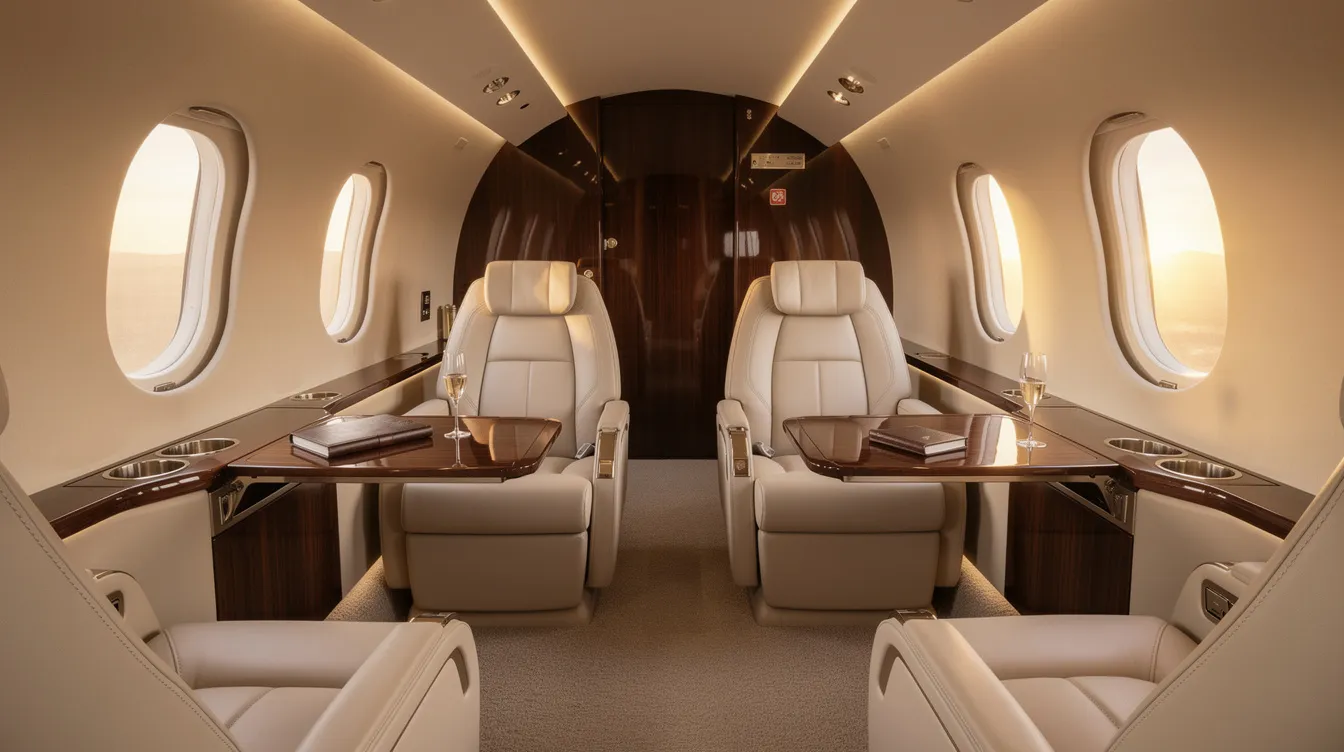
Contrast this with a BlackJet scenario: a business traveler using a 25-hour Jet Card boards a light jet with a separate, finished cabin - executive seating for four to eight, a refreshment center, and space for confidential conversations in flight, much like the structured access offered by the BlackJet 25+ Hour Jet Card. While experimental jets are thrilling for pilots, they are less suited to working in transit, hosting colleagues, or carrying meaningful payload - areas where Jet Card access to larger aircraft cabins excels.
Safety, Technology, and Sustainability in Small Jets
Safety considerations diverge sharply between self-flown experimental two-seat jets and professionally operated private jets. Two-seat jets offer enhanced safety through crew resource management when flown with two qualified pilots, but the underlying airframe and systems lack the redundancies of certified platforms.
Modern certified light and very light jets feature:
Advanced autopilots with envelope protection
Garmin G3000-class avionics with stabilized-approach monitoring
Autothrottle and, in some models, emergency autoland systems
Industry-standard inspection and maintenance regimes
Experimental aircraft safety depends on build quality, pilot training, and rigorous self-imposed inspection schedules. Not all experimental jets meet the third-party safety auditing standards used in commercial charter operations.
BlackJet's safety framework includes proprietary operator vetting, alignment with leading safety ratings such as ARGUS and IS-BAO, and the exclusive use of professional, type-rated crews on every flight.
On sustainability: fuel efficiency trends in VLJs continue to improve, but a two-seat jet flown with a single occupant generates higher per-seat emissions than a well-loaded light jet, especially when compared with the cheapest private aircraft and other budget-friendly options that emphasize efficient missions and smarter access models. BlackJet ensures every journey is carbon neutral through verified offset programs - at no extra cost to the member, while transparent pricing resources such as a structured private jet price list help travelers understand how sustainability fits into total trip costs.
Matching Aircraft to Flying Needs: Two-Seat Jet or Jet Card Access?
The decision between pursuing a personal two-seat jet and relying on a Jet Card comes down to mission profile and understanding the main types of private jets for different travelers.
When a two-seat jet makes sense:
Hobby flying and weekend aerobatic practice
Short regional hops for one person with minimal baggage
Building jet hours and skills beyond piston aircraft
The pure fun of ownership and hands-on control
When BlackJet access wins:
A founder flying regularly between New York and Miami with colleagues
A family of four heading to Aspen with skis and luggage needing more space might compare the reliability of card-based access with whether chartering a private jet is worth it for occasional trips.
A legal team requiring quiet cabin space to prepare before landing in London
Cost structure comparison: an experimental jet build under $155,000 plus ongoing hangar, insurance, and maintenance versus all-inclusive hourly rates under a BlackJet Jet Card - approximately $7,000–$8,000 per hour for a 25-hour light jet card, or $6,500–$7,500 per hour for 50-hour cards, with no hidden fees for fuel, taxes, or carbon offsets; understanding Jet Card cost per hour is essential for accurate side-by-side comparisons. Two-seat jets are often sought after by aviation enthusiasts and for flight training, but for most business and high-end leisure travel, the flexibility, safety oversight, and cabin comfort of card-based private jet access deliver more strategic value, especially when you understand how Jet Card pricing structures work.
Notable Pilots, Demonstrations, and Training Pathways
Bob Carlton stands as the most visible example of what a personal jet can achieve. His aerobatic routines in the SubSonex at events like Sun 'n Fun and EAA AirVenture Oshkosh - loops, rolls, high-energy passes - have drawn new builders and seasoned pilots alike into the world of capable small jets. Two-seat jets are ideal for pilot training, and the SubSonex JSX-2T was designed precisely to meet that need.
Two-seat jets require specialized flight training to operate effectively, and many aspiring owners first explore affordable private planes and entry-level options before committing to a personal jet build. A typical training pathway starts with a private pilot certificate, progresses through instrument and commercial ratings, then includes jet transition and type-specific training before a pilot is ready for takeoff, distance management, high-altitude cruise, and landing procedures unique to jets.
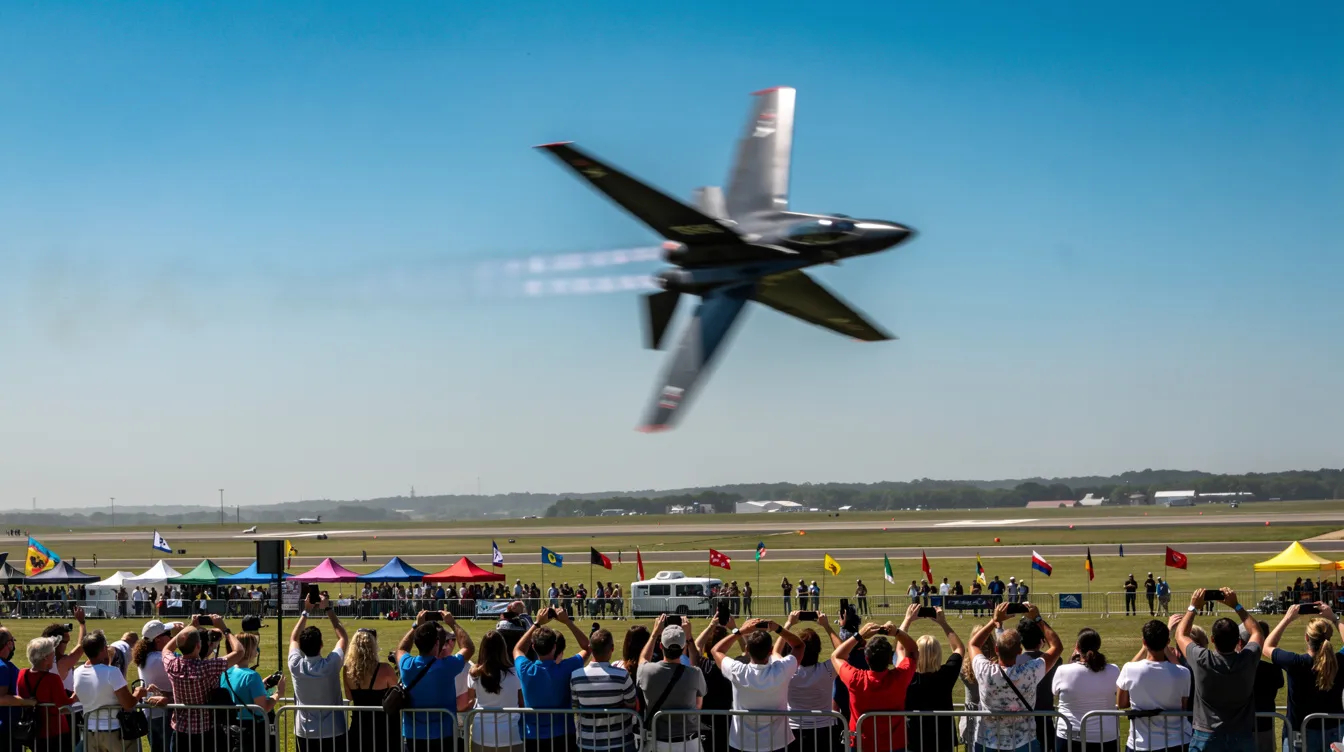
For BlackJet members, the pathway is simpler: rather than years of training, they leverage our flight support team and digital booking tools to select the right aircraft category, schedule flights, and align cabin class with each trip's expectations, often guided by resources outlining the best Jet Cards for frequent flyers. Home simulators - including modeled SubSonex aircraft in Microsoft Flight Simulator - offer familiarization for enthusiasts, but they are supplements, not replacements, for real-world instruction.
Conclusion: Where Two-Seat Jets Fit in a Modern Private Aviation Strategy
Two-seat jets are thrilling, technically fascinating, and relatively affordable ways for qualified pilots to experience jet performance and aerobatic flight. Projects like the SubSonex JSX series from Sonex Aircraft represent genuine innovation in the industry - making jet-powered flying accessible in ways that would have seemed impossible decades ago.
The key technical decision points remain: empty weight versus useful load, fuel capacity versus range, cruise speed compared with mission length, and the implications of experimental certification for everyday travel. They allow sharing the experience of jet-powered flight, but their limited payload, restricted regulatory status, and compact cockpits constrain their utility for serious business use.
For most executives, entrepreneurs, and families, the strategic move is to separate flying for fun from flying for business. A Jet Card ensures schedule control, safety protocols, and cabin comfort come first on every critical trip - without the waiting, building, or pilot training that ownership demands.
**Explore how BlackJet's carbon-neutral Jet Card programs can reshape your travel - delivering fast, seamless, and private access to the future of aviation.


 Sign up with google
 Sign up with Apple


