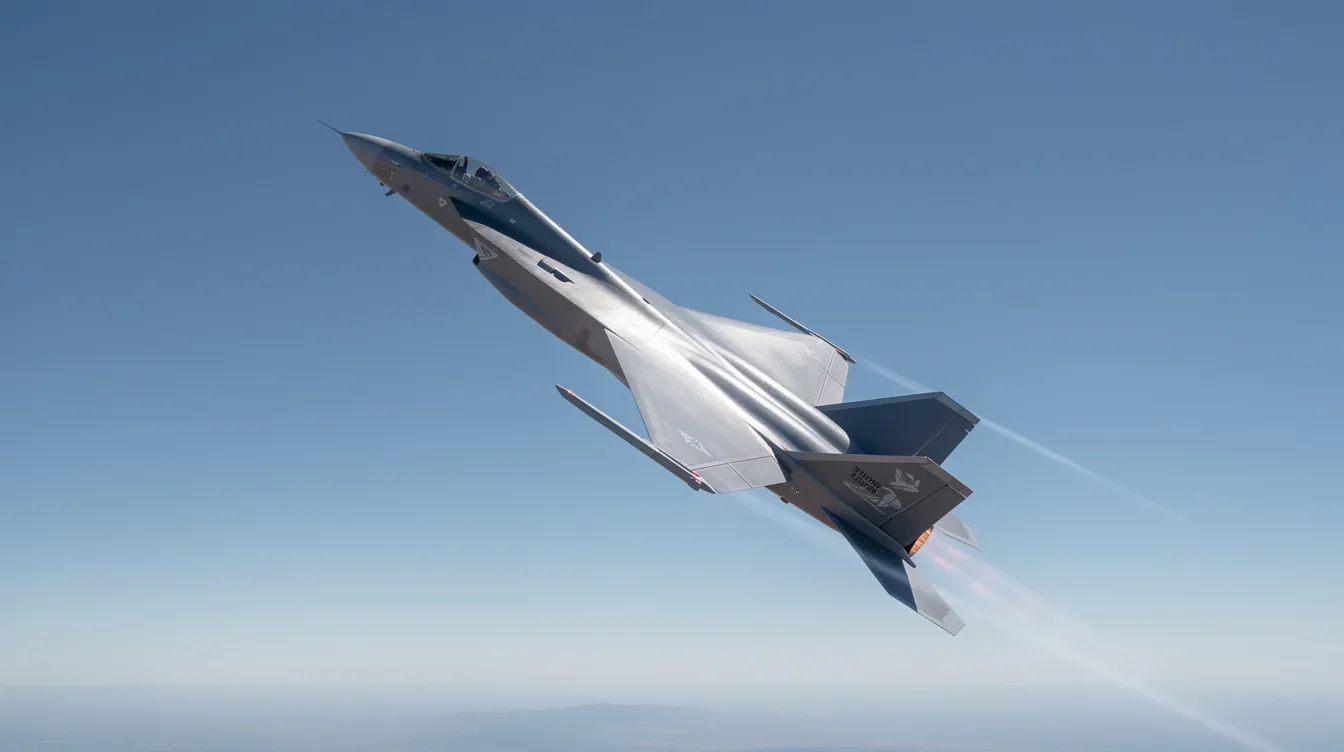
Introduction: Why the "Best Fighter Jet" Matters in Modern Air Combat
Ranking the top 5 best fighter jets in the world still matters in 2026 because air superiority remains the decisive factor in modern conflict. Every major air force on the planet builds its strategy around combat aircraft that can control the sky, suppress threats on the ground, and project power across vast distances. Air combat in this era is not a contest of speed alone; it is a layered competition of stealth technology, sensor fusion, electronic warfare systems, networked data links, and weapons integration that determines which military aircraft dominates the battlespace.
What defines the "best fighter jet" today goes far beyond being the fastest fighter jet. The most capable fighters combine low-observable airframes, advanced avionics, precision weapons, and the ability to share information across allied forces in real time. This article focuses on the top five operational fighter jets in active service as of 2026, drawing from public data and a global air force perspective.
It is worth noting a parallel: while military jets optimize for survival and lethality, private jets-like the ones BlackJet members rely on-optimize for range, comfort, and productivity. The engineering heritage, however, often flows from one world to the other.
Key Takeaways: The Best Fighter Jets in 2026 (Answer First)
If you are short on time, here is the definitive ranking. These five jets in the world represent the sharpest edge of modern air power, each earning its place through a combination of stealth, sensors, weapons, and proven operational service.
#1 Lockheed Martin F-35 Lightning II (USA) - Fifth-generation stealth multirole fighter with unmatched sensor fusion and the largest global deployment of any modern jet.
#2 Lockheed Martin F-22 Raptor (USA) - The ultimate air superiority fighter with elite stealth and supercruise capability, regarded as the benchmark for air dominance.
#3 Chengdu J-20 Mighty Dragon (China) - Long-range fifth-generation interceptor with a rapidly growing fleet size and powerful beyond-visual-range armament.
#4 Sukhoi Su-57 Felon (Russia) - Agile fifth-generation fighter with 3D thrust vectoring, evolving sensors, and internal weapons bays.
#5 Eurofighter Typhoon (EU Consortium) - A 4.5-generation air superiority and capable multirole fighter that forms the backbone of several European air forces and NATO operations.
Other excellent combat aircraft-including the Dassault Rafale, Saab Gripen E/F, and Boeing F-15EX-narrowly miss this list but remain among the most powerful fighter jets globally. They are covered in a later section.
Sixth-generation fighters such as the NGAD/F-47, FCAS, and GCAP/Tempest are excluded because none have entered operational service.
How We Ranked the Best Fighter Jets
A transparent ranking method matters more than personal opinion. Every jet on this list was evaluated against a consistent set of criteria drawn from how modern air combat works in practice, not from spec-sheet comparisons alone.
The ranking criteria, in order of weight:
Stealth and radar cross section - How difficult is the aircraft to detect across multiple radar bands?
Sensor fusion and avionics - Does the jet merge radar, infrared, and data-link information into a unified picture for the pilot? Advanced sensor fusion separates fifth-generation fighters from everything else.
Air-to-air performance - Agility, supercruise capability (sustained supersonic flight without afterburners), and thrust-to-weight ratio in beyond-visual-range and within-visual-range engagements.
Weapons payload and integration - Internal and external carriage, missile diversity, ground attack options, and electronic warfare capabilities. Weapons and electronic warfare capabilities are key factors in fighter performance.
Combat radius and range - How far the jet can project power from its base.
Real-world usage - Operational deployments, fleet size, and readiness rates across major air forces.
Survivability - Ability to evade surface-to-air missiles, absorb damage, and return home.
Fifth-generation stealth platforms-F-35, F-22, J-20, and Su-57-differ fundamentally from 4.5-generation aircraft like the Eurofighter Typhoon or Rafale. The key dividing lines are all-aspect stealth shaping, internal weapons bays that preserve low observability, and deeply integrated sensor fusion. Evaluation criteria for fighter jets today always begin with stealth and sensor fusion because these traits determine who shoots first. Modern military jets often integrate advanced radar and electronic warfare systems as core capabilities, not bolt-on extras. Aircraft performance is evaluated not just on specifications but on integrated mission capability. Payload capacity affects the operational capabilities of military aircraft, and operational readiness is a critical factor in evaluating any platform.
Cost and export success are secondary but still relevant. The F-35 Lightning II's massive production run gives it a systemic advantage that the low-volume F-22 Raptor cannot match. Only fighters operational in 2026 are considered; prototypes and testbeds like the NGAD/F-47 and Turkish KAAN are excluded.
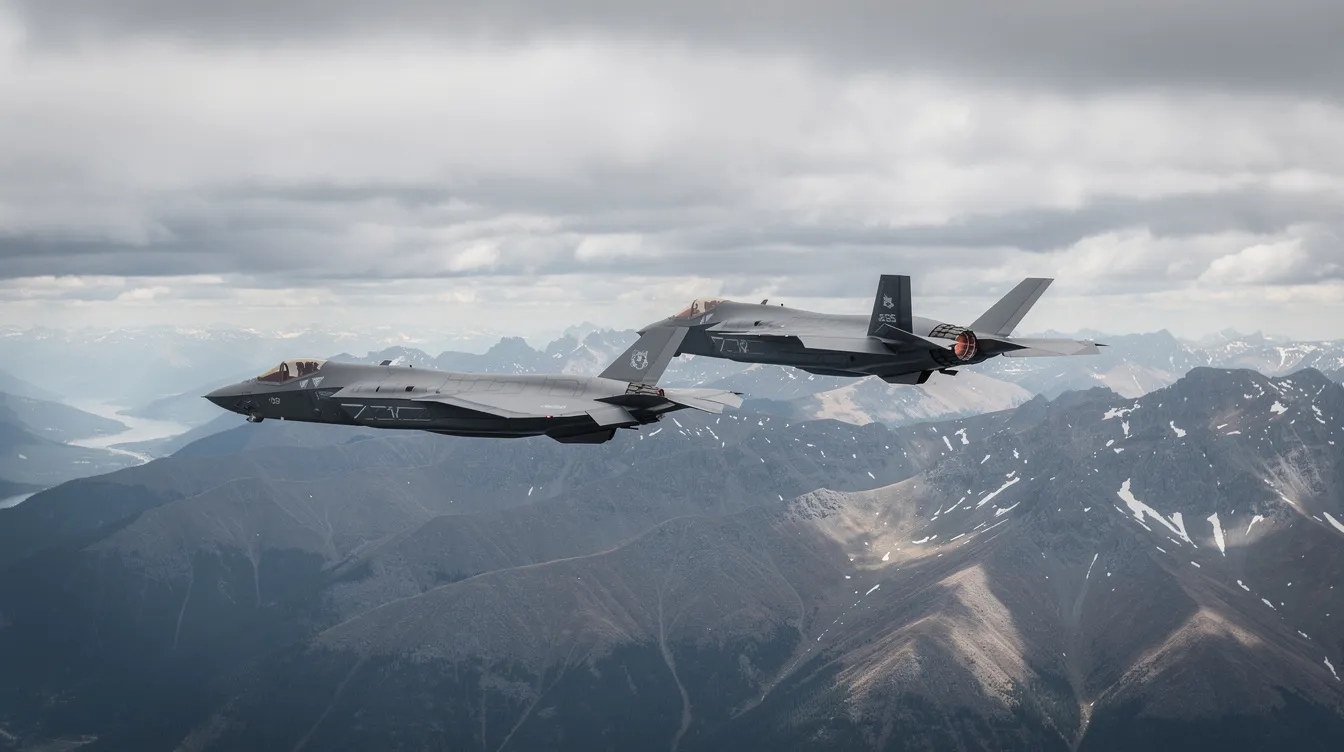
1. Lockheed Martin F-35 Lightning II - The Best Fighter Jet in the World
The F-35 Lightning II is the best fighter jet in 2026. No other operational aircraft combines fifth-generation stealth, sensor fusion, multirole flexibility, and global scale as effectively.
First flown in 2006 and reaching initial operational capability around 2015, the Lockheed Martin F-35 program has delivered over 1,387 production aircraft globally as of late 2026, with the F-35 having over 880 units in active service across more than 20 allied nations. The program has accumulated over one million flight hours and trained more than 3,400 pilots.
Key specifications at a glance:
Attribute | F-35A |
|---|
Top speed | Mach 1.6 |
Combat radius | ~670 nautical miles |
Radar cross section | Comparable to a golf ball in clean configuration |
Weapons carriage | Internal weapons bays for stealth; external hardpoints available |
Radar | AN/APG-81 AESA |
The jet's advanced avionics define its edge. The distributed aperture system provides near-360° infrared coverage. Helmet-mounted displays let pilots look through the airframe. The AN/APG-81 AESA radar, combined with passive sensors and encrypted data links, turns the F-35 into a flying information node-collecting, fusing, and sharing data with other fighters, ships, and ground units in real time. This level of advanced sensor fusion and situational awareness is unmatched among operational aircraft.
Three variants cover distinct missions. The F-35A serves the United States Air Force and most allied forces from conventional runways. The F-35B, a short takeoff and vertical landing variant, operates from amphibious assault ships and austere fields for the US Marine Corps, Royal Navy, and Italian Navy. The F-35C deploys from aircraft carriers for the US Navy, featuring larger wings and a reinforced airframe for catapult launches and arrested landings.
Honesty demands acknowledging challenges. Block 4/TR-3 software upgrades have been delayed, and sustainment costs remain high, with GAO reports indicating only about 25% of the fleet was fully mission capable in FY 2025. Still, no other combat aircraft matches the F-35's combination of stealth, multirole capabilities, and sheer numbers. Fifth-generation stealth platforms are considered the pinnacle of modern military aviation design, and the F-35 embodies that standard more broadly than any rival.
2. Lockheed Martin F-22 Raptor - Supreme Air Superiority Fighter
The F-22 Raptor remains the most lethal air-to-air combat platform ever built. It ranks second overall only because its limited numbers and narrower multirole scope prevent it from matching the F-35's global impact.
First flown in 1997 and entering operational service in 2005, the Lockheed Martin F-22 had its production capped at 195 airframes. Approximately 184 remain in US Air Force inventory, making it an asset that only a handful of squadrons can field.
Performance defines the Raptor's legend:
Attribute | F-22 Raptor |
|---|
Top speed | Mach 2.25 |
Supercruise | ~Mach 1.5 without afterburners |
Engines | Two Pratt & Whitney F119-PW-100 (~35,000 lb thrust each) |
Ceiling | Above 50,000 ft |
Thrust vectoring | 2D nozzles for extreme agility |
The F-22 Raptor can supercruise at Mach 1.5 without afterburners, meaning it maintains supersonic speeds without the massive fuel burn and thermal signature of afterburning turbofan engines. Supercruise capability enables the aircraft to fly at supersonic speeds without afterburners, a trait that gives the Raptor a decisive tactical edge in air-to-air combat- arriving faster, engaging at range, and disengaging before opponents can react.
Its stealth edge is mature and formidable. The radar cross section is often described in open sources as marble-sized, reflecting years of advanced stealth refinement focused purely on air dominance. Internal weapons carriage holds AIM-120 AMRAAM and AIM-9 Sidewinder missiles, plus a 20 mm cannon, all without compromising the jet's low-observable profile.
The F-22 never saw export due to US restrictions, and its per-flight-hour maintenance cost remains among the highest of any operational fighter. Mission-capable rates dropped to roughly 40% in 2024. Despite these constraints, the F-22 Raptor is regarded as the benchmark for air superiority-a standard against which every other fighter is measured.
3. Chengdu J-20 Mighty Dragon - China's Fifth Generation Long-Range Hunter
The J-20 Mighty Dragon is China's first operational fifth-generation stealth fighter, and it has rapidly become a serious contender in Indo-Pacific air combat calculations.
As of 2026, the Chengdu J-20 has an estimated 250 units in active service across the People's Liberation Army Air Force, deployed in approximately 14 frontline brigades. Some analyst estimates run higher, but open-source verification remains limited. What is clear is that the fleet now rivals the US Air Force's F-22 inventory in raw numbers.
The J-20 was designed as a long-range interceptor and air dominance platform, optimized for anti-access/area-denial missions. Its combat radius is estimated at over 1,000 nautical miles, and its large internal weapons bays carry the PL-15 long-range air-to-air missile and PL-10 short-range infrared missile, weapons optimized for beyond-visual-range air combat where first detection and first shot matter most.
The Chengdu J-20 can achieve speeds of Mach 2. Critically, the introduction of WS-15 engines is enabling true supercruise capability, bringing the aircraft's sustained supersonic performance closer to Western fifth-generation standards, though exact parameters remain less transparent than those of Western equivalents.
Limitations are real. Export is prohibited, the jet has no known combat record beyond exercises and deterrence operations, and aspects of its stealth and avionics remain less publicly verified compared to the F-35 and F-22. For analysts, this opacity affects confidence in ranking. Still, the J-20's combination of range, weapons, growing numbers, and advancing technology earns it a firm third place among the most advanced fighters in the world.
4. Sukhoi Su-57 Felon - Russia's Agile Fifth Generation Fighter
The Sukhoi Su-57 Felon represents Russia's answer to fifth-generation stealth fighters, with agility and 3D thrust vectoring as its most distinctive features. The Sukhoi Su-57 features 3D thrust vectoring for extreme maneuverability, a trait that makes it exceptionally dangerous in close-in engagements and high-angle-of-attack scenarios.
First flown in 2010, the Su-57 entered small-scale production deliveries to the Russian Aerospace Forces by the mid-2020s. The Su-57 has approximately 30 units in service as of 2026-a limited but growing fleet that includes both test and operational aircraft.
Attribute | Su-57 Felon |
|---|
Maximum speed | Mach 2.0 |
Combat radius | ~900 nautical miles |
Weapons carriage | Internal weapons bays + external hardpoints |
Radar | Multi-band AESA architecture |
Thrust vectoring | Full 3D nozzle control |
The Sukhoi Su-57 has a maximum speed of Mach 2.0 and combines stealth shaping with super-maneuverability- a pairing that no other operational fighter replicates in quite the same way. The Sukhoi Su-57 is noted for its agility and maneuverability, and its multi-band AESA radar architecture and electronic warfare suites offer layered detection and jamming capability.
However, questions persist. Its radar cross section is generally assessed as higher than Western fifth-generation counterparts, particularly from non-frontal aspects. Engine maturity (the newer Izdeliye-30 variant) and overall avionics sophistication are evolving but have not yet been independently verified to match Western or Chinese standards. Reports indicate limited combat deployment in Ukraine and Syria, though verifiable results remain sparse.
The Su-57's technology and potential justify a top-five slot. Constrained production numbers and ongoing development challenges prevent it from challenging the F-35 or F-22 globally, but it remains a capable and evolving platform.
5. Eurofighter Typhoon - Europe's Frontline Air Superiority Workhorse
The Eurofighter Typhoon is Europe's premier high-end 4.5-generation air superiority and multirole fighter jet, fielded by the United Kingdom, Germany, Italy, Spain, and several partner air forces worldwide.
A joint program among four nations, the Typhoon first flew in 1994 and entered operational service in the early 2000s. Over 520 aircraft have been delivered through multiple production tranches, with Tranche 5 orders-featuring the new ECRS Mk2 AESA radar-now in progress.
Performance highlights:
Attribute | Eurofighter Typhoon |
|---|
Top speed | Mach 2 |
Supercruise | ~Mach 1.5 with air-to-air loadout |
Combat radius | ~750 nautical miles |
Configuration | Canard-delta, twin-engine |
Key missile | Meteor BVRAAM (~100+ km range, Mach 4+) |
The Eurofighter Typhoon can supercruise at Mach 1.5 fully loaded in an air-to-air configuration-a fact that underscores its raw kinematic performance. Its canard-delta design delivers exceptional agility in close-range engagements, and compatibility with the Meteor beyond-visual-range missile and Storm Shadow cruise missile gives it teeth for both air-to-air and ground attack missions.
Critical systems include the Captor-E AESA radar in newer tranches, an advanced defensive aids subsystem (EuroDASS) for electronic warfare, and robust weapons integration across NATO-standard ordnance.
The Typhoon lacks true fifth-generation stealth and internal weapons bays. Its radar signature is larger than stealth fighters, making it more vulnerable in heavily contested airspace defended by modern surface-to-air missiles. But continuous upgrades-new radars, improved electronic warfare systems, structural enhancements-keep it among the best non-stealth aircraft and among the best jets in the world. For European air forces, the Typhoon remains the frontline answer until sixth-generation fighters arrive.
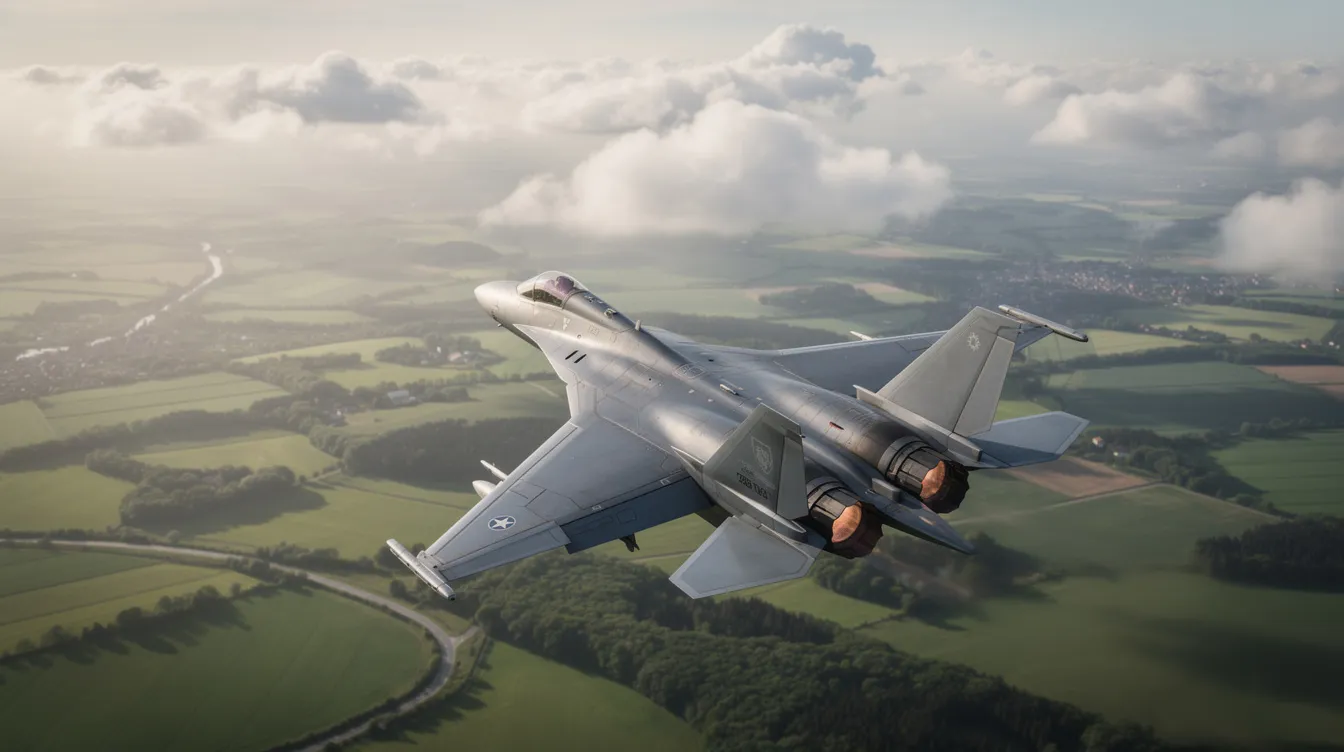
How Fifth Generation Stealth Changed Air Combat
Fifth-generation fighters- the F-35, F-22, J-20, and Su-57-redefined modern air combat by introducing a combination of capabilities that earlier generations simply could not match: all-aspect stealth, internal weapons bays, deeply integrated sensor fusion, and secure high-bandwidth data links. Fifth-generation fighters prioritize stealth and sensor fusion capabilities above raw aerodynamic performance.
In modern air combat, information dominance and first-look/first-shot advantage often matter more than raw top speed. A stealth aircraft that detects an adversary at 100 miles while remaining invisible has already won the engagement before the other pilot knows a threat exists. This is the essence of how modern air combat works-victory through awareness, not just airspeed.
These jets are also "software-defined" aircraft. The F-35 is the clearest example: new radar modes, weapons, and electronic warfare features can be deployed through software updates rather than hardware swaps. This means the jet you buy today can become measurably more capable next year without returning to the factory. Fifth-generation jets are designed to operate as network nodes, cueing older combat aircraft, surface-to-air defenses, satellites, and even unmanned systems. Airborne early-warning and support systems enhance a fighter jet's effectiveness during missions, and modern stealth fighters are built from the ground up to exploit that network.
Where Other Elite Fighter Jets Rank (Rafale, Gripen, F-15EX, and More)
Several fourth- and 4.5-generation jets narrowly miss the top five but still rank among the best fighter jets worldwide. These platforms remain essential to global air power and complement the stealth fighters that lead this list.
Dassault Rafale F4 - The Dassault Rafale is recognized for its multirole capabilities and versatility in combat. Equipped with the SPECTRA electronic warfare suite, a combat radius of approximately 1,000 nautical miles, and the ability to perform all mission types simultaneously-air superiority, strike missions, reconnaissance, and nuclear deterrence-it is a top contender wherever stealth is less critical. Multirole versatility allows aircraft to perform various combat missions seamlessly, and the Rafale exemplifies that principle.
Saab JAS 39 Gripen E/F - A cost-effective advanced fighter with a modern AESA radar, Meteor missile integration, and optimization for dispersed operations. Ideal for smaller air forces and the Korea Air Force–style procurement philosophy where availability and low unit cost matter as much as peak capability.
Boeing F-15EX Eagle II - The F-15 Eagle can reach speeds of Mach 2.5, and the latest F-15EX variant can carry up to 29,500 lbs of weapons-nearly 30,000 lbs-earning it the "missile truck" label. The US Air Force uses it to support stealth fighters by carrying massed long-range weapons directed by F-35 sensor data.
Boeing F/A-18E/F Super Hornet and F-16V Fighting Falcon - Both remain relevant as capable fighters for budget-conscious air forces and carrier operations. The F-16 Fighting Falcon supports almost every NATO weapon, making it one of the most versatile operational aircraft in history. These are not non-stealth aircraft by choice but by era-they were designed before stealth technology became the standard, yet upgrades keep them effective.
Fastest Fighter Jet vs. Best Fighter Jet: Why Speed Isn't Everything
Many readers search for the "fastest fighter jet," but speed alone no longer defines the best fighter jet in air combat terms. The fastest fighter jet ever is the NASA/USAF X-15, an experimental aircraft that reached Mach 6.72-a record that still stands decades later. Among traditional combat aircraft, the MiG-25 Foxbat has a top speed of Mach 3.2, and the SR-71 Blackbird cruised above Mach 3.0. For a deeper look at speed records across aviation, see this guide to the Top 10 Fastest Airplanes.
None of these record-holders had stealth, sensor fusion, or modern electronic warfare suites. Modern fifth-generation fighters- the F-22, F-35, and J-20-typically operate between Mach 1 and Mach 2 but rely on stealth, advanced avionics, and networked tactics to survive and dominate in contested airspace. Supersonic speeds matter, but staying unseen and better informed generally beats simply flying faster.
Training and tactics significantly influence the effectiveness of a fighter jet in combat. A well-trained pilot in a slightly slower stealth aircraft will almost always prevail over a faster jet whose pilot is detected first.
Aircraft Carriers and Carrier-Capable Fighter Jets
Aircraft carriers extend air combat power by allowing fighter jets to project force thousands of miles from home bases, operating where land runways do not exist.
Key carrier-capable combat aircraft in 2026 include the F-35B and F-35C Lightning II variants (US Navy, US Marine Corps, Royal Navy, Italian Navy), the F/A-18E/F Super Hornet, and emerging Chinese carrier stealth fighter programs such as the J-35. These jets operate from aircraft carriers with reinforced landing gear, arrestor hooks, foldable wings, and corrosion-resistant coatings designed for the harsh maritime environment.
Carrier operations demand extraordinary coordination and reliability. Launching and recovering modern jets from a moving ship at sea, day or night, in rough weather requires meticulous planning and zero tolerance for mechanical failure. In a different context, private aviation operators like BlackJet apply a similar philosophy: reliability and precise scheduling across multiple airports ensure that members experience seamless travel without disruption.
Modern Air Forces: How Top Jets Fit Into a Bigger Combat System
No air force relies on a single fighter type. The most effective forces build layered fleets combining fifth-generation stealth platforms, heavy strike fighters, and cost-effective workhorses.
The US Air Force blends the F-22 Raptor for air dominance, the F-35 for multirole penetration, the F-15EX as a high-payload striker, and the F-16 as a versatile workhorse. European air forces mix the Eurofighter Typhoon with Rafale and legacy types. China aligns the J-20 with the J-10C and J-16 to cover different mission profiles across its air force.
Supporting systems are equally critical. AWACS aircraft, aerial refueling tankers, satellites, and ground-based radar networks multiply the effectiveness of every fighter in the sky. Control systems that link these assets together turn individual jets into elements of a larger, more lethal whole-much as a well-run private aviation network coordinates aircraft, crews, and airports to deliver seamless travel for its clients.
The top five jets listed here act as the sharp tip of a much larger spear, not solo performers.
Fifth Generation Fighters and Technology Crossover to Civil Aviation
Innovations born in fifth-generation fighters eventually influence civil and business aviation. The composite materials developed to create radar-absorbing stealth airframes now inform the construction of smoother, lighter, more fuel-efficient business jet fuselages. Fly-by-wire control systems, once exotic military technology, are standard in every modern business jet. Advanced turbofan engine designs-initially refined for high-performance military use-drive improvements in range and fuel efficiency across the private fleet.
Military-grade situational awareness has also inspired advanced cockpit avionics in modern business jets: synthetic vision systems, enhanced ground-proximity warnings, and data-linked weather radar all trace their lineage to defense programs.
While BlackJet clients never fly in combat aircraft, they benefit indirectly from decades of military R&D embedded in safer, quieter, and more efficient private jets. The engineering pedigree is real, even if the mission is comfort rather than combat.
Private Jet Travel vs. Fighter Jets: Comfort, Mission, and Capability
Fighter jets are designed for minutes of high-stress air combat. Private jets are designed for hours of quiet, productive travel. The contrast is absolute.
A fighter pilot straps into a single-seat or two-seat cockpit, endures extreme G-forces, wears a pressurized flight suit, and operates in an environment optimized for lethality. A private jet passenger settles into a spacious cabin with lie-flat seating, Wi-Fi, catered meals, and a pressurized environment designed for relaxation. The noise, vibration, and physical demands of a fighter are worlds apart from the calm interior of even a midsize business jet.
Private jets focus on range, reliability, and safety rather than speed and maneuverability, with their ability to fly higher than most commercial flights contributing to smoother, more efficient journeys. Even the fastest business jets cruise well below the top speed of other fighters like the F-22 or Typhoon. BlackJet's mission is not to emulate fighter jets-it is to give travelers fighter-pilot levels of control over their time and routing, without sacrificing comfort or safety, for those evaluating whether chartering a private jet is worth it.
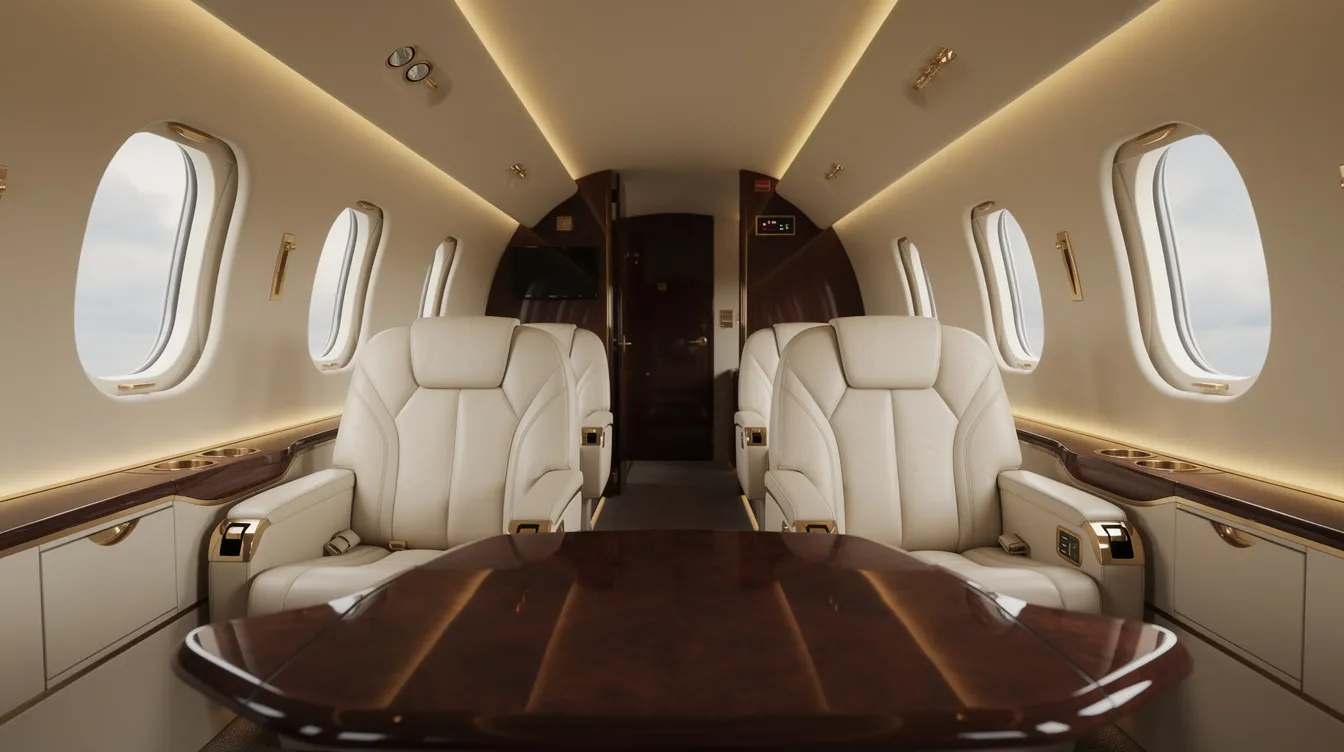
How BlackJet Jet Cards Give You "Air Superiority" in Your Schedule
BlackJet is a private aviation company offering Jet Card programs that give members guaranteed access to private jets through prepaid flight hours-no aircraft ownership, no complex logistics, and a full suite of premium private jet card services.
The analogy is straightforward: just as an air force relies on rapid-response fighter jets for strategic advantage, executives and high-net-worth travelers use BlackJet Jet Cards to gain a strategic advantage over commercial airline schedules. When time is the most valuable asset, waiting in terminals and connecting through hubs is the equivalent of flying blind without sensor fusion, which is why many travelers explore how to buy a seat on a private jet instead of relying solely on commercial schedules.
Key features of the Jet Card model include 25-hour and 50-hour blocks backed by a comprehensive 50-hour jet card cost guide, access to multiple aircraft categories from light to large cabin jets, 24/7 digital booking, and real-time flight support. Unlike the complexity of military fighter logistics-where only a handful of maintenance crews can service a stealth coating-BlackJet simplifies the entire process into a seamless booking experience with predictable pricing and no ownership burden.
Safety Protocols: From Military-Grade Mindset to Private Aviation Standards
Like air forces, top private aviation providers treat safety as non-negotiable-even when missions differ radically from air combat.
BlackJet emphasizes a set of safety cornerstones that parallel military rigor: third-party safety audits and ratings, strict operator vetting, highly experienced crews, and continuous maintenance oversight across the fleet, reinforcing that private jets are highly safe when operated under robust standards. Every aircraft and crew must meet or exceed stringent jet card safety standards before a member boards.
The difference in philosophy is instructive. Military fighters operate at the edge of the performance envelope, pushing aircraft and pilots to physical limits. BlackJet ensures private flights stay comfortably within conservative operational limits, prioritizing risk management over raw performance. The result is the same confidence a well-equipped air force pilot feels-but applied to a quiet, comfortable cabin at 45,000 feet.
Sustainability and Carbon-Neutral Flights in Private Aviation
Both military and civilian aviation face legitimate questions about emissions and environmental impact. The defense sector is investing in lighter materials and more efficient engines, some of which eventually benefit civil aircraft.
BlackJet addresses sustainability directly. Every flight is carbon-neutral through high-quality carbon offset programs integrated transparently into the service at no extra cost or hassle to the member, while also highlighting budget-friendly private aircraft options for cost-conscious flyers. Where available, sustainable aviation fuel participation further reduces the lifecycle carbon footprint.
New engine and material technologies-some seeded by military research into efficient afterburning turbofan engines and composite structures-are steadily reducing fuel burn across the private jet fleet, even for those considering the cheapest private jet options. Sustainability is a built-in pillar of BlackJet's offering, not an afterthought.
Choosing the Right Aircraft Class for Your Mission (Unlike a Fighter Jet)
In private aviation, choosing the "best aircraft" is about mission profile-passenger count, route length, luggage requirements, and time sensitivity-not air combat performance.
The main business jet categories, from light jets to large-cabin aircraft suitable for groups of up to 20 passengers, as detailed in this guide to the best private jet for 20 passengers:
Category | Typical Range | Passengers | Best For |
|---|
Light Jet | ~1,500 nm | 4–7 | Short regional hops |
Midsize Jet | ~2,500 nm | 6–8 | Domestic and short international |
Super-Midsize | ~3,500 nm | 8–10 | Coast-to-coast, Caribbean |
Large Cabin / Long-Range | ~6,000+ nm | 10–16 | Transcontinental, transatlantic |
Consider a scenario: a CEO needs to fly from New York to London. A large-cabin jet booked via a 25-hour BlackJet Jet Card or the BlackJet 25+ Hour Jet Card covers the route nonstop with a full cabin, workspace, and rest. By contrast, an F-35's 670-nautical-mile combat radius and single-seat cockpit make the comparison almost absurd-yet it illustrates why "best" always depends on the mission.
BlackJet's advisors help members match the right aircraft type to each trip, drawing on an understanding of the types of private jets for every traveler, much like mission planners assign the right fighter to each role.
Technology and Real-Time Support: Your "Ops Center" in the Sky
BlackJet's digital tools function as the civilian equivalent of a military operations center: a mobile booking platform, real-time flight tracking, and on-demand concierge support available around the clock.
Members can view aircraft availability, request flights, and adjust schedules through the app or via a dedicated concierge, mirroring the responsiveness air forces need in dynamic environments. Behind the interface, a dedicated operations team coordinates aircraft, crews, and airports so the member experiences a seamless, low-friction journey every time.
The benefit is simple: effortless control over complex logistics, without the need to understand the machinery that makes it happen.
Frequently Asked Questions About Fighter Jets and Private Jet Travel
Is the F-22 Raptor better than the F-35 Lightning II?
In pure air-to-air combat, the F-22 is unmatched. Its combination of supercruise, stealth, and agility makes it the most dangerous dogfighter alive. However, the F-35 ranks higher overall because it is a capable multirole fighter with superior sensor fusion, far greater production numbers, and deployment across allied nations. The "better" jet depends on the mission.
What is the difference between fifth-generation fighters and 4.5-generation jets like the Eurofighter Typhoon?
Fifth-generation fighters feature all-aspect stealth, internal weapons bays, and deeply integrated sensor fusion that merge radar, infrared, and data-link information into a single cockpit picture. 4.5-generation jets like the Typhoon have excellent agility, modern radar, and advanced electronic warfare suites, but lack comprehensive stealth shaping and rely primarily on external weapons carriage, which increases their radar signature.
Can civilians ever fly in combat aircraft like the F-35?
True fifth-generation stealth fighters like the F-35 and F-22 are strictly restricted to military personnel. Only a handful of rare demonstration flights have carried non-pilots. Civilians interested in jet flight can access ex-military trainers (like the L-39 Albatros) through specialized operators, but no public access to operational stealth aircraft exists.
How does flying private with BlackJet compare to flying in a fighter jet?
A fighter jet delivers extreme speed, G-forces, and sensory overload in a cramped cockpit designed for combat. Flying private with BlackJet delivers quiet comfort, spacious cabins, gourmet catering, and connectivity designed for productivity and relaxation. Both demand precision and reliability, but the missions could not be more different.
What is a Jet Card and how does it differ from on-demand charter?
A Jet Card provides prepaid flight hours at fixed or predictable rates, with guaranteed availability and faster booking, making it one of the best jet card options for frequent flyers. On-demand charter requires quoting each trip individually, with pricing and availability that fluctuate. Jet Cards offer priority access, consistency, and the convenience of a membership model-ideal for travelers who fly privately multiple times per year.
Conclusion: From Air Combat Dominance to Personal Travel Freedom
In 2026, the F-35 Lightning II leads the list of best fighter jets in the world, followed by the F-22 Raptor, the J-20 Mighty Dragon, the Su-57 Felon, and the Eurofighter Typhoon. Together, these five modern fighter jets define the cutting edge of modern air combat-each earning its place through a distinct combination of stealth, sensors, weapons, and operational reach.
The broader lesson applies beyond the battlefield: in both military and private aviation, real air power comes from combining advanced aircraft, information, and smart planning-not just raw speed. Whether commanding a squadron or commanding your schedule, the advantage belongs to those who plan decisively and act with precision.
Elevate your travel-effortlessly. Explore BlackJet's Jet Card programs to secure fast, flexible, and carbon-neutral private jet access that gives you true air superiority over your schedule.


 Sign up with google
 Sign up with Apple