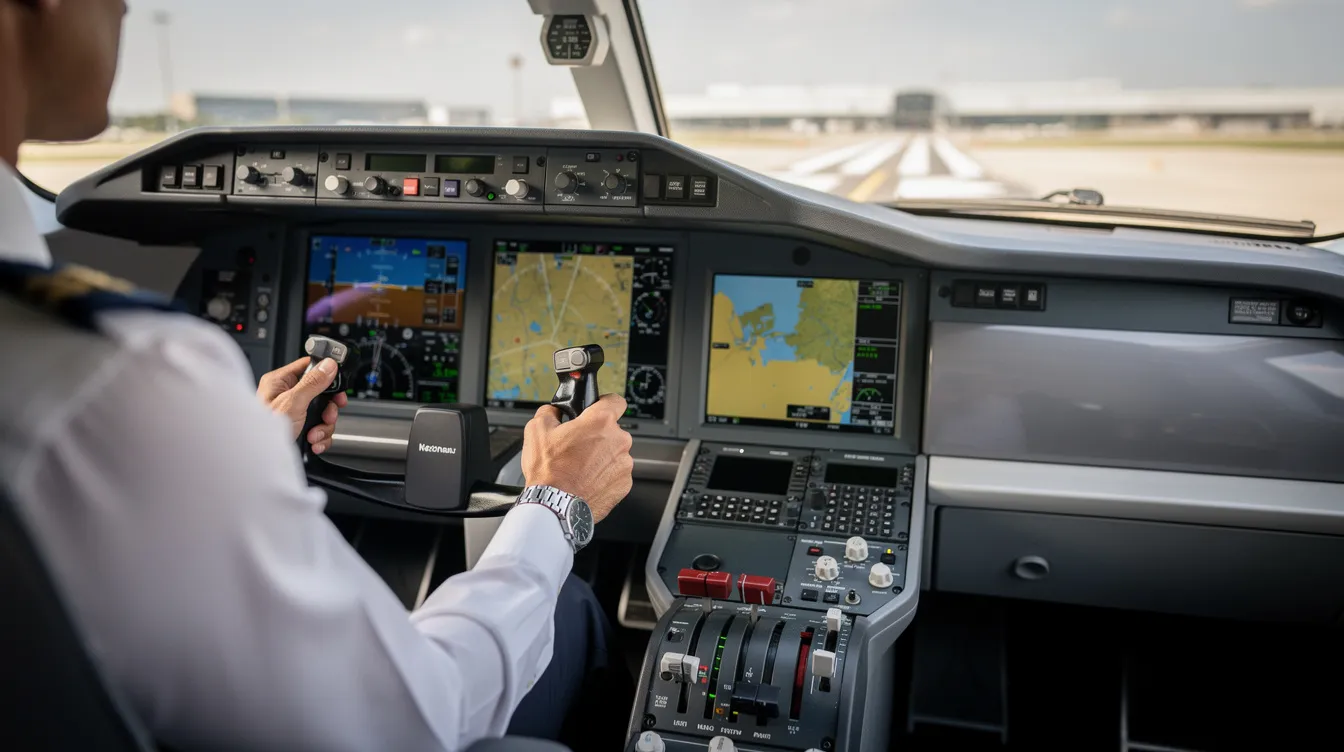
For most travelers, the moments between boarding and takeoff feel like dead time—a slow crawl across concrete before the real journey begins. In practice, taxiing in airport operations is the movement of an aircraft on the ground under its own power between the terminal, hangar, and runway, excluding takeoff and landing, and it is one of the most operationally demanding phases of any flight. For frequent business travelers and high-net-worth leisure flyers who choose private aviation for flexibility, privacy, safety, and luxury, understanding how that ground movement works explains why the experience can feel faster, smoother, and more controlled from the first engine start to the last wheel stop.
This guide looks at how private jets taxi safely and efficiently, including ground steering by pilots, airport markings, radio communication and clearances, situational awareness, onboard technology, environmental considerations, and the way BlackJet streamlines the ground experience. Knowing what happens during taxi matters because it affects departure timing, safety margins, passenger comfort, and even the environmental footprint of each trip—revealing why efficient ground handling is a real advantage in private jet travel.
Executive Overview: Why Taxiing Matters for Private Jet Travelers
Consider the numbers. At large airports like Amsterdam's Schiphol Airport or major U.S. commercial hubs, airlines routinely face taxi times of 20 to 27 minutes—sometimes longer during peak hours when multiple aircraft queue for a single departure runway. A recent study of 71 U.S. hub airports found large hubs averaged roughly 27 minutes of ground time before takeoff. By contrast, private jets departing from dedicated executive terminals and FBOs often complete the entire route from stand to runway in just 3 to 8 minutes.
For BlackJet members, that difference is strategic. Imagine a London-to-Geneva trip timed around a 9 a.m. board meeting. Shaving 15 to 20 minutes off ground operations on each end can mean the difference between arriving composed and arriving late. Smooth, predictable ground operations protect both your schedule and your safety—two priorities that define every aspect of BlackJet's approach to private aviation and its broader premium private jet card programs.
What follows is a detailed look at what happens from stand to runway, how pilots steer on the ground, and how airport markings, lights, and technology keep every taxiing aircraft safe.
What Is Aircraft Taxiing? Definitions, Phases, and Key Concepts
Taxiing is the movement of an aircraft on the ground, under its own power, between the terminal, hangar, and runway. It excludes the takeoff roll and the landing rollout—those are separate phases with distinct procedures. Taxiing procedures differ based on country, airport, aircraft, and operator, but the core principles remain consistent worldwide.
A typical taxi sequence for a private jet includes—and varies slightly across different types of private jets for every traveler:
Engine start at the stand: Pilots start engines (or the APU) once passengers are seated and doors are secured.
Brake checks and initial movement: The plane begins moving forward or receives a pushback, then proceeds along assigned taxiways.
Taxi to holding position: The aircraft follows a designated taxi route to the threshold of the active runway.
Hold and clearance: The crew holds short until cleared for takeoff by air traffic control.
Post-landing taxi: After an aircraft lands, it exits the runway and taxis back to the apron or hangar.
At a private jet-focused airfield like Paris Le Bourget, the entire ground sequence might take five to ten minutes. At a large mixed-use airport like Frankfurt, crews can spend 20 minutes or more navigating congested areas before reaching the departure runway. For BlackJet clients, this is precisely why choosing the right airport and terminal matters—it's where the door-to-door time advantage over commercial business class begins, whether you're flying from Geneva, London, or booking private jet charters in Karachi.
From Stand to Runway: How an Aircraft Gets Moving
After passengers board at a private terminal, the sequence unfolds quickly. Doors close, the crew initiates a brief safety briefing, and engines come to life. Taxiing uses the aircraft's engines for movement—jet blast from the rear propels the airplane forward, and the pilot modulates engine thrust to control speed.
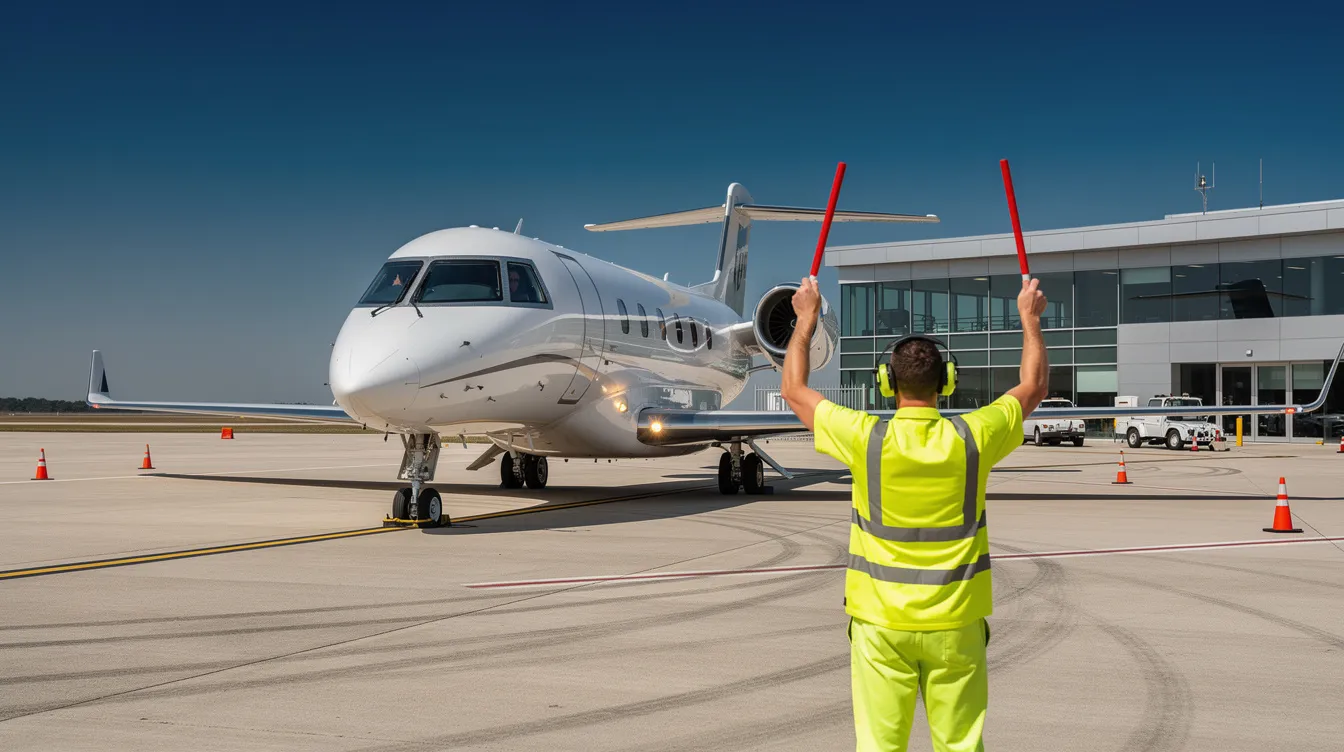
Pushback vs. forward taxi: At tight stands or nose-in positions, a pushback vehicle—one of the specialized ground vehicles on the airfield—tows the airplane backward before the crew takes over. When the jet is parked with a clear path ahead, it simply taxis forward under its own power.
Who controls what: Ground crew marshals use hand signals or headset communication to guide the airplane clear of obstacles. Inside the cockpit, pilots handle steering, braking, and radios. Ground control on the radio provides the taxi route and clearances.
Towing as an alternative: Towing involves external vehicles pulling the aircraft, and it reduces fuel consumption by turning off engines during the process. Towing also minimizes environmental impact and noise pollution, which is why it's preferred at noise-sensitive facilities.
Taxiing is ideal for quick repositioning between gates or when moving short distances across the airfield. At Teterboro (KTEB), a BlackJet client might experience a two- to three-minute pushback followed by a brief independent taxi to Runway 24—a far cry from the lengthy ground queues at nearby Newark Liberty.
Reversing under engine power is rarely used in private aviation. Reverse thrust generates excessive noise, risks foreign object damage, and offers limited rear visibility, making towing and pushback the preferred methods for backward movement.
How Pilots Steer on the Ground: Nose Wheels, Brakes, and Thrust
Steering an airplane on the ground looks effortless from the cabin, but it demands constant attention. Pilots control direction through nosewheel steering or differential braking, depending on the situation and the type of aircraft.
Nose Wheel Tiller
In larger aircraft like a Gulfstream G450 or Bombardier Challenger 350, a steering wheel called a tiller commands the nose wheel through deflections of up to ±70–78 degrees, enabling tight turns on narrow taxiways.
Rudder Pedals
Differential Braking
Taxiing speed is monitored to maintain safety during ground movement. Typical speeds range from 10 to 20 knots—comparable to a brisk walk or a fast jog. Controlled taxi speeds preserve the mechanical integrity of the aircraft and keep passengers comfortable. Taxiing speeds must be adjusted for aircraft type and traffic conditions—and even for different private jet size categories: slower in congested areas, near other aircraft, or during turns, and slightly faster on long, straight taxiway segments.
Consider a BlackJet crew taxiing a super-midsize jet at London Luton in gusty crosswinds. The pilots steer with constant small tiller corrections while managing control surfaces on the wings to prevent weathervaning—the tendency of the tail to swing into the wind. Engine power adjustments and careful brake management ensure the airplane tracks smoothly, even in poor visibility or challenging weather.
Reading the Airport: Yellow Lines, Runway Areas, and Critical Markings
Airport markings and illuminated signs form a standardized language that keeps aircraft separated and safely routed across the airfield. Taxiway markings are crucial for guiding aircraft safely on the ground, and every pilot learns to read them instinctively.
Taxiway Centerlines
Taxiway Edges
Enhanced Centerlines
White vs. Yellow
Runway markings (threshold bars, centerline, aiming points) are always white. Taxiway markings are always yellow. Confusing the two can lead to runway incursions—one of aviation's most serious ground safety events.
Holding Position Markings
Location and Direction Signs
Taxiway location markings indicate the current taxiway with letters on signs with a black background and yellow lettering.
Direction signs use yellow signs with black lettering and arrows. Example: "You are on taxiway B, cleared via B → D → holding position for Runway 15."
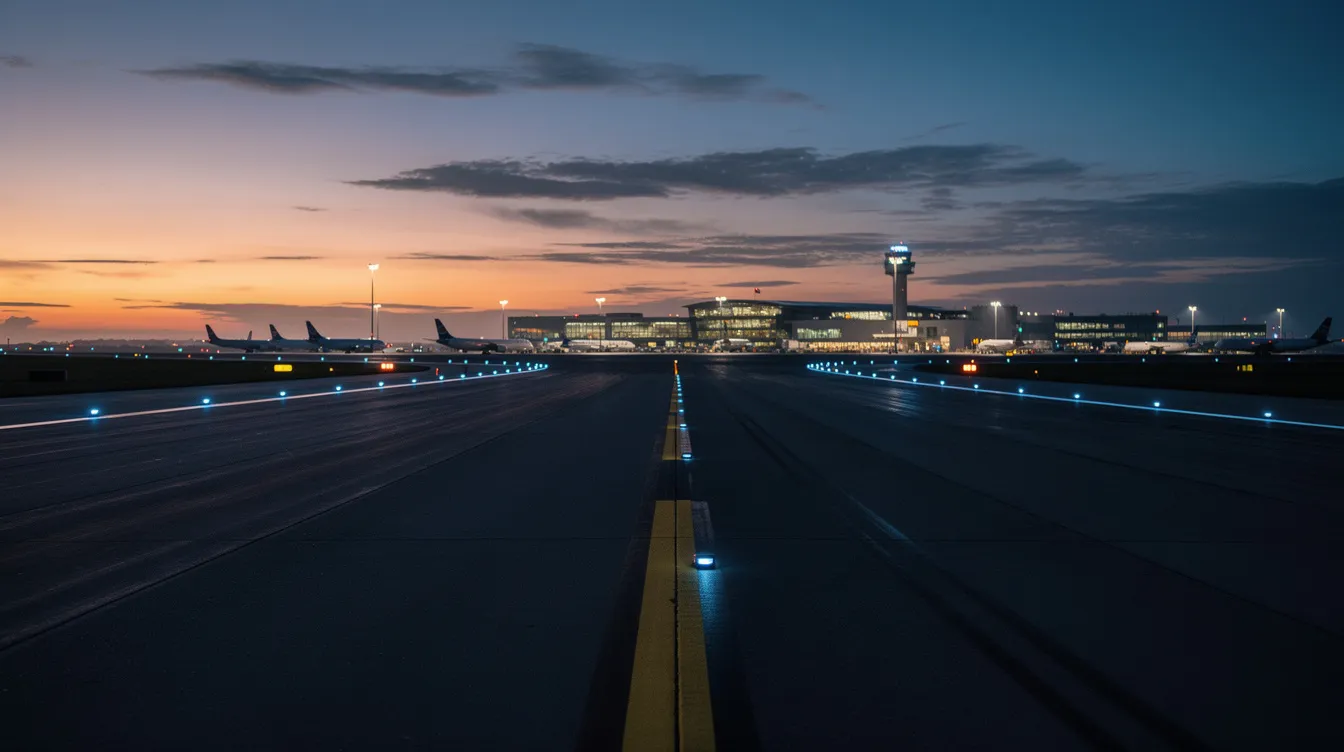
Taxiway centerlines provide visual guidance for pilots, and taxiway markings and illuminated signs help pilots navigate the airfield confidently, even at unfamiliar airports or during low visibility operations.
Communication and Clearances: How Taxi Instructions Really Work
Pilots must receive explicit taxi clearance from ATC before moving. No aircraft moves an inch on the ground without authorization from air traffic controllers. This is non-negotiable across every airport and jurisdiction worldwide.
The basic flow works like this:
Request and receive: The crew contacts ground control and receives a taxi route. ATC provides route clearances to avoid conflicts during taxiing, specifying taxiway identifiers and any hold short points.
Read back: Pilots must repeat taxi instructions back to ATC for confirmation. A typical exchange sounds like: "November-Two-Seven-Bravo, taxi to holding position Runway 26 via Alpha, Charlie. Hold short Runway 22." The crew reads it back verbatim.
Hold short compliance: Crossing a hold short line without explicit clearance is a serious safety breach. Strict adherence to hold-short instructions prevents runway incursions.
Progressive instructions: At unfamiliar or complex airports, pilots can request progressive instructions—step-by-step taxi guidance—or a follow-me vehicle to reduce the risk of wrong turns.
Clear and concise radio communication prevents confusion on the ground, and effective communication with ATC is crucial for safe airport operations. BlackJet-approved operators emphasize standard phraseology, and flight crews cross-check every clearance between captain and first officer—a practice outlined in essential jet card safety standards that applies equally on the ground and in the air.
Constant communication between cockpit and air traffic control ensures that landing traffic, departing flights, and ground vehicles all share the same runway areas without conflict.
Safety and Situational Awareness: Preventing Runway Incursions
Runway incursions—any unauthorized presence of an aircraft, vehicle, or person in a protected runway area—remain a top global safety concern. FAA data for fiscal year 2023 recorded approximately 1,756 incursions across roughly 54.4 million takeoff and landing operations. Of those, only 23 were classified as serious (Category A or B), but even minor incursions demand investigation and corrective action.
Common hazards during taxiing include:
Complex intersections: Large airports with multiple runway crossings and similar-sounding taxiway labels (B, B1, B10) increase the chance of navigational errors.
Poor visibility: Night operations, fog, and heavy rain reduce the effectiveness of visual cues, making situational awareness during taxiing even more critical.
Close proximity to other traffic: In congested areas, multiple aircraft may be taxiing simultaneously, requiring precise spacing.
Situational awareness is crucial during taxiing to avoid collisions. Taxiing requires pilots to focus on external conditions and other traffic at all times. Pilots must maintain situational awareness during taxiing—one pilot focuses primarily outside on steering and spacing, while the other monitors charts, moving maps, and radio calls. This crew resource management discipline is a hallmark of the high safety standards BlackJet demands from every operator in its network and aligns with what discerning travelers look for when comparing the top private jet companies for luxury travel.
Runway holding position markings prevent unauthorized runway entry, and verifying runway signs and numbers before crossing any runway prior to entry is standard procedure for every professional crew.
Technology on the Taxiway: Moving Maps, Alerts, and Sustainable Taxiing
Moving Map Displays
Modern business jets increasingly feature airport moving map displays in the cockpit—GPS-based overlays on digital taxi charts that show the airplane's real-time position relative to taxiways, holding positions, and runway areas. Runway awareness systems issue visual and aural alerts if the crew approaches a specific runway or intersection without proper clearance.
Surface Surveillance
Fuel and Emissions Savings
Fuel and emissions savings: Single-engine taxiing, where one engine is shut down during ground movement, can save several dozen kilograms of fuel on a 30-minute ground sequence. Even modest reductions in fuel consumption across thousands of flights add up significantly. Efficient taxi procedures also reduce emissions—a priority for environmentally conscious travelers and many users of private jet rideshare options.
Emerging Technology
BlackJet ensures every journey is carbon neutral at no extra cost to members. Efficient taxi procedures, route optimization, and mandatory carbon offsets work together to reduce each trip's environmental footprint—on the ground and in the air.
Taxiing in Different Conditions: Weather, Time of Day, and Airport Type
Wet or Icy Surfaces
Contaminated taxiways reduce braking performance, demanding lower speeds, greater spacing, and earlier braking points. Pilots avoid aggressive turns and allow extra margin at every stop.
Night Operations
Blue edge lights, green centerline lights, and red stop bars become the primary visual references. Reflective yellow signs and cockpit lighting discipline help crews maintain orientation across the airfield.
Airport Type Matters
At a compact regional field, the taxi route is short and direct with minimal intersections. At a major international hub, multi-runway layouts, complex intersections, and heavy air traffic extend taxi times significantly—whether you’re departing from a local business airport or arranging private jet charters in Lahore for regional and international trips.
Compare a BlackJet client departing from a private apron at Geneva—a five-minute taxi with no runway crossings—to the experience of using a commercial terminal at a congested hub like Heathrow, where 25 minutes of taxiing past queued airlines is routine. The difference in time, stress, and overall experience is substantial, especially for travelers considering the cheapest private aircraft and budget-friendly private options as an upgrade over commercial business class.
Noise-abatement rules may also dictate specific taxi routes, engine power limits near residential areas, and designated holding positions for de-icing in winter—all factors that professional crews at BlackJet-approved operators navigate seamlessly, whether they’re handling light jets or coordinating the best private jet options for 20 passengers.
Taxiing, Final Approach, and the Bigger Safety Picture
Successive takeoff and landing phases are dependent on effective taxiing. When an aircraft lands after final approach, the crew must transition rapidly from an airborne mindset to ground operations. During the landing rollout, they decelerate, identify the correct exit taxiway, and receive taxi instructions from ground control—all within seconds.
After clearing the active runway, checklists for flaps retraction and system reconfiguration are completed in designated sections of the taxi route to avoid distraction at intersections or holding positions. Every successful flight depends on this disciplined handoff between airborne and ground phases.
BlackJet's commitment to audited safety standards extends to recurring training that includes ground operations—not just en-route or approach procedures. Seamless ground handling, from the accelerating run at takeoff to full stop at the FBO door, is a hallmark of professional private aviation and a core benefit of the BlackJet 25+ Hour Jet Card.
FAQs: What Private Travelers Ask About Taxiing
Why are we sometimes waiting at a holding position before takeoff?
Your crew is holding short of the runway until air traffic control confirms the runway is clear of landing traffic and other aircraft. This wait—usually brief at private terminals—ensures safe separation before your departure.
Who decides our taxi route?
Ground control assigns the taxi route based on runway in use, other traffic, and airfield conditions. Pilots follow the entire route as cleared, and if anything is unclear, they can request progressive instructions for step-by-step guidance.
How do pilots avoid getting lost on the taxiways?
Crews use airport diagrams, cockpit moving maps, taxiway location signs, and constant cross-checking between both pilots.
At unfamiliar fields, they can also request a follow-me vehicle from ATC.
Does time spent taxiing increase my flight's carbon footprint?
Yes—longer taxi times mean more fuel burn and higher emissions.
BlackJet addresses this through efficient routing, operator selection at airports with shorter taxi distances, and comprehensive carbon offset programs that ensure every flight is carbon neutral.
Can the jet taxi faster to save time?
Taxi speeds are set by safety requirements, not convenience.
Passengers and the airplane are best protected at controlled speeds—typically 10 to 20 knots.
The real time savings come from using private terminals with shorter taxi distances, not from faster ground movement.
From Taxiway to Takeoff: How BlackJet Elevates the Entire Journey
Taxiing is where professional skill, advanced technology, and smart airport design converge to keep every flight safe and on schedule. It is a phase that passengers rarely think about, yet it directly shapes the punctuality, comfort, and safety of every trip.
For BlackJet members, the advantages are tangible: minimal waiting at private terminals, direct apron access, predictable departure times, and crews trained to handle ground operations with the same precision they bring to flight at altitude. With a Jet Card program, members simply arrive, board, and trust that every detail—from pushback to holding position to wheels-up—is managed by experienced professionals backed by 24/7 support and uncompromising safety certification, while resources like our guide to understanding jet card cost and private jet membership pricing help you choose the right structure.
Every journey begins and ends on the ground. BlackJet ensures those moments are as seamless as the flight itself. Explore BlackJet Jet Cards or speak with an advisor to discover how private jet access can reshape your most important routes—and use our guide to jet card pricing, costs, and benefits to compare options.


 Sign up with google
 Sign up with Apple