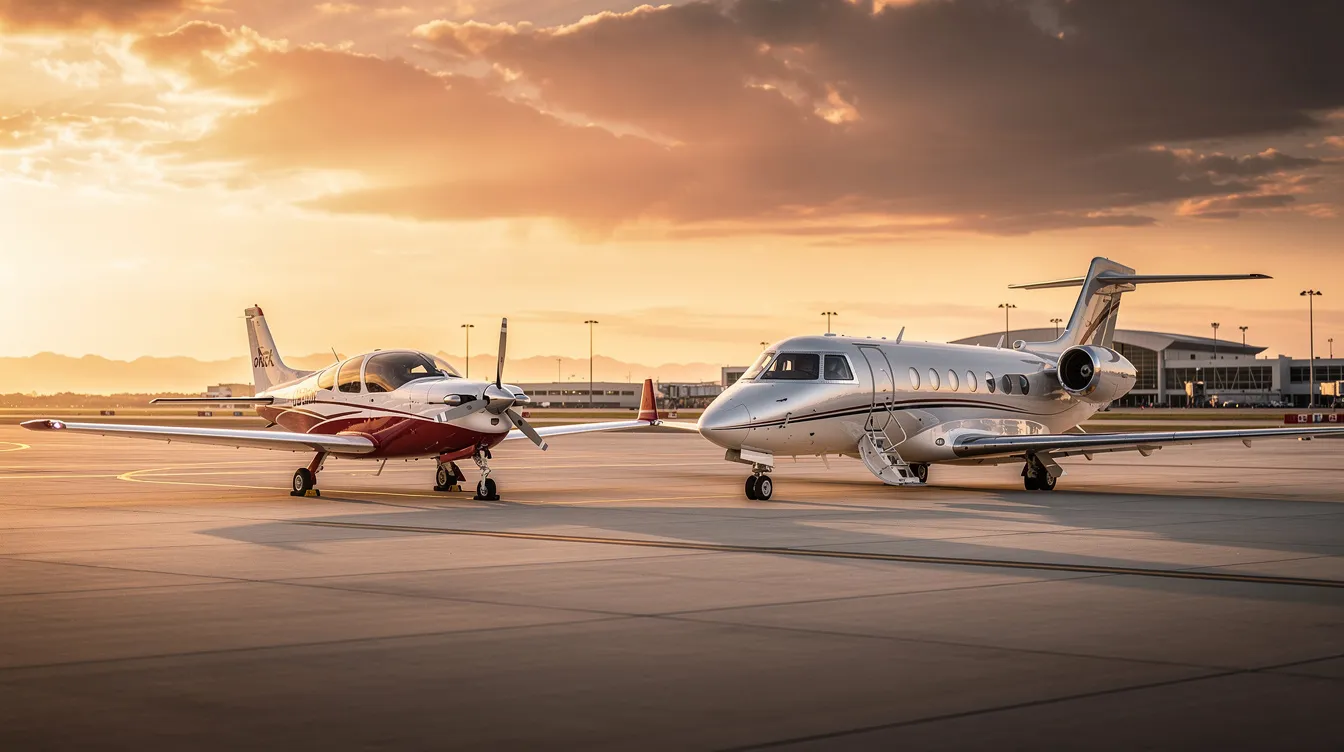
If you've ever looked out the window of a private jet and wondered what it would be like to have your own hands on the controls, the sport pilot certificate may be the fastest way to find out.
Overview: What a Sport Flying License Is (and Why It Matters Now)
A sport flying license—formally the FAA sport pilot certificate under 14 CFR Part 61, Subpart J—is a lower-cost, lower-hour path to flying light sport aircraft for personal use, with simpler medical requirements than a private pilot license. It was created in 2004 to make general aviation more accessible, and in the US it is formally a certificate, not a license, even though many pilots still use the terms interchangeably.
Many people use sport pilot training as an on-ramp to a private pilot certificate and more advanced ratings later, much as some travelers start with an entry-level LSA before comparing 50-hour jet card programs for frequent private flying. This guide is written for aviation-curious executives, high-net-worth travelers, and hands-on enthusiasts who want to understand what a sport pilot certificate lets you do, who qualifies, how training and costs compare with private pilot training, which aircraft you can fly, and how recent FAA MOSAIC changes have expanded the category. A sport pilot certificate requires a minimum of 20 flight hours—roughly half what a private pilot certificate demands—while some travelers bypass piloting altogether and dig into NetJets jet card costs and membership options to secure predictable private air access.
For BlackJet members and frequent private flyers, that context is practical: a sport pilot certificate offers a flexible, lower-commitment way to gain real flying experience, better evaluate private aviation options, and complement travel handled through a 25-hour private jet card structure. It also helps explain why sport flying has become more relevant as FAA rules broaden privileges without pushing travelers straight to full ownership or a more demanding certificate—the same decision logic behind comparing top private jet companies and their access models instead of buying an aircraft outright.
What you can fly: Light sport aircraft and, under MOSAIC, a broader range of eligible aircraft
Core limits: One passenger, daytime VFR standard, no commercial operations
Why it's popular: Fewer training hours, lower cost, and simplified medical requirements
Sport Pilot Privileges and Limitations (Compared With a Private Pilot)
Under Part 61 and updated MOSAIC guidance, a sport pilot can fly light sport aircraft for personal use as pilot in command. Sport pilots may carry one passenger and share operating expenses such as fuel, oil, and rental fees on a pro-rata basis, whereas owners and frequent flyers in the private jet world also think carefully about jet card tax deductions and proper expense treatment and compare Flexjet jet card costs and program details against other providers. You can conduct cross-country flights, enter controlled airspace including Class B, C, and D airspace with proper endorsements, and fly up to 10,000 feet above sea level.
Sport pilots cannot fly for compensation or hire, and a sport pilot certificate carries limitations for international operations because it does not meet ICAO private-pilot standards. Sport pilots cannot fly at night without additional training and endorsements and, in some cases, a medical certificate. No IFR flying is permitted—you must maintain visual reference to the surface and remain in visual meteorological conditions. Sport pilots can only fly light sport aircraft or eligible aircraft under MOSAIC's performance criteria.
Sport pilot vs. private pilot at a glance:
Factor | Sport Pilot | Private Pilot |
|---|
Passengers | One passenger per flight | More than one passenger allowed |
Night flying | Only with additional training and endorsement | Included in standard privileges |
IFR / instrument | Not permitted | Permitted with instrument rating |
Medical | No FAA medical certificate required (driver's license accepted) | At least third-class FAA medical certificate |
Compensation | Cannot fly for hire | Private pilots can carry passengers for compensation under specific rules |
Aircraft | Light sport category aircraft | Standard category, larger, faster aircraft |
A sport pilot handles short regional hops in a two-seat LSA on a Saturday morning. For multi-passenger, multi-city business trips on turbine aircraft, that's where BlackJet's Jet Card programs and premium private jet card membership options serve a different mission entirely.
Eligibility, Medical Requirements, and How Many Flight Hours You Need
To become a sport pilot, you must meet a few baseline criteria:
Eligibility requirements:
Age: You must be at least 17 years old to obtain a sport pilot certificate (16 to fly solo).
Language: You must be able to read, speak, write, and understand English per FAA requirements. You may also need to provide proof of identity such as a birth certificate or passport.
Citizenship/TSA: US citizens must show proof of citizenship when starting flight training. Non-US citizens may need prior authorization under the TSA Alien Flight Student Program.
Medical eligibility:
No FAA medical certificate is required for sport pilots. A valid U.S. driver's license can serve as medical self-certification, provided you have no disqualifying conditions and have never had a medical certificate denied, revoked, or suspended.
For night flying privileges under MOSAIC, a third-class medical or Basic Med may be required.
Flight hour requirements:
FAA minimum: 20 flight hours total under 14 CFR § 61.313
Training includes: 15 hours of flight instruction from an authorized instructor and 5 hours of solo flight time, for a flight consisting of both dual and solo training
Solo cross-country: Students must complete one solo cross-country flight of at least 75 nautical miles with a full stop landing at a minimum of two points
National average before checkride: 30–35 flight hours
Contrast: Private pilot certificate minimum is 40 hours, with typical actual totals of 60–70 flight hours
A sport pilot certificate allows flying light sport aircraft with fewer training hours. Training can be completed in a few months with consistent practice—roughly 2–4 months if you fly two to three times per week, similar to how many executives evaluate jet card pricing structures and membership terms over a defined planning window before committing.
Sport Pilot Training Path: From First Lesson to Checkride
Your journey starts with a discovery flight—your very first lesson in an LSA with a flight instructor, where you'll handle the controls and decide if the sport pilot path fits your aviation goals. From there, you enroll in flight training at a school offering light sport category aircraft, and begin accumulating flight hours through dual instruction and ground training.
Sport pilot training generally requires less complex ground school compared to private pilot training, but you must complete formal ground training to master aerodynamics, airspace rules, and navigation. Many student pilot candidates supplement classroom time with a home study course and advanced avionics simulation.
Training phases:
Ground school: Regulations, weather, navigation, aircraft systems. Can include a home study course or classroom sessions covering flight topics consisting of cross-country planning, airspace, and emergency decision-making.
Dual instruction: Basic maneuvers, takeoffs/landings, stalls, slow flight, emergency procedures with your flight instructor.
Solo practice: Once endorsed, you fly solo for pattern work, local flights, and your required hours of solo flight. You must log the required solo flight time, including cross-country segments.
Checkride prep: Intensive review of the Airman Certification Standards (ACS), mock oral exams, and flight practice.
You must pass an FAA sport pilot knowledge test (a computer-based multiple-choice FAA knowledge test) and a practical test administered by a designated pilot examiner, which includes both an oral exam and an FAA practical test in the aircraft.
Properly logged dual and solo time counts toward a private pilot certificate. A student with 35–40 flight hours as a sport pilot candidate may need only an additional 20–30 hours to earn a private pilot certificate—fewer hours than starting from scratch, much like frequent travelers who benefit from the best jet cards for high-usage private flying instead of ad‑hoc charter.
Costs, Aircraft Types, and the Impact of the MOSAIC Rule
Sport pilot training is the most cost-effective route to a pilot license, though costs vary by location, aircraft, and instructor rates, just as the cheapest private aircraft options in general aviation depend heavily on mission profile and ownership vs. access model.
Realistic cost breakdown:
FAA-minimum programs: $6,000–$9,000
Typical total with 30–35 flight hours: $8,000–$12,000
Key line items: aircraft rental per hour (wet rate), instructor hourly fee, ground instruction, written test fee, examiner fee, headset and materials
Common training aircraft:
Vans RV-12
Sling 2
Tecnam P2002
Icon A5 (amphibious)
Flight Design CT series
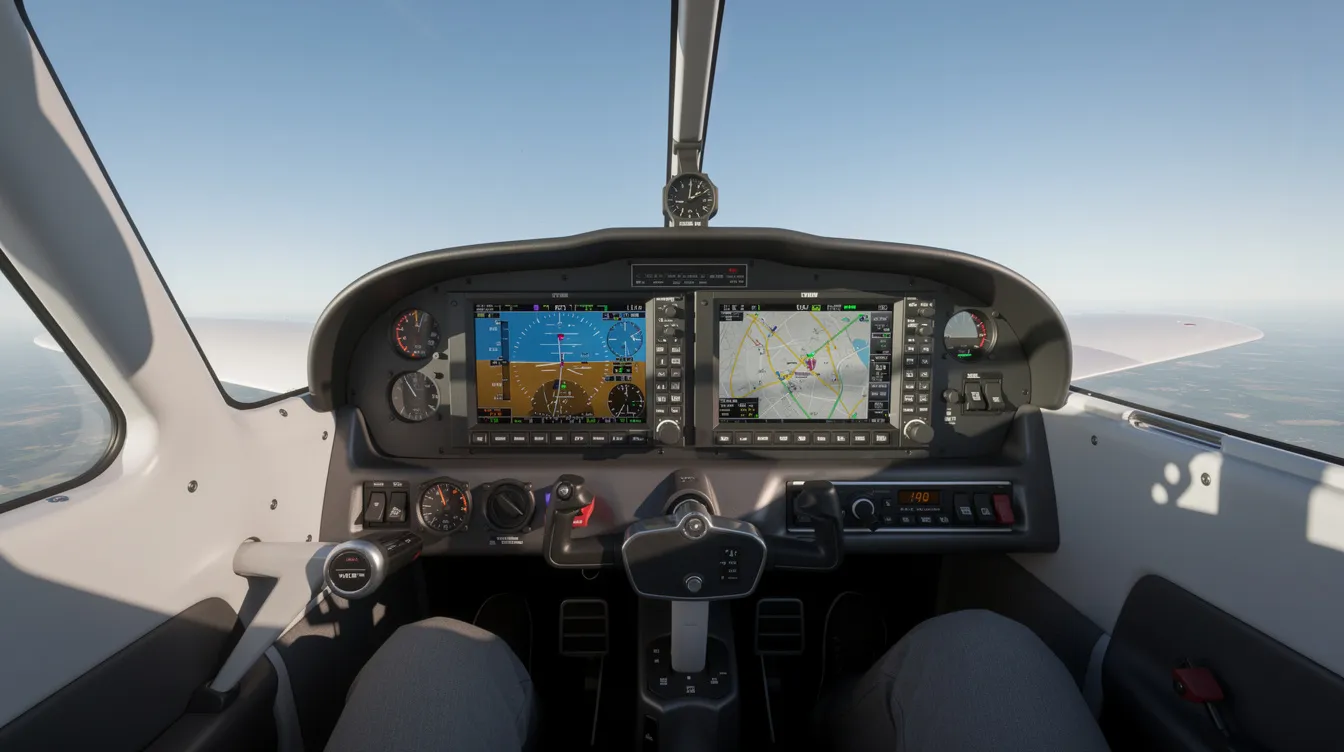
Many feature advanced avionics like Garmin G3X panels, building transferable skills for transitioning into the best small private aircraft for broader missions.
MOSAIC rule highlights:
The MOSAIC rule replaces old weight limit and fixed-gear restrictions with performance-based criteria, primarily clean stall speed. This special airworthiness certification framework means sport pilots may now access aircraft with retractable landing gear, retractable gear configurations, controllable-pitch propellers, and even aircraft with four seats—though the one-passenger limit remains. The FAA estimates roughly three-quarters of the general aviation fleet could become accessible to sport pilots under these expanded definitions. Key effective dates: October 22, 2025 for pilot privileges, and July 24, 2026 for new aircraft certification.
Contrast this with BlackJet's world: an owner-flown LSA serves weekend flying experience beautifully, but for a multi-city itinerary with colleagues and luggage, stepping onto a BlackJet-arranged midsize jet or exploring the most affordable private jet options for entry-level travelers is a fundamentally different—and complementary—mission.
Choosing Between Sport Pilot, Private Pilot, and Private Jet Access
Many readers land here deciding between becoming a sport pilot, pursuing a full private pilot certificate, or leveraging private jet access. The right answer depends on your training requirements, budget, and mission, as well as whether you prefer to buy a seat on a private jet via shared or semi-private services instead of committing to ownership or full charter.
Quick comparison:
Training time: 20+ hours minimum (sport) vs. 40+ hours (private); fewer training hours overall and less training time to your first flight as PIC
Passengers: One passenger (sport) vs. multiple (private)
Medical: Driver's license (sport, for daylight hours VFR) vs. FAA medical certificate (private)
Scope: The sport pilot certificate carries domestic-use limitations, while night flying, IFR, and larger-aircraft access remain on the private side; international flying generally requires a Private Pilot Certificate because of ICAO recognition standards—and some pilots ultimately graduate to evaluating multi-million dollar private jet options for long-range travel.
Sport pilot is the better fit for recreational flying within a few hundred miles during daylight hours, for those wanting to test the waters without full commitment, or for pilots whose health makes a traditional medical certificate challenging. A private pilot license is more appropriate if you plan to carry more than one passenger, pursue flight instruction careers, or fly into busy Class B hubs regularly—and it also opens the door to eventually flying or chartering top-tier private jets that combine range and luxury.
For high-net-worth individuals needing reliable, on-demand travel with multiple passengers and global reach, perhaps even considering the best private jet options for 20 passengers, sport pilot privileges simply won't meet that mission. BlackJet's Jet Card programs provide guaranteed access across aircraft categories with carbon-neutral flights, professional crews, and rigorous safety certification—complementing any personal flying you do on weekends, while a dedicated BlackJet 25+ Hour Jet Card can lock in predictable access and rates.
If hands-on flying calls to you, book a discovery flight at your local flight school. If seamless business and luxury travel is the priority, discover how BlackJet's Jet Card membership can elevate every journey into a curated, carbon-neutral private jet experience.
Frequently Asked Questions (FAQs) About the Sport Flying License
Q1: What types of aircraft can I fly with a sport pilot certificate?
A1: With a sport pilot certificate, you can fly FAA-approved light sport aircraft (LSA) and MOSAIC-eligible aircraft that meet specific performance criteria. These are typically smaller, lighter aircraft designed for recreational flying.
Q2: How many flight hours are required to earn a sport pilot certificate?
A2: The FAA requires a minimum of 20 flight hours, including 15 hours of flight instruction and 5 hours of solo flight time, with specific cross-country solo requirements.
Q3: Do I need a medical certificate to become a sport pilot?
A3: No FAA medical certificate is required. A valid U.S. driver's license can serve as medical self-certification, provided you have no disqualifying medical conditions.
Q4: Can I fly at night or in bad weather with a sport pilot certificate?
A4: Night flying is only permitted with additional training and endorsements. Instrument flight rules (IFR) or flying in bad weather is not allowed; sport pilots must maintain visual reference to the surface.
Q5: Can I carry passengers or fly commercially with a sport pilot certificate?
A5: You may carry one passenger and share operating expenses. Flying for compensation or hire is not permitted.
Q6: How does the MOSAIC rule affect sport pilot privileges?
A6: The MOSAIC rule expands sport pilot privileges to include more types of aircraft, including those with retractable landing gear and controllable-pitch propellers, while maintaining the one passenger limit.
Q7: How long does it typically take to complete sport pilot training?
A7: Training can be completed in a few months with consistent practice, typically 2–4 months flying two to three times per week.
Q8: Can flight hours earned as a sport pilot count toward a private pilot certificate?
A8: Yes, properly logged flight time as a sport pilot can often be credited toward private pilot training, reducing the total hours needed.
Q9: What are the age requirements to become a sport pilot?
A9: You must be at least 17 years old to obtain a sport pilot certificate and at least 16 to fly solo.
Q10: Is the sport pilot certificate recognized internationally?
A10: The sport pilot certificate does not meet ICAO standards, so flying outside the U.S. requires special authorization from the country where you intend to operate.
Conclusion: Elevate Your Aviation Journey with a Sport Flying License
The sport pilot certificate offers a prestigious yet accessible entry point into the world of aviation, combining streamlined training, reduced costs, and fewer regulatory hurdles. For high-net-worth individuals, executives, and aviation enthusiasts, it represents a strategic advantage—providing hands-on flying experience and a deeper connection to the skies without the extensive commitment of a private pilot license.
While sport pilots enjoy the freedom of flying light sport aircraft with one passenger during daylight hours, the MOSAIC rule’s expansion of privileges opens new possibilities, making this certificate even more valuable. Whether you seek weekend escapes, scenic adventures, or a stepping stone toward advanced certifications, the sport pilot certificate fits seamlessly into a lifestyle that values both flexibility and sophistication.
For those whose travel demands exceed the scope of sport flying, BlackJet’s Jet Card programs offer unparalleled access to a broad range of private jets with premier safety protocols, sustainable operations, and seamless digital booking. This dual approach—combining the joy of personal flight with the luxury of professional jet access—ensures every journey is not just a trip but a curated experience.
Discover how earning your sport flying license can complement your private aviation lifestyle and elevate your travel horizons. Explore BlackJet’s premium jet card membership today and unlock a new realm of effortless, carbon-neutral private jet access tailored to the discerning traveler.


 Sign up with google
 Sign up with Apple