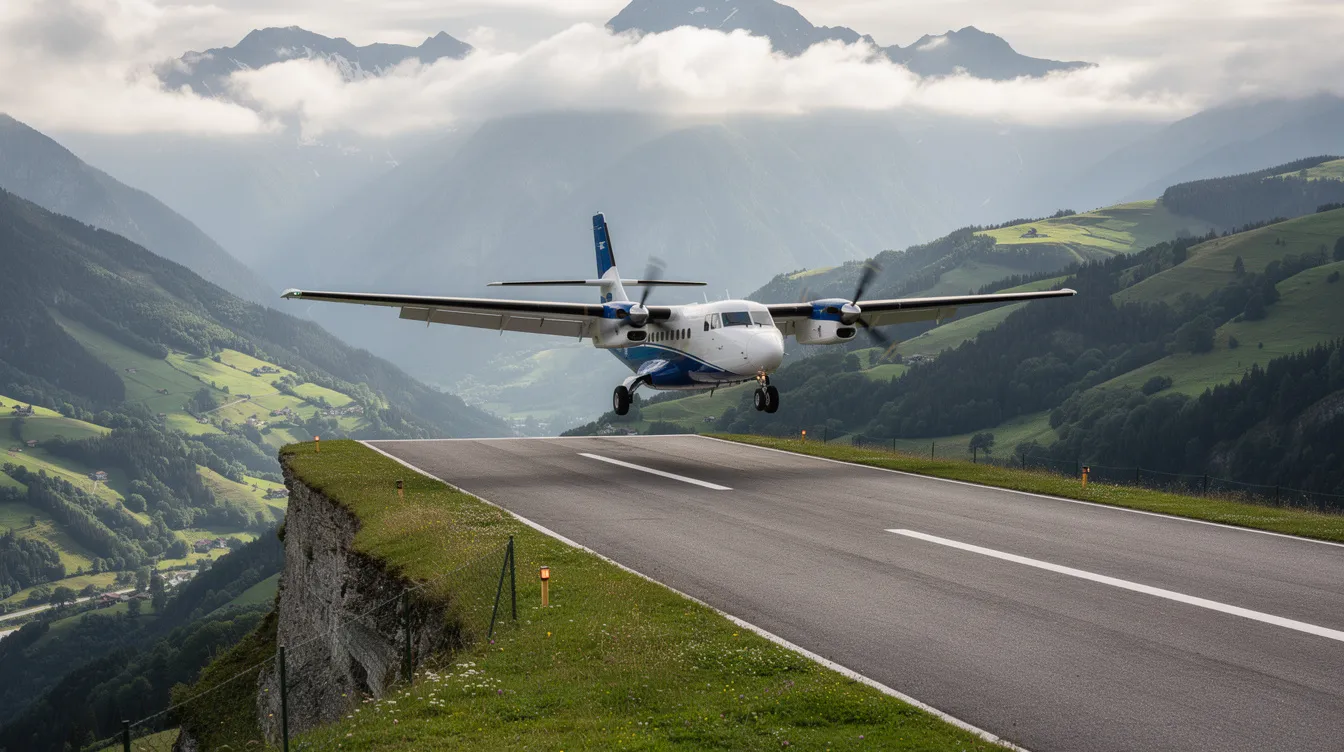
For discerning travelers who understand that time is the ultimate currency, smaller planes are not recreational toys—they are strategic tools that reshape how you move between cities. The FAA defines small planes as weighing 12,500 pounds or less. In this comprehensive guide, we’ll explore the different types of small planes, their key benefits, cost considerations, safety standards, and how to access them efficiently. Whether you’re a private traveler seeking flexibility, a business flyer needing to maximize productivity, or someone interested in the economics of private aviation, this article will help you understand why small planes are often the smartest choice for regional and short-haul travel.
Why Smaller Planes Matter for Serious Travelers
The FAA defines small planes as weighing 12,500 pounds or less. This category spans single-engine pistons like the Cirrus SR22, turboprops like the Pilatus PC-12 and Beechcraft King Air 250, and very light jets such as the Embraer Phenom 100—typically seating four to eight passengers. Smaller aircraft prioritize speed and cost-efficiency over massive passenger capacity, and they deliver measurable time savings: a New York–Boston flight takes roughly two hours door-to-door via private FBO, compared with four to five hours through commercial terminals. Small planes can access more airports than commercial jets, and smaller planes result in shorter boarding and deplaning times due to fewer passengers.
BlackJet Jet Card members gain these advantages without ownership—no capital outlay, no training burden, no maintenance headaches.
Speed: bypass hubs and fly point-to-point
Access: land at regional strips that commercial airlines cannot serve
Privacy: share the cabin only with your own party
The Basics: What Counts as Small Planes?
Aircraft categories include pistons, turboprops, and small jets for private flying, and discerning travelers often evaluate the best small private aircraft for every need before deciding how to fly. Here is how each type breaks down:
Single-engine piston (Cessna 172, Piper PA-28): 2–4 passengers, 120–140 knots. Single-engine piston planes are efficient for short trips and have lower operating costs.
Light twin-engine piston (Beechcraft Baron 58): added redundancy, higher cruise speed.
Turboprops (Pilatus PC-12, King Air 200): 6–9 seats, 300+ knots. Turboprops provide a balance between speed and fuel efficiency for regional travel.
Very Light Jets / light jets (Phenom 100, Citation CJ3): 4–7 seats, 350–450 knots. Very Light Jets are designed for trips up to 1,300 nautical miles.
Regional jets connect smaller cities to hubs with fewer than 100 seats, but they run on airline schedules, while specialized large-group charters such as private jets for up to 50 passengers serve a very different mission profile. Mid-size and large-cabin jets offer greater range and cabin volume but require longer runways and higher operating costs. Travelers comparing providers often review NetJets jet card costs and program structures alongside other options. BlackJet members typically use small aircraft for sub-three-hour flights and reserve larger cabin classes for longer segments.
Small Plane vs Owning One: Why Access Beats Ownership
We acknowledge the appeal of owning your own airplane, but the economics tell a different story. A good-quality used Cessna 150 costs around $30,000, while a well-maintained Cessna 172 runs $80,000–$150,000. For many travelers, exploring top affordable private planes and access options can be more strategic than committing to full ownership. Beyond acquisition, aircraft owners face ongoing expenses that add up to thousands each year, so it is essential to compare them with the cheapest private aircraft and other budget-friendly options:
Annual ownership costs include:
Annual ownership costs: $8,000 to $12,000, including insurance and routine maintenance
Storage costs: $50 to $600 per month, depending on location
Annual inspections: $750 to $2,000
Fuel costs: may account for 70% of operational expenses
Operating costs: roughly $120–$180 per flight hour, which aligns with benchmarks outlined in guides on how much it costs to charter a small plane
With a BlackJet Jet Card, you pay only for occupied hours—no capital tied up, and you always fly the aircraft type suited to each trip. Guides to jet card cost per hour can help you benchmark these occupied-hour rates against alternatives. Travelers flying 50–75 hours per year often find this model more economical than sole ownership, and many use comprehensive overviews of jet card pricing structures and benefits to compare programs before committing.
Safety Standards on Small Planes
A common fear is that small planes are less safe. In reality, small planes are subject to the same safety standards as larger aircraft. Under FAA Part 135, charter operators must maintain rigorous oversight:
Small planes must undergo annual inspections by trained professionals, plus 100-hour checks for commercial operations
All pilots must meet rigorous FAA requirements to fly any aircraft. Pilots of small aircraft must meet FAA training requirements,s including recurrent checks every 6–12 months
Volunteer pilots must have a minimum of 250 flight hours; professional charter pilots typically hold Commercial or ATP certificates.
BlackJet partners exclusively with operators holding ARGUS Gold/Platinum, Wyvern, or IS-BAO Stage II+ ratings
The FAA's 2025 General Aviation Safety Fact Sheet confirms that the fatal accident rate hit its lowest point since tracking began—offering peace of mind for every flight.
Where Smaller Planes Excel: Airports & Mission Profiles
The greatest advantage of a small plane is access. Many storage and service options are also based at the airport, including hangars, tiedowns, and FBO support, which helps streamline day-to-day operations. Larger planes require long runways and specialized heavy equipment, but a turboprop can operate from roughly 3,000 feet of runway versus 4,500+ feet for many midsize jets.
Northeast: fly Westchester County (HPN) direct to Nantucket or Martha's Vineyard instead of navigating JFK
California: Van Nuys to Truckee in a PC-12, landing minutes from Tahoe—a location commercial airlines cannot reach directly
Europe: reach Sion or Bolzano by small aircraft instead of connecting through Zurich or Milan
Ideal mission profiles include same-day business meetings within 500–800 nm, weekend ski or golf trips for two to five travelers, and short-notice flights to secondary cities with limited commercial service, all perfectly suited to small private jets and other compact luxury aircraft.
Comfort & Experience Inside a Small Plane
Cabin Layouts
Cabins in smaller planes are more intimate, but the experience still surpasses commercial business class. For some travelers, especially owner-pilots, exploring the best cheap light aircraft for personal adventures can complement charter or Jet Card access. Of course, cabin comfort in larger planes includes spacious cabins and in-flight entertainment, but private jets provide superior speed and cabin comfort regardless of size.
Piston aircraft (Cirrus SR22, Bonanza): four-seat club layouts with leather trim and panoramic views of the terrain below
Turboprops (King Air 250, PC-12): six to eight executive seats, fold-out work tables, generous baggage holds for ski gear or golf bags
Ride Quality
Ride quality: weather sensitivity affects smaller planes more due to their lighter mass, and smaller planes are more susceptible to turbulence due to their lighter weight—but modern composite airframes and active noise reduction headsets significantly improve comfort at altitude and heights typical of these aircraft
Catering & Amenities
BlackJet can tailor catering to flight duration—espresso and light breakfast on a 7 a.m. hop, for example—ensuring every detail meets your preferences.
Cost Efficiency: When Small Planes Are the Smarter Choice
Choosing the right-sized aircraft for each mission is where smart travelers save, and frameworks for understanding private jet sizes and use cases can clarify which cabin class fits a given trip. While larger planes can transport hundreds of people at once, lowering the cost-per-seat, and fuel efficiency is a key advantage of larger aircraft over long distances, those advantages disappear on short regional legs. Larger aircraft offer extreme fuel efficiency over long distances, but not on a 300 nm weekend run.
Hourly Rates by Aircraft Type
Piston: lowest hourly rate, ideal for one to three passengers on short hops
Turboprop: often 20–40% less per hour than a comparable light jet on sub-600 nm routes
Light jet: higher hourly rate but faster; total trip cost may be comparable on slightly longer legs, especially when you evaluate the cheapest private jet options for regional travel
Trip Cost Examples
For a four-person New York–coastal Maine weekend (~300 nm each way), a turboprop delivers better total value without meaningfully increasing travel time.
Aircraft Type Comparison Table
Aircraft Type | Ideal Use Case | Typical Seats | Hourly Rate |
|---|
Piston | 1–3 passengers, short hops (<400 nm) | 2–4 | Lowest |
Turboprop | 2–6 passengers, regional trips (<600 nm) | 6–9 | 20–40% less than light jet |
Light Jet | 4–7 passengers, longer regional trips | 4–7 | Higher, but faster |
Or, as a quick bullet reference:
Piston: 1–3 passengers, short hops (<400 nm), 2–4 seats, lowest hourly rate
Turboprop: 2–6 passengers, regional trips (<600 nm), 6–9 seats, 20–40% less than light jet
Light Jet: 4–7 passengers, longer regional trips, 4–7 seats, higher hourly rate, but faster
Technology & Modern Avionics in Small Planes
Many newer small planes carry avionics rivaling airline-grade systems, and booking tools—including BlackJet's digital bot and concierge platform—make scheduling seamless:
Glass cockpits (Garmin G1000/G3000) with synthetic vision and advanced flight management
ADS-B Out and In for real-time traffic and weather awareness
Integrated autopilots with envelope protection in aircraft like the Cirrus SR22 and TBM series
These systems support precise approaches to challenging regional airports, which is central to the value of small planes. In-flight Wi-Fi remains limited on very light aircraft but is increasingly available on turboprops and light jets, and tech-enabled platforms also make it easier than ever to buy a seat on a private jet when you do not need the entire aircraft.
Sustainability: Why Smaller Planes Fit a Greener Strategy
Sustainability is no longer optional—it is a baseline expectation. On short sectors, small planes and turboprops burn significantly less fuel per trip than deploying a large jet for the same route, especially when combined with strategies to fly private more cheaply and efficiently.
BlackJet makes every flight carbon neutral by default through verified offset programs, regardless of aircraft size
Sustainable Aviation Fuel availability is expanding at key private aviation hubs
Matching aircraft size to mission is itself a sustainability strategy, reducing unnecessary fuel burn
Using a Jet Card to Access Small Planes with BlackJet
A Jet Card simplifies access to the right plane for every trip with a predefined block of hours across cabin classes, and many frequent flyers rely on independent reviews of the best jet cards for frequent travelers when evaluating providers:
25-hour and 50-hour options with transparent occupied-hour rates, which you can compare with broader market benchmarks in a 50-hour jet card cost guide
Request specific aircraft categories—piston, turboprop, light jet, mid, large—via app or concierge, similar in spirit to the flexibility described in 100-hour jet card cost and structure overviews
24/7 digital booking and real-time support for schedule changes or weather reroutes
Same-day or 24-hour booking on popular routes, subject to availability
Example use case: a founder based in Chicago uses a turboprop via BlackJet's Jet Card to visit three Midwest cities in a single day—Chicago–Des Moines–Omaha–Chicago—without overnight stays. That is the kind of flexibility that changes how you do business.
FAQs About Flying on Small Planes with BlackJet
How safe are small planes compared with larger private jets?
Small planes are subject to the same safety standards. BlackJet partners only with operators holding top-tier safety certifications.
Can I choose a turboprop or light jet instead of a piston with my Jet Card?
Yes. Your Jet Card lets you select the aircraft category that meets each trip's requirements.
How much luggage can a small plane handle?
Most turboprops accommodate ski gear, golf bags, and weekend luggage comfortably. Capacity varies by aircraft; your advisor will confirm.
What happens if the weather affects my small plane flight?
BlackJet's operations team monitors conditions in real time and can reroute or reschedule to ensure your safety.
Are flights on small planes carbon-neutral with BlackJet?
Every BlackJet flight is carbon neutral at no extra cost, regardless of aircraft type.
How to Decide If a Small Plane Is Right for Your Next Trip
Distance, passenger count, luggage, and schedule determine the ideal aircraft, whether you are selecting a light piston or committing to a BlackJet 25+ Hour Jet Card for larger cabins. Keep these views in mind:
Under 400–600 nm, 2–4 passengers: small plane or turboprop is often ideal
600–1,200 nm or 5–7 passengers: consider a turboprop or light jet
Over 1,200 nm or larger groups: mid-size and large-cabin jets are more suitable
Conclusion: Elevate Your Travel with Smaller Planes
Smaller planes offer more than just an alternative to commercial flights or jet ownership—they provide a strategic advantage for the discerning traveler. Their unmatched speed, flexibility, and access to regional airports allow you to reclaim valuable time and reduce travel stress. BlackJet’s Jet Card program grants seamless access to a curated fleet of certified, safety-vetted small planes, supported by advanced technology and committed to sustainability through carbon-neutral operations. Whether your journey involves quick regional hops or multi-city business trips, selecting the right aircraft size optimizes your travel experience, cost efficiency, and environmental impact. Discover how BlackJet can transform your private aviation experience—because smart travel means flying smarter, not just flying more.
Discuss your typical travel profile with a BlackJet advisor to map which Jet Card structure aligns with your regional and international needs. Visit our page to explore BlackJet's Jet Card options or schedule a private consultation—and discover how the right aircraft, at the right time, reshapes the way you travel.


 Sign up with google
 Sign up with Apple