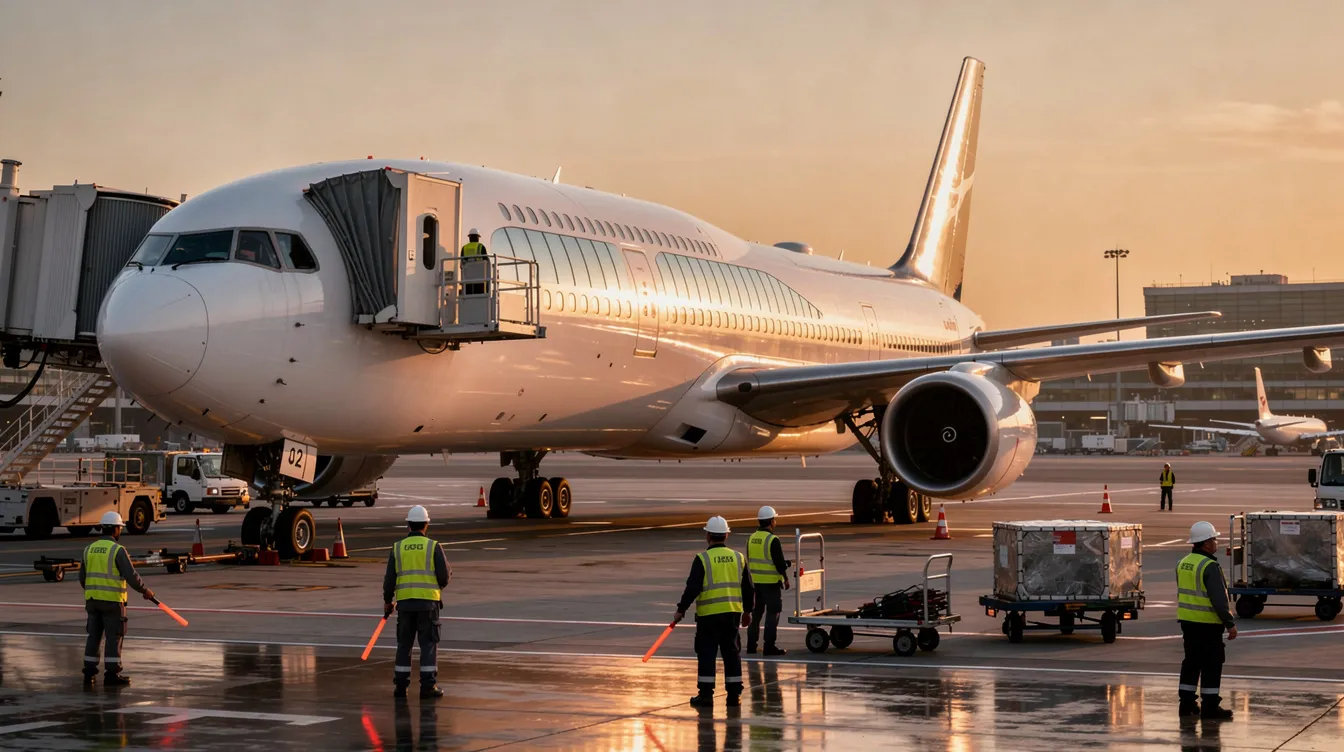
Airplanes vary in size based on mission, passenger capacity, range, and cargo volume-from compact regional turboprops to the colossal double-deck Airbus A380. Understanding the size of aeroplane options available today isn't just trivia for aviation enthusiasts. It's a strategic decision that shapes every aspect of travel: where you can fly, how quickly you arrive, and how comfortably you spend the journey. This guide covers the full spectrum-from the world's largest passenger aircraft down to the precision-matched private jets available through a BlackJet Jet Card.
Quick Answer: What Is the Largest Passenger Aircraft Today?
The Airbus A380 is the largest passenger aircraft currently in commercial service. It is a four-engine, double-deck, wide-body airliner purpose-built for the highest-traffic international routes. Very large aircraft like this can have double decks and carry over 500 passengers in typical configurations.
Here are the numbers that define its scale:
Length: The Airbus A380 measures 73 meters in length
Wingspan: It has a wingspan of 79.8 meters, wider than a football pitch is long
Height: Approximately 24 meters tall
Maximum takeoff weight: Roughly 575 tonnes
Maximum seating capacity: The A380 can carry a maximum of 853 passengers in a high-density, all-economy layout; at maximum capacity, it can exceed 800 passengers depending on configuration
Typical airline layout: Most operators configure 450–615 seats to allow premium cabins and greater passenger comfort
The A380 began its commercial service on October 25, 2007, with Singapore Airlines as its inaugural customer. Production concluded in 2021 after Airbus delivered a total of 251 units to airlines worldwide. A total of 251 A380s were delivered to airlines before production ended in 2021.
Metric | Airbus A380-800 | Boeing 747-8I |
|---|
Length | ~73 m | ~76.3 m (longest passenger aircraft) |
Wingspan | 79.8 m | ~68.4 m |
Typical seats | 500–615 | 364–467 |
Max certified seats | 853 | ~605 |
Range | ~8,000 nm | ~7,730 nm |
The Boeing 747-8 holds the record as the longest passenger aircraft by fuselage length, while the Antonov An-225 was the heaviest cargo aircraft ever built (destroyed in 2022). Neither challenges the A380's status as the world's largest commercial aircraft by passenger volume.
While the A380 defines the upper extreme, private jets-including those accessible through a BlackJet Jet Card-are optimized for a fundamentally different purpose: privacy, flexibility, and saving hours compared to the full commercial airliner experience.
Why Aircraft Size Matters for Elite and Frequent Travelers
Aircraft size directly shapes four factors that define your travel experience: route availability, airport access, cabin comfort, and total door-to-door time. Large commercial aircraft like the A380 and Boeing 777 concentrate operations at major international hubs-think Heathrow, JFK, Dubai-where passengers face congested terminals, lengthy security queues, and rigid departure schedules. Heavy aircraft typically require longer runways for takeoff and landing, which further limits where they can operate. However, all aircraft flip this equation. Private jets can access thousands more airports than large aircraft, including secondary airports closer to your origin or destination—Teterboro instead of JFK, Farnborough instead of Heathrow. Weight and size influences airplane speed, range, runway requirements, and payload, meaning a right-sized private aircraft eliminates unnecessary ground time while matching performance to your actual mission.
Big commercial widebody vs private jet experience:
Airport access: Major hubs only vs 5,000+ airports including private terminals (FBOs)
Schedule control: Fixed timetables vs departure on your terms
Cabin privacy: Shared cabin with 300–800 passengers vs 4–19 guests
Ground time: 2–3 hours of check-in and transfers vs 15–30 minutes
Cost model: Per-seat pricing vs hourly rates that reward small-group efficiency
BlackJet helps members right-size the aircraft to the mission-balancing aircraft size, flight range, airport access, and budget under a Jet Card model that removes the complexity of ownership.
How Planes Are Classified by Size, Weight, and Cabin Layout
Aircraft are classified into regional, narrow-body, and wide-body types, each serving distinct missions. Aircraft size can be categorized by fuselage width, weight, and operating range. Commercial aircraft include small regional turboprops and massive wide-body jets, while general aviation includes small aircraft under 12,500 pounds.
Here's how the aviation industry organizes these categories:
Regional aircraft: Capacity of 50 to 100 passengers. Examples: Embraer E190, Bombardier CRJ series. Designed for short-haul routes connecting smaller cities to hubs.
Narrow-body aircraft (single-aisle): Roughly 100–240 seats. Examples: Boeing 737-800, Airbus A320neo. Fuselage width around 3.5–4 m with 3-3 seating. Workhorses for domestic and medium-haul.
Widebody aircraft (twin-aisle): Approximately 250–400+ seats. Examples: Boeing 787 Dreamliner, Airbus A350, Boeing 777. Cabin width around 5.5–6.5 m, multiple cabin zones, built for long-haul flights.
Jumbo jets: 400–850+ in high-density layouts. Examples: Airbus A380, Boeing 747-8. The largest in the aviation industry.
Operational weight classes used in aviation include Small, Large, and Heavy (plus "Super" for aircraft like the A380), based on maximum takeoff weight. These categories determine wake turbulence separation rules, runway length requirements, and airport infrastructure needs.
In private aviation, aircraft categories follow a different logic: very light jets, light jets, midsize, super-midsize, large-cabin, and ultra-long-range, each defined by cabin volume, typical range, and passenger count (typically 4–19).
How Many Passengers Can Different Aircraft Types Carry?
Passenger capacity depends on whether you're measuring a typical airline configuration with premium cabins or the absolute certified maximum. Here's how passenger count breaks down across the spectrum:
Commercial aircraft:
Commuter turboprops: Up to ~19 passengers on regional routes
Regional jets: Regional jets typically carry 70 to 100 passengers (e.g., Embraer E175)
Narrow-body: Narrow-body aircraft typically seat 100 to 240 passengers; narrow-body aircraft can hold up to 200 passengers in standard configs. A320: ~150–190, Boeing 737-800: ~160–189
Widebody: Wide-body aircraft often carry 300 to 400+ passengers. Boeing 787-9: ~250–300, Boeing 777-300ER: ~350–400
Jumbo: Jumbo jets can accommodate 400 to 850 passengers. A380: typically 500–615 in three-class layout
Private aircraft:
Very light jets: 4–6 seats
Light jets: Light jets are designed for short regional hops and seat 4 to 8 passengers
Midsize jets: Midsize jets typically seat 8 to 12 passengers with transcontinental range
Super-midsize: ~8–11 seats
Large cabin jets: Large cabin jets can seat 12 to 19 passengers and fly nonstop over 6,500 nautical miles
In private aviation, the question is rarely "how many passengers fit?" but rather "how many passengers plus luggage, over what distance, from which airports?" Guidelines for private jet sizes and categories help frame these trade-offs clearly.
Single-Aisle vs Widebody: What Aircraft Size Means Onboard
The core distinction passengers feel in the cabin comes down to fuselage width: single-aisle aircraft seat between 100 to 240 passengers across one aisle, while wide-body aircraft are built for long-haul flights and can seat over 400 passengers across two aisles. This shapes everything from boarding speed to personal space.
Narrow-body (single-aisle):
Typical 3-3 seating in economy, cabin width ~3.5–4 m
Serve routes of 1–6 hours (domestic, intra-continental)
Examples: Boeing 737, Airbus A320 families
Faster boarding but less room for premium products
Widebody (twin-aisle):
Cabin width ~5.5–6.5 m, configurations like 3-3-3 or 3-4-3
Multiple cabin zones with dedicated business and first-class narrow-body
More galleys, lavatories, and overhead bin space
Examples: Boeing 777, 787, Airbus A330, A350, A380
A notable trend: long-range single-aisle aircraft like the Airbus A321XLR now enable thinner transatlantic routes, blurring the line between narrow body aircraft and smaller widebodies for airlines like Delta Air Lines, United Airlines, and American Airlines, much as different types of private jets for every traveler blur traditional size categories in business aviation.
Single-aisle vs widebody vs private jet (traveler's perspective):
Space: Limited → Generous → Exclusively yours (more personal space per passenger)
Privacy: Minimal → Class-dependent → Complete
Boarding: 30–45 min → 45–60 min → 5–15 min
Service: Standardized → Tiered → Bespoke
While physically smaller than any commercial widebody, a light jet or midsize jet can offer quieter cabins, fully customized layouts, and significantly more personal space per passenger than a commercial flight.
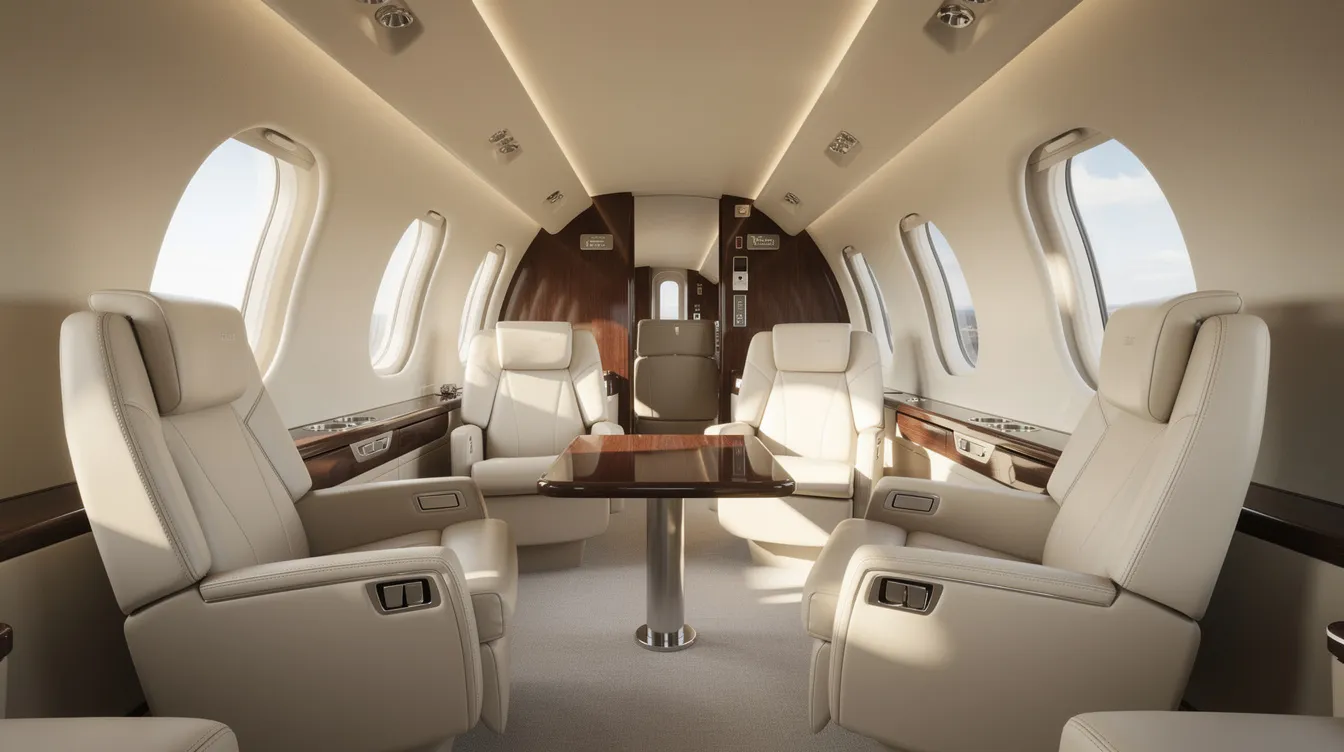
The Giants: World's Largest Commercial and Passenger Aircraft
The world's largest passenger aircraft have captivated aviation enthusiasts for decades. Here are the defining large aircraft of commercial aviation:
Airbus A380-800: Length ~73 m, wingspan 79.8 m, height ~24.1 m. MTOW ~575 tonnes. First flight on 27 April 2005. Entered commercial service in 2007 with Singapore Airlines. Airlines including Qatar Airways, Korean Air, British Airways, Air France, and Turkish Airlines have operated the type. Production ended in 2021 after 251 deliveries. The A380 can carry a maximum of 853 passengers.
Boeing 747 (747-400, 747-8): The 747-8 stretches to ~76.3 m, making it the longest passenger aircraft ever.Wingspan wide-body, typical seating 364–467. An iconic widebody aircraft spanning five decades of service, with Air Canada among its final operators. Production ended in 2023.
Other large commercial aircraft: Boeing 777-300ER and Airbus A350-1000 represent current wide body aircraft workhorses, with lengths exceeding 73 m and capacities of 350–480 in varied layouts. The Airbus A340-600 offered ultra-long-range four-engine service before retirement by most carriers.
Non-passenger giants (for context): Cargo aircraft exist across the same size range as passenger aircraft. The Antonov An-225 was the heaviest cargo aircraft ever built, destroyed in 2022. Cargo aircraft are designed for volume and weight limits rather than human comfort. Cargo focuses on payload and volume. The Stratolaunch ROC holds the largest wingspan at ~117 m but serves experimental missions only.
While these giants dominate headlines, airlines today increasingly prefer efficienttwin-enginee aircraft for their operating costs advantages-which is why the A380 and 747 lines have ended. At the ultra-elite end of the market, some UHNW travelers even explore the private jet Airbus A380 experience as a flying palace rather than a traditional airliner.
Iconic Widebody Aircraft: Size, Capacity, and Fuel Burn Efficiency
Modern widebody aircraft form the backbone of long-haul commercial aviation, balancing widebody aircraft size with fuel efficiency and route flexibility, just as the best private jets in the world balance range, comfort, and performance for high-end travelers.
Boeing 777-300ER: Length ~73.9 m, typical seating 350–400 passengers. Flight range exceeding 7,000 nautical miles makes it a cornerstone of consumption; newer routes are being introduced by airlines like Qatar Airways, Air France, and Korean Air.
Boeing 787 Dreamliner (787-8/9/10): Typical seating 240–330 passengers. Its carbon fiber reinforced polymer composite construction and advanced engines deliver low fuel consumption-newer widebody aircraft improve fuel efficiency by 20–25% compared to older models of similar size. Modern aircraft use advanced engines to reduce fuel burn significantly compared to long-range aircraft.
Airbus A350-900 awide-body000: Seating ~300–480 depending on layout. Typical range up to ~8,700 nautical miles with modern materials and smarter,u sing rrefinements Operators include Delta Air Lines, United Airlines, and Turkish Airlines on long range flights.
These current wide body aircraft demonstrate how the aviation industry has shifted: rather than building bigger, manufacturers build smarter-using modern materials, advanced engines, and optimized aerodynamics to reduce operating costs per seat-mile.
In private aviation, large-cabin and ultra-long-range business jets offer intercontinental range rivaling these widebodies-with personalized cabins for 12–19 passengers and overlap with the best private jet options for around 20 passengers. Business airliners are VIP-configured versions of commercial aircraft, serving heads of state and corporations requiring maximum space and range in a private aircraft.
Fuel Burn, Aircraft Size, and Environmental Impact
Larger aircraft generally have higher payload capacities but also heavier operating requirements. Fuel consumption increases with larger aircraft size due to increased drag—more wing area and fuselage surface — demanding more thrust. But the relationship between size and efficiency isn't linear.
Key trade-offs:
Full loads favor big aircraft: Larger aircraft can be more efficient per seat when full. The Airbus A380 consumes about 3.1 litres of fuel per 100 passenger-kilometers at capacity, competitive with a modern compact car per occupant.
Empty seats destroy the math: Lightly loaded large aircraft dramatically increase per-passenger fuel burn and emissions, making right-sizing critical.
Technology narrows the gap: Composite airframes (787, A350), high-bypass turbofan engines, and winglet designs cut fuel burn across both commercial and private fleets.
Sustainable aviation fuel (SAF): Blended or neat SAF can reduce lifecycle carbon emissions by up to 80%. Combined with optimized routing and carbon offset programs, even private aviation—andeaningfully reduce their footprint.
Right-sizing matters most: Choosing the smallest aircraft that meets the mission's passenger count, range, and runway length requirements is the single most effective lever for reducing emissions in private aviation. A thorough guide to the best small private aircraft for each mission can sharpen those choices.
BlackJet offers carbon-neutral flights as part of its core value proposition, combining careful aircraft selection with verified offsets and SAF where available-at no extra cost to members, while also highlighting the cheapest private jet options for travelers who prioritize both cost and sustainability.
Private Jets vs Commercial Aircraft Size: What BlackJet Customers Should Know
While commercial aircraft size focuses on moving hundreds of passengers efficiently, private jets are engineered around small groups who prioritize time, control, and privacy. Private aviation encompasses a range from small two-seaters to luxury airliners configured for VIP service, with particularly compelling small private jet luxury travel options for individuals and tight-knit teams.
Private jet size categories BlackJet members typically choose:
Very light jets: 4–6 seats, ~1,000–1,500 nm range
Light jet: 6–8 seats, ~1,500–2,500 nm range
Midsize: 7–9 seats, ~2,500–3,000 nm range
Super-midsize: 8–11 seats, ~3,000–4,000+ nm range
Large-cabin: 10–14 seats, ~4,000–6,000 nm range
Ultra-long-range: 12–19 seats, ~5,000–8,000+ nm range
Aircraft size influences runway access and airport compatibility. Light jets and midsize jets can operate from shorter runways at secondary airports—Teterboro for New York, Le Bourget for Paris—dramatically cutting ground travel time. Airport infrastructure must accommodate the specific size and weight of aircraft, which is why larger private aircraft have fewer airport options.
The cost equation shifts when you factor in productivity. While hourly rates exceed a commercial flight ticket price, a BlackJet-certified private jet can save hours compared to commercial alternatives for executive teams whose collective time carries real economic value, and a detailed private jet price list and cost guide help frame that ROI clearly.
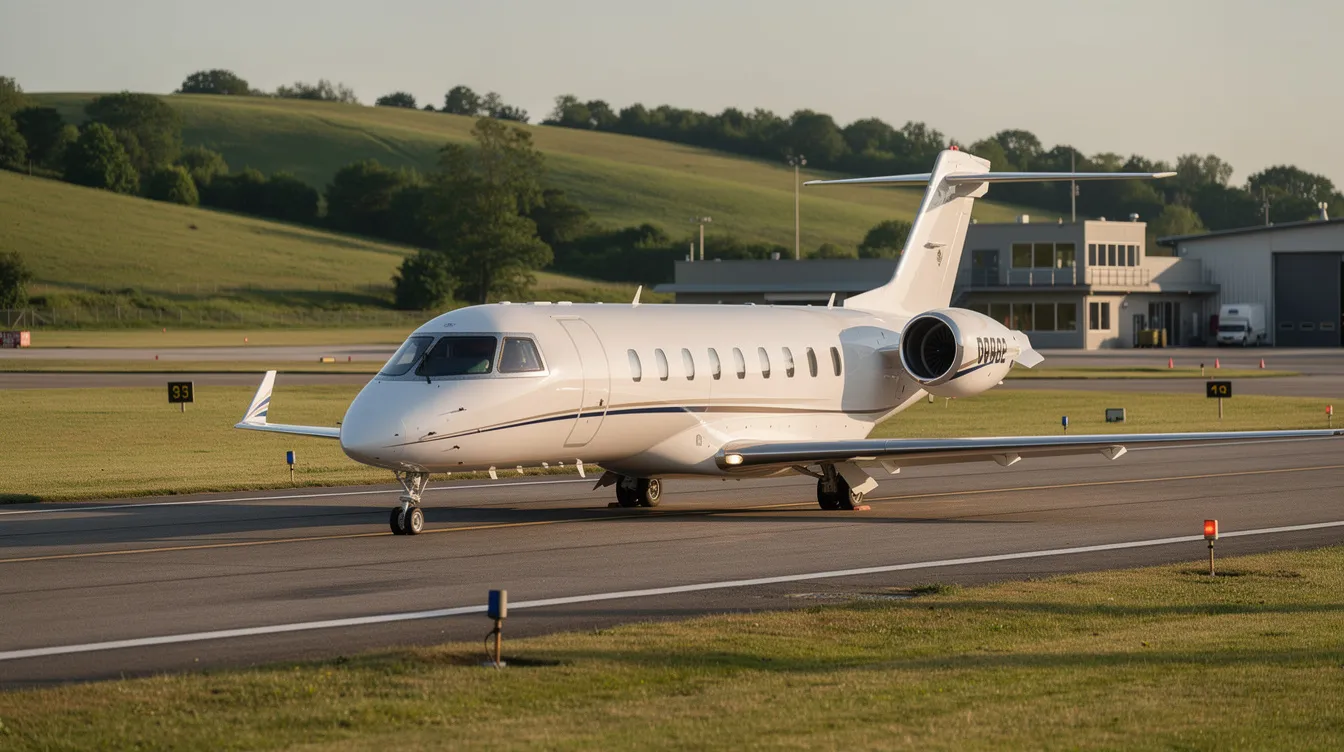
Choosing the Right Aircraft Size with a BlackJet Jet Card
A Jet Card provides prepaid flight hours, giving members predictable access to multiple aircraft sizes without the burden of owning or managing a jet. The key is matching aircraft type to mission, something the best jet cards for frequent flyers are specifically designed to support.
For 4–6 passengers (short-haul): A business trip from New York to Chicago (~850 nm) calls for a light jet. Minimal luggage, fast turnaround, access to close-in airports. A same-day return trip becomes effortless and aligns well with a 25-hour flight—makingtur50-hourccasional but strategic travel.
For 7–10 passengers (coast-to-coast): An 8-person team flying New York to Los Angeles (~2,450 nm) fits a super-midsize jet. Stand-up cabin, full galley, enough room to work or rest during a five-hour flight-making a 50 hour jet card program an efficient choice for recurring coast-to-coast missions.
For 11–19 passengers (intercontinental): A 12-person delegation traveling from New York to London (~3,500 nm) requires a large-cabin or ultra-long-range jet. These aircraft can fly nonstop with multiple cabin zones, conference areas, and lie-flat seating, and they overlap with the best private jet solutions for groups of up to 50 passengers when missions scale further.
Right-sizing improves both sustainability and cost control-avoiding unnecessarily large aircraft for smaller groups keeps fuel burn proportional and hourly rates lower. BlackJet's team and digital platform recommend the appropriate aircraft category instantly, factoring in runway length, weather, passenger count, and scheduling preferences, and their jet card pricing guide clarifies how those choices translate into hourly rates.
Every operator in BlackJet's network meets rigorous safety certification standards, so members focus on choosing space and range rather than worrying about quality.
Safety, Wake Turbulence, and Operating Large vs Small Aircraft
Safety standards apply consistently across all aircraft sizes, from very light jets to the Airbus A380. What changes with aircraft size are the operational procedures surrounding them, and membership products like the BlackJet 25+ Hour Jet Card are structured to deliver that safety consistently across multiple aircraft types.
Wake turbulence categories (light, medium, heavy, super) are based on aircraft weight. Larger aircraft require greater separation in air traffic control to protect following aircraft from dangerous wake vortices.
Air traffic control procedures and modern avionics maintain safe sequencing between a full commercial airliner departing and a private jet following behind.
Accident rates across both commercial and business aviation are extremely low when operators maintain proper regulatory compliance and maintenance programs, a principle embedded in BlackJet's premium private jet card services and standards regardless of work.
Choosing a smaller private jet instead of a massive commercial widebody does not mean compromising on safety. BlackJet partners exclusively with audited, safety-certified operators with experienced crews and rigorous maintenance standards-regardless of aircraft size, making it easy to compare options to established providers via resources like a NetJets jet card cost overview.
FAQs About Aircraft Size, Passenger Capacity, and Private Jet Choice
What is currently the world's largest passenger aircraft?
The Airbus A380-800. It spans 79.8 m in wingspan, stretches 73 m long, and holds a maximum seating capacity of 853 passengers. Most airlines configure it for 500 615 seats with premium cabins.
How does a private jet cabin compare to a commercial widebody like a Boeing 787?
A Boeing 787 carries 250 300+ passengers across two aisles. A large-cabin private jet carries 12 19 guests with exclusive access, custom layouts, and dramatically faster boarding. The difference is shared efficiency vs personal control.
How many passengers can a light jet or midsize jet carry?
A light jet seats approximately 6to 8 passengers. A midsize jet handles7- 99. Super-midsize fits 8 11, and large-cabin or ultra-long-range jets accommodate 12 19.
Can a private jet match the range of big commercial aircraft?
Yes. Ultra-long-range jets like the Gulfstream G650ER and Bombardier Global—or achieve 7,000 for—unused miles nonstop—comparable to routes served by the 787 or A350.
Does choosing a smaller jet reduce my environmental impact?
Absolutely. Smaller aircraft burn less fuel per hour, and right-sizing ensures you're not paying for-or burning fuel for-unused capacity. BlackJet further mitigates impact through carbon-neutral flights and SAF integration, while also educating travelers about the cheapest private aircraft and budget-friendly options that keep costs and emissions in check.
How do I decide which aircraft size is right for me with BlackJet?
Consider your 100-hour count, luggage, origin and destination airports, desired flight range, and cabin preferences. BlackJet advisors and the digital booking platform match these inputs to the optimal aircraft category for every trip, whether that means a flexible 100 hour jet card program or a smaller block of hours.
Conclusion: Using Aircraft Size to Shape a Smarter Travel Strategy
Aircraft size is more than a trivia question about the largest passenger aircraft. It's a strategic factor in time, comfort, operating costs, and environmental performance. The Airbus A380 remains the undisputed giant of commercial aviation; modern widebody aircraft like the 777, 787, and A350 serve as long-haul workhorses for airlines including British Airways, Air France, and Delta Air Lines. But for travelers who value privacy, flexibility, and airport access, private jets—matched precisely to the mission—deliver advantages that no commercial flight can replicate.
Elite travelers can leverage aircraft size choices to align with what matters most: speed, seating capacity, sustainability, or all three. BlackJet simplifies this through Jet Card membership, safety-certified fleets, carbon-neutral flights, and 24/7 expert support that takes the guesswork out of right-sizing.
Discover how a BlackJet Jet Card can reshape your travel. Explore your options or speak with a specialist about matching the right aircraft to every journey you take.


 Sign up with google
 Sign up with Apple