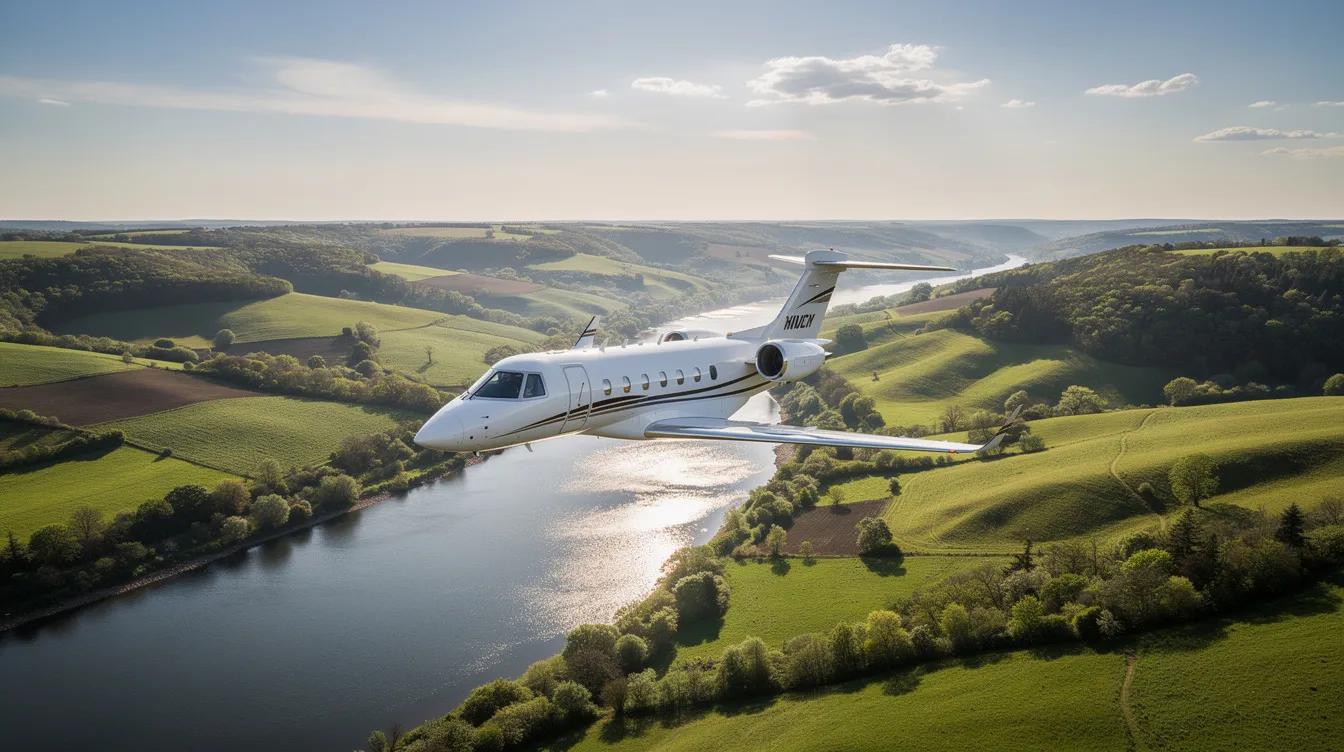
Single-pilot jets are private aircraft certified to be flown safely by one qualified pilot, combining private jet speed and access with lower crew costs, simpler scheduling, and the ability to use smaller airports. For executives, frequent business flyers, and high-net-worth leisure travelers who want the privacy, convenience, and flexibility of private aviation without owning an aircraft, they offer one of the strongest value propositions in the market.
This guide is designed for executives, frequent business travelers, and private aviation newcomers seeking to understand the benefits and options of single-pilot jets.
This guide looks at the main single-pilot jet categories, leading aircraft models, safety systems and modern flight decks, cabin comfort, operating economics, sustainability, and how they compare with larger private jets and commercial flights. It also explains practical access options, including ownership, charter, and BlackJet Jet Card programs, for travelers trying to save time, control costs, and make regional and business travel more efficient.
Why Single-Pilot Jets Matter for Serious Travelers in 2026
Consider a routine business trip from New York to Chicago. On a commercial business class ticket, you are looking at a drive to a major hub airport, an early arrival for security screening, time in a crowded lounge, potential gate delays, and a transfer on the other end. Door-to-door, that is easily five to six hours consumed. Now picture the same trip in a single-pilot light jet departing from Teterboro or White Plains: you arrive 15 minutes before departure, board immediately, and land at a private terminal minutes from downtown Chicago. Total time: roughly two and a half hours.
That gap is not a luxury-it is a strategic advantage.
Single-pilot certification matters because it directly affects how efficiently an aircraft can be dispatched and operated. With one qualified pilot at the controls instead of two, crew costs drop, scheduling becomes simpler, and the aircraft can fly more missions with fewer logistical dependencies. These jets are also designed specifically for operations into shorter runways at smaller airports, placing you closer to your meeting, your vacation home, or your next deal.
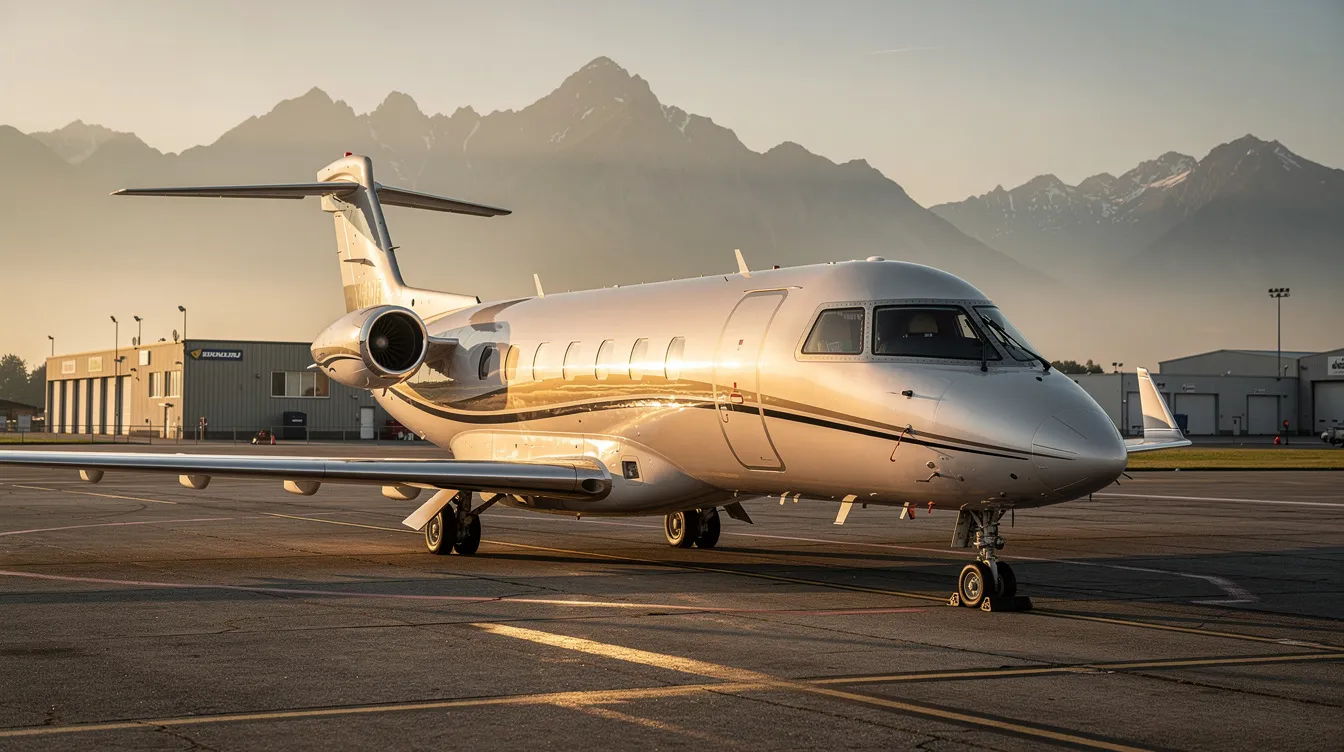
In 2026, the safety case for these aircraft is stronger than ever. Advanced avionics suites like the Garmin G3000, combined with emergency autoland systems, have made modern single-pilot platforms-the Embraer Phenom 300E, Cirrus Vision Jet, and HondaJet Elite II among them-safer and more capable than anything available a decade ago. At BlackJet, we provide access to these aircraft categories through Jet Cards and on-demand charter, so our members enjoy all the benefits without owning the aircraft.
Key advantages at a glance:
Time saved: bypass commercial hubs, board in minutes, use airports closer to your destination
Scheduling flexibility: fewer crew dependencies mean faster dispatch, even on short notice
Privacy and productivity: a closed-door cabin for calls, work, or simply decompressing
Cost efficiency vs larger aircraft: lower hourly rates and fuel burn for missions that do not require a midsize or heavy cabin
What Is a Single-Pilot Jet? (VLJ vs Light Jet vs "Personal Jet")
Single-pilot jets are certified to be safely operated by one qualified pilot. They are typically classified as very light jets or entry-level jets, and usually accommodate between four and six passengers, with a maximum takeoff weight of 10,000 lbs or less. The Cirrus Vision Jet is the first single-engine private jet for single-pilot operation. Passenger capacity varies among single-pilot jets, from 1 to 10 passengers.
A "single-pilot certified" aircraft is one whose FAA or EASA type certificate permits a single qualified pilot to serve as Pilot in Command. The aircraft's systems, avionics, and flight controls must meet rigorous standards that compensate for the absence of a second crew member. In practice, many charter and Jet Card operators still fly these jets with two pilots for added redundancy-particularly on night, weather, or international missions.
The main categories break down as follows:
Very Light Jet (VLJ): The entry point of the VLJ category and a core segment within small private jets. Aircraft like the Cirrus Vision Jet SF50, Cessna Citation Mustang, Eclipse 550, and Embraer Phenom 100EV. Ranges of roughly 1,000–1,300 nm, cruise speed around 280–400 KTAS depending on the model, seating for a few passengers (typically 4–7).
Light jet: More capable twin-engine jets in the light jet category, including the Embraer Phenom 300E, Cessna Citation CJ3+/CJ3 Gen3, CJ4 Gen3, and HondaJet Elite II. These fly further (up to ~2,000+ nm), faster (Mach 0.78–0.80), and carry 6–10 passengers with meaningful baggage space.
Single-engine personal jet: The Cirrus Vision Jet stands alone as the first personal jet to achieve mainstream production success-a single-engine turbine aircraft that brought jet performance to owner operators and personal use missions at a fraction of traditional jet costs.
Single-engine jets like the Vision Jet differ from twin-engine light jets in maintenance complexity, redundancy philosophy, and mission profile. They excel on shorter legs with fewer passengers. Twin-engine light jets like the Phenom 300 or Cessna Citation CJ3 offer more performance, greater payload, and longer nonstop range for demanding business travel.
Flagship 2026 Single-Pilot Light Jets: A Quick Lineup
Here is an executive buyer's snapshot of the leading single-pilot light jets available through charter and Jet Card programs in 2026. According to the General Aviation Manufacturers Association, the light jet segment continues to lead business jet deliveries-and these models explain why.
Embraer Phenom 300E: The best selling light jet in the world for over a decade and a true workhorse of the charter fleet. Seats 6–8 passengers in a club configuration. IFR range of approximately 2,010 nm with standard payload. Max cruise of Mach 0.80 (~464 KTAS), with economy cruise options for longer legs. Service ceiling of 45,000 ft. Equipped with Prodigy Touch avionics, autothrottle, and the Runway Overrun Awareness and Alerting System (ROAAS). The newer Phenom 300EV variant adds emergency autoland and increased maximum payload.
Cessna Citation CJ3+ / CJ3 Gen3: Solid performance meets versatility. Typical seating for 6–7 passengers. Range of approximately 2,040 nm with max fuel. Cruise speed around 416 KTAS. Takeoff field length of roughly 3,180 ft, giving it access to thousands of airports that larger aircraft cannot reach. The Gen3 update brings G3000 avionics, autothrottle, and multifunction spoilers.
Cessna Citation CJ4 Gen3: A top contender for travelers who need more range and cabin room from a single-pilot platform. Positioned as a "big light jet" with additional payload capacity, higher maximum takeoff weight, and longer legs-ideal when the mission demands more performance than a standard light jet but a midsize is unnecessary.
HondaJet Elite II: The Elite II features distinctive over-the-wing engine mounts that free up cabin space and reduce noise. Range of approximately 1,547 nm. Cruise speed around 422 KTAS. First twin-turbine very light business jet certified with emergency autoland. G3000-based flight deck with stability augmentation, envelope protection, and autothrottle.
Cessna Citation M2 Gen3: An efficient entry-level Cessna Citation light jet, popular in training and owner-flown missions. Commonly seen in the market as a stepping stone for many buyers moving from turboprops to jets, with production continuing in 2026.
Very Light Jets & the Cirrus Vision Jet: The "First Personal Jet" Era
VLJs opened the door to turbine-powered flight for private owners who wanted jet speed without jet-sized budgets, redefining what counts as budget-friendly private aircraft. They made it possible for a single pilot to operate a jet safely into small airports that were previously the domain of piston and turboprop aircraft-airports with shorter runways, minimal infrastructure, and proximity to where people actually live and work.
The standout of this era is the Cirrus Vision Jet SF50:
Cirrus Vision Jet SF50: Widely recognized as the first personal jet to gain broad market traction, with over 400 units delivered. Powered by a single Williams FJ33-5A turbofan. Cruise speed of approximately 300 KTAS (345 mph). Range around 1,275 nm. Seating for up to 5 adults plus 2 children. Equipped with the cirrus airframe parachute system (CAPS)-a whole-aircraft parachute-and Garmin Perspective Touch+ with Safe Return emergency autoland and autothrottle. Takeoff distance over a 50-ft obstacle is approximately 3,192 ft. The vision jet is ideal for leisure travel, regional hops, and personal use missions.
Cessna Citation Mustang: An older model now primarily available pre-owned, the Citation Mustang delivers approximately 1,150 nm of range with 4–5 passengers in a conventional twin-jet layout. Many pilots trained on this aircraft, and it remains a practical, affordable entry into jet ownership.
Embraer Phenom 100EV: Approximately 1,300 nm range, 4–7 seats, and a cabin feel that punches above its class. Twin-engine redundancy in a VLJ package.
Eclipse 550: Ultra-efficient with roughly 1,125 nm range and 4–5 seats. By 2026, the Eclipse is mostly a pre-owned market proposition but still valued for its low operating costs. Consider it alongside the premier IA as an older model that served the VLJ market well in its time.
VLJs fit best when your mission involves quick hops between regional cities, access to airports with shorter runways, and lower hourly costs for a few passengers rather than a full cabin.
Cabin Comfort: How Single-Pilot Jets Feel in Real Life
Cabin comfort can make or break the private aviation experience, especially when you are comparing single-pilot jets against commercial first class or larger private cabins. Here is what each aircraft actually delivers:
Embraer Phenom 300E: The "Oval Lite" cross-section provides a flat floor and generous cabin space with large windows. Best-in-class cabin altitude of approximately 5,600 ft at FL450 means less fatigue on longer flights. Baggage capacity of roughly 84 cu ft accommodates skis, golf clubs, and oversized luggage. Room for 6–8 in a club layout with fold-out tables.
HondaJet Elite II: The over-the-wing engine placement moves the engines off the fuselage, creating more cabin room and noticeably reduced noise. Fully enclosed lavatory with skylights. Club-style executive leather seating. Cabin width around 5 ft, height approximately 4.8 ft. Combined baggage space of about 62 cu ft.
Cirrus Vision Jet: Single-level cabin entry with panoramic windows for exceptional visibility. Club seating for 3–5 adults. Cabin width approximately 5.1 ft, height 4.1 ft. Best suited for leisure travelers who prioritize ease of access and views over stand-up headroom.
Cessna Citation CJ3+/CJ4: Typical 6–8 passenger club configuration with fold-out tables, optional Wi-Fi, and entertainment systems. Practical layouts with room for productive work sessions.
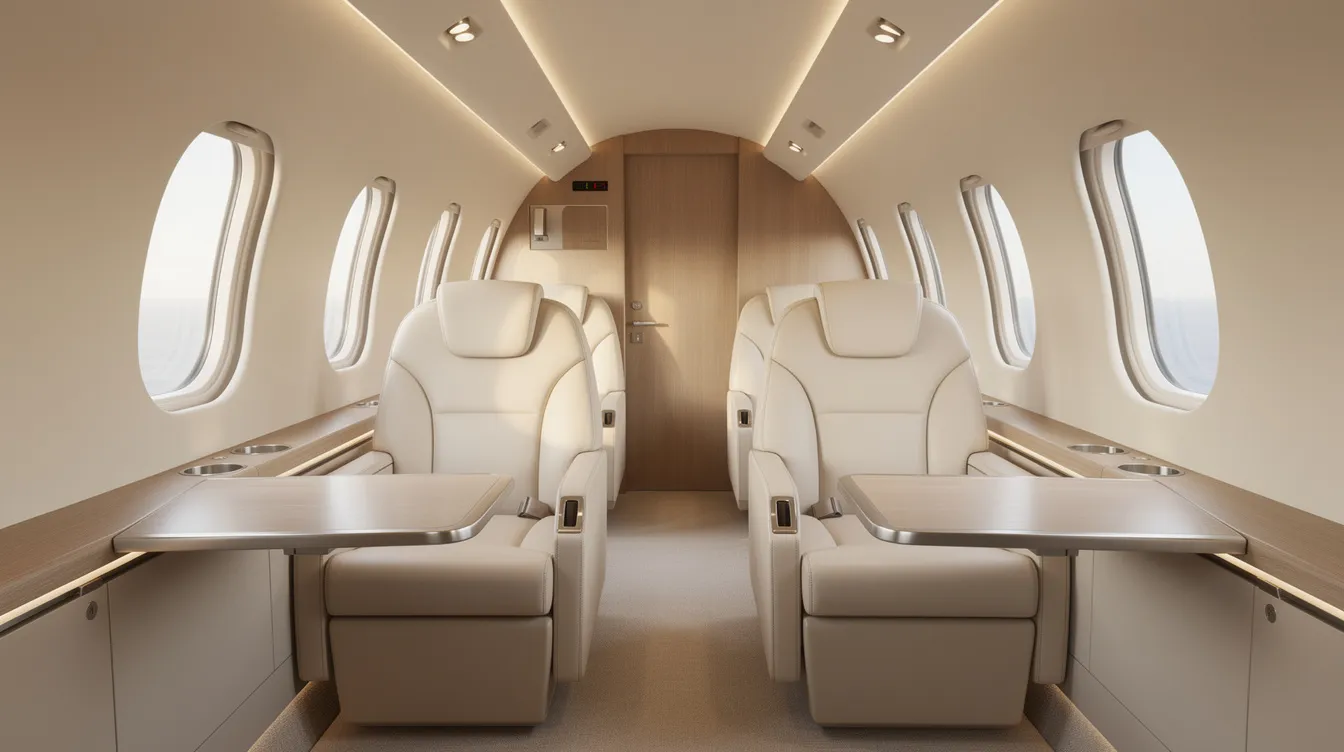
Amenities common across modern small private aircraft in this class include adjustable leather seating with lumbar bolsters, mood lighting, USB-C and AC power at each seat, in-flight Wi-Fi, and refreshment centers. These are not stripped-down cockpits with seats-they are genuine working and relaxation environments.
Flight Deck Technology & Safety: Why 2026 Single-Pilot Jets Inspire Confidence
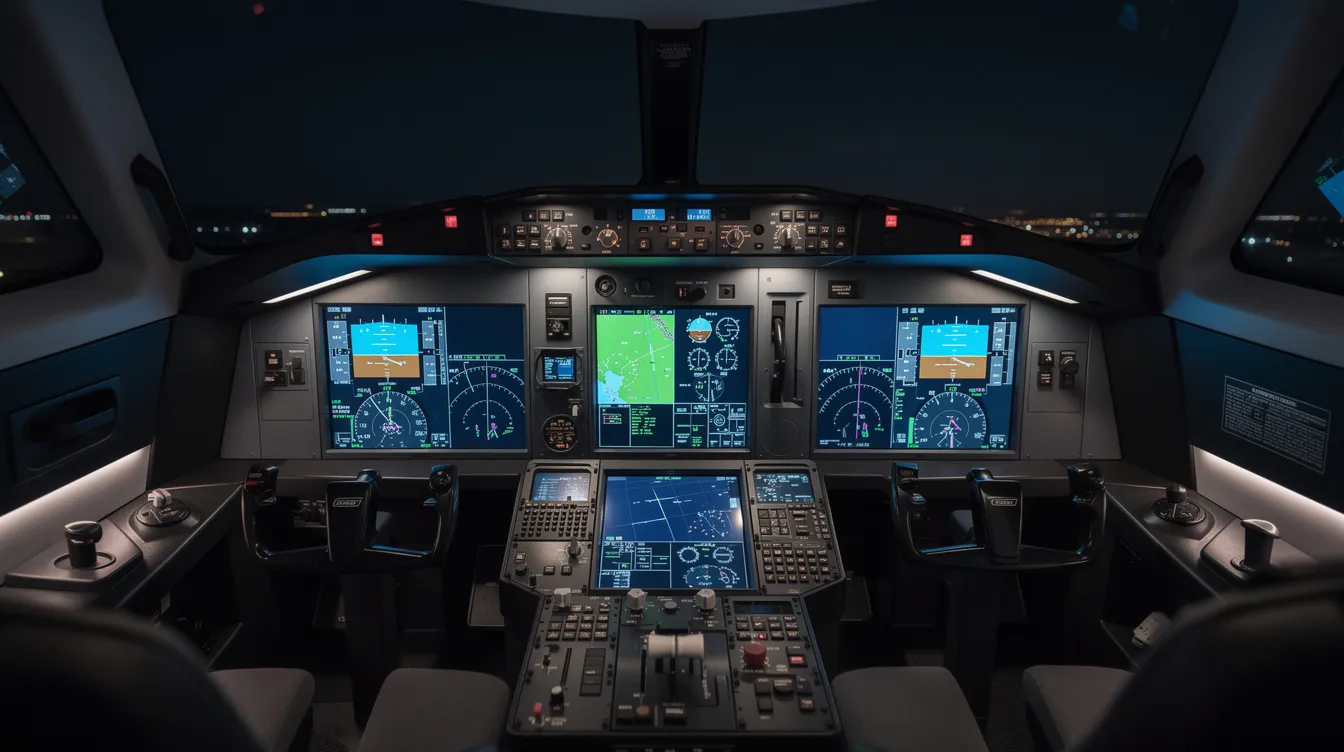
Advanced avionics and automation are the primary enablers of safe single-pilot operations in modern light jets. The flight deck of a 2026 single-pilot jet bears little resemblance to anything from even a decade ago.
Core systems by aircraft:
Embraer Phenom 300E / 300EV: Prodigy Touch avionics (Garmin G3000-based) with touch-screen controllers, synthetic vision, SurfaceWatch, ROAAS (runway overrun awareness and alerting system), graphical flight planning, and RNP AR 0.3 approach capability. The 300EV adds emergency autoland as standard.
Cessna Citation CJ3 Gen3 / CJ4 Gen3: G3000 PRIME avionics with emergency autoland capability. Autothrottle standard. Enhanced situational awareness with weather radar and turbulence detection.
Cirrus Vision Jet: Perspective Touch+ suite with autothrottle, Safe Return emergency autoland, CAPS parachute, and electronic stability protection. Synthetic vision provides terrain awareness in all conditions.
HondaJet Elite II: G3000-based cockpit with autothrottle, stability augmentation, envelope protection, approach monitoring (unstable approach warning), and underspeed protection.
Safety features that matter to passengers:
Envelope protection: prevents pilots from exceeding structural or aerodynamic limits
Emergency descent mode: automatically descends the aircraft if cabin pressurization is lost
TAWS and TCAS: terrain awareness and warning system plus traffic collision avoidance, standard across all platforms
Weather radar: with turbulence detection for routing around convective activity
Emergency autoland: the defining safety trend of 2026, allowing the aircraft to autonomously navigate to a suitable airport and land if the pilot becomes incapacitated
BlackJet partners exclusively with ARGUS, Wyvern, or equivalent safety-rated operators. Even when an aircraft is certified for single-pilot operations, BlackJet typically dispatches two crew members for charter and Jet Card missions on longer or more complex legs. Many pilots in our network hold a type rating on multiple platforms, with extensive recurrent simulator training.
Operating Economics: Ownership vs Charter vs Jet Card
Understanding operating costs is essential when evaluating how to access single-pilot jets and how they fit into the broader private jet price landscape. Here are approximate direct hourly cost bands for owners in 2026:
Cirrus Vision Jet: roughly $650–$750 per flight hour
Citation Mustang (pre-owned): around $1,000/hour
Phenom 100EV: approximately $1,200/hour
HondaJet Elite II and Phenom 300E: generally $1,100–$1,800/hour depending on utilization and region
These figures cover fuel, maintenance, and direct expenses only. Private owners must also budget for hangar storage, hull and liability insurance, maintenance reserves, crew training and recurrent checks, avionics upgrades, and the significant capital tied up in the aircraft itself. For context, a new Cirrus Vision Jet lists around $3–3.5M, a pre-owned Citation Mustang roughly $2M, and a new Embraer Phenom 300E in the $10M+ range.
Compare the ownership path against other access models, especially if you are still getting up to speed on overall jet card cost and structure:
Full ownership: highest commitment and maximum control, but utilization risk is real-most owners fly 200–400 hours per year, leaving the aircraft idle most of the time, which makes exploring the cheapest private jet options and alternative access models especially important at the entry level
Fractional ownership: shared cost and scheduling, minimum usage requirements, less flexibility compared with some programs offered by top private jet companies
On-demand charter: pay per trip with variable pricing; no fixed costs but positioning fees can add up, particularly if you are only buying a single seat on a private jet rather than the whole aircraft
Jet Card membership: prepaid hours at transparent, all-in hourly rates by cabin class-no maintenance, depreciation, or crew logistics to manage, with predictable jet card pricing structures that simplify budgeting
For travelers flying 50–200+ hours per year who value predictability without capital exposure, the Jet Card model consistently delivers the strongest economics and the lowest operational headache. Guides to the best jet cards for frequent flyers consistently highlight how lower operating costs per mission make single-pilot capable light jets especially attractive in this structure.
Choosing the Right Single-Pilot Jet for Your Mission
Matching aircraft to mission is where many travelers leave value on the table. Here is a simple decision framework:
1–3 passengers, 400–700 nm leisure trips: Cirrus Vision Jet or Phenom 100EV class. Lower hourly rate, ample for weekend getaways or short business hops.
4–6 passengers, 800–1,500 nm regional business: Embraer Phenom 300E, Cessna Citation CJ3+, or HondaJet Elite II. The sweet spot of speed, range, cabin comfort, and payload.
6–8 passengers, 1,500–2,000+ nm with significant baggage: Phenom 300E or CJ4 Gen3. These aircraft can fly coast-to-coast nonstop with a full cabin, though baggage trade-offs may apply at maximum range.
Key factors to evaluate:
Typical passenger count and baggage profile for your most common trips
Average stage length and whether nonstop capability is essential
Runway length at your home airport, office airport, or vacation destinations
Whether you prioritize maximum cabin comfort or minimum hourly rate
BlackJet's flight advisors can map your last 12 months of travel-or projected travel-to one or two ideal aircraft categories and a matching Jet Card tier that delivers the right balance of performance, comfort, and cost.
Single-Pilot Jets within BlackJet's Jet Card & Charter Programs
At BlackJet, we structure access to very light jet and light jet categories through Jet Card programs-such as our 25-hour and 50-hour options-rather than selling aircraft. Members prepay hours and fly without any ownership burden.
While many aircraft in our network are certified for single-pilot operations, BlackJet typically dispatches flights with two pilots as a safety and service standard-especially for night operations, challenging weather, or cross-border missions.
Members select a cabin class (very light, light, midsize, or larger) via our mobile or web booking platform. Our network then assigns an appropriate tail number-whether that is a Phenom 300E, a Cessna Citation CJ3, or another qualified aircraft-based on availability, mission profile, and passenger requirements.
Every BlackJet flight is automatically carbon neutral. Our sustainability program integrates audited carbon offsets into every trip, including the short-haul hops where VLJs and light jets excel. No extra effort or cost is expected from the member.
Whether your trip calls for a Vision Jet hop across a state or a Phenom 300E crossing the continent, BlackJet matches the right aircraft to the right mission-every time.
Safety, Certification & Crew Standards in a Single-Pilot World
There is an important distinction between an aircraft being certified for single-pilot operations and an operator's internal safety policies. Certification means the aircraft can be safely flown by one qualified pilot. It does not mean it should always operate that way-particularly in charter and Jet Card environments where passenger safety expectations are paramount.
BlackJet's operator and crew standards include:
FAA Part 135 certification or EASA equivalent for all operators in our network
ARGUS Gold/Platinum, Wyvern Wingman, or comparable third-party safety ratings
Minimum PIC hours and type rating requirements for captains on platforms like the Phenom 300, Citation CJ3, and HondaJet Elite II
Recurrent simulator training on a defined schedule
Technology like emergency autoland, emergency descent mode, TCAS, and terrain awareness systems complements-but never replaces-professional crew training and standard operating procedures. For certain short, simple, VFR-friendly missions, some private owners do fly these aircraft single-pilot. In BlackJet's charter environment, we prioritize redundancy and passenger comfort.
The takeaway for our members: "single-pilot capable" describes the aircraft's certification. It does not describe how we operate it on your behalf.
Sustainability & Efficiency: Why Smaller Jets Can Be the Greener Choice
VLJs and light jets burn significantly less fuel per hour than midsize and large-cabin jets. When your mission involves a few passengers on a sub-1,500 nm leg, flying the right-sized aircraft is both an economic and environmental optimization.
Fuel burn comparison: A Vision Jet or Phenom 100EV on a 500 nm hop consumes a fraction of the fuel that repositioning a super-midsize jet for the same mission would require. Modern engines-Williams FJ33, Pratt & Whitney PW535E1 on the Phenom 300E, GE Honda HF120-deliver meaningful efficiency gains over prior generations.
Aerodynamic optimizations: The HondaJet's over-the-wing engine mounts reduce drag. Improved bleed systems and cabin insulation across the light jet class reduce energy waste.
BlackJet's carbon-neutral commitment: every flight is automatically offset using audited carbon offset programs, covering reforestation, renewable energy, and emission reduction projects. No extra effort or cost is passed to clients.
Choosing the right-sized aircraft through BlackJet is not just about cost-it is about flying responsibly.
Single-Pilot Jets vs Larger Cabin Aircraft vs Commercial Premium Cabins
For ROI-driven decision makers, here is how single-pilot capable jets stack up:
Time and access:
Single-pilot VLJ/light jet: use thousands of small airports; board in minutes; no security lines or connections
Midsize/super-midsize private jet: similar flexibility but may require longer runways; higher handling times at some airports
Commercial business/first class: fixed schedules, major hub airports, security screening, potential delays and connections
Privacy and productivity:
Comfort:
A Phenom 300E at 45,000 ft maintains a cabin altitude of ~5,600 ft-lower than most commercial aircraft. Dedicated seating, personal climate control, and minimal turbulence at altitude create a materially different experience from even the best lie-flat commercial seat.
Cost per trip:
For 1–4 passengers on sub-1,500 nm legs, a single-pilot light jet is often more cost-efficient than booking multiple commercial premium tickets once you factor in the value of time saved, productivity gained, and connections avoided, especially when you consider the cheapest private aircraft options in the VLJ and light jet categories.
BlackJet helps members choose the right cabin class per trip-sometimes that means a light jet, sometimes a midsize-without locking anyone into a single aircraft type. That flexibility is the core of the Jet Card vs charter advantage.
Financing, Ownership, and Access Pathways to Single-Pilot Jets
The main ways affluent travelers engage with single-pilot jets build on the same access models you see across the broader private jet price list:
Full ownership: Maximum control. Acquire a Vision Jet (~$3–3.5M), a pre-owned Mustang (~$2M), or a new Phenom 300E ($10M+), or explore curated UK private jets for sale if your base is in Europe. But you also take on depreciation, regulatory compliance, maintenance scheduling, crew employment, and hangar costs. Expected utilization must justify the capital.
Fractional ownership: Lower investment, shared scheduling. Minimum annual usage requirements. Less flexibility than charter or Jet Card, though some programs such as Flexjet jet cards and fractional options blend elements of both models.
On-demand charter: Pay per trip. No fixed costs but variable pricing that can be unpredictable, especially for repositioning legs—a dynamic often compared against more stable jet card cost structures.
Jet Card membership: Zero acquisition cost. Predictable hourly rates. Choose the cabin class and aircraft size per mission rather than being locked into one jet. 24/7 digital booking and human support for irregular operations or complex routing, especially through premium private jet card programs.
For many buyers considering their first step into private aviation-or experienced travelers tired of the overhead that comes with ownership-the Jet Card model delivers the performance of these remarkable aircraft without the financial and logistical burden of keeping one in your hangar, especially when you understand the full jet card cost structure.
Frequently Asked Questions About Single-Pilot Jets & BlackJet Access
Are single-pilot jets safe for my family or executive team? Yes. These aircraft meet rigorous FAA and EASA type certification standards, equipped with emergency autoland, envelope protection, TCAS, and terrain awareness. BlackJet further mandates safety-rated operators and flies most missions with two-pilot crews.
Can I request a specific aircraft type, like an Embraer Phenom 300 or HondaJet Elite II? You can. BlackJet allows cabin class and aircraft category selection. Specific model requests are accommodated based on fleet availability and mission profile.
What is the difference between a very light jet and a light jet in terms of cabin comfort and luggage? VLJs like the Vision Jet or Phenom 100EV have smaller cabins, fewer seats, and less baggage space. Light jets like the Phenom 300E or CJ3+ offer larger cabins for 6–8 passengers, substantially more baggage space, and higher speed and range.
How far can a single-pilot jet fly nonstop? VLJs typically cover 1,000–1,300 nm. Top light jets like the Phenom 300E and CJ3 Gen3 can reach approximately 2,000–2,100 nm with moderate payload under NBAA IFR reserves.
How does BlackJet keep flights carbon neutral? Every trip's emissions are calculated based on aircraft type, distance, and weight. BlackJet purchases verified offsets from audited programs-reforestation, renewable energy, emission reduction-to match or exceed actual emissions. It is integrated into every service at no additional cost.
How do I know which Jet Card tier is right for my travel patterns? BlackJet's advisors can map your typical year of travel-origins, destinations, frequency, passenger count, and luggage needs-to recommend the optimal aircraft category and Jet Card program, drawing on a deep understanding of jet card pricing and benefits. Explore how BlackJet can reshape the way you fly by connecting with our advisory team today.
Conclusion: Elevate Your Travel with Single-Pilot Jets and BlackJet
Single-pilot jets represent a transformative opportunity for discerning travelers seeking the perfect blend of speed, convenience, and cost efficiency. By enabling safe, certified operation by one skilled pilot, these jets unlock access to thousands of smaller airports, reduce operational complexities, and offer unparalleled scheduling flexibility. Whether you choose a very light jet like the Cirrus Vision Jet for short regional hops or a light jet such as the Embraer Phenom 300E for longer business missions, single-pilot aircraft deliver a strategic advantage that commercial airlines and larger jets cannot match.
At BlackJet, we harness the power of these advanced aircraft through our exclusive Jet Card and charter programs, providing seamless access without the burdens of ownership. Our commitment to safety, sustainability, and cutting-edge technology ensures every journey is not only effortless but also responsible—carbon neutral at no extra cost to you.
Discover how BlackJet can elevate your travel experience with personalized flight options tailored to your mission and lifestyle. Join our Jet Card program or explore premium jet access today, and unlock the true potential of private aviation with the smartest single-pilot jets in the sky.


 Sign up with google
 Sign up with Apple